| Size | Price | Stock | Qty |
|---|---|---|---|
| 50mg |
|
||
| 100mg |
|
||
| 250mg |
|
||
| 500mg |
|
||
| 1g |
|
||
| Other Sizes |


| ln Vitro |
In LPS- and MCP-1-stimulated macrophage cell lines, acetamidoamide monoHClide triponder (10, 30, 100 μM; 1 hour) lowers the expression level of IκB-α phosphorylation [1].
Acotiamide at concentrations of 10, 30, and 100 μmol/L significantly reduced the expression levels of IκB-α phosphorylation in LPS- (1, 3, 10 μg/mL) and MCP-1 (100 pg/mL)-stimulated NR8383 rat macrophage cell lines. [1] Acotiamide (10, 30, and 100 μmol/L) significantly reduced TNF-α production in LPS (1 μg/mL)-stimulated NR8383 cells treated with MCP-1 (100 pg/mL) (P < .05 for each concentration). [1] Acotiamide at 30 μmol/L significantly reduced IL-6 production in LPS (1 μg/mL)-stimulated NR8383 cells treated with MCP-1 (100 pg/mL) (P < .05). [1] Acotiamide treatment did not affect IL-4 production in LPS- and MCP-1-stimulated NR8383 cells. [1] Acotiamide (30 μmol/L) did not affect TNF-α or IL-6 production in LPS (1 μg/mL)-stimulated NR8383 cells incubated with Ucn 2 (0.3 μmol/L). [1] |
|---|---|
| ln Vivo |
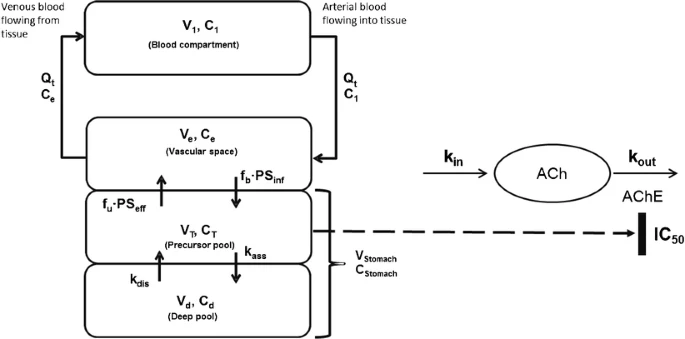
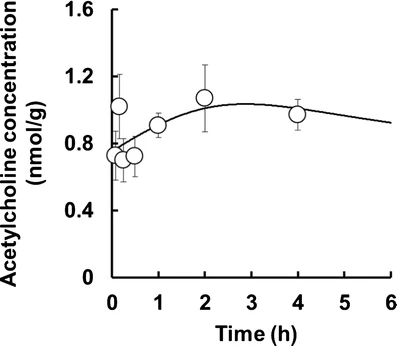
In a dose-dependent manner, acocamide monohydrochloride trihydrate (0.3, 1, 3 mg/kg; iv/3, 10, 30 mg/kg; po) raises the postprandial gastric motility index [2]. With an IC50 of 1.79 μM, acotiamide monoHClide triponder (0.83 mg/kg; iv; Once) inhibits AChE in the stomach of rats [3].
Acotiamide (30 mg/kg, s.c.) significantly reduced MCP-1 levels in the jejunum and ileum of LPS-stimulated Ucn 2-treated rat models (P < .01 for both). [1] Acotiamide significantly decreased myeloperoxidase (MPO) activity in the ileum of LPS-stimulated Ucn 2-treated rat models (P < .01). [1] Acotiamide significantly reduced CD68-positive cell infiltrations in the lamina propria and submucosal layer of the small intestine, and in the lamina propria of the transverse colon and sigmoid colon, in LPS-stimulated Ucn 2-treated rat models (P < .05). [1] Acotiamide significantly reduced CCR2-positive cell infiltrations in the jejunum, ileum (lamina propria), ascending colon (submucosal layer), and sigmoid colon (submucosal layer) of LPS-stimulated Ucn 2-treated rat models (P < .05 or P < .01). [1] |
| Enzyme Assay |
Myeloperoxidase (MPO) activity was measured as a marker of neutrophil infiltration. Homogenates of gastrointestinal tissues (jejunum and ileum, 30 mg per sample) were centrifuged at 1600×g for 10 min. The supernatant was used for MPO activity measurement, expressed as the degradation of H₂O₂ in μmol·g tissue protein/min. [1]
|
| Cell Assay |
Cell viability assay [1]
Cell Types: NR8383, macrophage Tested Concentrations: 10, 30, 100 μM Incubation Duration: 1 hour Experimental Results: The production of TNF-α and IL-6 in NR8383 cells stimulated by LPS/MCP-1 was significant reduce. Rat macrophage NR8383 cells were maintained in Ham's F12K medium supplemented with 10% fetal bovine serum at 37°C in 5% CO₂. Cells were stimulated with: (a) LPS alone (1, 3, and 10 μg/mL); (b) LPS (1 μg/mL) and Ucn 2 (0.1 and 0.3 μmol/L); (c) LPS (1 μg/mL) and Ucn 2 (0.3 μmol/L) in the presence of astressin B (1 mmol/L); (d) LPS (1 μg/mL) and Ucn 2 (0.3 μmol/L) in the presence of acotiamide (30 μmol/L); and (e) LPS (1 μg/mL) and Ucn 2 (0.3 μmol/L) in the presence of both astressin B (1 mmol/L) and acotiamide (30 μmol/L). [1] TNF-α, IL-6, and IL-4 levels in the supernatants of stimulated NR8383 cells were measured by ELISA using commercially available assay kits, performed in duplicate according to the manufacturer's instructions. [1] For Western blot analysis, stimulated NR8383 cells were lysed in a buffer containing 0.1% NP-40, 10 mmol/L NaCl, 5 mmol/L MgCl₂, 10 mmol/L NaH₂PO₄ (pH 7.4), 65 mmol/L Na-orthovanadate, and protease inhibitor cocktail, then centrifuged at 1200g for 15 min. Equal amounts of protein (20 μg) were separated by SDS-PAGE, transferred to nitrocellulose membranes, blocked with 5% non-fat milk in TBST, and incubated overnight at 4°C with rabbit anti-IκB-α phosphorylation antibody (1:200). After washing, membranes were incubated with peroxidase-conjugated secondary antibody (1:5000) for 1 h at room temperature, and detection was performed using electrochemiluminescence. [1] |
| Animal Protocol |
Animal/Disease Models: Male mongrel dog (9-11 kg), male beagle dog (9.6-12.9 kg) [2]
Doses: 0.3, 1, 3, 10, 30 mg/kg Route of Administration: intravenous (iv) (iv)injection; once. Experimental Results: Gastric motility increased after meals. Animal/Disease Models: Male SD (SD (Sprague-Dawley)) rats (6-7 weeks old) [3] Doses: 0.83 mg/kg Route of Administration: intravenous (iv) (iv)injection; once. Experimental Results: Functional dyspepsia was effectively improved by inhibiting AChE in the stomach of rats. Adult male Sprague Dawley rats (200–250 g) were used. After intraperitoneal injection of LPS (600 μg/300 g body weight), rats rested for 6 days. Under anesthesia (10% chloral hydrate, 300 mg/kg i.p.), a stainless steel cannula was implanted into the left lateral ventricle (stereotaxic coordinates: 0.8–1.0 mm posterior to bregma, 1.3–1.5 mm left lateral, 3.0–3.3 mm below skull surface). Urocortin 2 (Ucn 2, 3.3 μg/kg) was dissolved in saline (10 μL) for a single i.c.v. injection via a 10 μL microsyringe. Correct cannula placement was verified by injecting pontamine sky blue dye (5 μL, 2% in 0.5 mol/L sodium acetate). [1] Acotiamide was dissolved in 5% w/v glucose solution and administered via subcutaneous injection at a dose of 30 mg/kg. [1] Gastric emptying and small intestinal transit time were evaluated using Evans blue. After intragastric administration of 1 mL Evans blue for 30 min, the stomach and small intestine were resected. The small intestine was divided into 10 parts. Tissues were incubated in NaOH for 60 min, then allowed to sit for 1 h. Supernatants were centrifuged and absorbance measured. Gastric emptying (%) = Absorbance (small intestine) / Absorbance (stomach + small intestine). [1] For immunohistochemistry, 4-μm sections were deparaffinized, antigens retrieved by microwaving in 5% urea solution for 5 min, and endogenous peroxidase blocked with 3% H₂O₂ in methanol. Samples were incubated overnight at 4°C with rabbit anti-rat CD68 antibody (1:200), rabbit anti-rat CCR2 antibody (1:200), or anti-CRHR2 antibody (1:100). Secondary antibody was detected using an LSAB 2 kit with diaminobenzidine as chromogen. CD68- and CCR2-positive cells were counted in four fields at ×200 magnification. [1] |
| References |
|
| Additional Infomation |
Acotiamide hydrochloride is the hydrochloride salt form of acotiamide, a prokinetic drug that enhances gastrointestinal motility. Although the exact mechanism of action of acotiamide is not fully understood, it appears to inhibit acetylcholinesterase (AChE), an enzyme responsible for breaking down acetylcholine (ACh). Increased acetylcholine levels improve gastric emptying and gastrointestinal motility, ultimately alleviating symptoms of dyspepsia.
See also: Acotiamide (note moved to). Acotiamide is an acetylcholinesterase inhibitor that also acts as an antagonist of M1 and M2 muscarinic receptors in the enteric nervous system, thereby enhancing acetylcholine release. Its anti-inflammatory effects may involve the cholinergic anti-inflammatory pathway, similar to donepezil. Acotiamide has been shown to reduce LPS-induced NF-κB nuclear translocation and proinflammatory cytokine production in activated macrophages. The drug is used clinically for the treatment of functional dyspepsia, improving meal-related symptoms, epigastric pain, and gastric emptying. [1] |
| Molecular Formula |
C21H37CLN4O8S
|
|---|---|
| Molecular Weight |
541.0585
|
| Exact Mass |
540.202
|
| CAS # |
773092-05-0
|
| Related CAS # |
Acotiamide;185106-16-5;Acotiamide hydrochloride;185104-11-4;Acotiamide-d6
|
| PubChem CID |
6918406
|
| Appearance |
Light yellow to yellow solid powder
|
| LogP |
4.534
|
| Hydrogen Bond Donor Count |
7
|
| Hydrogen Bond Acceptor Count |
11
|
| Rotatable Bond Count |
10
|
| Heavy Atom Count |
35
|
| Complexity |
586
|
| Defined Atom Stereocenter Count |
0
|
| SMILES |
CC(C)N(CCNC(=O)C1=CSC(=N1)NC(=O)C2=CC(=C(C=C2O)OC)OC)C(C)C.O.O.O.Cl
|
| InChi Key |
NPTDXIXCQCFGKC-UHFFFAOYSA-N
|
| InChi Code |
InChI=1S/C21H30N4O5S.ClH.3H2O/c1-12(2)25(13(3)4)8-7-22-20(28)15-11-31-21(23-15)24-19(27)14-9-17(29-5)18(30-6)10-16(14)26/h9-13,26H,7-8H2,1-6H3,(H,22,28)(H,23,24,27)1H3*1H2
|
| Chemical Name |
N-(2-(diisopropylamino)ethyl)-2-(2-hydroxy-4,5-dimethoxybenzamido)thiazole-4-carboxamide hydrochloride trihydrate.
|
| Synonyms |
Z338 Z-338 Z 338YM443 YM-443 YM 443 Acotiamide Acotiamide hydrochloride trihydrate Acofide.
|
| HS Tariff Code |
2934.99.9001
|
| Storage |
Powder -20°C 3 years 4°C 2 years In solvent -80°C 6 months -20°C 1 month Note: Please store this product in a sealed and protected environment (e.g. under nitrogen), avoid exposure to moisture and light. |
| Shipping Condition |
Room temperature (This product is stable at ambient temperature for a few days during ordinary shipping and time spent in Customs)
|
| Solubility (In Vitro) |
DMSO : ~125 mg/mL (~231.03 mM)
H2O : ~3.03 mg/mL (~5.60 mM) |
|---|---|
| Solubility (In Vivo) |
Solubility in Formulation 1: ≥ 2.08 mg/mL (3.84 mM) (saturation unknown) in 10% DMSO + 40% PEG300 + 5% Tween80 + 45% Saline (add these co-solvents sequentially from left to right, and one by one), clear solution.
For example, if 1 mL of working solution is to be prepared, you can add 100 μL of 20.8 mg/mL clear DMSO stock solution to 400 μL PEG300 and mix evenly; then add 50 μL Tween-80 to the above solution and mix evenly; then add 450 μL normal saline to adjust the volume to 1 mL. Preparation of saline: Dissolve 0.9 g of sodium chloride in 100 mL ddH₂ O to obtain a clear solution. Solubility in Formulation 2: ≥ 2.08 mg/mL (3.84 mM) (saturation unknown) in 10% DMSO + 90% (20% SBE-β-CD in Saline) (add these co-solvents sequentially from left to right, and one by one), clear solution. For example, if 1 mL of working solution is to be prepared, you can add 100 μL of 20.8 mg/mL clear DMSO stock solution to 900 μL of 20% SBE-β-CD physiological saline solution and mix evenly. Preparation of 20% SBE-β-CD in Saline (4°C,1 week): Dissolve 2 g SBE-β-CD in 10 mL saline to obtain a clear solution. View More
Solubility in Formulation 3: ≥ 2.08 mg/mL (3.84 mM) (saturation unknown) in 10% DMSO + 90% Corn Oil (add these co-solvents sequentially from left to right, and one by one), clear solution. |
| Preparing Stock Solutions | 1 mg | 5 mg | 10 mg | |
| 1 mM | 1.8482 mL | 9.2411 mL | 18.4822 mL | |
| 5 mM | 0.3696 mL | 1.8482 mL | 3.6964 mL | |
| 10 mM | 0.1848 mL | 0.9241 mL | 1.8482 mL |
*Note: Please select an appropriate solvent for the preparation of stock solution based on your experiment needs. For most products, DMSO can be used for preparing stock solutions (e.g. 5 mM, 10 mM, or 20 mM concentration); some products with high aqueous solubility may be dissolved in water directly. Solubility information is available at the above Solubility Data section. Once the stock solution is prepared, aliquot it to routine usage volumes and store at -20°C or -80°C. Avoid repeated freeze and thaw cycles.
Calculation results
Working concentration: mg/mL;
Method for preparing DMSO stock solution: mg drug pre-dissolved in μL DMSO (stock solution concentration mg/mL). Please contact us first if the concentration exceeds the DMSO solubility of the batch of drug.
Method for preparing in vivo formulation::Take μL DMSO stock solution, next add μL PEG300, mix and clarify, next addμL Tween 80, mix and clarify, next add μL ddH2O,mix and clarify.
(1) Please be sure that the solution is clear before the addition of next solvent. Dissolution methods like vortex, ultrasound or warming and heat may be used to aid dissolving.
(2) Be sure to add the solvent(s) in order.
| NCT Number | Recruitment | interventions | Conditions | Sponsor/Collaborators | Start Date | Phases |
| NCT00764374 | Completed | Drug: YM443 | Dyspepsia Functional Dyspepsia |
Astellas Pharma Inc | August 2008 | Phase 3 |
| NCT00850746 | Completed | Drug: YM443 Drug: Placebo |
Functional Dyspepsia | Astellas Pharma Inc | February 2009 | Phase 1 |
| NCT00920998 | Completed | Drug: Z-338 | Healthy | Astellas Pharma Inc | March 2009 | Phase 1 |
| NCT01973790 | Completed | Drug: Z-338 | Dyspepsia | Zeria Pharmaceutical | March 2014 | Phase 3 |
|
|
|
Products are for research use only; We do not sell to patients
Copyright 2020 InvivoChem LLC | All Rights Reserved