| Size | Price | Stock | Qty |
|---|---|---|---|
| 50mg |
|
||
| 100mg |
|
||
| 500mg |
|
||
| 1g |
|
||
| 2g | |||
| 5g | |||
| Other Sizes |


Purity: ≥98%
| Targets |
17α-hydroxylase (IC50 = 2.5 nM); 17,20-lyase (IC50 = 15 nM)
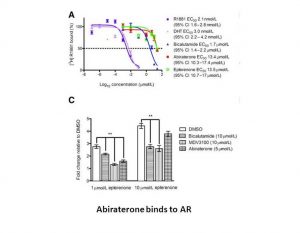
Abiraterone Acetate (Zytiga; formerly CB-7598; CB7598; CB 7598) is a prodrug of Abiraterone (active form), which targets steroidogenic enzymes critical for androgen synthesis: - Cytochrome P450 17A1 (CYP17A1) (17α-hydroxylase/C17,20-lyase): Inhibits C17,20-lyase with a Ki value of 15 ± 2 nM and 17α-hydroxylase with an IC50 value of 22 ± 3 nM (using human recombinant CYP17A1) [1, 3, 5] - 3β-Hydroxysteroid dehydrogenase (3β-HSD) (types 1 and 2): Inhibits human 3β-HSD-mediated pregnenolone-to-progesterone conversion with an IC50 value of 2.5 ± 0.4 μM [3] - Androgen Receptor (AR) (wild-type and mutants like AR-V7): Minimal binding affinity, with a Ki value > 10 μM (no direct AR antagonism) [2] |
|---|---|
| ln Vitro |
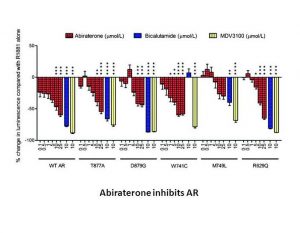
Abiraterone (Abi) acetate is an ester prodrug of the anticancer drug Abiraterone, with IC50 values for 17,20-lyase and 17α-hydroxylase (CYP17 is a bifunctional enzyme) with 17,20-lyase and 17α-hydroxylase activity of 15 nM and 2.5 nM, respectively. Abiraterone has an IC50 of 27 nM for human 17,20-lyase and 30 nM for 17α-hydroxylase inhibition[1]. The proliferation of AR-positive prostate cancer cell lines LNCaP and VCaP can be considerably inhibited by abiraterone at doses ≥ 5 μM, as demonstrated by research [2]. With competitive Ki values of 2.1 and 8.8 μM, abiraterone inhibits the activity of recombinant human 3βHSD1 and 3βHSD2. In both cell lines, 5α-diketone and DHT production could be totally inhibited by 10 μM abiraterone. In the rapidly expanding subgroup, biratterone treatment dramatically slowed the evolution of CRPC, effectively containing tumor growth for the entire 4-week treatment period (P<0.00001) [3].
Abiraterone Acetate (hydrolyzed to active Abiraterone) inhibits androgen synthesis in steroidogenic enzymes. In human adrenal cortex microsomes (enriched with CYP17A1): - Abiraterone (1–100 nM) reduces DHEA (androgen precursor) production by ~50% at 15 nM (Ki for C17,20-lyase) and 17α-hydroxypregnenolone production by ~50% at 22 nM (IC50 for 17α-hydroxylase) [3, 5] - In human liver microsomes (expressing 3β-HSD), Abiraterone (0.5–10 μM) inhibits pregnenolone-to-progesterone conversion by ~50% at 2.5 μM (IC50) and ~90% at 10 μM [3] - Abiraterone Acetate suppresses prostate cancer cell proliferation. In androgen-sensitive LNCaP and castration-resistant C4-2 cells (treated with active Abiraterone, 1–20 μM, for 72 hours): - MTT assay shows LNCaP cell viability decreases by ~40% (10 μM) and ~65% (20 μM); C4-2 cell viability decreases by ~35% (10 μM) and ~55% (20 μM) [2] - Western blot reveals reduced AR target gene expression: 10 μM Abiraterone lowers prostate-specific antigen (PSA) protein levels by ~55% in C4-2 cells [2] - Abiraterone Acetate inhibits intracrine androgen biosynthesis in renal cell carcinoma (RCC). In 786-O RCC cells treated with active Abiraterone (5–20 μM) for 48 hours: - qPCR shows reduced expression of androgen synthesis enzymes (CYP17A1, 3β-HSD) by ~40–60% [4] - ELISA detects decreased intracellular testosterone levels by ~35% (10 μM) and ~55% (20 μM) [4] |
| ln Vivo |
In prostate cancer that is resistant to castration, biratterone acetate (Abi) increases survival (CRPC). Abiraterone has been demonstrated to have an inhibitory dose of 0.5 mmol/kg/d, which results in serum concentrations of roughly 0.5 to 1 μM. It inhibits the consumption of [3H]-dehydroepiandrosterone (DHEA) and the buildup of Δ4-androstenedione (AD) in LNCaP with an IC50<1 μM. The control group's xenograft tumors showed a wide range of growth rates, with some growing slowly and only a few exhibiting vigorous growth [3].
Abiraterone Acetate reduces androgen levels and tumor growth in castration-resistant prostate cancer (CRPC) models. Male nude mice bearing C4-2 CRPC xenografts (castrated 1 week pre-implantation) are treated with oral Abiraterone Acetate (75 mg/kg/day, equivalent to 50 mg/kg active Abiraterone) for 21 days: - Tumor volume decreases by ~55% vs. vehicle; tumor weight reduces by ~50% [1] - Serum testosterone levels drop from 120 ± 15 pg/mL (vehicle) to 38 ± 9 pg/mL; DHEA (androgen precursor) decreases by >90% [1] - Abiraterone Acetate modulates hormonal profiles in prostate cancer patients (clinical in vivo data). In 24 patients with CRPC treated with oral Abiraterone Acetate (250–2000 mg/day): - Serum testosterone decreases to <0.1 ng/mL (castrate level) in 92% of patients at doses ≥500 mg/day [5] - Serum DHEA-S (sulfated DHEA) reduces by ~95%;adrenocorticotropic hormone (ACTH) increases by ~2–3 fold (compensatory for reduced steroid synthesis) [5] - 67% of patients achieve ≥50% reduction in prostate-specific antigen (PSA) [5] |
| Enzyme Assay |
Enzyme assays[3]
Incubations testing abiraterone as an inhibitor contained recombinant human 3βHSD1 or 3βHSD2 (in yeast microsomes, 3.2 or 25 μg protein per incubation, respectively), [3H]-pregnenolone (100,000 cpm, 1–20 μmol/L), and abiraterone (5–20 μmol/L) or ethanol vehicle in 0.2 to 1 mL of potassium phosphate buffer. After preincubation at 37°C for 1 to 3 minutes, NAD+ (1 mmol/L) was added, and the incubation was conducted at 37°C for 15 minutes. The reaction was stopped by addition of 1 to 2 mL ethyl acetate:isooctane (1:1) and extracting the steroids into the organic phase. The dried extracts were resolved either by TLC on plastic-backed silica gel plates using 3:1 chloroform:ethyl acetate or by HPLC. For TLC, regions of the plates containing steroids were identified with iodine vapor, excised with scissors, and quantitated by liquid scintillation counting as described. For HPLC, pregnenolone radioactivity was quantitated with BioSafeII scintillation cocktail. Incubations testing abiraterone as a substrate were carried out as above but substituting 0.1 to 5 μmol/L unlabeled abiraterone for pregnenolone and quantitating conversion by HPLC. Ligand-binding assay[2] PC-3 cells transfected with WT or T877A mutant AR or LNCaP cells were seeded in 24-well plates and grown in CSS-supplemented phenol-red free media for 24 hours. To determine the kinetics of [3H]-R1881 binding to the WT and T877A AR, cells were treated with 0.25-25nM [3H]-R1881 for 2 hours, then washed, lysed and radioactivity was measured. Kd and Bmax were determined by nonlinear regression using Graphpad Prism™ software. When the concentration of [3H]-R1881 required to almost saturate AR in both WT and T877A AR mutant transfections was established (5nM), displacement of [3H]-R1881 by test compound was determined. The concentration at which 50% of [3H]-R1881 was displaced (EC50) was established using nonlinear regression CYP17A1 (C17,20-lyase) activity assay: 1. Human recombinant CYP17A1 (expressed in insect cells) is mixed with reaction buffer (50 mM Tris-HCl pH 7.4, 1 mM NADPH, 10 μM cytochrome b5) and 1 μM 17α-hydroxypregnenolone (substrate for C17,20-lyase) [3] 2. Serial concentrations of active Abiraterone (0.1–100 nM, derived from Abiraterone Acetate hydrolysis) are added, and the mixture is incubated at 37°C for 60 minutes [3] 3. The reaction is terminated by adding 200 μL ice-cold methanol. The product (DHEA) is quantified via high-performance liquid chromatography (HPLC) with ultraviolet detection at 240 nm [3] 4. Enzyme activity percentage (relative to vehicle control) is calculated, and Ki is determined by fitting to a competitive inhibition model [3] - 3β-Hydroxysteroid dehydrogenase (3β-HSD) activity assay: 1. Human liver microsomes (expressing 3β-HSD type 1) are incubated with reaction buffer (50 mM Tris-HCl pH 7.5, 1 mM NAD+, 5 μM pregnenolone) [3] 2. Active Abiraterone (0.1–20 μM) is added, and the mixture is incubated at 37°C for 30 minutes [3] 3. The reaction is stopped with 100 μL acetonitrile. The product (progesterone) is measured via liquid chromatography-tandem mass spectrometry (LC-MS/MS) [3] 4. IC50 is calculated by sigmoidal dose-response fitting of progesterone production inhibition [3] - Androgen Receptor (AR) binding assay: 1. Recombinant wild-type human AR or AR-V7 mutant is immobilized on a microplate. [³H]-dihydrotestosterone (DHT, 0.5 nM, AR ligand) and active Abiraterone (0.1–100 μM) are added [2] 2. Incubation is performed at 25°C for 120 minutes. Unbound [³H]-DHT is removed by washing, and bound radioactivity is detected via liquid scintillation counting [2] 3. Ki is calculated using the Cheng-Prusoff equation; no significant binding is observed (Ki > 10 μM) [2] |
| Cell Assay |
Cell viability[2]
LNCaP and VCaP cells were seeded in 96-well plates and grown in CSS-supplemented phenol red-free or FBS-supplemented media for 7 days. Cells were treated with compound at 24 and 96 hours after plating and cell viability was determined on day 7 by adding CellTiter Glo and measuring luminescence. Luciferase reporter assays[2] We constructed a PSA-ARE3-luc luciferase reporter plasmid that was co-transfected with a human AR expression plasmid, F527-AR (wild-type (WT) or mutant as stated; mutations confirmed by sequencing) into PC-3 cells. These were seeded in white opaque 384-well plates and grown in 10% CSS-supplemented phenol red-free RPMI 1640 for 30 hours. Cells were then treated with the indicated concentration of compound and R1881 for 16 hours. Luciferase activity was determined by adding ONE Glo and measuring luminescence on a TopCount plate reader. Transfection efficiency and protein expression are shown in Supplemental Figure 1. C4-2 CRPC cell proliferation and AR target gene assay: 1. C4-2 cells are seeded in 96-well plates (5×10³ cells/well) for viability assay or 6-well plates (2×10⁵ cells/well) for Western blot. Cells are cultured in RPMI 1640 with 10% charcoal-stripped FBS (androgen-depleted) at 37°C (5% CO₂) [2] 2. Cells are treated with active Abiraterone (1, 5, 10, 20 μM, from Abiraterone Acetate hydrolysis) or vehicle (DMSO, final concentration <0.1%) for 72 hours [2] 3. MTT assay: 20 μL of 5 mg/mL MTT is added for 4 hours; DMSO dissolves formazan crystals, and absorbance at 570 nm is measured [2] 4. Western blot: Cells are lysed with RIPA buffer (含 protease inhibitors); 30 μg protein is separated by SDS-PAGE, transferred to PVDF membranes, and probed with anti-PSA and anti-β-actin (loading control) antibodies. Bands are visualized via chemiluminescence [2] - 786-O RCC intracrine androgen synthesis assay: 1. 786-O RCC cells are seeded in 6-well plates (1×10⁶ cells/well) and cultured in DMEM with 10% FBS [4] 2. Cells are treated with active Abiraterone (5, 10, 20 μM) or vehicle for 48 hours [4] 3. qPCR: Total RNA is extracted using TRIzol reagent, reverse-transcribed to cDNA, and amplified with primers for CYP17A1, 3β-HSD, and GAPDH (housekeeping gene). Relative mRNA levels are calculated via 2⁻ΔΔCt [4] 4. Intracellular testosterone detection: Cells are lysed with PBS; testosterone levels are quantified via commercial ELISA kits, normalized to protein concentration [4] |
| Animal Protocol |
Dissolved in 0.1 mL 5% benzyl alcohol and 95% safflower oil solution; 0.5 mmol/kg/d; s.c. injection
Male NOD/SCID mice with LAPC4 cells Mouse xenograft studies[4] Male NOD/SCID mice 6 to 8 weeks of age were used, and studies were conducted under an Institutional Animal Care and Use Committee–approved protocol. Mice were surgically orchiectomized and implanted with a 5 mg 90-day sustained release DHEA pellet to mimic CRPC with human adrenal physiology. Two days later, 7 × 10⁶ LAPC4 cells were injected subcutaneously with Matrigel. Tumor dimensions were measured 2 to 3 times per week, and volume was calculated as length × width × height × 0.52. Once tumors reached 300 mm3, mice were randomly assigned to vehicle or Abiraterone treatment groups. Mice in the Abiraterone group were treated with 5 mL/kg intraperitoneal injections of 0.5 mmol/kg/d (0.1 mL 5% benzyl alcohol and 95% safflower oil solution) and control mice with vehicle only, once daily for 5 days per week over a duration of 4 weeks (n = 8 mice per treatment). Statistical significance between Abiraterone and vehicle treatment groups was assessed by ANOVA based on a mixed-effect model. Nude mouse CRPC xenograft model (C4-2 cells): 1. Male nude mice (6–8 weeks old, 20–25 g) are castrated under isoflurane anesthesia 7 days before subcutaneous injection of 5×10⁶ C4-2 cells (suspended in 50% Matrigel) into the right flank [1] 2. When tumors reach 100–150 mm³, mice are randomly divided into 2 groups (n=8/group): Vehicle group (0.5% carboxymethyl cellulose [CMC] + 0.1% Tween 80, oral gavage) and Abiraterone Acetate group (75 mg/kg/day, oral gavage) [1] 3. Abiraterone Acetate is dissolved in 0.5% CMC + 0.1% Tween 80 (sonicated for 10 minutes to ensure solubility) and administered once daily for 21 days. Dose volume is adjusted to 0.1 mL/10 g body weight based on weekly weight measurements [1] 4. Tumor volume is measured every 3 days (volume = length × width² / 2). At study end, mice are euthanized; tumors are excised and weighed; serum is collected via cardiac puncture for testosterone/DHEA detection via ELISA [1] |
| ADME/Pharmacokinetics |
Absorption
In healthy subjects fasting overnight, the geometric mean (± standard deviation) Cmax after a single 500 mg abiraterone acetate dose was 73 (±44) ng/mL, and the AUC0-∞ was 373 (±249) ng·hr/mL. Dose-proportioning relationships were observed with single doses ranging from 125 mg to 625 mg of abiraterone acetate. In a group of patients with metastatic castration-resistant prostate cancer (mCRPC) receiving 1000 mg daily: at steady state, the mean (± standard deviation) Cmax was 226 (±178) ng/mL, and the AUC was 993 (±639) ng·hr/mL. The median Tmax after oral administration of abiraterone acetate in patients with metastatic castration-resistant prostate cancer was 2 hours. In vivo, abiraterone acetate is converted to abiraterone. In clinical studies of other abiraterone acetate formulations, plasma concentrations of abiraterone acetate were below the limit of detection (< 0.2 ng/mL) in over 99% of the analyzed samples. Systemic exposure to abiraterone acetate increases when taken with food. In healthy subjects, compared to an overnight fasting diet, a single 500 mg dose of abiraterone acetate followed by a high-fat meal (56-60% fat, 900-1000 calories) resulted in an approximately 6.5-fold increase in Cmax and a 4.4-fold increase in AUC0-∞. Given normal variations in dietary composition, co-administration of abiraterone with food may lead to increased and fluctuating drug exposure. Elimination Route: Approximately 88% of the radioactive dose is excreted in feces after oral administration of 14C-abiraterone acetate. The main compounds in feces are unmetabolized abiraterone acetate and abiraterone, accounting for approximately 55% and 22% of the administered dose, respectively. Approximately 5% of the dose is excreted in urine. Volume of Distribution: The mean (± standard deviation) apparent steady-state volume of distribution is 19,669 (±13,358) liters. Metabolism/Metabolites The conversion of abiraterone acetate to the active metabolite abiraterone is likely mediated by esterases, but the specific esterases have not been identified. In human plasma, the two main circulating metabolites are abiraterone sulfate (generated by CYP3A4 and SULT2A1) and N-oxidized abiraterone sulfate (generated by SULT2A1). These metabolites each account for approximately 43% of abiraterone exposure and are not pharmacologically active. Known human metabolites of abiraterone include abiraterone sulfate. S73 | METXBIODB | Metabolite Response Database from BioTransformer | DOI:10.5281/zenodo.4056560 Biological Half-Life In patients with metastatic castration-resistant prostate cancer (mCRPC), the mean (± standard deviation) terminal half-life of abiraterone in plasma is 12 (± 5) hours. Oral Absorption: - Abiraterone acetate is a prodrug; it is rapidly hydrolyzed in the gastrointestinal tract and liver to active abiraterone. In humans, after oral administration of 1000 mg abiraterone acetate on an empty stomach, the peak plasma concentration (Cmax) of active abiraterone is 0.8 ± 0.2 μg/mL, and the time to peak concentration is 2 ± 0.5 hours (Tmax) [1, 5]. - A high-fat diet can increase the Cmax of active abiraterone by about 10 times and the AUC by about 17 times; therefore, abiraterone acetate should be taken on an empty stomach [1]. - Distribution: - The volume of distribution (Vd) of active abiraterone in the human body is 19 ± 4 L/kg, indicating its extensive tissue penetration. It accumulates in the adrenal glands, prostate, and tumor tissues (tissue/plasma ratio of 8-10)[1] - Active abiraterone has a plasma protein binding rate of 99.6 ± 0.2% in humans (bound to albumin and α1-acid glycoprotein)[1, 5] - Metabolism: - Abiraterone acetate is first hydrolyzed by esterases to active abiraterone. Active abiraterone is then primarily metabolized in the liver by CYP3A4 (70%) and SULT2A1 (20%) to inactive metabolites (e.g., N-oxides, sulfate conjugates). No active metabolites were detected [1, 5] - Excretion: - In the human body, approximately 80% of active abiraterone and its metabolites are excreted in feces within 72 hours (65% as metabolites and 5% as the original drug); approximately 10% are excreted in urine (all as metabolites) [1] - The elimination half-life (t1/2) of active abiraterone in the human body is 12 ± 2 hours [1, 5] |
| Toxicity/Toxicokinetics |
Hepatotoxicity
Up to 13% of patients treated with abiraterone experienced elevated serum transaminases, compared to 1% to 8% in patients receiving placebo or control drugs. These abnormalities are usually mild, transient, and without symptoms or jaundice. In patients treated with abiraterone, 6% experienced ALT elevations exceeding 5 times the upper limit of normal (ULN), compared to 1% in patients receiving placebo or control drugs. Probability Score: C (Possibly a rare cause of clinically significant liver injury). Protein Binding Abbiraterone binds very well to human plasma proteins (albumin and α-1 acid glycoprotein) (>99%). Clinical adverse reactions (human data): - In patients receiving abiraterone acetate (1000 mg/day) in combination with prednisone (5 mg twice daily): common side effects included fluid retention (36%), hypertension (28%), hypokalemia (21%), and fatigue (19%). These symptoms were caused by elevated mineralocorticoid levels (due to CYP17A1 inhibition) and could be relieved by prednisone [1, 5] - Serious hepatotoxicity (ALT/AST > 5 times the upper limit of normal) was rare (<3%) at doses ≤1000 mg/day [5] - Animal toxicity: - In rats, the oral acute LD50 of abiraterone acetate was >2000 mg/kg. A 28-day repeated-dose study (50, 200, 500 mg/kg/day) showed no significant changes in liver and kidney function (ALT, AST, BUN, creatinine) or organ weight [1] - In dogs, oral administration of abiraterone acetate (100 mg/kg/day) for 14 days resulted in mild, reversible adrenal atrophy (due to inhibition of steroid synthesis) [1] - Drug interactions: - Abiraterone acetate (via active abiraterone) is a substrate of CYP3A4. Co-administration with ketoconazole (a CYP3A4 inhibitor) increased the AUC of active abiraterone by approximately 4-fold; co-administration with rifampin (a CYP3A4 inducer) decreased the AUC by approximately 70% [1] |
| References |
|
| Additional Infomation |
Abiraterone acetate to state or federal labeling requirements, abiraterone acetate may cause developmental toxicity, female reproductive toxicity, and male reproductive toxicity. Abiraterone acetate is a sterol ester formed by the condensation of the 3-hydroxy group of abiraterone with the carboxyl group of acetic acid. It is a prodrug that can be converted into abiraterone in vivo. It is used to treat metastatic castration-resistant prostate cancer. It has the functions of a prodrug, an antitumor drug, and an EC 1.14.99.9 (steroid 17α-monooxygenase) inhibitor. It is a sterol ester belonging to the pyridine class of compounds. Its function is related to abiraterone. Abiraterone acetate is the oral active acetate form of the steroid compound abiraterone, which has anti-androgenic activity. Abiraterone inhibits the enzymatic activity of steroid 17α-monooxygenase (a 17α-hydrolase/C17,20 lyase complex), an enzyme belonging to the cytochrome P450 family that catalyzes the 17α-hydroxylation of steroid intermediates involved in testosterone synthesis. This medication inhibits testosterone production in the testes and adrenal glands, reducing it to castration levels. It is an androgene derivative that inhibits steroid 17α-hydroxylase and is used as an antitumor drug to treat metastatic castration-resistant prostate cancer. See also: Abiraterone (with the active component); Niraparib; Abiraterone acetate (component)... See more...
Drug Indications Abiraterone Mylan, used in combination with prednisone or prednisolone, is indicated for: the treatment of newly diagnosed high-risk metastatic hormone-sensitive prostate cancer (mHSPC) in adult men requiring androgen deprivation therapy (ADT); and the treatment of asymptomatic or mildly symptomatic metastatic castration-resistant prostate cancer (mCRPC) in adult men who have failed androgen deprivation therapy and who do not have a clinical indication for chemotherapy. Abiraterone Krka, in combination with prednisone or prednisolone, is indicated for: the treatment of newly diagnosed high-risk metastatic hormone-sensitive prostate cancer (mHSPC) in adult men requiring androgen deprivation therapy (ADT) (see Section 5.1); the treatment of asymptomatic or mildly symptomatic metastatic castration-resistant prostate cancer (mCRPC) in adult men who have failed androgen deprivation therapy and are not currently clinically indicated for chemotherapy (see Section 5.1); and the treatment of metastatic castration-resistant prostate cancer (mCRPC) in adult men whose disease has progressed after docetaxel chemotherapy. Zytiga, in combination with prednisone or prednisolone, is indicated for: the treatment of asymptomatic or mildly symptomatic metastatic castration-resistant prostate cancer in adult men who have failed androgen deprivation therapy. For patients who are not currently clinically indicated for chemotherapy, deprivation therapy can be used to treat metastatic castration-resistant prostate cancer (CRPC). This therapy is indicated for adult men whose disease has progressed after docetaxel chemotherapy. Mechanism of action: Abiraterone acetate is a prodrug that is hydrolyzed in vivo to active abiraterone. Active abiraterone inhibits androgen synthesis by blocking two key enzymes: [1, 3, 5] 1. CYP17A1: Prevents the conversion of pregnenolone/progesterone to androgen precursors (DHEA, androstenedione) in the adrenal glands, testes, and tumor tissues (which is crucial for CRPC that depends on local androgen synthesis). 2. 3β-HSD: Blocks the conversion of pregnenolone to progesterone (a precursor of mineralocorticoids and androgens), further inhibiting steroid production. Unlike antiandrogens (e.g., MDV3100), active abiraterone does not bind directly to the androgen receptor (AR) [2] - Therapeutic indications: Abiraterone acetate is approved for the treatment of metastatic castration-resistant prostate cancer (mCRPC). It is often used in combination with prednisone to counteract the side effects of excessive mineralocorticoids (e.g., hypertension, hypokalemia) [1, 5] - Clinical mechanism of CRPC: - Despite castration therapy (low serum testosterone levels), CRPC remains hormone-driven because tumor cells synthesize androgens locally. Abiraterone acetate inhibits local synthesis, thereby reducing PSA levels, promoting tumor regression, and prolonging progression-free survival [1, 5]. - Mechanism of resistance: - Resistance to abiraterone acetate is associated with androgen receptor (AR) mutations (e.g., AR-V7, a truncated, ligand-independent AR variant) or increased expression of steroid-producing enzymes (e.g., 3β-HSD). Therefore, it is necessary to increase the dose of abiraterone acetate or use it in combination with an AR antagonist (e.g., MDV3100) [2, 3]. - Advantages of prodrug: - Compared with active abiraterone (which has poor solubility and intestinal absorption), the acetate fraction of abiraterone acetate improves oral bioavailability and chemical stability [1, 5]. |
| Molecular Formula |
C26H33NO2
|
|---|---|
| Molecular Weight |
391.55
|
| Exact Mass |
391.251
|
| Elemental Analysis |
C, 79.76; H, 8.50; N, 3.58; O, 8.17
|
| CAS # |
154229-18-2
|
| Related CAS # |
Abiraterone;154229-19-3;Abiraterone acetate (Standard);154229-18-2;Abiraterone acetate-d4
|
| PubChem CID |
9821849
|
| Appearance |
White to off-white solid powder
|
| Density |
1.1±0.1 g/cm3
|
| Boiling Point |
506.7±50.0 °C at 760 mmHg
|
| Melting Point |
127-130°C
|
| Flash Point |
260.2±30.1 °C
|
| Vapour Pressure |
0.0±1.3 mmHg at 25°C
|
| Index of Refraction |
1.584
|
| LogP |
6.55
|
| Hydrogen Bond Donor Count |
0
|
| Hydrogen Bond Acceptor Count |
3
|
| Rotatable Bond Count |
3
|
| Heavy Atom Count |
29
|
| Complexity |
739
|
| Defined Atom Stereocenter Count |
6
|
| SMILES |
CC(=O)O[C@H]1CC[C@@]2([C@H]3CC[C@]4([C@H]([C@@H]3CC=C2C1)CC=C4C5=CN=CC=C5)C)C
|
| InChi Key |
UVIQSJCZCSLXRZ-HMMZIKKISA-N
|
| InChi Code |
InChI=1S/C26H33NO2/c1-17(28)29-20-10-12-25(2)19(15-20)6-7-21-23-9-8-22(18-5-4-14-27-16-18)26(23,3)13-11-24(21)25/h4-6,8,14,16,20-21,23-24H,7,9-13,15H2,1-3H3/t20-,21?,23?,24?,25-,26+/m0/s1
|
| Chemical Name |
[(3S,10R,13S)-10,13-dimethyl-17-pyridin-3-yl-2,3,4,7,8,9,11,12,14,15-decahydro-1H-cyclopenta[a]phenanthren-3-yl] acetate
|
| Synonyms |
Abiraterone Acetate; CB7630; CB 7630 ; CB-7630; trade name: Zytiga; Yonsa; UNII-EM5OCB9YJ6;
|
| HS Tariff Code |
2934.99.9001
|
| Storage |
Powder -20°C 3 years 4°C 2 years In solvent -80°C 6 months -20°C 1 month |
| Shipping Condition |
Room temperature (This product is stable at ambient temperature for a few days during ordinary shipping and time spent in Customs)
|
| Solubility (In Vitro) |
DMSO: 28 mg/mL (71.5 mM)
Water: 1 mg/mL (Insoluble) Ethanol: 1 mg/mL |
|---|---|
| Solubility (In Vivo) |
Solubility in Formulation 1: ≥ 1 mg/mL (2.55 mM) (saturation unknown) in 10% DMSO + 40% PEG300 + 5% Tween80 + 45% Saline (add these co-solvents sequentially from left to right, and one by one), clear solution.
For example, if 1 mL of working solution is to be prepared, you can add 100 μL of 10.0 mg/mL clear DMSO stock solution to 400 μL of PEG300 and mix evenly; then add 50 μL of Tween-80 to the above solution and mix evenly; then add 450 μL of normal saline to adjust the volume to 1 mL. Preparation of saline: Dissolve 0.9 g of sodium chloride in 100 mL ddH₂ O to obtain a clear solution. Solubility in Formulation 2: ≥ 1 mg/mL (2.55 mM) (saturation unknown) in 10% DMSO + 90% (20% SBE-β-CD in Saline) (add these co-solvents sequentially from left to right, and one by one), clear solution. For example, if 1 mL of working solution is to be prepared, you can add 100 μL of 10.0 mg/mL clear DMSO stock solution to 900 μL of 20% SBE-β-CD physiological saline solution and mix evenly. Preparation of 20% SBE-β-CD in Saline (4°C,1 week): Dissolve 2 g SBE-β-CD in 10 mL saline to obtain a clear solution. View More
Solubility in Formulation 3: ≥ 1 mg/mL (2.55 mM) (saturation unknown) in 10% DMSO + 90% Corn Oil (add these co-solvents sequentially from left to right, and one by one), clear solution. Solubility in Formulation 4: 5% DMSO+95% Corn oil: 30mg/mL |
| Preparing Stock Solutions | 1 mg | 5 mg | 10 mg | |
| 1 mM | 2.5540 mL | 12.7698 mL | 25.5395 mL | |
| 5 mM | 0.5108 mL | 2.5540 mL | 5.1079 mL | |
| 10 mM | 0.2554 mL | 1.2770 mL | 2.5540 mL |
*Note: Please select an appropriate solvent for the preparation of stock solution based on your experiment needs. For most products, DMSO can be used for preparing stock solutions (e.g. 5 mM, 10 mM, or 20 mM concentration); some products with high aqueous solubility may be dissolved in water directly. Solubility information is available at the above Solubility Data section. Once the stock solution is prepared, aliquot it to routine usage volumes and store at -20°C or -80°C. Avoid repeated freeze and thaw cycles.
Calculation results
Working concentration: mg/mL;
Method for preparing DMSO stock solution: mg drug pre-dissolved in μL DMSO (stock solution concentration mg/mL). Please contact us first if the concentration exceeds the DMSO solubility of the batch of drug.
Method for preparing in vivo formulation::Take μL DMSO stock solution, next add μL PEG300, mix and clarify, next addμL Tween 80, mix and clarify, next add μL ddH2O,mix and clarify.
(1) Please be sure that the solution is clear before the addition of next solvent. Dissolution methods like vortex, ultrasound or warming and heat may be used to aid dissolving.
(2) Be sure to add the solvent(s) in order.
| NCT Number | Recruitment | interventions | Conditions | Sponsor/Collaborators | Start Date | Phases |
| NCT06193993 | Active, not recruiting | Drug: Abiraterone Acetate | Prostate Cancer Metastatic Cancer |
National University Hospital, Singapore | November 30, 2021 | Phase 1 |
| NCT02025010 | Active, not recruiting Has Results | Drug: abiraterone acetate | Castration-resistant Prostate Cancer | Dana-Farber Cancer Institute | January 27, 2014 | Phase 2 |
| NCT01495910 | Recruiting | Drug: Abiraterone acetate | 21-hydroxylase Deficiency | Johnson & Johnson Pharmaceutical Research & Development, L.L.C. |
December 2011 | Phase 1 |
| NCT02867852 | Completed | Drug: Abiraterone acetate | Salivary Glands Tumors | Fondazione IRCCS Istituto Nazionale dei Tumori, Milano |
March 2015 | Phase 2 |
Products are for research use only; We do not sell to patients
Copyright 2020 InvivoChem LLC | All Rights Reserved


 NMR
NMR