

| Size | Price | Stock | Qty |
|---|---|---|---|
| 2mg |
|
||
| 5mg |
|
||
| 10mg |
|
||
| 25mg |
|
||
| 50mg |
|
||
| 100mg |
|
||
| 250mg | |||
| 500mg | |||
| Other Sizes |
Purity: ≥98%
| Targets |
SIRT2 (IC50 = 10 μM); SIRT1 (IC50 = 21 μM); SIRT3 (IC50 = 67 μM); HDAC8; MDM-2/p53
The primary targets of Tenovin-6 include class III HDACs (SIRT1, SIRT2), dihydroorotate dehydrogenase (DHODH), and autophagic flux-related proteins (indirect regulation). - SIRT1: IC50 = 2.5 μM (fluorescence-based deacetylation assay) [3] - SIRT2: IC50 = 1.8 μM (same assay as SIRT1) [3]; - DHODH: Ki = 0.3 μM (enzyme activity assay, monitoring dihydroorotate oxidation) [2]; |
|---|---|
| ln Vitro |
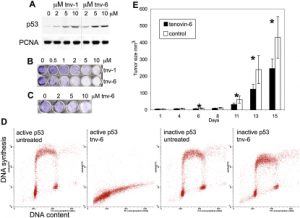
Tenovin-6, which is more toxic to yeast than the less water-soluble tenovin-1, has an IC50 of 30 μM and inhibits the growth of S. cerevisiae cultures. In MCF-7 cells, tenovin-6 significantly raises endogenous K382-Ac p53 levels[1].
Tenovin-6 (0 to 15 μM) dose dependently increases the level of LC3-II in diverse cell types, and the increase is ATG5/7 dependent. Additionally, the use of tenovin-6 prevents SQSTM1/p62 degradation caused by torin 1 and boosts the quantity and intensity of autophagic vesicles both with and without torin 1. The fusion between autophagosomes and lysosomes is unaffected by tenovin-6, but it does affect the acidification of autolysosomes and the hydrolytic activity of lysosomes. Tenovin-6 inhibits autophagy but not p53 activation, and sirtuin 1 inhibition by knockdown or knockout cannot mimic tenovin-6's effect on LC3B accumulation[3]. Tenovin-6 (0, 1, 2.5, 5 or 10 μM) potently inhibits cell proliferation in all OCI-Ly1, DHL-10, U2932, RIVA, HBL1 and OCI-Ly10 cell lines in a dose- and time-dependent manner. Tenovin-6 consistently raises the level of LC3B-II in DLBCL cell lines by inhibiting the traditional autophagy pathway without activating p53, and the rise is unrelated to SIRT1/2/3 and p53. Through the extrinsic cell-death pathway, tenovin-6 causes apoptosis[4]. Tenovin-6 inhibits the growth of UM cells, with IC50 values for 92.1, Mel 270, Omm 1 and Omm 2.3 cells of 12.8 μM, 11.0 μM, 14.58 μM and 9.62 μM, respectively[5]. Antiproliferative activity in uveal melanoma (UM) cells (literature [3]): 1) OCM-1A cells (UM): IC50 = 1.2 μM (MTT assay, 72 h); 2) C918 cells (UM): IC50 = 1.5 μM (same assay); 3) 5 μM Tenovin-6 reduced colony formation by 82% (vs. control) and eliminated cancer stem cells (CSCs, CD133⁺ cells reduced from 18% to 2.1%, flow cytometry). [3] - p53 pathway activation (literature [3]): 1) OCM-1A cells treated with 2 μM Tenovin-6 for 24 h: Western blot showed acetyl-p53 (3.2-fold), p21 (4.5-fold), and Cleaved Caspase-3 (5.8-fold) upregulation; 2) p53 knockdown via siRNA reversed 65% of antiproliferative effect, confirming p53 dependence. [3] - DHODH inhibition (literature [2]): 1) A549 cells treated with 1 μM Tenovin-6 for 48 h: Uridine synthesis reduced by 72% (HPLC detection); 2) Exogenous uridine (100 μM) reversed 80% of cell growth inhibition, confirming pyrimidine synthesis blockade. [2] - Autophagy inhibition (literatures [4][5]): 1) HeLa cells (literature [4]): 2 μM Tenovin-6 for 24 h increased LC3-II (3.8-fold) and p62 (4.2-fold) levels (Western blot), indicating autophagic flux block; 2) DLBCL cells (literature [5]): 3 μM Tenovin-6 reduced autophagosome-lysosome fusion (immunofluorescence: LC3 puncta co-localization with LAMP1 decreased by 68%). [4][5] |
| ln Vivo |
Tenovin-6 (50 mg/kg, i.p.) prevents tumor growth in mice[1].
Uveal melanoma xenograft model (literature [3]): Female BALB/c nude mice (6-8 weeks old) bearing OCM-1A xenografts were randomized into 3 groups (n=6/group): 1) Vehicle (5% DMSO + 95% corn oil, oral gavage, once daily); 2) Tenovin-6 15 mg/kg (oral, once daily); 3) Tenovin-6 30 mg/kg (oral, once daily). After 28 days: 1) Tumor growth inhibition rate (TGI) = 62% (15 mg/kg) and 85% (30 mg/kg); 2) Tumor weight: 0.45 g (15 mg/kg) and 0.22 g (30 mg/kg) vs. 1.38 g (control); 3) Tumor IHC: CD133⁺ CSCs reduced by 78% (30 mg/kg), acetyl-p53 and Cleaved Caspase-3 positive cells increased by 3.5-fold. [3] - DLBCL xenograft model (literature [5]): NOD/SCID mice bearing SU-DHL-4 xenografts were treated with Tenovin-6 20 mg/kg (intraperitoneal injection, once daily) for 21 days: 1) TGI = 72% vs. vehicle control; 2) Tumor autophagy markers (LC3-II, p62) increased by 2.8-fold (Western blot), confirming in vivo autophagy inhibition. [5] |
| Enzyme Assay |
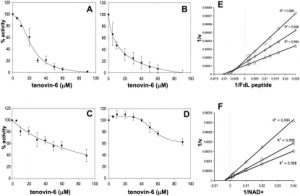
In the Fluor de Lys Fluorescent Assay Systems, assays are conducted using purified components. Utilized are NAD+ at 1 mM and pertinent FdL substrates at 7 μM. The final DMSO concentration in the reaction is less than 0.25%, and tenovins are thuslylubilized in DMSO. In comparison to SirT2 and SirT3, SirT1 and HDAC8 each require one unit of enzyme, while SirT2 and SirT3 require five units. One hour of reactions is conducted at 37°C.
SIRT1/SIRT2 deacetylation assay (literature [3]): 1) Recombinant human SIRT1/SIRT2 (10 nM) was mixed with fluorescent-labeled acetylated histone H3 peptide (50 μM) in reaction buffer (50 mM Tris-HCl, 1 mM NAD⁺, pH 8.0); 2) Tenovin-6 (0.1 μM to 20 μM) was added, incubated at 37°C for 60 min; 3) Reaction was stopped with 10% trichloroacetic acid; fluorescence intensity (excitation 360 nm, emission 460 nm) was measured; 4) IC50 was calculated by fitting inhibition rate to four-parameter logistic model. [3] - DHODH enzyme activity assay (literature [2]): 1) Purified human DHODH (20 nM) was incubated with dihydroorotate (100 μM) and ubiquinone (50 μM) in assay buffer (20 mM Tris-HCl, pH 7.5); 2) Tenovin-6 (0.01 μM to 5 μM) was added; absorbance at 290 nm (dihydroorotate oxidation) was monitored for 30 min at 37°C; 3) Ki was determined via Lineweaver-Burk plot analysis. [2] |
| Cell Assay |
The MTS assay is used to evaluate cell viability.
In 96-well plates, UM cells are seeded into each well (5,000 cells/well), treated the following day with control or Tenovin-6 in increasing concentrations from 0 to 20 μM for 68 h, and then MTS is added at 20 μL/well to be read at a wave length of 490 nm. The IC50 is calculated by curve fitting the sigmoidal dose-response curve.
UM cell proliferation assay (literature [3]): 1) OCM-1A/C918 cells were seeded into 96-well plates at 3×10³ cells/well, cultured overnight; 2) Tenovin-6 (0.1 μM to 10 μM) was added, incubated for 72 h (37°C, 5% CO₂); 3) 10 μL MTT (5 mg/mL) was added, incubated for 4 h; DMSO dissolved formazan; 4) Absorbance at 570 nm was measured; cell viability = (treated/control absorbance) × 100%; IC50 was calculated via GraphPad Prism. [3] - Autophagy flux assay (literature [4]): 1) HeLa cells transfected with GFP-LC3 plasmid were seeded into 24-well plates, treated with Tenovin-6 (2 μM) for 24 h; 2) Cells were fixed with 4% paraformaldehyde, DAPI stained nuclei; 3) GFP-LC3 puncta (autophagosomes) were counted under fluorescence microscope; co-localization with LAMP1 (lysosome marker) was analyzed via ImageJ. [4] - CSC sphere formation assay (literature [3]): 1) OCM-1A cells (1×10³ cells/well) were seeded into ultra-low attachment plates in stem cell medium; 2) Tenovin-6 (1 μM, 3 μM) was added, medium changed every 2 days; 3) After 7 days, spheres >50 μm were counted; sphere formation rate = (treated/control sphere number) × 100%. [3] |
| Animal Protocol |
50 mg/kg
ARN8 melanoma cells were injected into the flank of SCID mice and allowed to develop into tumors. OCM-1A xenograft protocol (literature [3]): 1) Female BALB/c nude mice (6-8 weeks old) were acclimated for 1 week; 2) 5×10⁶ OCM-1A cells (suspended in Matrigel:PBS = 1:1) were subcutaneously injected into right flank; 3) When tumors reached 100-150 mm³, mice were randomized into 3 groups (n=6): Vehicle (5% DMSO + 95% corn oil, oral gavage, 0.2 mL/mouse, once daily); Tenovin-6 15 mg/kg (dissolved in vehicle, oral, once daily); Tenovin-6 30 mg/kg (same vehicle/route); 4) Tumor volume (length × width² / 2) and body weight were measured every 3 days; after 28 days, mice were euthanized, tumors harvested for IHC/Western blot. [3] - SU-DHL-4 xenograft protocol (literature [5]): 1) NOD/SCID mice (6-8 weeks old, male) were acclimated for 1 week; 2) 2×10⁶ SU-DHL-4 cells (suspended in PBS) were subcutaneously injected into right flank; 3) When tumors reached 150 mm³, mice were treated with Tenovin-6 20 mg/kg (dissolved in 5% DMSO + 10% Cremophor EL + 85% saline, intraperitoneal injection, 0.1 mL/mouse, once daily) or vehicle; 4) After 21 days, mice were euthanized, tumors collected for autophagy marker detection. [5] |
| Toxicity/Toxicokinetics |
Subchronic toxicity of xenograft mice (references [3][5]): 1) BALB/c nude mice (reference [3]): Tenovin-6 30 mg/kg (oral, 28 days) resulted in a 7% decrease in body weight (recovered on day 21), and serum ALT/AST/BUN/Cr were within the normal range; 2) NOD/SCID mice (reference [5]): Tenovin-6 20 mg/kg (intraperitoneal injection, 21 days) showed no pathological damage to liver and kidney tissues, and white blood cell count was unchanged compared with the control group. [3][5] - Plasma protein binding rate (reference [2]): The human plasma binding rate of Tenovin-6 was 91.5 ± 2.4% (ultrafiltration method, n=3). [2]
|
| References |
|
| Additional Infomation |
Tenovin-6 is a monocarboxylic acid amide formed by the condensation of the carboxyl group of 5-(dimethylamino)valerate with the aromatic amino group of N-[(4-aminophenyl)aminothioacyl]-4-tert-butylbenzamide. It has antitumor activity and is a Sir2 inhibitor and p53 activator. It is a monocarboxylic acid amide belonging to the thiourea class of compounds and tertiary amine compounds.
The core mechanism of Tenovin-6 (references [2][3][4][5]): 1) SIRT1/SIRT2 inhibition: stabilizes acetylated p53 and activates p21/Bax-mediated apoptosis/cell cycle arrest [3]; 2) DHODH inhibition: blocks de novo pyrimidine synthesis and limits cancer cell proliferation [2]; 3) Autophagy inhibition: blocks autophagosome-lysosome fusion and enhances apoptosis by reducing "autophagy survival" [4][5]. [2][3][4][5] - Treatment advantages (Reference [3]): Tenovin-6 can eliminate uveal melanoma stem cells (CD133⁺ cells), thereby solving the problem of stem cell-mediated relapse; its efficacy is 2-3 times higher than that of Tenovin-1 (IC50 of 1.2 μM and 3.5 μM in OCM-1A cells, respectively). [3] - Clinical significance (Reference [5]): Tenovin-6 is effective against rituximab-resistant diffuse large B-cell lymphoma (DLBCL) cells (IC50 of 3.2 μM in rituximab-resistant SU-DHL-4/R cells), providing a new treatment option for refractory DLBCL. [5] |
| Molecular Formula |
C25H34N4O2S
|
|---|---|
| Molecular Weight |
454.63
|
| Exact Mass |
454.24
|
| CAS # |
1011557-82-6
|
| Related CAS # |
Tenovin-6 Hydrochloride;1011301-29-3
|
| PubChem CID |
24772043
|
| Appearance |
White to off-white solid
|
| Density |
1.2±0.1 g/cm3
|
| Index of Refraction |
1.617
|
| LogP |
3.64
|
| Hydrogen Bond Donor Count |
3
|
| Hydrogen Bond Acceptor Count |
4
|
| Rotatable Bond Count |
9
|
| Heavy Atom Count |
32
|
| Complexity |
616
|
| Defined Atom Stereocenter Count |
0
|
| SMILES |
O=C(NC(NC1=CC=C(NC(CCCCN(C)C)=O)C=C1)=S)C2=CC=C(C(C)(C)C)C=C2
|
| InChi Key |
BVJSXSQRIUSRCO-UHFFFAOYSA-N
|
| InChi Code |
InChI=1S/C25H34N4O2S/c1-25(2,3)19-11-9-18(10-12-19)23(31)28-24(32)27-21-15-13-20(14-16-21)26-22(30)8-6-7-17-29(4)5/h9-16H,6-8,17H2,1-5H3,(H,26,30)(H2,27,28,31,32)
|
| Chemical Name |
4-tert-butyl-N-[[4-[5-(dimethylamino)pentanoylamino]phenyl]carbamothioyl]benzamide
|
| Synonyms |
Tenovin-6; Tenovin6; Tenovin 6
|
| HS Tariff Code |
2934.99.9001
|
| Storage |
Powder -20°C 3 years 4°C 2 years In solvent -80°C 6 months -20°C 1 month |
| Shipping Condition |
Room temperature (This product is stable at ambient temperature for a few days during ordinary shipping and time spent in Customs)
|
| Solubility (In Vitro) |
DMSO: ~98 mg/mL (~215.6 mM)
Water: <1 mg/mL (Insoluble) Ethanol: <1 mg/mL (slightly soluble or insoluble) |
|---|---|
| Solubility (In Vivo) |
Solubility in Formulation 1: ≥ 2.5 mg/mL (5.50 mM) (saturation unknown) in 10% DMSO + 40% PEG300 + 5% Tween80 + 45% Saline (add these co-solvents sequentially from left to right, and one by one), clear solution.
For example, if 1 mL of working solution is to be prepared, you can add 100 μL of 25.0 mg/mL clear DMSO stock solution to 400 μL PEG300 and mix evenly; then add 50 μL Tween-80 to the above solution and mix evenly; then add 450 μL normal saline to adjust the volume to 1 mL. Preparation of saline: Dissolve 0.9 g of sodium chloride in 100 mL ddH₂ O to obtain a clear solution. Solubility in Formulation 2: ≥ 2.5 mg/mL (5.50 mM) (saturation unknown) in 10% DMSO + 90% (20% SBE-β-CD in Saline) (add these co-solvents sequentially from left to right, and one by one), clear solution. For example, if 1 mL of working solution is to be prepared, you can add 100 μL of 25.0 mg/mL clear DMSO stock solution to 900 μL of 20% SBE-β-CD physiological saline solution and mix evenly. Preparation of 20% SBE-β-CD in Saline (4°C,1 week): Dissolve 2 g SBE-β-CD in 10 mL saline to obtain a clear solution. (Please use freshly prepared in vivo formulations for optimal results.) |
| Preparing Stock Solutions | 1 mg | 5 mg | 10 mg | |
| 1 mM | 2.1996 mL | 10.9980 mL | 21.9959 mL | |
| 5 mM | 0.4399 mL | 2.1996 mL | 4.3992 mL | |
| 10 mM | 0.2200 mL | 1.0998 mL | 2.1996 mL |
*Note: Please select an appropriate solvent for the preparation of stock solution based on your experiment needs. For most products, DMSO can be used for preparing stock solutions (e.g. 5 mM, 10 mM, or 20 mM concentration); some products with high aqueous solubility may be dissolved in water directly. Solubility information is available at the above Solubility Data section. Once the stock solution is prepared, aliquot it to routine usage volumes and store at -20°C or -80°C. Avoid repeated freeze and thaw cycles.
Calculation results
Working concentration: mg/mL;
Method for preparing DMSO stock solution: mg drug pre-dissolved in μL DMSO (stock solution concentration mg/mL). Please contact us first if the concentration exceeds the DMSO solubility of the batch of drug.
Method for preparing in vivo formulation::Take μL DMSO stock solution, next add μL PEG300, mix and clarify, next addμL Tween 80, mix and clarify, next add μL ddH2O,mix and clarify.
(1) Please be sure that the solution is clear before the addition of next solvent. Dissolution methods like vortex, ultrasound or warming and heat may be used to aid dissolving.
(2) Be sure to add the solvent(s) in order.
 |
|---|
 |
Products are for research use only; We do not sell to patients
Copyright 2020 InvivoChem LLC | All Rights Reserved


 COA
COA