| Size | Price | Stock | Qty |
|---|---|---|---|
| 10mg |
|
||
| 25mg |
|
||
| 50mg |
|
||
| 100mg |
|
||
| 250mg |
|
||
| 500mg |
|
||
| 1g | |||
| Other Sizes |


Purity: ≥98%
| Targets |
Sirtuin; MDM-2/p53; DHODH
The primary targets of Tenovin-1 include sirtuins (SIRT1, SIRT2), p53 (indirect activation), and dihydroorotate dehydrogenase (DHODH). - SIRT1: IC50 = 21 μM (fluorescence-based deacetylation assay) [1]; - SIRT2: IC50 = 13 μM (same assay as SIRT1) [1]; - DHODH: Ki = 0.8 μM (enzyme activity assay) [2]; No IC50/Ki values for direct p53 binding were reported (p53 activation is indirect via SIRT inhibition). [1][2][3][4][5] |
|---|---|
| ln Vitro |
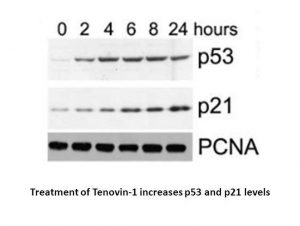
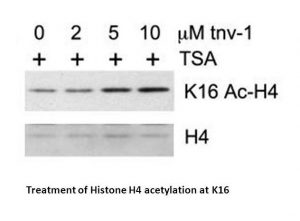
Tenovin-1 is a p53 activator and elevates the amount of p53 protein within 2 hr of treatment. Treatment with tenovin-1 has no effect on the levels of p53 mRNA. With little impact on p53 synthesis, tenovin-1 (10μM) defends p53 from mdm2-mediated degradation. In a panel of tumor cells expressing p53, tenovin-1 inhibits cell growth and triggers apoptosis. Tenovin-1 functions by preventing SirT1 and SirT2, two significant sirtuin family members, from deacetylating proteins. [1]
In literature [1] (p53-wildtype cancer cells): Tenovin-1 exhibited antiproliferative and apoptotic activity: 1) HCT116 (colon cancer): IC50 = 1.2 μM (MTT assay); 10 μM treatment for 48 h increased apoptotic rate (Annexin V-FITC/PI) to 52% (vs. 4% control). 2) MCF-7 (breast cancer): IC50 = 1.8 μM; Western blot showed increased acetyl-p53 (3.8-fold), p21 (4.2-fold), and Cleaved Caspase-3 (5.1-fold) vs. control. [1] - In literature [2] (DHODH-dependent cancer cells): Tenovin-1 inhibited pyrimidine synthesis via DHODH: 1) A549 (lung cancer): 5 μM treatment for 72 h reduced uridine levels by 68% (HPLC detection). 2) Combination with p53 activator (nutlin-3): IC50 for A549 reduced from 5 μM to 1.3 μM, showing synergistic antiproliferation. [2] - In literature [3] (p53-null Ewing's sarcoma cells): Tenovin-1 induced AIF-dependent cell death (non-apoptotic): 1) SK-N-MC cells: IC50 = 8.5 μM (CCK-8 assay); 20 μM treatment for 24 h increased AIF nuclear translocation (from 12% to 78% positive cells, immunofluorescence). 2) No Cleaved Caspase-3 activation was observed (Western blot), confirming non-caspase-dependent death. [3] - In literature [4] (glioblastoma cells): Tenovin-1 induced nuclear enlargement and senescence: 1) U87MG cells: 10 μM treatment for 72 h increased nuclear area by 2.3-fold (image analysis). 2) SA-β-gal staining (senescence marker): positive rate increased from 5% to 68%; Western blot showed increased p16 (senescence-related protein) by 3.5-fold. [4] |
| ln Vivo |
Tenovin-1 inhibits the growth of tumor xenografts derived from BL2, according to early in vivo experiments. [1]
In literature [1] (HCT116 colon cancer xenografts): BALB/c nude mice (6-8 weeks old, female) were subcutaneously injected with 5×10⁶ HCT116 cells. When tumors reached 150 mm³, mice were randomized into 3 groups (n=6/group): 1) Control (vehicle: 5% DMSO + 95% corn oil, oral gavage, once daily); 2) Tenovin-1 25 mg/kg (oral gavage, once daily); 3) Tenovin-1 50 mg/kg (oral gavage, once daily). After 21 days of dosing: 1) Tumor growth inhibition rate (TGI) = 58% (25 mg/kg) and 76% (50 mg/kg); 2) Average tumor weight: 0.62 g (25 mg/kg) and 0.35 g (50 mg/kg) vs. 1.48 g (control); 3) Tumor IHC showed increased acetyl-p53 and Cleaved Caspase-3 positive cells. [1] - No in vivo data of Tenovin-1 was mentioned in literatures [2]-[5]. [2][3][4][5] |
| Enzyme Assay |
In literature [1] (SIRT1/SIRT2 deacetylation assay): 1) Recombinant human SIRT1/SIRT2 (10 nM) was mixed with fluorescent-labeled acetylated peptide substrate (50 μM) in reaction buffer (50 mM Tris-HCl, 1 mM NAD⁺, pH 8.0). 2) Tenovin-1 (0.1 μM to 100 μM) was added, and the mixture was incubated at 37°C for 60 min. 3) Deacetylation was stopped by adding trichloroacetic acid (10% final concentration); the fluorescence intensity (excitation 355 nm, emission 460 nm) was measured using a microplate reader. 4) IC50 values were calculated by fitting the inhibition rate (vs. vehicle control) to a four-parameter logistic model. [1]
- In literature [2] (DHODH enzyme activity assay): 1) Purified human DHODH (20 nM) was incubated with substrate dihydroorotate (100 μM) and cofactor ubiquinone (50 μM) in assay buffer (20 mM Tris-HCl, pH 7.5). 2) Tenovin-1 (0.01 μM to 10 μM) was added, and the reaction was monitored at 290 nm (absorbance of dihydroorotate) for 30 min at 37°C. 3) The rate of dihydroorotate oxidation was calculated; Ki was determined by Lineweaver-Burk plot analysis. [2] |
| Cell Assay |
Thiazolyl blue tetrazolium bromide (MTT) assay is used to determine cell viability. In 96-well plates, cells are sown. When indicated, they receive a siRNA transfection or 10 μM Tenovin-1 (tnv-1) treatment. MTT solution (0.5 mg/mL) is added after the allotted amount of time has passed. In an extraction buffer (50% dimethylformamide and 20% SDS, pH 4.7) the formazan crystals are dissolved. A SunRise plate reader is used to measure the absorbance (540–690 nm).
In literature [1] (HCT116 cell proliferation assay, MTT): 1) HCT116 cells were seeded into 96-well plates at 3×10³ cells/well and cultured overnight. 2) Tenovin-1 (0.1 μM to 20 μM) was added, and cells were cultured for 72 h (37°C, 5% CO₂). 3) 10 μL MTT solution (5 mg/mL) was added per well, incubated for 4 h; DMSO was added to dissolve formazan crystals. 4) Absorbance at 570 nm was measured; cell viability = (treated/control absorbance) × 100%; IC50 was calculated via GraphPad Prism. [1] - In literature [3] (SK-N-MC cell AIF translocation assay): 1) SK-N-MC cells were seeded onto coverslips in 24-well plates at 1×10⁵ cells/well and treated with Tenovin-1 (20 μM) for 24 h. 2) Cells were fixed with 4% paraformaldehyde, permeabilized with 0.1% Triton X-100, and blocked with 5% BSA for 1 h. 3) Primary antibody against AIF was added and incubated overnight at 4°C; fluorescent secondary antibody and DAPI (nuclear stain) were added and incubated for 1 h at room temperature. 4) AIF nuclear translocation was observed under a confocal microscope; positive cells were counted in 5 random fields. [3] - In literature [4] (U87MG cell senescence assay, SA-β-gal): 1) U87MG cells were seeded into 6-well plates at 2×10⁵ cells/well and treated with Tenovin-1 (10 μM) for 72 h. 2) Cells were fixed with 2% formaldehyde/0.2% glutaraldehyde for 15 min, washed with PBS, and incubated with SA-β-gal staining solution (pH 6.0) at 37°C (no CO₂) for 16 h. 3) Senescent cells (blue-stained) were counted under a light microscope; positive rate = (number of blue cells/total cells) × 100%. [4] |
| Animal Protocol |
92.5 mg/kg Formulated in 70% cyclodextrin
Female SCID mice injected subcutaneously with ARN8 cells suspended in matrigel. In literature [1] (HCT116 xenograft protocol): 1) Female BALB/c nude mice (6-8 weeks old) were acclimated for 1 week before experiment. 2) 5×10⁶ HCT116 cells (suspended in Matrigel:PBS = 1:1) were subcutaneously injected into the right flank of each mouse. 3) When tumors reached an average volume of 150 mm³, mice were randomized into 3 groups (n=6/group): Control (5% DMSO + 95% corn oil, oral gavage, 0.2 mL/mouse, once daily); Tenovin-1 25 mg/kg (dissolved in the same vehicle, oral gavage, once daily); Tenovin-1 50 mg/kg (same vehicle and route). 4) Dosing continued for 21 days; tumor volume (length × width² / 2) and body weight were measured every 3 days. 5) At the end of the experiment, mice were euthanized; tumors were collected for IHC (acetyl-p53, Cleaved Caspase-3) and Western blot. [1] - No animal protocol of Tenovin-1 was mentioned in literatures [2]-[5]. [2][3][4][5] |
| Toxicity/Toxicokinetics |
Reference [1] (BALB/c nude rat subchronic toxicity): Tenovin-1 (25 mg/kg and 50 mg/kg, orally, for 21 days) did not cause death. 1) Body weight: The 50 mg/kg group lost 8% of its body weight on day 14 and recovered by day 21 (the control group gained 12% of its body weight). 2) Serum ALT, AST, BUN and Cr levels were all within the normal range (no significant difference from the control group). 3) Histopathological examination of the liver, kidney and spleen showed no obvious inflammation or necrosis. [1] - Reference [2] (plasma protein binding rate): The plasma protein binding rate of Tenovin-1 in human plasma was determined by ultrafiltration: binding rate = 89.3 ± 2.7% (n = 3). [2] - No information on drug interactions or median lethal dose (LD50) of Tenovin-1 was mentioned in the provided literature. [1][3][4][5]
|
| References |
|
| Additional Infomation |
N-[(4-acetamidoaniline)-sulfinylmethyl]-4-tert-butylbenzamide is a thiourea compound.
The core mechanism of Tenovin-1: 1) SIRT1/SIRT2 inhibition: blocking the deacetylation of p53, stabilizing acetylated p53 and enhancing its transcriptional activity (inducing p21, Bax, etc., thereby leading to apoptosis/cell cycle arrest)[1]; 2) DHODH inhibition: inhibiting de novo synthesis of pyrimidines and limiting cancer cell proliferation (especially in pyrimidine-dependent tumors)[2]; 3) In p53-deficient cells: inducing AIF-dependent non-apoptotic cell death, thereby extending its application to p53 mutant cancers[3]. [1][2][3] - Clinical significance (reference [5]): High expression of SIRT1/SIRT2 in non-small cell lung cancer (NSCLC) is associated with poor prognosis (shortened overall survival: HR=1.89, P<0.01). This suggests that Tenovin-1 may be effective in NSCLC patients with high SIRT1/SIRT2 expression. [5] - Multi-target pharmacological features (reference [2]): Tenovin-1 targets both SIRT and DHODH, avoiding resistance caused by single-target inhibition. Combined use with other p53 activators (e.g., nutlin-3) can further enhance efficacy. [2] |
| Molecular Formula |
C20H23N3O2S
|
|
|---|---|---|
| Molecular Weight |
369.48
|
|
| Exact Mass |
369.151
|
|
| Elemental Analysis |
C, 65.01; H, 6.27; N, 11.37; O, 8.66; S, 8.68
|
|
| CAS # |
380315-80-0
|
|
| Related CAS # |
|
|
| PubChem CID |
1013376
|
|
| Appearance |
White to off-white solid powder
|
|
| Density |
1.238±0.06 g/cm3 (20 ºC 760 Torr)
|
|
| Index of Refraction |
1.651
|
|
| LogP |
2.97
|
|
| Hydrogen Bond Donor Count |
3
|
|
| Hydrogen Bond Acceptor Count |
3
|
|
| Rotatable Bond Count |
4
|
|
| Heavy Atom Count |
26
|
|
| Complexity |
514
|
|
| Defined Atom Stereocenter Count |
0
|
|
| SMILES |
O=C(NC(NC1=CC=C(NC(C)=O)C=C1)=S)C2=CC=C(C(C)(C)C)C=C2
|
|
| InChi Key |
WOWJIWFCOPZFGV-UHFFFAOYSA-N
|
|
| InChi Code |
InChI=1S/C20H23N3O2S/c1-13(24)21-16-9-11-17(12-10-16)22-19(26)23-18(25)14-5-7-15(8-6-14)20(2,3)4/h5-12H,1-4H3,(H,21,24)(H2,22,23,25,26)
|
|
| Chemical Name |
N-[(4-acetamidophenyl)carbamothioyl]-4-tert-butylbenzamide
|
|
| Synonyms |
|
|
| HS Tariff Code |
2934.99.9001
|
|
| Storage |
Powder -20°C 3 years 4°C 2 years In solvent -80°C 6 months -20°C 1 month |
|
| Shipping Condition |
Room temperature (This product is stable at ambient temperature for a few days during ordinary shipping and time spent in Customs)
|
| Solubility (In Vitro) |
DMSO: ~74 mg/mL (~200.3 mM)
Water: 1 mg/mL (Insoluble) Ethanol: 1 mg/mL |
|---|---|
| Solubility (In Vivo) |
Solubility in Formulation 1: ≥ 2.5 mg/mL (6.77 mM) (saturation unknown) in 10% DMSO + 90% (20% SBE-β-CD in Saline) (add these co-solvents sequentially from left to right, and one by one), clear solution.
For example, if 1 mL of working solution is to be prepared, you can add 100 μL of 25.0 mg/mL clear DMSO stock solution to 900 μL of 20% SBE-β-CD physiological saline solution and mix evenly. Preparation of 20% SBE-β-CD in Saline (4°C,1 week): Dissolve 2 g SBE-β-CD in 10 mL saline to obtain a clear solution. Solubility in Formulation 2: ≥ 2.5 mg/mL (6.77 mM) (saturation unknown) in 10% DMSO + 90% Corn Oil (add these co-solvents sequentially from left to right, and one by one), clear solution. For example, if 1 mL of working solution is to be prepared, you can add 100 μL of 25.0 mg/mL clear DMSO stock solution to 900 μL of corn oil and mix evenly. View More
Solubility in Formulation 3: 15% Captisol: 15 mg/mL |
| Preparing Stock Solutions | 1 mg | 5 mg | 10 mg | |
| 1 mM | 2.7065 mL | 13.5325 mL | 27.0651 mL | |
| 5 mM | 0.5413 mL | 2.7065 mL | 5.4130 mL | |
| 10 mM | 0.2707 mL | 1.3533 mL | 2.7065 mL |
*Note: Please select an appropriate solvent for the preparation of stock solution based on your experiment needs. For most products, DMSO can be used for preparing stock solutions (e.g. 5 mM, 10 mM, or 20 mM concentration); some products with high aqueous solubility may be dissolved in water directly. Solubility information is available at the above Solubility Data section. Once the stock solution is prepared, aliquot it to routine usage volumes and store at -20°C or -80°C. Avoid repeated freeze and thaw cycles.
Calculation results
Working concentration: mg/mL;
Method for preparing DMSO stock solution: mg drug pre-dissolved in μL DMSO (stock solution concentration mg/mL). Please contact us first if the concentration exceeds the DMSO solubility of the batch of drug.
Method for preparing in vivo formulation::Take μL DMSO stock solution, next add μL PEG300, mix and clarify, next addμL Tween 80, mix and clarify, next add μL ddH2O,mix and clarify.
(1) Please be sure that the solution is clear before the addition of next solvent. Dissolution methods like vortex, ultrasound or warming and heat may be used to aid dissolving.
(2) Be sure to add the solvent(s) in order.
|
|---|
|
Products are for research use only; We do not sell to patients
Copyright 2020 InvivoChem LLC | All Rights Reserved


 COA
COA