| Size | Price | Stock | Qty |
|---|---|---|---|
| 10mg |
|
||
| 25mg |
|
||
| 50mg |
|
||
| 100mg |
|
||
| 250mg |
|
||
| 500mg |
|
||
| Other Sizes |


Purity: ≥98%
| Targets |
IC50: 670 nM (Rev-ErbBα); 800 nM (Rev-ErbBβ)[1]
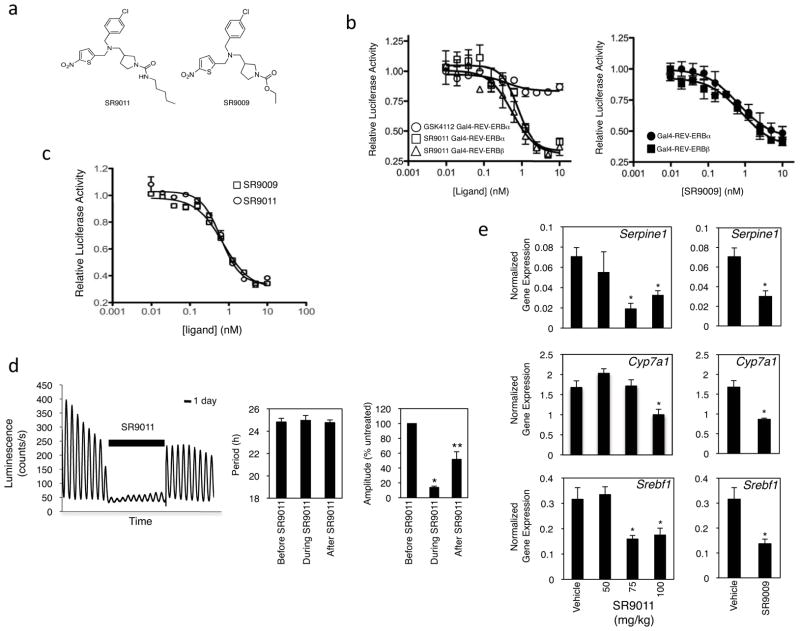
In a dose-dependent manner, SR9009 promotes the production of the Gal4-responsive luciferase reporter gene and the chimeric Gal4 DNA binding domain (DBD)-REV-ERB ligand binding domain (LBD) α or β (SR9009: REV-ERBα IC50=670 nM, REV-ERBβ IC50=800 nM). In co-transfection tests with full-length REV-ERBα and a luciferase reporter powered by the Bmal1 promoter, SR9009 potently suppresses transcription (IC50=710 nM). In HepG2 cells, SR9009 inhibits BMAL1 mRNA expression in a way that is dependent on REV-ERBα/β. Circular dichroism analysis (Kd=800 nM) was also used to confirm direct binding of SR9009 to REV-ERBα [1]. |
|---|---|
| ln Vitro |
In a dose-dependent manner, SR9009 promotes the production of the Gal4-responsive luciferase reporter gene and the chimeric Gal4 DNA binding domain (DBD)-REV-ERB ligand binding domain (LBD) α or β (SR9009: REV-ERBα IC50=670 nM, REV-ERBβ IC50=800 nM). In co-transfection tests with full-length REV-ERBα and a luciferase reporter powered by the Bmal1 promoter, SR9009 potently suppresses transcription (IC50=710 nM). In HepG2 cells, SR9009 inhibits BMAL1 mRNA expression in a way that is dependent on REV-ERBα/β. Circular dichroism analysis (Kd=800 nM) was also used to confirm direct binding of SR9009 to REV-ERBα [1].
SR9009 dose-dependently increased REV-ERB-dependent repressor activity in HEK293 cells expressing a chimeric Gal4 DNA binding domain fused to the REV-ERB ligand binding domain (α or β) and a Gal4-responsive luciferase reporter (REV-ERBα IC50=670 nM; REV-ERBβ IC50=800 nM). In a cotransfection assay using full-length REV-ERBα and a luciferase reporter driven by the Bmal1 promoter, SR9009 potently suppressed transcription (IC50=710 nM). SR9009 suppressed the expression of BMAL1 mRNA in HepG2 cells in a REV-ERBα/β-dependent manner. Consistent with functioning as a direct agonist, SR9009 increased the recruitment of the CoRNR box peptide fragment of the corepressor NCoR to REV-ERBα in a biochemical assay. Direct binding of SR9009 to REV-ERBα was confirmed using circular dichroism analysis with a dissociation constant (Kd) of 800 nM. SR9009 exhibited no activity at a panel of other nuclear receptors. [1] |
| ln Vivo |
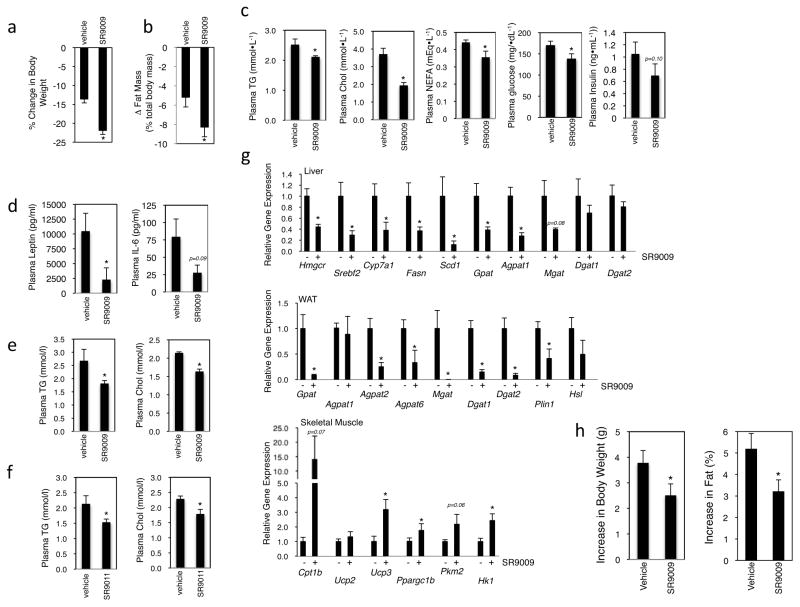
Mice given SR9009 (100 mg/kg, ip) had a more marked decrease in body weight. In addition, plasma glucose (19%) and non-esterified fatty acids (NEFA) were decreased by 23% in rats treated with SR9009. Triglyceride (TG) synthesis-related genes were shown to express less in white adipose tissue (WAT) after treatment with SR9009; this effect was also noted in lean mice [1].
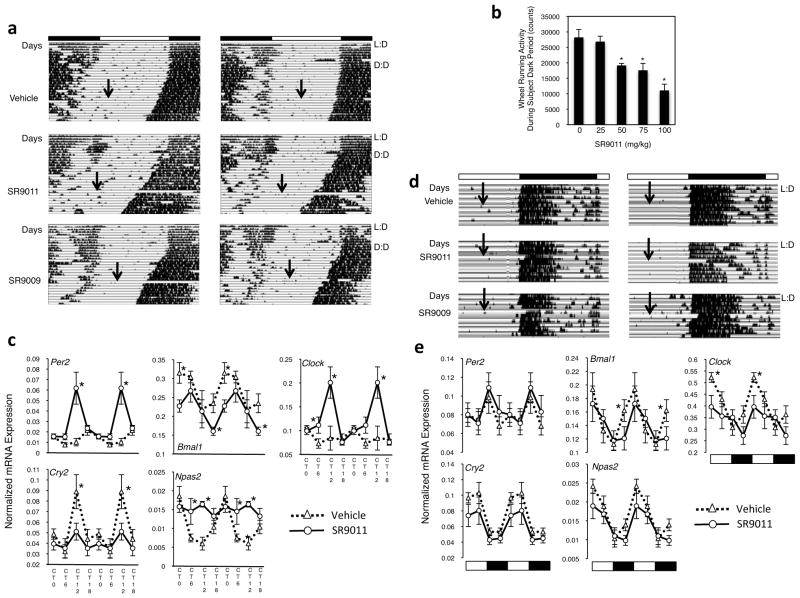
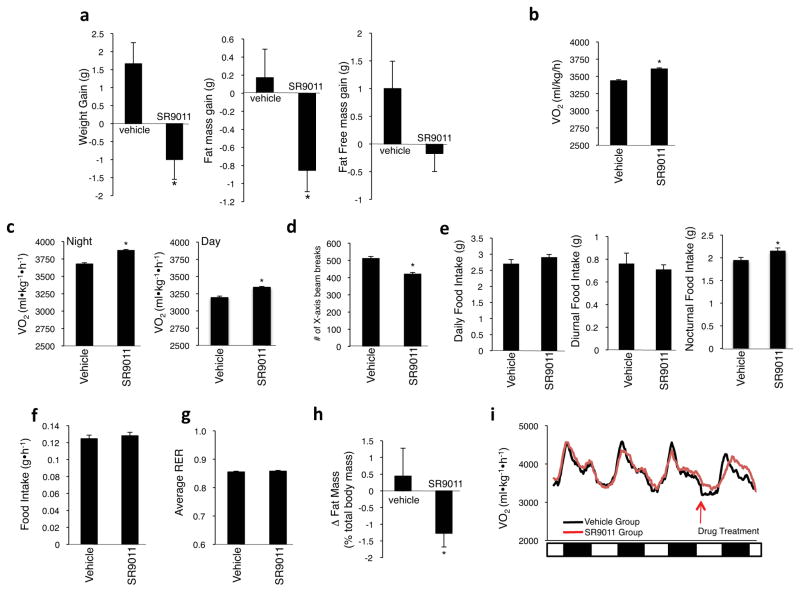
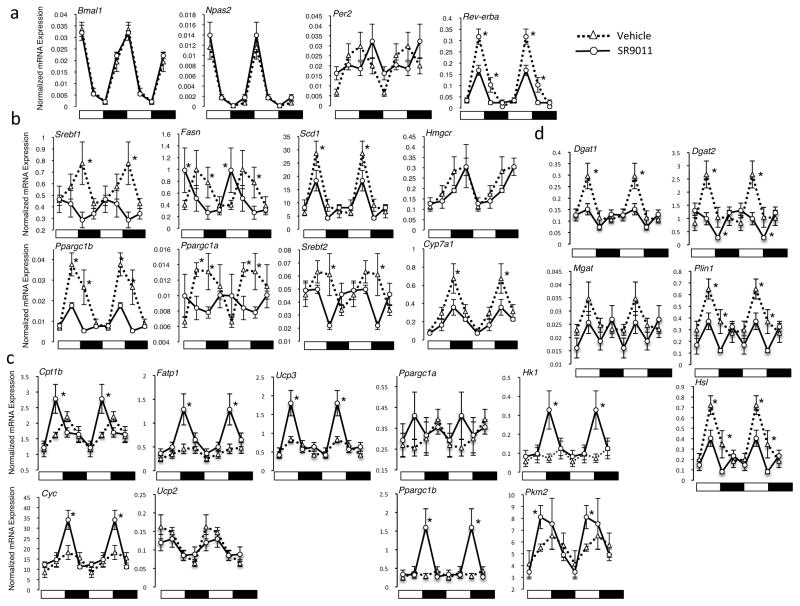
A single intraperitoneal injection of SR9009 (100 mg/kg) at circadian time (CT) 6 in mice maintained under constant dark (D:D) conditions resulted in a complete loss of locomotor activity during the subsequent subjective dark phase. Normal activity returned the next circadian cycle. In mice maintained under a standard 12-hour light/12-hour dark (L:D) cycle, a single injection of SR9009 (100 mg/kg) caused a 1-3 hour delay in the onset of nocturnal locomotor activity. A single injection of SR9009 (100 mg/kg) at CT0 under D:D conditions altered the circadian pattern of core clock gene expression in the mouse hypothalamus, with effects similar to its analog SR9011 (e.g., enhanced Per2 amplitude, suppressed Cry2, eliminated Npas2 rhythm, phase-shifted Bmal1). Chronic treatment of Balb/c or C57BL/6 mice with SR9009 (100 mg/kg, i.p., twice daily) for 10-12 days resulted in weight loss primarily due to decreased fat mass, without affecting food intake. In diet-induced obese (DIO) C57BL/6 mice, treatment with SR9009 (100 mg/kg, i.p., twice daily at CT0 and CT12) for 30 days caused significant weight loss (60% greater than vehicle-treated controls) and reduced adiposity. SR9009 treatment in DIO mice also improved metabolic parameters: it decreased fasting plasma triglycerides (by 12%), total cholesterol (by 47%), non-esterified fatty acids (by 23%), glucose (by 19%), and showed a trend toward decreased insulin (by 35%). Plasma levels of leptin and the proinflammatory cytokine IL-6 were also markedly reduced (by 80% and 72%, respectively). In lean C57BL/6 mice, treatment with SR9009 (100 mg/kg, i.p., twice daily) for 10 days reduced fasting plasma triglycerides and total cholesterol. In ob/ob (leptin-deficient) mice, treatment with SR9009 (100 mg/kg, i.p., twice daily) for 12 days suppressed the degree of weight gain normally observed. A single dose of SR9009 altered the circadian expression pattern of metabolic genes in peripheral tissues: in the liver, it suppressed Srebfl, Scd1, Srebf2, Cyp7a1, Ppargc1a, and Ppargc1b; in skeletal muscle, it elevated Cpt1b, Fatp1, Ppargc1b, Ucp3, Hk1, and Pkm2; in white adipose tissue (WAT), it suppressed Dgat1, Dgat2, Mgat, Plin1, and Hsl. [1] |
| Enzyme Assay |
In this study, researchers developed two REV-ERBα/β agonists with sufficient plasma/brain exposure to allow evaluation of their effects in vivo. Both SR9009 and SR9009 (Fig. 1a, Supplementary Fig. 1) dose-dependently increased the REV-ERB-dependent repressor activity assessed in HEK293 cells expressing a chimeric Gal4 DNA Binding Domain (DBD) - REV-ERB ligand binding domain (LBD) α or β and a Gal4-responsive luciferase reporter (Fig. 1b) (SR9009: REV-ERBα IC50=670 nM, REV-ERBβ IC50=800 nM; SR9011: REV-ERBα IC50=790 nM, REV-ERBβ IC50=560 nM). The REV-ERB ligand GSK4112 (Supplementary Fig. 2), which exhibits no plasma exposure displays limited activity (Fig. 1b). Both SR9011 and SR9009 potently and efficaciously suppressed transcription in a cotransfection assay using full-length REV-ERBα along with a luciferase reporter driven by the Bmal1 promoter (Fig. 1c) (SR9009 IC50=710 nM; SR9011 IC50=620 nM). SR9011 and SR9009 suppressed the expression of BMAL1 mRNA in HepG2 cells in a REV-ERBα/β-dependent manner (Supplementary Fig. 3). Consistent with both compounds functioning as direct agonists of REV-ERB, we noted that the compounds increased the recruitment of the CoRNR box peptide fragment of NCoR using a biochemical assay (Supplementary Fig. 4). Direct binding of the SR9009 to REV-ERBα was also confirmed using circular dichrosim analysis (Supplementary Fig. 5) (Kd=800 nM). Neither compound exhibited activity at other nuclear receptors12,13 (Supplementary Fig. 6)[1].
A biochemical assay was used to assess corepressor peptide recruitment. The interaction between the REV-ERBα ligand binding domain and a fluorescein-labeled CoRNR box peptide fragment derived from the nuclear receptor corepressor (NCoR) was measured in the presence or absence of SR9009. The compound increased the recruitment of the peptide, indicating agonist-induced stabilization of the receptor-corepressor interaction. [1] Circular dichroism (CD) spectroscopy was employed to confirm direct binding. Titration of SR9009 into a solution containing the purified REV-ERBα ligand binding domain resulted in concentration-dependent changes in the CD spectrum, allowing calculation of a binding dissociation constant (Kd). [1] |
| Cell Assay |
HEK293 cells are grown in 96-well plates (1×10⁶/well) and are transiently transfected using Lipofectamine. Cells are transfected with a total of 200 ng of DNA per well consisting of the pGL4 mIL-17 firefly luciferase reporter construct, the pGL4 mIL-17 + CNS-5 firefly luciferase reporter construct, or the pGL4 mIL-17 2kB RORE mutant (100 ng/well) , an actin promoter Renilla reniformis luciferase reporter (50 ng/well), and either control vector alone or the test DNA (full-length RORα or full-length RORγ at 50 ng/well). All 48 human nuclear receptors are represented in the specificity assay and SR9009 is tested at a concentration of 20 μM. The format of the assay is a cotransfection assay with Gal4 DNA binding domain-nuclear receptor fusions in HEK293 cells[1].
For the Gal4-REV-ERB reporter assay, HEK293 cells were transfected with two plasmids: one expressing a fusion protein of the yeast Gal4 DNA-binding domain and the human REV-ERBα or REV-ERBβ ligand-binding domain, and another containing a luciferase reporter gene driven by a promoter with multiple Gal4 binding sites (UAS). After transfection, cells were treated with various concentrations of SR9009. Luciferase activity was measured, and the compound's ability to enhance the repressive activity of the Gal4-REV-ERB fusion protein (resulting in decreased luciferase signal) was quantified to determine potency (IC50). [1] For the full-length REV-ERB reporter assay, HEK293 cells were transfected with a plasmid expressing full-length human REV-ERBα, along with a luciferase reporter plasmid whose expression is driven by the mouse Bmal1 promoter (a natural REV-ERB target). Cells were treated with SR9009, and the subsequent suppression of luciferase activity, representing REV-ERB-mediated repression of the Bmal1 promoter, was measured. [1] For gene expression analysis in HepG2 cells, cells were treated with SR9009. RNA was then extracted and the mRNA levels of target genes (e.g., BMAL1) were quantified using real-time quantitative PCR (QPCR). To confirm REV-ERB dependency, parallel experiments were performed in cells where REV-ERBα and/or REV-ERBβ expression was reduced using siRNA. [1] |
| Animal Protocol |
For circadian gene expression experiments male C57BL6 mice (8–10 weeks of age) were either maintained on a L:D (12h:12h) cycle or on constant darkness. At circadian time (CT) 0 animals were administered a single dose of 100 mg/kg SR9009 or SR9011 (i.p.) and groups of animals (n=6) were sacrificed at CT0, CT6, CT12 and CT18. Gene expression was determined by real time QPCR.[1]
For circadian behavior and gene expression studies under constant darkness (D:D), male C57BL/6 mice (8-10 weeks old) were first entrained to a 12h:12h light:dark (L:D) cycle for at least one week, then released into constant darkness. After 12 days in D:D, mice received a single intraperitoneal (i.p.) injection of SR9009 (typically 100 mg/kg) or vehicle at a specific circadian time (CT, e.g., CT6 or CT0). Locomotor activity was monitored using running wheels. For gene expression analysis, groups of mice were sacrificed at different CT time points after injection, and tissues (hypothalamus, liver, muscle, adipose) were collected for QPCR. [1] For studies under a standard L:D cycle, mice were maintained on a 12h:12h L:D schedule. They received a single i.p. injection of SR9009 (100 mg/kg), and locomotor activity or tissue collection followed similarly. [1] For chronic metabolic studies (e.g., weight loss, CLAMS analysis), mice (Balb/c or C57BL/6) were administered SR9009 intraperitoneally at a dose of 100 mg/kg, twice daily (b.i.d.), typically at CT0 and CT12, for periods ranging from 10 to 30 days. Body weight and composition were monitored. [1] For the diet-induced obesity (DIO) study, 20-week-old C57BL/6 mice that had been on a high-fat diet (60% fat) for 14 weeks were treated with SR9009 (100 mg/kg, i.p., b.i.d. at CT0 and CT12) or vehicle for 30 days while continuing the high-fat diet. Body weight, fat mass, and plasma parameters were assessed. [1] For the ob/ob mouse study, leptin-deficient mice were treated with SR9009 (100 mg/kg, i.p., b.i.d.) for 12 days, and body weight was monitored. [1] |
| ADME/Pharmacokinetics |
The compounds SR9009 and SR9011 were developed to provide adequate plasma and brain tissue exposures for in vivo evaluation, unlike the previous tool compound (GSK4112), which did not provide plasma exposure. [1] As described in the text, both SR9009 and SR9011 showed “reasonable plasma exposures” in mice. However, specific quantitative pharmacokinetic parameters (e.g., half-life, Cmax, AUC, oral bioavailability) for SR9009 were not provided in the text. [1]
|
| Toxicity/Toxicokinetics |
In mice, a single injection of SR9009 resulted in complete loss of motor activity under continuous darkness, not due to systemic toxicity or weakness, as the mice continued to move in the open field test without showing any decrease in strength. [1]
Complete blood counts of the treated mice showed no significant toxicity. [1] |
| References | |
| Additional Infomation |
SR-9009 is a REV-ERB agonist. SR-9011 has been shown to specifically kill cancer cells and oncogene-induced senescent cells (including melanocytic nevi) without affecting the viability of normal cells or tissues. Synchronizing behavioral and metabolic processes is crucial for cardiovascular health and the prevention of metabolic diseases. Nuclear receptors REV-ERB-α and REV-ERB-β play an indispensable role in regulating the expression of core clock proteins that drive activity and metabolic rhythms. This article describes the identification of a potent synthetic REV-ERB agonist with in vivo activity. Administration of synthetic REV-ERB ligands altered the diurnal rhythmic behavior and diurnal rhythmic patterns of core clock gene expression in mice. The diurnal rhythmic expression patterns of a range of metabolic genes in the liver, skeletal muscle, and adipose tissue were also altered, leading to increased energy expenditure. Treatment of diet-induced obese mice with REV-ERB agonists reduced obesity by decreasing fat mass and significantly improving dyslipidemia and hyperglycemia. These results suggest that pharmacologically targeted synthetic REV-ERB ligands may be beneficial for the treatment of sleep disorders and metabolic diseases. [1] SR9009 is a synthetic small molecule nuclear receptor agonist that activates REV-ERBα and REV-ERBβ. REV-ERB is a transcription factor that plays an important role in regulating the expression of core circadian clock proteins and is also involved in metabolic regulation. [1] The physiological ligand of REV-ERB is heme. SR9009 is a synthetic ligand designed to pharmacologically regulate REV-ERB activity. [1] SR9009 alters the circadian rhythm behavior (sleep/wake cycle) and the circadian rhythm expression patterns of genes involved in metabolism in various tissues (liver, muscle, adipose tissue) by targeting the biological clock mechanism. [1]
The metabolic effects of SR9009 include increased energy expenditure, promotion of fatty acid and glucose oxidation in skeletal muscle, inhibition of lipogenesis and cholesterol synthesis in the liver, and inhibition of triglyceride synthesis and storage in white adipose tissue. [1] These combined effects reduced fat content, weight loss, and improved dyslipidemia and hyperglycemia in an obese mouse model. [1] This study suggests that synthetic REV-ERB agonists like SR9009 may have the potential to treat sleep disorders (by resetting circadian rhythms) and metabolic diseases such as obesity and dyslipidemia. [1] |
| Molecular Formula |
C20H24CLN3O4S
|
|
|---|---|---|
| Molecular Weight |
437.94
|
|
| Exact Mass |
437.118
|
|
| CAS # |
1379686-30-2
|
|
| Related CAS # |
|
|
| PubChem CID |
57394020
|
|
| Appearance |
White to off-white solid powder
|
|
| Density |
1.3±0.1 g/cm3
|
|
| Boiling Point |
547.2±45.0 °C at 760 mmHg
|
|
| Flash Point |
284.7±28.7 °C
|
|
| Vapour Pressure |
0.0±1.5 mmHg at 25°C
|
|
| Index of Refraction |
1.608
|
|
| LogP |
4.17
|
|
| Hydrogen Bond Donor Count |
0
|
|
| Hydrogen Bond Acceptor Count |
6
|
|
| Rotatable Bond Count |
8
|
|
| Heavy Atom Count |
29
|
|
| Complexity |
556
|
|
| Defined Atom Stereocenter Count |
0
|
|
| SMILES |
O=C(N1CC(CN(CC2=CC=C(Cl)C=C2)CC3=CC=C([N+]([O-])=O)S3)CC1)OCC
|
|
| InChi Key |
MMJJNHOIVCGAAP-UHFFFAOYSA-N
|
|
| InChi Code |
InChI=1S/C20H24ClN3O4S/c1-2-28-20(25)23-10-9-16(13-23)12-22(11-15-3-5-17(21)6-4-15)14-18-7-8-19(29-18)24(26)27/h3-8,16H,2,9-14H2,1H3
|
|
| Chemical Name |
|
|
| Synonyms |
|
|
| HS Tariff Code |
2934.99.9001
|
|
| Storage |
Powder -20°C 3 years 4°C 2 years In solvent -80°C 6 months -20°C 1 month |
|
| Shipping Condition |
Room temperature (This product is stable at ambient temperature for a few days during ordinary shipping and time spent in Customs)
|
| Solubility (In Vitro) |
|
|||
|---|---|---|---|---|
| Solubility (In Vivo) |
Solubility in Formulation 1: 20 mg/mL (45.67 mM) in 5% DMSO 10% Cremophor EL + 85% ddH2O (add these co-solvents sequentially from left to right, and one by one), suspension solution; with sonication.
Solubility in Formulation 2: 2.5 mg/mL (5.71 mM) in 5% DMSO + 40% PEG300 + 5% Tween80 + 50% Saline (add these co-solvents sequentially from left to right, and one by one), suspension solution; with ultrasonication. Preparation of saline: Dissolve 0.9 g of sodium chloride in 100 mL ddH₂ O to obtain a clear solution. View More
Solubility in Formulation 3: 2.5 mg/mL (5.71 mM) in 5% DMSO + 95% (20% SBE-β-CD in Saline) (add these co-solvents sequentially from left to right, and one by one), suspension solution; with ultrasonication. Solubility in Formulation 4: 2.08 mg/mL (4.75 mM) in 10% DMSO + 40% PEG300 + 5% Tween80 + 45% Saline (add these co-solvents sequentially from left to right, and one by one), suspension solution; with ultrasonication. For example, if 1 mL of working solution is to be prepared, you can add 100 μL of 20.8 mg/mL clear DMSO stock solution to 400 μL of PEG300 and mix evenly; then add 50 μL of Tween-80 to the above solution and mix evenly; then add 450 μL of normal saline to adjust the volume to 1 mL. Preparation of saline: Dissolve 0.9 g of sodium chloride in 100 mL ddH₂ O to obtain a clear solution. Solubility in Formulation 5: 2.08 mg/mL (4.75 mM) in 10% DMSO + 90% (20% SBE-β-CD in Saline) (add these co-solvents sequentially from left to right, and one by one), suspension solution; with ultrasonication. For example, if 1 mL of working solution is to be prepared, you can add 100 μL of 20.8 mg/mL clear DMSO stock solution to 900 μL of 20% SBE-β-CD physiological saline solution and mix evenly. Preparation of 20% SBE-β-CD in Saline (4°C,1 week): Dissolve 2 g SBE-β-CD in 10 mL saline to obtain a clear solution. Solubility in Formulation 6: ≥ 2.08 mg/mL (4.75 mM) (saturation unknown) in 10% DMSO + 90% Corn Oil (add these co-solvents sequentially from left to right, and one by one), clear solution. For example, if 1 mL of working solution is to be prepared, you can add 100 μL of 20.8 mg/mL clear DMSO stock solution to 900 μL of corn oil and mix evenly. |
| Preparing Stock Solutions | 1 mg | 5 mg | 10 mg | |
| 1 mM | 2.2834 mL | 11.4171 mL | 22.8342 mL | |
| 5 mM | 0.4567 mL | 2.2834 mL | 4.5668 mL | |
| 10 mM | 0.2283 mL | 1.1417 mL | 2.2834 mL |
*Note: Please select an appropriate solvent for the preparation of stock solution based on your experiment needs. For most products, DMSO can be used for preparing stock solutions (e.g. 5 mM, 10 mM, or 20 mM concentration); some products with high aqueous solubility may be dissolved in water directly. Solubility information is available at the above Solubility Data section. Once the stock solution is prepared, aliquot it to routine usage volumes and store at -20°C or -80°C. Avoid repeated freeze and thaw cycles.
Calculation results
Working concentration: mg/mL;
Method for preparing DMSO stock solution: mg drug pre-dissolved in μL DMSO (stock solution concentration mg/mL). Please contact us first if the concentration exceeds the DMSO solubility of the batch of drug.
Method for preparing in vivo formulation::Take μL DMSO stock solution, next add μL PEG300, mix and clarify, next addμL Tween 80, mix and clarify, next add μL ddH2O,mix and clarify.
(1) Please be sure that the solution is clear before the addition of next solvent. Dissolution methods like vortex, ultrasound or warming and heat may be used to aid dissolving.
(2) Be sure to add the solvent(s) in order.
SR9011 and SR9009 are synthetic REV-ERB agonists with activityin vivo.Nature.2012 Mar 29;485(7396):62-8. |
Synthetic REV-ERB ligands alter circadian behavior and the pattern of expression of core clock genes.Nature.2012 Mar 29;485(7396):62-8. |
Activation of REV-ERB by SR9011in vivoresults in an increase in energy expenditure and weight loss.Nature.2012 Mar 29;485(7396):62-8. |
REV-ERB ligands alter the pattern of circadian expression of metabolic genes in the liver, skeletal muscle and adipose tissue.Nature.2012 Mar 29;485(7396):62-8. |
SR9009 treatment results in a decrease in fat mass and in plasma lipids in diet-induced obese mice.Nature.2012 Mar 29;485(7396):62-8. |
Products are for research use only; We do not sell to patients
Copyright 2020 InvivoChem LLC | All Rights Reserved


 COA
COA