| Size | Price | Stock | Qty |
|---|---|---|---|
| 2mg |
|
||
| 5mg |
|
||
| 10mg |
|
||
| 25mg |
|
||
| 50mg |
|
||
| 100mg |
|
||
| 250mg |
|
||
| 500mg | |||
| Other Sizes |


Purity: =99.46%
| Targets |
c-Met (IC50 = 4 nM)
The sole target of SGX-523 is mesenchymal-epithelial transition factor (MET) tyrosine kinase, with ultra-high selectivity for MET over other kinases. Specific IC50 values: - Recombinant human MET kinase: IC50 = 1.2 nM [1] - MET (cellular activity, MET-amplified gastric cancer MKN-45 cells): IC50 = 15 nM [1] - MET (cellular activity, MET-overexpressing lung adenocarcinoma H441 cells): IC50 = 20 nM [1] - MET (cellular activity, MET-driven EBC-1 lung cancer cells): IC50 = 25 nM [1] It shows no significant inhibition (IC50 > 1000 nM) against 200+ non-target kinases (e.g., EGFR, VEGFR2, PDGFRα, c-Kit, ALK) [1] |
|---|---|
| ln Vitro |
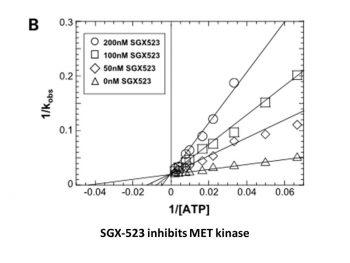
SGX-523 is a member of the c-Met/hepatocyte growth factor receptor (HGFR) tyrosine kinase inhibitor class. Its selectivity may be explained by the way SGX-523 stabilizes MET in a distinct inactive conformation that is unattainable by other protein kinases. While the closely related receptor tyrosine kinase RON is not potently inhibited by SGX523, the purified MET catalytic domain is. With a higher apparent affinity for the less active, unphosphorylated form of MET [MET-KD(0P), with a Ki of 2.7 nM] than the more active phospho-enzyme [MET-KD(3P), with a Ki of 23 nM], SGX523 shows ATP-competitive inhibition. This phenomenon is consistent with preferential binding to an inactive enzyme conformation. At nanomolar concentrations, SGX523 inhibits MET-mediated signaling, cell migration, and proliferation, but even at micromolar concentrations, it has no effect on signaling that is dependent on other protein kinases, including the closely related RON.
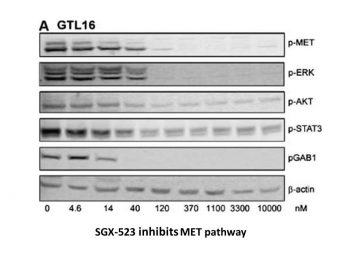
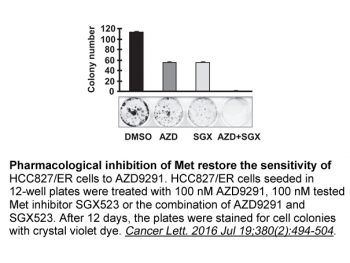
1. Antiproliferative activity against MET-driven tumors: - SGX-523 potently inhibits MET-amplified gastric cancer cells: MKN-45 (IC50 = 15 nM), NCI-N87 (IC50 = 18 nM) [1] - Against MET-overexpressing lung adenocarcinoma cells: H441 (IC50 = 20 nM), EBC-1 (IC50 = 25 nM) [1] - For MET-low/negative cancer cells (A549 lung cancer, MCF-7 breast cancer), IC50 > 1000 nM (no significant activity) [1] 2. Signaling pathway inhibition: - In MKN-45 cells treated with SGX-523 (50 nM for 1 hour), phosphorylation of MET (p-MET, Tyr1234/1235) is reduced by 95%, and downstream p-AKT (Ser473) and p-ERK1/2 (Thr202/Tyr204) are inhibited by 90% and 88% respectively (detected by Western blot) [1] - In H441 cells, 20 nM SGX-523 blocks MET-mediated p-STAT3 (Tyr705) by 86% [1] 3. Apoptosis induction: - In MKN-45 cells, SGX-523 (100 nM for 48 hours) increases apoptotic rate (Annexin V-FITC+/PI-) from 3.5% (control) to 58.2%, with cleaved caspase-3 (Asp175) upregulated 5.1-fold [1] 4. Colony formation inhibition: - In soft agar assay with H441 cells, SGX-523 (10 nM) reduces colony number by 82% vs control; 50 nM reduces colonies by 96% (colonies > 50 μm) [1] 5. Anti-invasive activity: - In Transwell invasion assay with EBC-1 cells, 50 nM SGX-523 decreases invasive cell number by 78% vs control (Matrigel-coated inserts) [1] |
| ln Vivo |
SGX523 significantly retards the growth of preestablished GTL16 tumors when administered orally at doses of ≥10 mg/kg twice daily. Strongly suppressing the growth of U87MG tumors, SGX523 causes a noticeable regression of U87MG tumors when dosed twice daily at 30 mg/kg. When SGX523 is administered twice a day at a dose of 30 mg/kg, it also lowers tumor MET autophosphorylation levels while slowing the growth of H441 tumors. Tumor xenografts derived from human glioblastoma, lung, and gastric cancers grow less rapidly in response to SGX523's dose-dependent inhibition of MET in vivo, indicating that these tumors are dependent on Catalytic Activity of MET. [1]
1. MET-amplified gastric cancer xenograft (MKN-45): - Female nude mice (6–8 weeks old) bearing subcutaneous MKN-45 tumors are treated with SGX-523 (10 mg/kg, 15 mg/kg, oral, once daily for 21 days). - The 10 mg/kg group reduces tumor volume by 78% vs vehicle; 15 mg/kg reduces volume by 85% and prolongs median survival from 26 days (control) to 54 days [1] 2. MET-overexpressing lung cancer xenograft (H441): - Nude mice treated with SGX-523 (15 mg/kg, oral, daily for 18 days) show 88% tumor weight reduction vs vehicle; tumor tissue Western blot confirms 92% reduction in p-MET [1] 3. PET imaging for tumor proliferation (MKN-45 xenograft): - Mice treated with SGX-523 (15 mg/kg, oral, 7 days) show 70% reduction in 18 F-FLT (proliferation marker) uptake in tumors vs baseline (microPET analysis) [1] |
| Enzyme Assay |
In the presence of 100 mM HEPES (pH 7.5), 0.3 mg/mL poly(Glu-Tyr) peptide substrate, 10 mM MgCl2, 1 mg/mL bovine serum albumin, 5% DMSO, 20 nM MET-KD, and varying concentrations of ATP and SGX523, initial rate constants are measured at 21 °C. Kinase-Glo detection buffer (20 μL) is used to quench the entire reaction volumes (20 μL). A plate-reading luminometer is used to detect luminosity, and nonlinear regression is used to analyze the data.
1. Recombinant MET kinase activity assay: - Prepare reaction mixture (50 μL total volume): 50 mM HEPES buffer (pH 7.4, containing 10 mM MgCl₂, 1 mM DTT), recombinant human MET kinase domain (50 ng), SGX-523 (0.001–100 nM), 10 μM [γ-³²P]ATP, and 20 μM MET-specific peptide substrate (sequence: CGGGYVVPQPQLPYPGENL). - Incubate the mixture at 30°C for 60 minutes to initiate kinase reaction. - Terminate reaction by adding 25 μL of 30% trichloroacetic acid (TCA) and incubate on ice for 15 minutes. - Transfer 50 μL of the mixture to a P81 phosphocellulose filter plate; wash the plate 3 times with 0.5% TCA (500 μL/well) to remove unbound ATP. - Dry the plate at 50°C for 30 minutes, add 50 μL scintillation fluid per well, and measure radioactivity using a liquid scintillation counter. - Calculate inhibition rate by comparing with vehicle control, and fit data to a four-parameter logistic model to obtain IC50 (1.2 nM) [1] 2. Kinase selectivity assay: - Test SGX-523 (100 nM) against a panel of 220 human kinases using the above kinase assay protocol (replacing MET with target kinases). - Only MET shows >90% inhibition; all other kinases (e.g., EGFR, VEGFR2, PDGFRα) show <10% inhibition [1] |
| Cell Assay |
In a 24-well plate, 1 × 10 3 MDCK cells are seeded per well and incubated for one week at 37 °C with 5% CO2 in MEM and 10% fetal bovine serum. After adding different concentrations of SGX523 and HGF (90 ng/mL), the cells are incubated for an additional 18 hours at 37 °C in a humidified incubator with 5% CO2 before being observed. To study cell migration, A549 cells are plated in 12-well plates (6 × 10 4 per well) and incubated until confluence. Using a pipette tip, create a channel by scraping the monolayers. The compound is added to the starve medium at different dilutions both with and without HGF (90 ng/mL). After twenty-four hours, the wells are examined for cell migration.
Immunoblot Assay[1] GTL16 cells were grown in RPMI supplemented with 10% fetal bovine serum. A549, U87MG, and H441 cells were grown in DMEM and 10% fetal bovine serum. Cells (1 × 10⁶) were incubated with various concentrations of SGX523 for 1 h and then treated with lysis buffer plus protease inhibitors. Where indicated, 90 ng/mL HGF was added for the last 10 min incubation or 150 ng/mL macrophage-stimulating protein was added for the last 30 min incubation. Proteins were separated via SDS-PAGE on 4% to 20% gradient gels (80 μg/lane) and standard semidry blotting techniques were used to transfer the protein to nitrocellulose membranes. Phosphorylated signaling molecules were detected using antibodies raised to phospho-MET (Tyr1234/1235), phospho–extracellular signal-regulated kinase (Thr202/Tyr204), phospho-AKT (Ser473), phospho-STAT3 (Tyr705), or phospho-Gab1 (Tyr627) followed by a horseradish peroxidase–conjugated secondary antibody. The intensity of the phosphorylated bands was quantified nd IC50 values were determined by sigmoidal dose-response nonlinear regression analysis (GraphPad Prism 5 Software).[1] Scatter and Migration Assays[1] To measure the effect of SGX523 on HGF-induced cell scatter, MDCK cells were plated at 1 × 10³ per well in a 24-well plate and incubated at 37°C in 5% CO2 for 1 week in MEM and 10% fetal bovine serum. HGF (90 ng/mL) and various concentrations of SGX523 were added, and the cells were incubated for 18 h (37°C, 5% CO2 humidified incubator) and visualized. To investigate cell migration, A549 cells were plated in 12-well plates (6 × 10⁴ per well) and incubated to confluence. A channel was introduced into the monolayers by scratching with a pipette tip. Various dilutions of compound were added in starve medium in the presence and absence of HGF (90 ng/mL). Twenty-four hours later, wells were checked for cell migration. Cells were stained and visualized as described. 1. Cell proliferation assay (MTT method): - Seed target cells (MKN-45, H441, EBC-1, A549) in 96-well plates at 5×10³ cells/well; incubate overnight in RPMI 1640 medium (10% fetal bovine serum, 1% penicillin-streptomycin) at 37°C, 5% CO₂. - Add SGX-523 (0.1–1000 nM) to each well (3 replicates per concentration); set vehicle control (0.1% DMSO). - Incubate for 72 hours; add 10 μL MTT reagent (5 mg/mL in PBS) to each well, continue incubation for 4 hours. - Aspirate medium, add 150 μL DMSO per well to dissolve formazan crystals; shake for 10 minutes at room temperature. - Measure absorbance at 570 nm using a microplate reader; calculate IC50 via GraphPad Prism [1] 2. Western blot analysis: - Seed MKN-45/H441 cells in 6-well plates at 2×10⁵ cells/well; incubate overnight. - Treat cells with SGX-523 (10–100 nM) for 1–2 hours; wash twice with cold PBS. - Lyse cells with RIPA buffer (containing 1× protease inhibitor cocktail, 1× phosphatase inhibitor cocktail) on ice for 30 minutes; centrifuge at 12,000×g, 4°C for 15 minutes to collect supernatant. - Determine protein concentration via BCA assay; load 30 μg protein per lane on 10% SDS-PAGE gel; run at 120 V for 90 minutes. - Transfer proteins to PVDF membrane (300 mA, 60 minutes); block with 5% non-fat milk in TBST (0.1% Tween-20) for 1 hour at room temperature. - Incubate membrane with primary antibodies (anti-p-MET, anti-MET, anti-p-AKT, anti-p-ERK1/2, anti-cleaved caspase-3, anti-GAPDH) at 4°C overnight; wash 3× with TBST (10 minutes each). - Incubate with HRP-conjugated secondary antibody for 1 hour at room temperature; detect signals with ECL reagent; quantify band intensity via ImageJ [1] 3. Apoptosis assay (Annexin V-FITC/PI double staining): - Treat MKN-45 cells with SGX-523 (100 nM) for 24/48 hours; collect floating and adherent cells; wash twice with cold PBS. - Resuspend cells in 100 μL Annexin V binding buffer; add 5 μL Annexin V-FITC and 5 μL PI; incubate for 15 minutes in dark at room temperature. - Add 400 μL binding buffer; analyze apoptotic rate within 1 hour using a flow cytometer (excitation: 488 nm; emission: 530 nm for FITC, 610 nm for PI) [1] 4. Transwell invasion assay: - Coat Transwell inserts (8 μm pore size) with Matrigel (1:8 dilution in serum-free RPMI 1640); incubate at 37°C for 1 hour to solidify. - Resuspend EBC-1 cells in serum-free medium containing SGX-523 (50 nM); seed 1×10⁵ cells in upper chamber; add medium with 10% FBS to lower chamber. - Incubate at 37°C for 24 hours; wipe non-invasive cells on upper surface with cotton swab; fix invasive cells on lower surface with 4% paraformaldehyde for 15 minutes; stain with 0.1% crystal violet for 20 minutes. - Count invasive cells under microscope (5 random fields per insert); calculate inhibition rate vs vehicle control [1] |
| Animal Protocol |
GTL16, U87, or H441 xenografts in Harlan nude mice
60 mg/kg Oral gavage In vivo Studies[1] Female Harlan nude mice (athymic nu/nu) were s.c. implanted with GTL16, U87, or H441 cells. When tumors had reached ∼150 mm3, SGX523 was administered at various dose regimens by oral gavage. Intratumoral inhibition of MET signaling was determined by measuring average levels of phospho-MET in GTL16 tumors at various time points after the last dose by Western blot analysis. In vivo experiments were conducted at Explora BioLabs in accordance with the requirements for the procurement, housing, care, and use of animals as set forth in the NIH Guide for the Care and Use of Laboratory Animals in Research (revised 1996), the U.S. Department of Agriculture, and the Animal Welfare Act (Public Law: 89-544, 91-579, 91-279 9 CFR parts 1-3).[1] 1. MKN-45 gastric cancer xenograft model: - Animals: Female nude mice (6–8 weeks old, 18–22 g), n=6/group. - Tumor induction: Subcutaneous injection of 5×10⁶ MKN-45 cells (0.2 mL, mixed with PBS/Matrigel 1:1) into right flank. - Drug formulation: SGX-523 dissolved in 0.5% methylcellulose + 0.2% Tween 80 (final DMSO concentration <1%). - Administration: Oral gavage at 10 mg/kg, 15 mg/kg once daily for 21 days; control group receives vehicle. - Monitoring: Measure tumor volume (length×width²/2) every 2 days using digital calipers; record body weight weekly; track survival time until tumor volume > 2000 mm³ [1] 2. H441 lung cancer xenograft model: - Animals: Female nude mice (6–8 weeks old), n=6/group. - Tumor induction: Subcutaneous injection of 4×10⁶ H441 cells (0.2 mL PBS/Matrigel 1:1) into right flank. - Administration: SGX-523 (15 mg/kg, oral, daily for 18 days); control receives vehicle. - Endpoint: Euthanize mice at day 18; excise tumors, weigh; extract tumor proteins for Western blot (detect p-MET, MET) [1] 3. 18 F-FLT PET imaging protocol (MKN-45 model): - Animals: Nude mice bearing MKN-45 tumors (tumor volume ~200 mm³), n=4/group. - Administration: SGX-523 (15 mg/kg, oral, daily for 7 days); baseline imaging before dosing. - Imaging: Inject 18 F-FLT (100 μCi/mouse) via tail vein; perform microPET scan at 1 hour post-injection; calculate tumor standardized uptake value (SUVmax) [1] |
| ADME/Pharmacokinetics |
1. Oral pharmacokinetics in mice:
- Male C57BL/6 mice (n=3 at each time point) were orally administered SGX-523 (15 mg/kg). - Plasma samples were collected at 0.25, 0.5, 1, 2, 4, 8, 12, and 24 hours post-administration; plasma was centrifuged (3500 rpm, 4°C, 10 min). - Plasma concentrations were analyzed by LC-MS/MS (mobile phase: acetonitrile/water solution containing 0.1% formic acid; column: C18). - Key parameters: Cmax = 850 ng/mL, Tmax = 1.0 h, AUC0-24h = 4200 ng·h/mL, t1/2 = 6.5 h, oral bioavailability = 42% [1] 2. Tissue distribution: - Two hours after oral administration (15 mg/kg), mice were sacrificed; tissues (liver, tumor, kidney, spleen, brain) were collected. - SGX-523 Concentration (ng/g): Liver (3120), Tumor (2850), Kidney (2680), Spleen (2150), Brain (42) [1] 3. Plasma protein binding: - Ultrafiltration assay: SGX-523 was added to mouse/rat/human plasma (10–1000 ng/mL); incubated at 37°C for 1 hour. - Centrifuged using an ultrafiltration device with a molecular weight cutoff of 30 kDa (3000 rpm, 30 min); free/total drug concentration was determined by LC-MS/MS. - Protein binding: >99% at all species and concentrations [1] 4. Metabolism: - In mouse liver microsomes: SGX-523 (1 μM) was incubated with microsomes (1 mg protein/mL) and NADPH; metabolites were analyzed by LC-MS/MS. - Major metabolite: M1 (hydroxylation of benzene ring); metabolic half-life = 4.8 h [1] |
| Toxicity/Toxicokinetics |
1. Acute toxicity in mice:
- Male/female C57BL/6 mice (n=3 per sex per dose group) were given SGX-523 (oral, 50–200 mg/kg). - No deaths occurred in the 50/100/150 mg/kg dose groups; transient somnolence occurred in the 200 mg/kg dose group (recovered within 48 hours); oral LD50 >200 mg/kg [1] 2. Subacute toxicity (28 days, mice): - Dosage: 10 mg/kg, 15 mg/kg, 20 mg/kg (oral, once daily). - 10/15 mg/kg groups: No changes were observed in body weight, food intake, serum biochemical indicators (ALT, AST, creatinine) or hematological indicators (white blood cell count, platelet count, hemoglobin). - 20 mg/kg group: ALT was slightly elevated (1.3 times that of the control group); no damage was observed in liver and kidney histopathology [1] 3. Cardiotoxicity: - No significant QT interval prolongation or arrhythmia was observed in rats after oral administration of SGX-523 (30 mg/kg) monitored by telemetry [1] |
| References | |
| Additional Infomation |
SGX-523 belongs to the triazolopyridazine class of compounds, with the chemical name 6-(1-methylpyrazol-4-yl)[1,2,4]triazolo[4,3-b]pyridazine-3-thiol, in which the thiol hydrogen is replaced by a quinoline-6-yl group. It is a c-Met tyrosine kinase inhibitor and is nephrotoxic. SGX-523 belongs to the quinoline, triazolopyridazine, pyrazole, biaryl, and aryl thioether classes of compounds. It is a MET receptor tyrosine kinase inhibitor. SGX-523 is a small molecule c-Met inhibitor with high oral bioavailability and potential antitumor activity. The MET receptor tyrosine kinase inhibitor SGX523 specifically binds to c-Met protein or hepatocyte growth factor receptor (HGFR), preventing the binding of hepatocyte growth factor (HGF), thereby disrupting the MET signaling pathway; this drug can induce the death of tumor cells expressing c-Met. c-Met is a receptor tyrosine kinase that is overexpressed or mutated in various tumor cell types and plays an important role in tumor cell proliferation, survival, invasion and metastasis, as well as tumor angiogenesis.
Drug indications Investigation for the treatment of solid tumors and cancer/tumors (not specified). Mechanism of action SGX523 is a selective inhibitor of the receptor tyrosine kinase MET. MET is closely related to the occurrence and development of cancer. SGX523 inhibits the autophosphorylation and signal transduction of MET and activates caspase 3, which is part of the apoptosis signaling cascade. 1. Treatment background: SGX-523 is a highly selective ATP-competitive MET tyrosine kinase inhibitor that was initially developed as a preclinical research tool to validate the effectiveness of MET as a therapeutic target for MET-driven solid tumors (gastric cancer, lung adenocarcinoma)[1]. 2. Mechanism of action: It competitively binds to the ATP-binding pocket of MET, blocking MET autophosphorylation and subsequent activation of downstream signaling pathways (PI3K-AKT, RAS-ERK1/2, JAK-STAT3). This compound can inhibit tumor cell proliferation and invasion and induce apoptosis [1]. 3. Research significance: Its ultra-high selectivity for MET (no off-target kinase inhibition) makes it the gold standard tool for studying MET-dependent signaling pathways in cancer; it lays the foundation for the development of clinical MET inhibitors (such as carmatinib) [1]. 4. Limitations: Due to poor oral bioavailability (42%) and lack of clinical development priority, SGX-523 is currently still a preclinical research reagent and has not yet entered the clinical trial stage [1]. |
| Molecular Formula |
C18H13N7S
|
|
|---|---|---|
| Molecular Weight |
359.41
|
|
| Exact Mass |
359.095
|
|
| Elemental Analysis |
C, 60.15; H, 3.65; N, 27.28; S, 8.92
|
|
| CAS # |
1022150-57-7
|
|
| Related CAS # |
|
|
| PubChem CID |
24779724
|
|
| Appearance |
Light yellow to yellow solid powder
|
|
| Density |
1.5±0.1 g/cm3
|
|
| Index of Refraction |
1.817
|
|
| LogP |
2.73
|
|
| Hydrogen Bond Donor Count |
0
|
|
| Hydrogen Bond Acceptor Count |
6
|
|
| Rotatable Bond Count |
3
|
|
| Heavy Atom Count |
26
|
|
| Complexity |
494
|
|
| Defined Atom Stereocenter Count |
0
|
|
| SMILES |
S(C1C([H])=C([H])C2=C(C([H])=C([H])C([H])=N2)C=1[H])C1=NN=C2C([H])=C([H])C(C3C([H])=NN(C([H])([H])[H])C=3[H])=NN21
|
|
| InChi Key |
BCZUAADEACICHN-UHFFFAOYSA-N
|
|
| InChi Code |
InChI=1S/C18H13N7S/c1-24-11-13(10-20-24)16-6-7-17-21-22-18(25(17)23-16)26-14-4-5-15-12(9-14)3-2-8-19-15/h2-11H,1H3
|
|
| Chemical Name |
6-[[6-(1-methylpyrazol-4-yl)-[1,2,4]triazolo[4,3-b]pyridazin-3-yl]sulfanyl]quinoline
|
|
| Synonyms |
SGX-523; SGX 523; 6-(6-(1-methyl-1H-pyrazol-4-yl)-[1,2,4]triazolo[4,3-b]pyridazin-3-ylthio)quinoline; 6-((6-(1-methyl-1H-pyrazol-4-yl)-[1,2,4]triazolo[4,3-b]pyridazin-3-yl)thio)quinoline; WH8SQN09KJ; CHEMBL1236107; SGX523
|
|
| HS Tariff Code |
2934.99.9001
|
|
| Storage |
Powder -20°C 3 years 4°C 2 years In solvent -80°C 6 months -20°C 1 month |
|
| Shipping Condition |
Room temperature (This product is stable at ambient temperature for a few days during ordinary shipping and time spent in Customs)
|
| Solubility (In Vitro) |
DMSO: ~3 mg/mL (~8.3 mM)
Water: 1 mg/mL (Insoluble) Ethanol: 1 mg/mL |
|
|---|---|---|
| Solubility (In Vivo) |
|
| Preparing Stock Solutions | 1 mg | 5 mg | 10 mg | |
| 1 mM | 2.7823 mL | 13.9117 mL | 27.8234 mL | |
| 5 mM | 0.5565 mL | 2.7823 mL | 5.5647 mL | |
| 10 mM | 0.2782 mL | 1.3912 mL | 2.7823 mL |
*Note: Please select an appropriate solvent for the preparation of stock solution based on your experiment needs. For most products, DMSO can be used for preparing stock solutions (e.g. 5 mM, 10 mM, or 20 mM concentration); some products with high aqueous solubility may be dissolved in water directly. Solubility information is available at the above Solubility Data section. Once the stock solution is prepared, aliquot it to routine usage volumes and store at -20°C or -80°C. Avoid repeated freeze and thaw cycles.
Calculation results
Working concentration: mg/mL;
Method for preparing DMSO stock solution: mg drug pre-dissolved in μL DMSO (stock solution concentration mg/mL). Please contact us first if the concentration exceeds the DMSO solubility of the batch of drug.
Method for preparing in vivo formulation::Take μL DMSO stock solution, next add μL PEG300, mix and clarify, next addμL Tween 80, mix and clarify, next add μL ddH2O,mix and clarify.
(1) Please be sure that the solution is clear before the addition of next solvent. Dissolution methods like vortex, ultrasound or warming and heat may be used to aid dissolving.
(2) Be sure to add the solvent(s) in order.
| NCT Number | Recruitment | interventions | Conditions | Sponsor/Collaborators | Start Date | Phases |
| NCT00606879 | Terminated | Drug: SGX523 Capsules | Advanced Cancer | SGX Pharmaceuticals, Inc. | January 2008 | Phase 1 |
| NCT00607399 | Terminated | Drug: SGX523 Capsules | Advanced Cancer | SGX Pharmaceuticals, Inc. | January 2008 | Phase 1 |
|
 |
 |
Products are for research use only; We do not sell to patients
Copyright 2020 InvivoChem LLC | All Rights Reserved


 COA
COA