| Size | Price | Stock | Qty |
|---|---|---|---|
| 10mg |
|
||
| 25mg |
|
||
| 50mg |
|
||
| 100mg |
|
||
| 250mg | |||
| 500mg | |||
| Other Sizes |
Purity: ≥98%
| Targets |
T1-CDK9 (IC50 = 1 nM); cyclin B1-CDK1 (IC50 = 2 nM); cyclin E-CDK2 (IC50 = 3 nM); cyclin D1-CDK4 (IC50 = 4 nM); cyclin E-CDK3 (IC50 = 5 nM); p35-CDK5 (IC50 = 5 nM); cyclin H-CDK7 (IC50 = 44 nM); cyclin D3-CDK6 (IC50 = 55 nM); GSK-3β (IC50 = 3 nM); JAK2 (IC50 = 50 nM); MEK1 (IC50 = 54 nM); Fms (IC50 = 1 nM); TAK1 (IC50 = 5 nM); JNK1a1 (IC50 = 17 nM); JNK1a2 (IC50 = 40 nM); C-src (IC50 = 25 nM); AMPK (IC50 = 41 nM)
Transcriptional cyclin-dependent kinases (CDKs) (Ki values in nanomolar range) [1] |
|---|---|
| ln Vitro |
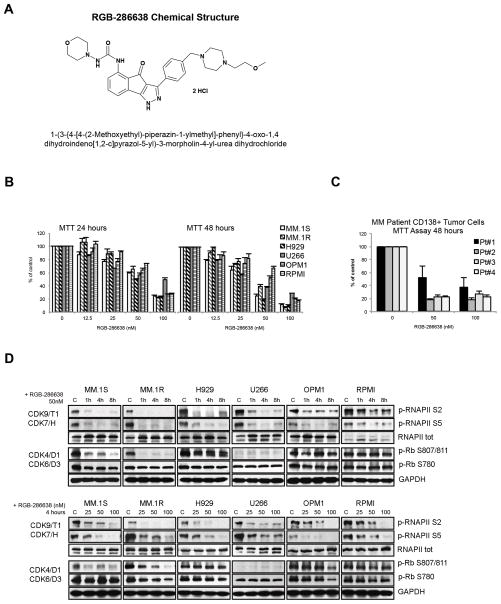
RGB-286638 is a CDK inhibitor (CDKI) derived from indenopyrazole that exhibits Ki-nanomolar activity against transcriptional CDKs. AMPK, Jak2, MEK1, TAK1, GSK-3β, and other tyrosine and serine/threonine non-CDK enzymes are all inhibited by RGB-286638. By using the MTT assay to measure viability at 24 and 48 hours, the effects of RGB-286638 (12.5-100nM) treatment are examined on the growth of human p53-wt (MM.1S, MM.1R, and H929) and p53-mutant (U266, OPM1, and RPMI) MM cells. After 48 hours, the half-maximally effective concentrations (EC50) vary from 20 to 70 nM. Following 50nM treatment, dose-dependent growth differences between p53-wt and -mutant cells are seen, with p53-wt MM.1S, MM.1R, and H929 showing a slight increase in sensitivity to RGB-286638 treatment at 48 hours[1].
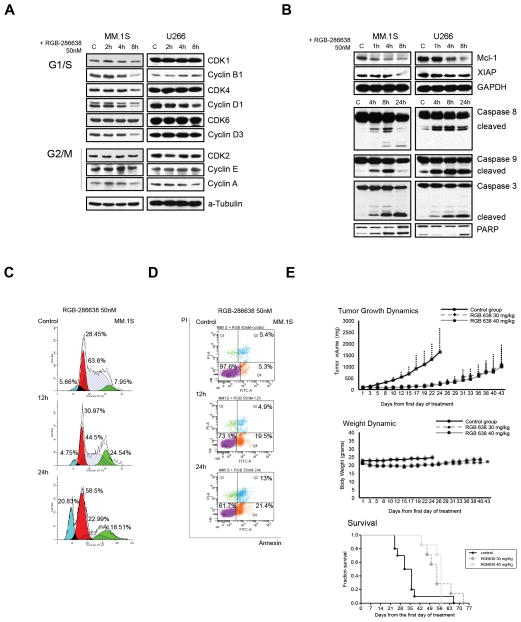
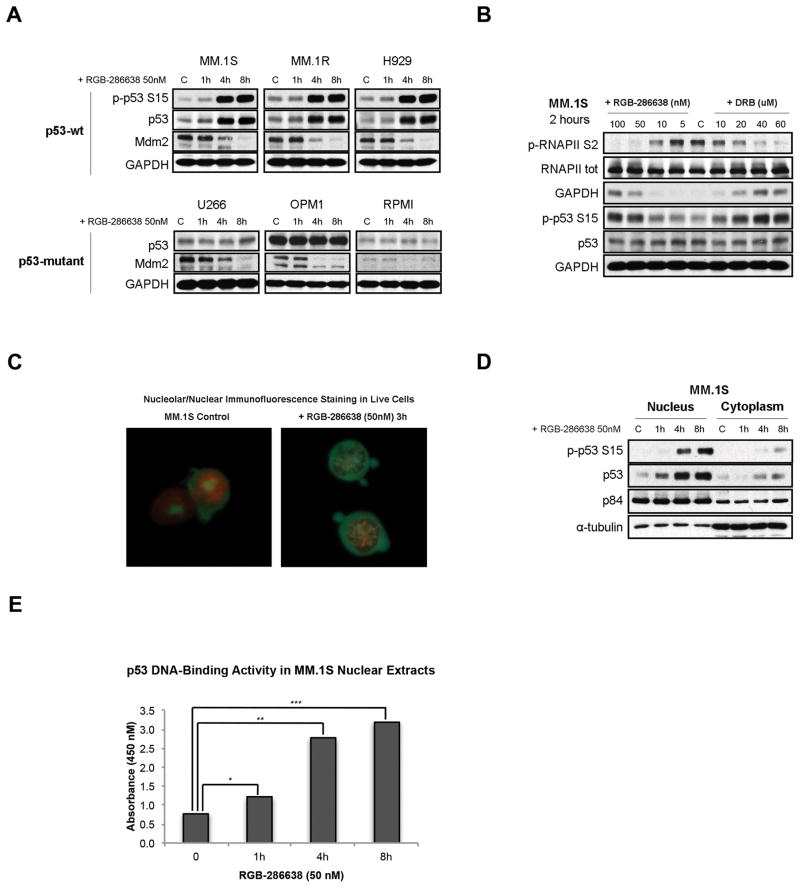
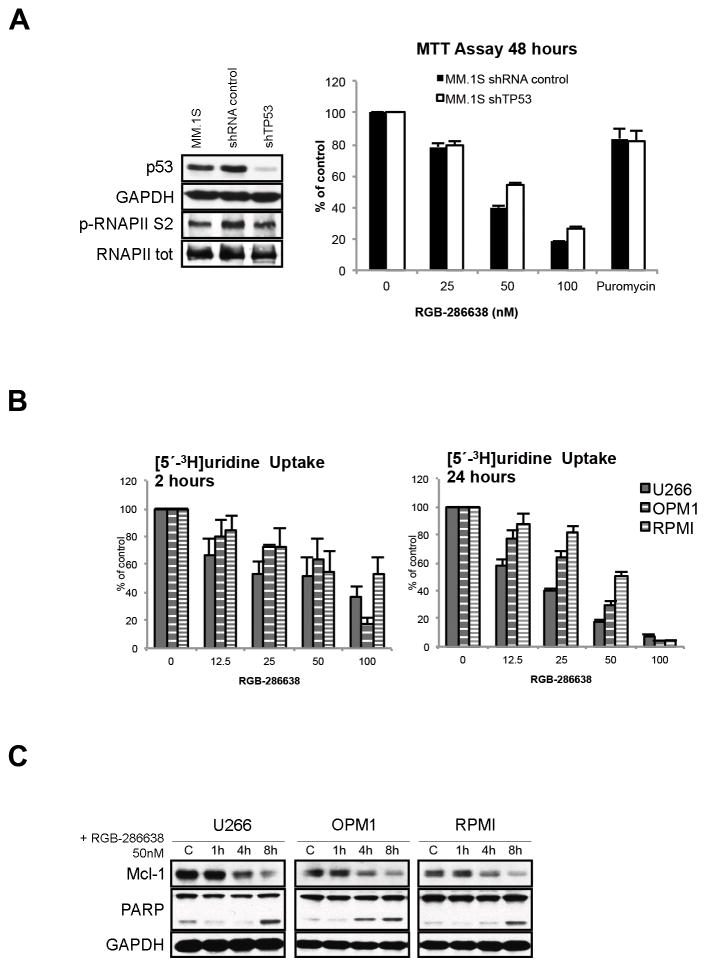
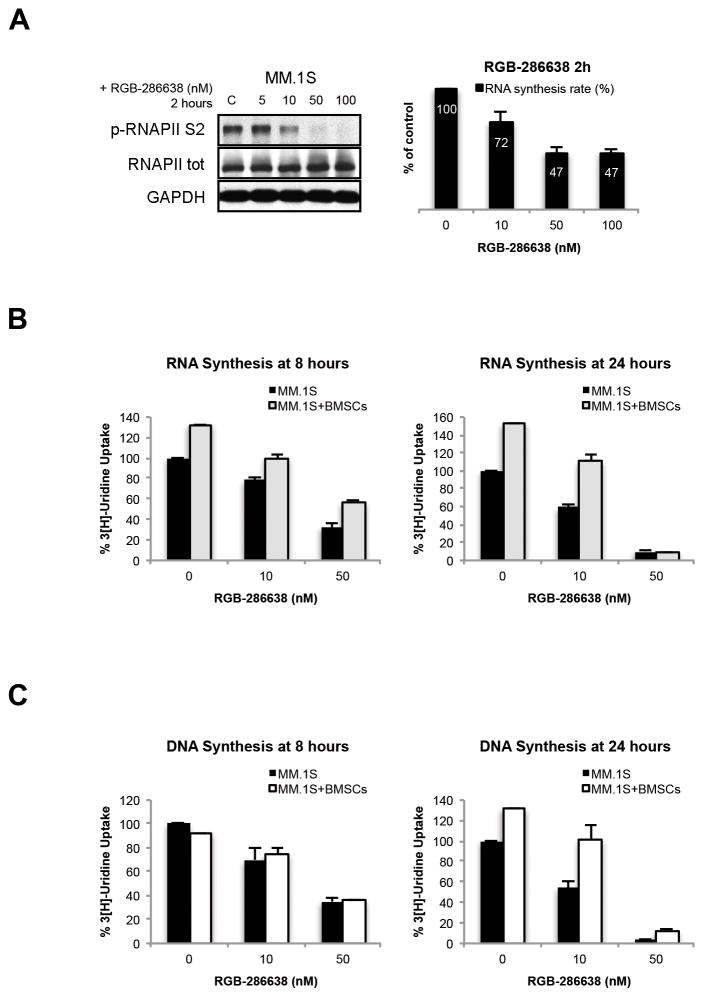
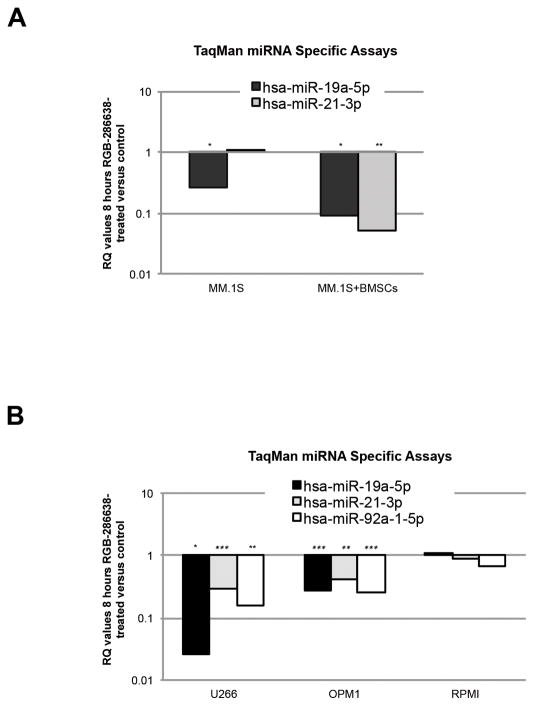
RGB-286638 2HCl (chemical name: 1-(3-{4-[4-(2-Methoxyethyl)-piperazin-1-ylmethyl]-phenyl}-4-oxo-1,4-dihydroindeno[1,2-c]pyrazol-5-yl)-3-morpholin-4-yl-urea dihydrochloride; molecular formula: C₂₉H₃₇N₇O₄·2HCl; molecular weight: 618.52) exhibits potent dose- and time-dependent cytotoxicity against multiple myeloma (MM) cell lines. For wild-type p53 MM cell lines (MM.1S, MM.1R, H929) and mutant p53 MM cell lines (U266, OPM1, RPMI), the EC₅₀ ranges from 20–70 nM at 48 h as determined by MTT assay [1] - It shows comparable cytotoxicity against primary tumor cells isolated from MM patients (CD138+ selection) at 0–100 nM concentration, with viability assessed by MTT assay at 48 h [1] - Treatment with RGB-286638 2HCl inhibits transcriptional CDKs, leading to downregulation of RNA polymerase II (RNAPII) phosphorylation at S²/S⁵ sites and Rb phosphorylation at S⁸⁰⁷/⁸¹¹/S⁷⁸⁰ sites, as detected by western blotting in MM cell lines at 1, 4, and 8 h [1] - It induces caspase-dependent apoptosis in both wild-type and mutant p53 MM cells, accompanied by reduced expression of anti-apoptotic proteins (Mcl-1, XIAP) and activation of caspases 3, 8, 9, and PARP cleavage, as shown by western blotting at 4, 8, and 24 h (50 nM concentration) [1] - The compound disrupts cell cycle progression, affecting G1/S and G2/M phases in MM.1S cells treated with 50 nM for 12 and 24 h, as analyzed by flow cytometry with propidium iodide staining [1] - It triggers early apoptosis in MM.1S cells (50 nM concentration) at 12 and 24 h, with increasing apoptotic cell percentages detected by Annexin V/PI staining and FACS analysis [1] - RGB-286638 2HCl inhibits RNAPII-mediated transcription, reducing RNA synthesis in MM.1S cells (0–100 nM, 2 h incubation) as measured by [5′-³H]uridine incorporation. It also abrogates bone marrow stromal cell (BMSC)-induced RNA and DNA synthesis in MM.1S cells after 8 and 24 h co-culture, assessed by [5′-³H]uridine and [³H-TdR] uptake assays respectively [1] - In wild-type p53 MM cells, it induces p53 accumulation (via nucleolar stress and reduced Mdm2 expression), increases p53 phosphorylation at S¹⁵, promotes nuclear translocation of p53, and enhances p53 sequence-specific DNA binding activity, as demonstrated by western blotting (nuclear/cytoplasmic fractions), immunofluorescence microscopy, and DNA binding assays [1] - It exerts p53-independent cytotoxicity, as evidenced by significant cytotoxicity in p53-knockdown MM.1S cells (transduced with p53 shRNA) and mutant p53 MM cell lines (U266, OPM1, RPMI) at 0–100 nM concentration. In mutant p53 cells, it reduces RNA synthesis and triggers apoptosis with Mcl-1 downregulation and PARP cleavage [1] - The compound modulates miRNA expression: it suppresses oncogenic miR-19a-5p, miR-21-3p, and miR-92a-1-5p in MM.1S cells (alone or co-cultured with BMSCs) and mutant p53 MM cell lines, as detected by TaqMan® miRNA-specific RT-PCR after 8 h treatment with 50 nM [1] |
| ln Vivo |
The highest tolerated dosage in SCID mice, according to dose-finding studies using RGB-286638, is 40 mg/kg/day IV therapy. RGB-286638 treatment for five days intravenously significantly suppresses the growth of MM tumors; the maximum TGI (%) in the 30 mg/kg and 40 mg/kg treated cohorts is recorded at day 14 after treatment completion, at 85.06% and 86.34%, respectively. Each of the two treated groups has a log10 cell kill (LCK Td: 4.5 days) of 1.6. The first death in the control group occurred on day 24, while in the treated groups it occurred on day 43. This suggests that treatment with RGB-286638 is also linked to improved survival. This study did not result in any toxic deaths. The highest percentage of body weight (BW) loss was noted on day 5 (8.4%) at a dosage schedule of 30 mg/kg and on day 15 (9.9%) after a dosage of 40 mg/kg. The following two weeks saw weight recovery[1].
In SCID mice bearing subcutaneous MM.1S xenografts (3 × 10⁶ cells inoculated), RGB-286638 2HCl exhibits significant anti-MM activity. Daily intravenous tail vein injections of 30 mg/kg or 40 mg/kg for 5 consecutive days results in tumor growth inhibition and prolonged survival compared to vehicle control [1] - Transient weight loss is observed in treated mice: maximum body weight loss of 8.4% on day 5 (30 mg/kg group) and 9.9% on day 15 (40 mg/kg group), followed by recovery within the subsequent two weeks [1] |
| Enzyme Assay |
The Nuclear Extraction Kit is used to isolate nuclear proteins from MM.1S cells that have been exposed to 50nM RGB-286638 for 1, 4, and 8 hours. A specific double-stranded DNA sequence containing the p53 response element is coated on 96-well plates, and nuclear protein aliquots are added for an overnight incubation. By adding a particular primary antibody that targets p53, p53 in the nuclear extract can be identified. A sensitive colorimetric readout at 450 nm is achieved by adding a secondary antibody conjugated to HRP. Triple-checking is done on every experiment[1].
|
| Cell Assay |
Colorimetric assays are used to measure the efficacy of drugs at progressively higher RGB-286638 concentrations (0-100nM). 100 μL of isopropanol containing 0.04 HCl is added to each well after 10μL of 5 mg/mL MTT is pulsed into each well of p53-expressing wild-type (MM.1S, MM.1R, H929) or mutant (U266, OPM1, RPMI) cells from 24- or 48-hour cultures. The cells are then incubated at 37°C for 4 hours. Using a spectrophotometer, absorbance measurements are made at 570 nm wavelength (corrected using readings at 630 nm). Three duplicates of each experiment are run[1].
MTT cell viability assay: Seed MM cell lines (wild-type or mutant p53) or primary MM patient cells (CD138+ selected) in 96-well plates. Treat with RGB-286638 2HCl at concentrations ranging from 0–100 nM for 24 or 48 h. Add MTT reagent, incubate, solubilize formazan crystals, and measure absorbance to determine cell viability and calculate EC₅₀ values [1] - Western blot analysis: Treat MM cell lines with RGB-286638 2HCl (0–100 nM) for specified time points (1–24 h). Lyse cells, extract total, nuclear, or cytoplasmic proteins, separate by SDS-PAGE, and transfer to membranes. Probe with specific antibodies against target proteins (e.g., p-RNAPII, Rb, p53, Mdm2, caspases, PARP, Mcl-1, XIAP, GAPDH, p84, α-tubulin) to detect protein expression, phosphorylation, or cleavage [1] - Flow cytometry for cell cycle and apoptosis: For cell cycle analysis, treat MM.1S cells with 50 nM RGB-286638 2HCl for 12 or 24 h, fix, stain with propidium iodide, and analyze DNA content. For apoptosis analysis, treat cells with 50 nM compound for 12 or 24 h, stain with Annexin V/PI, and perform FACS to quantify apoptotic cells [1] - RNA synthesis assay: Pre-incubate MM.1S cells (alone or co-cultured with BMSCs) with RGB-286638 2HCl (0–100 nM) for 1 h (or 8/24 h for co-culture). Add [5′-³H]uridine, incubate for 1 h, and measure radioactivity to assess RNA synthesis [1] - DNA synthesis assay: Treat MM.1S cells (with or without BMSCs) with RGB-286638 2HCl (0–100 nM) for 8 or 24 h. Add [³H-TdR], incubate, and measure radioactivity to evaluate cell proliferation [1] - Immunofluorescence microscopy: Incubate MM.1S cells with 50 nM RGB-286638 2HCl or media alone for 3 h. Resuspend cells in Dual Detection Reagent for 30 min, and observe nucleolar fragmentation and p53 localization under a fluorescence microscope (60× magnification) [1] - p53 DNA binding assay: Isolate nuclear extracts from MM.1S cells treated with 50 nM RGB-286638 2HCl for 1, 4, or 8 h. Perform a p53 sequence-specific DNA binding assay to measure the binding activity, with results presented as mean ± SD of triplicate cultures [1] - miRNA expression analysis: Treat MM cells (alone or co-cultured with BMSCs) with 50 nM RGB-286638 2HCl for 8 h. Isolate total RNA, perform reverse transcription with miRNA-specific primers, and conduct TaqMan® RT-PCR to quantify the expression of miR-19a-5p, miR-21-3p, and miR-92a-1-5p. Calculate relative quantity (RQ) values compared to untreated cells [1] - p53 knockdown cell assay: Transduce MM.1S cells with p53 shRNA or empty vector. Select transduced cells with puromycin. Treat cells with RGB-286638 2HCl (0–100 nM) for 48 h, assess viability by MTT assay, and verify p53 knockdown and p-RNAPII expression by western blotting [1] |
| Animal Protocol |
40 mg/kg; i.v.
Mice: RGB-286638's in vivo anti-MM activity is assessed using an MM xenograft model. Agennix AG prepares and supplies the RGB-286638 dosing solutions, which come in 2 and 3 mg/mL in 5% dextrose/water (D5W) pH5.2 as well as D5W pH5.2 for the vehicle control dosing group. The mice used are CB-17 severe combined immunodeficient (SCID). A total of forty male mice aged five to six weeks are exposed to 2 Gy [200 rad] of radiation using a cesium 137 (137Cs)-irradiator source; 24 hours post-irradiation, the mice measure 2.5 x 10⁶ MM. Subcutaneous inoculation of the upper back is done with 1S cells. Mice are randomized into three cohorts when the tumor weight is roughly 100 mg, and they are given daily IV tail vein injections for five days straight with either RGB-286638 30 mg/kg (8 mice), 40 mg/kg (9 mice), or control vehicle alone (10 mice). Every other day, the body weight and tumor volume of the animals are measured using calipers. Volume of tumor is estimated. From the first day of treatment until death, survival is assessed. From the first day of treatment until the first sacrifice day, measurements taken with a caliper are used to assess the growth of the tumor. Tumor growth inhibition (TGI) percentage is computed. MM xenograft model in SCID mice: Inoculate 3 × 10⁶ MM.1S cells (suspended in 100 μL RPMI medium) subcutaneously into SCID mice. Once tumors are established, randomly divide tumor-bearing mice into three cohorts (vehicle control, 30 mg/kg RGB-286638 2HCl, 40 mg/kg RGB-286638 2HCl) with n ≥ 5 mice per group. Administer the compound or vehicle via daily intravenous tail vein injections for 5 consecutive days. Monitor mouse body weight and tumor growth (volume) regularly. Record survival time to generate Kaplan–Meier survival curves. Euthanize mice at the end of the study for tumor tissue collection and analysis [1] |
| References | |
| Additional Infomation |
RGB-286638 2HCl is a small-molecule multi-target kinase inhibitor derived from indopyrazole [1]. It exerts its anti-multiple myeloma (MM) activity by inhibiting transcriptional CDK, thereby triggering p53-dependent and p53-independent apoptosis. This unique mechanism makes it effective against both wild-type p53 (activated by p53) and mutated/deleted p53 (through other cell death pathways), thus addressing the poor prognosis associated with p53 deficiency in MM [1]. The compound can inhibit bone marrow mesenchymal stem cell (BMSC)-induced RNA and DNA synthesis in MM cells, indicating that it can overcome the protective role of the tumor microenvironment, which is a key challenge in the treatment of MM [1].
|
| Molecular Formula |
C29H37CL2N7O4
|
|---|---|
| Molecular Weight |
618.6
|
| Exact Mass |
617.228
|
| CAS # |
784210-87-3
|
| Related CAS # |
RGB-286638 free base;784210-88-4
|
| PubChem CID |
11285001
|
| Appearance |
Light yellow to yellow solid
|
| LogP |
4.243
|
| Hydrogen Bond Donor Count |
5
|
| Hydrogen Bond Acceptor Count |
8
|
| Rotatable Bond Count |
8
|
| Heavy Atom Count |
42
|
| Complexity |
857
|
| Defined Atom Stereocenter Count |
0
|
| SMILES |
Cl.Cl.O(C)CCN1CCN(CC2C=CC(=CC=2)C2C3C(C4C(=CC=CC=4C=3NN=2)NC(NN2CCOCC2)=O)=O)CC1
|
| InChi Key |
WJVMGQMXUBAAPL-UHFFFAOYSA-N
|
| InChi Code |
InChI=1S/C29H35N7O4.2ClH/c1-39-16-13-34-9-11-35(12-10-34)19-20-5-7-21(8-6-20)26-25-27(32-31-26)22-3-2-4-23(24(22)28(25)37)30-29(38)33-36-14-17-40-18-15-36;;/h2-8H,9-19H2,1H3,(H,31,32)(H2,30,33,38);2*1H
|
| Chemical Name |
1-[3-[4-[[4-(2-methoxyethyl)piperazin-1-yl]methyl]phenyl]-4-oxo-1H-indeno[1,2-c]pyrazol-5-yl]-3-morpholin-4-ylurea;dihydrochloride
|
| Synonyms |
RGB-286638 2HCl; RGB 286638 2HCl; RGB2866382HCl
|
| HS Tariff Code |
2934.99.9001
|
| Storage |
Powder -20°C 3 years 4°C 2 years In solvent -80°C 6 months -20°C 1 month Note: Please store this product in a sealed and protected environment, avoid exposure to moisture. |
| Shipping Condition |
Room temperature (This product is stable at ambient temperature for a few days during ordinary shipping and time spent in Customs)
|
| Solubility (In Vitro) |
|
|||
|---|---|---|---|---|
| Solubility (In Vivo) |
Solubility in Formulation 1: ≥ 7.5 mg/mL (12.13 mM) (saturation unknown) in 10% DMSO + 40% PEG300 + 5% Tween80 + 45% Saline (add these co-solvents sequentially from left to right, and one by one), clear solution.
For example, if 1 mL of working solution is to be prepared, you can add 100 μL of 75.0 mg/mL clear DMSO stock solution to 400 μL PEG300 and mix evenly; then add 50 μL Tween-80 to the above solution and mix evenly; then add 450 μL normal saline to adjust the volume to 1 mL. Preparation of saline: Dissolve 0.9 g of sodium chloride in 100 mL ddH₂ O to obtain a clear solution. Solubility in Formulation 2: ≥ 7.5 mg/mL (12.13 mM) (saturation unknown) in 10% DMSO + 90% (20% SBE-β-CD in Saline) (add these co-solvents sequentially from left to right, and one by one), clear solution. For example, if 1 mL of working solution is to be prepared, you can add 100 μL of 75.0 mg/mL clear DMSO stock solution to 900 μL of 20% SBE-β-CD physiological saline solution and mix evenly. Preparation of 20% SBE-β-CD in Saline (4°C,1 week): Dissolve 2 g SBE-β-CD in 10 mL saline to obtain a clear solution. (Please use freshly prepared in vivo formulations for optimal results.) |
| Preparing Stock Solutions | 1 mg | 5 mg | 10 mg | |
| 1 mM | 1.6166 mL | 8.0828 mL | 16.1655 mL | |
| 5 mM | 0.3233 mL | 1.6166 mL | 3.2331 mL | |
| 10 mM | 0.1617 mL | 0.8083 mL | 1.6166 mL |
*Note: Please select an appropriate solvent for the preparation of stock solution based on your experiment needs. For most products, DMSO can be used for preparing stock solutions (e.g. 5 mM, 10 mM, or 20 mM concentration); some products with high aqueous solubility may be dissolved in water directly. Solubility information is available at the above Solubility Data section. Once the stock solution is prepared, aliquot it to routine usage volumes and store at -20°C or -80°C. Avoid repeated freeze and thaw cycles.
Calculation results
Working concentration: mg/mL;
Method for preparing DMSO stock solution: mg drug pre-dissolved in μL DMSO (stock solution concentration mg/mL). Please contact us first if the concentration exceeds the DMSO solubility of the batch of drug.
Method for preparing in vivo formulation::Take μL DMSO stock solution, next add μL PEG300, mix and clarify, next addμL Tween 80, mix and clarify, next add μL ddH2O,mix and clarify.
(1) Please be sure that the solution is clear before the addition of next solvent. Dissolution methods like vortex, ultrasound or warming and heat may be used to aid dissolving.
(2) Be sure to add the solvent(s) in order.
|
|---|
|
|
RGB-286638 Demonstrated Potent Activity Against Transcriptional CDKs in MM Cell Lines and Inhibited Myeloma Cell Growthin Vitro.Leukemia.2013 Dec;27(12):2366-75. |
|---|
RGB-286638 Inhibited Transcription.Leukemia.2013 Dec;27(12):2366-75. |
RGB-286638 Effects on miRNA Expression.Leukemia.2013 Dec;27(12):2366-75. |
Products are for research use only; We do not sell to patients
Copyright 2020 InvivoChem LLC | All Rights Reserved


 COA
COA