

| Size | Price | Stock | Qty |
|---|---|---|---|
| 25mg |
|
||
| 50mg |
|
||
| 100mg |
|
||
| 250mg |
|
||
| 500mg |
|
||
| 1g | |||
| Other Sizes |


Purity: ≥98%
| Targets |
Target: Bacterial ribosome (50S subunit, peptidyl transferase center) [1]
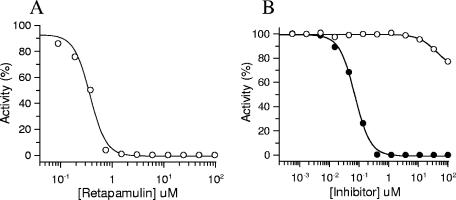
Binding affinity Kd ~ 3 nM for E. coli and S. aureus ribosomes [1] Inhibition of bacterial coupled transcription/translation IC50 = 0.33 ± 0.02 μM (E. coli S30 lysate) [1] Inhibition of peptidyl transferase IC50 below tight binding limit (~100 nM) [1] Partial inhibition of fmet-tRNA binding to P-site IC50 = 17.4 ± 2.1 nM (maximum inhibition 80%) [1] Retapamulin targets bacterial ribosomes, specifically the 50S ribosomal subunit, where it inhibits protein biosynthesis. It binds to both E. coli and S. aureus ribosomes with similar potencies, with a Kd of 3 nM. By binding to the ribosome, Retapamulin inhibits translation and the formation of the 50S ribosomal subunit, leading to the inhibition of bacterial protein synthesis and bacterial death. Retapamulin is a potent antibacterial agent against Gram-positive bacteria, especially against Staphylococcus aureus and Streptococcus pyogenes. It has no cross-resistance to existing antibiotic classes, making it a valuable option for treating infections caused by resistant bacteria. |
|---|---|
| ln Vitro |
Retapamulin is a potent inhibitor of protein synthesis with an IC50 of 0.33 μM in lysates prepared from erythromycin-susceptible E. coli cells. Retapamulin (100 μM) is ineffective in inhibiting eukaryotic translation when tested in a rabbit reticulocyte lysate system with the cellular components necessary for mammalian protein synthesis. Retapamulin binds to Erys ribosomes and fully displaces the labeled ligand with an IC50 of 26.1 nM. Retapamulin partially inhibits the ability of charged, N-blocked tRNA to bind to the P-site of E. coli ribosomes, with an IC50 of 17.4 nM (maximum inhibition of 80%). Retapamulin inhibits Staphylococcus aureus and Streptococcus pyogenes with MIC90 of 0.12 μg/mL and ≤0.03 μg/mL, respectively. Retapamulin inhibits S. aureus subset with MIC50/90 values of 0.06/0.12 μg/mL. Retapamulin shows excellent activity against these isolates, with only two requiring a MIC of 0.06 μg/mL. Retapamulin is very active against the S. pyogenes isolates tested with MIC90 of 0.016 μg/mL, and based on MIC90s, is 32- and >1,024-fold more active than mupirocin and fusidic acid, respectively. Retapamulin binds to a unique site on the bacterial ribosome, and by virtue of its novel mode of action. Retapamulin (<2 mg/L) inhibits 37/52 (71%) strains of the B. fragilis group and 85/87 (98%) of the other Gram-negative bacilli. Retapamulin is more active than clindamycin, metronidazole and ceftriaxone against Propionibacterium acnes and anaerobic Gram-positive cocci. Retapamulin inhibits total viable cells (TVC), Protein synthesis and 50S subunit synthesis in both wild-type (wt) Staphylococcus aureus strain RN1786 with IC50 of 12 ng/mL, 5 ng/mL and 27 ng/mL, respectively.
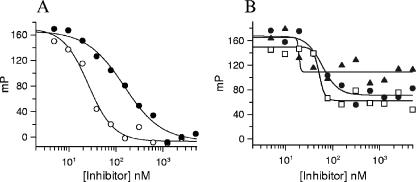
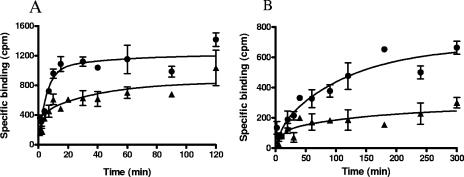
In Vitro: Retapamulin potently inhibited bacterial protein synthesis in an E. coli coupled transcription/translation assay with IC50 of 0.33 ± 0.02 μM [1]. Retapamulin was ineffective in inhibiting eukaryotic translation in rabbit reticulocyte lysate, achieving less than 20% inhibition at 100 μM [1]. Retapamulin bound to E. coli erythromycin-susceptible ribosomes with high affinity, displacing a fluorescently labeled pleuromutilin derivative with IC50 of 26.1 ± 3.6 nM in a fluorescence polarization competitive binding assay [1]. Retapamulin bound to both E. coli and S. aureus ribosomes with similar potencies (Kd ~ 3 nM), with association and dissociation rates: for E. coli, kon = (3.0 ± 0.4)×10^5 M^-1 s^-1, koff = (8.3 ± 1.0)×10^-4 s^-1; for S. aureus, kon = (6.3 ± 2.9)×10^4 M^-1 s^-1, koff = (2.0 ± 0.2)×10^-4 s^-1 [1]. Retapamulin inhibited ribosomal peptidyl transferase activity in a puromycin-based scintillation proximity assay with IC50 below the tight binding limit (~100 nM) [1]. Retapamulin partially inhibited the binding of [3H]fmet-tRNA to the P-site of E. coli ribosomes with IC50 of 17.4 ± 2.1 nM (maximum inhibition 80%) [1]. Schild analysis indicated that the inhibition was non-competitive and allosteric [1]. Retapamulin enhanced the reactivity of nucleotides A2058, A2059, and A2062 in 23S rRNA to dimethyl sulfate (DMS) modification: A2058: 147% enhancement, A2059: 635% enhancement, A2062: 44% enhancement, as measured by fluorescent chemical rRNA footprinting [1]. In vitro studies have demonstrated that Retapamulin is a potent antibacterial agent against Gram-positive bacteria. It is especially active against Staphylococcus aureus and Streptococcus pyogenes. Retapamulin binds to both E. coli and S. aureus ribosomes with similar potencies, with a Kd of 3 nM. The compound's mechanism of action involves inhibition of translation and formation of the 50S ribosomal subunit. These in vitro findings confirm the compound's potency and mechanism of action as a pleuromutilin antibiotic. Retapamulin's lack of cross-resistance to existing antibiotic classes makes it a valuable tool for treating infections caused by resistant bacteria. |
| ln Vivo |
In vivo studies have demonstrated that Retapamulin is effective as a topical antibiotic for the treatment of skin infections caused by Gram-positive bacteria. The compound is the first drug in the pleuromutilin class to be approved for human use. Retapamulin is available as a topical ointment for the treatment of impetigo and other skin infections. Its topical application minimizes systemic exposure and reduces the risk of systemic side effects. The compound's efficacy has been confirmed in clinical trials, and it is approved for clinical use in various countries. Retapamulin is a valuable option for the treatment of skin infections caused by susceptible Gram-positive bacteria, including methicillin-resistant Staphylococcus aureus (MRSA).
|
| Enzyme Assay |
Enzyme Assay: For the fluorescence polarization competitive binding assay, bacterial ribosomes were incubated at 37°C for 15 min before dilution in binding buffer (20 mM HEPES pH 7.5, 50 mM NH4Cl, 10 mM MgCl2, 0.05% Tween 20). A BODIPY-labeled pleuromutilin derivative (SB-452466) at 5 nM was preincubated with 30 nM E. coli erythromycin-susceptible ribosomes for 30 min. Test compounds diluted in 10% DMSO were mixed with the ligand-ribosome mixture in a 96-well plate (final volume 40 µL per well) and incubated at room temperature for 2 h. Fluorescence polarization was measured (excitation 485 nm, emission 530 nm). IC50 values were determined by fitting binding data to a four-parameter IC50 equation [1].
For radiolabeled competitive binding kinetics, bacterial ribosomes were incubated at 37°C for 15 min then diluted in binding buffer (for S. aureus: 25 mM MgCl2). A radiolabeled pleuromutilin ([3H]SB-258781) was used. 20 nM unlabeled retapamulin was mixed with ribosomes (5-15 nM) and [3H]SB-258781 (15-19 nM) in 100 µL final volume. Binding was competed at room temperature over time (2 h for E. coli, 5 h for S. aureus). Free and bound ligands were separated by filtration through a filter plate using a cell harvester. Nonspecific binding was determined by displacement with 10 µM SB-268091. Radioactivity was measured by scintillation counting. Binding data were fit to kinetics of competitive binding model [1]. For the puromycin assay (peptidyl transferase inhibition), E. coli tRNAfmet was aminoacylated with [3H]methionine and formylated. MVF mRNA (120 nt) was transcribed. Reaction mixtures containing P buffer (50 mM HEPES pH 7.5, 100 mM NH4Cl, 15 mM Mg(OAc)2), 1 mM DTT, 50 nM 70S ribosomes, 125 nM mRNA, and compound (1% DMSO) were incubated at 37°C for 10 min. [3H]fmet-tRNA (50 nM) was added and incubated 30 min at 37°C. After cooling, 500 nM biotin-puromycin was added and incubated 3 h. Reactions were quenched with streptavidin-SPA beads. The [3H]fmet-puromycin-biotin product was quantified by scintillation proximity counting [1]. For P-site binding assay, [3H]fmet-tRNA, tRNAphe, and retapamulin in 10% DMSO were added to a 96-well plate. E. coli ribosomes (50 nM final) were incubated at 37°C for 15 min, diluted in P buffer, and added to the plate (final: 50 nM ribosomes, 100 nM [3H]fmet-tRNA, 50 nM tRNAphe). Binding reactions were incubated at 37°C for 30 min, then placed on ice. Bound and free ligands were separated by filtration using a filter plate, washed twice with P buffer, dried. Radioactivity was measured by scintillation counting. For Schild analysis, retapamulin was titrated at four different concentrations of [3H]fmet-tRNA (10-200 nM) [1]. For fluorescent chemical rRNA footprinting, E. coli MRE600 ribosomes (200 nM) were activated at 42°C for 5 min and incubated with 200 µM compound at 37°C for 20 min then ambient temperature for 10 min in buffer (40 mM HEPES pH 7.4, 150 mM KCl, 10 mM MgCl2, 6 mM β-mercaptoethanol). Chemical modification of adenine residues was performed by adding DMS (1:12 in ethanol) and incubating at 37°C for 10 min. Reactions were stopped by ethanol precipitation. Methylation pattern was monitored by primer extension using reverse transcriptase with a 5,6-carboxyfluorescein-labeled DNA primer (oLM7: 5'-CCT ACA CAT CAA GGC TC-3') to screen A2058, A2059, and A2062. Samples were separated by capillary gel electrophoresis and analyzed using GeneScan software [1]. Non-cellular assays for Retapamulin typically involve measuring its binding affinity to bacterial ribosomes using purified ribosomes from E. coli or S. aureus. These assays use radiolabeled Retapamulin or a competitive binding assay with a labeled reference ligand to determine the Kd for ribosomal binding. Alternatively, in vitro translation assays using purified ribosomes and a reporter mRNA can be used to measure the inhibition of protein synthesis by Retapamulin. The compound is tested at various concentrations to determine its IC50 for inhibition of translation. These assays are essential for characterizing the mechanism of action and potency of Retapamulin as a pleuromutilin antibiotic. |
| Cell Assay |
Cell Assay: For the bacterial coupled transcription/translation assay, an E. coli S30 lysate was used with a luciferase reporter gene. The 2× TnT premix contained 625 µM each of 20 natural L-amino acids, 700 mM potassium L-glutamate, 5 mM ATP, 1.25 mM each CTP, UTP, GTP, 50 mM phosphoenol pyruvate, 44 mM HEPES, 44 mM Tris-acetate, 125 mM ammonium acetate, 2.5 mM cyclic AMP, 50 µg/mL folic acid, 250 µg/mL E. coli tRNA, 22.5 mM magnesium acetate, 2 mM IPTG, 5 mM DTT, and 87.5 mg/mL polyethylene glycol 8000 (pH 8.0). Final reaction conditions: 1% DMSO, 1× TnT premix, 4 mg/mL S30 lysate, 0.02 mg/mL pDNA-luc, and test compound (0-50 µM). Reaction mixtures (20 µL) containing compound, TnT premix, and S30 lysate were preincubated for 15 min at 37°C. Reactions were started by addition of 5 µL pDNA-luc and incubated at 37°C for 45 min, then ambient temperature for 10 min. Luciferin substrate reagent (25 µL) was added, and luminescence was measured. IC50 values were calculated [1].
For the rabbit reticulocyte assay (eukaryotic translation inhibition), a rabbit reticulocyte lysate system was used with luciferase mRNA as template. Inhibitors were tested from 2 nM to 100 µM with final DMSO concentration of 1%. Full-length luciferase was quantified using a luciferase assay system. Retapamulin showed less than 20% inhibition at 100 µM [1]. In vitro cell-based assays for Retapamulin typically involve determining the minimum inhibitory concentration (MIC) against a panel of bacterial strains, including Gram-positive and Gram-negative bacteria. The MIC is determined using broth microdilution or agar dilution methods according to Clinical and Laboratory Standards Institute (CLSI) guidelines. Retapamulin is tested at various concentrations, and the MIC is defined as the lowest concentration that inhibits visible bacterial growth after overnight incubation. The compound is particularly active against Gram-positive bacteria, including Staphylococcus aureus and Streptococcus pyogenes. Cytotoxicity assays may also be performed in mammalian cell lines to assess the compound's safety profile. Retapamulin is typically dissolved in DMSO for in vitro studies. |
| Animal Protocol |
In vivo animal studies for Retapamulin typically involve mouse models of skin infections, such as impetigo or wound infection models. Mice are infected with bacterial strains (e.g., S. aureus) and treated with Retapamulin topically at various doses. The compound's efficacy is assessed by measuring bacterial burden in the skin, wound healing, and histopathological changes. Dose-response studies are conducted to determine the optimal dosing regimen. However, specific published in vivo data for Retapamulin are primarily derived from clinical trials rather than animal studies. Retapamulin is approved for clinical use based on extensive clinical trial data.
|
| ADME/Pharmacokinetics |
Pharmacokinetic studies of Retapamulin have shown that it is minimally absorbed through the skin when applied topically, limiting systemic exposure and reducing the risk of systemic side effects. The compound is metabolized in the skin and is eliminated primarily through the skin and by renal excretion. The compound's favorable pharmacokinetic profile supports its use as a topical antibiotic. Retapamulin is approved for clinical use and is available by prescription as a topical ointment. Its molecular weight is 517.76 g/mol.
|
| Toxicity/Toxicokinetics |
Effects During Pregnancy and Lactation
◉ Overview of Use During Lactation There is currently no information regarding the use of Retapalline during lactation. Because Retapalline is poorly absorbed after topical application, it is unlikely to enter the infant's bloodstream, nor will it cause any adverse effects on the breastfeeding infant if the mother applies the medication to areas other than the breast. Only water-soluble creams or gels should be applied to the breast, as ointments may expose the infant to high concentrations of mineral oil through licking. ◉ Effects on Breastfeeding Infants As of the revision date, no relevant published information was found. ◉ Effects on Lactation and Breast Milk As of the revision date, no relevant published information was found. Toxicological data for Retapamulin have been evaluated in preclinical studies and clinical trials. The compound is generally well-tolerated when applied topically, with the most common adverse effects being local skin reactions (e.g., irritation, itching, redness). Systemic toxicity is minimal due to the low systemic absorption of the compound. Retapamulin has a favorable safety profile, with no significant systemic toxicity reported. The compound is approved for clinical use and is available by prescription. Retapamulin is not intended for systemic use and is strictly a topical antibiotic. |
| References |
Antimicrob Agents Chemother.2006 Nov;50(11):3875-81. Epub 2006 Aug 28.
|
| Additional Infomation |
Retapamulin is a carboxylic acid ester and a cyclic ketone. Retapalline is a truncated pleurotin class of antibacterial drugs. See also: Retapalline (note moved to).
Additional Info: Retapamulin is a semisynthetic pleuromutilin derivative being developed as a topical antibiotic for treating bacterial infections of the skin. It is potent against susceptible and multidrug-resistant organisms commonly associated with bacterial skin infections [1]. Unlike macrolides (erythromycin, azithromycin, clarithromycin), retapamulin does not show cross-resistance with these classes; macrolides did not displace pleuromutilin ligand from ribosomes [1]. Retapamulin showed a low propensity for development of resistance, indicating low likelihood of resistance via target mutation during therapy [1]. The mode of action of retapamulin is distinct from other classes of antibiotics: it binds to the peptidyl transferase center, inhibits peptide bond formation, and partially inhibits P-site tRNA binding through an allosteric mechanism [1]. X-ray crystallographic data for tiamulin (a related pleuromutilin) show interactions with both A- and P-sites of the ribosome, and retapamulin is expected to have a similar binding mode [1]. Retapamulin (SB-275833) is a semi-synthetic pleuromutilin antibiotic and the first drug in its class approved for human use. It has the CAS number 224452-66-8. Retapamulin is a potent topical antibiotic against Gram-positive bacteria, especially S. aureus and S. pyogenes. It binds to bacterial ribosomes with a Kd of 3 nM and inhibits protein synthesis. Retapamulin is approved for clinical use as a topical ointment for the treatment of skin infections. |
| Molecular Formula |
C30H47NO4S
|
|
|---|---|---|
| Molecular Weight |
517.76
|
|
| Exact Mass |
517.322
|
|
| Elemental Analysis |
C, 69.59; H, 9.15; N, 2.71; O, 12.36; S, 6.19
|
|
| CAS # |
224452-66-8
|
|
| Related CAS # |
|
|
| PubChem CID |
6918462
|
|
| Appearance |
White to off-white solid powder.
|
|
| Density |
1.2±0.1 g/cm3
|
|
| Boiling Point |
594.9±50.0 °C at 760 mmHg
|
|
| Flash Point |
313.6±30.1 °C
|
|
| Vapour Pressure |
0.0±3.8 mmHg at 25°C
|
|
| Index of Refraction |
1.571
|
|
| LogP |
5.45
|
|
| Hydrogen Bond Donor Count |
1
|
|
| Hydrogen Bond Acceptor Count |
6
|
|
| Rotatable Bond Count |
6
|
|
| Heavy Atom Count |
36
|
|
| Complexity |
895
|
|
| Defined Atom Stereocenter Count |
10
|
|
| SMILES |
S(C([H])([H])C(=O)O[C@]1([H])C([H])([H])[C@](C([H])=C([H])[H])(C([H])([H])[H])[C@]([H])([C@]([H])(C([H])([H])[H])[C@]23C([H])([H])C([H])([H])C([C@@]2([H])[C@@]1(C([H])([H])[H])[C@]([H])(C([H])([H])[H])C([H])([H])C3([H])[H])=O)O[H])C1([H])C([H])([H])[C@]2([H])C([H])([H])C([H])([H])[C@]([H])(C1([H])[H])N2C([H])([H])[H]
|
|
| InChi Key |
STZYTFJPGGDRJD-QPCPVAGTSA-N
|
|
| InChi Code |
InChI=1S/C30H47NO4S/c1-7-28(4)16-24(35-25(33)17-36-22-14-20-8-9-21(15-22)31(20)6)29(5)18(2)10-12-30(19(3)27(28)34)13-11-23(32)26(29)30/h7,18-22,24,26-27,34H,1,8-17H2,2-6H3/t18-,19+,20-,21+,22-,24-,26+,27+,28-,29-,30+/m1/s1
|
|
| Chemical Name |
(3aR,4S,5R,7S,8S,9R,9aS,12R)-8-hydroxy-4,7,9,12-tetramethyl-3-oxo-7-vinyldecahydro-4,9a-propanocyclopenta[8]annulen-5-yl 2-(((1R,3s,5S)-8-methyl-8-azabicyclo[3.2.1]octan-3-yl)thio)acetate
|
|
| Synonyms |
SB-275833; SB 275833; SB275833; Retapamulin, trade names Altabax and Altargo.
|
|
| HS Tariff Code |
2934.99.9001
|
|
| Storage |
Powder -20°C 3 years 4°C 2 years In solvent -80°C 6 months -20°C 1 month Note: This product requires protection from light (avoid light exposure) during transportation and storage. |
|
| Shipping Condition |
Room temperature (This product is stable at ambient temperature for a few days during ordinary shipping and time spent in Customs)
|
| Solubility (In Vitro) |
DMSO : 104~110 mg/mL ( 200.86~212.45 mM )
Ethanol : ~104 mg/mL |
|---|---|
| Solubility (In Vivo) |
Solubility in Formulation 1: ≥ 2.75 mg/mL (5.31 mM) (saturation unknown) in 10% DMSO + 40% PEG300 + 5% Tween80 + 45% Saline (add these co-solvents sequentially from left to right, and one by one), clear solution.
For example, if 1 mL of working solution is to be prepared, you can add 100 μL of 27.5 mg/mL clear DMSO stock solution to 400 μL PEG300 and mix evenly; then add 50 μL Tween-80 to the above solution and mix evenly; then add 450 μL normal saline to adjust the volume to 1 mL. Preparation of saline: Dissolve 0.9 g of sodium chloride in 100 mL ddH₂ O to obtain a clear solution. Solubility in Formulation 2: ≥ 2.75 mg/mL (5.31 mM) (saturation unknown) in 10% DMSO + 90% (20% SBE-β-CD in Saline) (add these co-solvents sequentially from left to right, and one by one), clear solution. For example, if 1 mL of working solution is to be prepared, you can add 100 μL of 27.5 mg/mL clear DMSO stock solution to 900 μL of 20% SBE-β-CD physiological saline solution and mix evenly. Preparation of 20% SBE-β-CD in Saline (4°C,1 week): Dissolve 2 g SBE-β-CD in 10 mL saline to obtain a clear solution. View More
Solubility in Formulation 3: ≥ 2.75 mg/mL (5.31 mM) (saturation unknown) in 10% DMSO + 90% Corn Oil (add these co-solvents sequentially from left to right, and one by one), clear solution. Solubility in Formulation 4: 10% DMSO+40% PEG300+5% Tween-80+45% Saline: ≥ 2.75 mg/mL (5.31 mM) |
| Preparing Stock Solutions | 1 mg | 5 mg | 10 mg | |
| 1 mM | 1.9314 mL | 9.6570 mL | 19.3140 mL | |
| 5 mM | 0.3863 mL | 1.9314 mL | 3.8628 mL | |
| 10 mM | 0.1931 mL | 0.9657 mL | 1.9314 mL |
*Note: Please select an appropriate solvent for the preparation of stock solution based on your experiment needs. For most products, DMSO can be used for preparing stock solutions (e.g. 5 mM, 10 mM, or 20 mM concentration); some products with high aqueous solubility may be dissolved in water directly. Solubility information is available at the above Solubility Data section. Once the stock solution is prepared, aliquot it to routine usage volumes and store at -20°C or -80°C. Avoid repeated freeze and thaw cycles.
Calculation results
Working concentration: mg/mL;
Method for preparing DMSO stock solution: mg drug pre-dissolved in μL DMSO (stock solution concentration mg/mL). Please contact us first if the concentration exceeds the DMSO solubility of the batch of drug.
Method for preparing in vivo formulation::Take μL DMSO stock solution, next add μL PEG300, mix and clarify, next addμL Tween 80, mix and clarify, next add μL ddH2O,mix and clarify.
(1) Please be sure that the solution is clear before the addition of next solvent. Dissolution methods like vortex, ultrasound or warming and heat may be used to aid dissolving.
(2) Be sure to add the solvent(s) in order.
 |
|---|
 |
 |
Products are for research use only; We do not sell to patients
Copyright 2020 InvivoChem LLC | All Rights Reserved


 COA
COA