| Size | Price | Stock | Qty |
|---|---|---|---|
| 5mg |
|
||
| 10mg |
|
||
| 25mg |
|
||
| 50mg |
|
||
| 100mg |
|
||
| 250mg | |||
| 500mg | |||
| Other Sizes |


Purity: ≥98%
| Targets |
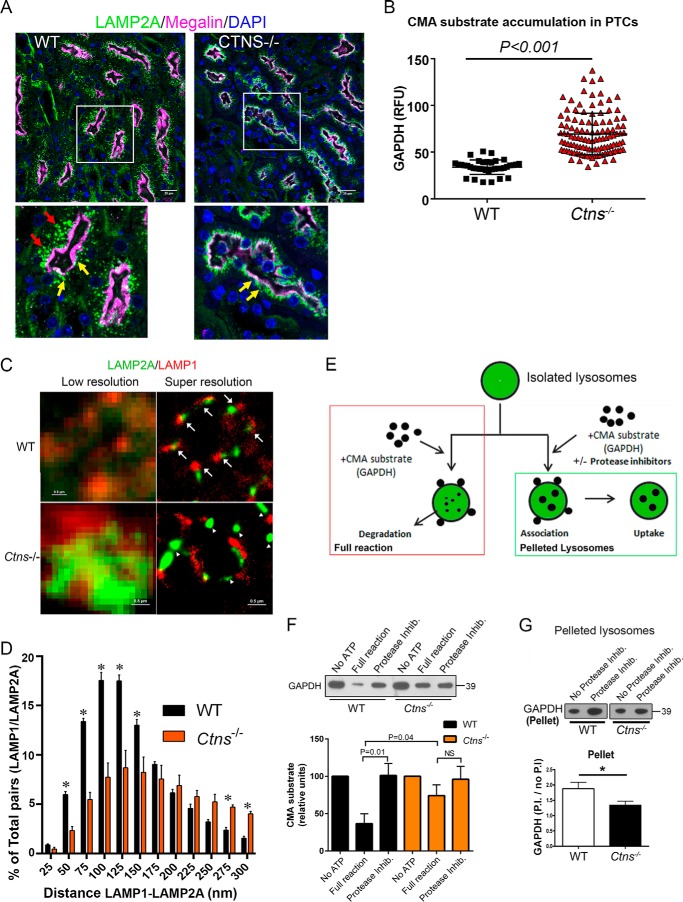
In Ctns-/- MEFs, QX77 (48 hours) increases the expression levels of Rab11 [1]. Rab11-positive vector vesicles restored the high-motility transport phenotype of wild-type cells, and QX77 restored downregulated LAMP2A expression in Ctns-/-MEFs [1]. In cystine cells, treatment with the CMA activator QX77 prevented Rab11 downregulation and trafficking abnormalities. Additionally, LAMP2A's location on the lysosomal membrane is enhanced by QX77 treatment [1]. QX77 corrects the location of LAMP2A on the lysosomal membrane of cystine cells and dramatically promotes its relocalization to LAMP1-positive lysosomes in cystine cells [1]. QX77 restores the levels of resistance seen in wild-type cells while shielding cystine cells from oxidative damage caused by tert-butyl hydroperoxide. LAMP2A expression is required for QX77 to have an impact on cystine cell survival [1]. In D3 and E14 ES cells, QX77 (10 μM; 0, 3 or 6 days) downregulates pluripotency factors and AP responsiveness, increases LAMP2A expression, activates CMA, and partially loses typical ES cell shape [2].
|
|---|---|
| ln Vitro |
In Ctns-/- MEFs, QX77 (48 hours) increases the expression levels of Rab11 [1]. Rab11-positive vector vesicles restored the high-motility transport phenotype of wild-type cells, and QX77 restored downregulated LAMP2A expression in Ctns-/-MEFs [1]. In cystine cells, treatment with the CMA activator QX77 prevented Rab11 downregulation and trafficking abnormalities. Additionally, LAMP2A's location on the lysosomal membrane is enhanced by QX77 treatment [1]. QX77 corrects the location of LAMP2A on the lysosomal membrane of cystine cells and dramatically promotes its relocalization to LAMP1-positive lysosomes in cystine cells [1]. QX77 restores the levels of resistance seen in wild-type cells while shielding cystine cells from oxidative damage caused by tert-butyl hydroperoxide. LAMP2A expression is required for QX77 to have an impact on cystine cell survival [1]. In D3 and E14 ES cells, QX77 (10 μM; 0, 3 or 6 days) downregulates pluripotency factors and AP responsiveness, increases LAMP2A expression, activates CMA, and partially loses typical ES cell shape [2].
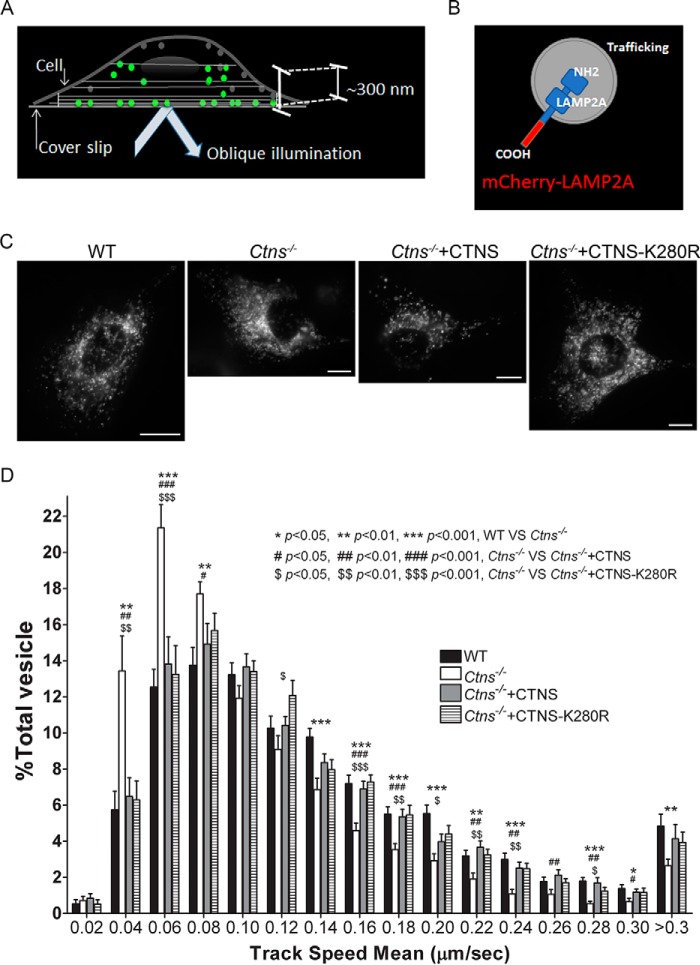
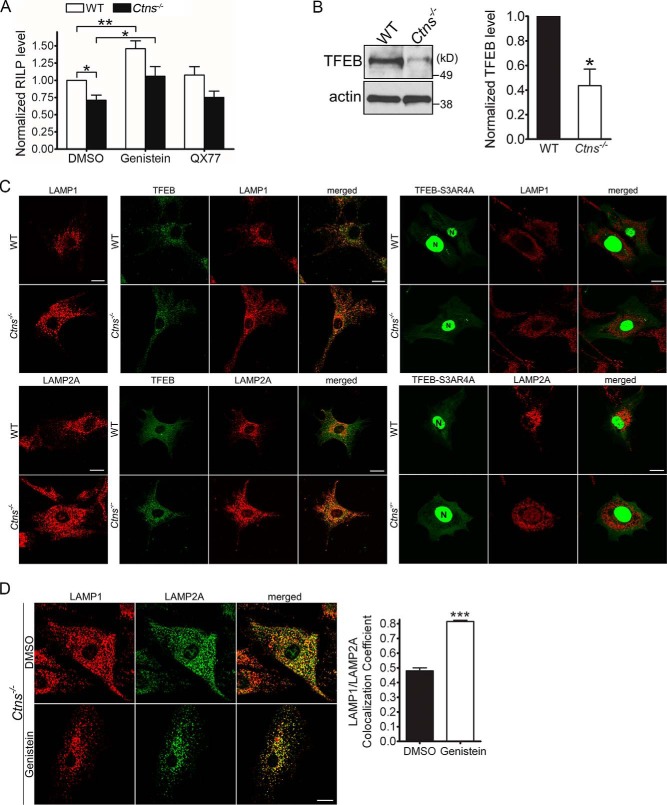
Treatment of mouse embryonic stem (ES) cell lines (D3 and E14) with QX77 at a concentration of 10 µM led to downregulation of pluripotency transcription factors (Oct4, Sox2, Nanog) and reduced alkaline phosphatase (AP) reactivity, which is a marker of undifferentiated ES cells. QX77 treatment also induced a loss of the characteristic compact colony morphology of ES cells. These effects are consistent with the pharmacological activation of CMA by QX77, promoting ES cell differentiation. [2] Treatment of Ctns−/− mouse embryonic fibroblasts (MEFs) with the CMA activator QX77 for 48 hours induced the up-regulation of Rab11 expression to the levels observed in wild-type cells. In contrast, genistein (a TFEB activator) did not have this effect. [1] Vesicular trafficking analysis by pseudo-TIRFM showed that GFP-Rab11-positive vesicles in Ctns−/− MEFs exhibited decreased motility compared to wild-type cells. Treatment of Ctns−/− cells with QX77 rescued this defect, restoring the high-motility trafficking phenotype observed in wild-type cells. This rescue effect was dependent on LAMP2A expression, as it was not observed in Ctns−/− cells where LAMP2A was down-regulated using shRNA. [1] Quantitative PCR analysis revealed that treatment of wild-type and Ctns−/− MEFs with QX77 for 48 hours did not up-regulate the expression of RILP, a Rab7 effector. In contrast, genistein treatment up-regulated RILP expression. [1] Confocal microscopy analysis showed that treatment of Ctns−/− cells with QX77 significantly increased the re-localization of the CMA receptor LAMP2A at LAMP1-positive lysosomes. [1] Cell survival assays (MTT) demonstrated that pre-treatment of Ctns−/− MEFs with QX77 for 48 hours protected them from oxidative stress-induced cell death caused by tert-butyl hydroperoxide (100 μM). This protective effect restored survival levels to those observed in wild-type cells and was dependent on LAMP2A expression, as it was prevented by LAMP2A knockdown. [1] |
| Cell Assay |
Western Blot analysis [2]
Cell Types: ES D3 cell line; E14TG2a (E14) Cell line Tested Concentrations: 10 μM Incubation Duration: 3 or 6 days Experimental Results: LAMP2A expression increased, SOX2 and Oct4 protein expression diminished. For analysis of Rab11 and RILP expression, wild-type (WT) and Ctns−/− mouse embryonic fibroblasts (MEFs) were treated with QX77, genistein, or vehicle (DMSO) for 48 hours. Cells were then lysed, and protein expression levels were analyzed by Western blotting using specific antibodies against Rab11, RILP, and loading controls. [1] For qRT-PCR analysis of RILP mRNA, RNA was isolated from WT and Ctns−/− MEFs treated with QX77 or vehicle for 48 hours. RNA was reverse-transcribed, and quantitative PCR was performed using specific primers for mouse Rilp and β-actin as an internal control. [1] For vesicular trafficking studies, QX77-treated or untreated Ctns−/− MEFs were transfected with GFP-Rab11. Live-cell imaging was performed using pseudo-total internal reflection fluorescence microscopy (pseudo-TIRFM). Images were acquired every 300-500 ms, and the motility of GFP-Rab11-positive vesicles was tracked and analyzed using specialized software to determine vesicle speeds. [1] For LAMP2A lysosomal localization analysis, Ctns−/− cells were treated with QX77 or vehicle for a specified period (likely 48 hours based on other assays), then fixed and immunostained for endogenous LAMP1 and LAMP2A. Confocal microscopy was used to acquire images, and colocalization of LAMP2A with LAMP1-positive structures was quantified using image analysis software. [1] For cell survival assays, Ctns−/− and WT MEFs were seeded in 96-well plates and grown for 24 hours. Cells were then pre-incubated with QX77 or vehicle (DMSO) for 48 hours in fresh medium containing 10% dialyzed FBS. Subsequently, the oxidative stressor tert-butyl hydroperoxide was added at a concentration of 100 μM. After overnight incubation, cell viability was determined using the MTT assay. The culture medium was replaced with fresh medium containing MTT reagent and incubated for 4 hours at 37°C. Cells were then solubilized, and absorbance at 560 nm was measured with a microplate reader. Background absorbance from wells without cells was subtracted, and survival percentage was calculated relative to untreated control wells. [1] To assess LAMP2A-dependence, Ctns−/− MEFs were first infected with lentiviral shRNA against mouse LAMP2A for 7 days to down-regulate its expression. These cells were then subjected to the same QX77 pre-treatment and oxidative stress challenge, followed by the MTT assay as described above. [1] |
| References |
|
| Additional Infomation |
QX77 is a small molecule activator of chaperone-mediated autophagy (CMA). In this study, QX77 was used as a pharmacological tool to verify that increased CMA activity (mimicking the upregulation observed during differentiation) was sufficient to inhibit the pluripotency of mouse embryonic stem cells and promote their differentiation. The effect of QX77 is similar to that of forced overexpression of the rate-limiting CMA receptor LAMP2A. [2]
|
| Molecular Formula |
C16H13CLN2O2
|
|
|---|---|---|
| Molecular Weight |
300.739622831345
|
|
| Exact Mass |
300.066
|
|
| CAS # |
1798331-92-6
|
|
| Related CAS # |
|
|
| PubChem CID |
118129505
|
|
| Appearance |
Light yellow to yellow solid powder
|
|
| LogP |
2.9
|
|
| Hydrogen Bond Donor Count |
1
|
|
| Hydrogen Bond Acceptor Count |
3
|
|
| Rotatable Bond Count |
2
|
|
| Heavy Atom Count |
21
|
|
| Complexity |
419
|
|
| Defined Atom Stereocenter Count |
0
|
|
| SMILES |
ClC1C=CC2=C(C=1)OCC(C1C=CC(=CC=1)NC(C)=O)=N2
|
|
| InChi Key |
PYCTUCLCTVWILY-UHFFFAOYSA-N
|
|
| InChi Code |
InChI=1S/C16H13ClN2O2/c1-10(20)18-13-5-2-11(3-6-13)15-9-21-16-8-12(17)4-7-14(16)19-15/h2-8H,9H2,1H3,(H,18,20)
|
|
| Chemical Name |
|
|
| Synonyms |
|
|
| HS Tariff Code |
2934.99.9001
|
|
| Storage |
Powder -20°C 3 years 4°C 2 years In solvent -80°C 6 months -20°C 1 month |
|
| Shipping Condition |
Room temperature (This product is stable at ambient temperature for a few days during ordinary shipping and time spent in Customs)
|
| Solubility (In Vitro) |
|
|||
|---|---|---|---|---|
| Solubility (In Vivo) |
Solubility in Formulation 1: 10 mg/mL (33.25 mM) in 50% PEG300 +50% Saline (add these co-solvents sequentially from left to right, and one by one), suspension solution; with sonication.
Preparation of saline: Dissolve 0.9 g of sodium chloride in 100 mL ddH₂ O to obtain a clear solution. (Please use freshly prepared in vivo formulations for optimal results.) |
| Preparing Stock Solutions | 1 mg | 5 mg | 10 mg | |
| 1 mM | 3.3251 mL | 16.6257 mL | 33.2513 mL | |
| 5 mM | 0.6650 mL | 3.3251 mL | 6.6503 mL | |
| 10 mM | 0.3325 mL | 1.6626 mL | 3.3251 mL |
*Note: Please select an appropriate solvent for the preparation of stock solution based on your experiment needs. For most products, DMSO can be used for preparing stock solutions (e.g. 5 mM, 10 mM, or 20 mM concentration); some products with high aqueous solubility may be dissolved in water directly. Solubility information is available at the above Solubility Data section. Once the stock solution is prepared, aliquot it to routine usage volumes and store at -20°C or -80°C. Avoid repeated freeze and thaw cycles.
Calculation results
Working concentration: mg/mL;
Method for preparing DMSO stock solution: mg drug pre-dissolved in μL DMSO (stock solution concentration mg/mL). Please contact us first if the concentration exceeds the DMSO solubility of the batch of drug.
Method for preparing in vivo formulation::Take μL DMSO stock solution, next add μL PEG300, mix and clarify, next addμL Tween 80, mix and clarify, next add μL ddH2O,mix and clarify.
(1) Please be sure that the solution is clear before the addition of next solvent. Dissolution methods like vortex, ultrasound or warming and heat may be used to aid dissolving.
(2) Be sure to add the solvent(s) in order.
LAMP2A mislocalization is associated within vivoaccumulation and impaired CMA substrate lysosomal internalization in cystinosis.J BiolChem.2017 Jun 23;292(25):10328-10346. d |
CTNS regulates LAMP2A trafficking.J BiolChem.2017 Jun 23;292(25):10328-10346. d |
TFEB activation improves lysosomal trafficking and corrects the localization of LAMP2A in cystinotic cells.J BiolChem.2017 Jun 23;292(25):10328-10346. d |
Products are for research use only; We do not sell to patients
Copyright 2020 InvivoChem LLC | All Rights Reserved


 COA
COA