| Size | Price | Stock | Qty |
|---|---|---|---|
| 10mg |
|
||
| 25mg |
|
||
| 50mg |
|
||
| 100mg | |||
| 250mg | |||
| 500mg | |||
| Other Sizes |
| Targets |
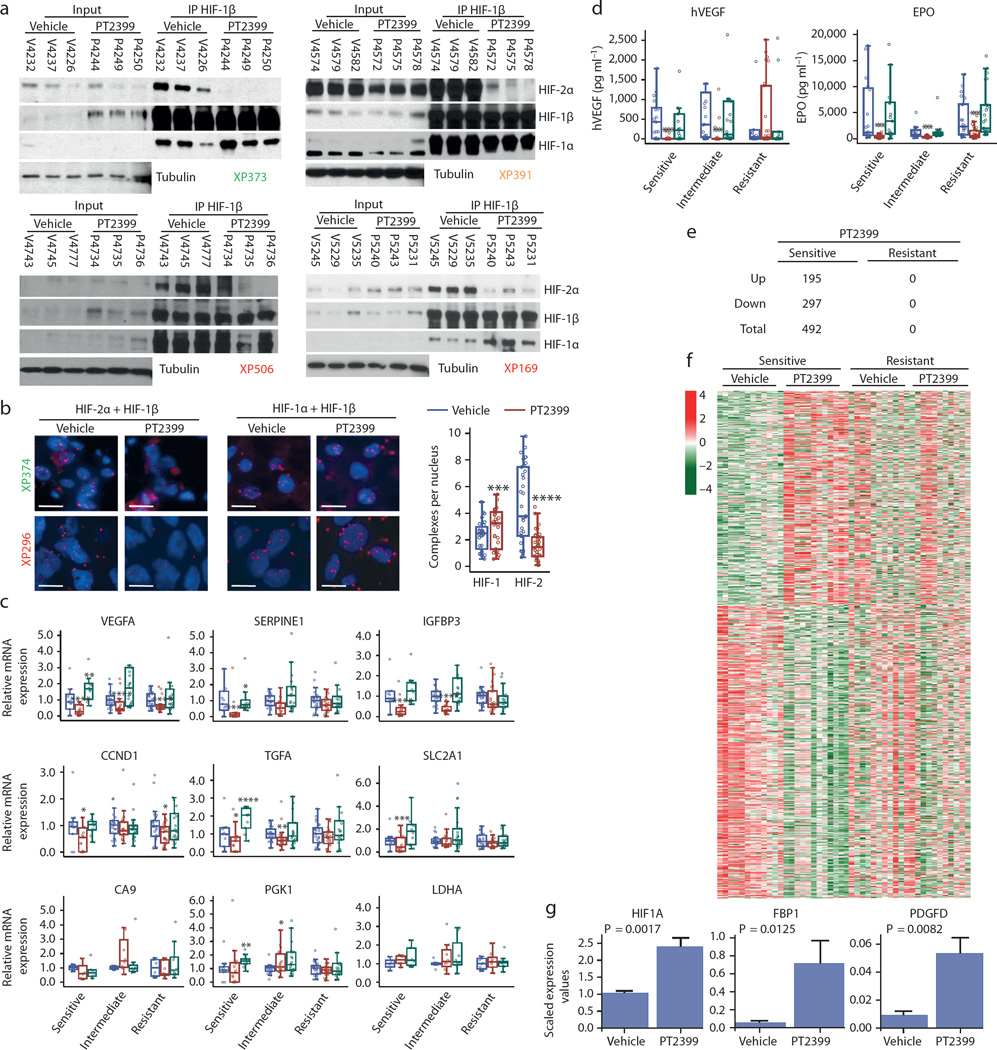
PT2399's primary target is hypoxia-inducible factor 2α (HIF-2α), a transcription factor that plays a key role in cellular responses to hypoxia. It binds directly to the HIF-2α PAS-B domain with an IC50 of 6 nM. By binding to this domain, it selectively disrupts the heterodimerization of HIF-2α with HIF-1β (ARNT). This prevents the formation of the active HIF-2 transcriptional complex, thereby reducing the expression of HIF-2 target genes such as VEGF, SERPINE1, IGFBP3, CCND1, TGFA, and SLC2A1. PT2399 does not suppress HIF-1α-specific targets such as CA9, PGK1, and LDHA, demonstrating its selectivity for HIF-2α over HIF-1α.
|
|---|---|
| ln Vitro |
PT2399 (compound 10f) has an IC50 of 6 nM for inhibiting HIF-2α [3]. Because it inhibits HIF translocation -2α-/- 786-O cells and other cell lines tested for HIF-2α, PT2399 (20 μM) can induce off-target damage. It directly binds to the HIF-2α PAS B domain and surpasses HIF-2α's ability to connect to aryl hydrocarbon receptor nuclear transporter (ARNT) [2]. In soft agar, PT2399 (0.2-2 μM) inhibits 786-O VHL/; 0-21 days) and prevents 786-O cell development [2]. In ccRCC cells, a number of HIF target genes, including BNIP3, do not suppress HIF-1α potential targets [2].
In vitro, PT2399 is a potent antagonist of HIF-2α with an IC50 of 6 nM. It selectively disrupts the heterodimerization of HIF-2α with HIF-1β. PT2399 represses various HIF target genes in 786-O VHL-deficient ccRCC cells but does not suppress HIF-1α-specific targets such as BNIP3. It reduces the expression of HIF-2 target genes (VEGF, SERPINE1, IGFBP3, CCND1, TGFA, and SLC2A1) but not HIF-1 targets (CA9, PGK1, and LDHA). The compound specifically disassembles HIF-2 but not HIF-1 complexes. At 20 µM, PT2399 can induce off-target damage. |
| ln Vivo |
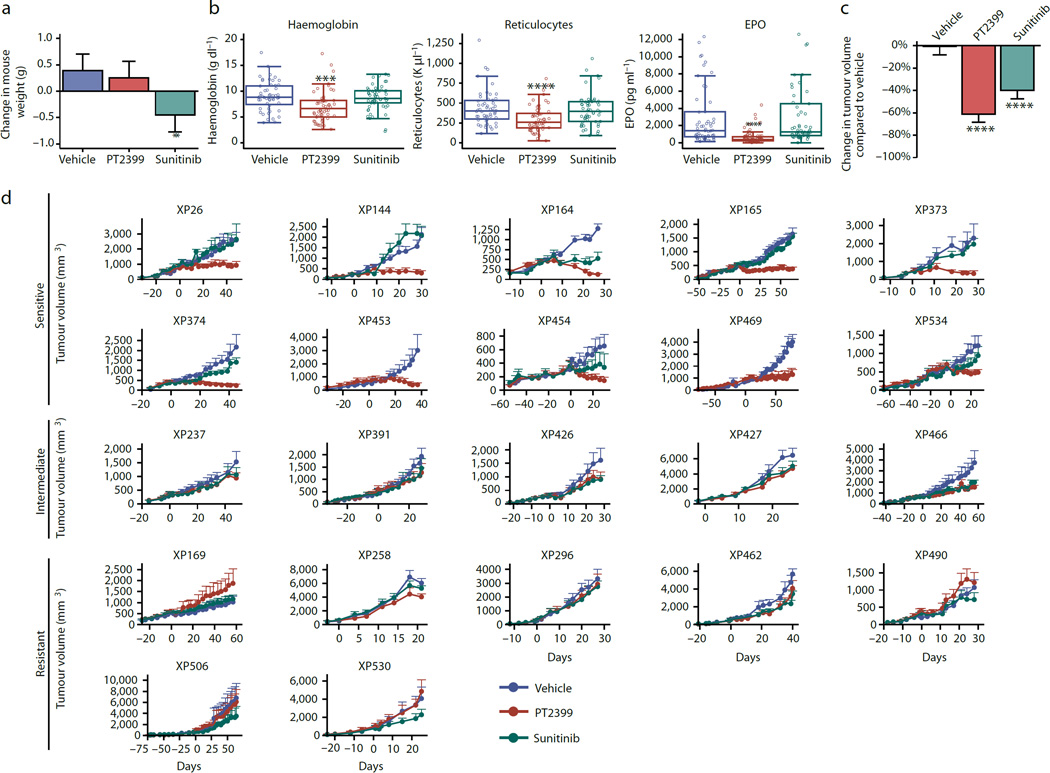
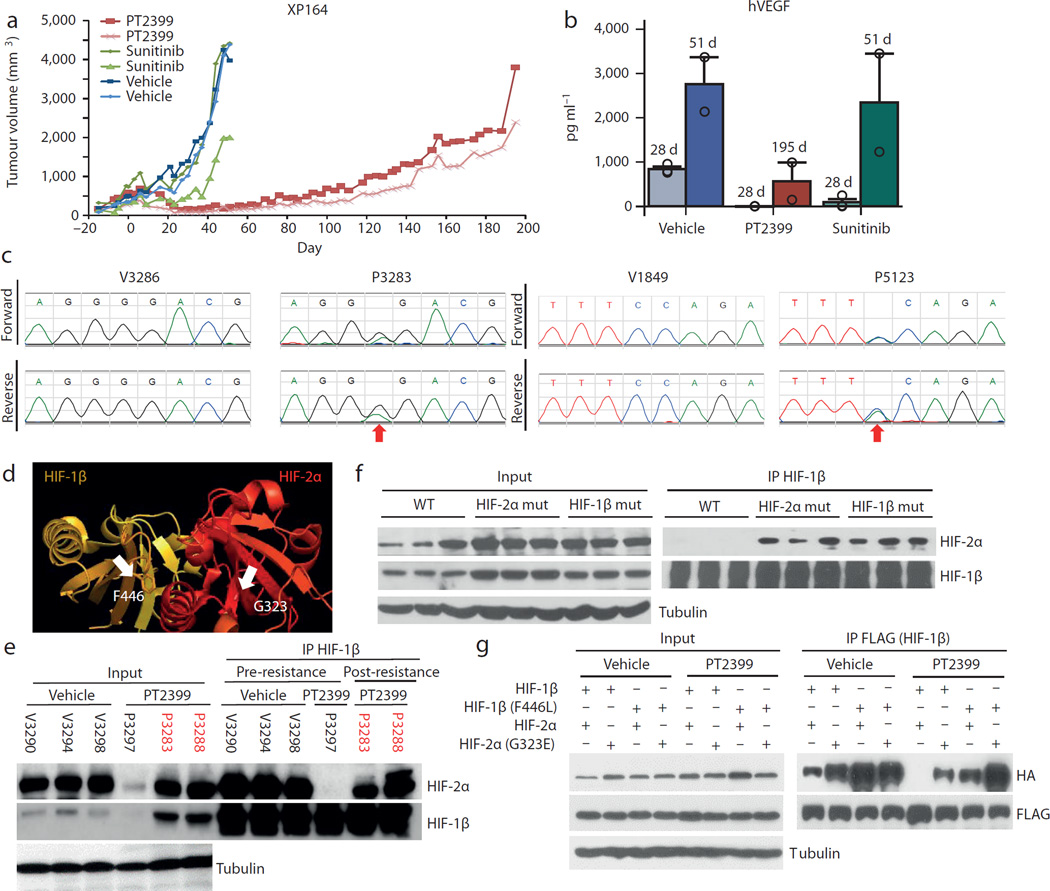
PT2399 reduces tumor cell density and increases fibrosis in RCC mice [1]. PT2399 (100 mg/kg; side wall gavage; every 12 hours) is more active than SU 11248 and inhibits several interactions in RCC tumor-bearing cells PT2399 directly inhibits HIF-2α in an inhibitory manner in primary and metastatic pVHL Defective ccRCC leads to tumor regression in preclinical models [2]. SU 11248 triggers tumor growth [1].
In vivo, PT2399 directly inhibits HIF-2α and causes tumor regression in preclinical mouse models of primary and metastatic pVHL-deficient clear cell renal cell carcinoma. It inhibits tumor cell proliferation by 3.5-fold in mice bearing renal cell carcinoma (RCC). PT2399 displays potent antitumor activity in vivo. Its oral availability makes it suitable for therapeutic applications. The compound has been studied for its potential in treating clear cell renal cell carcinoma (ccRCC), which is characterized by VHL loss and HIF-2α activation. |
| Enzyme Assay |
The in vitro activity of PT2399 is assessed using various biochemical and cell-based assays. For binding studies, surface plasmon resonance (SPR) or isothermal titration calorimetry (ITC) can be used to measure the binding affinity of PT2399 to the HIF-2α PAS-B domain. For functional assays, 786-O VHL-deficient ccRCC cells are treated with various concentrations of PT2399 (typically 0.1-100 µM) for 24-72 hours. The expression of HIF target genes (e.g., VEGF, SERPINE1, CCND1) is analyzed by qPCR or Western blotting. The disruption of HIF-2α/ARNT heterodimerization can be assessed using co-immunoprecipitation or proximity ligation assays.
|
| Cell Assay |
Cell Viability Assay[1]
Cell Types: 786-O cells Tested Concentrations: 0 μM, 0.2 μM, 2 μM Incubation Duration: 0-21 days Experimental Results: 0.2-2 μM concentration can inhibit the growth of 786-O cells in soft agar. For cellular assays, 786-O VHL-deficient ccRCC cells and other cancer cell lines are used. Cells are cultured in appropriate media and treated with various concentrations of PT2399 (typically 0.1-100 µM) for defined periods (24-72 hours). Cell viability is assessed using MTT or CellTiter-Glo assays. Apoptosis is evaluated by measuring caspase-3/7 activity or by flow cytometry using Annexin V/PI staining. The expression of HIF target genes is analyzed by qPCR. Cell cycle progression is analyzed by flow cytometry using propidium iodide staining. The effect on HIF-2α and HIF-1α activity is compared to confirm selectivity. |
| Animal Protocol |
Animal/Disease Models: Mouse RCC tumor graft [1]
Doses: 100 mg/kg Route of Administration: po (oral gavage); every 12 hrs (hrs (hours)) Experimental Results: More active than SU 11248, and inhibits tumor growth of a variety of SU 11248-resistant tumors . In vivo, PT2399 is typically administered orally to mouse models of renal cell carcinoma. The compound is formulated in a suitable vehicle (e.g., 0.5% methylcellulose or a mixture of PEG400 and water) and administered at various doses (typically 10-100 mg/kg) once or twice daily. Tumor growth is monitored by measuring tumor volume. At the end of the study, tumors are excised and analyzed for the expression of HIF target genes by qPCR and for apoptosis by TUNEL or immunohistochemistry. Pharmacodynamic studies can be performed by collecting blood and tumor tissue at various time points after administration. |
| ADME/Pharmacokinetics |
PT2399 is orally available. It has a molecular weight of 411.35 g/mol and a molecular formula of C18H12F3NO5S. The compound is soluble in DMSO. It should be stored at -20°C under appropriate conditions to maintain stability. Specific pharmacokinetic data (absorption, distribution, metabolism, excretion) is not detailed in the provided search results. Its half-life and bioavailability would require further investigation.
|
| Toxicity/Toxicokinetics |
Specific toxicity data for PT2399 is not available in the provided search results. In vitro studies have shown that at 20 µM, PT2399 can induce off-target damage, indicating that high concentrations may have non-specific effects. At therapeutic doses, the compound is expected to be well-tolerated due to its selectivity for HIF-2α. However, chronic inhibition of HIF-2α may affect normal physiological processes that depend on HIF-2 signaling, including erythropoiesis and vascular function. Comprehensive toxicological studies are required to establish its full safety profile.
|
| References | |
| Additional Infomation |
PT2399 is a research compound that has been developed as a potent and selective HIF-2α antagonist for the treatment of clear cell renal cell carcinoma (ccRCC). ccRCC is characterized by VHL loss, which leads to constitutive activation of HIF-2α, making it a key oncogenic driver. PT2399 directly binds to the HIF-2α PAS-B domain and disrupts its heterodimerization with ARNT, thereby inhibiting HIF-2 target gene expression. The compound has shown potent antitumor activity in preclinical models, leading to tumor regression. PT2399 is not approved for clinical use and is intended for research purposes only. It is available from chemical suppliers for research applications.
|
| Molecular Formula |
C17H10F5NO4S
|
|---|---|
| Molecular Weight |
419.322620868683
|
| Exact Mass |
419.03
|
| Elemental Analysis |
C, 48.69; H, 2.40; F, 22.65; N, 3.34; O, 15.26; S, 7.65
|
| CAS # |
1672662-14-4
|
| Related CAS # |
(Rac)-PT2399;1672662-07-5
|
| PubChem CID |
91663289
|
| Appearance |
White to off-white solid powder
|
| LogP |
3.3
|
| Hydrogen Bond Donor Count |
1
|
| Hydrogen Bond Acceptor Count |
10
|
| Rotatable Bond Count |
4
|
| Heavy Atom Count |
28
|
| Complexity |
734
|
| Defined Atom Stereocenter Count |
1
|
| SMILES |
C1C2=C(C=CC(=C2[C@@H](C1(F)F)O)S(=O)(=O)C(F)F)OC3=CC(=CC(=C3)C#N)F
|
| InChi Key |
MXUSGDMIHGLCNC-HNNXBMFYSA-N
|
| InChi Code |
InChI=1S/C17H10F5NO4S/c18-9-3-8(7-23)4-10(5-9)27-12-1-2-13(28(25,26)16(19)20)14-11(12)6-17(21,22)15(14)24/h1-5,15-16,24H,6H2/t15-/m0/s1
|
| Chemical Name |
3-[(1S)-7-(Difluoromethylsulfonyl)-2,2-difluoro-1-hydroxy-indan-4-yl]oxy-5-fluoro-benzonitrile
|
| Synonyms |
PT2399 PT-2399 PT 2399
|
| HS Tariff Code |
2934.99.9001
|
| Storage |
Powder -20°C 3 years 4°C 2 years In solvent -80°C 6 months -20°C 1 month Note: Please store this product in a sealed and protected environment (e.g. under nitrogen), avoid exposure to moisture. |
| Shipping Condition |
Room temperature (This product is stable at ambient temperature for a few days during ordinary shipping and time spent in Customs)
|
| Solubility (In Vitro) |
DMSO : ≥ 200 mg/mL (~476.96 mM)
|
|---|---|
| Solubility (In Vivo) |
Solubility in Formulation 1: ≥ 1.67 mg/mL (3.98 mM) (saturation unknown) in 10% DMSO + 40% PEG300 + 5% Tween80 + 45% Saline (add these co-solvents sequentially from left to right, and one by one), clear solution.
For example, if 1 mL of working solution is to be prepared, you can add 100 μL of 16.7 mg/mL clear DMSO stock solution to 400 μL PEG300 and mix evenly; then add 50 μL Tween-80 to the above solution and mix evenly; then add 450 μL normal saline to adjust the volume to 1 mL. Preparation of saline: Dissolve 0.9 g of sodium chloride in 100 mL ddH₂ O to obtain a clear solution. Solubility in Formulation 2: ≥ 1.67 mg/mL (3.98 mM) (saturation unknown) in 10% DMSO + 90% (20% SBE-β-CD in Saline) (add these co-solvents sequentially from left to right, and one by one), clear solution. For example, if 1 mL of working solution is to be prepared, you can add 100 μL of 16.7 mg/mL clear DMSO stock solution to 900 μL of 20% SBE-β-CD physiological saline solution and mix evenly. Preparation of 20% SBE-β-CD in Saline (4°C,1 week): Dissolve 2 g SBE-β-CD in 10 mL saline to obtain a clear solution. View More
Solubility in Formulation 3: ≥ 1.67 mg/mL (3.98 mM) (saturation unknown) in 10% DMSO + 90% Corn Oil (add these co-solvents sequentially from left to right, and one by one), clear solution. |
| Preparing Stock Solutions | 1 mg | 5 mg | 10 mg | |
| 1 mM | 2.3848 mL | 11.9241 mL | 23.8481 mL | |
| 5 mM | 0.4770 mL | 2.3848 mL | 4.7696 mL | |
| 10 mM | 0.2385 mL | 1.1924 mL | 2.3848 mL |
*Note: Please select an appropriate solvent for the preparation of stock solution based on your experiment needs. For most products, DMSO can be used for preparing stock solutions (e.g. 5 mM, 10 mM, or 20 mM concentration); some products with high aqueous solubility may be dissolved in water directly. Solubility information is available at the above Solubility Data section. Once the stock solution is prepared, aliquot it to routine usage volumes and store at -20°C or -80°C. Avoid repeated freeze and thaw cycles.
Calculation results
Working concentration: mg/mL;
Method for preparing DMSO stock solution: mg drug pre-dissolved in μL DMSO (stock solution concentration mg/mL). Please contact us first if the concentration exceeds the DMSO solubility of the batch of drug.
Method for preparing in vivo formulation::Take μL DMSO stock solution, next add μL PEG300, mix and clarify, next addμL Tween 80, mix and clarify, next add μL ddH2O,mix and clarify.
(1) Please be sure that the solution is clear before the addition of next solvent. Dissolution methods like vortex, ultrasound or warming and heat may be used to aid dissolving.
(2) Be sure to add the solvent(s) in order.
|
|
|
Products are for research use only; We do not sell to patients
Copyright 2020 InvivoChem LLC | All Rights Reserved