yingweiwo

15S-Latanprost

Alias: 15(S)-Latanoprost; 145773-22-4; (15S)-Latanoprost; 15-epi-Latanoprost; Latanoprost, (15S)-; P840K2J2DL; propan-2-yl (Z)-7-[(1R,2R,3R,5S)-3,5-dihydroxy-2-[(3S)-3-hydroxy-5-phenylpentyl]cyclopentyl]hept-5-enoate; 5-Heptenoic acid, 7-[(1R,2R,3R,5S)-3,5-dihydroxy-2-[(3S)-3-hydroxy-5-phenylpentyl]cyclopentyl]-, 1-methylethyl ester, (5Z)-;
Cat No.:V86514 Purity: ≥98%
15(S)-Latanoprost is a latanoprost analog in which the hydroxyl at carbon 15 is inverted relative to latanoprost.
15S-Latanprost
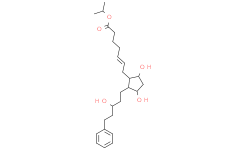
15S-Latanprost Chemical Structure CAS No.: 145773-22-4
Product category: Others 14
This product is for research use only, not for human use. We do not sell to patients.
Size Price Stock Qty
5mg
10mg
Other Sizes
Official Supplier of:
Alternate Text
Alternate Text
Alternate Text
Alternate Text
Alternate Text
Alternate Text
Alternate Text
Alternate Text
Alternate Text
Alternate Text
Alternate Text
Alternate Text
Alternate Text
Alternate Text
Alternate Text
Alternate Text
Alternate Text
Alternate Text
Alternate Text
Alternate Text
Alternate Text
Alternate Text
Alternate Text
Alternate Text
Alternate Text
Alternate Text
Alternate Text
Alternate Text
Alternate Text
Alternate Text
Alternate Text
Alternate Text


  • Business Relationship with 5000+ Clients Globally
  • Major Universities, Research Institutions, Biotech & Pharma
  • Citations by Top Journals: Nature, Cell, Science, etc.
Top Publications Citing lnvivochem Products
Product Description
15(S)-Latanoprost is a latanoprost analog in which the hydroxyl at carbon 15 is inverted relative to latanoprost. The IC50 values for the free acid forms of latanoprost and 15(S)-latanoprost were determined to be 3.6 nM and 24 nM, respectively, in a FP receptor binding assay using the cat iris sphincter muscle. A 3 μg dose of 15(S)-latanoprost caused a 1 mmHg reduction of IOP in normotensive cynomolgus monkeys.
Biological Activity I Assay Protocols (From Reference)
Targets
FP Receptor
ln Vitro
In addition, the activity of the analogues on FP receptors was studied in vitro[1].
ln Vivo
A series of phenyl-substituted analogues of prostaglandin F2 alpha (PGF2 alpha) were prepared and evaluated for ocular hypotensive effect and side effects in different animal models. In addition, the activity of the analogues on FP receptors was studied in vitro. The results were compared with those of PGF2 alpha and its isopropyl ester. The phenyl-substituted PGF2 alpha analogues exhibited good intraocular pressure reducing effect, were more selective, and exhibited a much higher therapeutic index in the eye than PGF2 alpha or its isopropyl ester. The analogues exhibited high activity on FP receptors in a stereoselective manner for the 15 alpha-hydroxyl group[1].
References

[1]. Phenyl-substituted prostaglandins: Potent and selective antiglaucoma agents. J. Med. Chem. 36(2), 243-248 (1993).

These protocols are for reference only. InvivoChem does not independently validate these methods.
Physicochemical Properties
Molecular Formula
C26H40O5
Molecular Weight
432.5928
Exact Mass
430.271
CAS #
145773-22-4
PubChem CID
10477939
Appearance
Typically exists as solid at room temperature
Density
1.1±0.1 g/cm3
Boiling Point
573.4±50.0 °C at 760 mmHg
Flash Point
185.0±23.6 °C
Vapour Pressure
0.0±1.7 mmHg at 25°C
Index of Refraction
1.579
LogP
3.56
Hydrogen Bond Donor Count
3
Hydrogen Bond Acceptor Count
5
Rotatable Bond Count
14
Heavy Atom Count
31
Complexity
526
Defined Atom Stereocenter Count
5
SMILES
CC(C)OC(=O)CCC/C=C\C[C@@H]1[C@@H](CC[C@@H](CCC2=CC=CC=C2)O)[C@@H](C[C@@H]1O)O
InChi Key
GGXICVAJURFBLW-SCTZCWPJSA-N
InChi Code
InChI=1S/C26H40O5/c1-19(2)31-26(30)13-9-4-3-8-12-22-23(25(29)18-24(22)28)17-16-21(27)15-14-20-10-6-5-7-11-20/h3,5-8,10-11,19,21-25,27-29H,4,9,12-18H2,1-2H3/b8-3-/t21-,22-,23-,24+,25-/m1/s1
Chemical Name
propan-2-yl (Z)-7-[(1R,2R,3R,5S)-3,5-dihydroxy-2-[(3S)-3-hydroxy-5-phenylpentyl]cyclopentyl]hept-5-enoate
Synonyms
15(S)-Latanoprost; 145773-22-4; (15S)-Latanoprost; 15-epi-Latanoprost; Latanoprost, (15S)-; P840K2J2DL; propan-2-yl (Z)-7-[(1R,2R,3R,5S)-3,5-dihydroxy-2-[(3S)-3-hydroxy-5-phenylpentyl]cyclopentyl]hept-5-enoate; 5-Heptenoic acid, 7-[(1R,2R,3R,5S)-3,5-dihydroxy-2-[(3S)-3-hydroxy-5-phenylpentyl]cyclopentyl]-, 1-methylethyl ester, (5Z)-;
HS Tariff Code
2934.99.9001
Shipping Condition
Room temperature (This product is stable at ambient temperature for a few days during ordinary shipping and time spent in Customs)
Solubility Data
Solubility (In Vitro)
May dissolve in DMSO (in most cases), if not, try other solvents such as H2O, Ethanol, or DMF with a minute amount of products to avoid loss of samples
Preparing Stock Solutions 1 mg 5 mg 10 mg
1 mM 2.3117 mL 11.5583 mL 23.1166 mL
5 mM 0.4623 mL 2.3117 mL 4.6233 mL
10 mM 0.2312 mL 1.1558 mL 2.3117 mL

*Note: Please select an appropriate solvent for the preparation of stock solution based on your experiment needs. For most products, DMSO can be used for preparing stock solutions (e.g. 5 mM, 10 mM, or 20 mM concentration); some products with high aqueous solubility may be dissolved in water directly. Solubility information is available at the above Solubility Data section. Once the stock solution is prepared, aliquot it to routine usage volumes and store at -20°C or -80°C. Avoid repeated freeze and thaw cycles.

Calculator

Molarity Calculator allows you to calculate the mass, volume, and/or concentration required for a solution, as detailed below:

  • Calculate the Mass of a compound required to prepare a solution of known volume and concentration
  • Calculate the Volume of solution required to dissolve a compound of known mass to a desired concentration
  • Calculate the Concentration of a solution resulting from a known mass of compound in a specific volume
An example of molarity calculation using the molarity calculator is shown below:
What is the mass of compound required to make a 10 mM stock solution in 5 ml of DMSO given that the molecular weight of the compound is 350.26 g/mol?
  • Enter 350.26 in the Molecular Weight (MW) box
  • Enter 10 in the Concentration box and choose the correct unit (mM)
  • Enter 5 in the Volume box and choose the correct unit (mL)
  • Click the “Calculate” button
  • The answer of 17.513 mg appears in the Mass box. In a similar way, you may calculate the volume and concentration.

Dilution Calculator allows you to calculate how to dilute a stock solution of known concentrations. For example, you may Enter C1, C2 & V2 to calculate V1, as detailed below:

What volume of a given 10 mM stock solution is required to make 25 ml of a 25 μM solution?
Using the equation C1V1 = C2V2, where C1=10 mM, C2=25 μM, V2=25 ml and V1 is the unknown:
  • Enter 10 into the Concentration (Start) box and choose the correct unit (mM)
  • Enter 25 into the Concentration (End) box and select the correct unit (mM)
  • Enter 25 into the Volume (End) box and choose the correct unit (mL)
  • Click the “Calculate” button
  • The answer of 62.5 μL (0.1 ml) appears in the Volume (Start) box
g/mol

Molecular Weight Calculator allows you to calculate the molar mass and elemental composition of a compound, as detailed below:

Note: Chemical formula is case sensitive: C12H18N3O4  c12h18n3o4
Instructions to calculate molar mass (molecular weight) of a chemical compound:
  • To calculate molar mass of a chemical compound, please enter the chemical/molecular formula and click the “Calculate’ button.
Definitions of molecular mass, molecular weight, molar mass and molar weight:
  • Molecular mass (or molecular weight) is the mass of one molecule of a substance and is expressed in the unified atomic mass units (u). (1 u is equal to 1/12 the mass of one atom of carbon-12)
  • Molar mass (molar weight) is the mass of one mole of a substance and is expressed in g/mol.
/

Reconstitution Calculator allows you to calculate the volume of solvent required to reconstitute your vial.

  • Enter the mass of the reagent and the desired reconstitution concentration as well as the correct units
  • Click the “Calculate” button
  • The answer appears in the Volume (to add to vial) box
In vivo Formulation Calculator (Clear solution)
Step 1: Enter information below (Recommended: An additional animal to make allowance for loss during the experiment)
Step 2: Enter in vivo formulation (This is only a calculator, not the exact formulation for a specific product. Please contact us first if there is no in vivo formulation in the solubility section.)
+
+
+

Calculation results

Working concentration mg/mL;

Method for preparing DMSO stock solution mg drug pre-dissolved in μL DMSO (stock solution concentration mg/mL). Please contact us first if the concentration exceeds the DMSO solubility of the batch of drug.

Method for preparing in vivo formulation:Take μL DMSO stock solution, next add μL PEG300, mix and clarify, next addμL Tween 80, mix and clarify, next add μL ddH2O,mix and clarify.

(1) Please be sure that the solution is clear before the addition of next solvent. Dissolution methods like vortex, ultrasound or warming and heat may be used to aid dissolving.
             (2) Be sure to add the solvent(s) in order.

Contact Us