| Size | Price | Stock | Qty |
|---|---|---|---|
| 1mg |
|
||
| Other Sizes |


| Targets |
Multiple targets including antioxidant enzymes, inflammatory mediators, cancer cell signaling pathways, and microbial targets. Dehydroglyasperin C, as a prenylated flavonoid, exhibits potent antioxidant activity by scavenging free radicals and upregulating antioxidant enzymes. It has anti-inflammatory effects by inhibiting the production of pro-inflammatory mediators such as NO, TNF-α, and IL-6. The compound shows anticancer activity by inducing apoptosis, inhibiting cell proliferation, and modulating signaling pathways. Antimicrobial activity has been observed against various bacterial and fungal strains. Prenylated flavonoids often exhibit enhanced biological activities compared to their non-prenylated counterparts due to increased lipophilicity and membrane permeability.
|
|---|---|
| ln Vitro |
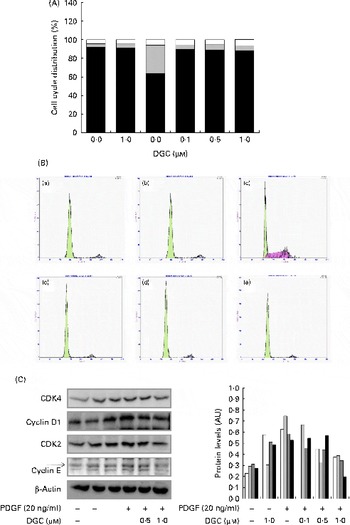
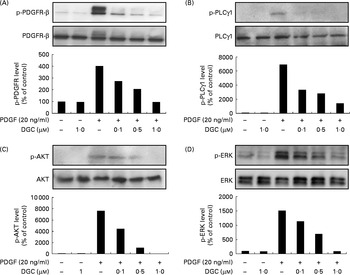
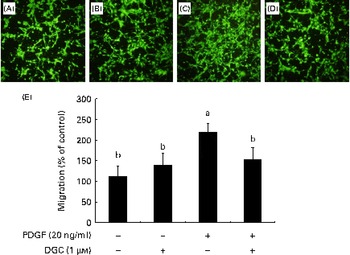
Dehydroglyasperin C (0.1–1 μM; 24 h) suppresses the expression of CDK–2, cyclin E, CDK4, and cyclin D1 and prevents the cell cycle from progressing from the G0/G1 to S phase as induced by PDGF. The phosphorylation of PDGF receptor-β, phospholipase C-γ1, AKT, and extracellular-regulated kinase 1/2 is significantly attenuated by dehydroglyasperin C, and DGC also inhibits cell migration and the dissociation of actin filaments by PDGF[1]. In human aortic smooth muscle cells (HASMC), dehydroglyasperin C (0.1–1 μM; 24 h) treatment significantly reduces PDGF-induced cell number and DNA synthesis in a dose-dependent manner without causing any cytotoxicity[1].
Dehydroglyasperin C exhibits antioxidant activity by scavenging free radicals and reducing oxidative stress. The compound has anti-inflammatory effects, inhibiting the production of pro-inflammatory mediators in activated immune cells. Anticancer activity has been demonstrated, with the compound inducing apoptosis and inhibiting proliferation in various cancer cell lines. Antimicrobial activity has been observed against various bacterial and fungal strains. The compound's specific in vitro activities would depend on the concentrations tested and the assay systems used. Further studies are needed to fully characterize its activity profile. |
| ln Vivo |
Histological analysis of liver tissue from ICR mice treated with a combination of CCl4 and Dehydroglyasperin C (5 mg/kg; once) demonstrates decreased lipid droplet formation. Additionally, DGC showed a minor protective effect against CCl4 injection-induced centrilobular injury, possibly via CYP2E1 expression suppression[4].
In vivo studies of dehydroglyasperin C are limited. As a prenylated flavonoid from licorice, it may contribute to the pharmacological effects of licorice extracts, which have been used in traditional medicine for their anti-inflammatory, antiviral, and hepatoprotective properties. The compound's antioxidant, anti-inflammatory, and anticancer activities suggest potential benefits in various disease models. Further in vivo studies are needed to characterize its specific pharmacokinetic and pharmacodynamic properties. |
| Enzyme Assay |
Non-cell-based assays for dehydroglyasperin C include standard antioxidant assays such as DPPH radical scavenging, ABTS radical scavenging, and FRAP assays. Anti-inflammatory activity is assessed by measuring inhibition of COX-2, LOX, or cytokine production in enzyme assays. Antimicrobial activity is assessed by broth microdilution for MIC determination against bacterial and fungal strains. Standard analytical methods including HPLC, NMR, and mass spectrometry are used for compound characterization.
|
| Cell Assay |
Cell Cycle Analysis[1]
Cell Types: Human aortic smooth muscle cells (HASMC) Tested Concentrations: 0.1 μM, 0.5 μM, 1 μM Incubation Duration: 24 hrs (hours) Experimental Results: Blocked the PDGF-induced progression through the G0/G1 to S phase of the cell cycle. Western Blot Analysis[1] Cell Types: Human aortic smooth muscle cells (HASMC) Tested Concentrations: 0.1 μM, 0.5 μM, 1 μM Incubation Duration: 24 hrs (hours) Experimental Results: Down-regulated the expression of CDK; 2, cyclin E, CDK4 and cyclin D1. Cell-based assays for dehydroglyasperin C use various cell lines to assess its biological activities. Macrophage cell lines (e.g., RAW 264.7) are stimulated with LPS and treated with the compound, and inflammatory mediators in culture supernatant are measured. Cancer cell lines are treated with the compound, and cell viability (MTT), apoptosis (Annexin V/PI), and cell cycle progression are assessed. For antimicrobial studies, bacterial or fungal cultures are treated with the compound and growth inhibition is measured. Cytotoxicity is assessed using standard cell viability assays. |
| Animal Protocol |
In vivo studies of dehydroglyasperin C are limited. Based on its biological activities, potential animal models include: carrageenan-induced paw edema for anti-inflammatory evaluation; tumor xenograft models for anticancer evaluation; and infection models for antimicrobial evaluation. Standard protocols for these models involve administration of the compound followed by measurement of relevant endpoints.
|
| ADME/Pharmacokinetics |
Dehydroglyasperin C has a molecular formula of C₂₁H₂₂O₅ and a molecular weight of approximately 354.40 g/mol. It is a prenylated flavonoid found in Glycyrrhiza species (licorice) and other plants. The compound is soluble in organic solvents such as DMSO and methanol. It should be stored as a powder at -20°C for up to 3 years or in solvent at -80°C for 1 year. It is intended for research use only.
|
| Toxicity/Toxicokinetics |
Specific toxicity data for dehydroglyasperin C are limited. As a naturally occurring flavonoid, it is generally considered to have low toxicity. However, comprehensive toxicological studies have not been reported. Standard laboratory safety practices should be followed when handling this compound, including the use of personal protective equipment. It is intended for research use only.
|
| References |
|
| Additional Infomation |
It has been reported that licorice (Glycyrrhiza uralensis) and coarse licorice (Glycyrrhiza aspera) contain dehydroglycyrrhizin C, and relevant data are available for reference. See also: Licorice (Glycyrrhiza uralensis) root (part).
Dehydroglyasperin C is a prenylated flavonoid found in Glycyrrhiza species (licorice) and other plants. Licorice has been used in traditional medicine for its anti-inflammatory, antiviral, and hepatoprotective properties. Flavonoids are a large class of polyphenolic compounds known for their diverse biological activities, including antioxidant, anti-inflammatory, anticancer, and antimicrobial effects. Prenylated flavonoids often exhibit enhanced biological activities due to increased lipophilicity and membrane permeability. Dehydroglyasperin C is used as a reference standard for the identification and quantification of flavonoids in plant extracts and for research purposes. It is for research use only. |
| Molecular Formula |
C21H22O5
|
|---|---|
| Molecular Weight |
354.40
|
| Exact Mass |
354.146
|
| CAS # |
199331-35-6
|
| PubChem CID |
480775
|
| Appearance |
White to off-white solid
|
| Density |
1.3±0.1 g/cm3
|
| Boiling Point |
588.6±50.0 °C at 760 mmHg
|
| Flash Point |
309.8±30.1 °C
|
| Vapour Pressure |
0.0±1.7 mmHg at 25°C
|
| Index of Refraction |
1.637
|
| Source |
Originated from plants: Leguminosae Glycyrrhiza uralensis Fisch.
|
| LogP |
6.48
|
| Hydrogen Bond Donor Count |
3
|
| Hydrogen Bond Acceptor Count |
5
|
| Rotatable Bond Count |
4
|
| Heavy Atom Count |
26
|
| Complexity |
539
|
| Defined Atom Stereocenter Count |
0
|
| SMILES |
OC1=CC=C(C2=CC3=C(OC)C(C/C=C(C)\C)=C(O)C=C3OC2)C(O)=C1
|
| InChi Key |
UACNRZUVCUEUPY-UHFFFAOYSA-N
|
| InChi Code |
InChI=1S/C21H22O5/c1-12(2)4-6-16-19(24)10-20-17(21(16)25-3)8-13(11-26-20)15-7-5-14(22)9-18(15)23/h4-5,7-10,22-24H,6,11H2,1-3H3
|
| Chemical Name |
4-[7-hydroxy-5-methoxy-6-(3-methylbut-2-enyl)-2H-chromen-3-yl]benzene-1,3-diol
|
| Synonyms |
Dehydroglyasperin C
|
| HS Tariff Code |
2934.99.9001
|
| Storage |
Powder -20°C 3 years 4°C 2 years In solvent -80°C 6 months -20°C 1 month Note: This product requires protection from light (avoid light exposure) during transportation and storage. |
| Shipping Condition |
Room temperature (This product is stable at ambient temperature for a few days during ordinary shipping and time spent in Customs)
|
| Solubility (In Vitro) |
DMSO: 100 mg/mL (282.17 mM)
|
|---|---|
| Solubility (In Vivo) |
Solubility in Formulation 1: ≥ 2.5 mg/mL (7.05 mM) (saturation unknown) in 10% DMSO + 40% PEG300 + 5% Tween80 + 45% Saline (add these co-solvents sequentially from left to right, and one by one), clear solution.
For example, if 1 mL of working solution is to be prepared, you can add 100 μL of 25.0 mg/mL clear DMSO stock solution to 400 μL PEG300 and mix evenly; then add 50 μL Tween-80 to the above solution and mix evenly; then add 450 μL normal saline to adjust the volume to 1 mL. Preparation of saline: Dissolve 0.9 g of sodium chloride in 100 mL ddH₂ O to obtain a clear solution. Solubility in Formulation 2: ≥ 2.5 mg/mL (7.05 mM) (saturation unknown) in 10% DMSO + 90% (20% SBE-β-CD in Saline) (add these co-solvents sequentially from left to right, and one by one), clear solution. For example, if 1 mL of working solution is to be prepared, you can add 100 μL of 25.0 mg/mL clear DMSO stock solution to 900 μL of 20% SBE-β-CD physiological saline solution and mix evenly. Preparation of 20% SBE-β-CD in Saline (4°C,1 week): Dissolve 2 g SBE-β-CD in 10 mL saline to obtain a clear solution. View More
Solubility in Formulation 3: ≥ 2.5 mg/mL (7.05 mM) (saturation unknown) in 10% DMSO + 90% Corn Oil (add these co-solvents sequentially from left to right, and one by one), clear solution. |
| Preparing Stock Solutions | 1 mg | 5 mg | 10 mg | |
| 1 mM | 2.8217 mL | 14.1084 mL | 28.2167 mL | |
| 5 mM | 0.5643 mL | 2.8217 mL | 5.6433 mL | |
| 10 mM | 0.2822 mL | 1.4108 mL | 2.8217 mL |
*Note: Please select an appropriate solvent for the preparation of stock solution based on your experiment needs. For most products, DMSO can be used for preparing stock solutions (e.g. 5 mM, 10 mM, or 20 mM concentration); some products with high aqueous solubility may be dissolved in water directly. Solubility information is available at the above Solubility Data section. Once the stock solution is prepared, aliquot it to routine usage volumes and store at -20°C or -80°C. Avoid repeated freeze and thaw cycles.
Calculation results
Working concentration: mg/mL;
Method for preparing DMSO stock solution: mg drug pre-dissolved in μL DMSO (stock solution concentration mg/mL). Please contact us first if the concentration exceeds the DMSO solubility of the batch of drug.
Method for preparing in vivo formulation::Take μL DMSO stock solution, next add μL PEG300, mix and clarify, next addμL Tween 80, mix and clarify, next add μL ddH2O,mix and clarify.
(1) Please be sure that the solution is clear before the addition of next solvent. Dissolution methods like vortex, ultrasound or warming and heat may be used to aid dissolving.
(2) Be sure to add the solvent(s) in order.
|
|
|
Products are for research use only; We do not sell to patients
Copyright 2020 InvivoChem LLC | All Rights Reserved