| Size | Price | Stock | Qty |
|---|---|---|---|
| 10mg |
|
||
| 25mg |
|
||
| 50mg |
|
||
| 100mg |
|
||
| 250mg |
|
||
| Other Sizes |


Purity: ≥98%
| Targets |
FAK (IC50 = 4 nM)
Focal Adhesion Kinase (FAK): IC₅₀ ≈ 1.5 μM (for FAK kinase activity); Pyk2 (a FAK family kinase): IC₅₀ ≈ 36 μM (showing selective inhibition of FAK over Pyk2) [1] - Focal Adhesion Kinase (FAK) confirmed to inhibit FAK phosphorylation (Tyr397) in vitro and in vivo [2] Focal Adhesion Kinase (FAK), also known as Protein-Tyrosine Kinase 2 (PTK2). PF-573228 potently inhibits the catalytic activity of FAK with an IC50 of 4 nM against the purified recombinant fragment in biochemical assays. In cellular contexts, it inhibits FAK autophosphorylation at Tyr397 with IC50s ranging from 11 nM in A431 cells to 500 nM in MDCK cells. It has also been reported to activate BKCa channels with an EC50 of 3.2 μM, an off-target effect independent of FAK inhibition. |
|---|---|
| ln Vitro |
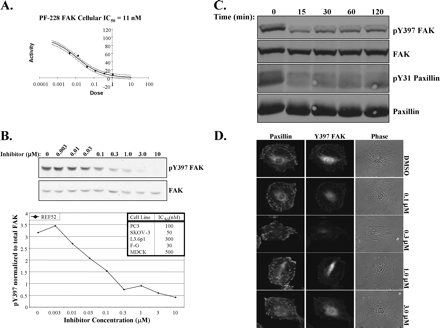
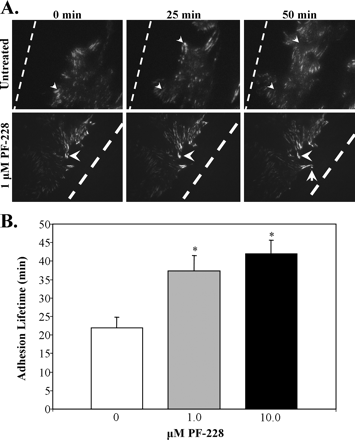
PF-573228 suppresses the purified recombinant catalytic portion of FAK with an IC50 of 4 nM [1]. PF-573228 suppresses FAK phosphorylation on Tyr397 at an IC50 of 30-100 nM[1]. PF-573228 significantly lowers FAK Tyr397 phosphorylation [1]. PF-573228 decreases chemotaxis and chemotactic migration while also reducing focal adhesion turnover [1].
In A549 (lung adenocarcinoma), HeLa (cervical carcinoma), and MDA-MB-231 (breast cancer) cells: Treatment with PF-573228 (1 μM, 5 μM, 10 μM) caused concentration-dependent reduction of FAK phosphorylation at Tyr397 (detected by Western blot), while total FAK protein levels remained unchanged. This inhibition was observed both under basal conditions and after fibronectin-induced FAK activation [1] - In A549 cell migration assays (Transwell): PF-573228 (5 μM, 10 μM) significantly inhibited cell migration; the number of migrated cells decreased by approximately 50%-70% compared to the solvent control [1] - In cell adhesion assays (fibronectin-coated plates): PF-573228 (10 μM) reduced the adhesion of A549/MDA-MB-231 cells to fibronectin, with an adhesion rate decrease of about 40% [1] - In soft agar colony formation assays (MDA-MB-231 cells): PF-573228 (5 μM) markedly reduced the number and size of colonies, with a colony formation rate decrease of ~60% relative to the control [1] - In human lung microvascular endothelial cells (HMVEC-L): IL-4 (10 ng/mL) induced VCAM-1 mRNA and protein expression; pretreatment with PF-573228 (1 μM, 5 μM) concentration-dependently inhibited this induction. At 5 μM, VCAM-1 mRNA levels decreased by ~60% (qPCR) and protein levels decreased by ~55% (Western blot) [2] - In eosinophil-HMVEC-L adhesion assays: IL-4 treatment increased eosinophil adhesion to HMVEC-L; pretreatment with PF-573228 (10 μM) reduced the adhesion rate by ~50% [2] - In HMVEC-L cells: PF-573228 (1 μM, 5 μM) concentration-dependently inhibited IL-4-induced phosphorylation of FAK (Tyr397) and its downstream effector STAT6 (Tyr641), without affecting total FAK or STAT6 protein levels [2] |
| ln Vivo |
In several human s.c. xenograft models, PF-562271 exhibits dose-dependent tumor growth inhibition, and produces maximum tumor inhibition for PC-3M, BT474, BxPc3, and LoVo ranging from 78% to 94% inhibition at doses of 25 to 50 mg/kg twice daily, without weight loss, morbidity, or death. PF-562271 (25 mg/kg by p.o.) leads to a significant decrease in tumor progression in both subcutaneous and bone metastasis PC3M-luc-C6 xenograft models. In a Huh7.5 hepatocellular carcinoma xenograft model, combination therapy of sunitinib and PF-562271 targets angiogenesis and tumor aggressiveness, and produces more significant anti-tumor effect than single agent by blocking tumor growth and impacting the ability of the tumor to recover upon withdrawal of the therapy.
In OVA-induced allergic airway inflammation model (female BALB/c mice, 6-8 weeks old): PF-573228 was administered via intraperitoneal injection (i.p.) at 25 mg/kg once daily for 7 days (during the OVA challenge phase). Compared to the model group: (1) Eosinophil count in bronchoalveolar lavage fluid (BALF) decreased by ~65%; (2) VCAM-1 protein expression in lung tissues (detected by immunohistochemistry/Western blot) decreased by ~50%; (3) Lung inflammation scores (assessed by HE staining) were reduced, with less inflammatory cell infiltration and mucosal thickening; (4) Phosphorylation of FAK (Tyr397) and STAT6 (Tyr641) in lung tissues was significantly downregulated [2] |
| Enzyme Assay |
Recombinant Kinase Assay[1]
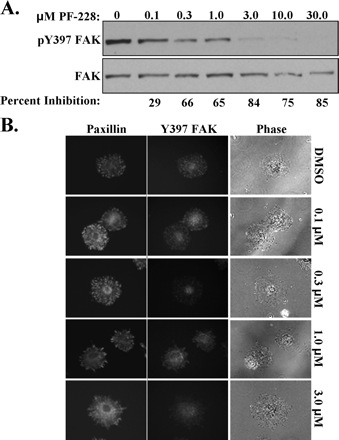
Purified activated FAK kinase domain (amino acids 410–689) was reacted with 50 μm ATP, and 10 μg/well of a random peptide polymer of Glu and Tyr (molar ratio of 4:1), poly(Glu/Tyr) in kinase buffer (50 mm HEPES, pH 7.5, 125 mm NaCl, 48 mm MgCl2) for 15 min. Phosphorylation of poly(Glu/Tyr) was challenged with serially diluted compounds at ½-Log concentrations starting at a top concentration of 1 μm. Each concentration was run in triplicate. Phosphorylation of poly(Glu/Tyr) was detected with a general anti-phospho-tyrosine (PY20) antibody, followed by horseradish peroxidase-conjugated goat anti-mouse IgG antibody. The standard horseradish peroxidase substrate 3, 3′, 5, 5′-tetramethylbenzidine was added, and Optical Density readings at 450 nm were obtained following the addition of stop solution (2 m H2SO4). The IC50 values were determined using the Hill slope model. Broad kinase selectivity profiling was performed using the KinaseProfiler™ selectivity screening service available through Upstate Biotechnology, Inc. For more information please see: www.upstate.com/discovery/services/kp_overview.q. Cellular Kinase Assays[1] Using the GeneSwitch inducible system from Invitrogen, stable A431 epithelial carcinoma clones were generated to express either wild type V5-tagged FAK protein or mutant FAK Y397F V5-tagged protein under the inducible regulation of mifepristone. Stable clones were grown in Dulbecco’s modified Eagle’s medium, 10% fetal bovine serum, 750 μg/ml Zeocin, and 50 μg/ml Hygromycin. One day prior to running the FAK cell ELISA, A431·FAKwt cells were seeded at 1.2 × 10⁶ cells/ml in growth medium in 96-well U-bottom plates. After 4–6 h at 37 °C, 5% CO2, FAK expression was induced with 0.1 nm miferpristone. Uninduced controls were included. Goat anti-mouse or anti-rabbit plates were subsequently coated with either anti-V5 or anti-FAK (1.0 μg/ml) or an irrelevant antibody control in Superblock Tris-buffered saline buffer. Anti-V5- or anti-FAK-coated plates were blocked in 3% bovine serum albumin, 0.5% Tween for 1 h at room temperature. The cells were treated with ½-Log serial dilutions starting at a top concentration of 1 μm for 30 min at 37 °C, 5% CO2. Lysates from cells treated with indicated concentrations of compound were prepared in P-lysis buffer (50 mm Tris-HCl, pH 7.4, 1% Nonidet P-40, 0.25% sodium deoxycholate, 150 mm NaCl, 1 mm EDTA, 1 mm Na3VO4, 1 mm NaF, and protease inhibitors) and transferred to the anti-V5- or anti-FAK-coated plates to capture total induced or total FAK protein. Anti-phosphospecific FAK[Y397] was used to detect autophosphorylated FAK Tyr397, followed by secondary reporter antibody. Horseradish peroxidase substrate was added, and plates were read at 450 nm. The IC50 values were determined using the Hill slope model. For Western blot analysis, REF52 cells were treated with the indicated concentrations of inhibitor for the indicated periods of time prior to lysis in CH buffer (50 mm HEPES, 0.15 m NaCl, 2 mm EDTA, 1% Nonidet P-40, and 0.5% sodium deoxycholate, pH 7.2) containing 1 mm phenylmethylsulfonyl fluoride, 100 mm leupeptin, and 0.05 TIU/ml aprotinin, 1 mm Na3VO4, 40 mm NaF, and 10 mm Na4P2O7. For suspension/replating experiments, REF52 cells were suspended in serum-free medium in the presence or absence of the indicated concentrations of inhibitor and were allowed to reattach to plates coated with 5 μg/ml FN for 30 min in the continued presence or absence of inhibitor. The cells were lysed in CH-buffer, and Western blot analysis of whole cell lysates was performed using 25–50 μg of protein. FAK kinase activity assay: Recombinant human FAK catalytic domain was incubated with a substrate (poly(Glu,Tyr) 4:1 or FAK-specific peptide) in reaction buffer containing ATP and MgCl₂. PF-573228 was added at concentrations of 0.1 μM, 0.5 μM, 1 μM, 5 μM, 10 μM, and 50 μM (solvent as control). After incubation at 37°C for 30 minutes, the reaction was terminated with EDTA. Kinase activity was measured by detecting phosphorylated substrate: either via scintillation counting (using ³²P-labeled ATP) or ELISA (using anti-phospho-substrate antibody). Inhibition rates at different drug concentrations were calculated to determine the IC₅₀ for FAK [1] |
| Cell Assay |
Wound Healing Assay[1]
Confluent REF52 monolayers on 35-mm Bioptechs delta-T dishes were wounded with a 10-μl pipette tip, and cells migrating into the wound were filmed for 9 h at 37 °C by time lapse microscopy. PF-573,228 was added at the time of wounding, and filming was initiated 1 h post-wounding. Time lapse microscopy was performed using a Nikon TE200 inverted microscope with a 20× differential interference contrast objective and a Bioptechs heated stage. The images were captured with a Hamamatsu Orca camera and compiled using Improvision Openlab software. Following image capture, the nuclei of single cells were tracked over time as they migrated into the wound, and the cell speed was calculated by dividing the length of the cell track by the total time of the movie.[1] Immunofluorescence and Cell Spreading[1] Adherent REF52 cells were washed and treated with increasing concentrations of PF-573,228 for 1 h in the absence of serum. For replating experiments REF52 cells were held in suspension for 30 min without serum and in the presence of increasing amounts of the FAK inhibitors. The cells were plated onto FN-coated (5 μg/ml) coverslips (for immunofluorescence) or delta-T dishes (for differential interference contrast time lapse movies) for 60 min in the continued presence of inhibitors. The cells were fixed for 20 min with fresh 4% paraformaldehyde, permeabilized with 0.5% Triton X-100 for 2 min and blocked in 20% goat serum, 2% bovine serum albumin for 30 min. The cells were then stained with antibodies to paxillin or FAK Tyr(P)397. Secondary antibodies were labeled with Alexa Fluor 488 or 594 dyes. Images were acquired using a Nikon Eclipse E600 microscope with a 60× oil objective, a Hamamatsu digital camera, and the Openlab imaging software package. TIRF Microscopy and Adhesion Turnover Analysis[1] NIH-3T3 cells were stably transfected with green fluorescent protein-paxillin using the FLP-In system. Confluent monolayers on delta-T dishes were treated with PF-573,228 and wounded with a pipette tip as described above. Fluorescent adhesions were visualized at 37 °C using a Nikon TE2000-E Eclipse inverted TIRF microscope equipped with a 60 × 1.45 N.A. TIRF objective, a Retiga digital camera and QCapture Pro acquisition software. The images were acquired every 5 min for 60–90 min. Image analysis was performed using Openlab software. The intensity of each adhesion was measured over time, and the peak (maximal) intensity for each adhesion was determined. Adhesion lifetime was calculated as the sum of the time required for the adhesion to reach the peak intensity from its half-peak intensity and the time required for the adhesion to return to its half-peak intensity from its peak intensity. At least seven adhesions were analyzed per cell. FAK phosphorylation detection (Western blot): A549/MDA-MB-231 cells were seeded in 6-well plates and cultured to 80% confluence, then serum-starved (0.5% FBS) overnight. Cells were treated with PF-573228 (0 μM, 1 μM, 5 μM, 10 μM) for 1-4 hours, followed by stimulation with fibronectin (10 μg/mL) for 15 minutes (or no stimulation). Cells were lysed to extract total protein; after protein quantification, SDS-PAGE and transfer to PVDF membranes were performed. Membranes were probed with primary antibodies against p-FAK (Tyr397), total FAK, and β-actin (loading control), followed by secondary antibodies. ECL chemiluminescence was used for visualization, and band intensities were quantified with ImageJ to analyze the p-FAK/total FAK ratio [1] - Cell migration assay (Transwell): Transwell inserts were placed in 24-well plates; the lower chamber contained medium with 10% FBS (chemoattractant). A549 cells (5×10⁴ cells/well) and PF-573228 (0 μM, 5 μM, 10 μM) were added to the upper chamber. After 24 hours of culture (37°C, 5% CO₂), non-migrated cells in the upper chamber were removed with a cotton swab. Migrated cells on the lower membrane surface were fixed with formaldehyde, stained with crystal violet, and counted in 5 random fields under a microscope to calculate the average number of migrated cells and inhibition rate [1] - Cell adhesion assay: 96-well plates were coated with fibronectin (10 μg/mL) overnight at 4°C, then blocked with BSA. Log-phase cells were digested with trypsin, resuspended in serum-free medium, and pretreated with PF-573228 (0 μM, 10 μM) for 30 minutes. Cells were seeded into coated plates and incubated at 37°C for 1 hour. Unattached cells were removed; attached cells were stained with crystal violet, dissolved, and absorbance was measured at 570 nm (absorbance correlates with the number of attached cells) to calculate the adhesion rate [1] - Soft agar colony formation assay: 6-well plates were coated with a bottom layer of 0.6% agarose (in medium with 10% FBS). A top layer of 0.3% agarose (containing MDA-MB-231 cells (1×10³ cells/well) and PF-573228 (0 μM, 5 μM)) was added. After 21 days of culture (37°C, 5% CO₂), colonies were stained with crystal violet. Colonies >0.1 mm in diameter were counted to calculate the colony formation rate [1] - VCAM-1 expression detection (RT-PCR/Western blot): HMVEC-L cells were seeded in 6-well plates, cultured to confluence, and serum-starved (0.5% FBS) for 4 hours. Cells were pretreated with PF-573228 (0 μM, 1 μM, 5 μM) for 1 hour, then co-incubated with IL-4 (10 ng/mL) for 6 hours (mRNA) or 24 hours (protein). For mRNA: Total RNA was extracted, reverse-transcribed to cDNA, and qPCR was performed (GAPDH as internal control) to measure VCAM-1 mRNA levels. For protein: Total protein was extracted, and Western blot was performed with anti-VCAM-1 antibody (β-actin as loading control) [2] - Eosinophil-endothelial cell adhesion assay: HMVEC-L cells in 96-well plates were pretreated with PF-573228 (10 μM) for 1 hour, then incubated with IL-4 (10 ng/mL) for 24 hours. Human peripheral blood eosinophils (isolated by density gradient centrifugation) were labeled with Calcein-AM and added to HMVEC-L wells. After 30 minutes of incubation, non-adherent eosinophils were removed; fluorescence intensity (485 nm excitation, 535 nm emission) was measured to quantify adherent eosinophils and calculate the adhesion rate [2] - FAK/STAT6 phosphorylation detection (Western blot): HMVEC-L cells were treated as in VCAM-1 detection, with IL-4 incubation for 15 minutes. Total protein was extracted, and Western blot was performed with antibodies against p-FAK (Tyr397), total FAK, p-STAT6 (Tyr641), and total STAT6. Band intensities were quantified to analyze the phospho-protein/total protein ratio [2] |
| Animal Protocol |
25 mg/kg; Oral gavage
PC3M-luc-C6 xenograft models To better understand the role of FAK in leukocyte recruitment, we used a FAK-specific inhibitor (PF-573228) and determined the effect on IL-4 induced eosinophil recruitment in vivo. PF-573228 prevented the expression of VCAM-1 and CCL26 expression in IL-4-stimulated human endothelial cells in vitro. As a result, eosinophil adhesion and transmigration were blocked. PF-572338 also prevented IL-4-induced VCAM-1 expression in vivo. Using brightfield intravital microscopy, we found that PF-573228 decreased leukocyte rolling flux, adhesion, and emigration. We specifically examined eosinophil recruitment in vivo by using an eosinophil-GFP reporter mouse and found PF-573228 attenuated eosinophil emigration. This study reveals that a FAK inhibitor influences inflammation through its action on eosinophil recruitment. [2] Experimental animals: Female BALB/c mice (6-8 weeks old, 18-22 g) were housed in SPF-grade facilities (22-25°C, 50%-60% humidity, 12 h light/dark cycle) with free access to food and water [2] - Allergic airway inflammation model establishment: Mice were divided into control, model (OVA-induced), and PF-573228 treatment groups. Sensitization: On days 0 and 7, mice were intraperitoneally injected with OVA-alum sensitizing solution. Challenge: From days 14 to 20, mice were intranasally administered 1% OVA solution (20 μL/mouse) daily for 7 days [2] - Drug preparation and administration: PF-573228 was dissolved in a solvent (5% DMSO, 10% Cremophor EL, 85% normal saline). The treatment group received intraperitoneal injections of PF-573228 (25 mg/kg, 10 μL/g body weight) once daily from days 14 to 20; control and model groups received equal volumes of solvent [2] - Sample collection and analysis: On day 21, mice were anesthetized with pentobarbital sodium. BALF was collected via tracheal intubation; after centrifugation, total leukocyte count and differential count (eosinophils, neutrophils) were performed. Lung tissues were collected: one part was fixed with 4% paraformaldehyde for paraffin embedding, HE staining (inflammation assessment), and immunohistochemistry (VCAM-1 detection); the other part was used for total protein extraction and Western blot (p-FAK, total FAK, p-STAT6, total STAT6) [2] |
| References | |
| Additional Infomation |
6-[[4-[(3-methylsulfonylphenyl)methylamino]-5-(trifluoromethyl)-2-pyrimidinyl]amino]-3,4-dihydro-1H-quinoline-2-one belongs to the quinoline family of compounds. Focal adhesion kinases (FAKs) belong to the non-receptor protein tyrosine kinase family, which regulates integrin and growth factor signaling pathways and participates in cell migration, proliferation, and survival. FAK expression is elevated in various cancers, including breast and prostate cancer. This article describes the interference of the FAK inhibitor PF-573,228 on adhesion-mediated signaling pathways. In vitro experiments showed that this compound inhibited the purified recombinant FAK catalytic fragment with an IC50 value of 4 nM. In cultured cells, PF-573,228 inhibited FAK phosphorylation at the Tyr(397) site with an IC50 value of 30-100 nM. Treatment of cells with PF-573,228, which significantly reduced FAK Tyr(397) phosphorylation, did not inhibit cell growth or induce apoptosis. Instead, PF-573,228 treatment inhibited chemotactic and tactile chemotactic migration, while also inhibiting focal adhesion turnover. These studies suggest that PF-573,228 could serve as an effective tool for elucidating the function of FAK in integrin-dependent signaling pathways in normal and cancer cells, and lay the foundation for the development of compounds suitable for preclinical and patient trials. [1]
Leukocyte recruitment plays a crucial role in both normal and chronic inflammatory diseases, and current research is dedicated to better understanding the complexity of this process. Follicular adhesion kinase (FAK) is well known for its role in cancer, but studies have shown that it can also regulate the recruitment of neutrophils and B16 melanoma cells by rapidly affecting endothelial cell focal adhesion dynamics and junction opening. Recently, we discovered that FAK-associated non-kinase (FRNK), a protein commonly used as a dominant-negative inhibitor of FAK, can inhibit the transcription of vascular cell adhesion molecule-1 (VCAM-1) and eosinophil chemokine-3 (CCL26), thereby blocking eosinophil transendothelial migration. Surprisingly, this blocking effect persists even in the absence of endogenous FAK. To better understand the role of FAK in leukocyte recruitment, we used a FAK-specific inhibitor (PF-573228) and examined its effects on IL-4-induced eosinophil recruitment in vitro and in vivo. The results showed that PF-573228 inhibited the expression of VCAM-1 and CCL26 in human endothelial cells stimulated by IL-4 in vitro. Therefore, eosinophil adhesion and transendothelial migration were blocked. PF-572338 also inhibited IL-4-induced VCAM-1 expression in vivo. Using bright-field in vivo microscopy, we found that PF-573228 reduced leukocyte rolling flux, adhesion, and migration. We specifically examined eosinophil recruitment in vivo using eosinophil-GFP reporter mice and found that PF-573228 attenuated eosinophil migration. This study reveals that FAK inhibitors affect inflammation through their effects on eosinophil recruitment. [2] PF-573228 is a novel selective small molecule FAK inhibitor. It exerts its biological effects by directly inhibiting FAK kinase activity, thereby interfering with FAK-mediated signaling pathways (such as PI3K/Akt, MAPK) and regulating cell adhesion, migration, proliferation, and survival. It is a valuable tool compound for studying the biological function of FAK and exploring FAK-targeted cancer therapies [1] - PF-573228 inhibits IL-4-induced STAT6 phosphorylation and VCAM-1 expression by blocking FAK activity, thereby reducing the recruitment of eosinophils to inflammatory sites. This suggests that PF-573228 has potential therapeutic value in eosinophil-related inflammatory diseases (such as allergic asthma) and provides a new target/strategy for the treatment of inflammatory diseases [2] |
| Molecular Formula |
C22H20F3N5O3S
|
|
|---|---|---|
| Molecular Weight |
491.486113548279
|
|
| Exact Mass |
491.123
|
|
| Elemental Analysis |
C, 53.76; H, 4.10; F, 11.60; N, 14.25; O, 9.77; S, 6.52
|
|
| CAS # |
869288-64-2
|
|
| Related CAS # |
|
|
| PubChem CID |
11612883
|
|
| Appearance |
White to off-white solid powder
|
|
| Density |
1.5±0.1 g/cm3
|
|
| Index of Refraction |
1.616
|
|
| LogP |
1.03
|
|
| Hydrogen Bond Donor Count |
3
|
|
| Hydrogen Bond Acceptor Count |
10
|
|
| Rotatable Bond Count |
6
|
|
| Heavy Atom Count |
34
|
|
| Complexity |
822
|
|
| Defined Atom Stereocenter Count |
0
|
|
| SMILES |
O=C1CCC2C(=CC=C(NC3N=C(NCC4C=C(S(C)(=O)=O)C=CC=4)C(C(F)(F)F)=CN=3)C=2)N1
|
|
| InChi Key |
HESLKTSGTIBHJU-UHFFFAOYSA-N
|
|
| InChi Code |
InChI=1S/C22H20F3N5O3S/c1-34(32,33)16-4-2-3-13(9-16)11-26-20-17(22(23,24)25)12-27-21(30-20)28-15-6-7-18-14(10-15)5-8-19(31)29-18/h2-4,6-7,9-10,12H,5,8,11H2,1H3,(H,29,31)(H2,26,27,28,30)
|
|
| Chemical Name |
3,4-Dihydro-6-[[4-[[[3-(methylsulfonyl)phenyl]methyl]amino]-5-(trifluoromethyl)-2-pyrimidinyl]amino]-2(1H)-quinolinone
|
|
| Synonyms |
PF573,228; PF 573,228; PF-573,228; PF573228; 869288-64-2; PF-573228; PF 573228; PF573228; PF-228; 3,4-Dihydro-6-[[4-[[[3-(methylsulfonyl)phenyl]methyl]amino]-5-(trifluoromethyl)-2-pyrimidinyl]amino]-2(1H)-quinolinone; 6-((4-((3-(Methylsulfonyl)benzyl)amino)-5-(trifluoromethyl)pyrimidin-2-yl)amino)-3,4-dihydroquinolin-2(1H)-one; 6-(4-(3-(methylsulfonyl)benzylamino)-5-(trifluoromethyl)pyrimidin-2-ylamino)-3,4-dihydroquinolin-2(1H)-one; PF 573228; PF-573228;
|
|
| HS Tariff Code |
2934.99.9001
|
|
| Storage |
Powder -20°C 3 years 4°C 2 years In solvent -80°C 6 months -20°C 1 month |
|
| Shipping Condition |
Room temperature (This product is stable at ambient temperature for a few days during ordinary shipping and time spent in Customs)
|
| Solubility (In Vitro) |
DMSO: 26 mg/mL (52.9 mM)
Water: 1 mg/mL (Insoluble) Ethanol: 1 mg/mL |
|---|---|
| Solubility (In Vivo) |
Solubility in Formulation 1: 2.5 mg/mL (5.09 mM) in 10% DMSO + 90% (20% SBE-β-CD in Saline) (add these co-solvents sequentially from left to right, and one by one), suspension solution; with sonication.
For example, if 1 mL of working solution is to be prepared, you can add 100 μL of 25.0 mg/mL clear DMSO stock solution to 900 μL of 20% SBE-β-CD physiological saline solution and mix evenly. Preparation of 20% SBE-β-CD in Saline (4°C,1 week): Dissolve 2 g SBE-β-CD in 10 mL saline to obtain a clear solution. Solubility in Formulation 2: ≥ 2.08 mg/mL (4.23 mM) (saturation unknown) in 10% DMSO + 40% PEG300 + 5% Tween80 + 45% Saline (add these co-solvents sequentially from left to right, and one by one), clear solution. For example, if 1 mL of working solution is to be prepared, you can add 100 μL of 20.8 mg/mL clear DMSO stock solution to 400 μL PEG300 and mix evenly; then add 50 μL Tween-80 to the above solution and mix evenly; then add 450 μL normal saline to adjust the volume to 1 mL. Preparation of saline: Dissolve 0.9 g of sodium chloride in 100 mL ddH₂ O to obtain a clear solution. View More
Solubility in Formulation 3: ≥ 2.08 mg/mL (4.23 mM) (saturation unknown) in 10% DMSO + 90% Corn Oil (add these co-solvents sequentially from left to right, and one by one), clear solution. Solubility in Formulation 4: 30% PEG400+0.5% Tween80+5% propylene glycol:30 mg/mL |
| Preparing Stock Solutions | 1 mg | 5 mg | 10 mg | |
| 1 mM | 2.0346 mL | 10.1731 mL | 20.3463 mL | |
| 5 mM | 0.4069 mL | 2.0346 mL | 4.0693 mL | |
| 10 mM | 0.2035 mL | 1.0173 mL | 2.0346 mL |
*Note: Please select an appropriate solvent for the preparation of stock solution based on your experiment needs. For most products, DMSO can be used for preparing stock solutions (e.g. 5 mM, 10 mM, or 20 mM concentration); some products with high aqueous solubility may be dissolved in water directly. Solubility information is available at the above Solubility Data section. Once the stock solution is prepared, aliquot it to routine usage volumes and store at -20°C or -80°C. Avoid repeated freeze and thaw cycles.
Calculation results
Working concentration: mg/mL;
Method for preparing DMSO stock solution: mg drug pre-dissolved in μL DMSO (stock solution concentration mg/mL). Please contact us first if the concentration exceeds the DMSO solubility of the batch of drug.
Method for preparing in vivo formulation::Take μL DMSO stock solution, next add μL PEG300, mix and clarify, next addμL Tween 80, mix and clarify, next add μL ddH2O,mix and clarify.
(1) Please be sure that the solution is clear before the addition of next solvent. Dissolution methods like vortex, ultrasound or warming and heat may be used to aid dissolving.
(2) Be sure to add the solvent(s) in order.
Inhibition of cellular FAK Tyr397 phosphorylation by PF-228.J Biol Chem.2007 May 18;282(20):14845-52. |
The effects of PF-228 on adhesion-dependent FAK activation.J Biol Chem.2007 May 18;282(20):14845-52. |
Effect of PF-228 on focal adhesion turnover.J Biol Chem.2007 May 18;282(20):14845-52. |
Products are for research use only; We do not sell to patients
Copyright 2020 InvivoChem LLC | All Rights Reserved


 COA
COA