| Size | Price | Stock | Qty |
|---|---|---|---|
| 5mg |
|
||
| 10mg |
|
||
| 25mg |
|
||
| 50mg |
|
||
| 100mg |
|
||
| 250mg | |||
| 500mg | |||
| Other Sizes |
Purity: ≥98%
| Targets |
TOPK (IC50 = 28 nM); CDK11B (IC50 = 40 nM)
TOPK (mechanism related to inhibition of its kinase activity, specific IC50/Ki not provided in the literature) [1] CDK11B (KD = 40 nM) [2] |
|---|---|
| ln Vitro |
OTS964 hydrochloride (10 nM; 48 hours) inhibits the growth of cancer cells[1].
OTS964 hydrochloride (10 nM; 48 hours) increases cancer cell death[1]. OTS964 (0.1-2 μM; 24 and 48 hours) exhibits a dose-dependent increase in LC3-II expression and a decrease in P62 expression[3]. Treatment with OTS964 leads to cytokinesis defect and subsequent apoptosis of human lung cancer cells, which is similar to the knockdown effect of TOPK small interfering RNAs (siRNAs) [1] In A375 and DLD1 cells with PBK knockout, the efficacy of OTS964 is not affected, indicating that the drug kills cells through off-target effects rather than targeting PBK [2] Heterozygous mutations in the CDK11B kinase domain confer resistance to OTS964 in cancer cells [2] Expression of CDK11B G579S mutation in cancer cells reduces their sensitivity to OTS964 [2] Treatment of Hs683 and H4 glioma cells with different concentrations of OTS964 for 24 h and 48 h shows cytotoxicity as detected by MTT assay; western blot analysis reveals changes in the expression of relevant proteins (LC3-II, P62, etc.) [3] In Hs683 and H4 glioma cells, OTS964 treatment (1 μM, 48 h) affects the expression of ULK1, ATG13, p-ATG13, Beclin-1, p-Beclin-1 and other proteins related to autophagy and cell signaling pathways [3] When Hs683 and H4 cells are treated with OTS964 (1 μM) for 48 h, then exposed to EGF (20 ng/ml) for 15 min followed by CHX (100 μg/ml) for 6 and 8 h, the stability of ULK1 is increased as detected by western blot [3] |
| ln Vivo |
OTS964 hydrochloride causes tumors to continue to shrink even after treatment, eventually showing full regression[1].
OTS964 hydrochloride completely suppresses tumor growth in the end. Administration of free OTS964 induces hematopoietic adverse reactions (leukocytopenia associated with thrombocytosis) in mice; however, OTS964 delivered in a liposomal formulation effectively causes complete regression of transplanted human lung cancer tumors in xenograft models without showing any adverse reactions [1] |
| Enzyme Assay |
An in vitro kinase assay is performed where active TOPK serves as the kinase and ULK1 peptides as substrates; the reaction system contains [γ-32P] ATP, and autoradiography is used to detect the phosphorylation of ULK1 by TOPK, so as to explore the potential interaction between OTS964 target (TOPK) and its substrate [3]
A binding assay is conducted to determine the affinity of OTS964 for CDK11B, and the dissociation constant (KD) is calculated to be 40 nM, which reflects the binding ability of the drug to the target CDK11B [2] |
| Cell Assay |
At a specific density, 100 μl of cells are plated in 96-well plates. Prior to being exposed to compounds for 72 hours at 37°C, the cells are given an overnight period to adhere. At 450 nm in wavelength, plates are read using a spectrophotometer. Three duplicates of each assay are run. The z scores are computed to yield P values once the IC50 values have been measured. The log values of the IC50 for each of the 13 TOPK-positive cell lines are transformed to base ten (nM) and the mean and standard deviation are then computed.
Human lung cancer cells are treated with OTS964 in vitro, and the morphological changes of cells during cytokinesis, apoptotic status are observed and detected to evaluate the effect of the drug on cell division and survival [1] CRISPR-Cas9 technology is used to generate PBK-knockout A375 and DLD1 cell lines; these knockout cells and control cells (Rosa26) are treated with different concentrations of OTS964 to establish 7-point dose-response curves, so as to verify whether the drug's efficacy is dependent on PBK [2] Single cell-derived knockout clones of putative cancer dependencies (including PBK) are generated using a two-guide strategy; western blot is used to verify the knockout efficiency, and proliferation assays and soft agar colony formation assays are performed on these clones treated with OTS964 to evaluate the effect of the drug on cell proliferation and colony formation ability [2] Hs683 and H4 glioma cells are seeded and cultured for 24 h, then treated with different concentrations of OTS964 for 24 h and 48 h; MTT assay is used to detect cell cytotoxicity, and western blot is used to analyze the expression of proteins such as LC3-II, P62, ULK1, ATG13, p-ATG13, Beclin-1, p-Beclin-1 in whole cell lysates [3] TOPK-silencing Hs683 and H4 cells are constructed; after seeding and culturing to 80% confluence, western blot is used to detect the expression of LC3-II, P62 and other autophagy-related proteins, so as to compare the effect of OTS964 treatment and TOPK silencing on glioma cell autophagy [3] Hs683 and H4 cells are treated with OTS964 for 48 h after seeding for 24 h, and Baf A1 (50 nM) is added 5 h before cell harvesting; western blot is used to analyze the expression of relevant proteins in whole cell lysates to explore the effect of OTS964 on autophagy initiation [3] TOPK-silencing Hs683 and H4 cells are treated with HBSS for 6 h after seeding for 24 h, and CQ (50 μM) is added 3 h before cell harvesting; western blot is used to detect the expression of relevant proteins, and Image J is used to quantify the density of LC3-II/Tubulin to evaluate the effect of OTS964 on autophagy flux [3] H4-shRNA cells are seeded on coverslips for 24 h, then treated with HBSS for 6 h and CQ (50 μM) for 3 h; transmission electron microscopy is used to observe and count the number of autophagosomes per cell, and fluorescence microscope is used to observe the distribution of GFP-LC3 to evaluate the effect of OTS964 on autophagosome formation [3] |
| Animal Protocol |
Nude mice bearing LU-99 lung cancer cells[1]
40 mg/kg Intravenously; on days 1, 4, 8, 11, 15, and 18 Human lung cancer xenograft models are established in mice; OTS964 is administered in two formulations: free drug and liposomal formulation. The administration route and frequency are not specified in detail in the literature, but the therapeutic effect and adverse reactions of the drug on transplanted tumors are observed and recorded [1] |
| Toxicity/Toxicokinetics |
Injection of free OTS964 into mice resulted in adverse hematopoietic system reactions, particularly leukopenia associated with thrombocytosis [1].
|
| References |
|
| Additional Infomation |
OTS964 is a potent inhibitor with high affinity and selectivity for its target [1]
TOPK is highly and frequently transcribedly activated in a variety of cancer tissues, including lung cancer and triple-negative breast cancer, and plays an indispensable role in cancer cell mitosis; OTS964 exerts its anti-tumor effect by inhibiting TOPK activity [1] Many cancer types depend on the expression of CDK11, and OTS964 is a potent inhibitor of CDK11, which is its actual intracellular target [2] TOPK can directly bind to ULK1 and phosphorylate its Ser469, Ser495 and Ser533 sites, thereby reducing the activity and stability of ULK1 and inhibiting the initiation and process of autophagy in glioma cells; OTS964 inhibits TOPK, thereby increasing the sensitivity of glioma cells to temozolomide (TMZ) [3] |
| Molecular Formula |
C23H24N2O2S.HCL
|
|
|---|---|---|
| Molecular Weight |
428.98
|
|
| Exact Mass |
428.132
|
|
| Elemental Analysis |
C, 64.40; H, 5.87; Cl, 8.26; N, 6.53; O, 7.46; S, 7.47
|
|
| CAS # |
1338545-07-5
|
|
| Related CAS # |
OTS964;1338542-14-5
|
|
| PubChem CID |
89675898
|
|
| Appearance |
Off-white to light yellow solid powder
|
|
| LogP |
5.89
|
|
| Hydrogen Bond Donor Count |
3
|
|
| Hydrogen Bond Acceptor Count |
4
|
|
| Rotatable Bond Count |
4
|
|
| Heavy Atom Count |
29
|
|
| Complexity |
563
|
|
| Defined Atom Stereocenter Count |
1
|
|
| SMILES |
Cl[H].Cl[H].S1C([H])=C([H])C2=C1C(N([H])C1C(C([H])([H])[H])=C([H])C(=C(C3C([H])=C([H])C(=C([H])C=3[H])[C@@]([H])(C([H])([H])[H])C([H])([H])N(C([H])([H])[H])C([H])([H])[H])C=12)O[H])=O
|
|
| InChi Key |
YHPWOYBWUWSJDW-UQKRIMTDSA-N
|
|
| InChi Code |
InChI=1S/C23H24N2O2S.ClH/c1-13-11-18(26)19(16-7-5-15(6-8-16)14(2)12-25(3)4)20-17-9-10-28-22(17)23(27)24-21(13)20;/h5-11,14,26H,12H2,1-4H3,(H,24,27);1H/t14-;/m0./s1
|
|
| Chemical Name |
9-[4-[(2R)-1-(dimethylamino)propan-2-yl]phenyl]-8-hydroxy-6-methyl-5H-thieno[2,3-c]quinolin-4-one;hydrochloride
|
|
| Synonyms |
|
|
| HS Tariff Code |
2934.99.9001
|
|
| Storage |
Powder -20°C 3 years 4°C 2 years In solvent -80°C 6 months -20°C 1 month Note: Please store this product in a sealed and protected environment, avoid exposure to moisture. |
|
| Shipping Condition |
Room temperature (This product is stable at ambient temperature for a few days during ordinary shipping and time spent in Customs)
|
| Solubility (In Vitro) |
DMSO: 100 mg/mL
Water: 1mg/mL (Insoluble) Ethanol: 1 mg/mL |
|---|---|
| Solubility (In Vivo) |
Solubility in Formulation 1: ≥ 2.5 mg/mL (5.83 mM) (saturation unknown) in 10% DMSO + 40% PEG300 + 5% Tween80 + 45% Saline (add these co-solvents sequentially from left to right, and one by one), clear solution.
For example, if 1 mL of working solution is to be prepared, you can add 100 μL of 25.0 mg/mL clear DMSO stock solution to 400 μL PEG300 and mix evenly; then add 50 μL Tween-80 to the above solution and mix evenly; then add 450 μL normal saline to adjust the volume to 1 mL. Preparation of saline: Dissolve 0.9 g of sodium chloride in 100 mL ddH₂ O to obtain a clear solution. Solubility in Formulation 2: ≥ 2.5 mg/mL (5.83 mM) (saturation unknown) in 10% DMSO + 90% (20% SBE-β-CD in Saline) (add these co-solvents sequentially from left to right, and one by one), clear solution. For example, if 1 mL of working solution is to be prepared, you can add 100 μL of 25.0 mg/mL clear DMSO stock solution to 900 μL of 20% SBE-β-CD physiological saline solution and mix evenly. Preparation of 20% SBE-β-CD in Saline (4°C,1 week): Dissolve 2 g SBE-β-CD in 10 mL saline to obtain a clear solution. View More
Solubility in Formulation 3: ≥ 2.5 mg/mL (5.83 mM) (saturation unknown) in 10% DMSO + 90% Corn Oil (add these co-solvents sequentially from left to right, and one by one), clear solution. |
| Preparing Stock Solutions | 1 mg | 5 mg | 10 mg | |
| 1 mM | 2.3311 mL | 11.6556 mL | 23.3111 mL | |
| 5 mM | 0.4662 mL | 2.3311 mL | 4.6622 mL | |
| 10 mM | 0.2331 mL | 1.1656 mL | 2.3311 mL |
*Note: Please select an appropriate solvent for the preparation of stock solution based on your experiment needs. For most products, DMSO can be used for preparing stock solutions (e.g. 5 mM, 10 mM, or 20 mM concentration); some products with high aqueous solubility may be dissolved in water directly. Solubility information is available at the above Solubility Data section. Once the stock solution is prepared, aliquot it to routine usage volumes and store at -20°C or -80°C. Avoid repeated freeze and thaw cycles.
Calculation results
Working concentration: mg/mL;
Method for preparing DMSO stock solution: mg drug pre-dissolved in μL DMSO (stock solution concentration mg/mL). Please contact us first if the concentration exceeds the DMSO solubility of the batch of drug.
Method for preparing in vivo formulation::Take μL DMSO stock solution, next add μL PEG300, mix and clarify, next addμL Tween 80, mix and clarify, next add μL ddH2O,mix and clarify.
(1) Please be sure that the solution is clear before the addition of next solvent. Dissolution methods like vortex, ultrasound or warming and heat may be used to aid dissolving.
(2) Be sure to add the solvent(s) in order.
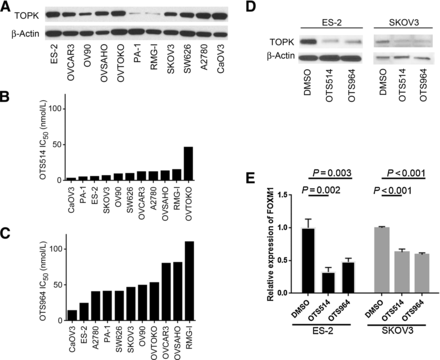
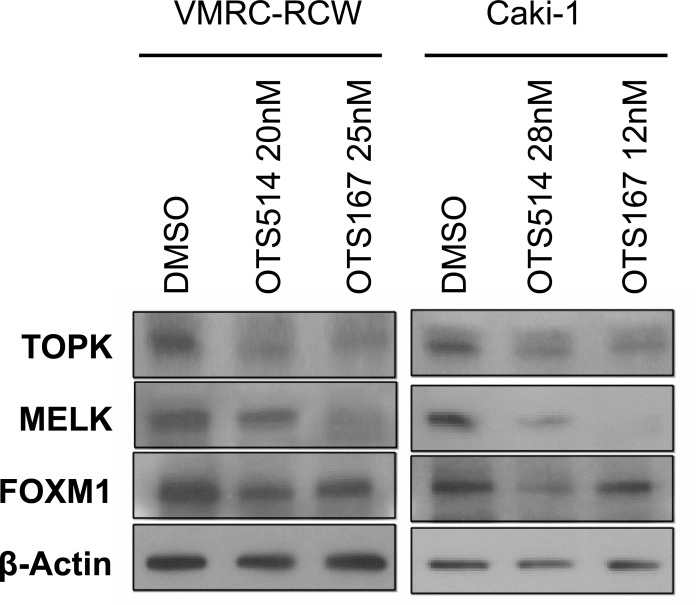
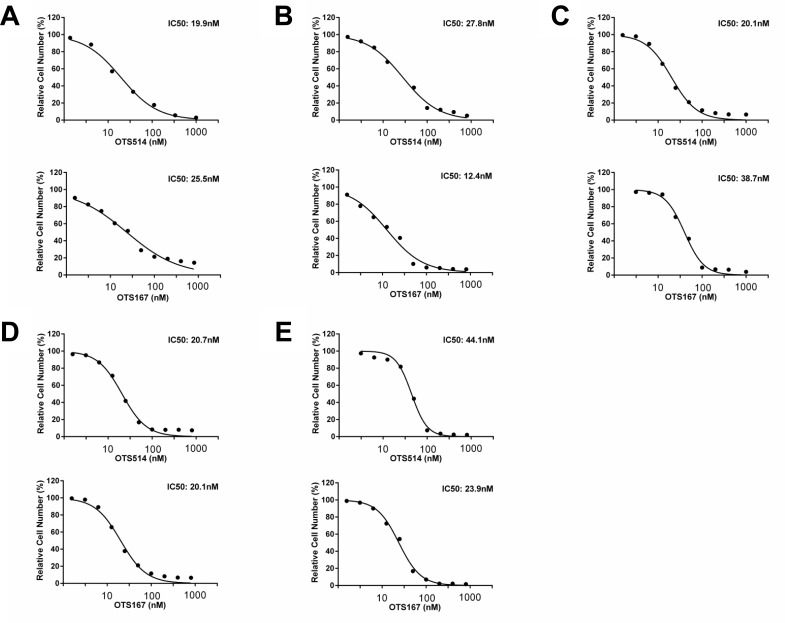
TOPK expression levels, IC50values to TOPK inhibitors and suppression of FOXM1 in ovarian cancer cell lines.Clin Cancer Res.2016 Dec 15;22(24):6110-6117. |
|---|
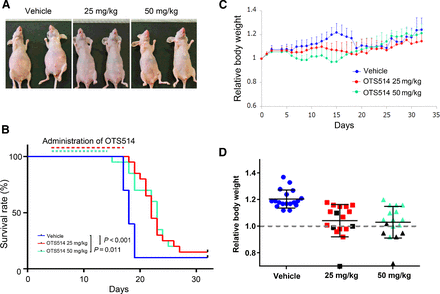
In vivoefficacy of OTS514 in ES-2 ovarian cancer peritoneal dissemination xenograft model.Clin Cancer Res.2016 Dec 15;22(24):6110-6117. |
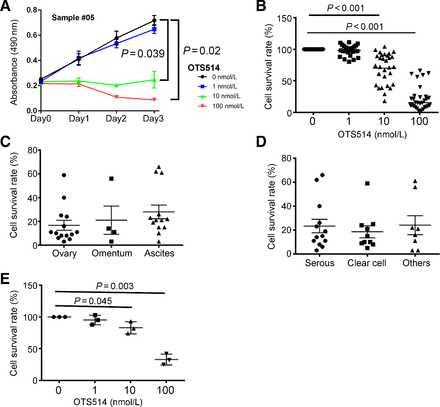
Growth-inhibitory and cytotoxic effects of OTS514 for ovarian cancer cells freshly-isolated from patients.Clin Cancer Res.2016 Dec 15;22(24):6110-6117. |
|
|---|
|
|
Products are for research use only; We do not sell to patients
Copyright 2020 InvivoChem LLC | All Rights Reserved


 COA
COA