| Size | Price | Stock | Qty |
|---|---|---|---|
| 5mg |
|
||
| 10mg |
|
||
| 25mg |
|
||
| 50mg |
|
||
| 100mg |
|
||
| 250mg | |||
| 500mg | |||
| Other Sizes |
Purity: ≥98%
| Targets |
TOPK (IC50 = 2.6 nM)
Mitogen-Activated Protein Kinase Kinases (TOPK/PBK) [2] |
|---|---|
| ln Vitro |
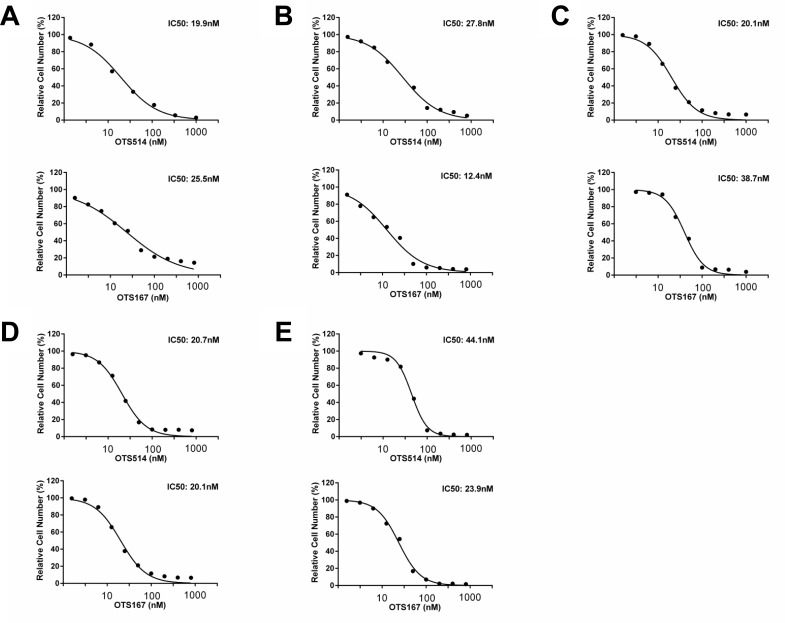
OTS514 (1.5625-100 nM) inhibits the growth of a putative CD138+ stem cell population from peripheral blood mononuclear cells derived from multiple myeloma (MM) patients and induces cell cycle arrest and apoptosis in a series of human myeloma cell lines (HMCL) at nanomolar concentrations[2].
In a series of human myeloma cell lines (HMCL), OTS514 induces cell cycle arrest and apoptosis at nanomolar concentrations. [2] - It prevents the outgrowth of a putative CD138⁺ stem cell population from multiple myeloma (MM) patient-derived peripheral blood mononuclear cells. [2] - In bone marrow cells from MM patients, OTS514 treatment preferentially kills malignant CD138⁺ plasma cells compared with the CD138⁻ compartment. [2] - Treatment of HMCLs with OTS514 elevates FOXO3 and its transcriptional targets CDKN1A (p21) and CDKN1B (p27), induces apoptosis, causes loss of FOXM1, and disrupts AKT, p38 MAPK, and NF-κB signaling. [2] - The effects of OTS514 are independent of p53 mutation or deletion status. [2] - Combination treatment of HMCLs with OTS514 and lenalidomide produces synergistic anti-myeloma effects. [2] - For the OTS514-resistant cell line 8226 Dox40, culture in the presence of 10 µM verapamil (which blocks ABCB1 activity) rescues sensitivity to OTS514. [2] - Serum-starved MM1.S and U266 cells (induced to G1 arrest) show altered DNA content after release from starvation and treatment with 10 nM OTS514 for 24 h, as analyzed by flow cytometry with propidium iodide staining. [2] - HMCLs treated with 100 nM OTS514 for 0-24 h exhibit caspase-mediated PARP cleavage, which is evident after 4 h (detected by Western blot). [2] - Treatment of MM1.S and U266 cells with OTS514 for 24 h causes a dose-dependent loss of TOPK protein (analyzed by Western blot). [2] |
| ln Vivo |
In a xenograft model of A549 cells (TOPK-positive lung cancer cells), OTS514 (1–5 mg/kg; once daily for 2 weeks; intravenous administration) induces tumor regression[1].
In an aggressive mouse xenograft model using NSG mice (NOD/SCID/IL2Rg) implanted with H929 cells, oral administration of OTS514 at 100 mg/kg 5 days per week is well tolerated. Depending on the initial graft size (1 × 10⁶ or 2 × 10⁶ cells), OTS514 reduces tumor size by 48%-81% compared to the control group. [2] |
| Enzyme Assay |
Expression of TOPK and phosphorylation of histone H3 (Ser10) were examined by Western blot, as described previously. Other antibodies used for Western blots are as follows: c-Src (1:1000), Fyn (1:1000), and Lyn (1:1000). In vitro cell viability was measured by the colorimetric assay using Cell Counting Kit-8. Cells (100 μl) were plated in 96-well plates at a density that generated continual linear growth (A549, 1 × 10³ cells; LU-99, 2 × 10³ cells; DU4475, 4 × 10³ cells; MDA-MB-231, 3 × 10³ cells; T47D, 3 × 10³ cells; Daudi, 5 × 10³ cells; UM-UC-3, 1 × 10³ cells; HCT-116, 1 × 10³ cells; MKN1, 2 × 10³ cells; MKN45, 4 × 10³ cells; HepG2, 4 × 10³ cells; MIAPaca-2, 2 × 10³ cells; 22Rv1, 6 × 10³ cells; and HT29, 3 × 10³ cells). The cells were allowed to adhere overnight before exposure to compounds for 72 hours at 37°C. Plates were read with a spectrophotometer at a wavelength of 450 nm. All assays were carried out in triplicate. After measuring IC50 values, we calculated the z scores to produce P values. After log transformation (base 10) of IC50 values (nM), the mean and SD were calculated for the log values of the IC50 for the 13 TOPK-positive cell lines. The mean and SD were 0.76 and 0.23 for OTS514 and 1.53 and 0.26 for OTS964. Then, the z scores from the HT29 IC50 values of OTS514 and OTS964 were 6.44 and 3.62, respectively[1].
|
| Cell Assay |
In vitro differentiation of human HSCs[1]
CD34+ HSCs were purified from growth factor–mobilized peripheral blood of healthy donors, and then cells were cultured in RPMI supplemented with 20% fetal bovine serum and 1× StemSpan CC100. Cells were treated with OTS514 (20 or 40 nM) or OTS964 (100 or 200 nM) for 48 hours. Collected cells were washed with phosphate-buffered saline (PBS) and resuspended in 100 μl of PBS followed by staining with CD41a antibody for 20 min at room temperature. Finally, the cells were washed with PBS again and then analyzed for CD41a staining by flow cytometry on the BD FACSCalibur. Expression of STAT5 was examined by Western blot with an anti-STAT5 antibody. Microarray analysis[2] 5 × 10⁵ H929 cells were treated with 0.015% DMSO, 15 nM OTS514, 15 µM lenalidomide (LEN), or 5 nM carfilzomib (CFZ) for 24 hours. Additionally, each active drug combination was performed (OTS514/LEN, OTS514/CFZ, OTS514/LEN/CFZ, and LEN/CFZ). RNA from three independent experiments (a total of 24 samples) was extracted with the Qiagen RNeasy mini kit and analyzed on two Human HT12v4 bead arrays at the University of Chicago functional genomics core facility. Gene Set Enrichment Analysis (GSEA) was performed on quantile‐normalized, background‐subtracted data using hallmark gene sets from the Molecular Signatures Database v6.1.27, 28 Upstream regulator analysis was generated through the use of Ingenuity Pathway Analysis. The cells were cultivated in RPMI supplemented with 1×StemSpan CC100 and 20% fetal bovine serum. For 48 hours, cells were exposed to either OTS964 (100 or 200 nM) or OTS514 (20 or 40 nM). Following a PBS wash and resuspension in 100 milliliters of PBS, the collected cells were stained for 20 minutes at room temperature using CD41a antibody. Ultimately, the cells underwent one more PBS wash before being subjected to flow cytometry analysis for CD41a staining. Using an anti-STAT5 antibody, a Western blot was used to measure STAT5 expression. MTT assay: Human myeloma cell lines (HMCL) are treated with increasing concentrations of OTS514 for 72 h, and cell viability is assessed using the MTT assay. For the OTS514-resistant 8226 Dox40 cell line, the assay is also performed in the presence of 10 µM verapamil to block ABCB1 activity. [2] - Cell cycle analysis: MM1.S and U266 cells are serum-starved overnight to induce G1 arrest. After releasing the starvation, cells are either left untreated or treated with 10 nM OTS514. After 24 h, DNA content is analyzed by flow cytometry with propidium iodide staining. [2] - Western blot analysis for PARP cleavage: HMCLs are treated with 100 nM OTS514 for 0-24 h, and PARP cleavage is detected by Western blot to assess apoptosis. [2] - Western blot analysis for TOPK protein: MM1.S and U266 cells are treated with OTS514 for 24 h, and TOPK protein levels are analyzed by Western blot to evaluate the dose-dependent effect on target protein. [2] - Flow cytometry for apoptosis in patient-derived cells: Bone marrow mononuclear cells from MM patients are plated with indicated concentrations of OTS514. After 18 h of culture, cells are harvested and analyzed by flow cytometry using Annexin V/PI staining to assess late apoptosis in the CD138⁺ plasma cell fraction and the CD138⁻ population. [2] - CD138⁺ cell outgrowth assay: Peripheral blood mononuclear cells (PBMC) derived from MM patients are plated with or without 5 ng/mL IL-3 and IL-6, and with or without 10 nM OTS514. After 6 days, CD138⁺ cells are isolated by magnetic bead separation to evaluate the effect of OTS514 on CD138⁺ cell outgrowth. [2] - Synergy assay with lenalidomide: MTT assays are performed simultaneously with OTS514, lenalidomide, and constant-ratio combinations (OTS514:lenalidomide = 1:6 and 1:12 molar equivalents) to assess synergistic activity. Western blot analysis is conducted on H929 cells treated for 24 h with increasing concentrations of OTS514 with or without lenalidomide to detect levels of IKAROS (IKZF1), IRF4, and FOXM1. Additionally, Amplex red peroxidase activity assay is performed using MM1.S cells with final concentrations of 20 µM lenalidomide, 100 nM OTS514, or the combination, with DMSO as a control. [2] - Western blot analysis for downstream signaling pathways: H929, 8226, and KMS11 cells are treated with increasing concentrations of OTS514 for 24 h, and Western blotting is performed with the LI-COR near-IR detection system to assess levels of p21/p27 and other relevant proteins. H929, U266, MM1.S, 8226, and KMS11 cells are treated with 15 nM OTS514 for 24 h, and Western blotting is performed using phospho-specific antibodies for IκBα, p38, AKT, and FOXM1, followed by stripping and re-probing to detect total levels of the same targets. [2] |
| Animal Protocol |
Female BALB/cSLC-nu/nu mice bearing a xenograft model of A549 cells[1]
1, 2.5, and 5 mg/kg Intravenously treated; once every day for 2 weeks In vivo xenograft study[1] A549 (1 × 10⁷ cells) or LU-99 cells (5 × 10⁶ or 1 × 10⁷ cells) were injected subcutaneously in the left flank of female BALB/cSLC-nu/nu mice. When A549 xenografts had reached an average volume of 200 mm3 or when LU-99 xenografts had reached an average volume of 150 or 200 mm3, animals were randomized into groups of six mice. The starting tumor volume of 150 mm3 was used for LU-99 xenografts when tumors were monitored for a longer time period (>14 days), because LU-99 cells grew very rapidly, and thus the starting volume of 200 mm3 prevented longer observation considering animal ethics (for example, 200 mm3 of inoculated LU-99 tumor reached an average tumor volume of about 1100 mm3, whereas A549 tumor reached about 490 mm3 on day 15). For intravenous administration, compounds were formulated in 5% glucose and injected into the tail vein. For oral administration, compounds (e.g. OTS514) were prepared in a vehicle of 0.5% methylcellulose and given by oral gavage at the indicated dose and schedule. An administration volume of 10 ml/kg of body weight was used for both administration routes. Concentrations were indicated in the main text and figures. Tumor volumes were determined using a caliper. The results were converted to tumor volume (mm3) by the formula length × width2 × 1/2. The weight of the mice was determined as an indicator of tolerability on the same days. The animal experiments were conducted at KAC Co. Ltd. for A549 xenograft or at OncoTherapy Science Inc. for LU-99 xenograft, in accordance with the Institutional Guidelines for the Care and Use of Laboratory Animals of each site. TGI was calculated according to the formula [1 − (T − T0)/(C − C0)] × 100, where T and T0 are the mean tumor volumes at day 15 or 22 and day 1, respectively, for the experimental group, and C and C0 are those for the vehicle control group. WBCs were counted with Sysmex XT-1800iV Analyzer (Sysmex Corporation) at KAC Co. Ltd. or with a cell counting chamber. Blood was collected in a blood collection tube with EDTA to prevent coagulation and to perform the blood cell count. Xenograft model establishment: NSG mice (NOD/SCID/IL2Rg) are used to establish xenografts of H929 cells, with 6 mice per group. [2] - Drug administration: When the tumor volume reaches 100 mm³, mice begin receiving OTS514 orally at a dose of 100 mg/kg, 5 days per week. [2] - Monitoring: Tumor volume is measured regularly to assess the anti-tumor effect, and body weight is monitored throughout the treatment course to evaluate tolerability. [2] |
| Toxicity/Toxicokinetics |
In a mouse xenograft model, oral administration of 100 mg/kg OTS514 five days a week was well tolerated, with stable body weight during treatment and no significant adverse reactions observed. [2]
|
| References | |
| Additional Infomation |
TOPK (T-lymphokine-activated killer cell-derived protein kinase) is highly and frequently activated in various cancer tissues, including lung cancer and triple-negative breast cancer, and plays an indispensable role in cancer cell mitosis. We report the development of a potent TOPK inhibitor, OTS964 {(R)-9-(4-(1-(dimethylamino)propyl-2-yl)phenyl)-8-hydroxy-6-methylthieno[2,3-c]quinoline-4(5H)-one}, which inhibits TOPK kinase activity with high affinity and selectivity. Similar to the knockdown of TOPK small interfering RNA (siRNA), this inhibitor induces cell division defects in vitro and in human lung cancer xenograft models, ultimately inducing apoptosis in cancer cells. Although administration of the free compound induced hematopoietic adverse reactions (leukopenia with thrombocytosis), administration of the liposomal formulation effectively induced complete regression of transplanted tumors in mice without any observed adverse reactions. Our results suggest that inhibiting TOPK activity may be a viable therapeutic approach for treating various human cancers. [1]
Multiple myeloma (MM) is still considered incurable, thus requiring the development of new drugs. Mitotic kinase T-LAK cell-derived protein kinase/PDZ-binding kinase (TOPK/PBK) is closely related to tumor cell proliferation, cancer stem cell maintenance, and poor patient prognosis in various cancers. In this report, we demonstrate for the first time that the TOPK inhibitor OTS514 has significant anti-myeloma activity. OTS514 can induce cell cycle arrest and apoptosis in a range of human myeloma cell lines (HMCL) at nanomolar concentrations and inhibit the proliferation of putative CD138+ stem cell populations in peripheral blood mononuclear cells of multiple myeloma (MM) patients. In bone marrow cells of MM patients, OTS514 treatment showed stronger killing effects on malignant CD138+ plasma cells than on CD138- plasma cells. In an invasive mouse xenograft model, oral administration of 100 mg/kg OTS964 five days a week was well tolerated, and the tumor volume was reduced by 48%-81% compared with the control group, depending on the initial size of the xenograft. After treatment of HMCL with OTS514, the expression of FOXO3 and its transcriptional targets CDKN1A (p21) and CDKN1B (p27) was upregulated, and apoptosis was induced. TOPK inhibitors can also induce the loss of FOXM1 and disrupt the AKT, p38 MAPK and NF-κB signaling pathways. The effect of OTS514 is independent of p53 mutation or deletion status. The combination of OTS514 and lenalidomide in the treatment of HMCL can produce a synergistic effect, which provides a theoretical basis for evaluating TOPK inhibitors in existing myeloma treatment regimens. [2] OTS514 is a potent TOPK inhibitor. TOPK/PBK (T-LAK cell-derived protein kinase/PDZ-binding kinase) is associated with tumor cell proliferation, cancer stem cell maintenance, and poor patient prognosis in various cancers. [2] Multiple myeloma (MM) is considered incurable, thus requiring the development of new drugs. OTS514 has shown potent anti-myeloma activity in preclinical models, providing a theoretical basis for evaluating the application of TOPK inhibitors in existing myeloma treatment regimens. [2] |
| Molecular Formula |
C21H20N2O2S
|
|
|---|---|---|
| Molecular Weight |
364.46
|
|
| Exact Mass |
364.124
|
|
| Elemental Analysis |
C, 69.21; H, 5.53; N, 7.69; O, 8.78; S, 8.80
|
|
| CAS # |
1338540-63-8
|
|
| Related CAS # |
OTS514 hydrochloride;2319647-76-0; OTS514;1338540-63-8; 1338544-87-8 (HBr); 1338545-92-8 (S-isomer HCl); 1338541-25-5 (s-isomer);
|
|
| PubChem CID |
67448836
|
|
| Appearance |
Light yellow to yellow solid
|
|
| Density |
1.3±0.1 g/cm3
|
|
| Boiling Point |
501.3±50.0 °C at 760 mmHg
|
|
| Flash Point |
256.9±30.1 °C
|
|
| Vapour Pressure |
0.0±1.3 mmHg at 25°C
|
|
| Index of Refraction |
1.665
|
|
| LogP |
3.25
|
|
| Hydrogen Bond Donor Count |
3
|
|
| Hydrogen Bond Acceptor Count |
4
|
|
| Rotatable Bond Count |
3
|
|
| Heavy Atom Count |
26
|
|
| Complexity |
522
|
|
| Defined Atom Stereocenter Count |
1
|
|
| SMILES |
Cl[H].S1C([H])=C([H])C2=C1C(N([H])C1C(C([H])([H])[H])=C([H])C(=C(C3C([H])=C([H])C(=C([H])C=3[H])[C@@]([H])(C([H])([H])[H])C([H])([H])N([H])[H])C=12)O[H])=O
|
|
| InChi Key |
OETLNMOJNONWOY-LBPRGKRZSA-N
|
|
| InChi Code |
InChI=1S/C21H20N2O2S/c1-11-9-16(24)17(14-5-3-13(4-6-14)12(2)10-22)18-15-7-8-26-20(15)21(25)23-19(11)18/h3-9,12,24H,10,22H2,1-2H3,(H,23,25)/t12-/m0/s1
|
|
| Chemical Name |
9-[4-[(2R)-1-aminopropan-2-yl]phenyl]-8-hydroxy-6-methyl-5H-thieno[2,3-c]quinolin-4-one
|
|
| Synonyms |
|
|
| HS Tariff Code |
2934.99.9001
|
|
| Storage |
Powder -20°C 3 years 4°C 2 years In solvent -80°C 6 months -20°C 1 month |
|
| Shipping Condition |
Room temperature (This product is stable at ambient temperature for a few days during ordinary shipping and time spent in Customs)
|
| Solubility (In Vitro) |
|
|||
|---|---|---|---|---|
| Solubility (In Vivo) |
Solubility in Formulation 1: ≥ 2.5 mg/mL (6.86 mM) (saturation unknown) in 10% DMSO + 40% PEG300 + 5% Tween80 + 45% Saline (add these co-solvents sequentially from left to right, and one by one), clear solution.
For example, if 1 mL of working solution is to be prepared, you can add 100 μL of 25.0 mg/mL clear DMSO stock solution to 400 μL PEG300 and mix evenly; then add 50 μL Tween-80 to the above solution and mix evenly; then add 450 μL normal saline to adjust the volume to 1 mL. Preparation of saline: Dissolve 0.9 g of sodium chloride in 100 mL ddH₂ O to obtain a clear solution. Solubility in Formulation 2: ≥ 2.5 mg/mL (6.86 mM) (saturation unknown) in 10% DMSO + 90% (20% SBE-β-CD in Saline) (add these co-solvents sequentially from left to right, and one by one), clear solution. For example, if 1 mL of working solution is to be prepared, you can add 100 μL of 25.0 mg/mL clear DMSO stock solution to 900 μL of 20% SBE-β-CD physiological saline solution and mix evenly. Preparation of 20% SBE-β-CD in Saline (4°C,1 week): Dissolve 2 g SBE-β-CD in 10 mL saline to obtain a clear solution. View More
Solubility in Formulation 3: ≥ 2.5 mg/mL (6.86 mM) (saturation unknown) in 10% DMSO + 90% Corn Oil (add these co-solvents sequentially from left to right, and one by one), clear solution. |
| Preparing Stock Solutions | 1 mg | 5 mg | 10 mg | |
| 1 mM | 2.7438 mL | 13.7189 mL | 27.4379 mL | |
| 5 mM | 0.5488 mL | 2.7438 mL | 5.4876 mL | |
| 10 mM | 0.2744 mL | 1.3719 mL | 2.7438 mL |
*Note: Please select an appropriate solvent for the preparation of stock solution based on your experiment needs. For most products, DMSO can be used for preparing stock solutions (e.g. 5 mM, 10 mM, or 20 mM concentration); some products with high aqueous solubility may be dissolved in water directly. Solubility information is available at the above Solubility Data section. Once the stock solution is prepared, aliquot it to routine usage volumes and store at -20°C or -80°C. Avoid repeated freeze and thaw cycles.
Calculation results
Working concentration: mg/mL;
Method for preparing DMSO stock solution: mg drug pre-dissolved in μL DMSO (stock solution concentration mg/mL). Please contact us first if the concentration exceeds the DMSO solubility of the batch of drug.
Method for preparing in vivo formulation::Take μL DMSO stock solution, next add μL PEG300, mix and clarify, next addμL Tween 80, mix and clarify, next add μL ddH2O,mix and clarify.
(1) Please be sure that the solution is clear before the addition of next solvent. Dissolution methods like vortex, ultrasound or warming and heat may be used to aid dissolving.
(2) Be sure to add the solvent(s) in order.
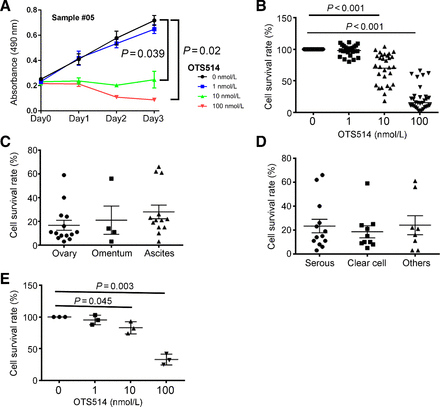
Growth-inhibitory and cytotoxic effects of OTS514 for ovarian cancer cells freshly-isolated from patients.Clin Cancer Res.2016 Dec 15;22(24):6110-6117. |
|---|
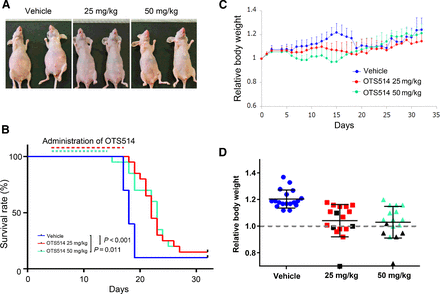
In vivoefficacy of OTS514 in ES-2 ovarian cancer peritoneal dissemination xenograft model.Clin Cancer Res.2016 Dec 15;22(24):6110-6117. |
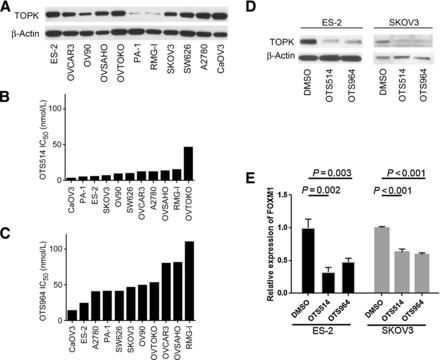
TOPK expression levels, IC50values to TOPK inhibitors and suppression of FOXM1 in ovarian cancer cell lines.Clin Cancer Res.2016 Dec 15;22(24):6110-6117. |
|
|---|
|
|
Products are for research use only; We do not sell to patients
Copyright 2020 InvivoChem LLC | All Rights Reserved


 COA
COA