| Size | Price | Stock | Qty |
|---|---|---|---|
| 5mg |
|
||
| 10mg |
|
||
| 25mg |
|
||
| 50mg |
|
||
| 100mg |
|
||
| 250mg |
|
||
| 500mg |
|
||
| Other Sizes |
Purity: ≥98%
| Targets |
Olanexidine HCl targets bacterial cell membranes. It is a monobiguanide compound with bactericidal activity. Olanexidine probably binds to the cell membrane and destroys membrane integrity. It is active against a wide range of bacteria, including Gram-positive and Gram-negative bacteria.
|
|---|---|
| ln Vitro |
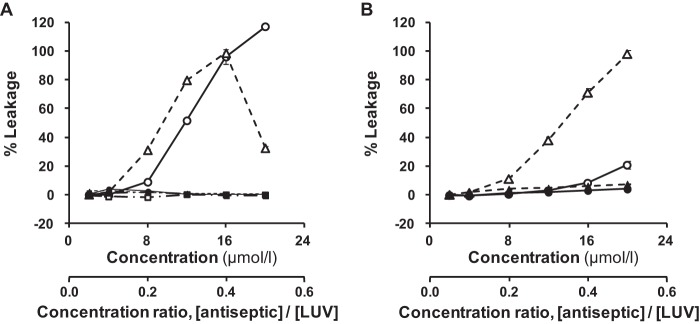
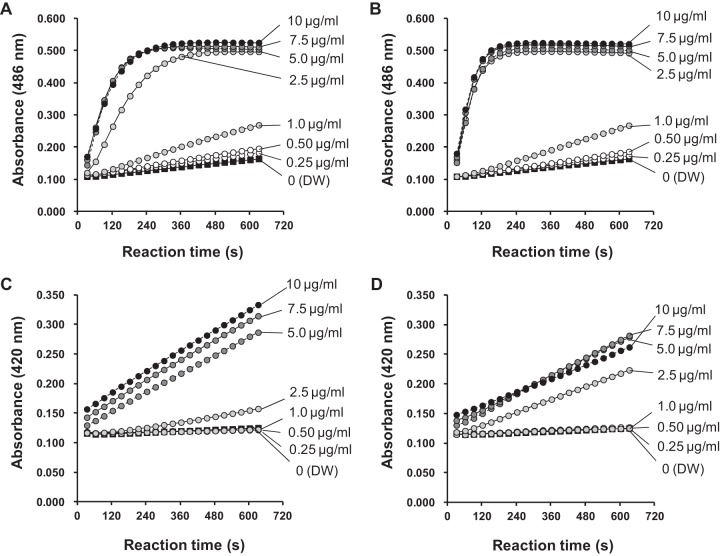
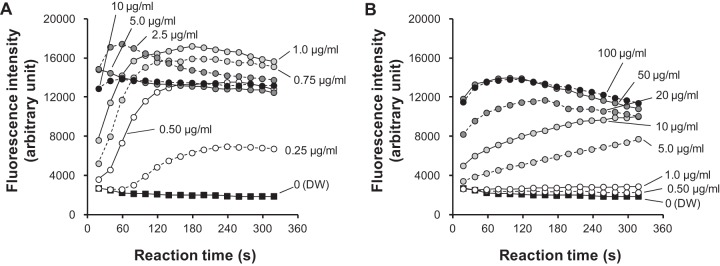
Olanexidine exhibits a bactericidal mechanism that involves interactions with molecules found on the surface of bacteria, such as lipopolysaccharide and lipoteichoic acid; disruption of liposome cell membranes, which are artificial models of bacterial membranes; enhancement of membrane permeability in Escherichia coli; disruption of S. aureus membrane integrity; and denature of proteins at relatively high concentrations (≥160 μg/ml)[1].
In vitro, Olanexidine HCl is a potent bactericidal agent. It is active against a wide range of bacteria, including Gram-positive and Gram-negative bacteria. It probably binds to the cell membrane and destroys membrane integrity. Its activity is concentration-dependent, with higher concentrations providing more effective bactericidal effects. |
| ln Vivo |
In vivo, Olanexidine HCl is used as an antiseptic/disinfectant compound for preparing patients for surgery and preventing postoperative bacterial infections. It was approved for use in Japan on July 3, 2015. It is applied topically to the skin. Its bactericidal effects are localized to the site of application.
|
| Enzyme Assay |
In vitro antibacterial susceptibility assays for Olanexidine HCl are performed using standard broth microdilution or agar diffusion methods. Various bacterial strains are cultured in appropriate media and exposed to varying concentrations of Olanexidine HCl. The minimum inhibitory concentration (MIC) is determined after incubation at 35-37°C for 16-24 hours.
|
| Cell Assay |
In vitro cell-based assays for Olanexidine HCl are performed using mammalian cell lines (e.g., keratinocytes or fibroblasts) to assess cytotoxicity. Cells are cultured in appropriate media and treated with Olanexidine HCl at various concentrations. Cell viability is measured by MTT or neutral red uptake assays. The compound's selectivity index is calculated by comparing its cytotoxic concentration to its antibacterial concentration.
|
| Animal Protocol |
In vivo animal studies for Olanexidine HCl were conducted in animal models of skin infection. The compound is applied topically to the skin. The reduction in bacterial burden on the skin is assessed by colony counting. Efficacy is compared to untreated controls and standard antiseptic agents.
|
| ADME/Pharmacokinetics |
Olanexidine HCl is applied topically to the skin and has minimal systemic absorption. Specific pharmacokinetic properties, such as half-life and bioavailability, are not extensively detailed in the available literature. It is primarily active at the site of application.
|
| Toxicity/Toxicokinetics |
Olanexidine HCl is generally well-tolerated when used as a topical antiseptic. It may cause local irritation or allergic reactions in some individuals. Systemic toxicity is rare due to minimal absorption. It is contraindicated in patients with known hypersensitivity to the compound.
|
| References |
Antimicrob Agents Chemother.2015 Aug;59(8):4551-9.
|
| Additional Infomation |
See also: Olanizide (note moved to); Olanizide hydrochloride (note moved to).
Olanexidine HCl is a novel monobiguanide analog with potent bactericidal activity. It is also known as OPB-2045 HCl. It was approved for use in Japan on July 3, 2015. It is used to prepare patients for surgery and to prevent postoperative bacterial infections. This product is for human topical use. |
| Molecular Formula |
C17H28CL3N5
|
|
|---|---|---|
| Molecular Weight |
408.80
|
|
| Exact Mass |
407.141
|
|
| Elemental Analysis |
C, 49.95; H, 6.90; Cl, 26.02; N, 17.13
|
|
| CAS # |
146509-94-6
|
|
| Related CAS # |
Olanexidine;146510-36-3
|
|
| PubChem CID |
6918362
|
|
| Appearance |
Solid powder
|
|
| LogP |
6.666
|
|
| Hydrogen Bond Donor Count |
4
|
|
| Hydrogen Bond Acceptor Count |
2
|
|
| Rotatable Bond Count |
11
|
|
| Heavy Atom Count |
25
|
|
| Complexity |
400
|
|
| Defined Atom Stereocenter Count |
0
|
|
| SMILES |
Cl.ClC1=C(Cl)C=CC(CNC(N(CCCCCCCC)C(=N)N)=N)=C1
|
|
| InChi Key |
GVBQOBUYEOFFLD-UHFFFAOYSA-N
|
|
| InChi Code |
InChI=1S/C17H27Cl2N5.ClH/c1-2-3-4-5-6-7-10-22-16(20)24-17(21)23-12-13-8-9-14(18)15(19)11-13;/h8-9,11H,2-7,10,12H2,1H3,(H5,20,21,22,23,24);1H
|
|
| Chemical Name |
-((3,4-Dichlorophenyl)methyl)-N'-octylimidodicarbonimidic diamide monohydrochloride
|
|
| Synonyms |
|
|
| HS Tariff Code |
2934.99.9001
|
|
| Storage |
Powder -20°C 3 years 4°C 2 years In solvent -80°C 6 months -20°C 1 month Note: Please store this product in a sealed and protected environment (e.g. under nitrogen), avoid exposure to moisture and light. |
|
| Shipping Condition |
Room temperature (This product is stable at ambient temperature for a few days during ordinary shipping and time spent in Customs)
|
| Solubility (In Vitro) |
DMSO : ~62.5 mg/mL (~152.89 mM)
|
|---|---|
| Solubility (In Vivo) |
Solubility in Formulation 1: ≥ 2.08 mg/mL (5.09 mM) (saturation unknown) in 10% DMSO + 90% Corn Oil (add these co-solvents sequentially from left to right, and one by one), clear solution.
For example, if 1 mL of working solution is to be prepared, you can add 100 μL of 20.8 mg/mL clear DMSO stock solution to 900 μL of corn oil and mix evenly. Solubility in Formulation 2: 10% DMSO+90% Corn Oil: ≥ 2.08 mg/mL (5.09 mM) (Please use freshly prepared in vivo formulations for optimal results.) |
| Preparing Stock Solutions | 1 mg | 5 mg | 10 mg | |
| 1 mM | 2.4462 mL | 12.2309 mL | 24.4618 mL | |
| 5 mM | 0.4892 mL | 2.4462 mL | 4.8924 mL | |
| 10 mM | 0.2446 mL | 1.2231 mL | 2.4462 mL |
*Note: Please select an appropriate solvent for the preparation of stock solution based on your experiment needs. For most products, DMSO can be used for preparing stock solutions (e.g. 5 mM, 10 mM, or 20 mM concentration); some products with high aqueous solubility may be dissolved in water directly. Solubility information is available at the above Solubility Data section. Once the stock solution is prepared, aliquot it to routine usage volumes and store at -20°C or -80°C. Avoid repeated freeze and thaw cycles.
Calculation results
Working concentration: mg/mL;
Method for preparing DMSO stock solution: mg drug pre-dissolved in μL DMSO (stock solution concentration mg/mL). Please contact us first if the concentration exceeds the DMSO solubility of the batch of drug.
Method for preparing in vivo formulation::Take μL DMSO stock solution, next add μL PEG300, mix and clarify, next addμL Tween 80, mix and clarify, next add μL ddH2O,mix and clarify.
(1) Please be sure that the solution is clear before the addition of next solvent. Dissolution methods like vortex, ultrasound or warming and heat may be used to aid dissolving.
(2) Be sure to add the solvent(s) in order.
Effects of olanexidine and chlorhexidine on calcein release from calcein-encapsulated LUVs with different lipid compositions after 11 min of exposure.Antimicrob Agents Chemother.2015 Aug;59(8):4551-9. |
Changes in outer and inner membrane permeabilization caused by olanexidine and chlorhexidine in E. coli ML-35p cells incubated in 5 mM HEPES buffer containing 20 μg/ml nitrocefin and 5 μM carbonyl cyanide 3-chlorophenylhydrazone with olanexidine gluconate (A) or chlorhexidine digluconate (B). |
Effects of olanexidine and chlorhexidine on the cytoplasmic membrane of S. aureus. The effects were monitored by changes in the membrane potential using a fluorescence probe, DiSC3(5). (A) Olanexidine gluconate. (B) Chlorhexidine digluconate. Distilled water (DW) was used as a negative control.Antimicrob Agents Chemother.2015 Aug;59(8):4551-9. |
Products are for research use only; We do not sell to patients
Copyright 2020 InvivoChem LLC | All Rights Reserved


 COA
COA