| Size | Price | Stock | Qty |
|---|---|---|---|
| 1mg |
|
||
| 2mg |
|
||
| 5mg |
|
||
| 10mg |
|
||
| 25mg |
|
||
| 50mg |
|
||
| 100mg |
|
||
| 250mg | |||
| Other Sizes |
Purity: ≥98%
| Targets |
MDM2/p53 (IC50 = 13.6 μg/mL)
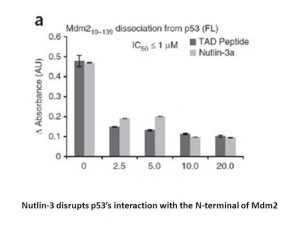
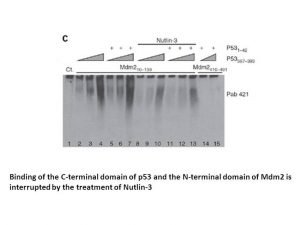
The target of Nutlin-3b is the p53-MDM2 interaction; it binds to the p53-binding pocket of MDM2 to disrupt the association between MDM2 and p53, thereby preventing MDM2-mediated ubiquitination and degradation of p53. Via surface plasmon resonance (SPR) assay, the equilibrium dissociation constant (Ki) of Nutlin-3b for MDM2 binding was determined to be 140 nM. In a fluorescence polarization (FP) assay that measures the inhibition of the interaction between MDM2 and a p53-derived peptide, Nutlin-3b exhibited an IC₅₀ value of 110 nM [1] |
|---|---|
| ln Vitro |
Nutlin-3b is useful as a negative control s for non-MDM2-related cellular activities.Only in cells that have p53 that is in the wild-type form does nutlin-3a induce the expression of MDM2 and p21 (but not p53). Regardless of whether the cells have p53 or not, nutlin-3b has no impact. Only the active enantiomer Nutlin-3a distinguishes between cells harboring mutant and wild-type p53 and exhibits strong antiproliferative activity. Nutlin-3b's potency against mutant p53 cells is almost identical to that of Nutlin-3a, while it is significantly less potent against wild-type p53 cells. After 48 hours of exposure to Nutlin-3a, 45% of the cell population became TUNEL positive, but cells treated with Nutlin-3b are identical to the untreated controls. [1]
Antiproliferative activity in cancer cell lines: Nutlin-3b showed dose-dependent antiproliferative effects on human cancer cell lines with wild-type p53, but its activity was significantly weaker than that of its stereoisomer, Nutlin-3a. In SJSA-1 osteosarcoma cells (wild-type p53), the IC₅₀ of Nutlin-3b for inhibiting cell proliferation (measured by MTT assay with 72 hours of incubation) was 3.8 μM, whereas the IC₅₀ of Nutlin-3a in the same assay was 0.15 μM. In HCT116 colon cancer cells (wild-type p53), Nutlin-3b had an IC₅₀ of 5.2 μM, compared to 2.3 μM for Nutlin-3a [1] - Activation of p53 target genes: Treatment of SJSA-1 cells with Nutlin-3b (10 μM for 24 hours) induced the upregulation of p53-responsive genes, including p21 (a marker of cell cycle arrest) and MDM2 (a negative feedback regulator of p53). Quantitative reverse transcription-polymerase chain reaction (RT-PCR) analysis showed that the mRNA levels of p21 and MDM2 increased by 3.2-fold and 2.8-fold, respectively, compared to the vehicle control. This induction was lower than that observed with Nutlin-3a (6.5-fold increase for p21 and 5.1-fold increase for MDM2 under the same conditions) [1] - Stabilization of p53 protein: Western blot analysis of HCT116 cells treated with Nutlin-3b (5 μM for 16 hours) revealed a significant increase in p53 protein levels (2.5-fold higher than the vehicle control). This stabilization was attributed to the inhibition of MDM2-mediated p53 ubiquitination and degradation, but the degree of stabilization was less pronounced than that of Nutlin-3a (a 4.8-fold increase in p53 protein levels at the same concentration) [1] |
| ln Vivo |
|
| Enzyme Assay |
Surface Plasmon Resonance (SPR) Assay for MDM2 Binding: Recombinant human MDM2 protein (residues 1–125, containing the p53-binding domain) was immobilized on a CM5 sensor chip using amine coupling chemistry. The running buffer used throughout the assay consisted of 10 mM HEPES (pH 7.4), 150 mM NaCl, and 0.005% Tween-20. Serial concentrations of Nutlin-3b (ranging from 0.05 μM to 10 μM) were injected over the MDM2-immobilized chip at a flow rate of 30 μL/min. Each injection cycle included a 120-second association phase (during which Nutlin-3b bound to MDM2) and a 300-second dissociation phase (during which unbound Nutlin-3b was washed away). Sensorgrams obtained from the assay were corrected for non-specific binding using a reference flow cell (without immobilized MDM2). The equilibrium dissociation constant (Ki) of Nutlin-3b for MDM2 was calculated using BIAevaluation software by fitting the corrected sensorgram data to a 1:1 Langmuir binding model [1]
- Fluorescence Polarization (FP) Assay for MDM2-p53 Peptide Interaction Inhibition: A synthetic peptide corresponding to the p53 transactivation domain (residues 15–29) was labeled with fluorescein isothiocyanate (FITC) to serve as a probe for the MDM2-p53 interaction. The assay was performed in a buffer containing 20 mM Tris-HCl (pH 7.5), 150 mM NaCl, and 0.05% Tween-20. First, 20 nM of the FITC-labeled p53 peptide was incubated with 100 nM of recombinant MDM2 at room temperature for 30 minutes to form a peptide-MDM2 complex. Serial dilutions of Nutlin-3b (ranging from 0.01 μM to 20 μM) were then added to the complex, and the mixture was incubated for an additional 60 minutes at room temperature. Fluorescence polarization signals were measured using a microplate reader with an excitation wavelength of 485 nm and an emission wavelength of 535 nm. The IC₅₀ of Nutlin-3b was defined as the concentration that reduced the fluorescence polarization signal (indicating displacement of the FITC-labeled peptide from MDM2) by 50% [1] |
| Cell Assay |
On a Biacore S51, competition assay is conducted. An immobilized PentaHis antibody is used to capture the His-tagged p53 on a Series S Sensor chip CM5. A response unit equals one pg of protein per millimeter 2, so the level of capture is around 200. MDM2 protein is kept at a constant 300 nM concentration. Each MDM2 test sample contains a concentration series of Nutlin-3 after it has been dissolved in DMSO at a 10 mM concentration and further diluted. Running buffer (10 mM Hepes, 0.15 M NaCl, 2% DMSO) is used for the assay, which is carried out at 25 °C. Calculating IC50 involves calculating the percentage of MDM2-p53 binding in the presence of Nutlin-3 compared to binding in the absence of Nutlin-3.
MTT Antiproliferation Assay: Cancer cells (including SJSA-1 osteosarcoma cells and HCT116 colon cancer cells) were seeded in 96-well plates at a density of 5×10³ cells per well. The cells were cultured overnight at 37°C in a humidified atmosphere with 5% CO₂ in complete Dulbecco’s Modified Eagle Medium (DMEM) supplemented with 10% fetal bovine serum, 100 U/mL penicillin, and 100 μg/mL streptomycin. The next day, the medium was replaced with fresh complete DMEM containing serial dilutions of Nutlin-3b (ranging from 0.1 μM to 20 μM) or vehicle (dimethyl sulfoxide, DMSO) at a final concentration of 0.1%. After 72 hours of incubation, 20 μL of MTT reagent (5 mg/mL in phosphate-buffered saline, PBS) was added to each well, and the plates were incubated for an additional 4 hours. The medium was then carefully aspirated, and 150 μL of DMSO was added to each well to dissolve the formazan crystals formed by viable cells. The absorbance of each well was measured at 570 nm using a microplate reader. Cell viability was calculated as the percentage of absorbance relative to the vehicle control group. The IC₅₀ value was determined by nonlinear regression analysis of the dose-response curve [1] - Quantitative RT-PCR for p53 Target Genes: SJSA-1 cells were seeded in 6-well plates at a density of 2×10⁵ cells per well and cultured overnight under the same conditions as the MTT assay. The cells were then treated with 10 μM Nutlin-3b or vehicle for 24 hours. Total RNA was extracted from the treated cells using an RNA isolation kit, and the concentration and purity of the RNA were determined using a spectrophotometer. Complementary DNA (cDNA) was synthesized by reverse transcription of 1 μg of total RNA using a reverse transcriptase enzyme and random primers. Quantitative PCR was performed in a reaction mixture containing the cDNA template, specific primers for p21, MDM2, and glyceraldehyde-3-phosphate dehydrogenase (GAPDH; used as an internal control), and a fluorescent DNA-binding dye. The reaction was run on a real-time PCR instrument, and the relative mRNA levels of p21 and MDM2 were calculated using the 2⁻ΔΔCt method (normalized to GAPDH expression) [1] - Western Blot Analysis for p53 Protein: HCT116 cells were seeded in 6-well plates at a density of 2×10⁵ cells per well and cultured overnight. The cells were treated with 5 μM Nutlin-3b or vehicle for 16 hours. After treatment, the cells were washed twice with cold PBS and lysed in radioimmunoprecipitation assay (RIPA) buffer containing protease inhibitors to prevent protein degradation. The cell lysates were centrifuged at high speed to remove cellular debris, and the protein concentration of the supernatant was measured using a bicinchoninic acid (BCA) protein assay kit. Equal amounts of protein (30 μg per lane) were separated by sodium dodecyl sulfate-polyacrylamide gel electrophoresis (SDS-PAGE) on a 10% acrylamide gel. The separated proteins were then transferred from the gel to a polyvinylidene difluoride (PVDF) membrane. The membrane was blocked with 5% non-fat milk in Tris-buffered saline with Tween-20 (TBST) for 1 hour at room temperature to prevent non-specific antibody binding. The membrane was then incubated overnight at 4°C with a primary antibody specific for p53. After incubation, the membrane was washed three times with TBST and incubated with a horseradish peroxidase (HRP)-conjugated secondary antibody for 1 hour at room temperature. The protein bands were visualized using an enhanced chemiluminescence (ECL) detection system, and the intensity of the p53 band was quantified using image analysis software (normalized to the intensity of a β-actin band, a loading control) [1] |
| Animal Protocol |
HCT116, RKO, SJSA-1, SW480, and MDA-MB-435
~30 μM; 48 h MTT assay |
| References | |
| Additional Infomation |
Nutlin-3 is a Nutlin and piperazine compound with anti-coronavirus activity. Nutlin-3 is a small molecule inhibitor that targets the p53-MDM2 interaction. Nutlin-3b is a stereoisomer of Nutlin-3a; both belong to the imidazoline class of small molecules designed to target the p53-MDM2 interaction. Nutlin-3b exhibits a lower binding affinity to MDM2 (Ki values of 140 nM and 130 nM, respectively, compared to Nutlin-3a), which is associated with its weaker in vitro antiproliferative activity and reduced ability to activate p53 target genes. This characteristic makes Nutlin-3b an important negative control tool for studying the biological effects of Nutlin-3a, as it helps to verify that the observed Nutlin-3a activity is mediated by its specific binding to MDM2, rather than a non-specific effect [1]. In the literature, Nutlin-3b has been specifically used to confirm the specificity of Nutlin-3a’s action on the p53-MDM2 pathway. For example, Nutlin-3b has weak antiproliferative activity in SJSA-1 cells (IC₅₀ = 3.8 μM), while Nutlin-3a has strong activity in the same cell line (IC₅₀ = 0.15 μM), which supports the conclusion that specific binding to MDM2 is necessary for p53-dependent anticancer activity [1].
|
| Molecular Formula |
C30H30CL2N4O4
|
|---|---|
| Molecular Weight |
581.49
|
| Exact Mass |
580.164
|
| Elemental Analysis |
C, 61.97; H, 5.20; Cl, 12.19; N, 9.64; O, 11.01
|
| CAS # |
675576-97-3
|
| Related CAS # |
Nutlin-3a;675576-98-4;Nutlin-3;548472-68-0
|
| PubChem CID |
16755649
|
| Appearance |
Off-white to yellow solid powder
|
| Density |
1.4±0.1 g/cm3
|
| Index of Refraction |
1.648
|
| LogP |
2.77
|
| Hydrogen Bond Donor Count |
1
|
| Hydrogen Bond Acceptor Count |
5
|
| Rotatable Bond Count |
6
|
| Heavy Atom Count |
40
|
| Complexity |
919
|
| Defined Atom Stereocenter Count |
2
|
| SMILES |
O=C1NCCN(C(N2[C@@H](C3=CC=C(Cl)C=C3)[C@@H](C4=CC=C(Cl)C=C4)N=C2C5=CC=C(OC)C=C5OC(C)C)=O)C1
|
| InChi Key |
BDUHCSBCVGXTJM-IZLXSDGUSA-N
|
| InChi Code |
InChI=1S/C30H30Cl2N4O4/c1-18(2)40-25-16-23(39-3)12-13-24(25)29-34-27(19-4-8-21(31)9-5-19)28(20-6-10-22(32)11-7-20)36(29)30(38)35-15-14-33-26(37)17-35/h4-13,16,18,27-28H,14-15,17H2,1-3H3,(H,33,37)/t27-,28+/m1/s1
|
| Chemical Name |
4-[(4R,5S)-4,5-bis(4-chlorophenyl)-2-(4-methoxy-2-propan-2-yloxyphenyl)-4,5-dihydroimidazole-1-carbonyl]piperazin-2-one
|
| Synonyms |
(+)-Nutlin-3; Nutlin 3b; Nutlin-3b; Nutlin3b
|
| HS Tariff Code |
2934.99.9001
|
| Storage |
Powder -20°C 3 years 4°C 2 years In solvent -80°C 6 months -20°C 1 month |
| Shipping Condition |
Room temperature (This product is stable at ambient temperature for a few days during ordinary shipping and time spent in Customs)
|
| Solubility (In Vitro) |
DMSO: ~100 mg/mL (~172.0 mM)
Water: <1 mg/mL (Insoluble) Ethanol: ~100 mg/mL (~172.0 mM) |
|---|---|
| Solubility (In Vivo) |
Solubility in Formulation 1: ≥ 2.5 mg/mL (4.30 mM) (saturation unknown) in 10% DMSO + 40% PEG300 + 5% Tween80 + 45% Saline (add these co-solvents sequentially from left to right, and one by one), clear solution.
For example, if 1 mL of working solution is to be prepared, you can add 100 μL of 25.0 mg/mL clear DMSO stock solution to 400 μL PEG300 and mix evenly; then add 50 μL Tween-80 to the above solution and mix evenly; then add 450 μL normal saline to adjust the volume to 1 mL. Preparation of saline: Dissolve 0.9 g of sodium chloride in 100 mL ddH₂ O to obtain a clear solution. Solubility in Formulation 2: ≥ 2.5 mg/mL (4.30 mM) (saturation unknown) in 10% DMSO + 90% Corn Oil (add these co-solvents sequentially from left to right, and one by one), clear solution. For example, if 1 mL of working solution is to be prepared, you can add 100 μL of 25.0 mg/mL clear DMSO stock solution to 900 μL of corn oil and mix evenly. (Please use freshly prepared in vivo formulations for optimal results.) |
| Preparing Stock Solutions | 1 mg | 5 mg | 10 mg | |
| 1 mM | 1.7197 mL | 8.5986 mL | 17.1972 mL | |
| 5 mM | 0.3439 mL | 1.7197 mL | 3.4394 mL | |
| 10 mM | 0.1720 mL | 0.8599 mL | 1.7197 mL |
*Note: Please select an appropriate solvent for the preparation of stock solution based on your experiment needs. For most products, DMSO can be used for preparing stock solutions (e.g. 5 mM, 10 mM, or 20 mM concentration); some products with high aqueous solubility may be dissolved in water directly. Solubility information is available at the above Solubility Data section. Once the stock solution is prepared, aliquot it to routine usage volumes and store at -20°C or -80°C. Avoid repeated freeze and thaw cycles.
Calculation results
Working concentration: mg/mL;
Method for preparing DMSO stock solution: mg drug pre-dissolved in μL DMSO (stock solution concentration mg/mL). Please contact us first if the concentration exceeds the DMSO solubility of the batch of drug.
Method for preparing in vivo formulation::Take μL DMSO stock solution, next add μL PEG300, mix and clarify, next addμL Tween 80, mix and clarify, next add μL ddH2O,mix and clarify.
(1) Please be sure that the solution is clear before the addition of next solvent. Dissolution methods like vortex, ultrasound or warming and heat may be used to aid dissolving.
(2) Be sure to add the solvent(s) in order.
|
|---|
|
Products are for research use only; We do not sell to patients
Copyright 2020 InvivoChem LLC | All Rights Reserved


 COA
COA