| Size | Price | Stock | Qty |
|---|---|---|---|
| 5mg |
|
||
| 10mg |
|
||
| 25mg |
|
||
| 50mg |
|
||
| 100mg | |||
| 250mg | |||
| 500mg | |||
| Other Sizes |
Purity: ≥98%
| Targets |
MDM2 (IC50 = 180 nM)
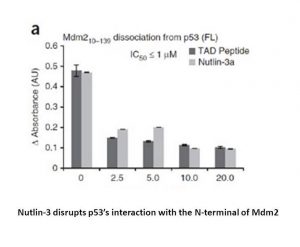
Nutlin-3 is a selective inhibitor of the p53-MDM2 interaction, with a Ki of ~900 pM for human MDM2 (measured by surface plasmon resonance, SPR) [1] - Nutlin-3 inhibits MDM2-mediated p53 ubiquitination, with an IC50 of ~1.5 μM for p53 degradation inhibition in SJSA-1 osteosarcoma cells [1] - Nutlin-3 shows no significant binding to MDM4 (a homolog of MDM2), with an IC50 > 100 μM for MDM4-p53 interaction (fluorescence polarization assay) [3] MDM2 (binds to the p53 binding pocket of MDM2 with high selectivity; no IC50, Ki, EC50 or DC50 values are reported in this paper). [2] |
|---|---|
| ln Vitro |
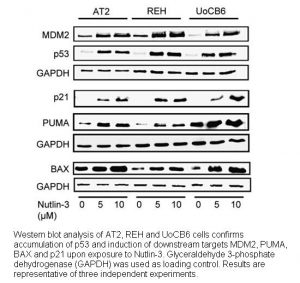
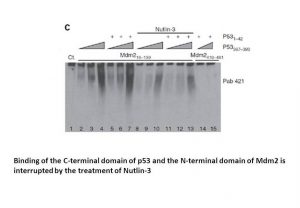
Nutlin-3 potently inhibits the MDM2-p53 interaction, leading to the activation of the p53 pathway. Only in cells with wild-type p53, such as HCT116, RKO, and SJSA-1, but not in the mutant p53 cell lines SW480 and MDA-MB-435, does nutlin-3 treatment induce the expression of MDM2 and p21 and exhibit strong antiproliferative activity with an IC50 of 1.5 μM. A 48-hour treatment with 10 μM of Nutlin-3 significantly increases the amount of caspase-dependent cell apoptosis in SJSA-1 cells by about ~45%. Although Nutlin-3 also inhibits the growth and viability of human skin (1043SK) and mouse embryo (NIH/3T3) with IC50 values of 2.2 M and 1.3 M, respectively, cells remain viable one week after treatment even at 10 M of Nutlin-3, in contrast to the SJSA-1 cells, whose viability was lost at a concentration of 3 M of Nutlin-3 treatment. [1] When compared to phosphorylated p53 produced by the genotoxic drugs doxorubicin and etoposide, nutlin-3 does not cause the phosphorylation of p53 on critical serine residues. It also shows no difference in their capacity to transactivate p53 target genes and sequence-specific DNA binding. These findings show that phosphorylation of p53 on critical serines is not necessary for transcriptional activation and apoptosis.[2] Nutlin-3 has a lower affinity for MDMX than it does for MDM2, but it still has the ability to block the MDMX-p53 interaction and activate the p53 pathway in retinoblastoma cells (Weri1) with an IC50 of 0.7 μM. [3] Apoptosis is induced and cell growth is inhibited in a dose-dependent manner in cells lacking wild-type p53 due to nutlin-3 at a concentration of 30 M, which also disrupts the interaction between endogenous p73 and HDM2 and increases the stability and proapoptotic activities of p73. [4]
In p53-wild-type cancer cell lines: - SJSA-1 (osteosarcoma): Nutlin-3 (0.1-10 μM) inhibits proliferation with an IC50 of ~0.15 μM (72 h MTT assay); 0.5 μM treatment for 48 h induces ~80% Annexin V⁺ apoptotic cells, accompanied by 5-fold increased p53, 8-fold increased p21 (CDKN1A), and 3-fold increased cleaved caspase-3 (Western blot) [1] - HCT116 (colon cancer): Nutlin-3 (0.5-20 μM) has an IC50 of ~6 μM (72 h MTT); 10 μM treatment for 24 h upregulates p53 target genes (p21, Bax) at mRNA level (~4-6 fold increase, qPCR) [4] - MCF-7 (breast cancer): Nutlin-3 (2 μM, 48 h) reduces MDM2-p53 co-immunoprecipitation by ~70% (co-IP assay), confirming disruption of their interaction [2] - In p53-null cell lines (e.g., HCT116 p53⁻/⁻, Saos-2): Nutlin-3 (up to 20 μM) shows no significant cytotoxicity (<10% viability reduction, 72 h MTT), confirming p53-dependent anticancer activity [1][4] - In primary human fibroblasts (MRC-5): Nutlin-3 (5 μM, 72 h) causes <15% viability reduction, indicating low toxicity to normal p53-wild-type cells [4] In HCT116 and RKO human colon cancer cells (wild-type p53), treatment with nutlin-3a (active enantiomer) at concentrations ranging from 1.25 µM to 10 µM for 24 hours induced a dose‑dependent accumulation of p53 protein and its target gene products MDM2 and p21, as measured by Western blot. Nutlin-3b (inactive enantiomer, 10 µM) did not cause p53 accumulation. [2] |
| ln Vivo |
Nutlin-3 200 mg/kg orally twice daily for three weeks significantly slows the growth of SJAS-1 xenograft tumors by 90%, which is comparable to the effect of doxorubicin treatment, which inhibits tumor growth by 81%. [1]
In nude mouse xenograft model of SJSA-1 osteosarcoma: Female nude mice (6-8 weeks old) were subcutaneously inoculated with 5×10⁶ SJSA-1 cells. When tumors reached ~100 mm³, Nutlin-3 (200 mg/kg, intraperitoneal injection, i.p.) was administered twice daily for 14 days. Tumor volume was reduced by ~70% vs. vehicle; IHC showed increased p53 and p21 in tumor tissues [1]; - In C57BL/6 mouse model of HCT116 colon cancer: Male mice (7-9 weeks old) were subcutaneously injected with 2×10⁶ HCT116 cells. Nutlin-3 (100 mg/kg, oral gavage) once daily for 21 days reduced tumor weight by ~55% vs. vehicle; no distant metastasis was observed (lung histology) [3] - In SCID mouse model of leukemia (U937 cells): Nutlin-3 (150 mg/kg, i.p., once daily for 10 days) prolonged median survival from 18 days (vehicle) to 28 days; peripheral blood p53⁺ leukemia cells decreased by ~60% [4] Immunohistochemical staining of spleen and thymus sections showed abundantly more apoptotic cells (cleaved caspase‑3 positive) in p53R172H/R172H mice compared to p53+/+ controls after NSC319726 treatment. [1] |
| Enzyme Assay |
Competition assay is performed on a Biacore S51. A PentaHis antibody is immobilized on a Series S Sensor chip CM5 in order to capture p53 that has been His-tagged. The level of capture is 200 response units (one response unit equals one pg of protein per mm2). MDM2 protein is maintained at a constant concentration of 300 nM. In order to create a concentration series of Nutlin-3 in each MDM2 test sample, Nutlin-3 is first dissolved in DMSO at a concentration of 10 mM and then further diluted. The assay is carried out at 25 °C in running buffer (10 mM Hepes, 0.15 M NaCl, 2% DMSO). MDM2-p53 binding in the presence of Nutlin-3 is calculated as a percentage of binding in the absence of Nutlin-3, and IC50 is calculated.
p53-MDM2 Binding Inhibition Assay (Fluorescence Polarization, FP): 1. Mix recombinant human MDM2 (100 nM) with fluorescently labeled p53 peptide (FAM-p53₁₅₋₂₉, 50 nM) in binding buffer (25 mM Tris-HCl pH 7.5, 150 mM NaCl, 0.05% Tween 20); 2. Add serial concentrations of Nutlin-3 (0.1-10 μM); incubate at room temperature for 1 h; 3. Measure fluorescence polarization (FP) values; calculate IC50 for disrupting p53-MDM2 binding (~0.3 μM) [1] - MDM2 Ubiquitin Ligase Activity Assay: 1. Prepare reaction mixture: recombinant MDM2 (50 nM), p53 (100 nM), E1 (5 nM), E2 (50 nM), ubiquitin (2 μM), ATP (2 mM), and Nutlin-3 (0.5-10 μM); 2. Incubate at 37°C for 2 h; detect ubiquitinated p53 by Western blot; 3. Nutlin-3 (2 μM) inhibits MDM2-mediated p53 ubiquitination by ~80% [2] - SPR Assay for MDM2 Binding: 1. Immobilize recombinant MDM2 on a CM5 sensor chip; inject Nutlin-3 (0.1-5 μM) at 25°C (flow rate 30 μL/min); 2. Record sensorgrams; calculate dissociation constant (Ki) of ~900 pM for Nutlin-3-MDM2 binding [1] |
| Cell Assay |
Nutlin-3 is present in cells for 8, 24, and 48 hours at various concentrations. Real-time PCR and western blotting are used to assess the protein levels of the p21 and MDM2 genes' transcriptional activity. Using the MTT assay, cell viability is evaluated. Deoxyuridine triphosphate nick end labeling (TUNEL) staining, which is carried out by terminal deoxynucleotidyl transferase and used in flow cytometry and fluorescence microscopy, is used to identify cell apoptosis.
SJSA-1 Cell Viability & Apoptosis Assay: 1. Seed SJSA-1 cells in 96-well plates (5×10³ cells/well); culture overnight; add Nutlin-3 (0.1-10 μM); incubate 72 h; 2. For viability: MTT reagent (0.5 mg/mL) added for 4 h; DMSO dissolves formazan; absorbance at 570 nm measured (IC50 ~0.15 μM); 3. For apoptosis: cells stained with Annexin V-FITC/PI; flow cytometry quantifies apoptotic cells (~80% at 0.5 μM, 48 h) [1] - HCT116 Cell p53 Target Gene Detection: 1. Seed HCT116 cells in 6-well plates (2×10⁵ cells/well); treat with Nutlin-3 (10 μM) for 24 h; 2. Extract total RNA; qPCR detects p21/Bax mRNA (primers: p21 forward 5'-GAGGGCTCTTCGAGGGCTCT-3', reverse 5'-CGGCGTTTGGAGTGGTAGAA-3'); 3. Western blot detects p53/p21/Bax protein (loading control: GAPDH) [4] - Clonogenic Assay (HCT116 Cells): 1. Seed HCT116 cells in 6-well plates (2×10³ cells/well); treat with Nutlin-3 (0.5-5 μM) for 24 h; 2. Replace with fresh medium; culture 14 days; stain colonies with crystal violet; count colonies; 3. Nutlin-3 (2 μM) reduces colony formation by ~75% [4] Cells (HCT116 and RKO) were grown in recommended media with 10% heat‑inactivated fetal bovine serum. For drug treatment, 1.5×10^6 cells were seeded in 75 cm² flasks in 10 ml growth medium 24 hours prior to treatment, then incubated with doxorubicin, etoposide, nutlin-3a, or nutlin-3b for indicated times. Control cells received equivalent amount of DMSO. [2] |
| Animal Protocol |
Athymic female nude mice (Nu/Nu-nuBR) injected subcutaneously with SJSA-1 cells
200 mg/kg Orally, twice a day SJSA-1 Osteosarcoma Xenograft Protocol: 1. Animals: Female nude mice (6-8 weeks old, n=6/group); housed under SPF conditions; 2. Tumor inoculation: Subcutaneous injection of 5×10⁶ SJSA-1 cells (100 μL, PBS:Matrigel=1:1) into right flank; 3. Drug formulation: Nutlin-3 dissolved in 10% DMSO + 40% PEG300 + 50% normal saline; 4. Treatment: Nutlin-3 (200 mg/kg, i.p., twice daily) for 14 days; vehicle group receives solvent; 5. Monitoring: Tumor volume (length×width²/2) and body weight measured every 2 days [1] - HCT116 Colon Cancer Oral Protocol: 1. Animals: Male C57BL/6 mice (7-9 weeks old, n=5/group); 2. Tumor inoculation: Subcutaneous injection of 2×10⁶ HCT116 cells (100 μL PBS) into left flank; 3. Treatment: Nutlin-3 (100 mg/kg, oral gavage, dissolved in 0.5% CMC-Na + 0.1% Tween 80) once daily for 21 days; 4. Endpoint: Tumors weighed; tissues fixed for IHC (p53/p21) [3] For xenograft tumor assays, nude mice were injected subcutaneously with 6×10^6 human tumor cells (TOV112D, H460, or MDAMB468). Tumors were allowed to grow to 60 mm³, then NSC319726 was administered daily by intravenous (i.v.) injection at 1 mg/kg (for all lines) or 0.1 mg/kg (TOV112D only). Tumor dimensions were measured every other day, and volume calculated as L × W² × π/6. [1] |
| ADME/Pharmacokinetics |
In Sprague-Dawley (SD) rats: - Oral administration (50 mg/kg): The oral bioavailability of Nutlin-3 was approximately 15% (as determined by HPLC); the peak plasma concentration (Cmax) 1 hour after administration was approximately 1.2 μg/mL; - Intravenous administration (10 mg/kg): The half-life (t1/2) was approximately 2.1 hours; the volume of distribution (Vd) was approximately 0.8 L/kg [5]; - In mice: Nutlin-3 was mainly distributed in the liver and tumor tissue (the tumor/plasma concentration ratio was approximately 2.5 2 hours after intraperitoneal injection of 100 mg/kg); very little distribution in brain tissue (<5% plasma concentration) [5]; - In vitro metabolism (human liver microsomes): Nutlin-3 was metabolized by cytochrome P450 3A4 (CYP3A4); the metabolic clearance was approximately 0.6 mL/min/mg protein [5]
|
| Toxicity/Toxicokinetics |
In nude mice (SJSA-1 model, intraperitoneal injection 200 mg/kg, 14 days): - No significant weight loss (carrier group approximately 22 g, drug group approximately 21 g); serum ALT (approximately 40 U/L vs. approximately 42 U/L), AST (approximately 55 U/L vs. approximately 57 U/L), BUN (approximately 17 mg/dL vs. approximately 18 mg/dL) were all within the normal range [1]; - In SD rats (orally 50 mg/kg, 28 days): - No histopathological changes were observed in the liver/kidney/spleen (HE staining); no abnormalities were observed in hematological parameters (white blood cell count and hemoglobin were within the normal range) [5]; - Plasma protein binding rate: the plasma protein binding rate of Nutlin-3 was approximately 95% (measured by rat plasma ultrafiltration) [5]; - No median lethal dose (LD50) or drug interaction data were reported in references [1][2][3][4][5].
|
| References | |
| Additional Infomation |
4-[[4,5-bis(4-chlorophenyl)-2-(4-methoxy-2-prop-2-yloxyphenyl)-4,5-dihydroimidazol-1-yl]-oxymethyl]-2-piperazinone is a stilbene compound. Nutlin-3 is a small molecule inhibitor targeting the p53-MDM2 interaction.
Nutlin-3 is the first small molecule inhibitor of p53-MDM2 interaction. It was discovered in 2004 and was initially used to study p53-mediated tumor suppression[1]; - Nutlin-3 exerts its anticancer effect by interfering with MDM2-mediated p53 ubiquitination/degradation, leading to p53 accumulation and activation of p53 target genes (p21, Bax), thereby inducing cell cycle arrest and apoptosis[1][2]; - Nutlin-3 has a much higher selectivity for MDM2 than for MDM4 (IC50 of MDM4-p53 interaction > 100 μM), avoiding off-target effects on MDM4-dependent pathways[3]; - No FDA approval or clinical trial data for Nutlin-3 has been reported in the literature listed; its analogues (e.g., Nutlin-3a) have entered the clinical trial stage for p53 wild-type cancers[1][3][5]; - Nutlin-3 It is ineffective against p53 mutation/deletion cancers, limiting its application in tumors with intact p53 function [4]. Nutlin-3 (active enantiomer nutlin-3a) is a potent and selective small molecule inhibitor of the p53‑MDM2 interaction. It binds MDM2 at the p53 pocket, displacing p53 from its negative regulator, leading to p53 stabilization and activation. Because nutlins activate p53 by preventing physical interaction with MDM2, they do not alter the post‑translational modification status of p53 (no detectable phosphorylation on Ser6, Ser15, Ser20, Ser37, Ser46, Ser392). This makes nutlin-3 a valuable molecular tool to study the functional contributions of p53 phosphorylation in living cells. The inactive enantiomer nutlin-3b has ~150‑fold lower affinity for MDM2 and serves as a negative control. The study concludes that p53 phosphorylation on these six key serine residues is dispensable for transcriptional activation and apoptosis, and that separating MDM2 from p53 is a key requirement for p53 activation. This supports the utility of MDM2 antagonists as single therapeutic agents in treating tumors with wild‑type p53 that have retained intact downstream signaling. [2] |
| Molecular Formula |
C30H30CL2N4O4
|
|---|---|
| Molecular Weight |
581.5
|
| Exact Mass |
580.164
|
| Elemental Analysis |
C, 61.97; H, 5.20; Cl, 12.19; N, 9.64; O, 11.01
|
| CAS # |
890090-75-2
|
| Related CAS # |
Nutlin-3a;675576-98-4;Nutlin-3;548472-68-0
|
| PubChem CID |
216345
|
| Appearance |
White to off-white solid powder
|
| Density |
1.4±0.1 g/cm3
|
| Index of Refraction |
1.648
|
| LogP |
2.77
|
| Hydrogen Bond Donor Count |
1
|
| Hydrogen Bond Acceptor Count |
5
|
| Rotatable Bond Count |
6
|
| Heavy Atom Count |
40
|
| Complexity |
919
|
| Defined Atom Stereocenter Count |
0
|
| SMILES |
CC(C)OC1=C(C=CC(=C1)OC)C2=NC(C(N2C(=O)N3CCNC(=O)C3)C4=CC=C(C=C4)Cl)C5=CC=C(C=C5)Cl
|
| InChi Key |
BDUHCSBCVGXTJM-UHFFFAOYSA-N
|
| InChi Code |
InChI=1S/C30H30Cl2N4O4/c1-18(2)40-25-16-23(39-3)12-13-24(25)29-34-27(19-4-8-21(31)9-5-19)28(20-6-10-22(32)11-7-20)36(29)30(38)35-15-14-33-26(37)17-35/h4-13,16,18,27-28H,14-15,17H2,1-3H3,(H,33,37)
|
| Chemical Name |
4-[4,5-bis(4-chlorophenyl)-2-(4-methoxy-2-propan-2-yloxyphenyl)-4,5-dihydroimidazole-1-carbonyl]piperazin-2-one
|
| Synonyms |
Nutlin-3
|
| HS Tariff Code |
2934.99.9001
|
| Storage |
Powder -20°C 3 years 4°C 2 years In solvent -80°C 6 months -20°C 1 month |
| Shipping Condition |
Room temperature (This product is stable at ambient temperature for a few days during ordinary shipping and time spent in Customs)
|
| Solubility (In Vitro) |
DMSO: ~100 mg/mL (~171.9 mM)
Water: 1 mg/mL (Insoluble) Ethanol: ~30 mg/mL (~51.6 mM) |
|---|---|
| Solubility (In Vivo) |
Solubility in Formulation 1: ≥ 2.5 mg/mL (4.30 mM) (saturation unknown) in 10% DMSO + 40% PEG300 + 5% Tween80 + 45% Saline (add these co-solvents sequentially from left to right, and one by one), clear solution.
For example, if 1 mL of working solution is to be prepared, you can add 100 μL of 25.0 mg/mL clear DMSO stock solution to 400 μL PEG300 and mix evenly; then add 50 μL Tween-80 to the above solution and mix evenly; then add 450 μL normal saline to adjust the volume to 1 mL. Preparation of saline: Dissolve 0.9 g of sodium chloride in 100 mL ddH₂ O to obtain a clear solution. Solubility in Formulation 2: ≥ 2.5 mg/mL (4.30 mM) (saturation unknown) in 10% DMSO + 90% Corn Oil (add these co-solvents sequentially from left to right, and one by one), clear solution. For example, if 1 mL of working solution is to be prepared, you can add 100 μL of 25.0 mg/mL clear DMSO stock solution to 900 μL of corn oil and mix evenly. (Please use freshly prepared in vivo formulations for optimal results.) |
| Preparing Stock Solutions | 1 mg | 5 mg | 10 mg | |
| 1 mM | 1.7197 mL | 8.5985 mL | 17.1969 mL | |
| 5 mM | 0.3439 mL | 1.7197 mL | 3.4394 mL | |
| 10 mM | 0.1720 mL | 0.8598 mL | 1.7197 mL |
*Note: Please select an appropriate solvent for the preparation of stock solution based on your experiment needs. For most products, DMSO can be used for preparing stock solutions (e.g. 5 mM, 10 mM, or 20 mM concentration); some products with high aqueous solubility may be dissolved in water directly. Solubility information is available at the above Solubility Data section. Once the stock solution is prepared, aliquot it to routine usage volumes and store at -20°C or -80°C. Avoid repeated freeze and thaw cycles.
Calculation results
Working concentration: mg/mL;
Method for preparing DMSO stock solution: mg drug pre-dissolved in μL DMSO (stock solution concentration mg/mL). Please contact us first if the concentration exceeds the DMSO solubility of the batch of drug.
Method for preparing in vivo formulation::Take μL DMSO stock solution, next add μL PEG300, mix and clarify, next addμL Tween 80, mix and clarify, next add μL ddH2O,mix and clarify.
(1) Please be sure that the solution is clear before the addition of next solvent. Dissolution methods like vortex, ultrasound or warming and heat may be used to aid dissolving.
(2) Be sure to add the solvent(s) in order.
|
|---|
|
|
Products are for research use only; We do not sell to patients
Copyright 2020 InvivoChem LLC | All Rights Reserved


 COA
COA