| Size | Price | Stock | Qty |
|---|---|---|---|
| 1mg |
|
||
| 5mg |
|
||
| 10mg |
|
||
| 100mg | |||
| Other Sizes |


| Targets |
MMP-13 Inhibitor specifically targets the matrix metalloproteinase-13 (MMP-13). MMP-13 is a member of the matrix metalloproteinase family, which are zinc-dependent endopeptidases that degrade components of the extracellular matrix. This inhibitor has an IC50 of 8 nM against MMP-13. It is a non-zinc-chelating inhibitor, meaning it does not bind to the catalytic zinc ion, which contributes to its high selectivity over other MMPs.
|
|---|---|
| ln Vitro |
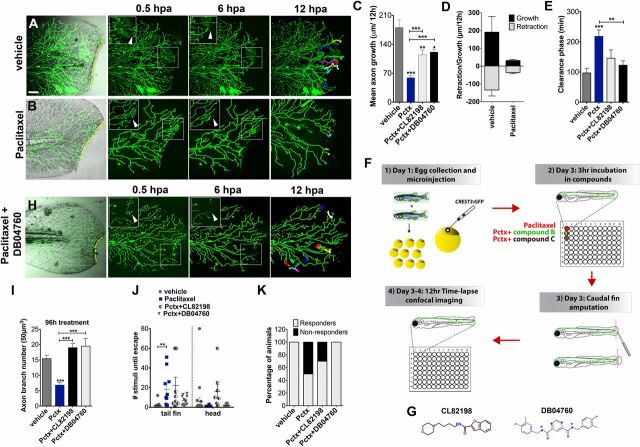
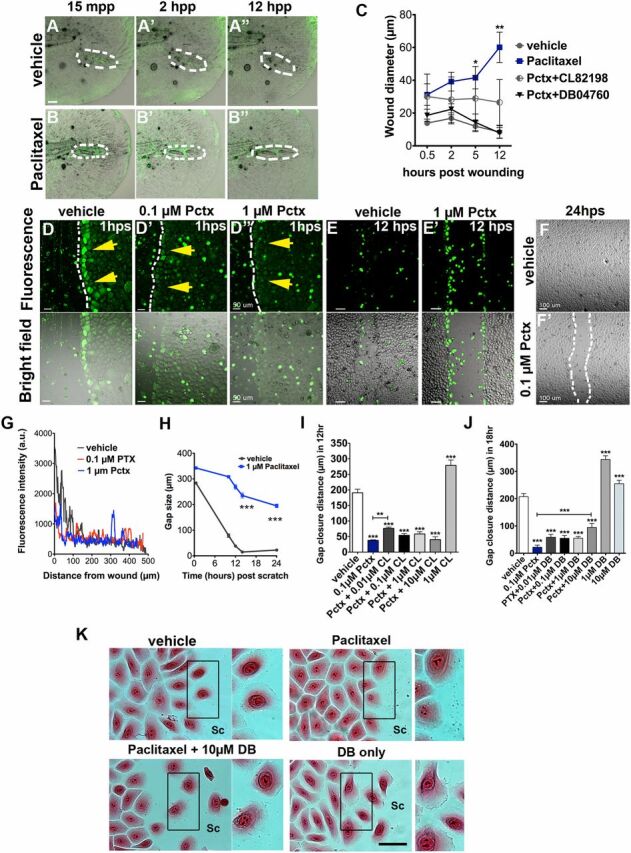
In vitro, MMP-13 Inhibitor demonstrates potent and selective inhibition of MMP-13 activity. Its activity is measured in enzymatic assays with an IC50 of 8 nM. It displays high selectivity over other MMPs, such as MMP-1, -2, -3, and -7. This selectivity is a key feature that minimizes off-target effects. The compound also decreases paclitaxel neurotoxicity in vitro and has anticancer activity.
|
| ln Vivo |
In vivo, MMP-13 Inhibitor has shown anticancer activity. However, specific in vivo data, such as its efficacy in animal models of cancer or its effect on neurotoxicity, is not detailed in the available literature. Its ability to decrease paclitaxel neurotoxicity suggests it could be used in combination with chemotherapy. The compound's in vivo activity would be an important area for further study.
|
| Enzyme Assay |
Cell-free assays for MMP-13 Inhibitor are the primary method for characterizing its activity. These are enzymatic assays where the ability of the compound to inhibit the catalytic activity of MMP-13 is measured. In a typical assay, the recombinant MMP-13 enzyme is incubated with a fluorogenic substrate (a peptide that becomes fluorescent upon cleavage) in the presence of varying concentrations of the inhibitor. The increase in fluorescence over time is measured, and the rate of substrate cleavage is calculated. The IC50, the concentration of inhibitor that reduces the enzymatic activity by 50%, is determined from the dose-response curve.
|
| Cell Assay |
In vitro cell-based assays for MMP-13 Inhibitor are performed to study its effects on cells, though its primary target is an extracellular enzyme. Cells that produce MMP-13, such as cancer cells or chondrocytes, can be treated with the compound. The amount of MMP-13 secreted into the culture medium can be measured using an ELISA or a zymography assay. Its effect on cell proliferation, migration, or invasion can also be assessed, as these processes often involve ECM degradation. These assays help to confirm the compound's activity in a cellular context.
|
| Animal Protocol |
In vivo animal experiments for MMP-13 Inhibitor would involve models where MMP-13 plays a pathogenic role, such as cancer, osteoarthritis, or neuropathic pain. For cancer studies, xenograft models could be used where the compound is administered to mice bearing tumors, and tumor growth and metastasis are monitored. For its effect on paclitaxel neurotoxicity, an animal model of chemotherapy-induced neuropathy could be used. Specific protocols are not detailed in the available literature.
|
| ADME/Pharmacokinetics |
Pharmacokinetic (PK) data for MMP-13 Inhibitor is not detailed in the available literature. Its properties, such as oral bioavailability and half-life, would be important for its development. The compound is soluble in DMSO and DMF. For storage, it is typically kept as a powder.
|
| Toxicity/Toxicokinetics |
Toxicological data for MMP-13 Inhibitor is not available in the public literature. As a research compound, its safety profile would be a critical factor in its development. However, no specific LD50, organ toxicity, or genotoxicity data are reported. Its use is strictly for research purposes, and it is not intended for human therapeutic use.
|
| References | |
| Additional Infomation |
MMP-13 Inhibitor is a research-grade compound used as a highly selective tool to study the role of MMP-13 in various biological and pathological processes. Its high selectivity and potency make it a valuable compound for validating MMP-13 as a therapeutic target for diseases like cancer, osteoarthritis, and neuropathic pain. It has also been studied for its potential to decrease paclitaxel neurotoxicity. It has not been approved for clinical use. All information is for research reference and not for diagnostic or clinical use.
|
| Molecular Formula |
C22H20F2N4O2
|
|---|---|
| Molecular Weight |
410.4248
|
| Exact Mass |
410.155
|
| CAS # |
544678-85-5
|
| PubChem CID |
5289110
|
| Appearance |
Light yellow to yellow solid powder
|
| LogP |
4.013
|
| Hydrogen Bond Donor Count |
2
|
| Hydrogen Bond Acceptor Count |
6
|
| Rotatable Bond Count |
6
|
| Heavy Atom Count |
30
|
| Complexity |
546
|
| Defined Atom Stereocenter Count |
0
|
| SMILES |
FC1=C(C=C(C=C1)CNC(C2=CC(C(NCC3=CC=C(C(C)=C3)F)=O)=NC=N2)=O)C
|
| InChi Key |
PYFRREJCFXFNRR-UHFFFAOYSA-N
|
| InChi Code |
InChI=1S/C22H20F2N4O2/c1-13-7-15(3-5-17(13)23)10-25-21(29)19-9-20(28-12-27-19)22(30)26-11-16-4-6-18(24)14(2)8-16/h3-9,12H,10-11H2,1-2H3,(H,25,29)(H,26,30)
|
| Chemical Name |
4-N,6-N-bis[(4-fluoro-3-methylphenyl)methyl]pyrimidine-4,6-dicarboxamide
|
| Synonyms |
MMP13 Inhibitor; MMP 13 Inhibitor; MMP-13 Inhibitor
|
| HS Tariff Code |
2934.99.9001
|
| Storage |
Powder -20°C 3 years 4°C 2 years In solvent -80°C 6 months -20°C 1 month |
| Shipping Condition |
Room temperature (This product is stable at ambient temperature for a few days during ordinary shipping and time spent in Customs)
|
| Solubility (In Vitro) |
DMSO : ~100 mg/mL (~243.65 mM)
|
|---|---|
| Solubility (In Vivo) |
Solubility in Formulation 1: ≥ 2.5 mg/mL (6.09 mM) (saturation unknown) in 10% DMSO + 90% Corn Oil (add these co-solvents sequentially from left to right, and one by one), clear solution.
For example, if 1 mL of working solution is to be prepared, you can add 100 μL of 25.0 mg/mL clear DMSO stock solution to 900 μL of corn oil and mix evenly. (Please use freshly prepared in vivo formulations for optimal results.) |
| Preparing Stock Solutions | 1 mg | 5 mg | 10 mg | |
| 1 mM | 2.4365 mL | 12.1826 mL | 24.3653 mL | |
| 5 mM | 0.4873 mL | 2.4365 mL | 4.8731 mL | |
| 10 mM | 0.2437 mL | 1.2183 mL | 2.4365 mL |
*Note: Please select an appropriate solvent for the preparation of stock solution based on your experiment needs. For most products, DMSO can be used for preparing stock solutions (e.g. 5 mM, 10 mM, or 20 mM concentration); some products with high aqueous solubility may be dissolved in water directly. Solubility information is available at the above Solubility Data section. Once the stock solution is prepared, aliquot it to routine usage volumes and store at -20°C or -80°C. Avoid repeated freeze and thaw cycles.
Calculation results
Working concentration: mg/mL;
Method for preparing DMSO stock solution: mg drug pre-dissolved in μL DMSO (stock solution concentration mg/mL). Please contact us first if the concentration exceeds the DMSO solubility of the batch of drug.
Method for preparing in vivo formulation::Take μL DMSO stock solution, next add μL PEG300, mix and clarify, next addμL Tween 80, mix and clarify, next add μL ddH2O,mix and clarify.
(1) Please be sure that the solution is clear before the addition of next solvent. Dissolution methods like vortex, ultrasound or warming and heat may be used to aid dissolving.
(2) Be sure to add the solvent(s) in order.
|
|
Products are for research use only; We do not sell to patients
Copyright 2020 InvivoChem LLC | All Rights Reserved