| Size | Price | Stock | Qty |
|---|---|---|---|
| 5mg |
|
||
| 10mg |
|
||
| 25mg |
|
||
| 50mg |
|
||
| 100mg |
|
||
| 250mg |
|
||
| 500mg |
|
||
| Other Sizes |
Purity: =99.01%
| Targets |
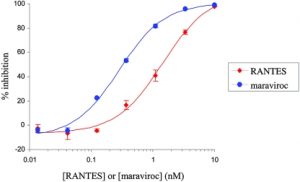
MIP-1α-CCR5 (IC50 = 3.3 nM); RANTES-CCR5 (IC50 = 5.2 nM); MIP-1β-CCR5 (IC50 = 7.2 nM); HIV-1 (Ba-L) (IC50 = 1.1 nM (IC50 in PM-1 cells)
Chemokine receptor CCR5 (selective inhibitor); Maraviroc (UK427857) exhibited high affinity for human CCR5 with a Ki value of 2.5 nM (measured by [¹²⁵I]-RANTES competitive binding assay). It had no significant binding to other chemokine receptors (e.g., CCR1, CCR2, CXCR4) at concentrations up to 10 μM [1] |
|---|---|
| ln Vitro |
A powerful selective CCR5 antagonist, maraviroc (UK-427857) effectively inhibits the human immunodeficiency virus type 1 (HIV-1). With IC50s ranging from 7 to 30 nM for MIP-1β, MIP-1α, and RANTES, maraviroc suppresses events that follow chemokine-induced intracellular calcium redistribution. In a 5-day antiviral assay employing isolated multiple (Pooled), Maraviroc (UK-427857) is active (IC90) against HIV-1 Ba-L, a laboratory-engineered R5 strain, at low nanomolar doses [1]. The assay assessed IC90 on donor PBMC (3.1 nM), IC90 on single-donor PBMC (1.8 nM), or IC90 on PM-1 cells (1.1 nM).
1. Broad-spectrum anti-HIV-1 activity: - In human peripheral blood mononuclear cells (PBMCs) infected with different HIV-1 strains (R5-tropic, including primary isolates and laboratory strains), Maraviroc (UK427857) (0.01–100 nM) dose-dependently inhibited viral replication. The EC50 values were 0.2–0.8 nM for primary R5-tropic strains and 0.1 nM for the laboratory strain BaL [1] - It had no inhibitory effect on X4-tropic HIV-1 strains (EC50 > 10 μM), confirming R5-tropic specificity [1] 2. Inhibition of leukocyte trafficking: - In vitro human neutrophil and monocyte migration assays (using CCL5/RANTES as chemoattractant), Maraviroc (UK427857) (1–100 nM) dose-dependently blocked leukocyte migration. At 10 nM, neutrophil migration was reduced by 65% ± 4% and monocyte migration by 70% ± 5% [2] 3. Regulation of HIV disease biomarkers: - In HIV-1-infected PBMCs, Maraviroc (UK427857) (1 nM) treatment for 72 hours reduced viral p24 antigen levels by 85% ± 6% and increased CD4+ T cell viability by 30% ± 3% (flow cytometry) [3] |
| ln Vivo |
Following intravenous injection, clearance values were moderate to high in dogs and rats (74 and 21 mL/min/kg, respectively). In both species, maraviroc likewise exhibits a moderate volume of distribution (4.3 to 6.5 L/kg). Maraviroc has a half-life of 0.9 hours in rats and 2.3 hours in dogs. Dogs received 2 mg/kg orally, and 1.5 hours later, Cmax (256 ng/mL) was reached. 40% of the substance is bioavailable after administration. Roughly thirty percent of the oral dose is absorbed from the gut in rats, according to research on concentrations found in the portal vein following oral administration [1]. Maraviroc specifically decreases the recruitment of leukocytes harboring CCR5 in DSS/TNBS colitis and metastatic models, thereby mitigating the development of intestinal inflammation[2].
1. Anti-HIV-1 efficacy in animal models: - In RAG-hu mice (humanized immune system) infected with HIV-1 BaL, oral administration of Maraviroc (UK427857) (10, 30 mg/kg/day) for 14 days: - Plasma HIV-1 RNA levels decreased by 1.8 log10 (10 mg/kg) and 2.5 log10 (30 mg/kg) vs. control [1] - Peripheral blood CD4+ T cell count increased by 25% ± 4% (30 mg/kg) [1] 2. Anti-inflammatory effect in murine colitis: - In DSS-induced colitis C57BL/6 mice, oral Maraviroc (UK427857) (5, 10 mg/kg/day) for 7 days: - Colonic mucosal inflammation score decreased from 8.2 ± 0.5 (control) to 4.1 ± 0.3 (10 mg/kg) (histological analysis) [2] - Colonic myeloperoxidase (MPO, neutrophil marker) activity reduced by 55% ± 5% (10 mg/kg) [2] - Serum pro-inflammatory cytokines (TNF-α, IL-6) decreased by 40% ± 4% and 35% ± 3% (10 mg/kg), respectively [2] 3. Effect on HIV disease progression biomarkers in humans: - In HIV-1-infected patients treated with Maraviroc (UK427857) (300 mg twice daily) for 24 weeks: - Plasma viral load decreased by 1.9 log10 copies/mL [3] - CD4+ T cell count increased by 120 ± 20 cells/μL [3] - Levels of soluble CD14 (endotoxin marker) decreased by 25% ± 3% [3] |
| Enzyme Assay |
Inhibition of chemokine binding to CCR5. [1]
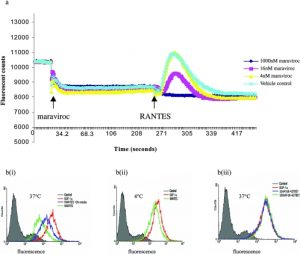
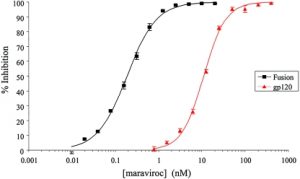
Binding of 125I-labeled MIP-1α, MIP-1β, and RANTES to CCR5 was measured essentially as described previously using intact HEK-293 cells stably expressing the receptor or membrane preparations thereof. Briefly, cells were resuspended in binding buffer (50 mM HEPES containing 1 mM CaCl2, 5 mM MgCl2, and 0.5% bovine serum albumin [BSA] and adjusted to pH 7.4) to a density of 2 × 10⁶ cells/ml. For membrane preparations, phosphate-buffered saline (PBS)-washed cells were resuspended in lysis buffer (20 mM HEPES, 1 mM CaCl2, 1 tablet COMPLETE per 50 ml, pH 7.4) prior to homogenization in a Polytron hand-held homogenizer, ultracentrifugation (40,000 × g for 30 min), and resuspension in binding buffer to a protein concentration of 0.25 mg/ml (12.5 μg of membrane protein was used in each well of a 96-well plate). 125I-radiolabeled MIP-1α, MIP-1β, and RANTES were prepared and diluted in binding buffer to a final concentration of 400 pM in the assay. Appropriatemaraviroc dilutions were added to each well to a final volume of 100 μl, the assay plates incubated for 1 h, and the contents filtered through preblocked and washed Unifilter plates which were counted following overnight drying. Inhibition of soluble recombinant HIV-1 gp120 (Ba-L strain) binding to CCR5. [1] This assay was performed as described previously. Briefly, HEK-293 cell aliquots (100 μl at 1 × 10⁶ cells/ml) were plated into poly-d-lysine-coated plates and incubated at 37°C overnight. A 1:1 mix of soluble recombinant human CD4 (sCD4) (diluted to 4.5 nM in culture medium) and HIV-1 gp120 was incubated at room temperature for 15 min prior to its addition to PBS-washed cells in the presence of dilutions of maraviroc to enable IC50 determination. The assay plates were incubated at 37°C for 1 h and washed. Eu3+-labeled anti-gp120 antibody (1/500 dilution in assay buffer) was added to each well (50 μl) and incubated for 1 h. The plate was washed three times with wash buffer prior to the addition of enhancement solution (200 μl/well) and measurement of Eu3+ fluorescence (Victor2 multilabel counter; “Europium” protocol). Nonspecific binding was taken as the fluorescence measured for gp120 incubated with cells in the absence of preincubation with sCD4. Inhibition of CCR5 signaling: calcium flux. [1] Maraviroc-dependent inhibition of CCR5-mediated signaling was investigated by measuring chemokine-dependent intracellular calcium redistribution (flux) by fluorescence assay using a calcium-sensitive dye, essentially as previously reported. Briefly, CCR5-stable transfected HEK-293 cells were washed in PBS and then incubated at 37°C for 1 h in cell culture medium containing fluo-3 dye (5 μg/ml; Molecular Probes). The dye-loaded cells were washed in PBS and resuspended in flux buffer (10 mM HEPES buffer, pH 7.4, containing 1.6 mM CaCl2 and 1 bottle of Hanks' balanced salts powder) to 5 × 10⁵ cells/ml for the assay. The cell suspension (160 μl) was divided into aliquots, placed in each well of a black-walled clear-base 96-well plate, and centrifuged (400 × g) for 5 min. Dilutions of maraviroc and solutions of chemokines were divided into aliquots and placed in separate 96-well plates to enable their sequential addition to the HEK-293 cells and subsequent measurement of intracellular calcium redistribution effects in a fluorescent laser imaging plate reader (FLIPR). The FLIPR added maraviroc dilutions (20 μl) after 30 s, followed 4 min later by the addition of the RANTES chemokine (20 μl) to a final concentration of 20 nM in situ. Fluorescence (488-nm and 530-nm excitation and emission wavelengths, respectively) was measured over 8 min to investigate the direct effects of maraviroc on cell signaling and inhibitory effects of maraviroc on chemokine-mediated signaling. Inhibition of CCR5 internalization. [1] The effects of maraviroc on CCR5 internalization were measured by flow cytometry, using a FACSCalibur instrument. Aliquots of 300.19 cells (100 μl at 5 × 10⁶/ml) were incubated for 45 min at 37°C with maraviroc, RANTES, or SDF-1α (all 100 nM in situ) to enable CCR5 internalization. The samples were washed twice, resuspended in 0.5% BSA-PBS (40 μl), and incubated for 45 min at 4°C with 10 μl 2D7 (anti-human CCR5 mouse monoclonal antibody) or isotype control antibody (mouse IgG2a). The samples were washed (0.5% BSA-PBS) and incubated with phycoerythrin-goat antimouse secondary antibody (75 μl) at 4°C for 45 min. The samples were washed and fixed with 1% (vol/vol) formaldehyde-PBS (1000 μl), and expression of CCR5 was evaluated using excitation/emission wavelengths of 488 nm and 530 nm, respectively. Human CCR5 competitive binding assay : 1. Reagent preparation: Human CCR5-expressing CHO cells were cultured in DMEM/F12 medium with 10% FBS. Maraviroc (UK427857) was dissolved in DMSO to serial concentrations (0.01–1000 nM); [¹²⁵I]-RANTES (CCR5 ligand) was diluted in binding buffer (50 mM Tris-HCl, pH 7.4, 1 mM CaCl₂, 5 mM MgCl₂, 0.5% BSA) [1] 2. Experimental procedure: Cells were harvested and resuspended in binding buffer (1×10⁶ cells/mL). The 200 μL reaction system contained cells (1×10⁵), [¹²⁵I]-RANTES (0.1 nM), and different concentrations of Maraviroc. It was incubated at 4°C for 2 hours, then filtered through glass fiber filters (pre-soaked in 0.1% BSA) to separate bound and free ligand. Filters were washed 3 times with cold binding buffer [1] 3. Detection and analysis: Radioactivity on filters was measured with a gamma counter. Non-specific binding was determined in the presence of 1 μM unlabeled RANTES. Ki value was calculated using the Cheng-Prusoff equation [1] |
| Cell Assay |
Drug susceptibility assays were performed in 24-well tissue culture plates. Duplicate eight-point dilution series of maraviroc were prepared in DMSO and medium to yield a final DMSO concentration of 0.1% (vol/vol) in the assay. PHA-stimulated PBMC or PM-1 cells were infected with virus for 1 h at 37°C. Cells were subsequently washed once, and 3.6 × 10⁵ PBMC or 2.0 × 10⁵ PM-1 cells were added to each well of assay plates containing diluted compound. Plates were incubated for 5 days (lab-adapted strains) or 7 days (primary isolates) at 37°C in a humidified 5% CO2 (vol/vol) atmosphere. Control compounds, saquinavir (an HIV-1 protease inhibitor) and RANTES, were included in all assays.
1. HIV-1 infection assay in PBMCs : 1. Cell preparation: Human PBMCs were isolated from healthy donors by Ficoll-Hypaque density gradient centrifugation, activated with phytohemagglutinin (PHA) for 3 days, then cultured in RPMI 1640 medium with 10% FBS and IL-2 [1] 2. Infection and treatment: Activated PBMCs were infected with R5-tropic HIV-1 (strain BaL, MOI=0.01) for 2 hours, then treated with Maraviroc (UK427857) (0.01–100 nM). After 7 days of culture, supernatant was collected [1] 3. Detection: HIV-1 p24 antigen in supernatant was measured by ELISA; viral RNA was quantified by real-time RT-PCR [1] 2. Leukocyte migration assay : 1. Cell preparation: Human neutrophils were isolated from peripheral blood by dextran sedimentation and Ficoll-Hypaque centrifugation; monocytes were isolated by CD14+ magnetic bead sorting [2] 2. Migration assay: A transwell system (8 μm pore size) was used. The lower chamber contained CCL5 (10 nM, chemoattractant); the upper chamber contained leukocytes (1×10⁵ cells) and Maraviroc (UK427857) (1–100 nM). After 2 hours of incubation at 37°C, cells migrated to the lower chamber were counted by flow cytometry [2] 3. HIV biomarker assay in PBMCs : 1. Cell culture and treatment: PBMCs from HIV-1-infected patients were cultured in RPMI 1640 medium with 10% FBS, treated with Maraviroc (UK427857) (1 nM) for 72 hours [3] 2. Detection: CD4+ T cell viability was analyzed by Annexin V-FITC/PI staining (flow cytometry); soluble CD14 in supernatant was measured by ELISA [3] |
| Animal Protocol |
Dissolved in phosphate-buffered saline, sterile-filtered and adjusted to a final concentration of 4 mg/mL (7.8 mM). A 3.4% gel preparation of hydroxyl-ethyl cellulose (HEC) is added to achieve a final concentration of 5 mM maraviroc in 2.2% HEC gel; ~64 μg; A 25 μL volume of the gel formulation is carefully applied in to the vaginal vault of mice.
Humanized BALB/c-Rag2 / γc / and BALB/c-Rag1 / γc / (RAG-hu) mice Pharmacokinetic studies with rats and dogs. [1] Preclinical pharmacokinetic studies were carried out with maravirocfollowing a single intravenous and oral administration to both male Sprague-Dawley rats (1 mg/kg of body weight given intravenously [i.v.] and 10 mg/kg given orally [p.o.]; n = 2) and male beagle dogs (0.5 mg/kg i.v. and 2 mg/kg p.o; n = 4). Plasma samples were taken for up to 24 h postdose, and the concentrations of unchanged maraviroc were determined using a specific high-performance liquid chromatography-tandem mass spectrum assay. In this study, researchers aimed to determine the role of CCR5 in mediating leukocyte trafficking in models of colitis, and evaluate the therapeutic potential of maraviroc, an orally active CCR5 antagonist used in the treatment of CCR5-tropic HIV. Acute and chronic colitis were induced by administration of DSS or TNBS to wild-type and CCR5(-/-) mice or adoptive transfer of splenic naïve CD4(+) T-cells from wild type or CCR5(-/-) mice into RAG-1(-/-). CCR5 gene ablation reduced the mucosal recruitment and activation of CCR5-bearing CD4(+) and CD11b(+) leukocytes, resulting in profound attenuation of signs and symptoms of inflammation in the TNBS and transfer models of colitis. In the DSS/TNBS colitis and in the transfer model, maravirocattenuated development of intestinal inflammation by selectively reducing the recruitment of CCR5 bearing leukocytes. In summary, CCR5 regulates recruitment of blood leukocytes into the colon indicating that targeting CCR5 may offer therapeutic options in IBDs. 1. Humanized HIV-1 mouse model : 1. Model establishment: RAG2⁻/⁻γc⁻/⁻ mice were transplanted with human CD34+ hematopoietic stem cells to establish a humanized immune system. After 8 weeks, mice were infected with R5-tropic HIV-1 BaL (1×10⁵ TCID50) via intraperitoneal injection [1] 2. Grouping and treatment: Infected mice were randomly divided into 3 groups (n=6/group): - Control group: Oral gavage of 0.5% methylcellulose (vehicle) once daily for 14 days [1] - Low-dose group: Oral gavage of Maraviroc (UK427857) (10 mg/kg/day, dissolved in 0.5% methylcellulose) once daily for 14 days [1] - High-dose group: Oral gavage of Maraviroc (UK427857) (30 mg/kg/day, dissolved in 0.5% methylcellulose) once daily for 14 days [1] 3. Detection: Plasma HIV-1 RNA was quantified by RT-PCR every 3 days; peripheral blood CD4+ T cells were counted by flow cytometry on day 14 [1] 2. DSS-induced murine colitis model : 1. Model establishment: C57BL/6 mice (8 weeks old) were given 3% dextran sulfate sodium (DSS) in drinking water for 7 days to induce colitis [2] 2. Grouping and treatment: Mice were randomly divided into 3 groups (n=8/group): - Control group: Oral gavage of normal saline once daily for 7 days [2] - Low-dose group: Oral gavage of Maraviroc (UK427857) (5 mg/kg/day, dissolved in normal saline) once daily for 7 days [2] - High-dose group: Oral gavage of Maraviroc (UK427857) (10 mg/kg/day, dissolved in normal saline) once daily for 7 days [2] 3. Detection: On day 8, mice were euthanized. Colons were excised for histological inflammation scoring; colonic MPO activity was measured by colorimetric assay; serum cytokines were detected by ELISA [2] |
| ADME/Pharmacokinetics |
Absorption: The oral bioavailability of maraviro (UK427857) in humans is 23%–33% (fasting) and 38%–47% (after eating, food can increase absorption). After oral administration of 300 mg, the peak plasma concentration (Cmax) of 132 ± 25 ng/mL is reached 1–2 hours [1]
- Distribution: The volume of distribution (Vd) in humans is 194 ± 58 L; the drug is distributed in peripheral tissues, and the blood-brain barrier penetration rate is <10% [1] - Metabolism: Maraviro (UK427857) is mainly metabolized by hepatic CYP3A4 to inactive metabolites (M1, M2); <5% of the dose is metabolized by CYP2D6 [1] - Elimination: The elimination half-life (t1/2) in humans is 3.7 ± 0.6 hours. Approximately 75% of the dose is excreted in feces (mainly metabolites) within 72 hours, and 20% is excreted in urine (12% of the original drug and 8% of the metabolites) [1] |
| Toxicity/Toxicokinetics |
Acute toxicity: The median lethal dose (LD50) of Malawiroc (UK427857) in mice (oral) is >2000 mg/kg and the median lethal dose in rats (oral) is >1500 mg/kg [1] - Chronic toxicity: In a 6-month oral toxicity study in rats (dose of 10, 30, and 100 mg/kg/day), no significant changes in liver function (ALT/AST) or kidney function (creatinine/BUN) were observed. Mild gastrointestinal discomfort (diarrhea) was observed in the 100 mg/kg group (incidence rate of 15%) [1] - Plasma protein binding: Maraviro (UK427857) had a plasma protein binding rate of 76% ± 2% in human plasma [1] - Drug interactions: Concomitant use with CYP3A4 inhibitors (e.g., ketoconazole) increased the plasma concentration of maraviro by 3.4 times; concomitant use with CYP3A4 inducers (e.g., rifampin) decreased the concentration by 80% [1] - Adverse clinical reactions: Common adverse reactions in HIV-1 patients treated with maraviro (300 mg twice daily) included fatigue (8%), headache (7%), and nausea (5%) [3]
|
| References |
|
| Additional Infomation |
Maraviroc is a monocarboxylic acid amide formed by the condensation of the carboxyl group of 4,4-difluorocyclohexanecarboxylic acid with the primary amino group of (1S)-3-[(3-exo)-3-(3-isopropyl-5-methyl-4H-1,2,4-triazol-4-yl)-8-azabicyclo[3.2.1]oct-8-yl]-1-phenylpropylamine. It is an antiretroviral drug that blocks the interaction between HIV-1 gp120 and chemokine receptor 5 (CCR5), an interaction essential for CCR5-tropic HIV-1 entry into cells. Maraviro has antiviral, chemokine receptor 5 antagonistic, and HIV fusion inhibitory effects. It is an azabicycloalkane, an organofluorine compound, a triazole compound, and a monocarboxylic acid amide.
Maraviro is a CCR5 co-receptor antagonist. The mechanism of action of maraviro is as a chemokine co-receptor 5 antagonist. It is a cyclohexane and triazole derivative that acts as a CCR5 receptor antagonist. It blocks infection by HIV-1 strains that use CCR5 as a co-receptor for membrane fusion and cell entry. See also: Malawiroc (note moved to). 1. Malawiroc (UK427857) is the first approved CCR5 antagonist for the treatment of R5-tropic HIV-1 infection. Its mechanism of action is to block the interaction between HIV-1 gp120 and CCR5, thereby preventing the virus from entering the host CD4+ T cells[1] 2. It has broad-spectrum activity against R5-tropic HIV-1 strains, including drug-resistant isolates (e.g., strains resistant to nucleoside reverse transcriptase inhibitors), and is therefore suitable for salvage therapy[1] 3. In a mouse colitis model, Malawiroc (UK427857) alleviated mucosal inflammation by inhibiting CCR5-mediated leukocyte infiltration, suggesting its potential value in the treatment of inflammatory bowel disease (IBD)[2] 4. In HIV-1 patients, Malawiroc (UK427857) not only reduced viral load but also improved immune reconstitution (increased CD4+ T cells) and reduced endotoxin-related inflammation (reduced soluble CD14), thereby delaying the progression of HIV disease[3] |
| Molecular Formula |
C29H41F2N5O
|
|
|---|---|---|
| Molecular Weight |
513.67
|
|
| Exact Mass |
513.327
|
|
| Elemental Analysis |
C, 67.81; H, 8.05; F, 7.40; N, 13.63; O, 3.11
|
|
| CAS # |
376348-65-1
|
|
| Related CAS # |
Maraviroc-d6;1033699-22-7
|
|
| PubChem CID |
3002977
|
|
| Appearance |
White to off-white solid powder
|
|
| Density |
1.3±0.1 g/cm3
|
|
| Melting Point |
79-81ºC
|
|
| Index of Refraction |
1.628
|
|
| LogP |
3.6
|
|
| Hydrogen Bond Donor Count |
1
|
|
| Hydrogen Bond Acceptor Count |
6
|
|
| Rotatable Bond Count |
8
|
|
| Heavy Atom Count |
37
|
|
| Complexity |
751
|
|
| Defined Atom Stereocenter Count |
3
|
|
| SMILES |
CC1=NN=C(N1C2C[C@H]3CC[C@@H](C2)N3CC[C@@H](C4=CC=CC=C4)NC(=O)C5CCC(CC5)(F)F)C(C)C
|
|
| InChi Key |
GSNHKUDZZFZSJB-HLMSNRGBSA-N
|
|
| InChi Code |
InChI=1S/C29H41F2N5O/c1-19(2)27-34-33-20(3)36(27)25-17-23-9-10-24(18-25)35(23)16-13-26(21-7-5-4-6-8-21)32-28(37)22-11-14-29(30,31)15-12-22/h4-8,19,22-26H,9-18H2,1-3H3,(H,32,37)/t23-,24+,25?,26-/m0/s1
|
|
| Chemical Name |
4,4-difluoro-N-[(1S)-3-[(1R,5S)-3-(3-methyl-5-propan-2-yl-1,2,4-triazol-4-yl)-8-azabicyclo[3.2.1]octan-8-yl]-1-phenylpropyl]cyclohexane-1-carboxamide
|
|
| Synonyms |
|
|
| HS Tariff Code |
2934.99.9001
|
|
| Storage |
Powder -20°C 3 years 4°C 2 years In solvent -80°C 6 months -20°C 1 month |
|
| Shipping Condition |
Room temperature (This product is stable at ambient temperature for a few days during ordinary shipping and time spent in Customs)
|
| Solubility (In Vitro) |
DMSO: 100 mg/mL (194.7 mM)
Water: 1 mg/mL (Insoluble) Ethanol: 100 mg/mL (194.7 mM) |
|---|---|
| Solubility (In Vivo) |
Solubility in Formulation 1: ≥ 2.5 mg/mL (4.87 mM) (saturation unknown) in 10% DMSO + 40% PEG300 + 5% Tween80 + 45% Saline (add these co-solvents sequentially from left to right, and one by one), clear solution.
For example, if 1 mL of working solution is to be prepared, you can add 100 μL of 25.0 mg/mL clear DMSO stock solution to 400 μL PEG300 and mix evenly; then add 50 μL Tween-80 to the above solution and mix evenly; then add 450 μL normal saline to adjust the volume to 1 mL. Preparation of saline: Dissolve 0.9 g of sodium chloride in 100 mL ddH₂ O to obtain a clear solution. Solubility in Formulation 2: ≥ 2.5 mg/mL (4.87 mM) (saturation unknown) in 10% DMSO + 90% (20% SBE-β-CD in Saline) (add these co-solvents sequentially from left to right, and one by one), clear solution. For example, if 1 mL of working solution is to be prepared, you can add 100 μL of 25.0 mg/mL clear DMSO stock solution to 900 μL of 20% SBE-β-CD physiological saline solution and mix evenly. Preparation of 20% SBE-β-CD in Saline (4°C,1 week): Dissolve 2 g SBE-β-CD in 10 mL saline to obtain a clear solution. View More
Solubility in Formulation 3: ≥ 2.5 mg/mL (4.87 mM) (saturation unknown) in 10% DMSO + 90% Corn Oil (add these co-solvents sequentially from left to right, and one by one), clear solution. Solubility in Formulation 4: ≥ 2.5 mg/mL (4.87 mM) (saturation unknown) in 5% DMSO + 40% PEG300 + 5% Tween80 + 50% Saline (add these co-solvents sequentially from left to right, and one by one), clear solution. Preparation of saline: Dissolve 0.9 g of sodium chloride in 100 mL ddH₂ O to obtain a clear solution. Solubility in Formulation 5: ≥ 2.5 mg/mL (4.87 mM) (saturation unknown) in 5% DMSO + 95% (20% SBE-β-CD in Saline) (add these co-solvents sequentially from left to right, and one by one), clear solution. Preparation of 20% SBE-β-CD in Saline (4°C,1 week): Dissolve 2 g SBE-β-CD in 10 mL saline to obtain a clear solution. Solubility in Formulation 6: ≥ 0.5 mg/mL (0.97 mM) (saturation unknown) in 1% DMSO 99% Saline (add these co-solvents sequentially from left to right, and one by one), clear solution. Preparation of saline: Dissolve 0.9 g of sodium chloride in 100 mL ddH₂ O to obtain a clear solution. Solubility in Formulation 7: 2% DMSO +Corn oil : 10 mg/mL |
| Preparing Stock Solutions | 1 mg | 5 mg | 10 mg | |
| 1 mM | 1.9468 mL | 9.7339 mL | 19.4678 mL | |
| 5 mM | 0.3894 mL | 1.9468 mL | 3.8936 mL | |
| 10 mM | 0.1947 mL | 0.9734 mL | 1.9468 mL |
*Note: Please select an appropriate solvent for the preparation of stock solution based on your experiment needs. For most products, DMSO can be used for preparing stock solutions (e.g. 5 mM, 10 mM, or 20 mM concentration); some products with high aqueous solubility may be dissolved in water directly. Solubility information is available at the above Solubility Data section. Once the stock solution is prepared, aliquot it to routine usage volumes and store at -20°C or -80°C. Avoid repeated freeze and thaw cycles.
Calculation results
Working concentration: mg/mL;
Method for preparing DMSO stock solution: mg drug pre-dissolved in μL DMSO (stock solution concentration mg/mL). Please contact us first if the concentration exceeds the DMSO solubility of the batch of drug.
Method for preparing in vivo formulation::Take μL DMSO stock solution, next add μL PEG300, mix and clarify, next addμL Tween 80, mix and clarify, next add μL ddH2O,mix and clarify.
(1) Please be sure that the solution is clear before the addition of next solvent. Dissolution methods like vortex, ultrasound or warming and heat may be used to aid dissolving.
(2) Be sure to add the solvent(s) in order.
|
|---|
|
|
Products are for research use only; We do not sell to patients
Copyright 2020 InvivoChem LLC | All Rights Reserved


 COA
COA