| Size | Price | Stock | Qty |
|---|---|---|---|
| 25mg |
|
||
| 50mg |
|
||
| 100mg |
|
||
| 250mg | |||
| Other Sizes |


| Targets |
Macelignan has multiple targets due to its diverse biological activities. It is known to inhibit the activity of acetylcholinesterase (AChE) and butyrylcholinesterase (BChE), enzymes involved in neurotransmitter breakdown. It also modulates various signaling pathways, including those involved in inflammation (e.g., NF-κB) and oxidative stress (e.g., Nrf2). Furthermore, it exhibits activity against certain cancer-related pathways.
|
|---|---|
| ln Vitro |
Macelignan (1-50 μM; 72 h) did not decrease cell viability on its own; rather, UVB therapy decreased HaCaT cell viability in a dose-dependent manner, reducing it by about 80 percent. The control value in percentage of hacat cells is 100 μM [1]. COX-2 expression is lowered by myristolignan (0.1–1 μM; 24 hours) in a concentration-dependent manner. In hacat cells, COX-2 expression is about 50% reduced at the maximum myristolignan concentration (1 μM)[1].
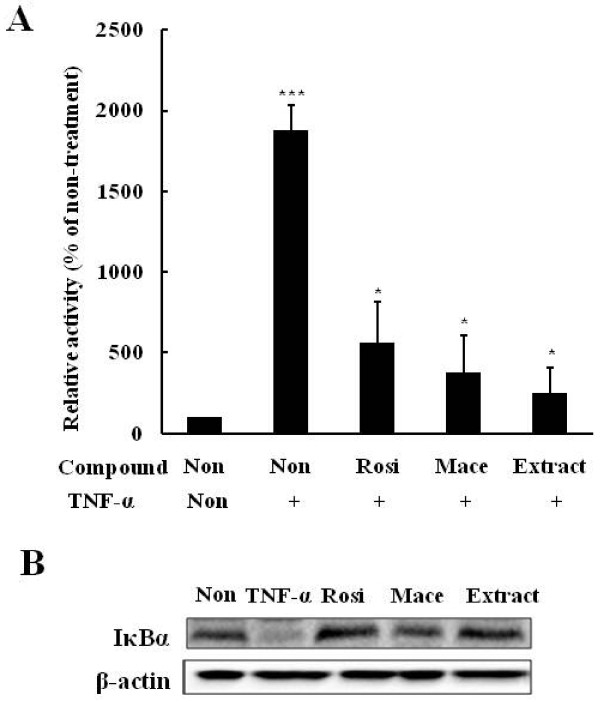
In vitro, Macelignan demonstrates significant anti-inflammatory activity by reducing the production of pro-inflammatory cytokines such as TNF-α, IL-1β, and IL-6 in activated macrophages. It exhibits potent antioxidant effects by scavenging free radicals and upregulating antioxidant enzymes. Macelignan also shows neuroprotective effects by inhibiting Aβ aggregation and protecting neuronal cells from oxidative stress-induced damage. It has shown cytotoxic activity against various cancer cell lines. |
| ln Vivo |
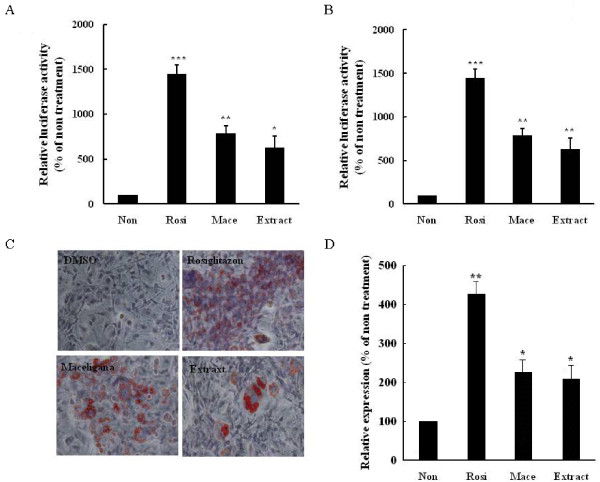
Macelignan (oral; 15 mg/kg; once daily for three weeks) exhibits antidiabetic effects in vivo. There was no difference in baseline (day 0) fasting blood glucose levels between the groups; at the end of the experiment, the values in the Macelignan-treated group of C57BL/KsJ-db/db mice were significantly lower than those in the diabetic control group [2].
In vivo, Macelignan has shown neuroprotective effects in animal models of Alzheimer's disease, improving cognitive function and reducing amyloid plaque burden. It has demonstrated anti-inflammatory effects in models of acute and chronic inflammation. Its hepatoprotective effects have been observed in models of liver injury, and its anti-diabetic potential has been shown in diabetic animal models. However, specific details are not fully detailed in the available literature. |
| Enzyme Assay |
Cell-free assays for Macelignan include enzyme inhibition assays for AChE and BChE. The compound is incubated with the enzyme and a substrate, and the inhibition of enzyme activity is measured spectrophotometrically. Its antioxidant activity can be assessed using DPPH and ABTS radical scavenging assays.
|
| Cell Assay |
Cell viability assay [1]
Cell Types: Hacat Cell Tested Concentrations: 1 μM; 2.5 μM; 5 μM; 10 μM; 15 μM; 50 μM Incubation Duration: 72 hrs (hours) Experimental Results: Cell death was induced by UVB irradiation of 10 μM 30 mJ/cm2. Western Blot Analysis [1] Cell Types: Hacat Cell Tested Concentrations: 0.1 μM; 0.5 μM; 1 μM Incubation Duration: 24 hrs (hours) Experimental Results: UVB-induced COX-2 expression in cells was diminished. In vitro cell-based assays for Macelignan are performed using various cell lines. Anti-inflammatory activity is assessed in macrophage cell lines (e.g., RAW 264.7) by measuring cytokine production. Neuroprotective effects are evaluated in neuronal cell lines (e.g., SH-SY5Y) exposed to stressors like Aβ or oxidative agents. Cytotoxicity is tested against cancer cell lines using MTT assays. |
| Animal Protocol |
Animal/Disease Models: Male C57BL/KsJ-db/db mice [2]
Doses: 15 mg/kg Route of Administration: po (po (oral gavage)) 15 mg/kg; one time/day for three weeks. Experimental Results: Dramatically diminished blood sugar levels in mice. In vivo animal experiments for Macelignan are conducted in models of neurodegenerative, inflammatory, and metabolic diseases. For Alzheimer's disease, transgenic mouse models are used to assess cognitive function and amyloid pathology. Inflammatory models include carrageenan-induced paw edema or LPS-induced sepsis models. Diabetes models involve streptozotocin-induced diabetic mice. |
| ADME/Pharmacokinetics |
Pharmacokinetic (PK) data for Macelignan is limited. As a lipophilic natural product, it is likely to have moderate oral bioavailability. It is metabolized in the liver and excreted via the kidneys. However, specific PK parameters are not detailed in the available literature.
|
| Toxicity/Toxicokinetics |
Toxicological data for Macelignan is not extensively documented. As a natural product, it is generally considered to have a favorable safety profile, with no significant toxicity reported at therapeutic doses in animal studies. However, comprehensive toxicology studies are lacking.
|
| References | |
| Additional Infomation |
4-[(2S,3R)-4-(1,3-benzodioxane-5-yl)-2,3-dimethylbutyl]-2-methoxyphenol is a lignan. Myristin is a nonsteroidal anti-inflammatory drug with antioxidant, free radical scavenging, and neuroprotective activities. Myristin has been reported to be found in Schisandra chinensis, Magnolia officinalis, and other organisms with relevant data. Myristin is a lignan isolated from nutmeg and exhibits antibacterial and anticariogenic activity against Streptococcus mutans and other Streptococcus species.
Macelignan is a research-grade natural product with diverse pharmacological activities. It has not been approved for clinical use. It is primarily used as a research tool to study its mechanisms of action and potential therapeutic applications in neurodegenerative and inflammatory diseases. All information is for research reference only. |
| Molecular Formula |
C20H24O4
|
|---|---|
| Molecular Weight |
328.4022
|
| Exact Mass |
328.167
|
| CAS # |
107534-93-0
|
| PubChem CID |
10404245
|
| Appearance |
White to off-white solid powder
|
| Density |
1.159
|
| Boiling Point |
467.0±40.0 °C at 760 mmHg
|
| Melting Point |
70-71℃
|
| Flash Point |
236℃
|
| Vapour Pressure |
0.0±1.2 mmHg at 25°C
|
| Index of Refraction |
1.574
|
| Source |
Originated from plants: Schisandraceae Schisandra chinensis (Turcz.) Baill.
|
| LogP |
5.22
|
| Hydrogen Bond Donor Count |
1
|
| Hydrogen Bond Acceptor Count |
4
|
| Rotatable Bond Count |
6
|
| Heavy Atom Count |
24
|
| Complexity |
388
|
| Defined Atom Stereocenter Count |
2
|
| SMILES |
C[C@H](CC1=CC2=C(C=C1)OCO2)[C@@H](C)CC3=CC(=C(C=C3)O)OC
|
| InChi Key |
QDDILOVMGWUNGD-UONOGXRCSA-N
|
| InChi Code |
InChI=1S/C20H24O4/c1-13(8-15-4-6-17(21)19(10-15)22-3)14(2)9-16-5-7-18-20(11-16)24-12-23-18/h4-7,10-11,13-14,21H,8-9,12H2,1-3H3/t13-,14+/m0/s1
|
| Chemical Name |
4-[(2S,3R)-4-(1,3-benzodioxol-5-yl)-2,3-dimethylbutyl]-2-methoxyphenol
|
| HS Tariff Code |
2934.99.9001
|
| Storage |
Powder -20°C 3 years 4°C 2 years In solvent -80°C 6 months -20°C 1 month |
| Shipping Condition |
Room temperature (This product is stable at ambient temperature for a few days during ordinary shipping and time spent in Customs)
|
| Solubility (In Vitro) |
DMSO : ~100 mg/mL (~304.51 mM)
|
|---|---|
| Solubility (In Vivo) |
Solubility in Formulation 1: ≥ 2.5 mg/mL (7.61 mM) (saturation unknown) in 10% DMSO + 40% PEG300 + 5% Tween80 + 45% Saline (add these co-solvents sequentially from left to right, and one by one), clear solution.
For example, if 1 mL of working solution is to be prepared, you can add 100 μL of 25.0 mg/mL clear DMSO stock solution to 400 μL PEG300 and mix evenly; then add 50 μL Tween-80 to the above solution and mix evenly; then add 450 μL normal saline to adjust the volume to 1 mL. Preparation of saline: Dissolve 0.9 g of sodium chloride in 100 mL ddH₂ O to obtain a clear solution. Solubility in Formulation 2: ≥ 2.5 mg/mL (7.61 mM) (saturation unknown) in 10% DMSO + 90% (20% SBE-β-CD in Saline) (add these co-solvents sequentially from left to right, and one by one), clear solution. For example, if 1 mL of working solution is to be prepared, you can add 100 μL of 25.0 mg/mL clear DMSO stock solution to 900 μL of 20% SBE-β-CD physiological saline solution and mix evenly. Preparation of 20% SBE-β-CD in Saline (4°C,1 week): Dissolve 2 g SBE-β-CD in 10 mL saline to obtain a clear solution. View More
Solubility in Formulation 3: ≥ 2.5 mg/mL (7.61 mM) (saturation unknown) in 10% DMSO + 90% Corn Oil (add these co-solvents sequentially from left to right, and one by one), clear solution. |
| Preparing Stock Solutions | 1 mg | 5 mg | 10 mg | |
| 1 mM | 3.0451 mL | 15.2253 mL | 30.4507 mL | |
| 5 mM | 0.6090 mL | 3.0451 mL | 6.0901 mL | |
| 10 mM | 0.3045 mL | 1.5225 mL | 3.0451 mL |
*Note: Please select an appropriate solvent for the preparation of stock solution based on your experiment needs. For most products, DMSO can be used for preparing stock solutions (e.g. 5 mM, 10 mM, or 20 mM concentration); some products with high aqueous solubility may be dissolved in water directly. Solubility information is available at the above Solubility Data section. Once the stock solution is prepared, aliquot it to routine usage volumes and store at -20°C or -80°C. Avoid repeated freeze and thaw cycles.
Calculation results
Working concentration: mg/mL;
Method for preparing DMSO stock solution: mg drug pre-dissolved in μL DMSO (stock solution concentration mg/mL). Please contact us first if the concentration exceeds the DMSO solubility of the batch of drug.
Method for preparing in vivo formulation::Take μL DMSO stock solution, next add μL PEG300, mix and clarify, next addμL Tween 80, mix and clarify, next add μL ddH2O,mix and clarify.
(1) Please be sure that the solution is clear before the addition of next solvent. Dissolution methods like vortex, ultrasound or warming and heat may be used to aid dissolving.
(2) Be sure to add the solvent(s) in order.
|
|
|
Products are for research use only; We do not sell to patients
Copyright 2020 InvivoChem LLC | All Rights Reserved