| Size | Price | Stock | Qty |
|---|---|---|---|
| 5mg |
|
||
| 10mg |
|
||
| 25mg |
|
||
| 50mg |
|
||
| 100mg |
|
||
| 250mg |
|
||
| 500mg | |||
| Other Sizes |


Purity: ≥98%
| Targets |
BACE1 (β-site amyloid precursor protein cleaving enzyme 1): LX2343 inhibits BACE1 enzymatic activity with an IC₅₀ value of 11.43±0.36 μmol/L[1]
- PI3K (Phosphatidylinositol 3-kinase): LX2343 acts as a non-ATP competitive PI3K inhibitor; in vitro, with 10 μmol/L ATP, the IC₅₀ is 13.11±1.47 μmol/L; with 50 μmol/L ATP, the IC₅₀ is 13.86±1.12 μmol/L; with 100 μmol/L ATP, the IC₅₀ is 15.99±3.23 μmol/L[1] - JNK (c-Jun N-terminal kinase): LX2343 suppresses JNK-mediated APP^{Thr668} phosphorylation [1] |
|---|---|
| ln Vitro |
LX2343 (5–20 μM) promoted Aβ clearance in SH-SY5Y cells and primary astrocytes, while dose-dependently reducing Aβ accumulation in HEK293-APPsw and CHO-APP cells. LX2343 has the potential to treat AD since it improves cognitive impairment in APP/PS1 transgenic mice by both promoting clearance and inhibiting Aβ generation. LX2343 does not influence BACE1 protein levels, as shown by Western blot results in both HEK293-APPsw cells and CHO-APP cells. On the other hand, in vitro BACE1 enzymatic activity experiments showed that LX2343 dose-dependently reduces BACE1 activity (using TDC as a positive control) with an IC50 of 11.43±0.36 μM. We looked into the impact of ATP at various doses on the inhibitory action of LX2343 in order to determine whether competition exists between ATP and LX2343. The outcome showed that ATP had almost no effect on LX2343's inhibition of PI3K. This finding implies that LX2343 is a PI3K inhibitor that is non-ATP competitive. LX2343 exhibits an IC50 of 13.11±1.47 μM when exposed to 10 μM ATP, 13.86±1.12 μM when exposed to 50 μM ATP, and 15.99±3.23 μM when exposed to 100 μM ATP, according to reference [1].
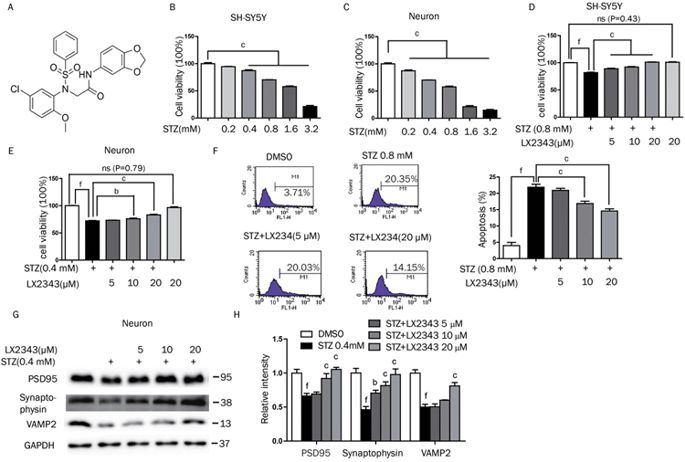
LX2343 (5-20 μmol/L) dose-dependently reduced Aβ accumulation (including Aβ₄₀ and Aβ₄₂) in STZ-treated HEK293-APPsw and CHO-APP cells, as detected by ELISA assays (one-way ANOVA, Dunnett's multiple comparison test, n=3, P<0.05, P<0.01 vs STZ)[1] - Western blot analysis showed that LX2343 decreased the phosphorylation levels of JNK and APP^{Thr668}, reduced sAPPβ protein level, and had no effect on BACE1 protein level in HEK293-APPsw and CHO-APP cells (one-way ANOVA, Dunnett's multiple comparison test, n=3, P<0.05, P<0.01 vs STZ); ELISA results also confirmed the reduction of sAPPβ in these cells (one-way ANOVA, Dunnett's multiple comparison test, n=3, P<0.05, P<0.01 vs STZ)[1] - LX2343 had no impact on the non-amyloidogenic processing of APP: it did not affect ADAM10 protein level (detected by Western blot, one-way ANOVA, Dunnett's multiple comparison test, n=3) or intracellular sAPPα level (detected by ELISA, one-way ANOVA, Dunnett's multiple comparison test, n=3) in HEK293-APPsw and CHO-APP cells[1] - ELISA results demonstrated that LX2343 promoted Aβ clearance in STZ-treated SH-SY5Y cells and primary astrocytes (one-way ANOVA, Dunnett's multiple comparison test, n=3, P<0.05, P<0.01 vs STZ)[1] - Western blot analysis indicated that LX2343 reduced the phosphorylation of PI3K, AKT, mTOR, P70S6, and ULK1, decreased p62 protein level, and promoted LC3 processing in STZ-treated SH-SY5Y cells and primary astrocytes (one-way ANOVA, Dunnett's multiple comparison test, n=3, P<0.05, P<0.01 vs STZ); short-term STZ stimulation increased AKT phosphorylation in SH-SY5Y cell lysates, which was reversed by LX2343 (t test, n=3, P<0.05 vs STZ, #P<0.05, ##P<0.01 vs DMSO)[1] - Confocal laser scanning microscopy (CLSM) of SH-SY5Y cells transiently expressing mRFP-GFP-LC3 showed that LX2343 stimulated autophagy (green and red puncta represented GFP and mRFP respectively, scale bar: 5 μm, n=3); CQ-based ELISA revealed that chloroquine (CQ) enhanced Aβ levels and partially reversed LX2343-induced Aβ reduction in SH-SY5Y cells (t test, P<0.01 vs STZ, ##P<0.01 vs STZ + LX2343, &&P<0.01 vs DMSO)[1] - LX2343 dose-dependently inhibited PI3K activity in vitro (one-way ANOVA, Dunnett's multiple comparison test, n=3, P<0.01 vs DMSO); MTT assay showed that LX2343 had no effect on cell viability of SH-SY5Y cells (one-way ANOVA, Dunnett's multiple comparison test, n=3)[1] |
| ln Vivo |
A popular animal model for AD dementia is the APP/PS1 mouse, which expresses a mutant human presenilin 1 protein as well as a chimeric human Swedish mutant APP. We assess LX2343's ability to improve memory impairment in this model by administering the MWM test. The APP/PS1 transgenic mice's path lengths and escape latencies in the 8-day training trials are noticeably longer than those of the non-transgenic mice, and the administration of 10 mg/kg LX2343 clearly counteracts the longer path lengths and escape latencies at days 7 and 8. Compared to transgenic mice given a vehicle, LX2343-administered transgenic mice traverse the platform's hidden location more frequently in the probe trial assay[1].
LX2343 (10 mg·kg⁻¹·d⁻¹, ip) administered to APP/PS1 transgenic mice for 100 days significantly ameliorated cognitive deficits evaluated by Morris water maze (MWM) test: two-way ANOVA with repeated measures over time showed significant effects of treatment (P<0.0001), time (P<0.0001), and treatment×time interaction; escape latency in platform trials was reduced (n=10, P<0.05 vs TV), and the number of platform crossings in probe trials was increased (t test, n=10, P<0.01 vs TV)[1] - Thioflavine S staining of brain sections from APP/PS1 transgenic mice showed that LX2343 markedly reduced senile amyloid plaques (scale bar: 100 μm, t test, n=4, P<0.05, P<0.01 vs TV)[1] - ELISA results indicated that LX2343 decreased Aβ levels in cortical and hippocampal homogenates of APP/PS1 transgenic mice (t test, n=10, P<0.05 vs TV)[1] - Western blot analysis of cortical homogenates from APP/PS1 transgenic mice demonstrated that LX2343 reduced phosphorylation of PI3K, AKT, mTOR, P70S6, and ULK1, decreased p62 protein level, promoted LC3 processing (t test, n=4, P<0.05, P<0.01 vs TV), reduced phosphorylation of JNK and APP^{Thr668}, decreased sAPPβ protein level (no effect on BACE1 protein level) (t test, n=4, P<0.05, P<0.01 vs TV), and increased protein levels of synaptophysin, PSD95, and VAMP2 (t test, n=4, P<0.05, P<0.01 vs TV)[1] - ELISA results confirmed that LX2343 decreased sAPPβ levels in cortical and hippocampal homogenates of APP/PS1 transgenic mice (t test, n=10, P<0.05, P<0.01 vs TV)[1] - LX2343 treatment extended the lifespan of wild-type Drosophila melanogaster )[1] |
| Enzyme Assay |
BACE1 enzymatic activity assay: The assay system was established to detect BACE1 activity with appropriate substrates. Different concentrations of LX2343 were added to the reaction system, and the enzymatic activity of BACE1 was measured after incubation under specific conditions. The IC₅₀ value of LX2343 for inhibiting BACE1 was calculated based on the dose-response curve, with 2,2′,4′-trihydroxychalcone (TDC, a non-competitive BACE1 inhibitor) as a positive control (one-way ANOVA, Dunnett's multiple comparison test, P<0.01 vs DMSO; TDC, t test, n=3)[1]
- PI3K enzymatic activity assay: In vitro PI3K activity assay was performed using purified PI3K enzyme and corresponding substrates. LX2343 at different concentrations was added to the reaction system, either in the absence or presence of different concentrations of ATP (10 μmol/L, 50 μmol/L, 100 μmol/L). After incubation under optimal conditions, the enzymatic activity of PI3K was detected, and the IC₅₀ values of LX2343 under different ATP concentrations were calculated (wortmannin, a PI3K inhibitor, was used as a positive control; one-way ANOVA, Dunnett's multiple comparison test, P<0.01 vs DMSO; wortmannin, t test, n=3)[1] |
| Cell Assay |
Aβ accumulation detection in HEK293-APPsw and CHO-APP cells: HEK293-APPsw and CHO-APP cells were treated with STZ to induce Aβ accumulation, and different concentrations of LX2343 (5-20 μmol/L) were added simultaneously. After incubation for a specific period, the cell culture supernatants or lysates were collected, and the levels of Aβ₄₀ and Aβ₄₂ were detected by ELISA. The inhibitory effect of LX2343 on Aβ accumulation was evaluated by comparing with the STZ-only group (one-way ANOVA, Dunnett's multiple comparison test, n=3, P<0.05, P<0.01 vs STZ)[1]
- Aβ clearance detection in SH-SY5Y cells and primary astrocytes: SH-SY5Y cells and primary astrocytes were treated with STZ, followed by the addition of LX2343 at different concentrations. After incubation, the Aβ levels in the cells or supernatants were measured by ELISA to assess the effect of LX2343 on Aβ clearance (one-way ANOVA, Dunnett's multiple comparison test, n=3, P<0.05, P<0.01 vs STZ)[1] - Western blot analysis for signaling proteins: Cells (HEK293-APPsw, CHO-APP, SH-SY5Y, primary astrocytes) were treated with STZ and LX2343, then lysed to extract total proteins. The protein samples were separated by SDS-PAGE, transferred to membranes, and incubated with primary antibodies against JNK, p-JNK, APP^{Thr668}, p-APP^{Thr668}, BACE1, sAPPβ, ADAM10, PI3K, p-PI3K, AKT, p-AKT, mTOR, p-mTOR, P70S6, p-P70S6, ULK1, p-ULK1, p62, LC3, GAPDH (loading control), etc. After incubation with secondary antibodies, the protein bands were visualized and quantified to analyze the effects of LX2343 on related signaling pathways (one-way ANOVA, Dunnett's multiple comparison test, n=3, P<0.05, P<0.01 vs STZ)[1] - ELISA for sAPPα and sAPPβ: Cell culture supernatants or lysates from HEK293-APPsw and CHO-APP cells treated with STZ and LX2343 were collected. The levels of sAPPα and sAPPβ were detected by specific ELISA kits, and the data were statistically analyzed (one-way ANOVA, Dunnett's multiple comparison test, n=3)[1] - Autophagy detection by CLSM: SH-SY5Y cells were transiently transfected with mRFP-GFP-LC3 plasmid to express the fusion protein. After transfection, the cells were treated with STZ and LX2343, then observed under confocal laser scanning microscopy. The number and distribution of green (GFP) and red (mRFP) puncta were analyzed to evaluate autophagic flux (scale bar: 5 μm, n=3)[1] - CQ-based Aβ ELISA: SH-SY5Y cells were treated with STZ, LX2343, and chloroquine (CQ, an autophagy inhibitor) alone or in combination. After incubation, Aβ levels in the cells were detected by ELISA to verify the role of autophagy in LX2343-mediated Aβ clearance (t test, P<0.01 vs STZ, ##P<0.01 vs STZ + LX2343, &&P<0.01 vs DMSO)[1] - MTT cell viability assay: SH-SY5Y cells were seeded in 96-well plates and treated with different concentrations of LX2343. After incubation for a specific time, MTT solution was added, and the absorbance was measured at a specific wavelength after formazan crystal dissolution. The cell viability was calculated to evaluate the cytotoxicity of LX2343 (one-way ANOVA, Dunnett's multiple comparison test, n=3)[1] |
| Animal Protocol |
7 and 21 mg/kg; 3% DMSO and 5% Tween-80; IV injection
Male Sprague Dawley (SD) rats APP/PS1 transgenic mice experiment: APP/PS1 transgenic mice were randomly divided into groups (TV: transgenic mice administered vehicle; LX2343: transgenic mice administered LX2343; NV: non-transgenic mice administered vehicle as control). LX2343 was administered intraperitoneally (ip) at a dose of 10 mg·kg⁻¹·d⁻¹ for 100 consecutive days. After the administration period, the cognitive ability of the mice was evaluated using the Morris water maze (MWM) test, including training trials (recording escape latency) and probe trials (counting the number of platform crossings). Then, the mice were sacrificed, and brain tissues were collected for Thioflavine S staining (to detect senile plaques), ELISA (to measure Aβ and sAPPβ levels in cortical and hippocampal homogenates), and Western blot analysis (to detect signaling proteins in cortical homogenates) (n=10 for behavioral and ELISA tests, n=4 for Western blot and Thioflavine S staining)[1] - Wild-type Drosophila melanogaster lifespan experiment: Wild-type Drosophila melanogaster were divided into control and LX2343-treated groups. LX2343 was administered via an appropriate route (not specified) at a certain dose (not specified), and the survival status of the flies was monitored continuously to record lifespan and calculate mean lifespan[1] |
| References | |
| Additional Infomation |
LX2343 is a small molecule with the chemical name N-(1,3-benzodioxane-5-yl)-2-[5-chloro-2-methoxy(benzenesulfonyl)anilino]acetamide[1]
- The anti-amyloid effect of LX2343 is attributed to two mechanisms: (1) inhibiting Aβ production by inhibiting JNK-mediated APP^{Thr668} phosphorylation (thereby reducing APP cleavage) and inhibiting BACE1 enzyme activity; (2) LX2343, as a non-ATP-competitive PI3K inhibitor, promotes Aβ clearance by negatively regulating the AKT/mTOR signaling pathway, thereby stimulating autophagy[1] - LX2343 improves cognitive dysfunction in APP/PS1 transgenic mice by inhibiting Aβ production and promoting Aβ clearance, highlighting its potential in the treatment of Alzheimer's disease (AD)[1] - LX2343 protects synaptic integrity in APP/PS1 transgenic mice by increasing protein levels of synaptophysin, PSD95, and VAMP2 in the cerebral cortex [1] |
| Molecular Formula |
C22H19CLN2O6S
|
|
|---|---|---|
| Molecular Weight |
474.07
|
|
| Exact Mass |
474.065
|
|
| CAS # |
333745-53-2
|
|
| Related CAS # |
|
|
| PubChem CID |
1000980
|
|
| Appearance |
White to off-white solid powder
|
|
| Density |
1.5±0.1 g/cm3
|
|
| Index of Refraction |
1.663
|
|
| LogP |
3.28
|
|
| Hydrogen Bond Donor Count |
1
|
|
| Hydrogen Bond Acceptor Count |
7
|
|
| Rotatable Bond Count |
7
|
|
| Heavy Atom Count |
32
|
|
| Complexity |
741
|
|
| Defined Atom Stereocenter Count |
0
|
|
| SMILES |
COC1=C(C=C(C=C1)Cl)N(CC(=O)NC2=CC3=C(C=C2)OCO3)S(=O)(=O)C4=CC=CC=C4
|
|
| InChi Key |
ZGYSGIYKAVUVOR-UHFFFAOYSA-N
|
|
| InChi Code |
InChI=1S/C22H19ClN2O6S/c1-29-19-9-7-15(23)11-18(19)25(32(27,28)17-5-3-2-4-6-17)13-22(26)24-16-8-10-20-21(12-16)31-14-30-20/h2-12H,13-14H2,1H3,(H,24,26)
|
|
| Chemical Name |
2-[N-(benzenesulfonyl)-5-chloro-2-methoxyanilino]-N-(1,3-benzodioxol-5-yl)acetamide
|
|
| Synonyms |
|
|
| HS Tariff Code |
2934.99.9001
|
|
| Storage |
Powder -20°C 3 years 4°C 2 years In solvent -80°C 6 months -20°C 1 month |
|
| Shipping Condition |
Room temperature (This product is stable at ambient temperature for a few days during ordinary shipping and time spent in Customs)
|
| Solubility (In Vitro) |
DMSO: ≥ 150 mg/mL
Water: 1 mg/mL (Insoluble) Ethanol: 1 mg/mL |
|---|---|
| Solubility (In Vivo) |
Solubility in Formulation 1: ≥ 2.5 mg/mL (5.26 mM) (saturation unknown) in 10% DMSO + 40% PEG300 + 5% Tween80 + 45% Saline (add these co-solvents sequentially from left to right, and one by one), clear solution.
For example, if 1 mL of working solution is to be prepared, you can add 100 μL of 25.0 mg/mL clear DMSO stock solution to 400 μL PEG300 and mix evenly; then add 50 μL Tween-80 to the above solution and mix evenly; then add 450 μL normal saline to adjust the volume to 1 mL. Preparation of saline: Dissolve 0.9 g of sodium chloride in 100 mL ddH₂ O to obtain a clear solution. Solubility in Formulation 2: ≥ 2.5 mg/mL (5.26 mM) (saturation unknown) in 10% DMSO + 90% Corn Oil (add these co-solvents sequentially from left to right, and one by one), clear solution. For example, if 1 mL of working solution is to be prepared, you can add 100 μL of 25.0 mg/mL clear DMSO stock solution to 900 μL of corn oil and mix evenly. (Please use freshly prepared in vivo formulations for optimal results.) |
| Preparing Stock Solutions | 1 mg | 5 mg | 10 mg | |
| 1 mM | 2.1094 mL | 10.5470 mL | 21.0939 mL | |
| 5 mM | 0.4219 mL | 2.1094 mL | 4.2188 mL | |
| 10 mM | 0.2109 mL | 1.0547 mL | 2.1094 mL |
*Note: Please select an appropriate solvent for the preparation of stock solution based on your experiment needs. For most products, DMSO can be used for preparing stock solutions (e.g. 5 mM, 10 mM, or 20 mM concentration); some products with high aqueous solubility may be dissolved in water directly. Solubility information is available at the above Solubility Data section. Once the stock solution is prepared, aliquot it to routine usage volumes and store at -20°C or -80°C. Avoid repeated freeze and thaw cycles.
Calculation results
Working concentration: mg/mL;
Method for preparing DMSO stock solution: mg drug pre-dissolved in μL DMSO (stock solution concentration mg/mL). Please contact us first if the concentration exceeds the DMSO solubility of the batch of drug.
Method for preparing in vivo formulation::Take μL DMSO stock solution, next add μL PEG300, mix and clarify, next addμL Tween 80, mix and clarify, next add μL ddH2O,mix and clarify.
(1) Please be sure that the solution is clear before the addition of next solvent. Dissolution methods like vortex, ultrasound or warming and heat may be used to aid dissolving.
(2) Be sure to add the solvent(s) in order.
|
|---|
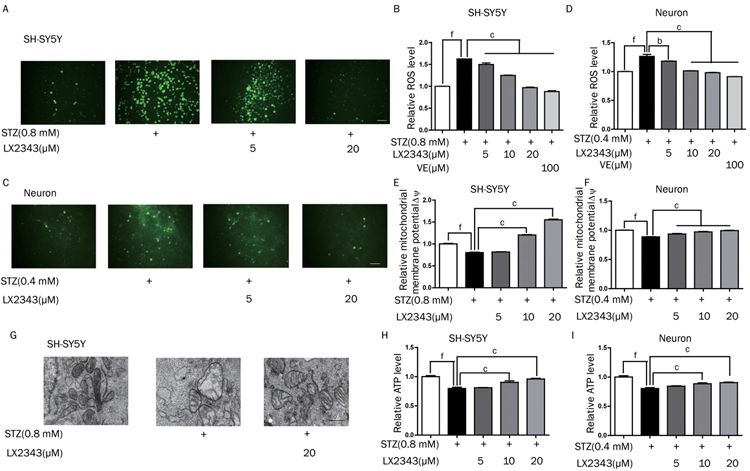
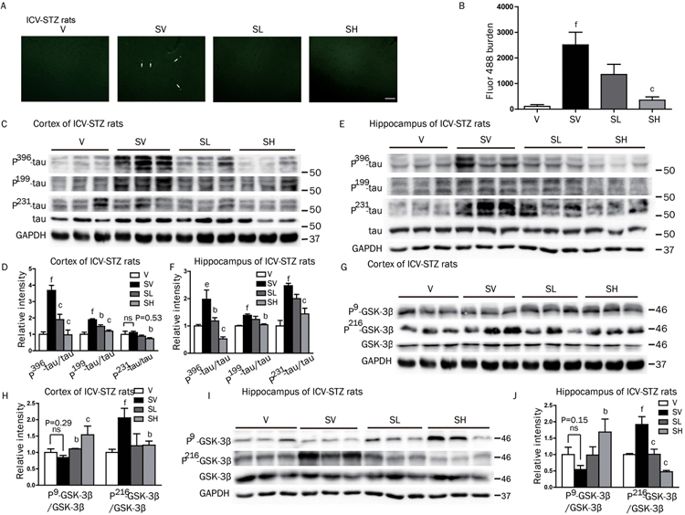
LX2343 alleviated STZ-induced OS and ameliorated mitochondrial dysfunction.Acta Pharmacol Sin.2017Aug;38(8):1104-1119. |
|
Products are for research use only; We do not sell to patients
Copyright 2020 InvivoChem LLC | All Rights Reserved


 COA
COA