| Size | Price | Stock | Qty |
|---|---|---|---|
| 5mg |
|
||
| 10mg |
|
||
| 25mg |
|
||
| 50mg |
|
||
| 100mg |
|
||
| 250mg | |||
| 500mg | |||
| Other Sizes |
Purity: ≥98%
| Targets |
LLY-283 targets protein arginine methyltransferase 5 (PRMT5) (IC50 = 22 nM for PRMT5 enzymatic activity; IC50 = 108 nM in MOLM-13 cells for cellular PRMT5 inhibition) [1]
|
|---|---|
| ln Vitro |
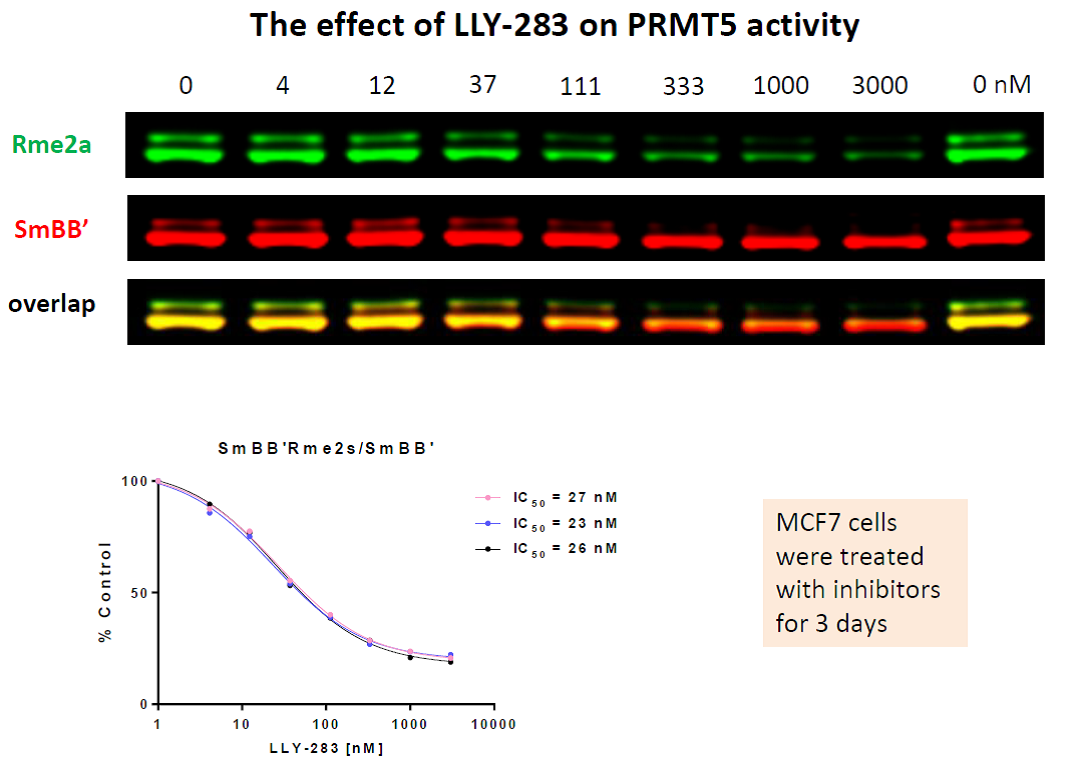
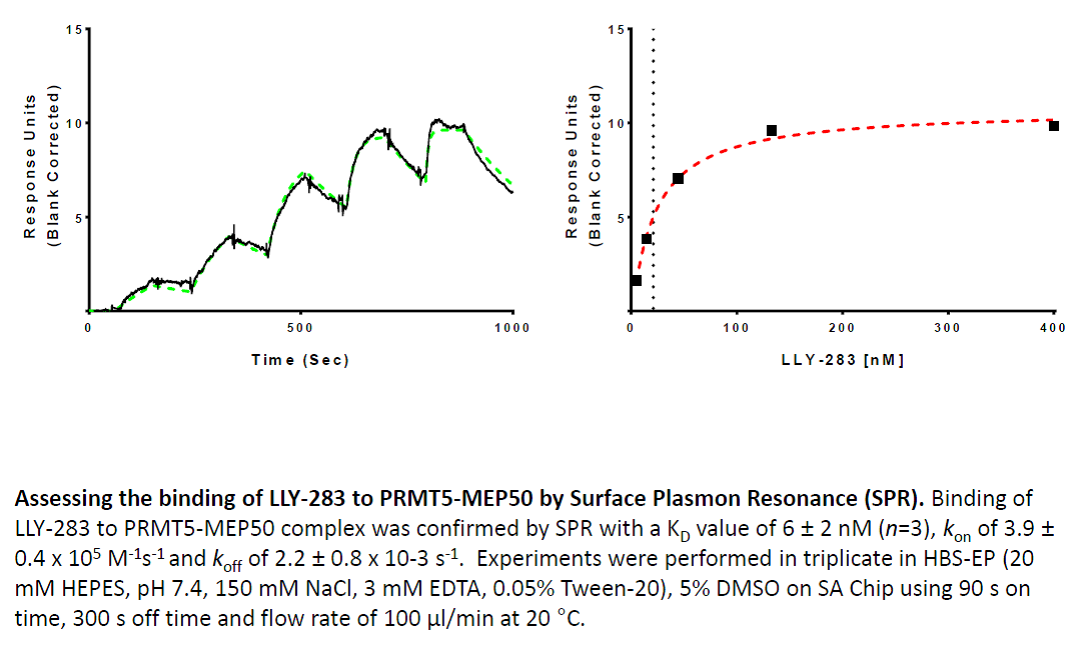
LLY-283 is an oral, potent, and selective inhibitor of arginine methyltransferase 5 (PRMT5), with an IC50 of 22 nM in vitro and 25 nM in cells; in vitro, it has a Kd of 6 nM for the PRMT5:MEP50 complex. With an IC50 of 46 nM, LLY-283 also inhibits the proliferation of A375 cells[1].
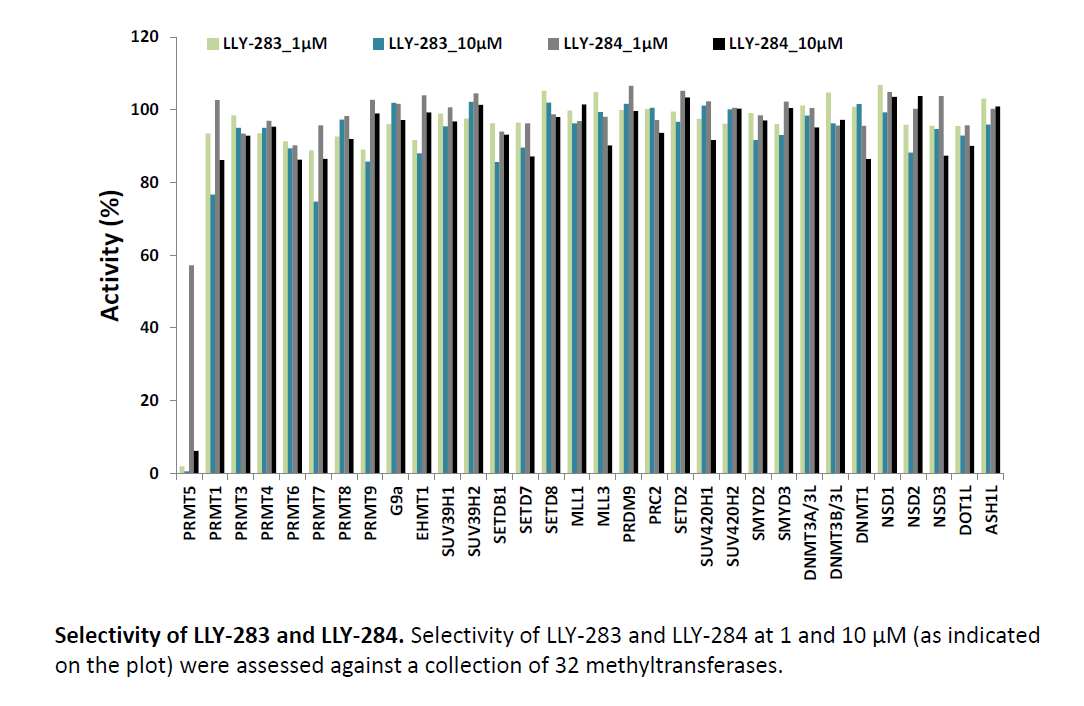
1. LLY-283 potently inhibits PRMT5 enzymatic activity with an IC50 of 22 nM, and exhibits high selectivity against other methyltransferases (PRMT1, PRMT3, PRMT4/CARM1, PRMT6, PRMT8, SET7/9, SUV39H1, G9a, GLP, EZH2, DOT1L) with IC50 values >10 μM for all tested off-target enzymes [1] 2. In MOLM-13 (AML), MV4-11 (AML), Daudi (Burkitt’s lymphoma), Raji (Burkitt’s lymphoma), and HCT116 (colorectal cancer) cell lines, LLY-283 inhibits cellular PRMT5 activity in a concentration-dependent manner, with IC50 values of 108 nM (MOLM-13), 168 nM (MV4-11), 121 nM (Daudi), 145 nM (Raji), and 215 nM (HCT116) [1] 3. Western blot analysis of MOLM-13 cells treated with LLY-283 (0–1 μM, 72 h) showed dose-dependent reduction of symmetric dimethylarginine (SDMA) levels on histones H4R3 and H2AR3 (key PRMT5 substrates), with no significant changes in total histone levels (loading control) [1] 4. Cell viability assays (72 h treatment) demonstrated that LLY-283 inhibits proliferation of MOLM-13 (IC50 = 157 nM), MV4-11 (IC50 = 210 nM), Daudi (IC50 = 189 nM), Raji (IC50 = 203 nM), and HCT116 (IC50 = 320 nM) cells in a concentration-dependent manner; no significant cytotoxicity was observed in non-malignant PBMCs (IC50 > 10 μM) [1] 5. Caspase 3/7 activity assays revealed that LLY-283 induces apoptosis in MOLM-13 cells (24–72 h treatment, 0.1–1 μM), with a ~5-fold increase in caspase activity at 1 μM (72 h) compared to vehicle control [1] |
| ln Vivo |
After 28 days of treatment, LLY-283 (20 mg/kg; po, QD; once daily)) significantly inhibits the growth of tumors in mice harboring A375 cells[1].
1. In MOLM-13 AML xenograft model (female NOD/SCID mice, 5×10⁶ cells s.c.), LLY-283 administered orally at 30 mg/kg twice daily (BID) for 21 days significantly inhibited tumor growth (tumor volume reduction: 78% vs vehicle, P < 0.001); tumor weight was reduced by 75% vs vehicle (P < 0.001) [1] 2. Western blot analysis of tumor tissues from LLY-283-treated mice showed significant reduction of H4R3me2s levels (PRMT5 substrate methylation) compared to vehicle control, confirming on-target activity in vivo [1] 3. In Daudi Burkitt’s lymphoma xenograft model (female NOD/SCID mice, 1×10⁷ cells s.c.), LLY-283 administered orally at 30 mg/kg BID for 21 days reduced tumor volume by 65% vs vehicle (P < 0.001) and tumor weight by 62% vs vehicle (P < 0.001) [1] |
| Enzyme Assay |
1. PRMT5 enzymatic activity assay: Recombinant PRMT5 complexed with MEP50 was incubated with varying concentrations of LLY-283, biotinylated histone H4 peptide (1–20 aa), and S-adenosyl-L-[methyl-³H]methionine ([³H]SAM) as methyl donor; the reaction was terminated by adding stop buffer, and methylated peptide was captured on streptavidin-coated plates, followed by scintillation counting to measure radioactive signal (enzyme activity) [1]
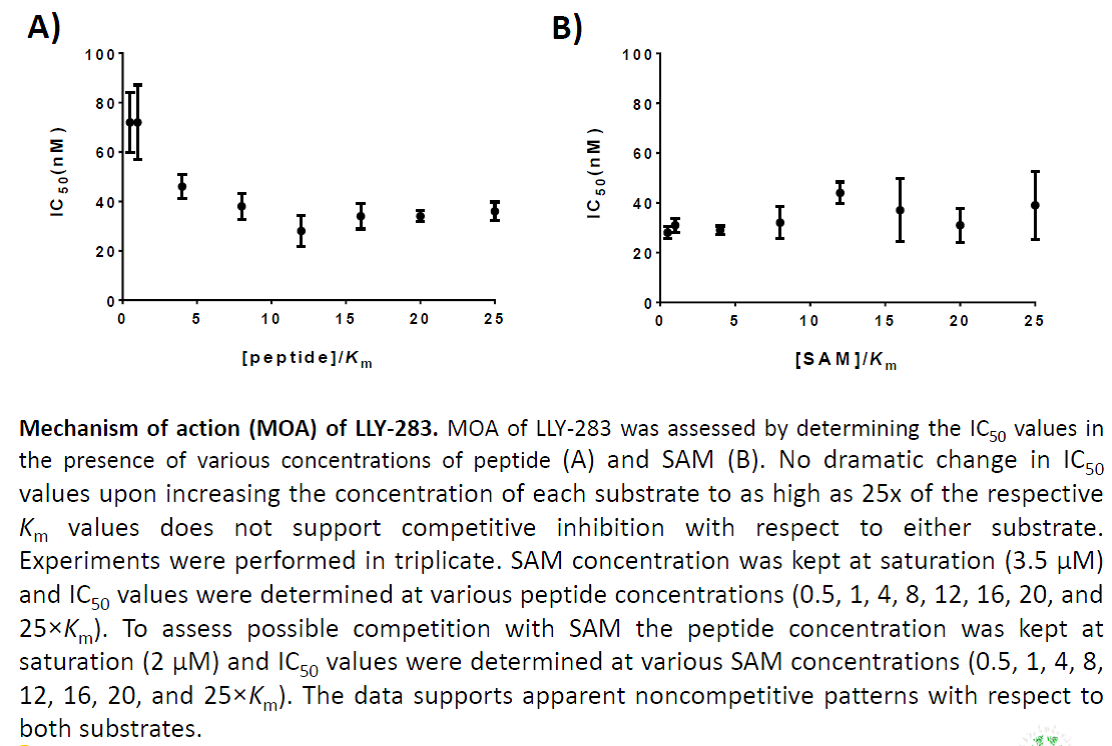
2. Selectivity assay for PRMT family enzymes: PRMT1, PRMT3, PRMT4/CARM1, PRMT6, PRMT8 were assayed using the same radioactive SAM-based method as PRMT5, with respective peptide substrates for each enzyme; other methyltransferases (SET7/9, SUV39H1, G9a, GLP, EZH2, DOT1L) were tested using validated radioactive or luminescent assay formats specific to each enzyme [1] 3. Determination of PRMT5 inhibition mode: LLY-283 was tested in PRMT5 assays with varying concentrations of peptide substrate (H4 1–20) and SAM cofactor; Lineweaver-Burk plots were generated to determine competitive/non-competitive binding (LLY-283 was found to be competitive with SAM and non-competitive with peptide substrate) [1] |
| Cell Assay |
1. Cellular PRMT5 activity assay: MOLM-13, MV4-11, Daudi, Raji, and HCT116 cells were treated with serial dilutions of LLY-283 for 72 h; cells were lysed, and histone extracts were prepared; SDMA levels on H4R3 and H2AR3 were quantified by ELISA using specific anti-SDMA antibodies (total histone levels were measured as loading control) [1]
2. Cell viability assay: Cancer cell lines (MOLM-13, MV4-11, Daudi, Raji, HCT116) and normal PBMCs were seeded in 96-well plates and treated with serial dilutions of LLY-283 (0.001–10 μM) for 72 h; cell viability was assessed using a colorimetric cell proliferation reagent, and IC50 values were calculated via nonlinear regression analysis [1] 3. Apoptosis assay (caspase 3/7 activity): MOLM-13 cells were seeded in 96-well plates and treated with LLY-283 (0.1, 0.3, 1 μM) or vehicle for 24, 48, and 72 h; caspase 3/7 activity was measured using a luminescent caspase substrate reagent, with luminescence signal normalized to vehicle control [1] 4. Western blot for PRMT5 substrate methylation: MOLM-13 cells were treated with LLY-283 (0, 0.1, 0.3, 1 μM) for 72 h; whole-cell lysates were prepared, separated by SDS-PAGE, transferred to membranes, and probed with antibodies against H4R3me2s, H2AR3me2s, and total histones (loading control); signal was detected via chemiluminescence and quantified by densitometry [1] |
| Animal Protocol |
20 mg/kg; p.o.
Mice bearing A375 tumor 1. MOLM-13 AML xenograft model: Female NOD/SCID mice (6–8 weeks old) were subcutaneously injected with 5×10⁶ MOLM-13 cells into the right flank; when tumors reached ~100 mm³, mice were randomized into vehicle and LLY-283 treatment groups (n=8/group); LLY-283 was formulated in 10% DMSO/90% corn oil, administered orally at 30 mg/kg twice daily (BID) for 21 days; tumor volume was measured by caliper every 3 days (volume = length × width² / 2), and mice were euthanized on day 21 to collect tumors for weight measurement and Western blot analysis [1] 2. Daudi Burkitt’s lymphoma xenograft model: Female NOD/SCID mice (6–8 weeks old) were subcutaneously injected with 1×10⁷ Daudi cells into the right flank; tumor-bearing mice were randomized (n=8/group) when tumors reached ~100 mm³; LLY-283 was formulated in 10% DMSO/90% corn oil, administered orally at 30 mg/kg BID for 21 days; tumor volume and weight were measured as described for MOLM-13 model, and body weight was monitored throughout the study to assess toxicity [1] |
| ADME/Pharmacokinetics |
1. In vitro metabolic stability: LLY-283 showed high stability in human liver microsomes (HLM) and mouse liver microsomes (MLM), with intrinsic clearance (CLint) values of 12 μL/min/mg (HLM) and 18 μL/min/mg (MLM), respectively [1]
2. In vivo pharmacokinetics (mice): LLY-283 was administered to CD-1 mice at doses of 10 mg/kg (oral) and 1 mg/kg (intravenous); the oral bioavailability was 42%; the plasma half-life (t1/2) was 4.2 hours (oral) and 2.8 hours (intravenous); and the Cmax was 1.2 μM (oral) and 3.5 μM (intravenous). The AUC0-24h after oral administration was 8.9 μM·h, and the AUC0-24h after intravenous administration was 5.1 μM·h [1]. 3. Plasma protein binding rate: LLY-283 showed high plasma protein binding rates in both human plasma (92%) and mouse plasma (90%) [1]. |
| Toxicity/Toxicokinetics |
1. In vitro cytotoxicity: LLY-283 exhibited very low cytotoxicity against non-malignant human peripheral blood mononuclear cells (PBMCs), with an IC50 > 10 μM (while the IC50 in cancer cell lines was < 320 nM)[1]
2. In vivo toxicity: In xenograft models, mice treated with LLY-283 (30 mg/kg, twice daily, orally) for 21 consecutive days did not show significant weight loss (>10%) or significant toxic symptoms (e.g., lethargy, decreased activity, abnormal behavior)[1] |
| References | |
| Additional Infomation |
1. LLY-283 is a first-in-class, highly selective small molecule inhibitor of PRMT5, designed to target PRMT5-dependent hematologic malignancies and solid tumors[1]
2. PRMT5 catalyzes the formation of symmetric dimethylarginine (SDMA) on histone and non-histone substrates, playing a key role in the epigenetic regulation of gene expression and cancer cell proliferation/survival[1] 3. LLY-283 binds to the SAM binding pocket of PRMT5 (competitively binding to SAM), blocking methyl transfer to substrate arginine residues, thereby inhibiting the formation of SDMA[1] 4. The high selectivity of LLY-283 for PRMT5 relative to other methyltransferases minimizes off-target effects, and its good pharmacokinetic properties (high oral bioavailability and good metabolic stability) support its application as an in vivo research tool. Compounds and potential clinical candidates [1] 5. LLY-283 showed strong antitumor activity and extremely low toxicity in xenograft models of acute myeloid leukemia (AML) and Burkitt lymphoma, validating PRMT5 as a therapeutic target for these cancers [1] |
| Molecular Formula |
C17H18N4O4
|
|
|---|---|---|
| Molecular Weight |
342.3492
|
|
| Exact Mass |
342.132
|
|
| CAS # |
2040291-27-6
|
|
| Related CAS # |
LLY-284;2226515-75-7
|
|
| PubChem CID |
122669401
|
|
| Appearance |
White to off-white solid powder
|
|
| LogP |
0.2
|
|
| Hydrogen Bond Donor Count |
4
|
|
| Hydrogen Bond Acceptor Count |
7
|
|
| Rotatable Bond Count |
3
|
|
| Heavy Atom Count |
25
|
|
| Complexity |
464
|
|
| Defined Atom Stereocenter Count |
5
|
|
| SMILES |
[C@@H]1(O)[C@@]([H])([C@@H](C2=CC=CC=C2)O)O[C@H]([C@@H]1O)N1C=CC2C(N)=NC=NC=21
|
|
| InChi Key |
WWOOWAHTEXIWBO-QFRSUPTLSA-N
|
|
| InChi Code |
InChI=1S/C17H18N4O4/c18-15-10-6-7-21(16(10)20-8-19-15)17-13(24)12(23)14(25-17)11(22)9-4-2-1-3-5-9/h1-8,11-14,17,22-24H,(H2,18,19,20)/t11-,12+,13-,14-,17-/m1/s1
|
|
| Chemical Name |
|
|
| Synonyms |
|
|
| HS Tariff Code |
2934.99.9001
|
|
| Storage |
Powder -20°C 3 years 4°C 2 years In solvent -80°C 6 months -20°C 1 month |
|
| Shipping Condition |
Room temperature (This product is stable at ambient temperature for a few days during ordinary shipping and time spent in Customs)
|
| Solubility (In Vitro) |
|
|||
|---|---|---|---|---|
| Solubility (In Vivo) |
Solubility in Formulation 1: ≥ 2.08 mg/mL (6.08 mM) (saturation unknown) in 10% DMSO + 40% PEG300 + 5% Tween80 + 45% Saline (add these co-solvents sequentially from left to right, and one by one), clear solution.
For example, if 1 mL of working solution is to be prepared, you can add 100 μL of 20.8 mg/mL clear DMSO stock solution to 400 μL PEG300 and mix evenly; then add 50 μL Tween-80 to the above solution and mix evenly; then add 450 μL normal saline to adjust the volume to 1 mL. Preparation of saline: Dissolve 0.9 g of sodium chloride in 100 mL ddH₂ O to obtain a clear solution. Solubility in Formulation 2: ≥ 2.08 mg/mL (6.08 mM) (saturation unknown) in 10% DMSO + 90% (20% SBE-β-CD in Saline) (add these co-solvents sequentially from left to right, and one by one), clear solution. For example, if 1 mL of working solution is to be prepared, you can add 100 μL of 20.8 mg/mL clear DMSO stock solution to 900 μL of 20% SBE-β-CD physiological saline solution and mix evenly. Preparation of 20% SBE-β-CD in Saline (4°C,1 week): Dissolve 2 g SBE-β-CD in 10 mL saline to obtain a clear solution. View More
Solubility in Formulation 3: ≥ 2.08 mg/mL (6.08 mM) (saturation unknown) in 10% DMSO + 90% Corn Oil (add these co-solvents sequentially from left to right, and one by one), clear solution. |
| Preparing Stock Solutions | 1 mg | 5 mg | 10 mg | |
| 1 mM | 2.9210 mL | 14.6049 mL | 29.2099 mL | |
| 5 mM | 0.5842 mL | 2.9210 mL | 5.8420 mL | |
| 10 mM | 0.2921 mL | 1.4605 mL | 2.9210 mL |
*Note: Please select an appropriate solvent for the preparation of stock solution based on your experiment needs. For most products, DMSO can be used for preparing stock solutions (e.g. 5 mM, 10 mM, or 20 mM concentration); some products with high aqueous solubility may be dissolved in water directly. Solubility information is available at the above Solubility Data section. Once the stock solution is prepared, aliquot it to routine usage volumes and store at -20°C or -80°C. Avoid repeated freeze and thaw cycles.
Calculation results
Working concentration: mg/mL;
Method for preparing DMSO stock solution: mg drug pre-dissolved in μL DMSO (stock solution concentration mg/mL). Please contact us first if the concentration exceeds the DMSO solubility of the batch of drug.
Method for preparing in vivo formulation::Take μL DMSO stock solution, next add μL PEG300, mix and clarify, next addμL Tween 80, mix and clarify, next add μL ddH2O,mix and clarify.
(1) Please be sure that the solution is clear before the addition of next solvent. Dissolution methods like vortex, ultrasound or warming and heat may be used to aid dissolving.
(2) Be sure to add the solvent(s) in order.
http://www.thesgc.org/chemical-probes/LLY-283 |
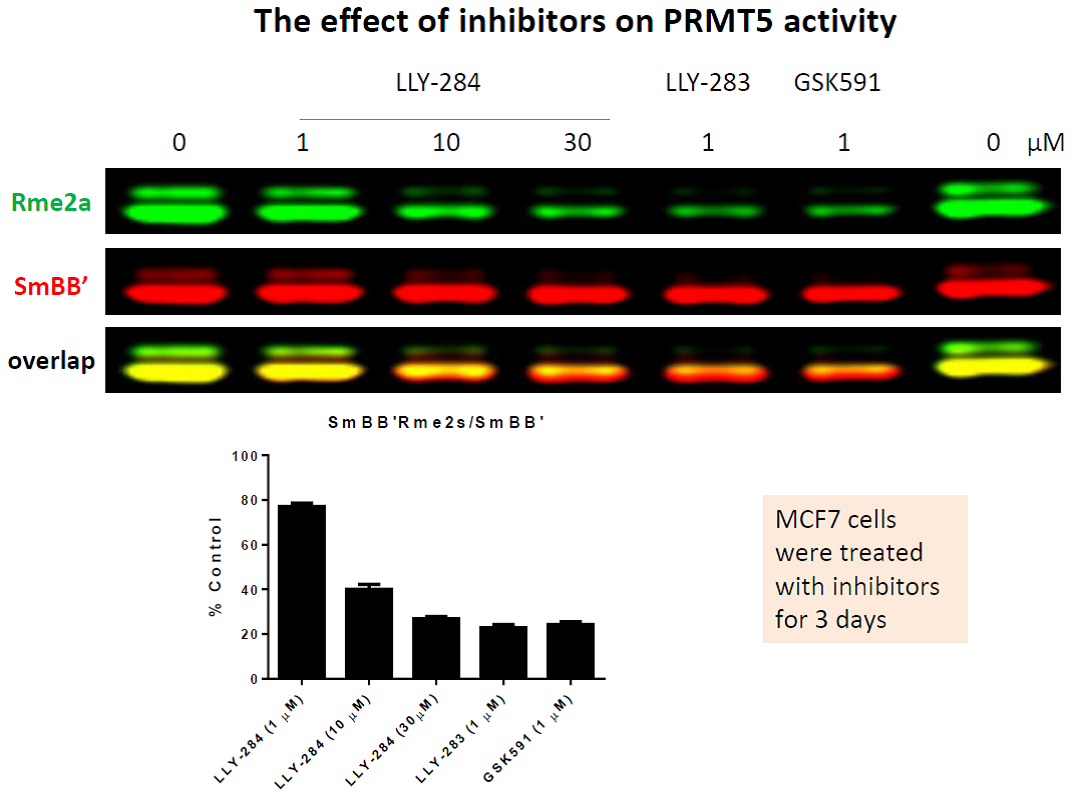
Enzyme inhibition assay for LLY-283 and its negative control (LLY-284). The IC50 values of 22 ± 3 nM (Hill Slope of 1) and 1074 ± 53 nM (Hill Slope of 1.2) were determined for LLY-283 and LLY-284, respectively.http://www.thesgc.org/chemical-probes/LLY-283 |
|---|
Products are for research use only; We do not sell to patients
Copyright 2020 InvivoChem LLC | All Rights Reserved


 COA
COA