| Size | Price | Stock | Qty |
|---|---|---|---|
| 5mg |
|
||
| 10mg |
|
||
| 25mg |
|
||
| 50mg |
|
||
| 100mg |
|
||
| 250mg | |||
| 500mg | |||
| Other Sizes |


Purity: ≥98%
| Targets |
Selective inhibitor of farnesyl protein transferase (FTase) with the following inhibitory parameters:
- IC50 = 9.2 nM (recombinant human FTase), Ki = 2.5 nM (recombinant human FTase) [2] - High selectivity over geranylgeranyl protein transferase type I (GGTase-I): IC50 > 10 μM for GGTase-I, no significant inhibition of geranylgeranylation of proteins (e.g., Rap1A) [2] |
|---|---|
| ln Vitro |
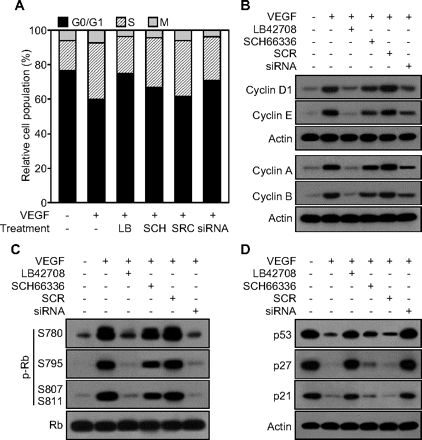
LB42708, in spite of K-ras prenylation, causes cell death. In H-ras-transformed RIE cells, LB42708 causes growth inhibition, which is accompanied by G1/M and G2/M cell cycle arrests, respectively. Ras-transformed rat intestinal epithelial (RIE) cells exhibit unique morphological changes and cell cycle arrest as a result of p21(CIP1/WAF1) and RhoB being upregulated above the basal level by LB42708[2].
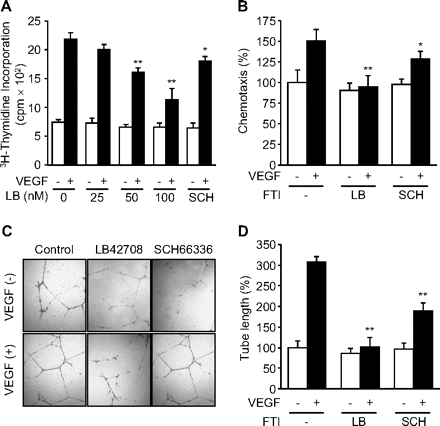
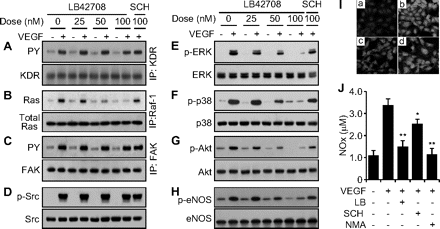
Antitumor activity in Ras-transformed intestinal epithelial cells: - In H-ras-transformed rat intestinal epithelial cells (RIE-H-ras): - LB42708 (1–100 nM) inhibited proliferation in a concentration-dependent manner: IC50 = 15 nM (72-hour MTT assay); 50 nM LB42708 reduced colony formation by 70% (colony formation assay, 14-day culture). - Induced irreversible apoptosis: 25 nM LB42708 (48-hour treatment) increased Annexin V-positive cells from 3% to 28%; 50 nM increased apoptosis rate to 45% (flow cytometry). - Mechanistic effects: 50 nM LB42708 reduced farnesylated H-Ras by 80% (Western blot, no change in total H-Ras); upregulated Bax protein by 60%, downregulated Bcl-2 protein by 50%, and increased cleaved caspase-3 activity by 2.4-fold [2] - In K-ras-transformed rat intestinal epithelial cells (RIE-K-ras): - IC50 = 22 nM (72-hour MTT assay); 50 nM LB42708 reduced cell viability by 65% and inhibited farnesylated K-Ras by 75% [2] - Anti-inflammatory activity in immune and synovial cells: - In lipopolysaccharide (LPS)-stimulated mouse peritoneal macrophages: - LB42708 (10–100 nM) inhibited NF-κB activation in a concentration-dependent manner: 50 nM reduced nuclear translocation of NF-κB p65 by 60% (Western blot of nuclear extracts); 100 nM reduced NF-κB luciferase activity by 75%. - Decreased inflammatory gene expression: 50 nM LB42708 reduced TNF-α mRNA by 55%, IL-1β mRNA by 50%, and iNOS mRNA by 65% (qPCR); 100 nM reduced TNF-α protein secretion by 60% (ELISA) [1] - In collagen-stimulated rat synovial cells: - 50 nM LB42708 reduced COX-2 protein by 55% (Western blot) and PGE2 secretion by 50% (ELISA) [1] |
| ln Vivo |
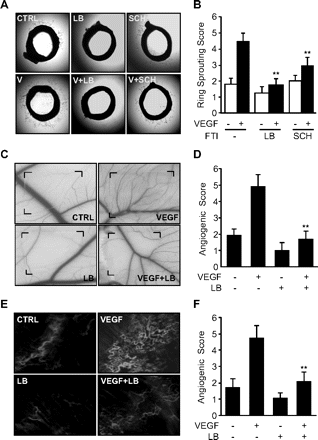
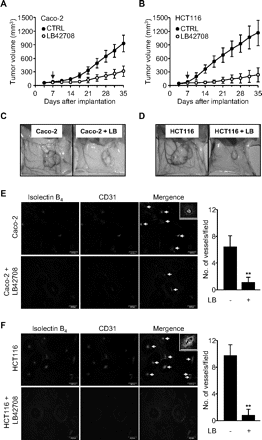
LB42708 (12.5 mg/kg i.p.) inhibits production of NO, PGE2, TNF-α, and IL-1β in LPS-injected mice, and also prevents the development of CIA. LB42708 (20 mg/kg/day i.p.) also inhibits tumor growth and angiogenesis in both Ras wild-type and mutated tumors.
Efficacy in collagen-induced arthritis (CIA) mouse model : 1. Animals: DBA/1J mice (male, 8–10 weeks old, 20–25 g) were immunized with bovine type II collagen (CII) emulsified in complete Freund’s adjuvant (CFA) to induce CIA. When arthritis signs appeared (day 21), mice were randomized into 3 groups (n=8/group): vehicle (0.5% CMC-Na), LB42708 10 mg/kg/day, 30 mg/kg/day [1] 2. Treatment: Daily oral gavage for 14 days (days 21–35). Arthritis severity was scored every 3 days (0–4 points per paw, total 0–16 points) [1] 3. Results: - Arthritis score: Reduced from 12.5 ± 1.8 (vehicle) to 6.2 ± 1.2 (10 mg/kg) and 3.8 ± 0.9 (30 mg/kg) on day 35; - Inflammatory markers: Serum TNF-α reduced by 45% (10 mg/kg) and 65% (30 mg/kg); serum IL-1β reduced by 40% (10 mg/kg) and 60% (30 mg/kg) (ELISA); - Joint pathology: Synovial hyperplasia, inflammatory cell infiltration, and cartilage destruction were significantly alleviated in LB42708-treated groups (H&E staining); - NF-κB activity: Nuclear p65 in synovial tissue reduced by 50% (10 mg/kg) and 70% (30 mg/kg) (immunohistochemistry) [1] |
| Enzyme Assay |
Recombinant human FTase activity assay :
The reaction system (50 μL) contained 50 mM Tris-HCl (pH 7.5), 5 mM MgCl2, 2 mM DTT, 100 nM recombinant human FTase, 200 nM biotinylated CAAX peptide (FTase substrate), 100 nM [3H]-farnesyl pyrophosphate ([3H]-FPP, radioactive donor), and LB42708 (0.1–100 nM). The mixture was incubated at 37°C for 30 minutes, then terminated by adding 50 μL of 20 mM EDTA. Biotinylated farnesylated peptide was captured on a streptavidin-coated 96-well plate, washed 3 times with PBS containing 0.1% Tween-20. Bound radioactivity was measured via liquid scintillation counting. The inhibition rate was calculated by comparing with the vehicle group, and IC50 was determined via non-linear regression curve fitting. Ki was calculated using Lineweaver-Burk plot analysis (varying [3H]-FPP concentrations: 25–200 nM) [2] |
| Cell Assay |
Ras-transformed intestinal epithelial cell assay :
1. Proliferation assay: RIE-H-ras/RIE-K-ras cells were seeded in 96-well plates (5×10³ cells/well) and cultured in DMEM medium (10% FBS) at 37°C, 5% CO2 for 24 hours. LB42708 (0.1–100 nM) was added, and cells were incubated for 72 hours. MTT solution (5 mg/mL) was added for 4 hours, formazan was dissolved with DMSO, and absorbance at 570 nm was measured. IC50 was calculated via curve fitting [2] 2. Apoptosis assay: RIE-H-ras cells (2×10⁵ cells/well, 6-well plate) were treated with LB42708 (10–50 nM) for 48 hours. Cells were stained with Annexin V-FITC/PI for 15 minutes at room temperature, and apoptotic cells were quantified via flow cytometry [2] 3. Western blot: Cells were lysed with RIPA buffer (含protease inhibitors), 30 μg protein was separated by 12% SDS-PAGE, transferred to PVDF membranes. Membranes were probed with antibodies against farnesylated Ras, total Ras, Bax, Bcl-2, cleaved caspase-3, and β-actin (loading control). Band intensity was quantified via ImageJ [2] - Inflammatory cell assay : 1. Macrophage isolation: Mouse peritoneal macrophages were collected 3 days after intraperitoneal injection of thioglycollate broth, seeded in 6-well plates (1×10⁶ cells/well) and cultured in RPMI 1640 medium (10% FBS) for 24 hours [1] 2. Drug and stimulus treatment: Cells were pre-treated with LB42708 (10–100 nM) for 1 hour, then stimulated with LPS (1 μg/mL) for 6 hours (for mRNA) or 24 hours (for protein) [1] 3. qPCR: Total RNA was extracted via TRIzol reagent, reverse-transcribed to cDNA. Primers for TNF-α, IL-1β, iNOS, and GAPDH (internal control) were used for qPCR. Relative mRNA levels were calculated via 2-ΔΔCt method [1] 4. NF-κB nuclear translocation: Nuclear extracts were prepared using nuclear extraction kit. Western blot was performed with anti-NF-κB p65 antibody (nuclear fraction) and anti-α-tubulin antibody (cytoplasmic fraction, loading control) [1] |
| Animal Protocol |
Dissolved in Saline; 10 mg/kg; i.p. injection
Mice collagen-induced arthritis model. Collagen-induced arthritis (CIA) mouse study : 1. Arthritis induction: On day 0, DBA/1J mice were immunized by subcutaneous injection of 100 μg bovine CII emulsified in CFA (1:1 v/v) at the base of the tail. A booster injection of 50 μg CII in incomplete Freund’s adjuvant (IFA) was given on day 7 [1] 2. Grouping: On day 21 (onset of arthritis, score ≥2), mice were randomized into 3 groups (n=8/group): - Vehicle group: 0.5% carboxymethyl cellulose sodium (CMC-Na) solution; - LB42708 10 mg/kg/day group; - LB42708 30 mg/kg/day group [1] 3. Drug preparation: LB42708 was dissolved in DMSO (5% v/v) and diluted with 0.5% CMC-Na to final concentration (DMSO ≤5%), sonicated for 5 minutes to ensure homogeneity [1] 4. Administration: Daily oral gavage at a volume of 10 mL/kg for 14 days (days 21–35). Mice were fasted for 4 hours before each gavage [1] 5. Sample collection and detection: - Arthritis scoring: Every 3 days, each paw was scored (0=normal, 1=mild redness/swelling, 2=moderate redness/swelling, 3=severe redness/swelling, 4=ankylosis); - Serum: Collected on day 35 via orbital sinus puncture, ELISA detected TNF-α and IL-1β; - Joint tissue: Mice were euthanized on day 35, hind paws were fixed in 4% paraformaldehyde, decalcified, embedded in paraffin, sectioned, and stained with H&E for pathology; synovial tissue was dissected for NF-κB p65 immunohistochemistry [1] |
| Toxicity/Toxicokinetics |
In vitro cytotoxicity: - In normal rat intestinal epithelial cells (RIE-1), LB42708 (at concentrations up to 100 nM) did not show significant cytotoxicity: cell viability remained above 90% compared to the solvent control group (MTT assay, treatment for 72 hours) [2] - In vivo safety: - In CIA mice treated with LB42708 (at doses up to 30 mg/kg/day for 14 days): - No significant change in body weight (<4% change compared to the solvent control group); - Serum liver function indicators (ALT, AST) and kidney function indicators (BUN, creatinine) were within the normal range (no significant difference compared to the solvent control group); - No clinical symptoms of toxicity (e.g., somnolence, diarrhea, hair loss) were observed [1]
|
| References |
|
| Additional Infomation |
LB42708 is a synthetic selective farnesyltransferase (FTase) inhibitor initially developed for the treatment of Ras-driven cancers, and later used to treat inflammatory diseases such as rheumatoid arthritis due to its anti-inflammatory activity [1][2]. - Antitumor mechanism: Inhibits FTase-mediated H-Ras/K-Ras farnesylation, blocking its membrane localization and activation of oncogenic signaling pathways (e.g., the MAPK/ERK pathway), thereby inhibiting the proliferation of Ras-transformed cells and inducing irreversible apoptosis [2]. - Anti-inflammatory mechanism: Inhibits p21ras-dependent NF-κB activation (blocks Ras-mediated NF-κB nuclear translocation), reduces the expression of pro-inflammatory genes (TNF-α, IL-1β, iNOS, COX-2) and inflammatory mediators (PGE2), thereby alleviating joint inflammation and tissue damage in arthritis. [1] - Preclinical studies have confirmed that LB42708 is effective against Ras-transformed tumors and inflammatory arthritis, with good safety (no toxicity to normal cells or vital organs), supporting its potential for dual therapeutic applications in oncology and rheumatology. [1][2]
|
| Molecular Formula |
C30H27BRN4O2
|
|
|---|---|---|
| Molecular Weight |
555.46
|
|
| Exact Mass |
554.131
|
|
| CAS # |
226929-39-1
|
|
| Related CAS # |
|
|
| PubChem CID |
10099206
|
|
| Appearance |
Off-white to light yellow solid powder
|
|
| Density |
1.4±0.1 g/cm3
|
|
| Boiling Point |
769.6±60.0 °C at 760 mmHg
|
|
| Flash Point |
419.2±32.9 °C
|
|
| Vapour Pressure |
0.0±2.6 mmHg at 25°C
|
|
| Index of Refraction |
1.681
|
|
| LogP |
3.14
|
|
| Hydrogen Bond Donor Count |
0
|
|
| Hydrogen Bond Acceptor Count |
3
|
|
| Rotatable Bond Count |
6
|
|
| Heavy Atom Count |
37
|
|
| Complexity |
756
|
|
| Defined Atom Stereocenter Count |
0
|
|
| SMILES |
C1COCCN1C(=O)C2=CN(C=C2C3=CC=CC4=CC=CC=C43)CC5=CN=CN5CC6=CC=C(C=C6)Br
|
|
| InChi Key |
GUUIRIMAQGOLHT-UHFFFAOYSA-N
|
|
| InChi Code |
InChI=1S/C30H27BrN4O2/c31-24-10-8-22(9-11-24)17-35-21-32-16-25(35)18-33-19-28(27-7-3-5-23-4-1-2-6-26(23)27)29(20-33)30(36)34-12-14-37-15-13-34/h1-11,16,19-21H,12-15,17-18H2
|
|
| Chemical Name |
(1-((1-(4-bromobenzyl)-1H-imidazol-5-yl)methyl)-4-(naphthalen-1-yl)-1H-pyrrol-3-yl)(morpholino)methanone
|
|
| Synonyms |
|
|
| HS Tariff Code |
2934.99.9001
|
|
| Storage |
Powder -20°C 3 years 4°C 2 years In solvent -80°C 6 months -20°C 1 month |
|
| Shipping Condition |
Room temperature (This product is stable at ambient temperature for a few days during ordinary shipping and time spent in Customs)
|
| Solubility (In Vitro) |
DMSO: 100 mg/mL (180.0 mM)
Water: 1 mg/mL (Insoluble) Ethanol: 86 mg/mL warmed (154.8 mM) |
|---|---|
| Solubility (In Vivo) |
Solubility in Formulation 1: ≥ 2.5 mg/mL (4.50 mM) (saturation unknown) in 10% DMSO + 40% PEG300 + 5% Tween80 + 45% Saline (add these co-solvents sequentially from left to right, and one by one), clear solution.
For example, if 1 mL of working solution is to be prepared, you can add 100 μL of 25.0 mg/mL clear DMSO stock solution to 400 μL PEG300 and mix evenly; then add 50 μL Tween-80 to the above solution and mix evenly; then add 450 μL normal saline to adjust the volume to 1 mL. Preparation of saline: Dissolve 0.9 g of sodium chloride in 100 mL ddH₂ O to obtain a clear solution. Solubility in Formulation 2: 2.5 mg/mL (4.50 mM) in 10% DMSO + 90% (20% SBE-β-CD in Saline) (add these co-solvents sequentially from left to right, and one by one), suspension solution; with ultrasonication. For example, if 1 mL of working solution is to be prepared, you can add 100 μL of 25.0 mg/mL clear DMSO stock solution to 900 μL of 20% SBE-β-CD physiological saline solution and mix evenly. Preparation of 20% SBE-β-CD in Saline (4°C,1 week): Dissolve 2 g SBE-β-CD in 10 mL saline to obtain a clear solution. View More
Solubility in Formulation 3: ≥ 2.5 mg/mL (4.50 mM) (saturation unknown) in 10% DMSO + 90% Corn Oil (add these co-solvents sequentially from left to right, and one by one), clear solution. |
| Preparing Stock Solutions | 1 mg | 5 mg | 10 mg | |
| 1 mM | 1.8003 mL | 9.0015 mL | 18.0031 mL | |
| 5 mM | 0.3601 mL | 1.8003 mL | 3.6006 mL | |
| 10 mM | 0.1800 mL | 0.9002 mL | 1.8003 mL |
*Note: Please select an appropriate solvent for the preparation of stock solution based on your experiment needs. For most products, DMSO can be used for preparing stock solutions (e.g. 5 mM, 10 mM, or 20 mM concentration); some products with high aqueous solubility may be dissolved in water directly. Solubility information is available at the above Solubility Data section. Once the stock solution is prepared, aliquot it to routine usage volumes and store at -20°C or -80°C. Avoid repeated freeze and thaw cycles.
Calculation results
Working concentration: mg/mL;
Method for preparing DMSO stock solution: mg drug pre-dissolved in μL DMSO (stock solution concentration mg/mL). Please contact us first if the concentration exceeds the DMSO solubility of the batch of drug.
Method for preparing in vivo formulation::Take μL DMSO stock solution, next add μL PEG300, mix and clarify, next addμL Tween 80, mix and clarify, next add μL ddH2O,mix and clarify.
(1) Please be sure that the solution is clear before the addition of next solvent. Dissolution methods like vortex, ultrasound or warming and heat may be used to aid dissolving.
(2) Be sure to add the solvent(s) in order.
|
|---|
|
|
|
|---|
|
|
Products are for research use only; We do not sell to patients
Copyright 2020 InvivoChem LLC | All Rights Reserved


 COA
COA