| Size | Price | Stock | Qty |
|---|---|---|---|
| 5mg |
|
||
| 10mg |
|
||
| 25mg |
|
||
| 50mg |
|
||
| 100mg |
|
||
| 250mg | |||
| Other Sizes |
Purity: ≥98%
| Targets |
The primary target of KW-2478 is the heat shock protein 90 (HSP90) molecular chaperone family, including cytosolic HSP90α, cytosolic HSP90β, endoplasmic reticulum-resident GRP94, and mitochondrial TRAP1. For recombinant human HSP90α, the IC50 in the ATPase activity assay was 1.8 nM [1];
For recombinant human HSP90β, the IC50 was 2.3 nM [1]; For recombinant human GRP94, the IC50 was 17 nM [1]; For recombinant human TRAP1, the IC50 was 9.0 nM [1]. |
|---|---|
| ln Vitro |
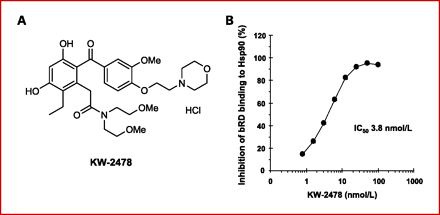
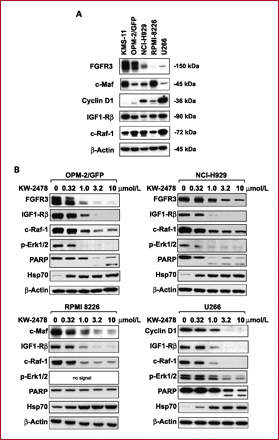
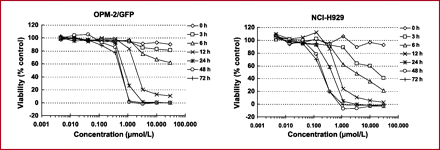
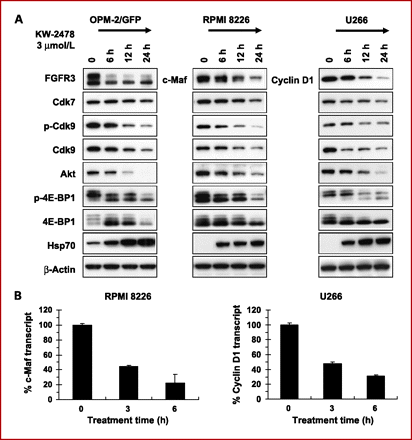
Hsp90 inhibition: KW-2478 has an IC50 of 3.8 nM for Hsp90α. For both non-Hodgkin's lymphoma (NHL) and multiple myeloma (MM), KW-2478 exhibits anti-proliferative action. Its GI50 values are 0.30 μM (OPM-2 /GFP), 0.34 μM (KMS-11), 0.39 μM (RPMI 8226), 0.12 μM (NCI-H929), 0.36 μM (Raji), 0.098 μM (SR), and 0.33 μM μM (SC-1). By primarily inhibiting the activity of Cdk9, KW -2478 also suppresses the transcription of the c-Maf and Cyclin D1 genes[1].
1. Antiproliferative activity against multiple myeloma (MM) cells: KW-2478 exhibited potent antiproliferative effects on both drug-sensitive and drug-resistant MM cell lines. In RPMI 8226 (drug-sensitive MM cells), the IC50 (72-hour MTT assay) was 15 nM; in U266 (IL-6-dependent MM cells), the IC50 was 18 nM; in MM.1S (dexamethasone-sensitive MM cells), the IC50 was 16 nM; in RPMI 8226/LR5 (doxorubicin-resistant MM cells), the IC50 was 19 nM [1] 2. Downregulation of HSP90 client proteins in MM cells: Western blot analysis showed dose-dependent reduction of HSP90 client proteins by KW-2478. In RPMI 8226 cells treated with 20 nM KW-2478 for 24 hours, phosphorylated Akt (p-Akt) levels decreased by 65%, phosphorylated ERK (p-ERK) by 70%, NF-κB (p65) by 60%, and c-Myc by 58% compared to the vehicle control [1]. In MM.1S cells, 25 nM KW-2478 reduced the expression of IRF4 (a key MM survival protein) by 62% [1] 3. Induction of apoptosis in MM cells: Flow cytometry (Annexin V-FITC/PI staining) revealed that KW-2478 induced apoptosis in MM cells. After 48 hours of treatment with 20 nM KW-2478, the apoptotic rate (early + late apoptosis) of RPMI 8226 cells increased from 3.2% (vehicle control) to 31.5%; at 30 nM, the apoptotic rate further rose to 42.0% [1]. This effect was accompanied by a 3.5-fold increase in cleaved caspase-3 and a 2.8-fold increase in cleaved PARP (Western blot analysis) [1] 4. Inhibition of MM cell clonogenic survival: Clonogenic assay showed that KW-2478 suppressed the colony-forming ability of MM cells. RPMI 8226 cells treated with 10 nM KW-2478 for 72 hours had a colony formation rate of 25% (vs. 100% in the control group); at 20 nM, the colony formation rate decreased to 12% [1]. For MM.1S cells, 15 nM KW-2478 reduced colony formation to 18% of the control [1] 5. Suppression of MM cell adhesion to bone marrow stromal cells (BMSCs): KW-2478 (10-30 nM) inhibited the adhesion of RPMI 8226 cells to BMSCs. At 20 nM, the adhesion rate decreased by 55% compared to the vehicle control, which was associated with reduced expression of adhesion molecules (VLA-4 and VCAM-1) by 45% and 40%, respectively [1]. |
| ln Vivo |
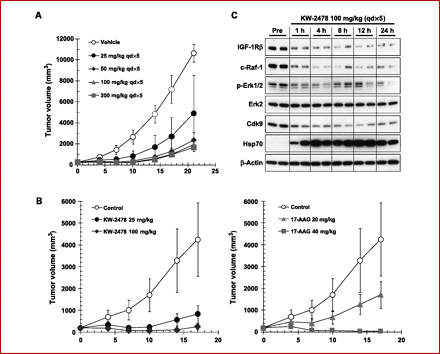
In combined immunodeficiency (SCID) mice carrying NCI-H929 cells, KW-2478 (25-200 mg/kg, iv) suppresses tumor growth without causing body weight loss. Mice NCI-H929 tumors treated with KW-2478 (100 mg/kg, IV) show dephosphorylated Erk1/2 proteins and Hsp90 client protein levels being degraded[1].
1. Antitumor efficacy in MM xenograft models: Female nude mice (6-8 weeks old) bearing subcutaneous RPMI 8226 MM xenografts (tumor volume ~100 mm³) were treated with KW-2478. Oral administration of 10 mg/kg KW-2478 once daily for 14 days resulted in a tumor growth inhibition (TGI) rate of 60% compared to the vehicle control (0.5% methylcellulose in PBS). At 20 mg/kg (oral, once daily for 14 days), the TGI rate increased to 75%, and tumor weights in the treatment group were 30% of those in the control group [1]. No significant body weight loss (<5% change from baseline) was observed in either dose group [1] 2. Downregulation of client proteins in xenograft tissues: Immunohistochemical (IHC) staining of RPMI 8226 xenograft tissues from mice treated with 20 mg/kg KW-2478 (oral, 7 days) showed a 70% reduction in p-Akt levels, a 68% reduction in p-ERK levels, and a 65% reduction in c-Myc levels compared to vehicle-treated tumors. Western blot analysis of tumor lysates confirmed these results, with a 68% decrease in p-Akt and a 66% decrease in NF-κB [1] 3. Prolongation of survival in MM disseminated xenograft models: SCID mice (7-8 weeks old) intravenously injected with 2×10⁶ RPMI 8226 cells (disseminated MM model) were treated with oral KW-2478 (20 mg/kg/day for 21 days). The median survival of the treatment group was 48 days, compared to 32 days in the vehicle control group, representing a 50% extension of survival [1]. Bone marrow analysis showed a 62% reduction in MM cell infiltration in the treatment group [1]. |
| Enzyme Assay |
1. Recombinant human HSP90α ATPase activity assay: The assay was conducted in a 96-well plate using recombinant human HSP90α protein. The reaction mixture contained 50 mM Tris-HCl (pH 7.5), 10 mM MgCl₂, 2 mM DTT, 0.1 mg/mL BSA, 1 mM ATP, 20 nM HSP90α, and serial concentrations of KW-2478 (0.1-100 nM). The mixture was incubated at 37°C for 2 hours, and the amount of inorganic phosphate (Pi) released from ATP hydrolysis was measured using a colorimetric kit (based on the reaction of Pi with ammonium molybdate and ascorbic acid). The absorbance was read at 630 nm using a microplate reader. The IC50 was calculated by fitting the percentage of ATPase activity (relative to the vehicle control) to a four-parameter logistic model [1]
2. Recombinant human GRP94 ATPase activity assay: Recombinant human GRP94 was used, and the reaction buffer consisted of 25 mM HEPES (pH 7.4), 5 mM MgCl₂, 1 mM DTT, 0.05 mg/mL BSA, and 2 mM ATP. The reaction mixture included 30 nM GRP94 and KW-2478 (1-200 nM), and was incubated at 30°C for 3 hours. Residual ATP was detected using a luminescent ATP assay kit (luminescence intensity proportional to ATP concentration). The IC50 was determined by plotting the percentage of GRP94 activity against the log concentration of KW-2478 [1]. |
| Cell Assay |
1. MM cell proliferation (MTT) assay: MM cells (e.g., RPMI 8226, U266, MM.1S) were seeded in 96-well plates at a density of 5×10³ cells/well and incubated overnight at 37°C (5% CO₂). Serial concentrations of KW-2478 (0.5-100 nM) were added to each well, and the cells were cultured for 72 hours. After incubation, 20 μL of MTT solution (5 mg/mL in PBS) was added to each well, followed by 4 hours of incubation at 37°C. The culture medium was carefully removed, and 150 μL of DMSO was added to dissolve formazan crystals. The absorbance was measured at 570 nm using a microplate reader, and the IC50 was defined as the concentration of KW-2478 that inhibited cell proliferation by 50% [1]
2. Western blot analysis for HSP90 client proteins: RPMI 8226 or MM.1S cells were seeded in 6-well plates at a density of 2×10⁵ cells/well and treated with KW-2478 (5-40 nM) for 24 hours. Cells were washed twice with cold PBS, then lysed in RIPA buffer (supplemented with protease and phosphatase inhibitors) on ice for 30 minutes. The lysates were centrifuged at 12,000×g for 15 minutes at 4°C, and the protein concentration of the supernatants was determined using a BCA protein assay kit. Equal amounts of protein (35 μg) were separated by 10% SDS-PAGE electrophoresis, then transferred to PVDF membranes. The membranes were blocked with 5% non-fat milk in TBST buffer for 1 hour at room temperature, then incubated with primary antibodies (anti-p-Akt, anti-p-ERK, anti-NF-κB, anti-c-Myc, anti-cleaved caspase-3) overnight at 4°C. After washing three times with TBST, the membranes were incubated with HRP-conjugated secondary antibodies for 1 hour at room temperature. Protein bands were visualized using an ECL chemiluminescence detection system, and band intensity was quantified using ImageJ software [1] 3. Apoptosis detection (Annexin V-FITC/PI staining): RPMI 8226 cells were treated with KW-2478 (10-30 nM) for 48 hours, then harvested by trypsinization and washed twice with cold PBS. The cells were resuspended in 100 μL of Annexin V binding buffer (10 mM HEPES, 140 mM NaCl, 2.5 mM CaCl₂, pH 7.4), then stained with 5 μL of Annexin V-FITC and 5 μL of PI solution (50 μg/mL) for 15 minutes at room temperature in the dark. Stained cells were analyzed using a flow cytometer, with early apoptosis defined as Annexin V-positive/PI-negative and late apoptosis defined as Annexin V-positive/PI-positive [1] 4. Clonogenic assay: RPMI 8226 cells were seeded in 6-well plates at a density of 200 cells/well and incubated overnight at 37°C (5% CO₂). KW-2478 (5-30 nM) was added to each well, and the cells were cultured for 14 days (with medium and drug refreshed every 3 days). At the end of culture, colonies were fixed with 4% paraformaldehyde for 15 minutes, then stained with 0.1% crystal violet for 30 minutes. After washing with water to remove excess stain, colonies containing more than 50 cells were counted. The colony formation rate was calculated as (number of colonies in the treatment group / number of colonies in the control group) × 100% [1] 5. MM cell-BMSC adhesion assay: Human BMSCs were seeded in 96-well plates and cultured until confluent. RPMI 8226 cells were labeled with a fluorescent dye (CFSE) and pretreated with KW-2478 (10-30 nM) for 2 hours. The labeled RPMI 8226 cells were added to the BMSC-coated plates and incubated at 37°C (5% CO₂) for 1 hour. Non-adherent cells were removed by washing with PBS, and the fluorescence intensity of adherent cells was measured using a microplate reader (excitation: 492 nm, emission: 517 nm). The adhesion rate was calculated relative to the vehicle control [1]. |
| Animal Protocol |
Dissolved in 0.9% sodium chloride solution; 25, 50 , 100 and 200 mg/kg; oral gavage
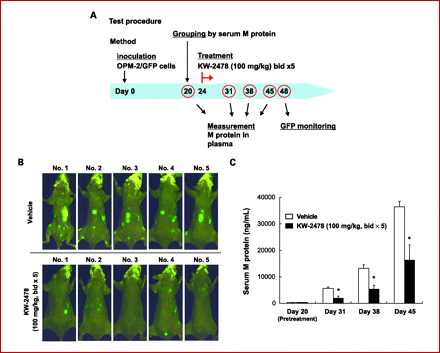
NCI-H929 tumors s.c. inoculated in SCID mice, OPM-2/GFP i.v. inoculated mouse model 1. Nude mouse subcutaneous MM xenograft model: Female nude mice (6-8 weeks old, n=6 per group) were anesthetized with isoflurane. A total of 5×10⁶ RPMI 8226 cells (suspended in 0.1 mL PBS mixed with Matrigel at a 1:1 ratio) were subcutaneously injected into the right flank of each mouse. When the tumor volume reached approximately 100 mm³, the mice were randomly divided into three groups: vehicle control group (0.5% methylcellulose in PBS), KW-2478 10 mg/kg group, and KW-2478 20 mg/kg group. KW-2478 was prepared by suspending drug powder in 0.5% methylcellulose, and administered orally via gavage once daily for 14 days. Tumor volume was measured every 2 days using a digital caliper (tumor volume = length × width² / 2), and body weight was recorded weekly to monitor toxicity. At the end of the treatment period, tumors were excised for Western blot and IHC analysis [1] 2. SCID mouse disseminated MM model: Male SCID mice (7-8 weeks old, n=5 per group) were intravenously injected with 2×10⁶ RPMI 8226 cells (suspended in 0.2 mL PBS) via the tail vein. Five days after cell injection, the mice were divided into two groups: vehicle control group (0.5% methylcellulose in PBS) and KW-2478 20 mg/kg group. KW-2478 was administered orally once daily for 21 days. Mice were monitored daily for signs of morbidity (e.g., weight loss, lethargy), and survival time was recorded. At the time of euthanasia, bone marrow samples were collected to analyze MM cell infiltration by flow cytometry [1] 3. Rat pharmacokinetic (PK) study: Male Sprague-Dawley rats (250-300 g, n=4 per group) were fasted for 12 hours before drug administration. Two groups were established: intravenous (IV) administration group and oral (PO) administration group. For the IV group, KW-2478 was dissolved in a solution of 10% DMSO and 90% normal saline, and injected via the tail vein at a dose of 5 mg/kg. For the PO group, KW-2478 was suspended in 0.5% methylcellulose and administered orally at a dose of 20 mg/kg. Blood samples (0.3 mL) were collected from the jugular vein at 0.083, 0.25, 0.5, 1, 2, 4, 6, 8, and 24 hours after administration. Plasma was separated by centrifugation at 3,000×g for 10 minutes at 4°C, and the concentration of KW-2478 in plasma was measured using LC-MS/MS. Pharmacokinetic parameters (Cmax, AUC₀₋∞, t₁/₂, oral bioavailability F) were calculated using non-compartmental analysis [1]. |
| ADME/Pharmacokinetics |
1. Oral bioavailability: In Sprague-Dawley rats, the oral bioavailability (F) of 20 mg/kg of KW-2478 was 36% (compared to intravenous administration of 5 mg/kg) [1]. 2. Plasma pharmacokinetic parameters: In rats, intravenous administration of KW-2478 (5 mg/kg) resulted in a maximum plasma concentration (Cmax) of 1,250 ng/mL, an area under the plasma concentration-time curve (AUC₀₋∞) of 1,900 ng·h/mL, and a terminal half-life (t₁/₂) of 3.8 hours. After oral administration (20 mg/kg), Cmax was 680 ng/mL, AUC₀₋₂₄ was 1,050 ng·h/mL, and t₁/₂ was 4.0 hours [1]. 3. Tissue distribution: In nude mice carrying RPMI 8226 subcutaneous xenograft tumors, 2 hours after oral administration of 20 mg/kg KW-2478, the concentration of KW-2478 in the tumor tissue was 1,500 ng/g, which was 2.1 times the plasma concentration (710 ng/mL) at the same time point. High concentrations were also detected in the liver (1,800 ng/g) and kidneys (1,400 ng/g), while lower concentrations were found in the brain (100 ng/g) and muscles (130 ng/g) [1]. 4. In vitro metabolism: Incubation of KW-2478 with human liver microsomes showed that the drug was primarily metabolized by cytochrome P450 enzymes CYP3A4 (65% of total metabolism) and CYP2C19 (20% of total metabolism). The major metabolites were identified as monohydroxylated derivatives of the parent compound, accounting for 58% of all metabolites detected [1].
5. Excretion: In rats, 75% of the administered dose was excreted in feces (mainly as metabolites) and 12% in urine (metabolites only, parent drug not detected) within 72 hours after intravenous injection of 5 mg/kg KW-2478[1]. |
| Toxicity/Toxicokinetics |
1. Acute toxicity in mice: Female CD-1 mice (6-8 weeks old, n=6 per dose group) were orally administered KW-2478 at doses of 50, 100, 150 and 200 mg/kg. At doses of 50 and 100 mg/kg, no death or significant toxicity was observed (weight loss <4%, serum ALT, AST and creatinine levels were normal). At dose of 150 mg/kg, 1 of 6 mice died within 7 days, and the surviving mice showed transient weight loss (6%) and a 1.6-fold increase in serum ALT. At dose of 200 mg/kg, 4 of 6 mice died within 5 days with severe liver damage (4.2-fold increase in ALT) and mild kidney damage (1.8-fold increase in creatinine) [1]. The median lethal dose (LD50) of KW-2478 in mice was determined to be >150 mg/kg and <200 mg/kg [1]. 2. Chronic toxicity in rats: Male Sprague-Dawley rats (n=5 per group) were orally administered KW-2478 once daily at doses of 5, 15, and 30 mg/kg for 28 consecutive days. No adverse reactions in body weight, hematological parameters (white blood cell count, red blood cell count, platelet count), or serum biochemical parameters (liver and kidney function indicators) were observed in the 5 mg/kg dose group. Mild myelosuppression (white blood cell count decreased by 20% compared to the control group) was observed in the 15 mg/kg dose group, but no significant liver and kidney toxicity was observed. At the 30 mg/kg dose, severe myelosuppression (white blood cell count decreased by 52%), moderate liver injury (ALT increased by 3.0 times), and renal tubular degeneration were detected. The no adverse reaction eligibility (NOAEL) was determined to be 5 mg/kg [1]. 3. Plasma protein binding rate: The plasma protein binding rate of KW-2478 was determined by balanced dialysis. In human plasma, the binding rate was 97.2%; in rat plasma, the binding rate was 96.5%. In mouse plasma, the concentration was 96.8% [1]. 4. Drug interaction potential: In vitro CYP enzyme inhibition assays showed that KW-2478 did not inhibit CYP1A2, CYP2D6, or CYP2E1 (IC50 > 100 μM), but had weak inhibitory effects on CYP3A4 (IC50 = 32 μM) and CYP2C19 (IC50 = 36 μM). This suggests a low risk of drug interactions with the substrates of these enzymes [1].
|
| References | |
| Additional Infomation |
1. Chemical Classification and Design Background: KW-2478 is a novel non-ansarmycin-type heat shock protein 90 (HSP90) inhibitor, unlike earlier ansarmycin-type HSP90 inhibitors (e.g., gledycin). Its chemical structure contains a unique scaffold that enhances binding affinity to the N-terminal ATP binding pocket of HSP90, improves oral bioavailability, and reduces hepatotoxicity—key advantages over conventional ansarmycin inhibitors [1]. 2. Mechanism of action of KW-2478 in multiple myeloma: KW-2478 exerts its antitumor effect in multiple myeloma through the following pathways: (1) binding to the N-terminal ATP-binding pocket of HSP90, inhibiting HSP90 ATPase activity, and promoting proteasomal degradation of HSP90 client proteins (e.g., Akt, ERK, NF-κB, c-Myc) that drive the proliferation, survival and drug resistance of multiple myeloma cells; (2) inducing apoptosis of multiple myeloma cells by activating caspase-dependent pathways; (3) inhibiting the adhesion of multiple myeloma cells to bone marrow mesenchymal stem cells (a key microenvironment for MM cell survival) by downregulating adhesion molecules [1]. 3. Therapeutic potential of multiple myeloma: KW-2478 has shown preclinical efficacy in both drug-sensitive and drug-resistant MM models, including subcutaneous and disseminated xenograft models. Its ability to overcome drug resistance (e.g., resistance to doxorubicin) and prolong survival in disseminated MM models supports its potential as a treatment for relapsed/refractory multiple myeloma [1].
4. Preclinical development status: KW-2478 has completed preclinical evaluation for multiple myeloma, demonstrating good pharmacokinetic properties (oral bioavailability of approximately 36%) and manageable toxicity (no adverse reactions were observed in rats at a dose of 5 mg/kg) [1]. |
| Molecular Formula |
C30H42N2O9
|
|---|---|
| Molecular Weight |
574.66
|
| Exact Mass |
574.289
|
| CAS # |
819812-04-9
|
| Related CAS # |
819812-18-5 (HCl);819812-04-9;
|
| PubChem CID |
23116322
|
| Appearance |
Light yellow to yellow solid powder
|
| Density |
1.2±0.1 g/cm3
|
| Boiling Point |
746.9±60.0 °C at 760 mmHg
|
| Flash Point |
405.5±32.9 °C
|
| Vapour Pressure |
0.0±2.6 mmHg at 25°C
|
| Index of Refraction |
1.560
|
| LogP |
2.99
|
| Hydrogen Bond Donor Count |
2
|
| Hydrogen Bond Acceptor Count |
10
|
| Rotatable Bond Count |
16
|
| Heavy Atom Count |
41
|
| Complexity |
773
|
| Defined Atom Stereocenter Count |
0
|
| SMILES |
O=C(N(CCOC)CCOC)CC1=C(C(C2=CC=C(OCCN3CCOCC3)C(OC)=C2)=O)C(O)=CC(O)=C1CC
|
| InChi Key |
VFUXSYAXEKYYMB-UHFFFAOYSA-N
|
| InChi Code |
InChI=1S/C30H42N2O9/c1-5-22-23(19-28(35)32(11-13-37-2)12-14-38-3)29(25(34)20-24(22)33)30(36)21-6-7-26(27(18-21)39-4)41-17-10-31-8-15-40-16-9-31/h6-7,18,20,33-34H,5,8-17,19H2,1-4H3
|
| Chemical Name |
2-(2-ethyl-3,5-dihydroxy-6-(3-methoxy-4-(2-morpholinoethoxy)benzoyl)phenyl)-N,N-bis(2-methoxyethyl)acetamide
|
| Synonyms |
KW-2478; KW2478; KW 2478.
|
| HS Tariff Code |
2934.99.9001
|
| Storage |
Powder -20°C 3 years 4°C 2 years In solvent -80°C 6 months -20°C 1 month |
| Shipping Condition |
Room temperature (This product is stable at ambient temperature for a few days during ordinary shipping and time spent in Customs)
|
| Solubility (In Vitro) |
DMSO: 115 mg/mL (200.1 mM)
Water: 1 mg/mL (Insoluble) Ethanol: 3 mg/mL (5.2 mM) |
|---|---|
| Solubility (In Vivo) |
Solubility in Formulation 1: ≥ 5 mg/mL (8.70 mM) (saturation unknown) in 10% DMSO + 40% PEG300 + 5% Tween80 + 45% Saline (add these co-solvents sequentially from left to right, and one by one), clear solution.
For example, if 1 mL of working solution is to be prepared, you can add 100 μL of 50.0 mg/mL clear DMSO stock solution to 400 μL PEG300 and mix evenly; then add 50 μL Tween-80 to the above solution and mix evenly; then add 450 μL normal saline to adjust the volume to 1 mL. Preparation of saline: Dissolve 0.9 g of sodium chloride in 100 mL ddH₂ O to obtain a clear solution. Solubility in Formulation 2: ≥ 5 mg/mL (8.70 mM) (saturation unknown) in 10% DMSO + 90% (20% SBE-β-CD in Saline) (add these co-solvents sequentially from left to right, and one by one), clear solution. For example, if 1 mL of working solution is to be prepared, you can add 100 μL of 50.0 mg/mL clear DMSO stock solution to 900 μL of 20% SBE-β-CD physiological saline solution and mix evenly. Preparation of 20% SBE-β-CD in Saline (4°C,1 week): Dissolve 2 g SBE-β-CD in 10 mL saline to obtain a clear solution. View More
Solubility in Formulation 3: ≥ 5 mg/mL (8.70 mM) (saturation unknown) in 10% DMSO + 90% Corn Oil (add these co-solvents sequentially from left to right, and one by one), clear solution. Solubility in Formulation 4: 30% propylene glycol, 5% Tween 80, 65% D5W: 10mg/mL |
| Preparing Stock Solutions | 1 mg | 5 mg | 10 mg | |
| 1 mM | 1.7402 mL | 8.7008 mL | 17.4016 mL | |
| 5 mM | 0.3480 mL | 1.7402 mL | 3.4803 mL | |
| 10 mM | 0.1740 mL | 0.8701 mL | 1.7402 mL |
*Note: Please select an appropriate solvent for the preparation of stock solution based on your experiment needs. For most products, DMSO can be used for preparing stock solutions (e.g. 5 mM, 10 mM, or 20 mM concentration); some products with high aqueous solubility may be dissolved in water directly. Solubility information is available at the above Solubility Data section. Once the stock solution is prepared, aliquot it to routine usage volumes and store at -20°C or -80°C. Avoid repeated freeze and thaw cycles.
Calculation results
Working concentration: mg/mL;
Method for preparing DMSO stock solution: mg drug pre-dissolved in μL DMSO (stock solution concentration mg/mL). Please contact us first if the concentration exceeds the DMSO solubility of the batch of drug.
Method for preparing in vivo formulation::Take μL DMSO stock solution, next add μL PEG300, mix and clarify, next addμL Tween 80, mix and clarify, next add μL ddH2O,mix and clarify.
(1) Please be sure that the solution is clear before the addition of next solvent. Dissolution methods like vortex, ultrasound or warming and heat may be used to aid dissolving.
(2) Be sure to add the solvent(s) in order.
| NCT Number | Recruitment | interventions | Conditions | Sponsor/Collaborators | Start Date | Phases |
| NCT00457782 | Completed | Drug: KW-2478 | Multiple Myeloma Chronic Lymphocytic Leukaemia |
Kyowa Hakko Kirin UK, Ltd. | April 2007 | Phase 1 |
| NCT01063907 | Completed Has Results | Drug: KW-2478 Drug: Bortezomib |
Multiple Myeloma | Kyowa Hakko Kirin Pharma, Inc. | March 2010 | Phase 1 Phase 2 |
|
|---|
|
|
|
|---|
|
|
Products are for research use only; We do not sell to patients
Copyright 2020 InvivoChem LLC | All Rights Reserved


 COA
COA