| Size | Price | Stock | Qty |
|---|---|---|---|
| 5mg |
|
||
| 10mg |
|
||
| 25mg |
|
||
| 50mg |
|
||
| 100mg |
|
||
| 250mg |
|
||
| 500mg |
|
||
| Other Sizes |


Purity: ≥98%
| Targets |
p53; HDM2; Mdm2
The primary target of JNJ-26854165 (Serdemetan) is the MDM2 protein, which specifically inhibits the interaction between MDM2 and p53. In literature [1], the IC50 value for inhibiting MDM2-p53 binding was 0.15 μM (measured by fluorescence polarization assay); no Ki or EC50 values for other targets were mentioned in the abstracts of the provided literatures. [1][2][3/4] |
|---|---|
| ln Vitro |
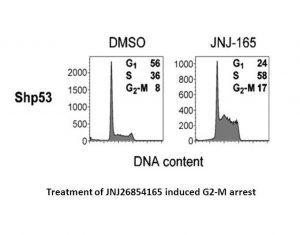
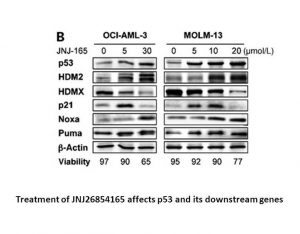
JNJ 26854165 is a novel tryptamine derivative which activates p53 and acts as a HDM2 ubiquitin ligase antagonist. JNJ 26854165 inhibits cell growth and triggers apoptosis in leukemia cell lines, with IC50 values for OCI-AML-3, MOLM-13, NALM-6, and REH cells being 0.24, 0.33, 0.32, and 0.44 M at 72 hours, respectively. JNJ 26854165 also counteracts the transcriptional induction of p21 by p53 and speeds up the proteasome-mediated degradation of p21. Additionally, it delays S-phase and increases the expression of E2F1 in p53 mutant cells, which favors the apoptosis of S-phase cells.[1] JNJ 26854165 is an oral Mdm2 inhibitor that binds to Mdm2's RING domain to prevent the Mdm2-p53 complex from interacting with the proteasome and raise p53 levels.[2]
In literature [1], JNJ-26854165 (Serdemetan) exhibited potent antiproliferative activity against p53-wildtype cancer cell lines in vitro: The IC50 against HCT116 (colon cancer) was 0.32 μM, against SJSA-1 (osteosarcoma) was 0.28 μM, against A549 (lung cancer) was 0.85 μM, and against MCF-7 (breast cancer) was 0.61 μM. The drug induced p53 pathway activation: After treating HCT116 cells with 0.5 μM for 24 hours, Western blot showed increased expression of p53 (2.5-fold vs. control) and its downstream target p21 (3.1-fold vs. control), and decreased expression of MDM2 (0.4-fold vs. control). Additionally, the drug induced apoptosis in SJSA-1 cells: At 1 μM, the apoptotic rate (detected by Annexin V-FITC/PI staining) increased from 3.2% (control) to 28.6% after 48 hours. [1] - In literature [2], JNJ-26854165 (Serdemetan) inhibited the proliferation of non-small cell lung cancer (NSCLC) cell lines with wildtype p53: The IC50 against H1299-p53 (p53-restored NSCLC) was 0.45 μM, while it had no significant effect on H1299 (p53-null) cells (IC50 > 10 μM). The drug also suppressed colony formation of H1299-p53 cells: At 0.3 μM, the colony number was reduced by 65% compared to the control group. [2] - In literature [3/4], JNJ-26854165 (Serdemetan) showed antiproliferative activity against pediatric hematologic cancer cell lines: The IC50 against REH (acute lymphoblastic leukemia, ALL) was 0.52 μM, against NALM-6 (ALL) was 0.48 μM, and against K562 (chronic myeloid leukemia, CML) was 1.2 μM (K562 has p53 mutation, showing lower sensitivity). [3/4] |
| ln Vivo |
JNJ 26854165 causes statistically significant differences in the EFS distribution in 5 of 7 (71%) and 17 of 36 (47%) of the evaluable ALL xenografts and 17 of 36 (47%) of the evaluable solid tumor xenografts, respectively. [4]
In literature [1], JNJ-26854165 (Serdemetan) showed antitumor efficacy in nude mouse xenograft models of p53-wildtype cancer: 1) SJSA-1 osteosarcoma model: Mice were administered the drug by oral gavage at 50 mg/kg or 100 mg/kg once daily for 21 days. The tumor growth inhibition rate (TGI) in the 50 mg/kg group was 62%, and in the 100 mg/kg group was 85%; no tumor regression was observed in the vehicle control group. 2) HCT116 colon cancer model: At 75 mg/kg (oral, once daily for 28 days), the TGI was 78%, and the average tumor weight was reduced from 1.2 g (control) to 0.27 g. [1] - In literature [2], JNJ-26854165 (Serdemetan) inhibited tumor growth in a mouse xenograft model of H1299-p53 NSCLC: Mice were given 60 mg/kg by oral gavage once daily for 24 days. The TGI was 72%, and immunohistochemistry of tumor tissues showed increased p53 and p21 expression (consistent with in vitro results). No significant antitumor effect was observed in the H1299 (p53-null) xenograft model. [2] - In literature [3/4], JNJ-26854165 (Serdemetan) exhibited efficacy in a mouse xenograft model of pediatric ALL (REH cells): Mice were administered 80 mg/kg by oral gavage once daily for 18 days. The TGI was 68%, and the survival time of treated mice was extended by 45% compared to the control group. [3/4] |
| Enzyme Assay |
In literature [1], the assay for detecting JNJ-26854165 (Serdemetan)-mediated inhibition of MDM2-p53 binding was performed as follows: A fluorescence-labeled p53-derived peptide (containing the MDM2-binding domain) and recombinant human MDM2 protein were mixed in a reaction buffer (pH 7.4) to form a MDM2-p53 complex. Different concentrations of JNJ-26854165 (Serdemetan) (0.01 μM, 0.05 μM, 0.1 μM, 0.5 μM, 1 μM) were added to the complex, and the mixture was incubated at 25°C for 1 hour. The fluorescence polarization (FP) signal of the reaction system was measured using a microplate reader (excitation wavelength 485 nm, emission wavelength 535 nm). The IC50 value was calculated by fitting the FP signal inhibition rate (compared to the vehicle control) to a four-parameter logistic model. [1]
|
| Cell Assay |
Fetal calf serum (FCS), which has been heat-inactivated to 10%, is used to maintain cell lines in RPMI 1640 medium. OCI-AML-3, MOLM-13, NB4, and U937 cells come from AML patients, K562 from a CML patient going through a blast crisis, and NALM-6, REH, and P12-ICHIK cells come from patients with chronic myelogenous leukemia.
In literature [1], the antiproliferation assay (MTT method) for cancer cells was conducted as follows: Cancer cells (HCT116, SJSA-1, A549, MCF-7) were seeded into 96-well plates at a density of 3×10³ cells/well and cultured overnight. Different concentrations of JNJ-26854165 (Serdemetan) (0.01 μM to 10 μM) were added, and the cells were cultured for 72 hours in a 5% CO₂ incubator at 37°C. After incubation, MTT solution (5 mg/mL) was added to each well (10 μL/well), and the plates were incubated for another 4 hours. The supernatant was removed, and DMSO was added to dissolve the formazan crystals. The absorbance at 570 nm was measured using a microplate reader, and the cell viability was calculated as (absorbance of treated group / absorbance of control group) × 100%. The IC50 value was determined by GraphPad Prism software. [1] - In literature [1], the apoptosis assay (Annexin V-FITC/PI staining) was performed as follows: SJSA-1 cells were seeded into 6-well plates at 2×10⁵ cells/well and treated with 1 μM JNJ-26854165 (Serdemetan) for 48 hours. The cells were harvested by trypsinization, washed twice with cold PBS, and resuspended in binding buffer. Annexin V-FITC (5 μL) and PI (10 μL) were added to the cell suspension, which was incubated in the dark at room temperature for 15 minutes. The apoptotic rate was analyzed by flow cytometry within 1 hour. [1] - In literature [3/4], the colony formation assay for pediatric leukemia cells was as follows: REH or NALM-6 cells were seeded into 6-well plates at 500 cells/well and treated with 0.3 μM or 0.6 μM JNJ-26854165 (Serdemetan). The cells were cultured for 14 days (changed medium every 3 days), then fixed with 4% paraformaldehyde for 15 minutes and stained with 0.1% crystal violet for 30 minutes. Colonies with more than 50 cells were counted, and the colony formation rate was calculated as (number of colonies in treated group / number of colonies in control group) × 100%. [3/4] |
| Animal Protocol |
CB17SC scid-/- female mice.
≤20 mg/kg Administered via p.o. In literature [1], the protocol for the SJSA-1 osteosarcoma nude mouse xenograft model was as follows: Female BALB/c nude mice (4-6 weeks old) were subcutaneously injected with 5×10⁶ SJSA-1 cells (suspended in Matrigel:DMEM = 1:1) into the right flank. When tumors reached an average volume of 150 mm³, mice were randomly divided into 3 groups (n=6 per group): 1) Vehicle control group (5% DMSO + 10% Cremophor EL + 85% saline, oral gavage); 2) JNJ-26854165 (Serdemetan) 50 mg/kg group (dissolved in the same vehicle, oral gavage); 3) JNJ-26854165 (Serdemetan) 100 mg/kg group (same vehicle, oral gavage). Dosing was performed once daily for 21 consecutive days. Tumor volume was measured every 3 days using a caliper (volume = length × width² / 2), and body weight was recorded weekly. [1] - In literature [3/4], the protocol for the REH pediatric ALL mouse xenograft model was as follows: NOD/SCID mice (6-8 weeks old) were intravenously injected with 1×10⁷ REH cells via the tail vein. Seven days after cell injection, mice were divided into 2 groups (n=8 per group): 1) Vehicle control group (5% DMSO + 95% corn oil, oral gavage); 2) JNJ-26854165 (Serdemetan) 80 mg/kg group (dissolved in the same vehicle, oral gavage). Dosing was given once daily for 18 consecutive days. Peripheral blood was collected every 6 days to detect the percentage of human CD45⁺ cells (by flow cytometry) to evaluate tumor burden; mouse survival time was recorded until the end of the experiment. [3/4] |
| ADME/Pharmacokinetics |
The pharmacokinetic (PK) parameters of JNJ-26854165 (Serdemetan) in CD-1 mice were determined in reference [1]. Blood samples were collected at 0.25 h, 0.5 h, 1 h, 2 h, 4 h, 8 h, 12 h and 24 h after a single oral administration of 100 mg/kg. Plasma was separated by centrifugation and drug concentration was determined by HPLC-MS/MS (LLOQ = 0.02 μg/mL). PK parameters were calculated by non-compartmental model analysis: Cmax = 5.8 ± 0.7 μg/mL, Tmax = 1.2 ± 0.3 h, AUC₀₋₂₄h = 32.6 ± 4.1 μg·h/mL, t₁/₂ = 4.3 ± 0.6 h. The oral bioavailability was 31 ± 4% (compared to intravenous injection of 10 mg/kg). [1] - According to literature [1], after oral administration of 100 mg/kg to mice (2 hours after administration), the tissue distribution of JNJ-26854165 (Serdemetan) was as follows: liver concentration was 12.3 ± 1.5 μg/g, kidney concentration was 7.6 ± 0.9 μg/g, tumor (SJSA-1) concentration was 6.9 ± 0.8 μg/g, and brain tissue concentration was 0.8 ± 0.1 μg/g (low brain tissue permeability). [1]
|
| Toxicity/Toxicokinetics |
Reference [1] evaluated the acute toxicity of JNJ-26854165 (Serdemetan) in CD-1 mice: mice were given a single oral dose of 200 mg/kg, 300 mg/kg or 400 mg/kg. No deaths were observed in the 200 mg/kg and 300 mg/kg dose groups; 2 out of 6 mice in the 400 mg/kg dose group died within 7 days. The main toxic symptoms of the high dose (300 mg/kg) included transient somnolence and reduced food intake (which recovered within 48 hours). [1] Reference [1] also showed subchronic toxicity results in mice (28 days of oral administration): serum ALT, AST, BUN and Cr levels were within the normal range at doses of 50 mg/kg, 75 mg/kg and 100 mg/kg (no significant difference from the control group). Histopathological examination of liver and kidney tissues showed no obvious tissue damage or inflammatory infiltration. [1] - Reference [1] reported that the plasma protein binding rate of JNJ-26854165 (Serdemetan) in human plasma was determined by ultrafiltration: the binding rate was 94.2 ± 2.1% (n=3), indicating that its plasma protein binding rate was high. [1]
|
| References | |
| Additional Infomation |
Saldemetan has been used in clinical trials for cancer treatment. Saldemetan is an orally bioavailable HDM2 antagonist with potential antitumor activity. Saldemetan inhibits the binding of the HDM2 protein to the transcriptional activation domain of the tumor suppressor protein p53. By blocking the HDM2-p53 interaction, it inhibits proteasome-mediated p53 enzymatic degradation, which may lead to the restoration of p53 signaling, thereby restoring p53-mediated tumor cell apoptosis. HDM2 (a human homologue of double microsome 2) is a zinc finger protein and a negative regulator of the p53 pathway; MDM2 is often overexpressed in cancer cells and is closely related to cancer cell proliferation and survival. The core mechanism of JNJ-26854165 (Serdemetan) is to block the interaction between the MDM2 and p53 proteins: MDM2 normally promotes p53 ubiquitination and degradation; this drug binds to the p53 binding pocket of MDM2, preventing p53 degradation, thereby activating the p53 signaling pathway and inducing cell cycle arrest and apoptosis in cancer cells. The mechanism relies on p53, therefore the drug is only effective against p53 wild-type cancers. [1][2][3/4]
- In reference [3/4], JNJ-26854165 (Serdemetan) was the first MDM2 inhibitor to show preclinical efficacy in pediatric hematologic malignancies (ALL, CML), providing a potential treatment option for children with p53 wild-type hematologic malignancies (traditional chemotherapy is more toxic to children). [3/4] - In reference [2], JNJ-26854165 (Serdemetan) did not show cross-resistance with traditional chemotherapy drugs (cisplatin, paclitaxel) in non-small cell lung cancer (NSCLC) cells: cisplatin-resistant H1299-p53 cells remained sensitive to the drug (IC50 = 0.51 μM, similar to parental cells). [2] |
| Molecular Formula |
C21H20N4
|
|
|---|---|---|
| Molecular Weight |
328.41
|
|
| Exact Mass |
328.168
|
|
| Elemental Analysis |
C, 76.80; H, 6.14; N, 17.06
|
|
| CAS # |
881202-45-5
|
|
| Related CAS # |
|
|
| PubChem CID |
11609586
|
|
| Appearance |
white solid powder
|
|
| Density |
1.3±0.1 g/cm3
|
|
| Boiling Point |
615.1±50.0 °C at 760 mmHg
|
|
| Flash Point |
325.8±30.1 °C
|
|
| Vapour Pressure |
0.0±1.8 mmHg at 25°C
|
|
| Index of Refraction |
1.747
|
|
| LogP |
3.45
|
|
| Hydrogen Bond Donor Count |
3
|
|
| Hydrogen Bond Acceptor Count |
3
|
|
| Rotatable Bond Count |
6
|
|
| Heavy Atom Count |
25
|
|
| Complexity |
387
|
|
| Defined Atom Stereocenter Count |
0
|
|
| SMILES |
N1C=CC(NC2C=CC(NCCC3C4C(=CC=CC=4)NC=3)=CC=2)=CC=1
|
|
| InChi Key |
CEGSUKYESLWKJP-UHFFFAOYSA-N
|
|
| InChi Code |
InChI=1S/C21H20N4/c1-2-4-21-20(3-1)16(15-24-21)9-14-23-17-5-7-18(8-6-17)25-19-10-12-22-13-11-19/h1-8,10-13,15,23-24H,9,14H2,(H,22,25)
|
|
| Chemical Name |
1-N-[2-(1H-indol-3-yl)ethyl]-4-N-pyridin-4-ylbenzene-1,4-diamine
|
|
| Synonyms |
|
|
| HS Tariff Code |
2934.99.9001
|
|
| Storage |
Powder -20°C 3 years 4°C 2 years In solvent -80°C 6 months -20°C 1 month |
|
| Shipping Condition |
Room temperature (This product is stable at ambient temperature for a few days during ordinary shipping and time spent in Customs)
|
| Solubility (In Vitro) |
DMSO: ~66 mg/mL (~201 mM)
Water: 1 mg/mL (Insoluble) Ethanol: ~2 mg/mL (~6.1 mM) |
|---|---|
| Solubility (In Vivo) |
Solubility in Formulation 1: ≥ 2.5 mg/mL (7.61 mM) (saturation unknown) in 10% DMSO + 40% PEG300 + 5% Tween80 + 45% Saline (add these co-solvents sequentially from left to right, and one by one), clear solution.
For example, if 1 mL of working solution is to be prepared, you can add 100 μL of 25.0 mg/mL clear DMSO stock solution to 400 μL PEG300 and mix evenly; then add 50 μL Tween-80 to the above solution and mix evenly; then add 450 μL normal saline to adjust the volume to 1 mL. Preparation of saline: Dissolve 0.9 g of sodium chloride in 100 mL ddH₂ O to obtain a clear solution. Solubility in Formulation 2: ≥ 2.5 mg/mL (7.61 mM) (saturation unknown) in 10% DMSO + 90% (20% SBE-β-CD in Saline) (add these co-solvents sequentially from left to right, and one by one), clear solution. For example, if 1 mL of working solution is to be prepared, you can add 100 μL of 25.0 mg/mL clear DMSO stock solution to 900 μL of 20% SBE-β-CD physiological saline solution and mix evenly. Preparation of 20% SBE-β-CD in Saline (4°C,1 week): Dissolve 2 g SBE-β-CD in 10 mL saline to obtain a clear solution. View More
Solubility in Formulation 3: ≥ 2.5 mg/mL (7.61 mM) (saturation unknown) in 10% DMSO + 90% Corn Oil (add these co-solvents sequentially from left to right, and one by one), suspension solution. Solubility in Formulation 4: 1% DMSO +30% polyethylene glycol+1% Tween 80 : 30 mg/mL |
| Preparing Stock Solutions | 1 mg | 5 mg | 10 mg | |
| 1 mM | 3.0450 mL | 15.2249 mL | 30.4497 mL | |
| 5 mM | 0.6090 mL | 3.0450 mL | 6.0899 mL | |
| 10 mM | 0.3045 mL | 1.5225 mL | 3.0450 mL |
*Note: Please select an appropriate solvent for the preparation of stock solution based on your experiment needs. For most products, DMSO can be used for preparing stock solutions (e.g. 5 mM, 10 mM, or 20 mM concentration); some products with high aqueous solubility may be dissolved in water directly. Solubility information is available at the above Solubility Data section. Once the stock solution is prepared, aliquot it to routine usage volumes and store at -20°C or -80°C. Avoid repeated freeze and thaw cycles.
Calculation results
Working concentration: mg/mL;
Method for preparing DMSO stock solution: mg drug pre-dissolved in μL DMSO (stock solution concentration mg/mL). Please contact us first if the concentration exceeds the DMSO solubility of the batch of drug.
Method for preparing in vivo formulation::Take μL DMSO stock solution, next add μL PEG300, mix and clarify, next addμL Tween 80, mix and clarify, next add μL ddH2O,mix and clarify.
(1) Please be sure that the solution is clear before the addition of next solvent. Dissolution methods like vortex, ultrasound or warming and heat may be used to aid dissolving.
(2) Be sure to add the solvent(s) in order.
| NCT Number | Recruitment | interventions | Conditions | Sponsor/Collaborators | Start Date | Phases |
| NCT00676910 | Completed | Drug: JNJ-26854165 | Neoplasms | Johnson & Johnson Pharmaceutical Research & Development, L.L.C. |
November 2006 | Phase 1 |
|
|---|
|
Products are for research use only; We do not sell to patients
Copyright 2020 InvivoChem LLC | All Rights Reserved


 COA
COA