| Size | Price | Stock | Qty |
|---|---|---|---|
| 1mg |
|
||
| 5mg |
|
||
| 10mg |
|
||
| 100mg |
|
||
| 250mg | |||
| Other Sizes |


| Targets |
JC124 primarily targets the NLRP3 inflammasome. It inhibits the activation of the NLRP3 complex, preventing the cleavage and activation of caspase-1, which is required for the processing of pro-IL-1β and pro-IL-18 into their active forms. By blocking this pathway, JC124 reduces the production of mature IL-1β and IL-18, thereby dampening the inflammatory response. Specific binding data and IC50 values are not detailed in the provided search results.
|
|---|---|
| ln Vitro |
It has been demonstrated that JC124 can specifically prevent the production of NLRP3 inflammasomes, activate caspase-1, and lower IL-1β in vitro[1].
In vitro, JC124 inhibits NLRP3 inflammasome activation in macrophages and other immune cells. It reduces the production of IL-1β and IL-18 in response to NLRP3 agonists such as ATP, nigericin, and monosodium urate crystals. The compound demonstrates dose-dependent inhibition of caspase-1 activation and IL-1β secretion. Specific IC50 values are not detailed in the provided search results. JC124 also reduces pyroptosis, a form of inflammatory cell death. |
| ln Vivo |
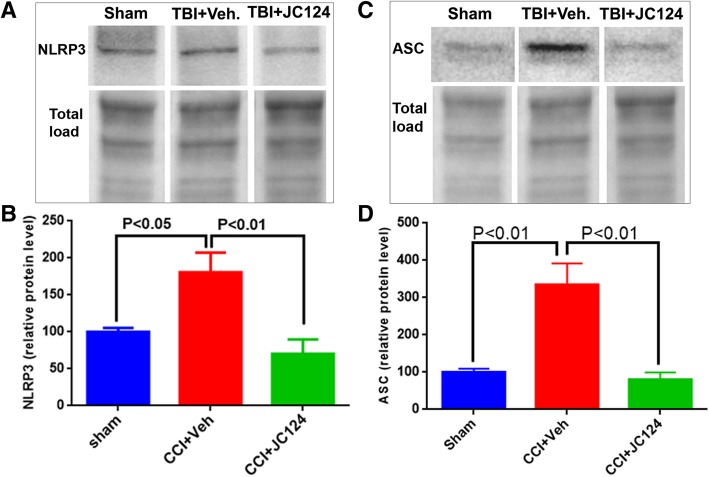
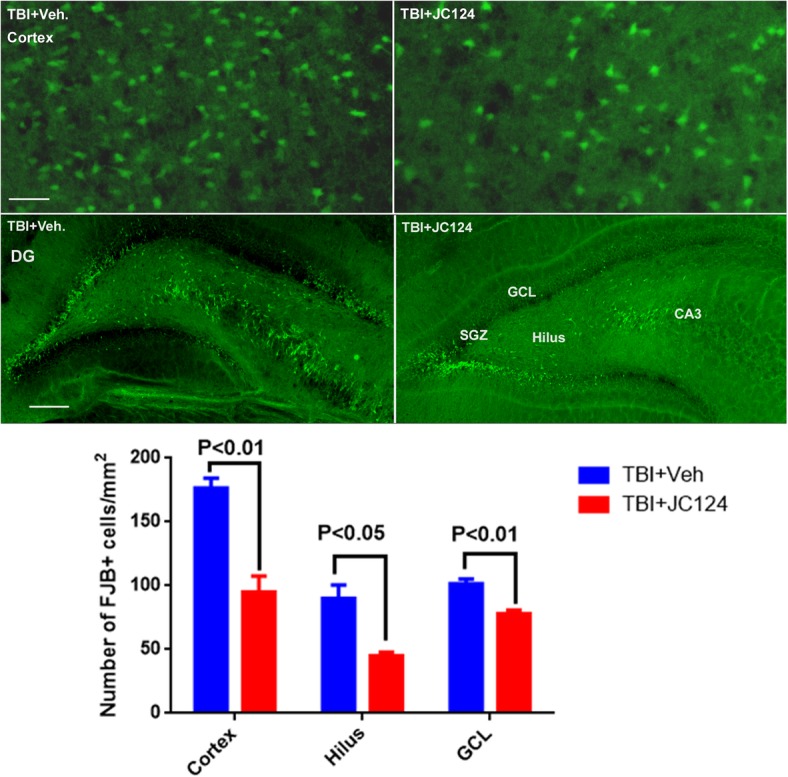
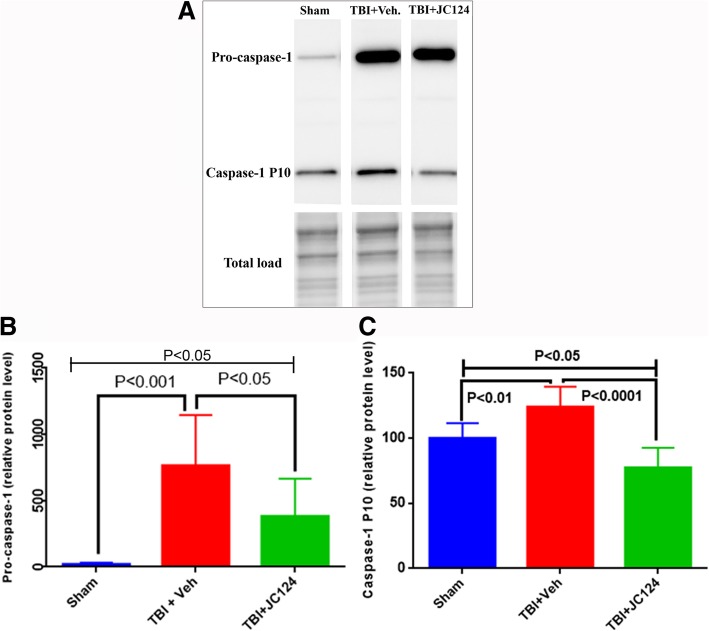
Injury-induced deteriorated neuronal numbers, inflammatory cell responses in injured brain, and cortical lesion volume were all significantly reduced by JC124 (100 mg/kg; i.p.; 4 doses; 30 minutes post-injury, 6, 24, and 30 hours post-TBI) treatment. The protein expression levels of NLRP3, ASC, IL-1 beta, TNFα, iNOS, and caspase-1 are similarly markedly decreased by JC124 [1].
In vivo, JC124 has been studied in animal models of inflammatory diseases. In Alzheimer's disease models, JC124 reduces neuroinflammation and improves cognitive function. In atherosclerosis models, it reduces plaque formation and inflammation. In gout models, it reduces joint inflammation and pain. These effects are attributed to the compound's ability to inhibit NLRP3 inflammasome activation and reduce IL-1β and IL-18 production. |
| Enzyme Assay |
The in vitro activity of JC124 is assessed using cell-based NLRP3 inflammasome assays. Macrophages (e.g., primary bone marrow-derived macrophages or THP-1 cells) are primed with LPS and then treated with varying concentrations of JC124 (typically 0.1-100 μM) before stimulation with NLRP3 activators (ATP, nigericin, MSU crystals). IL-1β and IL-18 levels in the culture medium are measured by ELISA. Caspase-1 activity is measured using a fluorogenic substrate (e.g., Ac-YVAD-AMC). Cell viability is assessed using standard assays.
|
| Cell Assay |
For cellular assays, THP-1 human monocytic cells or primary macrophages are cultured in appropriate media and differentiated as required. Cells are primed with LPS (100 ng/mL) for 3-4 hours, then treated with JC124 for 30-60 minutes, followed by stimulation with NLRP3 activators (ATP 5 mM, nigericin 10 μM, or MSU crystals 200 μg/mL) for 30-60 minutes. IL-1β levels in the supernatant are measured by ELISA. Cell lysates are analyzed for caspase-1 cleavage by Western blotting.
|
| Animal Protocol |
Animal/Disease Models: Adult male SD (SD (Sprague-Dawley)) rats (3-4 months old) with traumatic brain injury (TBI) [1]
Doses: 100 mg/kg Route of Administration: intraperitoneal (ip) injection; 4 doses; 30 days after injury Minutes, 6, 24, and 30 hrs (hrs (hours)) after TBI Experimental Results: Significant reduction in the number of injury-induced degenerated neurons, inflammatory cell responses in the injured brain, and cortical lesion volume. In vivo, JC124 is typically administered orally or intraperitoneally to animal models. In Alzheimer's disease models (APP/PS1 transgenic mice), JC124 is administered at doses ranging from 10-50 mg/kg daily for several weeks, and cognitive function is assessed by behavioral tests. In atherosclerosis models (ApoE-/- mice), the compound is administered, and plaque formation is assessed by histological analysis. In gout models, JC124 is administered, and joint inflammation is assessed by measuring paw swelling and inflammatory cell infiltration. |
| ADME/Pharmacokinetics |
JC124 has a specific molecular weight and formula, though detailed physicochemical properties are not provided in the search results. The compound is soluble in DMSO and should be stored at -20°C under appropriate conditions to maintain stability. Pharmacokinetic parameters such as bioavailability, half-life, and tissue distribution are not detailed in the provided search results.
|
| Toxicity/Toxicokinetics |
Specific toxicity data for JC124 is not available in the provided search results. As an NLRP3 inflammasome inhibitor, it may affect the innate immune response and potentially increase susceptibility to infections. The compound has been studied in animal models and appears to be well-tolerated at therapeutic doses. Comprehensive toxicological studies are required to establish its full safety profile for potential therapeutic applications.
|
| References | |
| Additional Infomation |
JC124 is a research compound that has been developed as a selective inhibitor of the NLRP3 inflammasome. The NLRP3 inflammasome is a critical mediator of inflammation in various diseases, including Alzheimer's disease, atherosclerosis, gout, and type 2 diabetes. By inhibiting this pathway, JC124 has shown promise in preclinical models of these diseases. The compound is not approved for clinical use and is intended for research purposes only. It is available from chemical suppliers for research applications.
|
| Molecular Formula |
C17H19CLN2O4S
|
|---|---|
| Molecular Weight |
382.861762285233
|
| Exact Mass |
382.075
|
| Elemental Analysis |
C, 53.33; H, 5.00; Cl, 9.26; N, 7.32; O, 16.72; S, 8.37
|
| CAS # |
1638611-48-9
|
| Related CAS # |
1638611-48-9;
|
| PubChem CID |
117715670
|
| Appearance |
Light yellow to yellow solid powder
|
| LogP |
2.8
|
| Hydrogen Bond Donor Count |
2
|
| Hydrogen Bond Acceptor Count |
5
|
| Rotatable Bond Count |
7
|
| Heavy Atom Count |
25
|
| Complexity |
529
|
| Defined Atom Stereocenter Count |
0
|
| SMILES |
CNS(=O)(=O)C1=CC=C(C=C1)CCNC(=O)C2=C(C=CC(=C2)Cl)OC
|
| InChi Key |
LXYPQRJNQPYTQW-UHFFFAOYSA-N
|
| InChi Code |
InChI=1S/C17H19ClN2O4S/c1-19-25(22,23)14-6-3-12(4-7-14)9-10-20-17(21)15-11-13(18)5-8-16(15)24-2/h3-8,11,19H,9-10H2,1-2H3,(H,20,21)
|
| Chemical Name |
5-chloro-2-methoxy-N-[2-[4-(methylsulfamoyl)phenyl]ethyl]benzamide
|
| Synonyms |
JC 124; JC-124; JC124
|
| HS Tariff Code |
2934.99.9001
|
| Storage |
Powder -20°C 3 years 4°C 2 years In solvent -80°C 6 months -20°C 1 month |
| Shipping Condition |
Room temperature (This product is stable at ambient temperature for a few days during ordinary shipping and time spent in Customs)
|
| Solubility (In Vitro) |
DMSO : ~250 mg/mL (~652.98 mM)
|
|---|---|
| Solubility (In Vivo) |
Solubility in Formulation 1: ≥ 2.08 mg/mL (5.43 mM) (saturation unknown) in 10% DMSO + 40% PEG300 + 5% Tween80 + 45% Saline (add these co-solvents sequentially from left to right, and one by one), clear solution.
For example, if 1 mL of working solution is to be prepared, you can add 100 μL of 20.8 mg/mL clear DMSO stock solution to 400 μL PEG300 and mix evenly; then add 50 μL Tween-80 to the above solution and mix evenly; then add 450 μL normal saline to adjust the volume to 1 mL. Preparation of saline: Dissolve 0.9 g of sodium chloride in 100 mL ddH₂ O to obtain a clear solution. Solubility in Formulation 2: 2.08 mg/mL (5.43 mM) in 10% DMSO + 90% (20% SBE-β-CD in Saline) (add these co-solvents sequentially from left to right, and one by one), suspension solution; with ultrasonication. For example, if 1 mL of working solution is to be prepared, you can add 100 μL of 20.8 mg/mL clear DMSO stock solution to 900 μL of 20% SBE-β-CD physiological saline solution and mix evenly. Preparation of 20% SBE-β-CD in Saline (4°C,1 week): Dissolve 2 g SBE-β-CD in 10 mL saline to obtain a clear solution. View More
Solubility in Formulation 3: ≥ 2.08 mg/mL (5.43 mM) (saturation unknown) in 10% DMSO + 90% Corn Oil (add these co-solvents sequentially from left to right, and one by one), clear solution. |
| Preparing Stock Solutions | 1 mg | 5 mg | 10 mg | |
| 1 mM | 2.6119 mL | 13.0596 mL | 26.1192 mL | |
| 5 mM | 0.5224 mL | 2.6119 mL | 5.2238 mL | |
| 10 mM | 0.2612 mL | 1.3060 mL | 2.6119 mL |
*Note: Please select an appropriate solvent for the preparation of stock solution based on your experiment needs. For most products, DMSO can be used for preparing stock solutions (e.g. 5 mM, 10 mM, or 20 mM concentration); some products with high aqueous solubility may be dissolved in water directly. Solubility information is available at the above Solubility Data section. Once the stock solution is prepared, aliquot it to routine usage volumes and store at -20°C or -80°C. Avoid repeated freeze and thaw cycles.
Calculation results
Working concentration: mg/mL;
Method for preparing DMSO stock solution: mg drug pre-dissolved in μL DMSO (stock solution concentration mg/mL). Please contact us first if the concentration exceeds the DMSO solubility of the batch of drug.
Method for preparing in vivo formulation::Take μL DMSO stock solution, next add μL PEG300, mix and clarify, next addμL Tween 80, mix and clarify, next add μL ddH2O,mix and clarify.
(1) Please be sure that the solution is clear before the addition of next solvent. Dissolution methods like vortex, ultrasound or warming and heat may be used to aid dissolving.
(2) Be sure to add the solvent(s) in order.
|
|
|
Products are for research use only; We do not sell to patients
Copyright 2020 InvivoChem LLC | All Rights Reserved