| Size | Price | Stock | Qty |
|---|---|---|---|
| 5mg |
|
||
| 10mg |
|
||
| 25mg |
|
||
| 50mg |
|
||
| 100mg |
|
||
| 250mg |
|
||
| Other Sizes |


Purity: ≥98%
| Targets |
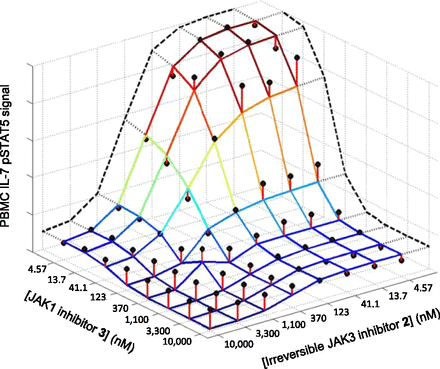
JAK3-IN-6 (Compound 2) is a powerful JAK3 inhibitor with a concentration of 0.15 nM. In an enzymatic assay, it demonstrates a 4300-fold greater selectivity for JAK3 than JAK1, meaning that it is 67-fold (IL-2 vs. IL-6) or 140-fold (IL-2 vs. EPO or GMCSF) selective in cell reporter gene assays and >35-fold (IL-7 vs. IL-6 or GMCSF) in human PBMC assays. In order to ascertain whether there is an additive or synergistic effect of synergy, JAK3-IN-6 was cross-titrated with JAK1 selective inhibitor 3 (JAK1: 0.96 nM, JAK2: 14 nM, JAK3: >1500 nM, TYK2: 10 nM). This cross-titration was irreversible. shows that the predicted pSTAT5 inhibition levels based on the addition of JAK1 and JAK3 inhibition are very close to the measured effects of cross-titration of each compound, indicating that inhibition of JAK1 and JAK3 is Blocking STAT5 phosphorylation has additive but not synergistic effects. Inhibits the JAK1 and JAK3 enzymes that inhibit IL-7 signaling in CD3+, CD4+ PBMC. Furthermore, JAK1 or JAK3 inhibition on its own is adequate to totally block pSTAT5 [2].
|
|---|---|
| ln Vitro |
JAK3-IN-6 (Compound 2) is a powerful JAK3 inhibitor with a concentration of 0.15 nM. In an enzymatic assay, it demonstrates a 4300-fold greater selectivity for JAK3 than JAK1, meaning that it is 67-fold (IL-2 vs. IL-6) or 140-fold (IL-2 vs. EPO or GMCSF) selective in cell reporter gene assays and >35-fold (IL-7 vs. IL-6 or GMCSF) in human PBMC assays. In order to ascertain whether there is an additive or synergistic effect of synergy, JAK3-IN-6 was cross-titrated with JAK1 selective inhibitor 3 (JAK1: 0.96 nM, JAK2: 14 nM, JAK3: >1500 nM, TYK2: 10 nM). This cross-titration was irreversible. shows that the predicted pSTAT5 inhibition levels based on the addition of JAK1 and JAK3 inhibition are very close to the measured effects of cross-titration of each compound, indicating that inhibition of JAK1 and JAK3 is Blocking STAT5 phosphorylation has additive but not synergistic effects. Inhibits the JAK1 and JAK3 enzymes that inhibit IL-7 signaling in CD3+, CD4+ PBMC. Furthermore, JAK1 or JAK3 inhibition on its own is adequate to totally block pSTAT5 [2].
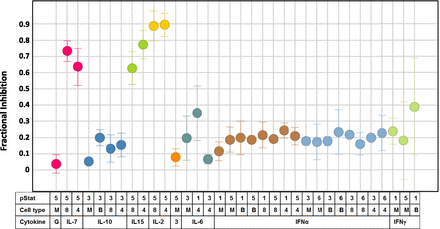
In single JAK isozyme PathHunter cellular assays (engineered to signal via a specific JAK), JAK3-IN-6 inhibited JAK2/3 chimeric signaling with an IC50 of 380 nM, showing 80-fold selectivity over JAK1 (IC50 = 50,000 nM) and >130-fold selectivity over JAK2 (IC50 >50,000 nM).[2] In cytokine reporter (Cellsensor) assays, JAK3-IN-6 inhibited IL-2 (JAK1/JAK3) signaling with an IC50 of 70 nM. It showed 67-fold selectivity over IL-6 (JAK1/JAK2) signaling (IC50 = 4710 nM) and >140-fold selectivity over GMCSF (JAK2) and EPO (JAK2) signaling (IC50 >10,000 nM).[2] In human PBMC flow cytometry assays, JAK3-IN-6 inhibited IL-7-induced pSTAT5 in CD3+, CD4+ T cells with an IC50 of 280 nM. It showed >35-fold selectivity, as it did not potently inhibit IL-6-induced pSTAT3 (IC50 >9967 nM) and weakly inhibited GMCSF-induced pSTAT5 in CD14+ monocytes (IC50 = 9600 nM).[2] In a multiplexed human whole blood flow cytometry assay assessing inhibition of 9 cytokines across 4 cell types, JAK3-IN-6 (at its IC50 concentration for IL-7/pSTAT5) selectively inhibited signaling by IL-2, IL-7, and IL-15 (common gamma chain cytokines using JAK1/JAK3) in T cells, but did not inhibit signaling by GMCSF, IL-3, IL-6, IL-10, IFNα, or IFNγ in monocytes or other cell types.[2] JAK3-IN-6 inhibited IL-7-induced pSTAT5 in rat whole blood with an IC50 of 1300 nM, but did not inhibit IL-6-induced pSTAT3 or GMCSF-induced pSTAT5 (IC50 >20,000 nM).[2] A cross-titration experiment of JAK3-IN-6 with a JAK1-selective inhibitor in human PBMCs stimulated with IL-7 showed that inhibition of either JAK1 or JAK3 alone was sufficient to fully inhibit STAT5 phosphorylation, and their effects were additive, not synergistic.[2] In an EPO-dependent proliferation assay using human CD34+ derived pre-erythroid cells, JAK3-IN-6 did not inhibit proliferation (IC50 >10,000 nM), confirming its selectivity over JAK2 signaling.[2] A cycloheximide chase assay in human CD4+ T cells determined the half-life (τ½) of JAK3 protein to be approximately 14.8 hours under normal serum conditions, and faster (9.0 hours) under serum-starved conditions. The presence of 1 μM JAK3-IN-6 did not alter the JAK3 protein half-life.[2] |
| ln Vivo |
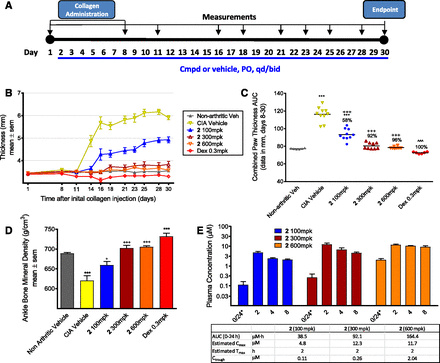
In a prophylactic rat collagen-induced arthritis (CIA) model, oral administration of JAK3-IN-6 (100, 300, 600 mg/kg, QD from day 2) dose-dependently inhibited paw swelling (58%, 92%, and 96% reduction in AUC respectively) and completely prevented bone mineral density loss in ankles at the 300 and 600 mg/kg doses. Efficacy correlated with time-weighted average (TWA) inhibition of IL-7/pSTAT5 signaling in blood (51%, 70%, and 80% TWA inhibition, respectively).[2]
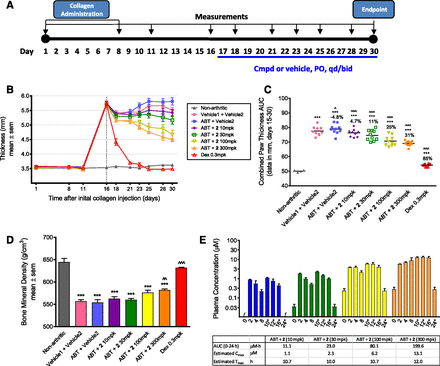
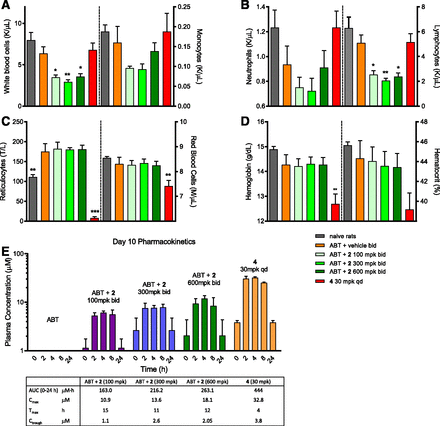
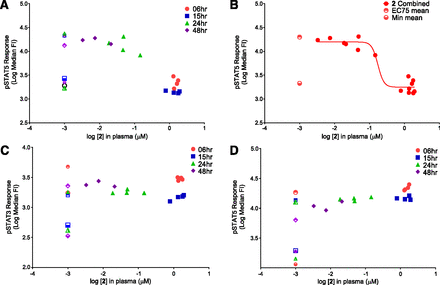
In a therapeutic rat CIA model (dosing started on day 17 after inflammation was established), co-administration of JAK3-IN-6 with a cytochrome P450 inhibitor (ABT) to increase exposure resulted in partial efficacy. At 300 mg/kg BID (achieving high plasma exposure), it produced 31% inhibition of paw swelling and a small but significant inhibition of bone loss.[2] In a 10-day rat study, JAK3-IN-6 (co-dosed with ABT at 100, 300, 600 mg/kg BID) significantly reduced total white blood cell and lymphocyte counts, but did not affect monocyte or neutrophil counts. It did not reduce reticulocyte counts, red blood cell counts, hemoglobin, or hematocrit, even at the highest dose, confirming selective inhibition of JAK3 (affecting lymphocytes) over JAK2 (sparing erythropoiesis).[2] An ex vivo PK/PD study in rats showed that after a single 300 mg/kg dose of JAK3-IN-6, inhibition of IL-7-induced pSTAT5 in blood persisted (17% inhibition) even 48 hours post-dose when plasma concentration was low (11 nM), indicating a modest extended pharmacodynamic effect. The ex vivo IC50 (0.17 μM) was 7.6-fold lower than the corresponding in vitro IC50.[2] |
| Enzyme Assay |
The potency (IC50) of compounds against JAK isozymes was determined using an HTRF (Homogeneous Time-Resolved Fluorescence) assay. Test compounds were serially diluted in DMSO and added to assay plates. A solution containing the specific JAK enzyme (e.g., 155 pM JAK3) and a biotinylated peptide substrate was added, followed by a preincubation period. The kinase reaction was initiated by adding ATP at a concentration near the enzyme's Km (e.g., 29.0 μM for JAK3). After a 120-minute incubation, the reaction was quenched with a detection buffer containing EDTA, a europium-labeled anti-phosphotyrosine antibody, and streptavidin-dylight. After a further incubation, the plate was read on a plate reader using TR-FRET detection (excitation 320 nm, emission ratio 665/615 nm). Percent inhibition was calculated relative to uninhibited controls, and IC50 values were determined by curve fitting.[2]
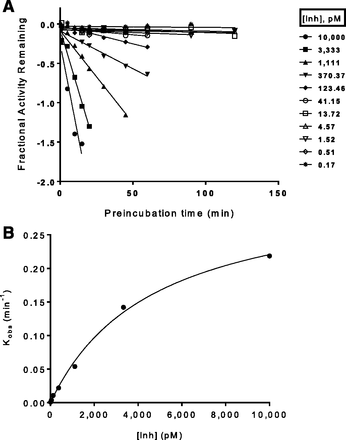
The kinetic parameters for irreversible inhibition (kinact, KI) of JAK3 by JAK3-IN-6 were determined using a time-dependent HTRF assay. The compound was preincubated with JAK3 enzyme for varying times. Reactions were then initiated by transferring the preincubation mixture to wells containing ATP and peptide substrate. After a short reaction period, samples were quenched and read as above. The observed rate constant (kobs) of enzyme inactivation at each inhibitor concentration was determined from the slope of fractional activity remaining vs. preincubation time. The kinact and KI were obtained by plotting kobs versus inhibitor concentration.[2] Reversibility of inhibition was assessed using a jump-dilution HTRF assay. JAK3-IN-6 was preincubated with JAK3 at a high concentration, then the mixture was diluted 100-fold into a reaction mix containing ATP and substrate. Enzyme activity was monitored over time. No recovery of JAK3 activity was observed for over 3 hours post-dilution, confirming irreversible binding.[2] |
| Cell Assay |
Single JAK isozyme cellular activity was assessed using PathHunter β-galactosidase enzyme fragment complementation assays. Engineered U2OS cells expressing full-length JAK1, JAK2, or a JAK2/3 chimera (containing JAK3's functional domains including the ATP pocket) fused to complementary fragments of β-gal were plated. Compounds were added, followed by stimulation with prolactin to activate the pathway. Functional β-gal formed upon pathway activation, and its activity was measured via chemiluminescence after adding detection reagent. Inhibition of signaling by the compound was quantified as IC50.[2]
Cytokine pathway inhibition was measured using Cellsensor reporter gene assays. Cells (e.g., CTLL-2 for IL-2/STAT5, TF-1 for GMCSF or EPO/STAT5, ME180 for IL-6/STAT3) stably expressing a β-lactamase reporter gene under the control of specific STAT response elements were used. Cells were treated with compound, stimulated with the respective cytokine (e.g., IL-2, GMCSF, IL-6), and reporter gene activity was measured to determine compound IC50 for pathway inhibition.[2] Inhibition of STAT phosphorylation in primary human cells was measured by phospho-flow cytometry. Human PBMCs or whole blood were treated with serially diluted compounds, then stimulated with specific cytokines (e.g., IL-7, IL-6, GMCSF). Cells were fixed, permeabilized, and stained with fluorophore-conjugated antibodies against cell surface markers (CD3, CD4, CD14, etc.) and phosphorylated STATs (pSTAT5, pSTAT3). Cells were analyzed by flow cytometry, and the median fluorescence intensity (MFI) of pSTAT in specific cell subsets (e.g., CD3+CD4+ T cells) was used to generate dose-response curves and calculate IC50 values.[2] For the EPO proliferation assay, human CD34+ cells were differentiated into pre-erythroid cells. These cells were then plated with serially diluted compounds in medium with or without EPO. After 4 days, cell viability/proliferation was quantified using a fluorescent resazurin-based dye (PrestoBlue). The effect of compounds on EPO-dependent proliferation was calculated.[2] The IL-6 induced MCP-1 secretion assay used human PBMCs. Cells were treated with compounds, stimulated with IL-6 for 24 hours, and the level of secreted MCP-1 in the supernatant was measured using an electrochemiluminescence-based immunoassay kit.[2] |
| Animal Protocol |
For the prophylactic rat Collagen-Induced Arthritis (CIA) model, female Lewis rats (7-8 weeks old) were immunized with bovine type II collagen in incomplete Freund's adjuvant at the base of the tail on day 1 and received a booster on day 8. Starting on day 2, rats were orally administered JAK3-IN-6 (suspended in 10% Tween 80) or vehicle daily (QD) until day 30. Paw thickness was measured periodically. On days 29-30, blood was collected for PK analysis. At the end (day 30), animals were euthanized, hindlimbs collected for micro-CT analysis of bone mineral density, and blood collected for clinical chemistry/hematology.[2]
For the therapeutic rat CIA model, arthritis was induced as above. Dosing with JAK3-IN-6 began on day 17, after paw swelling was established. To increase compound exposure, JAK3-IN-6 (suspended in 10% Tween 80) was co-administered orally with the non-specific cytochrome P450 inhibitor 1-aminobenzotriazole (ABT, administered at 10 mg/kg PO). Dosing continued BID or as specified until day 30. Paw measurements, PK sampling, and terminal analyses were performed similarly.[2] In the 10-day rat hematopoiesis study, female Lewis rats were dosed for 10 days. ABT (or vehicle) was administered PO in the afternoon of day 1. From days 2-11, ABT (10 mg/kg QD) was administered in the morning, immediately followed by JAK3-IN-6 (at 100, 300, or 600 mg/kg) or vehicle PO. An additional dose of compound or vehicle was given in the afternoon. On days 10 and 11, blood was collected at various times for PK, hematology (complete blood count), and clinical chemistry analysis.[2] For the ex vivo PK/PD study, Lewis rats were dosed with a single oral dose of JAK3-IN-6 (300 mg/kg). Groups of rats were sacrificed at 6, 15, 24, and 48 hours post-dose. Blood was collected for plasma PK analysis and for ex vivo flow cytometry assays. In the ex vivo assay, whole blood was stimulated with IL-7, IL-6, or GMCSF, and pSTAT levels in specific cell subsets were measured to assess pathway inhibition relative to plasma drug concentrations.[2] |
| ADME/Pharmacokinetics |
In a prophylactic rat CIA study, JAK3-IN-6 was administered orally once daily at doses of 100, 300, and 600 mg/kg, with AUC(0-24h) values of 38.5, 92.1, and 164.4 μM·h, respectively. The estimated Cmax values were 4.8, 12.3, and 11.7 μM, respectively. The Tmax was approximately 2 hours. The 24-hour trough concentrations were 0.11, 0.26, and 2.04 μM, respectively. [2] In a therapeutic rat CIA study, JAK3-IN-6 was co-administered with ABT, which increased the exposure to the compound. At doses of 10, 30, 100, and 300 mg/kg (co-administered with ABT), the AUC(0-24h) values were 11.1, 23.0, 80.1, and 199.6 μM·h, respectively. The estimated Cmax values were 1.1, 2.3, 6.2, and 13.1 μM, respectively. Tmax was delayed to approximately 10–12 hours. [2] In a 10-day rat hematopoietic study, JAK3-IN-6 was co-administered with ABT twice daily at doses of 100, 300, and 600 mg/kg, with AUC (0–24 h) values of 163.0, 216.2, and 263.1 μM·h, respectively. Cmax values were 10.9, 13.6, and 18.1 μM, respectively. Tmax was 11–15 hours. Ctrough values were 1.1, 2.6, and 2.05 μM, respectively. [2] It has been reported that the plasma half-life (t1/2) of JAK3-IN-6 in rats is approximately 0.3 hours. [2]
|
| Toxicity/Toxicokinetics |
In a 10-day rat study, JAK3-IN-6 (in combination with ABT at doses up to 600 mg/kg twice daily) significantly reduced white blood cell and lymphocyte counts, consistent with its mechanism of inhibiting JAK3-dependent cytokine signaling pathways (e.g., IL-2, IL-7), which are essential for lymphocyte survival/proliferation. This is considered a pharmacologically mediated targeting effect rather than general toxicity. [2] JAK3-IN-6 did not cause anemia or affect erythropoiesis. Even at the highest dose, it did not significantly reduce reticulocyte count, red blood cell count, hemoglobin, or hematocrit, suggesting its selectivity for JAK2 and avoiding hematopoietic adverse events associated with pan-JAK inhibition. [2]
|
| References | |
| Additional Infomation |
JAK3-IN-6 (compound 2) is an irreversible inhibitor designed to mitigate changes in cellular potency caused by ATP Km differences between JAK isoenzymes, which plague reversible inhibitors, by covalently binding an acrylamide warhead to Cys-909 in the JAK3 kinase domain. [2]
This compound was developed as a tool to assess JAK3 biology in autoimmune diseases. Studies have shown that selective pharmacological inhibition of JAK3 alone is sufficient to inhibit signaling via common γ-chain cytokine receptors such as IL-2, IL-7, and IL-15, which utilize the JAK1/JAK3 heterodimer. [2] This study suggests that while selective JAK3 inhibitors like JAK3-IN-6 can completely and effectively block the development of inflammation in prophylactic treatment (e.g., in a rat model of collagen-induced arthritis), they may only be partially effective in reversing established inflammation (therapeutic treatment) because late-stage disease involves JAK3-independent cytokines. [2] Data support the hypothesis that selective JAK3 inhibitors may maintain efficacy in autoimmune diseases such as rheumatoid arthritis while potentially avoiding adverse events associated with JAK2 inhibition (e.g., anemia) and JAK1 inhibition (e.g., dyslipidemia, increased risk of infection). [2] The relatively rapid turnover of JAK3 protein in human T cells (half-life of approximately 14.8 hours, with an even faster half-life under activation/stress conditions) may limit the long-term efficacy of irreversible JAK3 inhibitors in clinical inflammatory settings. [2] |
| Molecular Formula |
C19H18N4O3
|
|
|---|---|---|
| Molecular Weight |
350.371223926544
|
|
| Exact Mass |
350.137
|
|
| CAS # |
1443235-95-7
|
|
| Related CAS # |
|
|
| PubChem CID |
89629876
|
|
| Appearance |
White to light yellow solid powder
|
|
| LogP |
2.7
|
|
| Hydrogen Bond Donor Count |
2
|
|
| Hydrogen Bond Acceptor Count |
5
|
|
| Rotatable Bond Count |
6
|
|
| Heavy Atom Count |
26
|
|
| Complexity |
553
|
|
| Defined Atom Stereocenter Count |
0
|
|
| SMILES |
O(CC)C(C1=CNC2C1=C(C1C=CC=C(C=1)NC(C(=C)C)=O)N=CN=2)=O
|
|
| InChi Key |
NJPHKVOXHRAPGJ-UHFFFAOYSA-N
|
|
| InChi Code |
InChI=1S/C19H18N4O3/c1-4-26-19(25)14-9-20-17-15(14)16(21-10-22-17)12-6-5-7-13(8-12)23-18(24)11(2)3/h5-10H,2,4H2,1,3H3,(H,23,24)(H,20,21,22)
|
|
| Chemical Name |
|
|
| Synonyms |
|
|
| HS Tariff Code |
2934.99.9001
|
|
| Storage |
Powder -20°C 3 years 4°C 2 years In solvent -80°C 6 months -20°C 1 month |
|
| Shipping Condition |
Room temperature (This product is stable at ambient temperature for a few days during ordinary shipping and time spent in Customs)
|
| Solubility (In Vitro) |
|
|||
|---|---|---|---|---|
| Solubility (In Vivo) |
Solubility in Formulation 1: ≥ 2.17 mg/mL (6.19 mM) (saturation unknown) in 10% DMSO + 40% PEG300 + 5% Tween80 + 45% Saline (add these co-solvents sequentially from left to right, and one by one), clear solution.
For example, if 1 mL of working solution is to be prepared, you can add 100 μL of 21.7 mg/mL clear DMSO stock solution to 400 μL PEG300 and mix evenly; then add 50 μL Tween-80 to the above solution and mix evenly; then add 450 μL normal saline to adjust the volume to 1 mL. Preparation of saline: Dissolve 0.9 g of sodium chloride in 100 mL ddH₂ O to obtain a clear solution. Solubility in Formulation 2: ≥ 2.17 mg/mL (6.19 mM) (saturation unknown) in 10% DMSO + 90% Corn Oil (add these co-solvents sequentially from left to right, and one by one), clear solution. For example, if 1 mL of working solution is to be prepared, you can add 100 μL of 21.7 mg/mL clear DMSO stock solution to 900 μL of corn oil and mix evenly. (Please use freshly prepared in vivo formulations for optimal results.) |
| Preparing Stock Solutions | 1 mg | 5 mg | 10 mg | |
| 1 mM | 2.8541 mL | 14.2706 mL | 28.5413 mL | |
| 5 mM | 0.5708 mL | 2.8541 mL | 5.7083 mL | |
| 10 mM | 0.2854 mL | 1.4271 mL | 2.8541 mL |
*Note: Please select an appropriate solvent for the preparation of stock solution based on your experiment needs. For most products, DMSO can be used for preparing stock solutions (e.g. 5 mM, 10 mM, or 20 mM concentration); some products with high aqueous solubility may be dissolved in water directly. Solubility information is available at the above Solubility Data section. Once the stock solution is prepared, aliquot it to routine usage volumes and store at -20°C or -80°C. Avoid repeated freeze and thaw cycles.
Calculation results
Working concentration: mg/mL;
Method for preparing DMSO stock solution: mg drug pre-dissolved in μL DMSO (stock solution concentration mg/mL). Please contact us first if the concentration exceeds the DMSO solubility of the batch of drug.
Method for preparing in vivo formulation::Take μL DMSO stock solution, next add μL PEG300, mix and clarify, next addμL Tween 80, mix and clarify, next add μL ddH2O,mix and clarify.
(1) Please be sure that the solution is clear before the addition of next solvent. Dissolution methods like vortex, ultrasound or warming and heat may be used to aid dissolving.
(2) Be sure to add the solvent(s) in order.
Predicted cellular potency of compound 1 confirmed by potency in single isozyme cellular assay.J Pharmacol Exp Ther.2017 May;361(2):229-244. |
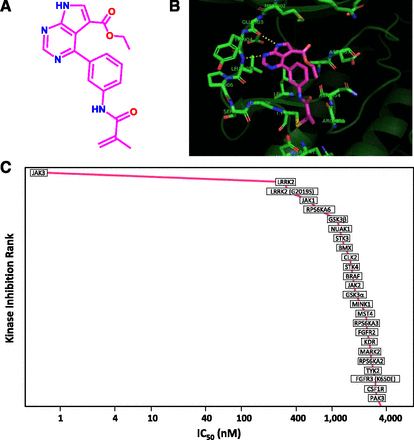
Potent, selective irreversible JAK3 inhibitor 2. (A) Compound 2 structure. (B) Confirmation of covalent binding by X-ray crystallography. (C) Waterfall plot demonstrating selectivity of compound 2 against the kinome. |
Fractional activity remaining and relative affinity (kinact/KI) determination.J Pharmacol Exp Ther.2017 May;361(2):229-244. |
Multiparameter flow cytometry in human whole blood demonstrates pSTAT signature of compound 2 specific to JAK3 signaling.J Pharmacol Exp Ther.2017 May;361(2):229-244. |
No synergy observed in pSTAT5 PBMC assay in response to IL-7 with cross-titrated JAK1 and JAK3 inhibitors.J Pharmacol Exp Ther.2017 May;361(2):229-244. |
Prophylactic inhibition of JAK3 in a rat CIA model blocks paw swelling and joint degradation.J Pharmacol Exp Ther.2017 May;361(2):229-244. |
Therapeutic inhibition of JAK3 in a rat CIA model partially blocks paw swelling and joint degradation.J Pharmacol Exp Ther.2017 May;361(2):229-244. |
Inhibition of leukocyte proliferation, but not erythrocyte proliferation, by compound 2 in rats.J Pharmacol Exp Ther.2017 May;361(2):229-244. |
Ex vivo pSTAT inhibition by compound 2 in rat whole blood. pSTAT signal in whole blood obtained from rats dosed with 300 mg/kg of compound 2 and stimulated with cytokines ex vivo.J Pharmacol Exp Ther.2017 May;361(2):229-244. |
Products are for research use only; We do not sell to patients
Copyright 2020 InvivoChem LLC | All Rights Reserved


 COA
COA