| Size | Price | Stock | Qty |
|---|---|---|---|
| 5mg |
|
||
| 10mg |
|
||
| 25mg |
|
||
| 50mg |
|
||
| 100mg |
|
||
| 250mg |
|
||
| Other Sizes |


Purity: ≥98%
| Targets |
Lysosome-mediated Autophagy Pathway (acts as a lysosomotropic agent to disrupt lysosomal function and inhibit autophagic flux) [1]
|
|---|---|
| ln Vitro |
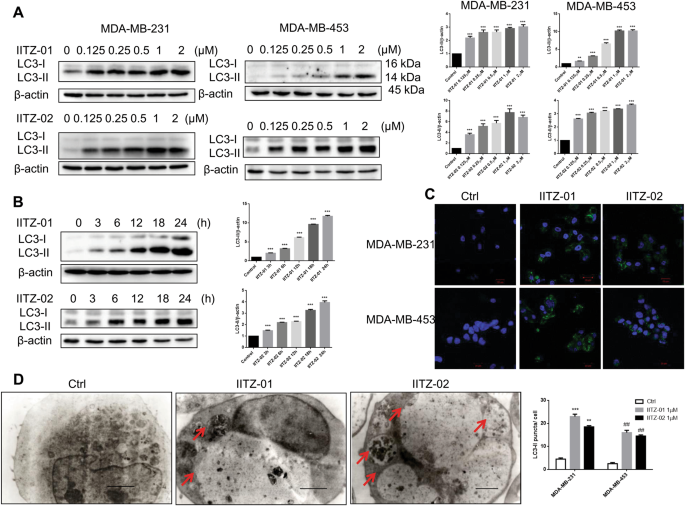
IITZ-01 (0-2 μM, 24 h) promotes autophagosomes formation as shown by increased expression of LC3-II levels time- and dose-dependently in triple-negative breast cancer (TNBC) cell lines (MDA-MB-231 and MDA -MB-453). IITZ-01 also showed substantial autophagy inhibitory effect in various breast, lung, and colon cancer cells[1].
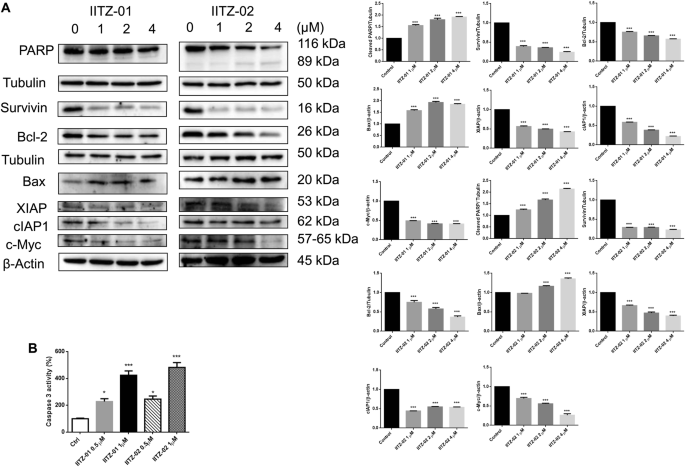
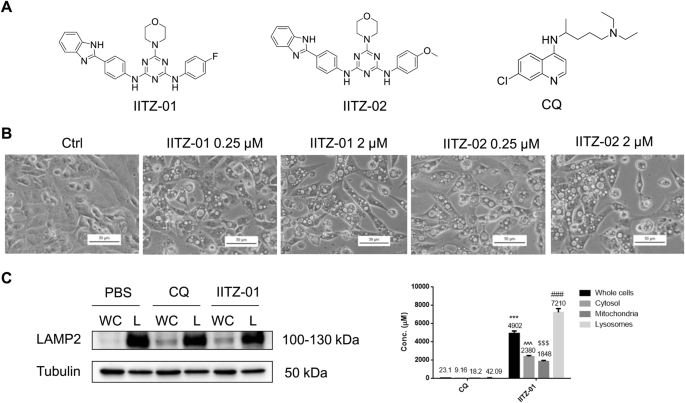
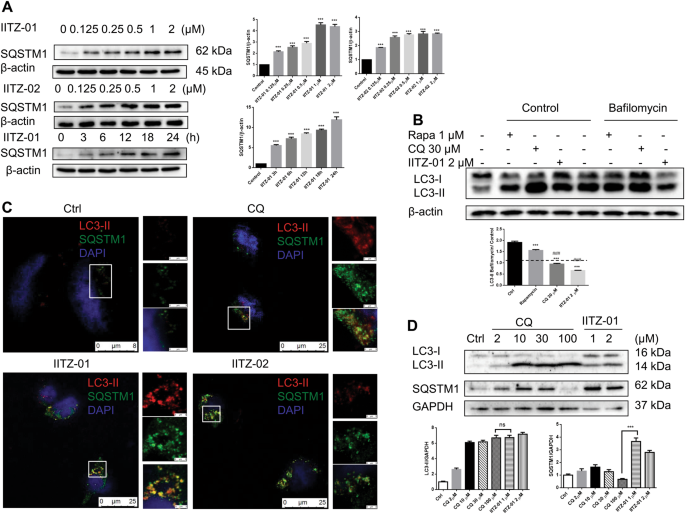
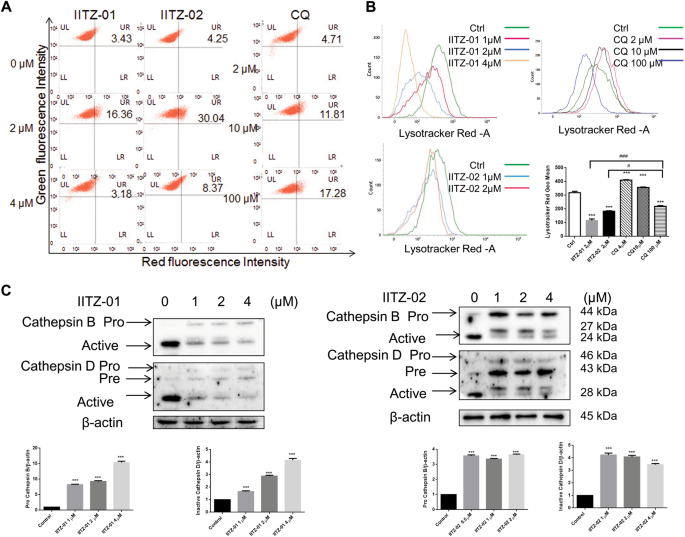
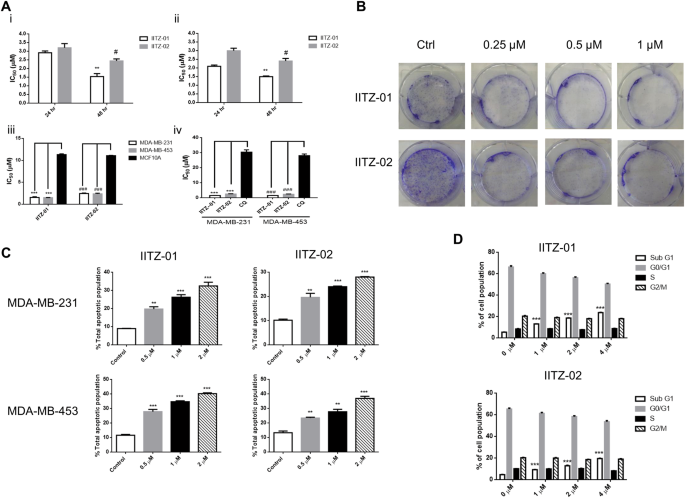
IITZ-01 is a novel potent lysosomotropic autophagy inhibitor with selective antiproliferative activity against triple-negative breast cancer (TNBC) cells [1] - Antiproliferative activity: Inhibits viability of TNBC cell lines via MTT assay (72-hour treatment): MDA-MB-231 (IC₅₀=0.8 μM), MDA-MB-468 (IC₅₀=0.6 μM), BT-549 (IC₅₀=1.2 μM), and HCC1806 (IC₅₀=0.9 μM); low cytotoxicity on normal human mammary epithelial cells (HMECs, IC₅₀=12.5 μM) [1] - Inhibits autophagic flux: Dose-dependently accumulates LC3-II (marker of autophagosome) and upregulates p62 (sequestosome 1, autophagic substrate) in MDA-MB-231 cells; 1 μM IITZ-01 increases LC3-II/LC3-I ratio by 3.5-fold and p62 protein level by 2.8-fold (western blot, 24-hour treatment); blocks autophagic flux even under starvation-induced autophagy (Earle's balanced salt solution, EBSS) [1] - Disrupts lysosomal function: Increases lysosomal pH (detected by LysoTracker Red staining; 1 μM treatment reduces red fluorescence intensity by 60% vs vehicle control); inhibits lysosomal cathepsin activity (cathepsin B/L activity reduced by 55% at 1 μM) [1] - Induces apoptosis in TNBC cells: 1.5 μM IITZ-01 increases Annexin V-positive apoptotic cells by 45% (vs 5.2% in vehicle, flow cytometry, 48-hour treatment); upregulates pro-apoptotic proteins Bax (2.3-fold) and cleaved caspase-3 (3.1-fold), downregulates anti-apoptotic protein Bcl-2 (0.4-fold) (western blot) [1] - Inhibits colony formation: 0.5–2 μM IITZ-01 reduces colony formation efficiency of MDA-MB-231 cells by 30–85% (crystal violet staining, 14-day culture) [1] - Synergizes with starvation-induced autophagy: EBSS-induced autophagy enhances IITZ-01 cytotoxicity; combination of 0.5 μM IITZ-01 and EBSS reduces cell viability by 78% (vs 32% for IITZ-01 alone, 22% for EBSS alone) [1] |
| ln Vivo |
In mice with triple-negative breast tumor models, IITZ-01 (45 mg/kg, ip every other day for four weeks) reduces the growth of average breast tumors starting on the third day of therapy as compared to the control group[1].
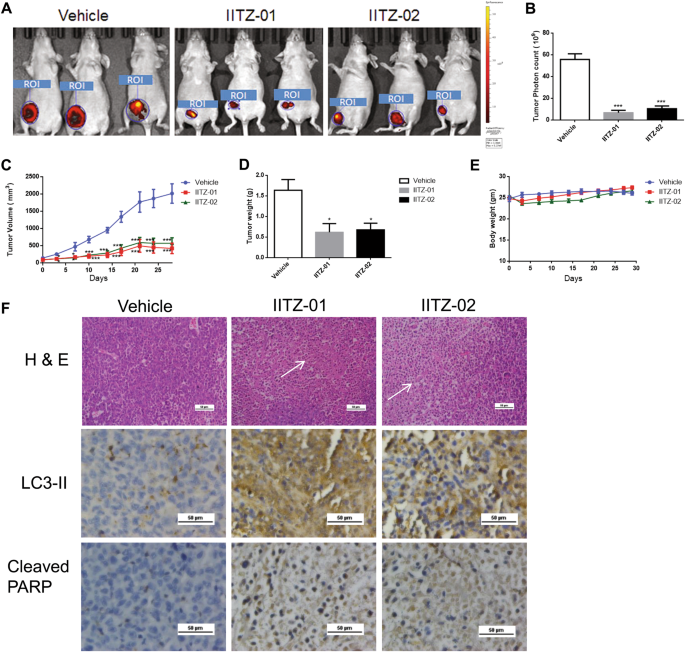
Inhibits tumor growth in TNBC xenograft models: Female BALB/c nu/nu mice (6–8 weeks old) implanted subcutaneously with MDA-MB-231 cells (2×10⁶ cells/mouse) were treated with IITZ-01 via intraperitoneal injection at 10 mg/kg and 20 mg/kg every other day for 21 days. The 20 mg/kg dose reduces tumor volume by 70% (from 1450 ± 160 mm³ to 435 ± 90 mm³, p<0.001) and tumor weight by 65% (from 1.62 ± 0.20 g to 0.57 ± 0.11 g, p<0.001) compared to vehicle control [1] - Suppresses autophagy and induces apoptosis in tumor tissues: Immunohistochemical analysis of MDA-MB-231 xenografts shows that 20 mg/kg IITZ-01 increases LC3-II-positive cells (4.2-fold) and p62-positive cells (3.8-fold), and enhances cleaved caspase-3-positive apoptotic cells (5.1-fold) vs vehicle control [1] - Improves survival in orthotopic TNBC model: Nude mice with orthotopic MDA-MB-231 tumors treated with IITZ-01 (20 mg/kg, i.p., every other day) show median survival extended from 38 days (vehicle) to 56 days (treatment group, p<0.01) [1] - No systemic toxicity in tumor-bearing mice: Treatment with IITZ-01 (10–20 mg/kg) for 21 days causes no significant changes in body weight, food intake, or hematological/biochemical parameters (ALT, AST, BUN, creatinine) [1] |
| Cell Assay |
Western Blot Analysis[1]
Cell Types: Triple-negative breast cancer (TNBC) cell lines (MDA -MB-231 and MDA-MB-453). Tested Concentrations: 0-2 μM. Incubation Duration: 24 hrs (hours). Experimental Results: Enhanced autophagosomes formation as indicated by increased expression of LC3-II levels. Cell viability assay (MTT): TNBC cells (MDA-MB-231, MDA-MB-468, BT-549, HCC1806) and HMECs are seeded in 96-well plates (5×10³ cells/well) and treated with serial dilutions of IITZ-01 (0.1–20 μM) for 72 hours. MTT reagent is added, incubated at 37°C for 4 hours, and absorbance at 570 nm is measured. IC₅₀ values are calculated via nonlinear regression analysis [1] - Autophagic flux detection (western blot): MDA-MB-231 cells are seeded in 6-well plates (2×10⁵ cells/well) and treated with IITZ-01 (0.25–2 μM) for 24 hours (or combined with EBSS for 12 hours). Cells are lysed in RIPA buffer, and proteins are separated by SDS-PAGE. Membranes are probed with primary antibodies against LC3-I/II, p62, Beclin-1, Atg5, and GAPDH (loading control). HRP-conjugated secondary antibodies are used, and band intensities are quantified by densitometry [1] - Lysosomal pH and cathepsin activity assay: MDA-MB-231 cells are seeded on coverslips and treated with IITZ-01 (0.5–2 μM) for 16 hours. Cells are stained with LysoTracker Red (for pH detection) or cathepsin B/L fluorescent substrate (for activity detection) and observed under a confocal microscope. Fluorescence intensity is quantified using image analysis software [1] - Apoptosis assay (Annexin V/PI staining): MDA-MB-231 cells are treated with IITZ-01 (0.5–2 μM) for 48 hours, harvested, stained with Annexin V-FITC and PI, and analyzed by flow cytometry to quantify apoptotic cells (Annexin V-positive/PI-negative and Annexin V-positive/PI-positive) [1] - Colony formation assay: MDA-MB-231 cells (1×10³ cells/well) are seeded in 6-well plates and treated with IITZ-01 (0.5–2 μM) for 24 hours. Medium is replaced with fresh medium without drug, and cells are cultured for 14 days. Colonies are stained with crystal violet, and colonies with >50 cells are counted [1] |
| Animal Protocol |
Animal/Disease Models: MDA-MB -231 (TNBC)/green fluorescent protein (GFP) orthotropic breast cancer xenografts were developed in CrTac:NCr-Foxnnu BALB/c female nude mice[1].
Doses: 45 mg/kg. Route of Administration: intraperitoneal (ip)every alternate day for 4 weeks . Experimental Results: Inhibited average breast tumor growth when compared with control from third day of treatment. Subcutaneous TNBC xenograft model: Female BALB/c nu/nu mice (6–8 weeks old) are anesthetized, and MDA-MB-231 cells (2×10⁶ cells/mouse) suspended in Matrigel are implanted subcutaneously into the right flank. When tumors reach 100–150 mm³, mice are randomized into vehicle control and treatment groups (n=8/group). IITZ-01 is dissolved in DMSO (10%) + PEG400 (40%) + sterile saline (50%) and administered via intraperitoneal injection at 10 mg/kg or 20 mg/kg every other day for 21 days. Tumor volume is measured every 3 days (volume = length × width² / 2), and mice are euthanized at the end of treatment to collect tumors for weight measurement, immunohistochemistry, and western blot analysis [1] - Orthotopic TNBC survival model: Nude mice (6–8 weeks old) are anesthetized, and MDA-MB-231 cells (1×10⁶ cells/mouse) are implanted orthotopically into the mammary fat pad. Seven days after implantation, mice are treated with IITZ-01 (20 mg/kg, i.p., every other day). Mice are monitored daily for survival and euthanized when they show signs of severe illness (e.g., weight loss >20%, lethargy) [1] |
| ADME/Pharmacokinetics |
Tumor tissue distribution: In MDA-MB-231 xenograft mice treated with IITZ-01 (20 mg/kg, intraperitoneal injection), the tumor tissue concentration reached 3.8 μM 4 hours after administration, which was 2.5 times the plasma concentration (1.5 μM) [1]
|
| Toxicity/Toxicokinetics |
In vitro cytotoxicity: Low cytotoxicity to normal HMEC cells (IC₅₀=12.5 μM), 15-20 times higher than IC₅₀ of TNBC cells [1] - Acute toxicity (mice): Intraperitoneal injection LD₅₀ > 100 mg/kg; no death or severe toxicity was observed at doses up to 80 mg/kg [1] - Subchronic toxicity (mice, 21 days): Intraperitoneal injection of IITZ-01 (10-20 mg/kg every other day) did not cause significant changes in body weight, food intake, hematological parameters (erythrocytes, white blood cells, platelets) or biochemical indicators (ALT, AST, BUN, creatinine); no histopathological abnormalities were observed in the liver, kidneys, heart or spleen [1]
|
| References | |
| Additional Infomation |
IITZ-01 is a novel lysosome-targeting small molecule compound designed as a selective autophagy inhibitor, with significant single-drug antitumor efficacy against triple-negative breast cancer [1]
- Mechanism of action: It accumulates in lysosomes (through lysosome-targeted capture), disrupts the acidic environment of lysosomes, thereby inhibiting lysosomal degradation function and blocking autophagy flux; continuous accumulation of autophagosomes leads to endoplasmic reticulum stress and apoptosis in triple-negative breast cancer (TNBC) cells [1] - Unique features: Compared with classic autophagy inhibitors (such as chloroquine, hydroxychloroquine), IITZ-01 has higher potency (IC₅₀ 10-20 times lower) and selectivity against TNBC cells [1] - Preclinical application: It is expected to become a therapeutic drug for triple-negative breast cancer, a subtype with limited treatment options and poor prognosis [1] |
| Molecular Formula |
C26H23FN8O
|
|
|---|---|---|
| Molecular Weight |
482.512227296829
|
|
| Exact Mass |
482.197
|
|
| CAS # |
1807988-47-1
|
|
| Related CAS # |
|
|
| PubChem CID |
134817273
|
|
| Appearance |
White to off-white solid powder
|
|
| LogP |
5.2
|
|
| Hydrogen Bond Donor Count |
3
|
|
| Hydrogen Bond Acceptor Count |
9
|
|
| Rotatable Bond Count |
6
|
|
| Heavy Atom Count |
36
|
|
| Complexity |
683
|
|
| Defined Atom Stereocenter Count |
0
|
|
| SMILES |
FC1C=CC(=CC=1)NC1N=C(NC2C=CC(=CC=2)C2=NC3C=CC=CC=3N2)N=C(N=1)N1CCOCC1
|
|
| InChi Key |
XGEDDGLPNSLBFE-UHFFFAOYSA-N
|
|
| InChi Code |
InChI=1S/C26H23FN8O/c27-18-7-11-20(12-8-18)29-25-32-24(33-26(34-25)35-13-15-36-16-14-35)28-19-9-5-17(6-10-19)23-30-21-3-1-2-4-22(21)31-23/h1-12H,13-16H2,(H,30,31)(H2,28,29,32,33,34)
|
|
| Chemical Name |
|
|
| Synonyms |
|
|
| HS Tariff Code |
2934.99.9001
|
|
| Storage |
Powder -20°C 3 years 4°C 2 years In solvent -80°C 6 months -20°C 1 month |
|
| Shipping Condition |
Room temperature (This product is stable at ambient temperature for a few days during ordinary shipping and time spent in Customs)
|
| Solubility (In Vitro) |
|
|||
|---|---|---|---|---|
| Solubility (In Vivo) |
Solubility in Formulation 1: ≥ 2.5 mg/mL (5.18 mM) (saturation unknown) in 10% DMSO + 40% PEG300 + 5% Tween80 + 45% Saline (add these co-solvents sequentially from left to right, and one by one), clear solution.
For example, if 1 mL of working solution is to be prepared, you can add 100 μL of 25.0 mg/mL clear DMSO stock solution to 400 μL PEG300 and mix evenly; then add 50 μL Tween-80 to the above solution and mix evenly; then add 450 μL normal saline to adjust the volume to 1 mL. Preparation of saline: Dissolve 0.9 g of sodium chloride in 100 mL ddH₂ O to obtain a clear solution. Solubility in Formulation 2: 2.5 mg/mL (5.18 mM) in 10% DMSO + 90% (20% SBE-β-CD in Saline) (add these co-solvents sequentially from left to right, and one by one), suspension solution; with ultrasonication. For example, if 1 mL of working solution is to be prepared, you can add 100 μL of 25.0 mg/mL clear DMSO stock solution to 900 μL of 20% SBE-β-CD physiological saline solution and mix evenly. Preparation of 20% SBE-β-CD in Saline (4°C,1 week): Dissolve 2 g SBE-β-CD in 10 mL saline to obtain a clear solution. View More
Solubility in Formulation 3: ≥ 2.5 mg/mL (5.18 mM) (saturation unknown) in 10% DMSO + 90% Corn Oil (add these co-solvents sequentially from left to right, and one by one), clear solution. |
| Preparing Stock Solutions | 1 mg | 5 mg | 10 mg | |
| 1 mM | 2.0725 mL | 10.3625 mL | 20.7250 mL | |
| 5 mM | 0.4145 mL | 2.0725 mL | 4.1450 mL | |
| 10 mM | 0.2072 mL | 1.0362 mL | 2.0725 mL |
*Note: Please select an appropriate solvent for the preparation of stock solution based on your experiment needs. For most products, DMSO can be used for preparing stock solutions (e.g. 5 mM, 10 mM, or 20 mM concentration); some products with high aqueous solubility may be dissolved in water directly. Solubility information is available at the above Solubility Data section. Once the stock solution is prepared, aliquot it to routine usage volumes and store at -20°C or -80°C. Avoid repeated freeze and thaw cycles.
Calculation results
Working concentration: mg/mL;
Method for preparing DMSO stock solution: mg drug pre-dissolved in μL DMSO (stock solution concentration mg/mL). Please contact us first if the concentration exceeds the DMSO solubility of the batch of drug.
Method for preparing in vivo formulation::Take μL DMSO stock solution, next add μL PEG300, mix and clarify, next addμL Tween 80, mix and clarify, next add μL ddH2O,mix and clarify.
(1) Please be sure that the solution is clear before the addition of next solvent. Dissolution methods like vortex, ultrasound or warming and heat may be used to aid dissolving.
(2) Be sure to add the solvent(s) in order.
 Oncogene.2018 Aug 30. doi: 10.1038/s41388-018-0446-2. |
|---|
 Oncogene.2018 Aug 30. doi: 10.1038/s41388-018-0446-2. |
 Oncogene.2018 Aug 30. doi: 10.1038/s41388-018-0446-2. |
 Oncogene.2018 Aug 30. doi: 10.1038/s41388-018-0446-2. |
|---|
Oncogene.2018 Aug 30. doi: 10.1038/s41388-018-0446-2. |
 Oncogene.2018 Aug 30. doi: 10.1038/s41388-018-0446-2. |
 Oncogene.2018 Aug 30. doi: 10.1038/s41388-018-0446-2. |
|---|
Products are for research use only; We do not sell to patients
Copyright 2020 InvivoChem LLC | All Rights Reserved


 COA
COA