| Size | Price | Stock | Qty |
|---|---|---|---|
| 10mg |
|
||
| 25mg |
|
||
| 50mg |
|
||
| 100mg |
|
||
| 250mg | |||
| 500mg | |||
| Other Sizes |


Purity: ≥98%
| Targets |
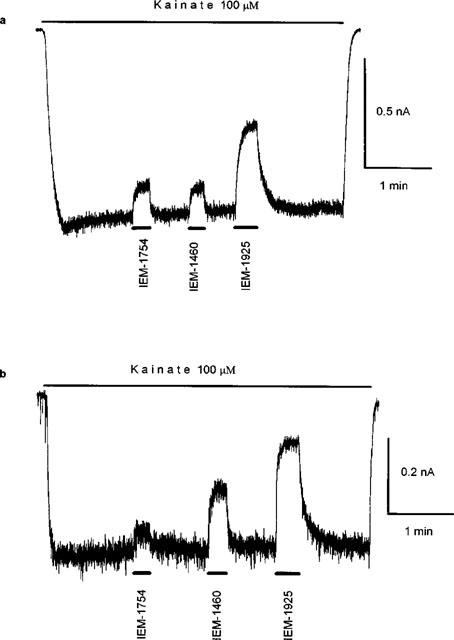
IEM-1754 targets AMPA/kainate receptors, particularly homomeric GluR1 and GluR3 receptors. For recombinant homomeric GluR1 or GluR3 receptors expressed in oocytes, the IC50 for inhibition of kainate-induced currents at a holding potential of -80 mV is 6.0 μM. The compound also blocks heteromeric receptors containing edited GluR2 subunits, but with much lower potency (no exact IC50 provided). For native hippocampal neurons with high sensitivity (presumably lacking edited GluR2), IEM-1754 is approximately 3 times less potent than IEM-1460 (IEM-1460 IC50 = 1.6 μM at -80 mV for high-sensitivity neurons). [1]
IEM 1754 2HBr targets AMPA and kainate receptors, specifically the GluR1 and GluR3 subunits. It is a selective AMPA/kainate receptor blocker with an IC50 of 6 µM. It causes use- and voltage-dependent block of open channels of recombinant AMPA receptors. By blocking these ionotropic glutamate receptors, it inhibits excitatory neurotransmission. This mechanism makes it a valuable tool for studying the role of AMPA and kainate receptors in synaptic transmission and plasticity. |
|---|---|
| ln Vitro |
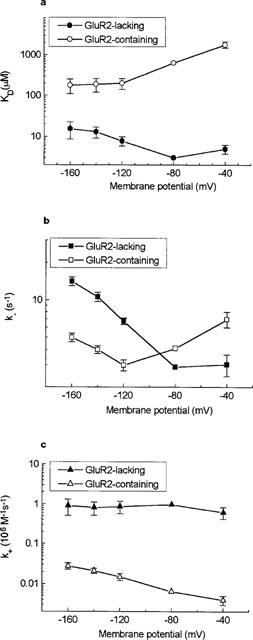
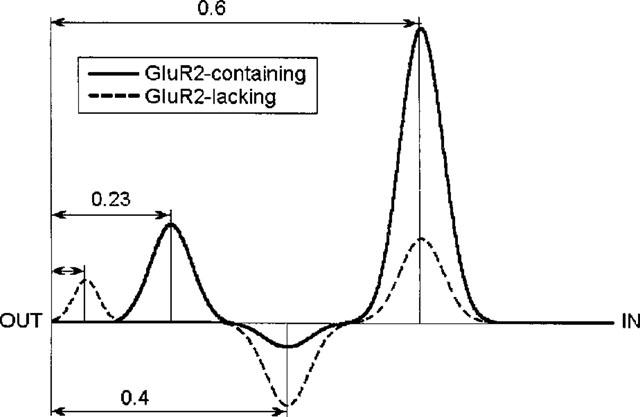
IEM 1754 is an adamantane derivative. IEM 1754 causes use- and voltage-dependent block of open channels of recombinant AMPA receptors. This antagonism is dependent on receptor subunit composition, channels gated by recombinant, homomeric GluR1 and GluR3 receptors exhibites a higher sensitivity to block than those gated by receptors containing edited GluR2 subunits. IEM-1754 block of GluR2-containing AMPAR is enhanced by hyperpolarization in agreement with the classical single-exponential model. In contrast, the block of GluR2-lacking AMPAR is reduced by hyperpolarization
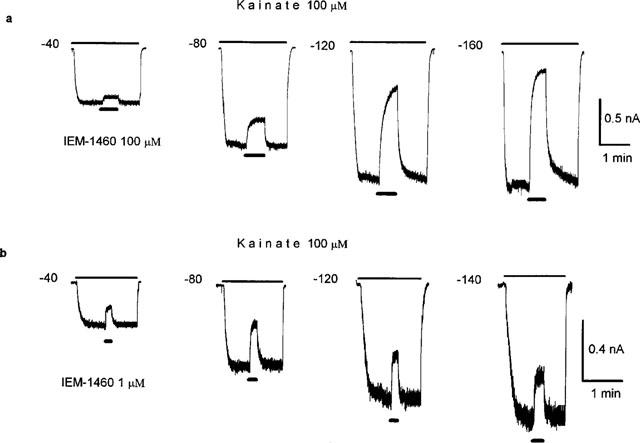
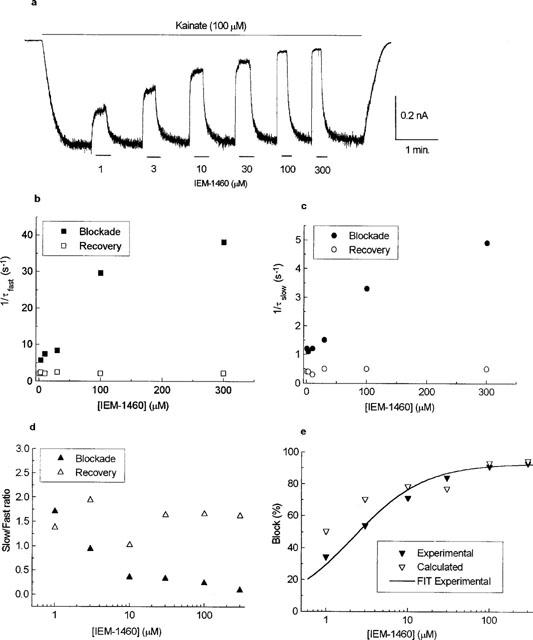
IEM-1754 inhibits kainate-induced currents in a use-dependent and voltage-dependent manner. In Xenopus oocytes expressing recombinant homomeric GluR1 or GluR3 receptors, IEM-1754 (5 μM) at Vh = -80 mV caused 46.1±7.7% inhibition (n=8), and at Vh = -120 mV caused 61.0±7.6% inhibition (n=3). At Vh = -40 mV, 5 μM caused 15.6±12.4% inhibition (n=4). The IC50 at -80 mV was 6.0 μM, making it 3.8 times less potent than IEM-1460. In oocytes expressing heteromeric receptors containing edited GluR2 subunits (GluR3+edited GluR2), IEM-1754 showed greatly reduced antagonism (no quantitative data provided). In freshly isolated rat hippocampal neurons, IEM-1754 (3-100 μM) inhibited kainate-induced currents in a concentration-dependent, use-dependent, and voltage-dependent manner. Based on sensitivity, neurons were classified as low-sensitivity (25 cells), intermediate-sensitivity (9 cells), and high-sensitivity (7 cells). For low- and intermediate-sensitivity cells, IEM-1754 and IEM-1460 were equipotent. For high-sensitivity cells at -80 mV, IEM-1754 was significantly weaker than IEM-1460. At Vh = -80 mV, for low-sensitivity neurons, 100 μM IEM-1754 caused 11.7±5.3% inhibition (n=25); for intermediate-sensitivity neurons, 100 μM caused 29.7±12.5% inhibition (n=9); for high-sensitivity neurons, 3 μM caused 24.0±3.0% inhibition (n=5). Voltage dependence: for low-sensitivity neurons, inhibition increased only at -120 mV; for intermediate-sensitivity neurons, inhibition increased progressively from -40 to -120 mV; for high-sensitivity neurons, antagonism was maximal at -80 mV and reduced at -120 mV (e.g., 3 μM at -80 mV: 24.0±3.0%, at -120 mV: 10.7±4.7%). Unlike IEM-1460, IEM-1754 antagonism in high-sensitivity neurons was less sensitive to changes in holding potential between -40 and -80 mV, and was markedly reduced by hyperpolarization to -120 mV (P < 0.003). The antagonism was use-dependent: repeated co-applications of kainate and IEM-1754 increased the level of block, and recovery was enhanced by repeated agonist applications. [1] In vitro, IEM 1754 2HBr is a selective AMPA/kainate receptor blocker with an IC50 of 6 µM. It causes use- and voltage-dependent block of open channels of recombinant AMPA receptors. It is an adamantane derivative. These in vitro studies confirm its mechanism as an AMPA/kainate receptor blocker. Its activity has been characterized in electrophysiological assays using recombinant receptors expressed in oocytes or mammalian cells. |
| ln Vivo |
In vivo studies on IEM 1754 2HBr are limited, as it is primarily a research compound used in vitro. Its use- and voltage-dependent block of AMPA receptors suggests it could have in vivo effects on synaptic transmission. However, specific in vivo data are not extensively documented in standard summaries.
|
| Enzyme Assay |
The enzyme (receptor) assay was performed using two-microelectrode voltage clamp on Xenopus oocytes expressing recombinant AMPA receptors. Oocytes were injected 4-7 days prior with mRNA for homomeric GluR1, GluR3, or heteromeric combinations with edited GluR2. Oocytes were placed in a silicone tube (2 mm diameter) and continuously perfused with saline (120 mM NaCl, 2 mM KCl, 1.8 mM CaCl2, 9.5 mM Hepes, pH 7.4) at 22-24°C. Currents were elicited by 100 μM kainate applied for 20-40 s. When the current reached steady state, the perfusate was switched to a solution containing kainate plus various concentrations of IEM-1754. After reaching a new steady state, perfusion returned to kainate alone to record recovery. The procedure was repeated with different antagonist concentrations at intervals of at least 5 min. Holding potential was typically -80 mV. Voltage dependence was assessed by ramping membrane potential from -140 mV to +40 mV over 20 s. Data were recorded on magnetic tape and analyzed using in-house software. [1]
Non-cellular binding assays for IEM 1754 2HBr typically involve measuring its affinity for AMPA or kainate receptors. These assays use membrane preparations from tissues or cells expressing the receptors and measure the displacement of a labeled ligand, such as [3H]AMPA or [3H]kainate. The compound's ability to inhibit receptor binding is assessed by determining the IC50. Such assays are essential for characterizing its potency and selectivity. |
| Cell Assay |
Freshly isolated rat hippocampal neurons were used for whole-cell patch-clamp recordings. Hippocampal slices (200-500 μm thick) from 15- to 30-day-old Wistar rats were incubated for 2-9 h at 30-32°C in solution containing (mM): 124 NaCl, 5 KCl, 1.3 CaCl2, 1.5 MgCl2, 20 NaHCO3, 1.24 NaH2PO4, and 10 D-glucose, bubbled with 95% O2-5% CO2 (pH 7.4-7.5). Cells were isolated by vibrodissociation at 70-120 Hz without enzymatic treatment. Extracellular solution for recording contained (mM): 143 NaCl, 5 KCl, 2.5 CaCl2, 10 D-glucose, 10 Hepes-NaOH (pH 7.4). Patch pipettes (3-5 MΩ) were filled with (mM): 100 CsF, 40 CsCl, 5 NaCl, 0.5 CaCl2, 5 EGTA, 10 Hepes-CsOH (pH 7.2). Kainate (100 μM) alone or with IEM-1754 (3-100 μM) was applied via a thin glass capillary inside a constantly flowing control tube. The cell was rapidly exposed to the drug stream for 1 s every 20 s under computer control. Inward currents were recorded at holding potentials of -40, -80, or -120 mV using an Axopatch 200A amplifier. Data acquisition and analysis were performed with in-house software (PATCH3). Each cell was tested with multiple antagonist concentrations. Concentration-inhibition curves were fitted to obtain IC50 values. [1]
In vitro cell-based assays for IEM 1754 2HBr are conducted using neuronal cell cultures or cells expressing recombinant AMPA or kainate receptors. Electrophysiological techniques, such as patch-clamp recording, are used to measure the compound's effects on receptor-mediated currents. The compound's use- and voltage-dependent block of open channels can be characterized. These experiments are crucial for confirming its mechanism of action. |
| Animal Protocol |
In vivo animal studies for IEM 1754 2HBr are not extensively documented in standard summaries. As a selective AMPA/kainate receptor blocker, it has potential applications in studying neurological disorders. However, specific in vivo efficacy studies would be required to validate its therapeutic potential.
|
| ADME/Pharmacokinetics |
IEM 1754 2HBr has a molecular weight of 412.25 g/mol. It is a small molecule. As a research compound, its pharmacokinetic properties are not extensively documented. It is intended for laboratory use only.
|
| Toxicity/Toxicokinetics |
Comprehensive toxicological data for IEM 1754 2HBr are limited, as it is primarily a research compound. It is intended for laboratory use only and is not for human consumption. As with all research chemicals, appropriate safety precautions should be taken when handling IEM 1754 2HBr.
|
| References |
J Physiol.1997 Dec 15;505 ( Pt 3):655-63;Br J Pharmacol.2000 Jan;129(2):265-74.
|
| Additional Infomation |
IEM-1754 is a bisactionic adamantane derivative synthesized at the Institute of Experimental Medicine, Russian Academy of Medical Sciences. It acts as an open-channel blocker of AMPA/kainate receptors, with faster onset and recovery kinetics compared to polyamine amides like PhTX-343 or ArgTX-636. The compound is predominantly doubly charged at physiological pH. The lower potency of IEM-1754 compared to IEM-1460 may be due to the permanent charge on the quarternized amine group of IEM-1460. IEM-1754 is potentially valuable for identifying classes of AMPA/kainate receptors and their roles in synaptic transmission, especially because its antagonism distinguishes between receptors containing or lacking edited GluR2 subunits. In contrast to IEM-1460, which is 5-6 times less potent at NMDA receptors, the relative potency of IEM-1754 at NMDA receptors is not specified in this paper. [1]
IEM 1754 2HBr is a selective AMPA/kainate receptor blocker for GluR1 and GluR3 with an IC50 of 6 µM. It causes use- and voltage-dependent block of open channels of recombinant AMPA receptors. IEM 1754 2HBr is not an approved drug and is available as a research compound for neuroscience studies. |
| Molecular Formula |
C16H30N2.2HBR
|
|
|---|---|---|
| Molecular Weight |
412.25
|
|
| Exact Mass |
410.093
|
|
| CAS # |
162831-31-4
|
|
| Related CAS # |
|
|
| PubChem CID |
9887867
|
|
| Appearance |
White to off-white solid powder
|
|
| LogP |
4.97
|
|
| Hydrogen Bond Donor Count |
4
|
|
| Hydrogen Bond Acceptor Count |
2
|
|
| Rotatable Bond Count |
7
|
|
| Heavy Atom Count |
20
|
|
| Complexity |
233
|
|
| Defined Atom Stereocenter Count |
0
|
|
| SMILES |
C1C2CC3CC1CC(C2)(C3)CNCCCCCN.Br.Br
|
|
| InChi Key |
JMPHTNNJCZDROM-UHFFFAOYSA-N
|
|
| InChi Code |
InChI=1S/C16H30N2.2BrH/c17-4-2-1-3-5-18-12-16-9-13-6-14(10-16)8-15(7-13)11-16;;/h13-15,18H,1-12,17H2;2*1H
|
|
| Chemical Name |
N'-(1-adamantylmethyl)pentane-1,5-diamine;dihydrobromide
|
|
| Synonyms |
|
|
| HS Tariff Code |
2934.99.9001
|
|
| Storage |
Powder -20°C 3 years 4°C 2 years In solvent -80°C 6 months -20°C 1 month Note: Please store this product in a sealed and protected environment, avoid exposure to moisture. |
|
| Shipping Condition |
Room temperature (This product is stable at ambient temperature for a few days during ordinary shipping and time spent in Customs)
|
| Solubility (In Vitro) |
|
|||
|---|---|---|---|---|
| Solubility (In Vivo) |
Solubility in Formulation 1: ≥ 1.25 mg/mL (3.03 mM) (saturation unknown) in 10% DMSO + 40% PEG300 + 5% Tween80 + 45% Saline (add these co-solvents sequentially from left to right, and one by one), clear solution.
For example, if 1 mL of working solution is to be prepared, you can add 100 μL of 12.5 mg/mL clear DMSO stock solution to 400 μL PEG300 and mix evenly; then add 50 μL Tween-80 to the above solution and mix evenly; then add 450 μL normal saline to adjust the volume to 1 mL. Preparation of saline: Dissolve 0.9 g of sodium chloride in 100 mL ddH₂ O to obtain a clear solution. Solubility in Formulation 2: ≥ 1.25 mg/mL (3.03 mM) (saturation unknown) in 10% DMSO + 90% (20% SBE-β-CD in Saline) (add these co-solvents sequentially from left to right, and one by one), clear solution. For example, if 1 mL of working solution is to be prepared, you can add 100 μL of 12.5 mg/mL clear DMSO stock solution to 900 μL of 20% SBE-β-CD physiological saline solution and mix evenly. Preparation of 20% SBE-β-CD in Saline (4°C,1 week): Dissolve 2 g SBE-β-CD in 10 mL saline to obtain a clear solution. View More
Solubility in Formulation 3: ≥ 1.25 mg/mL (3.03 mM) (saturation unknown) in 10% DMSO + 90% Corn Oil (add these co-solvents sequentially from left to right, and one by one), clear solution. Solubility in Formulation 4: 30% propylene glycol, 5% Tween 80, 65% D5W:30 mg/mL |
| Preparing Stock Solutions | 1 mg | 5 mg | 10 mg | |
| 1 mM | 2.4257 mL | 12.1286 mL | 24.2571 mL | |
| 5 mM | 0.4851 mL | 2.4257 mL | 4.8514 mL | |
| 10 mM | 0.2426 mL | 1.2129 mL | 2.4257 mL |
*Note: Please select an appropriate solvent for the preparation of stock solution based on your experiment needs. For most products, DMSO can be used for preparing stock solutions (e.g. 5 mM, 10 mM, or 20 mM concentration); some products with high aqueous solubility may be dissolved in water directly. Solubility information is available at the above Solubility Data section. Once the stock solution is prepared, aliquot it to routine usage volumes and store at -20°C or -80°C. Avoid repeated freeze and thaw cycles.
Calculation results
Working concentration: mg/mL;
Method for preparing DMSO stock solution: mg drug pre-dissolved in μL DMSO (stock solution concentration mg/mL). Please contact us first if the concentration exceeds the DMSO solubility of the batch of drug.
Method for preparing in vivo formulation::Take μL DMSO stock solution, next add μL PEG300, mix and clarify, next addμL Tween 80, mix and clarify, next add μL ddH2O,mix and clarify.
(1) Please be sure that the solution is clear before the addition of next solvent. Dissolution methods like vortex, ultrasound or warming and heat may be used to aid dissolving.
(2) Be sure to add the solvent(s) in order.
|
|---|
|
|
Products are for research use only; We do not sell to patients
Copyright 2020 InvivoChem LLC | All Rights Reserved


 COA
COA