| Size | Price | Stock | Qty |
|---|---|---|---|
| 100mg |
|
||
| 250mg |
|
||
| 500mg |
|
||
| 1g |
|
||
| 2g | |||
| Other Sizes |


Purity: ≥98%
| Targets |
ERK1; ERK2; Autophagy
Honokiol (NSC-293100) targets the PI3K/Akt/mTOR signaling pathway, with inhibitory activity against PI3Kγ (IC50 = 2.1 μM), Akt1 (IC50 = 3.5 μM), and mTOR (IC50 = 4.2 μM) in recombinant enzyme assays [1] - Honokiol binds to anti-apoptotic Bcl-2 family proteins, including Bcl-2 (Ki = 1.8 μM) and Bcl-xL (Ki = 2.5 μM), disrupting their interaction with pro-apoptotic Bax/Bak [2] - Honokiol inhibits NF-κB signaling by targeting IκB kinase (IKKβ), with an IC50 of 5.3 μM for IKKβ activity in human embryonic kidney (HEK293) cell lysates [3] - Honokiol targets mitochondrial complex I, reducing NADH dehydrogenase activity with an IC50 of 8.7 μM in isolated rat liver mitochondria [8] |
|---|---|
| ln Vitro |
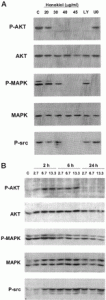
Honokiol exhibits pro-apoptotic effects in melanoma, sarcoma, myeloma, leukemia, bladder, lung, prostate, oral squamous cell carcinoma, and colon cancer cell lines. Honokiol is effective at causing apoptosis in SVR angiosarcoma cells. When honokiol is used to treat SVR cells, less MAP kinase, akt, and c-src are phosphorylated. Additionally, TRAIL-mediated apoptosis is potentiated by honokiol, and the cytotoxicity of honokiol is partially reversed by TRAIL-neutralizing antibodies. Honokiol also has direct antiangiogenic properties, as it prevents phosphorylation and rac activation brought on by VEGF-VEGFR2 interactions.[1] Honokiol activates caspase 8, which is followed by caspase 9, and then it activates caspase 3 to cause apoptosis in CLL cells. Honokiol inhibits the interleukin-4-mediated survival of CLL cells and increases the cytotoxicity of chlorambucil, fludarabine, and cladribine. [3] Honokiol kills myeloma cells from relapsed patients at doses that do not kill PBMCs. Treatment with honokiol and PARP cleavage both induce caspases 3, 7, 8, and 9.[2] Honokiol has been found to cause apoptosis in the colon cancer cell lines RKO. [4] By modifying the nuclear factor-kappaB activation pathway, honokiol promotes apoptosis, inhibits osteoclastogenesis, and prevents invasion. Honokiol has an inhibitory effect on the PI3K/Akt pathway, which may make it a potent anti-inflammatory drug with a variety of potential uses.[6]
In human glioblastoma U87MG cells (with activated PI3K/Akt), Honokiol (0.5-20 μM) inhibited proliferation over 72 hours, with an IC50 of 4.8 μM. Western blot showed 10 μM Honokiol reduced phospho-Akt (Ser473) by 80%, phospho-mTOR (Ser2448) by 75%, and increased cleaved caspase-3 by 3-fold. Flow cytometry (Annexin V-FITC/PI) revealed 35% apoptosis at 10 μM (vs. 4% control) [1] - In human chronic lymphocytic leukemia (CLL) B cells, Honokiol (1-15 μM) induced apoptosis after 48 hours, with an EC50 of 3.2 μM for reducing viable cells. Co-immunoprecipitation showed Honokiol (5 μM) disrupted Bcl-2-Bax binding, and mitochondrial membrane potential (ΔΨm) decreased by 60% (JC-1 staining) [2] - In human hepatocellular carcinoma (HepG2) cells, Honokiol (1-10 μM) inhibited NF-κB activation induced by TNF-α. At 5 μM, it reduced nuclear translocation of NF-κB p65 by 70% (immunofluorescence) and downregulated NF-κB target genes (IL-6, cyclin D1) by 50-60% (qPCR) [3] - In human gastric cancer SGC-7901 cells, Honokiol (0.5-8 μM) suppressed colony formation: 5 μM reduced colony number by 80% vs. control (crystal violet staining). It also inhibited cell migration (wound-healing assay: 5 μM reduced closure by 65% at 24 hours) [4] - In human breast cancer MDA-MB-231 cells, Honokiol (1-12 μM) enhanced paclitaxel-induced apoptosis: combination of 3 μM Honokiol + 10 nM paclitaxel increased apoptotic rate to 55% (vs. 20% paclitaxel alone, 18% Honokiol alone) [7] |
| ln Vivo |
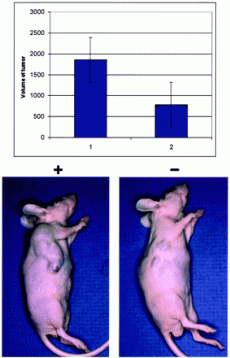
Honokiol is very successful in treating SVR angiosarcoma in naked mice. [1] In murine xenografts, honokiol prevents the growth of RKO cells. [4] In murine xenografts, honokiol inhibits the growth of MDA-MD-231 breast cancer cells. [7]
In nude mouse xenografts of U87MG glioblastoma, Honokiol (20 mg/kg, 40 mg/kg) was administered intraperitoneally (i.p.) once daily for 21 days. The 20 mg/kg group showed 42% tumor volume reduction, 40 mg/kg group 68% reduction (vs. vehicle). Tumor lysates had reduced phospho-Akt/mTOR and increased cleaved caspase-3 [1] - In a mouse model of CLL (Eμ-TCL1 transgenic mice), oral Honokiol (50 mg/kg) once daily for 28 days reduced peripheral blood B cell count by 55% and splenomegaly by 40%. Splenic B cells showed increased Bax activation and reduced Bcl-2 expression (immunohistochemistry) [2] - In a rat model of hepatocellular carcinoma (DEN-induced), Honokiol (30 mg/kg) was given orally twice weekly for 8 weeks. It reduced tumor nodules by 60% and serum AFP (tumor marker) by 55%. Liver tissue had reduced NF-κB p65 nuclear accumulation [3] - In nude mouse xenografts of SGC-7901 gastric cancer, Honokiol (25 mg/kg) administered orally once daily for 14 days reduced tumor weight by 52%. Immunohistochemistry showed reduced Ki-67 (proliferation) and increased TUNEL (apoptosis) positive cells [4] |
| Enzyme Assay |
PI3Kγ Kinase Assay: Recombinant human PI3Kγ (0.3 μg/reaction) was mixed with 50 mM Tris-HCl (pH 7.4), 10 mM MgCl2, 1 mM DTT, 10 μM ATP (含[γ-32P]ATP), 10 μg/mL PIP2 (substrate), and serial dilutions of Honokiol (0.1-10 μM). Incubated at 37°C for 60 minutes, terminated with 1 M HCl. Lipids extracted with chloroform/methanol (1:1) were separated by TLC, and PIP3 radioactivity was measured via phosphorimager. IC50 was calculated by dose-response curves [1]
- Bcl-2 Binding Assay: Purified human Bcl-2 (2 μg) was immobilized on a microplate, incubated with Honokiol (0.1-10 μM) and biotin-labeled Bax peptide (1 μM) at 37°C for 1 hour. After washing, streptavidin-HRP was added, and absorbance at 450 nm was measured. Ki values were derived from competitive binding curves [2] - IKKβ Activity Assay: HEK293 cell lysates (containing active IKKβ) were mixed with 20 mM HEPES (pH 7.5), 10 mM MgCl2, 1 μM ATP (含[γ-32P]ATP), GST-IκBα (substrate), and Honokiol (1-20 μM). Incubated at 30°C for 45 minutes, terminated with SDS buffer. Phosphorylated GST-IκBα was detected by autoradiography, and IC50 was determined [3] |
| Cell Assay |
In cytotoxicity tests, 96-well plates with 10,000 cells per well are added and allowed to stand overnight before the cells are exposed to various Honokiol concentrations dissolved in DMSO. For in vitro studies, honokiol is dissolved in DMSO because it is not soluble in aqueous solvents. Solvent (DMSO) control is used at a maximum concentration of <0.1% to investigate the potential impact of DMSO on cells. Cells are fixed 72 hours after treatment, and crystal violet staining (0.05%) is used to assess cell viability.
Glioblastoma Cell Proliferation & Apoptosis Assay: U87MG cells were seeded in 96-well plates (5×10³ cells/well) and treated with Honokiol (0.5-20 μM) for 72 hours. MTT (20 μL, 5 mg/mL) was added, incubated 4 hours, then DMSO (150 μL) was added; absorbance at 570 nm gave IC50. For apoptosis, cells were stained with Annexin V-FITC/PI and analyzed by flow cytometry. Western blot: cells lysed, probed with anti-phospho-Akt, anti-phospho-mTOR, anti-cleaved caspase-3 [1] - CLL B Cell Apoptosis Assay: Peripheral blood CLL B cells (1×10⁶ cells/mL) were isolated and treated with Honokiol (1-15 μM) for 48 hours. Viability was measured by trypan blue exclusion (EC50). Mitochondrial ΔΨm: cells stained with JC-1 (5 μg/mL) for 30 minutes, analyzed by flow cytometry (red/green fluorescence ratio). Co-IP: cell lysates incubated with anti-Bcl-2 antibody, precipitates probed with anti-Bax [2] - Gastric Cancer Colony Formation & Migration Assay: SGC-7901 cells (200 cells/well) were seeded in 6-well plates, treated with Honokiol (0.5-8 μM) for 14 days (medium refreshed every 3 days). Fixed with 4% paraformaldehyde, stained with 0.1% crystal violet; colonies >50 cells counted. Wound-healing: cells grown to confluence, scratch made, treated with Honokiol (5 μM); closure rate measured at 0/24 hours [4] |
| Animal Protocol |
The MDA-MB-231 cells (2 million) are injected into mammary fat tissue for anticancer in vivo studies. Palpable tumors are seen in mammary tissues two weeks after the tumor cell injections, which is a sign that a tumor has formed. The medication is then administered orally at doses of 40 and 80 mg/kg per day, either in free form or in nanomicellar form. The drug treatment is continued for another four weeks, and weekly weight and tumor volume measurements are made. Animals are sacrificed after 4 weeks of treatment, and the final tumor weights and volumes are assessed. For immunohistochemical and western blot analyses, these tumors are used.
U87MG Glioblastoma Xenograft Model: Female nude mice (6-8 weeks old, n=6/group) were subcutaneously injected with 2×10⁶ U87MG cells (100 μL PBS + 50% Matrigel) into the right flank. When tumors reached 100 mm³, mice were randomized to: vehicle (5% DMSO + 95% saline), Honokiol 20 mg/kg, Honokiol 40 mg/kg. Honokiol dissolved in vehicle, administered i.p. once daily for 21 days. Tumor volume (length×width²/2) measured every 3 days; body weight recorded weekly [1] - CLL Transgenic Mouse Model: Eμ-TCL1 transgenic mice (8-10 weeks old, n=5/group) were randomized to: untreated, Honokiol 50 mg/kg. Honokiol suspended in 0.5% CMC-Na, administered orally once daily for 28 days. Peripheral blood B cells counted via flow cytometry (CD5+CD19+). Spleens weighed; splenic B cells analyzed by immunohistochemistry (anti-Bcl-2, anti-Bax) [2] - DEN-Induced Hepatocellular Carcinoma Rat Model: Male SD rats (4 weeks old, n=4/group) were injected with DEN (200 mg/kg i.p.) to induce tumors. 8 weeks later, rats received Honokiol 30 mg/kg (dissolved in corn oil) orally twice weekly for 8 weeks. At study end, liver tumor nodules counted; serum AFP measured via ELISA [3] |
| ADME/Pharmacokinetics |
In male SD rats, the Cmax of oral honokiol (50 mg/kg) was 2.8 μg/mL, Tmax was 2.5 h, terminal half-life (t1/2) was 4.5 h, and oral bioavailability (F) was 18%. The volume of distribution (Vdss) of intravenous honokiol (10 mg/kg) was 2.3 L/kg, and the clearance (CL) was 0.6 L/h/kg [6]
- Honokiol has a high plasma protein binding rate: 90% in human plasma, 88% in rat plasma, and 85% in canine plasma (equilibrium dialysis method) [6] - Tissue distribution in rats (2 hours after oral administration of 50 mg/kg): the highest concentration was in the liver (8.6 μg/g), followed by the spleen (4.2 μg/g), lungs (3.1 μg/g), and brain (0.8 μg/g) [6] |
| Toxicity/Toxicokinetics |
Acute toxicity in ICR mice: The oral LD50 of honokiol was 1250 mg/kg; the intraperitoneal LD50 was 380 mg/kg. Mice with oral honokiol doses >1000 mg/kg experienced transient diarrhea, while those with doses <800 mg/kg did not die [8]
- Subacute toxicity in SD rats (oral administration of 50/100/200 mg/kg, 28 days): No significant weight loss or abnormalities in serum ALT/AST (liver) or creatinine/urea (kidney) were observed at doses of 50/100 mg/kg. A dose of 200 mg/kg caused mild hepatocyte vacuolation (histopathology) [8] - Cytotoxicity to normal human peripheral blood mononuclear cells: The CC50 of honokiol (0.1-20 μM) was 15.2 μM; no significant toxicity was observed at concentrations <10 μM (trypan blue exclusion method) [7] |
| References |
[1]. J Biol Chem . 2003 Sep 12;278(37):35501-7. [2]. Blood . 2005 Sep 1;106(5):1794-800. [3]. Blood . 2005 Jul 15;106(2):690-7. [4]. World J Gastroenterol . 2004 Aug 1;10(15):2205-8. [5]. https://pubmed.ncbi.nlm.nih.gov/16966432/ [6]. Acta Pharmacol Sin . 2008 Jan;29(1):113-22. |
| Additional Infomation |
Magnolol belongs to the biphenyl class of compounds.
It has been reported that magnolol exists in Magnolia officinalis, Illicium simonsii, and other organisms with relevant data. Magnolol is a natural lignan isolated from the bark of Magnolia officinalis and has been traditionally used in Chinese medicine for its anti-inflammatory and anti-anxiety effects [4] - Magnolol enhances chemotherapy sensitivity: In MDA-MB-231 breast cancer cells, 3 μM magnolol reduced the IC50 value of paclitaxel from 25 nM to 8 nM by inhibiting the expression of mTOR-mediated multidrug resistance protein 1 (MRP1) [7] - Magnolol inhibits angiogenesis: In human umbilical vein endothelial cells (HUVECs), 5 μM magnolol reduced tubular formation by 70%. VEGF-induced cell migration reached 65% (Boyden chamber experiment) [5] -Honokiol can cross the blood-brain barrier (BBB): In mice, after oral administration of 50 mg/kg, the brain concentration reached 0.8 μg/g, which was sufficient to inhibit the growth of glioblastoma [1] |
| Molecular Formula |
C18H18O2
|
|
|---|---|---|
| Molecular Weight |
266.334
|
|
| Exact Mass |
266.13
|
|
| Elemental Analysis |
C, 81.17; H, 6.81; O, 12.01
|
|
| CAS # |
35354-74-6
|
|
| Related CAS # |
|
|
| PubChem CID |
72303
|
|
| Appearance |
White to off-white solid powder
|
|
| Density |
1.1±0.1 g/cm3
|
|
| Boiling Point |
400.1±40.0 °C at 760 mmHg
|
|
| Melting Point |
87.5ºC
|
|
| Flash Point |
184.0±21.9 °C
|
|
| Vapour Pressure |
0.0±1.0 mmHg at 25°C
|
|
| Index of Refraction |
1.602
|
|
| LogP |
4.2
|
|
| Hydrogen Bond Donor Count |
2
|
|
| Hydrogen Bond Acceptor Count |
2
|
|
| Rotatable Bond Count |
5
|
|
| Heavy Atom Count |
20
|
|
| Complexity |
325
|
|
| Defined Atom Stereocenter Count |
0
|
|
| SMILES |
O([H])C1C([H])=C([H])C(C([H])([H])C([H])=C([H])[H])=C([H])C=1C1C([H])=C([H])C(=C(C([H])([H])C([H])=C([H])[H])C=1[H])O[H]
|
|
| InChi Key |
FVYXIJYOAGAUQK-UHFFFAOYSA-N
|
|
| InChi Code |
InChI=1S/C18H18O2/c1-3-5-13-7-9-18(20)16(11-13)14-8-10-17(19)15(12-14)6-4-2/h3-4,7-12,19-20H,1-2,5-6H2
|
|
| Chemical Name |
2-(4-hydroxy-3-prop-2-enylphenyl)-4-prop-2-enylphenol
|
|
| Synonyms |
Honokiol, Houpa; Hnk
|
|
| HS Tariff Code |
2934.99.9001
|
|
| Storage |
Powder -20°C 3 years 4°C 2 years In solvent -80°C 6 months -20°C 1 month |
|
| Shipping Condition |
Room temperature (This product is stable at ambient temperature for a few days during ordinary shipping and time spent in Customs)
|
| Solubility (In Vitro) |
|
|||
|---|---|---|---|---|
| Solubility (In Vivo) |
Solubility in Formulation 1: ≥ 2.5 mg/mL (9.39 mM) (saturation unknown) in 10% DMSO + 40% PEG300 + 5% Tween80 + 45% Saline (add these co-solvents sequentially from left to right, and one by one), clear solution.
For example, if 1 mL of working solution is to be prepared, you can add 100 μL of 25.0 mg/mL clear DMSO stock solution to 400 μL PEG300 and mix evenly; then add 50 μL Tween-80 to the above solution and mix evenly; then add 450 μL normal saline to adjust the volume to 1 mL. Preparation of saline: Dissolve 0.9 g of sodium chloride in 100 mL ddH₂ O to obtain a clear solution. Solubility in Formulation 2: ≥ 2.5 mg/mL (9.39 mM) (saturation unknown) in 10% DMSO + 90% (20% SBE-β-CD in Saline) (add these co-solvents sequentially from left to right, and one by one), clear solution. For example, if 1 mL of working solution is to be prepared, you can add 100 μL of 25.0 mg/mL clear DMSO stock solution to 900 μL of 20% SBE-β-CD physiological saline solution and mix evenly. Preparation of 20% SBE-β-CD in Saline (4°C,1 week): Dissolve 2 g SBE-β-CD in 10 mL saline to obtain a clear solution. View More
Solubility in Formulation 3: ≥ 2.5 mg/mL (9.39 mM) (saturation unknown) in 10% DMSO + 90% Corn Oil (add these co-solvents sequentially from left to right, and one by one), clear solution. Solubility in Formulation 4: 2% DMSO+40% PEG 300+2% Tween 80+ddH2O: 2mg/mL Solubility in Formulation 5: 16.67 mg/mL (62.59 mM) in Corn Oil (add these co-solvents sequentially from left to right, and one by one), clear solution; with ultrasonication. |
| Preparing Stock Solutions | 1 mg | 5 mg | 10 mg | |
| 1 mM | 3.7547 mL | 18.7737 mL | 37.5474 mL | |
| 5 mM | 0.7509 mL | 3.7547 mL | 7.5095 mL | |
| 10 mM | 0.3755 mL | 1.8774 mL | 3.7547 mL |
*Note: Please select an appropriate solvent for the preparation of stock solution based on your experiment needs. For most products, DMSO can be used for preparing stock solutions (e.g. 5 mM, 10 mM, or 20 mM concentration); some products with high aqueous solubility may be dissolved in water directly. Solubility information is available at the above Solubility Data section. Once the stock solution is prepared, aliquot it to routine usage volumes and store at -20°C or -80°C. Avoid repeated freeze and thaw cycles.
Calculation results
Working concentration: mg/mL;
Method for preparing DMSO stock solution: mg drug pre-dissolved in μL DMSO (stock solution concentration mg/mL). Please contact us first if the concentration exceeds the DMSO solubility of the batch of drug.
Method for preparing in vivo formulation::Take μL DMSO stock solution, next add μL PEG300, mix and clarify, next addμL Tween 80, mix and clarify, next add μL ddH2O,mix and clarify.
(1) Please be sure that the solution is clear before the addition of next solvent. Dissolution methods like vortex, ultrasound or warming and heat may be used to aid dissolving.
(2) Be sure to add the solvent(s) in order.
| NCT Number | Recruitment | interventions | Conditions | Sponsor/Collaborators | Start Date | Phases |
| NCT00966953 | Completed | Drug: Triclosan/Fluoride toothpaste Drug: Fluoride |
Gingival Diseases | Colgate Palmolive | October 2007 | Phase 3 |
|
honokiol inhibits phosphorylation of AKT, p44/42 MAPK, and Src. |
Effect of honokiol on in vivo growth of SVR angiosarcoma in nude mice. |
Products are for research use only; We do not sell to patients
Copyright 2020 InvivoChem LLC | All Rights Reserved


 COA
COA
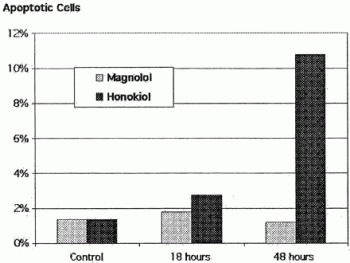 Effect of honokiol and magnolol on apoptosis. J Biol Chem, 2003, 278(37), 35501-35507.