| Size | Price | Stock | Qty |
|---|---|---|---|
| 5mg |
|
||
| 10mg |
|
||
| 25mg |
|
||
| 50mg |
|
||
| 100mg |
|
||
| 250mg |
|
||
| 500mg |
|
||
| Other Sizes |


Purity: ≥98%
| Targets |
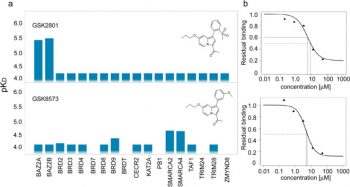
GSK2801 (GSK-2801) is a selective inhibitor of the bromodomains of BAZ2A and BAZ2B. In homogeneous time-resolved fluorescence (HTRF) binding assays, it exhibits IC50 values of ~10 nM for BAZ2A bromodomain and ~30 nM for BAZ2B bromodomain. It shows minimal activity against other bromodomains (e.g., BET family BRD4 BD1/BD2, CBP, p300) with IC50 values all exceeding 1000 nM [1]
- GSK2801 (GSK-2801) also inhibits the BRD9 bromodomain, with an IC50 of ~60 nM in HTRF assays, and maintains selectivity for BAZ2A/BAZ2B/BRD9 over other bromodomain families (IC50 > 1000 nM for non-target bromodomains) [2] |
|---|---|
| ln Vitro |
GSK2801 binds TAF1L(2) with an affinity KB of 0.31μM (KD: 3.2 μM) and a binding enthalpy change ΔH of −8.6 kcal/mol. ITC tests employing the bromodomain of BRD9 results in the measurement of an affinity KB of 0.826 μM (KD: 1.1 μM) and ΔH of −9.8 kcal/mol[1]. GSK2801 or RNAi suppression of BAZ2A/B with JQ1 selectively displaced BRD2 to promoters/enhancers of ETS-regulated genes. In 2D cells, enhanced displacement of BRD2 from chromatin by combined pharmacological therapy triggered senescence. In spheroid cultures, combined therapy produces cleaved caspase-3 and cleavage PARP typical of apoptosis in tumor cells. Thus, GSK2801 suppresses BRD2-driven transcription in conjunction with BET inhibitor and promotes apoptosis of TNBC[2] .
GSK2801 (GSK-2801) specifically disrupts BAZ2A/BAZ2B-histone interactions. In HTRF assays, 100 nM GSK2801 blocked ~95% of BAZ2A binding to acetylated histone H3 peptide (H3K14ac) and ~85% of BAZ2B binding to the same peptide. Surface plasmon resonance (SPR) confirmed direct binding to BAZ2A (KD ~12 nM) and BAZ2B (KD ~28 nM). In HeLa cells overexpressing BAZ2A, 1 μM GSK2801 reduced BAZ2A recruitment to chromatin (measured by ChIP-qPCR) by ~60% and downregulated BAZ2A target genes (e.g., rRNA genes) by ~50% at the mRNA level [1] - GSK2801 (GSK-2801) synergizes with BET inhibitors to induce apoptosis in triple-negative breast cancer (TNBC) cells. In MDA-MB-231 and BT-549 TNBC cells: - Monotherapy with GSK2801 (1, 5, 10 μM) reduced cell viability by 10-25% after 72 hours (CCK-8 assay), while BET inhibitor JQ1 (0.5, 1 μM) alone reduced viability by 15-30%. - Combination treatment (5 μM GSK2801 + 1 μM JQ1) reduced viability by 70% (MDA-MB-231) and 65% (BT-549), with a combination index (CI) < 0.5 (indicating strong synergy). - Flow cytometry (Annexin V-FITC/PI staining) showed apoptotic rates increased from 8% (vehicle) to 45% (combination) in MDA-MB-231 cells. - Western blot analysis revealed the combination downregulated anti-apoptotic protein Bcl-2 by ~75% and upregulated cleaved caspase-3 by ~3-fold compared to monotherapies [2] - GSK2801 (GSK-2801) has no significant cytotoxicity in normal cells. Treatment of normal human mammary epithelial cells (HMECs) with GSK2801 (up to 20 μM) for 72 hours maintained cell viability above 90% relative to vehicle, and combination with JQ1 (1 μM) only reduced viability by ~20% [2] |
| ln Vivo |
After oral and intraperitoneal dosing to male CD1 mice, the pharmacokinetic characteristics are assessed to assess the appropriateness of GSK2801 for in vivo investigations. Following oral dosage, GSK2801 exhibits a decent in vivo exposure, mild clearance, and reasonable plasma stability[1].
GSK2801 (GSK-2801) synergizes with BET inhibitors to suppress triple-negative breast cancer (TNBC) xenograft growth. Nude mice (BALB/c nu/nu, female, 6-8 weeks old) were subcutaneously injected with MDA-MB-231 cells (5×10⁶ cells/mouse) to establish tumors. When tumors reached ~150 mm³, mice were randomized into 4 groups (n=6/group): 1. Vehicle group: 0.5% methylcellulose + 0.1% Tween-80 (oral gavage, once daily (qd)). 2. GSK2801 group: 50 mg/kg GSK2801 (dissolved in 0.5% methylcellulose + 0.1% Tween-80, oral gavage, qd). 3. JQ1 group: 25 mg/kg JQ1 (dissolved in 10% DMSO + 90% saline, intraperitoneal injection (ip), qd). 4. Combination group: GSK2801 50 mg/kg oral qd + JQ1 25 mg/kg ip qd. - After 21 days of treatment: - Tumor volume in the combination group was reduced by ~80% compared to vehicle (vs. ~20% for GSK2801 alone and ~30% for JQ1 alone). - No significant weight loss (vehicle vs. combination: 21±2 g vs. 20±1 g) or pathological changes in liver/kidney (H&E staining) were observed in any treatment group [2] |
| Enzyme Assay |
HTRF-based BAZ2A/BAZ2B bromodomain binding assay [1]
: 1. Recombinant human BAZ2A bromodomain (residues 1221-1314) and BAZ2B bromodomain (residues 1194-1287) were expressed in Escherichia coli and purified via affinity chromatography (GST-tagged). 2. The assay was performed in 384-well plates with a total volume of 20 μL per well, containing 50 nM BAZ2A/BAZ2B bromodomain, 20 nM fluorescently labeled acetylated histone H3 peptide (FAM-H3K14ac), and serial dilutions of GSK2801 (0.001-1000 nM). 3. The mixture was incubated at room temperature for 1 hour, followed by addition of 10 μL anti-GST-Tb cryptate antibody (to detect GST-tagged bromodomains). 4. HTRF signals (fluorescence resonance energy transfer between FAM and Tb cryptate) were measured using a microplate reader. IC50 values were calculated by fitting dose-response curves with a four-parameter logistic regression model. - SPR-based BAZ2A bromodomain binding assay [1] : 1. Recombinant BAZ2A bromodomain was immobilized on a CM5 sensor chip via amine coupling to a surface density of ~180 response units (RU). 2. GSK2801 was prepared in running buffer (10 mM HEPES pH 7.4, 150 mM NaCl, 0.05% Tween-20) at concentrations of 0.03, 0.1, 0.3, 1, 3, 10 μM and injected over the chip surface at a flow rate of 30 μL/min. 3. The association phase was monitored for 120 seconds, and the dissociation phase for 300 seconds. The chip surface was regenerated with 10 mM glycine-HCl (pH 2.5) after each injection. 4. KD values were determined by fitting sensorgrams with a 1:1 Langmuir binding model using SPR data analysis software. |
| Cell Assay |
HeLa cell BAZ2A target gene expression assay [1]
1. HeLa cells were seeded in 6-well plates at 2×10⁵ cells/well and cultured in DMEM medium supplemented with 10% fetal bovine serum. 2. Cells were treated with GSK2801 (0.1, 1, 10 μM) or vehicle (0.1% DMSO) for 24 hours. 3. Total RNA was extracted using an RNA isolation kit, and cDNA was synthesized via reverse transcription. 4. qPCR was performed using specific primers for BAZ2A target genes (e.g., rRNA 47S precursor) and the housekeeping gene GAPDH. Relative mRNA expression was calculated using the 2-ΔΔCt method. - TNBC cell viability and apoptosis assay [2] : 1. MDA-MB-231 and BT-549 cells were seeded in 96-well plates at 5×10³ cells/well and cultured in RPMI 1640 medium supplemented with 10% fetal bovine serum. 2. Cells were treated with GSK2801 (0.1-20 μM), JQ1 (0.01-5 μM), or their combinations for 72 hours. Cell viability was measured via CCK-8 assay (absorbance at 450 nm). 3. For apoptosis detection, cells were seeded in 6-well plates at 2×10⁵ cells/well, treated with 5 μM GSK2801 + 1 μM JQ1 for 48 hours, stained with Annexin V-FITC/PI, and analyzed via flow cytometry. - TNBC cell protein and gene expression assay [2] : 1. MDA-MB-231 cells were seeded in 6-well plates at 2×10⁵ cells/well, treated with GSK2801 (5 μM), JQ1 (1 μM), or combination for 24 hours. 2. Western blot: Cells were lysed, proteins were separated by SDS-PAGE, transferred to membranes, and probed with antibodies against Bcl-2, cleaved caspase-3, and GAPDH (loading control). Signals were detected via chemiluminescence. 3. qPCR: Total RNA was extracted, cDNA synthesized, and qPCR performed with primers for pro-fibrotic genes (e.g., Col1A1) and GAPDH. |
| Animal Protocol |
Formulated in 0.5% CMC+1% Tween 80; 30 mg/kg; i.p. or p.o. Male CD1 mice
TNBC xenograft model protocol [2] : 1. Cell preparation: MDA-MB-231 cells were cultured to log phase, harvested, and resuspended in PBS mixed with Matrigel (1:1, v/v) at a concentration of 5×10⁷ cells/mL. 2. Tumor establishment: Nude mice (BALB/c nu/nu, female, 6-8 weeks old) were acclimated for 1 week, then subcutaneously injected with 100 μL cell suspension (5×10⁶ cells/mouse) into the right flank. 3. Grouping and treatment: When tumors reached ~150 mm³, mice were randomized into 4 groups (n=6/group): - Vehicle: 0.5% methylcellulose + 0.1% Tween-80, oral gavage, qd. - GSK2801: 50 mg/kg GSK2801 dissolved in 0.5% methylcellulose + 0.1% Tween-80, oral gavage, qd. - JQ1: 25 mg/kg JQ1 dissolved in 10% DMSO + 90% saline, ip, qd. - Combination: GSK2801 (50 mg/kg oral qd) + JQ1 (25 mg/kg ip qd). 4. Monitoring and sampling: Tumor volume (measured via caliper, formula: volume = length × width²/2) and mouse weight were recorded every 3 days. After 21 days, mice were euthanized, tumors were excised and weighed, and liver/kidney tissues were collected for H&E staining. |
| ADME/Pharmacokinetics |
GSK2801 (GSK-2801) has good in vitro and in vivo pharmacokinetic properties [1]: 1. Oral bioavailability: In CD-1 mice, the oral bioavailability of 10 mg/kg GSK2801 is approximately 45%. 2. Plasma half-life (t1/2): The t1/2 of intravenous injection of 5 mg/kg GSK2801 in mice is approximately 3.5 hours; the t1/2 of oral administration (10 mg/kg) is approximately 4.2 hours. 3. Clearance (CL): The clearance rate of intravenous injection in mice is approximately 12 mL/min/kg. 4. Volume of distribution (Vd): The Vd of intravenous injection in mice is approximately 0.8 L/kg, indicating that its tissue distribution is moderate.
|
| Toxicity/Toxicokinetics |
In vitro toxicity: GSK2801 (GSK-2801) exhibits low cytotoxicity to normal cells. After treatment with GSK2801 (at concentrations up to 20 μM) for 72 hours, human foreskin fibroblasts (HFF) and normal breast epithelial cells (HMEC) maintained cell viability above 90% (compared to the solvent control group) [1, 2]. In vivo toxicity: In the TNBC xenograft model (reference [2]), 50 mg/kg GSK2801 (orally once daily for 21 days) did not cause significant weight loss, and H&E staining of liver and kidney tissues showed no pathological changes (e.g., necrosis, inflammation). In CD-1 mice (reference [1]), a single oral dose of up to 200 mg/kg of GSK2801 did not cause acute toxicity (e.g., lethality, behavioral abnormalities) [1, 2]
- Plasma protein binding: In vitro human plasma protein binding assay (ultrafiltration) showed that approximately 92% of GSK2801 bound to plasma proteins [1] |
| References |
|
| Additional Infomation |
GSK2801 (GSK-2801) was initially developed as a selective chemical probe for detecting the bromodomains of BAZ2A and BAZ2B[1]. BAZ2A/B is a component of the nucleolar remodeling complex (NoRC), which regulates rRNA transcription—making GSK2801 a key tool for studying NoRC-mediated chromatin remodeling and rRNA synthesis[1]. GSK2801 (GSK-2801) has expanded its therapeutic potential by inhibiting BRD9[2]. BRD9 is a component of the SWI/SNF chromatin remodeling complex, and inhibition of BRD9 in triple-negative breast cancer (TNBC) cells disrupts pro-survival pathways. The synergistic effect between GSK2801 and BET inhibitors (such as JQ1) stems from the co-targeting of overlapping pro-tumor transcriptional networks, suggesting its potential in combination therapy for triple-negative breast cancer [2]. Unlike non-selective bromodomain inhibitors, the selectivity of GSK2801 (GSK-2801) for BAZ2A/BAZ2B/BRD9 minimizes off-target effects on other bromodomain families (such as BET, CBP/p300), thereby reducing potential toxicity and improving experimental reproducibility in mechanistic studies [1, 2].
|
| Molecular Formula |
C20H21NO4S
|
|
|---|---|---|
| Molecular Weight |
371.45
|
|
| Exact Mass |
371.119
|
|
| CAS # |
1619994-68-1
|
|
| Related CAS # |
|
|
| PubChem CID |
73010930
|
|
| Appearance |
Light yellow to khaki solid powder
|
|
| Density |
1.2±0.1 g/cm3
|
|
| Index of Refraction |
1.596
|
|
| LogP |
2.95
|
|
| Hydrogen Bond Donor Count |
0
|
|
| Hydrogen Bond Acceptor Count |
4
|
|
| Rotatable Bond Count |
6
|
|
| Heavy Atom Count |
26
|
|
| Complexity |
599
|
|
| Defined Atom Stereocenter Count |
0
|
|
| SMILES |
O=C(C)C1=CC(C2=C(S(=O)(C)=O)C=CC=C2)=C3N1C=CC(OCCC)=C3
|
|
| InChi Key |
KHWCPNJRJCNVRI-UHFFFAOYSA-N
|
|
| InChi Code |
InChI=1S/C20H21NO4S/c1-4-11-25-15-9-10-21-18(14(2)22)13-17(19(21)12-15)16-7-5-6-8-20(16)26(3,23)24/h5-10,12-13H,4,11H2,1-3H3
|
|
| Chemical Name |
1-(1-(2-(methylsulfonyl)phenyl)-7-propoxyindolizin-3-yl)ethanone
|
|
| Synonyms |
GSK-2801; GSK 2801; GSK2801
|
|
| HS Tariff Code |
2934.99.9001
|
|
| Storage |
Powder -20°C 3 years 4°C 2 years In solvent -80°C 6 months -20°C 1 month |
|
| Shipping Condition |
Room temperature (This product is stable at ambient temperature for a few days during ordinary shipping and time spent in Customs)
|
| Solubility (In Vitro) |
DMSO: 74 mg/mL (199.2 mM)
Water: 1 mg/mL (Insoluble) Ethanol: 7 mg/mL (18.8 mM) |
|---|---|
| Solubility (In Vivo) |
Solubility in Formulation 1: ≥ 2.5 mg/mL (6.73 mM) (saturation unknown) in 10% DMSO + 40% PEG300 + 5% Tween80 + 45% Saline (add these co-solvents sequentially from left to right, and one by one), clear solution.
For example, if 1 mL of working solution is to be prepared, you can add 100 μL of 25.0 mg/mL clear DMSO stock solution to 400 μL PEG300 and mix evenly; then add 50 μL Tween-80 to the above solution and mix evenly; then add 450 μL normal saline to adjust the volume to 1 mL. Preparation of saline: Dissolve 0.9 g of sodium chloride in 100 mL ddH₂ O to obtain a clear solution. Solubility in Formulation 2: 2.5 mg/mL (6.73 mM) in 10% DMSO + 90% (20% SBE-β-CD in Saline) (add these co-solvents sequentially from left to right, and one by one), suspension solution; with heating and sonication. For example, if 1 mL of working solution is to be prepared, you can add 100 μL of 25.0 mg/mL clear DMSO stock solution to 900 μL of 20% SBE-β-CD physiological saline solution and mix evenly. Preparation of 20% SBE-β-CD in Saline (4°C,1 week): Dissolve 2 g SBE-β-CD in 10 mL saline to obtain a clear solution. View More
Solubility in Formulation 3: 2.5 mg/mL (6.73 mM) in 10% DMSO + 90% Corn Oil (add these co-solvents sequentially from left to right, and one by one), clear solution. Solubility in Formulation 4: 0.5% CMC+1% Tween 80: 30mg/mL |
| Preparing Stock Solutions | 1 mg | 5 mg | 10 mg | |
| 1 mM | 2.6922 mL | 13.4608 mL | 26.9215 mL | |
| 5 mM | 0.5384 mL | 2.6922 mL | 5.3843 mL | |
| 10 mM | 0.2692 mL | 1.3461 mL | 2.6922 mL |
*Note: Please select an appropriate solvent for the preparation of stock solution based on your experiment needs. For most products, DMSO can be used for preparing stock solutions (e.g. 5 mM, 10 mM, or 20 mM concentration); some products with high aqueous solubility may be dissolved in water directly. Solubility information is available at the above Solubility Data section. Once the stock solution is prepared, aliquot it to routine usage volumes and store at -20°C or -80°C. Avoid repeated freeze and thaw cycles.
Calculation results
Working concentration: mg/mL;
Method for preparing DMSO stock solution: mg drug pre-dissolved in μL DMSO (stock solution concentration mg/mL). Please contact us first if the concentration exceeds the DMSO solubility of the batch of drug.
Method for preparing in vivo formulation::Take μL DMSO stock solution, next add μL PEG300, mix and clarify, next addμL Tween 80, mix and clarify, next add μL ddH2O,mix and clarify.
(1) Please be sure that the solution is clear before the addition of next solvent. Dissolution methods like vortex, ultrasound or warming and heat may be used to aid dissolving.
(2) Be sure to add the solvent(s) in order.
Chemoproteomic profiling of BAZ inhibitor selectivity to endogenous bromodomain proteins. J Med Chem. 2016 Feb 25; 59(4): 1410–1424. |
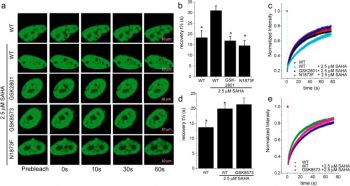
BAZ2A fluorescence recovery after photobleaching assay. J Med Chem. 2016 Feb 25; 59(4): 1410–1424. |
Products are for research use only; We do not sell to patients
Copyright 2020 InvivoChem LLC | All Rights Reserved


 COA
COA