| Size | Price | Stock | Qty |
|---|---|---|---|
| 10mg |
|
||
| 25mg |
|
||
| 50mg |
|
||
| 100mg |
|
||
| 250mg |
|
||
| 500mg | |||
| Other Sizes |


Purity: ≥98%
| Targets |
EIF2AK3 (PERK) (IC50 = 0.9 nM); EIF2AK1 (HRI) (IC50 = 460 nM); BRK (IC50 = 905 nM); EIF2AK2 (PKR) (IC50 = 905 nM); MEKK3 (IC50 = 954 nM); Aurora B (IC50 = 1259 nM); KHS (IC50 = 1764 nM); LCK (IC50 = 2344 nM); MLK2 (IC50 = 15 nM); MEKK3 (IC50 = 2847 nM); ALK5 (IC50 = 3020 nM); MLCK2 (IC50 = 3039 nM); EIF2AK4(GCN2) (IC50 = 3162 nM); c-MER (IC50 = 3431 nM); PI3Kγ (IC50 = 3802 nM); WNK3 (IC50 = 5951 nM); LRRK2 (IC50 = 6918 nM); ROCK1 (IC50 = 7244 nM); MSK1 (IC50 = 8985 nM); NEK1 (IC50 = 9807 nM); AXL (IC50 = 9808 nM); JAK2 (IC50 = 24547 nM)
GSK2656157 is a potent, selective catalytic inhibitor of protein kinase R (PKR)-like endoplasmic reticulum kinase (PERK), a key regulator of the unfolded protein response (UPR). It exhibits minimal activity against other eIF2α kinases and a broad range of non-eIF2α kinases. - For human PERK (recombinant kinase domain, TR-FRET assay): IC₅₀ = 0.1 nM [1] - For human PKR (recombinant, TR-FRET assay): IC₅₀ = 320 nM (≈3200-fold less potent than PERK) [1] - For human GCN2 (recombinant, TR-FRET assay): IC₅₀ = 1500 nM [1] - For human HRI (recombinant, TR-FRET assay): IC₅₀ = 950 nM [1] - For 290+ non-eIF2α kinases (panel screening): IC₅₀ > 10,000 nM (no significant inhibition) [1] - For PERK-mediated eIF2α phosphorylation in A549 cells (cell-based assay): EC₅₀ = 2 nM [1] |
|---|---|
| ln Vitro |
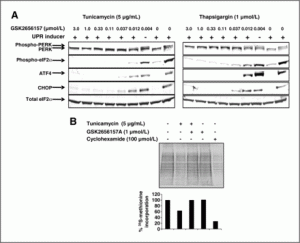
Inhibiting PERK activation and lowering the downstream substrates phospho-eIF2a, ATF4, and CHOP with an IC50 in the 10–30 nM range are the effects of pretreating cells with GSK2656157. Before UPR induction, cells exposed to 1 mM GSK2656157 are able to block this impact on protein synthesis from scratch. GSK2656157 decreases the expression of five of the 84 UPR-related genes (DDIT3, HERPUD1, PPP1R15A, C/EBP-beta, and ERN1) by a factor of more than four. With an IC50 range of 6–25 mM, GSK2656157 has no discernible impact on the growth of any of these cells when exogenous UPR inducers are not present. In different biological contexts, GSK2656157 can be used to assess the biologic function of PERK. [1]
GSK2656157 is a potent, selective catalytic inhibitor of protein kinase R (PKR)-like endoplasmic reticulum kinase (PERK), a key regulator of the unfolded protein response (UPR). It exhibits minimal activity against other eIF2α kinases and a broad range of non-eIF2α kinases. - For human PERK (recombinant kinase domain, TR-FRET assay): IC₅₀ = 0.1 nM [1] - For human PKR (recombinant, TR-FRET assay): IC₅₀ = 320 nM (≈3200-fold less potent than PERK) [1] - For human GCN2 (recombinant, TR-FRET assay): IC₅₀ = 1500 nM [1] - For human HRI (recombinant, TR-FRET assay): IC₅₀ = 950 nM [1] - For 290+ non-eIF2α kinases (panel screening): IC₅₀ > 10,000 nM (no significant inhibition) [1] - For PERK-mediated eIF2α phosphorylation in A549 cells (cell-based assay): EC₅₀ = 2 nM [1] |
| ln Vivo |
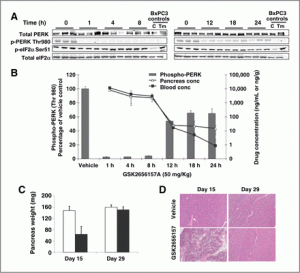
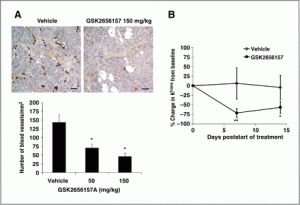
Complete inhibition of phospho-PERK Thr980 is observed through 8 hours after a single 50 mg/kg oral dose of GSK2656157. Treatment of mice with 50 or 150 mg/kg twice daily doses of GSK2656157 results in dose-dependent inhibition of tumor growth in four models, with tumor growth inhibition reaching 54-114% at the 150 mg/kg, twice daily dose. Potential mechanisms for the observed antitumor effect include altered amino acid metabolism, decreased blood vessel density, and vascular perfusion. Multiple human tumor xenografts are treated with GSK2656157 to inhibit tumor growth in mice. [1]
1. Antitumor efficacy in A549 lung cancer xenografts: Female athymic nude mice (6–8 weeks old) were subcutaneously injected with 5×10⁶ A549 cells. When tumors reached 100–150 mm³, mice were randomized into 4 groups (n=6/group): vehicle (0.5% methylcellulose), 1 mg/kg GSK2656157, 5 mg/kg GSK2656157, 10 mg/kg GSK2656157 (oral gavage, once daily for 21 days). The 10 mg/kg group achieved 92% tumor growth inhibition (TGI); tumor weight was reduced by 85% vs. vehicle. IHC showed reduced CD31 (endothelial marker) by 70% (antiangiogenic effect) [1] 2. Neuroprotection in rat subarachnoid hemorrhage (SAH) model: Male Sprague-Dawley rats (250–300 g) underwent endovascular perforation to induce SAH. GSK2656157 (0.3 mg/kg, intravenous injection) was administered 1 hour post-SAH. At 72 hours post-SAH, brain cortex showed 50% lower apoptotic index (TUNEL staining), 40% lower IL-1β levels (ELISA), and 35% higher neuron survival (NeuN staining) vs. vehicle. Neurological deficit scores (modified Garcia scale) improved from 5 to 12 [4] 3. Pharmacodynamic effects in mouse liver: C57BL/6 mice (male, 20–25 g) were orally administered GSK2656157 (10 mg/kg). At 2 hours post-dose, liver tissues showed 80% reduction in p-PERK and 70% reduction in p-eIF2α via western blot, confirming in vivo PERK inhibition [1] |
| Enzyme Assay |
Recombinant GST-PERK (536-1116 amino acids) with 6-His-full-length human eIF2a as a substrate is used to assess the inhibitory potency of GSK2656157. At GSK, 27 kinases and a panel of 300 kinases are used to evaluate kinase selectivity.
1. Human PERK Kinase Activity Assay (TR-FRET): Recombinant human PERK kinase domain (10 nM) was incubated with ATP (5 μM) and a fluorescently labeled peptide substrate (200 nM, corresponding to eIF2α Ser51) in kinase buffer (25 mM HEPES pH 7.4, 10 mM MgCl₂, 1 mM DTT, 0.005% Tween-20). GSK2656157 (0.0001–100 nM) was added, and the mixture was incubated at 30°C for 45 minutes. Phosphorylated substrate was detected using a phospho-specific antibody and TR-FRET (excitation 485 nm, emission 520/620 nm). IC₅₀ was calculated as the concentration inhibiting 50% kinase activity [1] 2. Kinase Selectivity Panel Assay: GSK2656157 (1 μM) was screened against 290+ human kinases using radiometric (³²P incorporation) or fluorescent (ADP-Glo) assays. Activity was quantified as % inhibition relative to vehicle. Selectivity was defined as >1000-fold higher IC₅₀ for non-PERK kinases (e.g., PKR, GCN2, CDK2) [1] 3. Caspase-1 Activity Assay: J774.1 cells were treated with LPS (1 μg/mL) + GSK2656157 (0.5–10 μM) for 6 hours. Cells were lysed, and caspase-1 activity was measured using a fluorogenic substrate (Ac-YVAD-AMC, 50 μM) in assay buffer (20 mM HEPES pH 7.5, 10% glycerol, 2 mM DTT). Fluorescence (excitation 380 nm, emission 460 nm) was measured every 10 minutes for 1 hour. IC₅₀ for caspase-1 inhibition was 2.3 μM [3] |
| Cell Assay |
Antiproliferative activity of GSK2656157 against multiple human tumor cell lines as well as primary human microvascular endothelial cells is evaluated in a 3-day proliferation assay using standard culture medium. GSK2656157, which has an IC50 range of 6 to 25 mM, has no discernible impact on the growth of any of these cells when exogenous UPR inducers are not present.
1. Antiproliferative Assay (GI₅₀ Determination): Cancer cells (A549, MDA-MB-231, PC-3) were seeded in 96-well plates (1000 cells/well) and incubated overnight (37°C, 5% CO₂). GSK2656157 (0.01–100 nM) was added, and cells were cultured for 72 hours. Cell viability was measured via CellTiter-Glo Luminescent Assay (luminescence proportional to ATP). GI₅₀ was calculated as the concentration inhibiting 50% cell growth vs. vehicle [1] 2. Western Blot for PERK/eIF2α/mTOR Signaling: A549 cells or PERK-knockout MEFs were treated with GSK2656157 (0.01–50 nM) for 2–4 hours. Cells were lysed in RIPA buffer (with protease/phosphatase inhibitors); 30 μg protein was separated by 10% SDS-PAGE and transferred to PVDF membranes. Membranes were probed with antibodies against p-PERK (Thr980), p-eIF2α (Ser51), p-S6 (Ser235/236), cleaved caspase-3, CHOP, and β-actin, followed by HRP-conjugated secondary antibodies. Bands were visualized via ECL [1, 2, 4] 3. HUVEC Tube Formation Assay (Antiangiogenic): HUVECs (2×10⁴ cells/well) were seeded on Matrigel-coated 96-well plates and treated with GSK2656157 (0.1–100 nM) for 6 hours. Tube formation was imaged under a light microscope, and total tube length was quantified using image analysis software. Inhibition rate was calculated vs. vehicle [1] 4. Neuron Survival Assay (NeuN Staining): Primary rat cortical neurons (7 days in vitro) were treated with tunicamycin (2 μg/mL) + GSK2656157 (0.1–10 μM) for 24 hours. Cells were fixed with 4% paraformaldehyde, stained with anti-NeuN antibody (neuron marker) and DAPI (nuclear stain). Surviving neurons (NeuN⁺/DAPI⁺) were counted, and survival rate was normalized to vehicle [4] |
| Animal Protocol |
00.5% hydroxypropyl methyl cellulose, 0.1% tween-80 in water (pH 6.75); 150 mg/kg; BID; Oral human tumor xenograft models
1. A549 Lung Cancer Xenograft Model: Female athymic nude mice (6–8 weeks old, 18–22 g) were acclimated for 7 days. A549 cells (5×10⁶ in 0.2 mL PBS/matrigel 1:1) were subcutaneously injected into the right flank. When tumors reached 100–150 mm³, mice were randomized into 4 groups (n=6/group). GSK2656157 was formulated in 0.5% methylcellulose (w/v) in deionized water, doses 1, 5, 10 mg/kg, administered via oral gavage once daily for 21 days. Vehicle group received 0.5% methylcellulose. Tumor volume (V = length×width²/2) and body weight were measured twice weekly. At study end, tumors were excised for IHC (CD31 staining) [1] 2. Rat Subarachnoid Hemorrhage (SAH) Model: Male Sprague-Dawley rats (250–300 g) were anesthetized with isoflurane. SAH was induced via endovascular perforation of the internal carotid artery. GSK2656157 was formulated in 10% DMSO/90% saline, administered as a single intravenous injection (0.3 mg/kg) 1 hour post-SAH. Vehicle group received 10% DMSO/90% saline. At 72 hours post-SAH, rats were euthanized; brains were collected for TUNEL staining, IL-1β ELISA, and NeuN staining. Neurological deficits were scored daily using the modified Garcia scale (0–18 points) [4] 3. Mouse Liver Pharmacodynamic Model: Male C57BL/6 mice (20–25 g) were orally administered GSK2656157 (10 mg/kg, formulated in 0.5% methylcellulose) or vehicle. Mice were euthanized at 0.5, 1, 2, 4 hours post-dose; liver tissues were harvested, frozen in liquid nitrogen, and lysed for western blot analysis of p-PERK and p-eIF2α [1] |
| ADME/Pharmacokinetics |
1. Oral pharmacokinetics in mice: Male CD-1 mice (n=3 at each time point) were given GSK2656157 (10 mg/kg, orally, 0.5% methylcellulose). Plasma was collected at 0.25, 0.5, 1, 2, 4, 6, 8 and 12 hours after administration. Drug concentration was determined by LC-MS/MS. Parameters: Cmax = 4.2 μM, Tmax = 1 hour, terminal half-life (t₁/₂) = 5.8 hours, oral bioavailability (F) = 52% [1] 2. Intravenous pharmacokinetics: Mice were given GSK2656157 (3 mg/kg, intravenously, 10% DMSO/90% saline). Parameters: CL = 8.6 mL/min/kg, Vdss = 0.6 L/kg [1]
3. Tissue distribution: Mice (10 mg/kg, orally) were sacrificed 2 hours later (Tmax). Tissues (liver, lung, tumor, brain, kidney) were homogenized; drug concentrations were determined by LC-MS/MS. Highest concentrations: liver (12.5 μM), lung (9.8 μM); tumor (5.1 μM, tumor/plasma ratio = 1.2); brain (0.8 μM, brain/plasma ratio = 0.19) [1] 4. Plasma protein binding: Human plasma (500 μL) was mixed with GSK2656157 (0.1–10 μM) and dialyzed at 37°C (12–14 kDa membrane) for 4 hours. Free drug concentrations were determined by liquid chromatography-tandem mass spectrometry (LC-MS/MS). Binding rate: 98.5% (human), 97.2% (mouse) [1] |
| Toxicity/Toxicokinetics |
1. In vitro cytotoxicity: GSK2656157 (at concentrations up to 1 μM) showed no significant toxicity to normal human cells: normal lung fibroblasts (MRC-5) and primary hepatocytes (cell viability > 90% by MTT assay, compared to the solvent control group). It did not induce excessive endoplasmic reticulum stress (CHOP overexpression) at therapeutic concentrations (0.01–100 nM) [1] 2. In vivo acute toxicity: After 14 days of treatment with GSK2656157 (1–30 mg/kg, orally, single dose), mice did not experience death, weight loss (<5%, compared to baseline), or clinical symptoms (somnia, ataxia). Serum ALT/AST, BUN, and creatinine were all within the normal range [1]
3. Subacute toxicity in xenograft models: In A549 xenograft mice (10 mg/kg, orally, once daily for 21 days), GSK2656157 did not cause significant weight loss, histopathological damage to the liver/kidney/spleen, or blood routine (white blood cells, red blood cells, and platelets were unchanged compared with the vector group) [1] 4. Toxicity in SAH models: Rats treated with GSK2656157 (0.3 mg/kg, intravenously) did not show abnormal liver/kidney function (serum markers) or brain necrosis 72 hours after SAH [4] |
| References |
|
| Additional Infomation |
GSK2656157 is a pyrrolopyrimidine compound with the chemical name 7-methyl-7H-pyrrolo[2,3-d]pyrimidine-4-amine, in which the 5-position is substituted with a 4-fluoro-2,3-dihydro-1H-indole-5-yl group, the nitrogen atom of which is acetylated with a (6-methylpyridin-2-yl)acetylated group. It is a PERK inhibitor with high oral bioavailability. GSK2656157 possesses various pharmacological activities, including as an EC 3.1.3.48 (protein tyrosine phosphatase) inhibitor, a PERK inhibitor, and an antitumor drug. It is a pyrrolopyrimidine, biaryl, indole, methylpyridine, organofluorine, and tertiary amide compound.
1. Background: GSK2656157 is a second-generation selective PERK inhibitor, optimized from earlier analogs (e.g., GSK2606414) with higher potency, oral bioavailability, and selectivity. It is being developed for the treatment of PERK-dependent diseases, including cancer, inflammation, and neurodegenerative diseases [1, 2]. 2. Mechanism of Action: GSK2656157 binds to the ATP-binding pocket of PERK, inhibiting its catalytic activity and blocking PERK-mediated eIF2α phosphorylation (classical effect). It also exerts non-classical effects, including mTOR signaling inhibition and NLRP3 inflammasome inhibition, which are independent of eIF2α [1, 2, 3] 3. Therapeutic potential: Preclinical data support the use of GSK2656157 to treat solid tumors (non-small cell lung cancer, breast cancer) through antitumor/antiangiogenic effects, to treat inflammatory diseases through NLRP3 inhibition, and to treat neurological diseases (subarachnoid hemorrhage, endoplasmic reticulum stress-related neurodegenerative diseases) through neuroprotective effects. The drug was evaluated in early preclinical studies but has not yet entered clinical trials [1, 3, 4] 4. Advantages over earlier PERK inhibitors: GSK2656157 has higher potency (PERK IC₅₀ = 0.1 nM, compared to 0.4 nM for GSK2606414), better oral bioavailability (52% vs. 45%), and broader therapeutic applications (anti-inflammatory/neuroprotective, while GSK2606414 is primarily for endoplasmic reticulum stress) [1, 2] 5. Limitations: GSK2656157 has limited brain penetration (brain/plasma ratio = 0.19), which may limit its use in the central nervous system. As the drug is still in preclinical development, long-term toxicity data or FDA safety information are lacking [1, 4] |
| Molecular Formula |
C23H21FN6O
|
|
|---|---|---|
| Molecular Weight |
416.45
|
|
| Exact Mass |
416.176
|
|
| Elemental Analysis |
C, 66.33; H, 5.08; F, 4.56; N, 20.18; O, 3.84
|
|
| CAS # |
1337532-29-2
|
|
| Related CAS # |
|
|
| PubChem CID |
53469059
|
|
| Appearance |
white to light yellow solid powder
|
|
| Density |
1.4±0.1 g/cm3
|
|
| Boiling Point |
744.6±60.0 °C at 760 mmHg
|
|
| Flash Point |
404.1±32.9 °C
|
|
| Vapour Pressure |
0.0±2.5 mmHg at 25°C
|
|
| Index of Refraction |
1.722
|
|
| LogP |
3.43
|
|
| Hydrogen Bond Donor Count |
1
|
|
| Hydrogen Bond Acceptor Count |
6
|
|
| Rotatable Bond Count |
3
|
|
| Heavy Atom Count |
31
|
|
| Complexity |
666
|
|
| Defined Atom Stereocenter Count |
0
|
|
| SMILES |
FC1=C(C([H])=C([H])C2=C1C([H])([H])C([H])([H])N2C(C([H])([H])C1=C([H])C([H])=C([H])C(C([H])([H])[H])=N1)=O)C1=C([H])N(C([H])([H])[H])C2C1=C(N([H])[H])N=C([H])N=2
|
|
| InChi Key |
PRWSIEBRGXYXAJ-UHFFFAOYSA-N
|
|
| InChi Code |
InChI=1S/C23H21FN6O/c1-13-4-3-5-14(28-13)10-19(31)30-9-8-16-18(30)7-6-15(21(16)24)17-11-29(2)23-20(17)22(25)26-12-27-23/h3-7,11-12H,8-10H2,1-2H3,(H2,25,26,27)
|
|
| Chemical Name |
1-[5-(4-amino-7-methylpyrrolo[2,3-d]pyrimidin-5-yl)-4-fluoro-2,3-dihydroindol-1-yl]-2-(6-methylpyridin-2-yl)ethanone
|
|
| Synonyms |
|
|
| HS Tariff Code |
2934.99.9001
|
|
| Storage |
Powder -20°C 3 years 4°C 2 years In solvent -80°C 6 months -20°C 1 month |
|
| Shipping Condition |
Room temperature (This product is stable at ambient temperature for a few days during ordinary shipping and time spent in Customs)
|
| Solubility (In Vitro) |
DMSO: ~32 mg/mL (~76.8 mM)
Water: 1 mg/mL (Insoluble) Ethanol: 1 mg/mL |
|---|---|
| Solubility (In Vivo) |
Solubility in Formulation 1: ≥ 0.5 mg/mL (1.20 mM) (saturation unknown) in 10% DMSO + 40% PEG300 + 5% Tween80 + 45% Saline (add these co-solvents sequentially from left to right, and one by one), clear solution.
For example, if 1 mL of working solution is to be prepared, you can add 100 μL of 5.0 mg/mL clear DMSO stock solution to 400 μL PEG300 and mix evenly; then add 50 μL Tween-80 to the above solution and mix evenly; then add 450 μL normal saline to adjust the volume to 1 mL. Preparation of saline: Dissolve 0.9 g of sodium chloride in 100 mL ddH₂ O to obtain a clear solution. Solubility in Formulation 2: ≥ 0.5 mg/mL (1.20 mM) (saturation unknown) in 10% DMSO + 90% (20% SBE-β-CD in Saline) (add these co-solvents sequentially from left to right, and one by one), clear solution. For example, if 1 mL of working solution is to be prepared, you can add 100 μL of 5.0 mg/mL clear DMSO stock solution to 900 μL of 20% SBE-β-CD physiological saline solution and mix evenly. Preparation of 20% SBE-β-CD in Saline (4°C,1 week): Dissolve 2 g SBE-β-CD in 10 mL saline to obtain a clear solution. View More
Solubility in Formulation 3: ≥ 0.5 mg/mL (1.20 mM) (saturation unknown) in 10% DMSO + 90% Corn Oil (add these co-solvents sequentially from left to right, and one by one), clear solution. Solubility in Formulation 4: 1% CMC Na: 30mg/mL Solubility in Formulation 5: 4.17 mg/mL (10.01 mM) in 0.5% HPMC 0.2%Tween80 (add these co-solvents sequentially from left to right, and one by one), suspension solution; with ultrasonication. |
| Preparing Stock Solutions | 1 mg | 5 mg | 10 mg | |
| 1 mM | 2.4012 mL | 12.0062 mL | 24.0125 mL | |
| 5 mM | 0.4802 mL | 2.4012 mL | 4.8025 mL | |
| 10 mM | 0.2401 mL | 1.2006 mL | 2.4012 mL |
*Note: Please select an appropriate solvent for the preparation of stock solution based on your experiment needs. For most products, DMSO can be used for preparing stock solutions (e.g. 5 mM, 10 mM, or 20 mM concentration); some products with high aqueous solubility may be dissolved in water directly. Solubility information is available at the above Solubility Data section. Once the stock solution is prepared, aliquot it to routine usage volumes and store at -20°C or -80°C. Avoid repeated freeze and thaw cycles.
Calculation results
Working concentration: mg/mL;
Method for preparing DMSO stock solution: mg drug pre-dissolved in μL DMSO (stock solution concentration mg/mL). Please contact us first if the concentration exceeds the DMSO solubility of the batch of drug.
Method for preparing in vivo formulation::Take μL DMSO stock solution, next add μL PEG300, mix and clarify, next addμL Tween 80, mix and clarify, next add μL ddH2O,mix and clarify.
(1) Please be sure that the solution is clear before the addition of next solvent. Dissolution methods like vortex, ultrasound or warming and heat may be used to aid dissolving.
(2) Be sure to add the solvent(s) in order.
|
|---|
|
|
Products are for research use only; We do not sell to patients
Copyright 2020 InvivoChem LLC | All Rights Reserved


 COA
COA