| Size | Price | Stock | Qty |
|---|---|---|---|
| 2mg |
|
||
| 5mg |
|
||
| 10mg |
|
||
| 25mg |
|
||
| 50mg |
|
||
| 100mg |
|
||
| 250mg | |||
| Other Sizes |


Purity: ≥98%
| Targets |
EIF2AK3 (PERK) (IC50 = 0.4 nM); EIF2AK1 (HRI) (IC50 = 420 nM); EIF2AK2 (PKR) (IC50 = 696 nM)
GSK2606414 is a potent and selective inhibitor of protein kinase R (PKR)-like endoplasmic reticulum kinase (PERK), a key kinase in the unfolded protein response (UPR). It exhibits high selectivity over other eIF2α kinases and a broad panel of kinases. - For human PERK (recombinant kinase domain, radiometric assay): IC₅₀ = 0.4 nM [1] - For human PKR (recombinant, radiometric assay): IC₅₀ = 420 nM (≈1000-fold less potent than PERK) [1] - For human GCN2 (recombinant, radiometric assay): IC₅₀ = 1800 nM [1] - For human HRI (recombinant, radiometric assay): IC₅₀ = 1000 nM [1] - For 300+ other kinases (panel screening): IC₅₀ > 10,000 nM (no significant inhibition) [1] - For Plasmodium falciparum PK4 (PfPK4, a parasite eIF2α kinase, radiometric assay): IC₅₀ = 23 nM [2] |
|---|---|
| ln Vitro |
GSK2606414 inhibits PERK activation in cells[1].
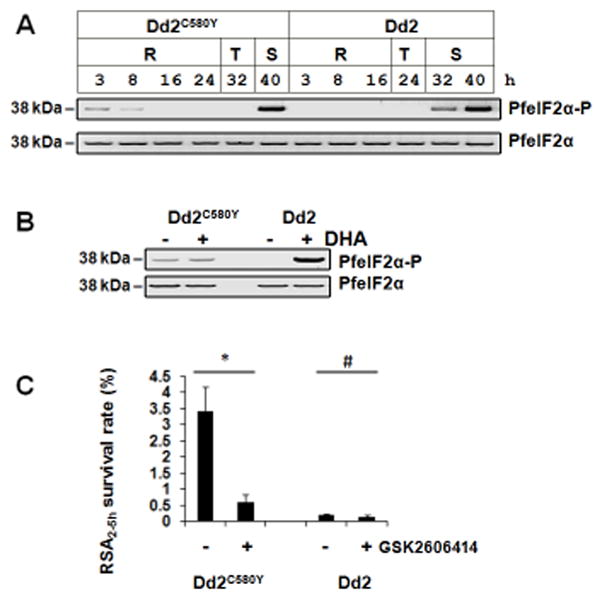
GSK2606414 inhibited PK4 alone, with no effect on the other two Plasmodium eIF2α kinases that respond to alternative stress signals (Figure S6). Importantly, GSK2606414 inhibited Plasmodium eIF2α phosphorylation and abolished recrudescence post-ART therapy (Figure 5). Since the ER, and hence PERK, are absent in mature erythrocytes, GSK2606414 is most likely exerting its activity through the parasite. [2] 1. Inhibition of PERK activation and downstream UPR signaling: GSK2606414 (0.01–100 nM) treated human embryonic kidney (HEK293) cells or mouse embryonic fibroblasts (MEFs) for 1–4 hours dose-dependently inhibited thapsigargin (ER stress inducer)-induced PERK autophosphorylation (p-PERK) by 90% at 10 nM (western blot). It reduced eIF2α phosphorylation (p-eIF2α) by 80% at 100 nM and downregulated UPR target genes (CHOP, GADD34) by 70% (qPCR) [1] 2. Reduction of ER stress-induced cell death: In tunicamycin-treated HeLa cells, GSK2606414 (1–100 nM) increased cell viability (MTT assay) from 30% (tunicamycin alone) to 85% at 100 nM, and decreased caspase-3/7 activity by 60% [1] 3. Inhibition of Plasmodium falciparum (P. falciparum) PfPK4 and prevention of artemisinin-induced latency: GSK2606414 (10–1000 nM) dose-dependently inhibited PfPK4-mediated eIF2α phosphorylation in P. falciparum lysates (IC₅₀ = 45 nM, western blot). In artemisinin (100 nM)-treated P. falciparum cultures, 100 nM GSK2606414 reduced the number of dormant parasites (hypnozoites) by 90% and prevented parasite recrudescence after drug withdrawal [2] 4. Selectivity in parasite vs. host cells: GSK2606414 (up to 1 μM) had no significant effect on human PERK activity in HeLa cells co-cultured with P. falciparum, indicating selective inhibition of PfPK4 at therapeutic concentrations [2] |
| ln Vivo |
GSK2606414 shows low to moderate blood clearance and high oral availability in mouse, rat, and dog. Oral administration of GSK2606414 inhibits tumor growth in mice with pancreatic human BxPC3 tumors in a dose-dependent manner. [1]
Moreover, compound 38 (GSK2606414) was advanced to a human xenograft efficacy study in mice and demonstrated that small molecule inhibition of PERK can inhibit tumor growth in vivo, consistent with the slow growth of tumors derived from transformed PERK–/– mouse embryonic fibroblasts. Further optimization offering improvements to the physical properties and pharmacokinetics of 38 will be the subject of a future communication.[1] 1. Reduction of ER stress markers in mouse liver: C57BL/6 mice (male, 20–25 g) were administered GSK2606414 (30 mg/kg, oral gavage) 1 hour before tunicamycin (1 mg/kg, ip, ER stress inducer). After 6 hours, liver tissues showed 70% lower p-PERK and 60% lower p-eIF2α levels (western blot) compared to vehicle + tunicamycin group [1] 2. Efficacy in P. berghei mouse malaria model: Female CD-1 mice (20–22 g) infected with P. berghei ANKA were treated with GSK2606414 (50 mg/kg, ip, once daily) + artemisinin (10 mg/kg, ip, once daily) for 3 days. Parasitemia (flow cytometry) was reduced by 95% on day 4, compared to 60% with artemisinin alone. No recrudescence was observed in the combination group up to day 14, while 80% of artemisinin-only mice showed recrudescence by day 10 [2] 3. Pharmacodynamic effect in mouse brain: Mice treated with GSK2606414 (30 mg/kg, oral) showed 50% reduction in p-eIF2α levels in brain cortex (western blot) 2 hours post-administration, confirming central nervous system penetration [1] |
| Enzyme Assay |
The cytoplasmic domain of GST-PERK is bought. 6-Human eIF2α full-length is isolated from baculovirus expression in Sf9 insect cells. The eIF2α protein is buffer exchanged by dialysis into PBS, followed by chemical modification with NHS-LC-biotin and buffer exchanged into 50 mM Tris, pH 7.2, 250 mM NaCl, and 5 mM DTT. Aliquoted protein is kept at -80°C for storage. When the freshly prepared quench solution is added to the reaction, the final concentrations of 4 nM eIF2α phospho-ser51-antibody, 4 nM anti-rabbit IgG labeled with Eu-1024, 40 nM streptavidin Surelight APC, and 15 mM EDTA are obtained. At a final volume of 10 μL, reactions were carried out in black 384-well polystyrene low volume plates. 10 mM HEPES, 5 mM MgCl2, 5 μM ATP, 1 mM DTT, 2 mM CHAPS, 40 nM biotinylated 6-His-eIF2α, and 0.4 nM GST-PERK are all present in the reaction volume in final concentrations. The compounds being analyzed are dissolved in 1.0 mM DMSO and then serially diluted 1–3 with DMSO over the course of 11 dilutions. For every concentration, 0.1 μL is added to the appropriate well in an assay plate. This results in a final compound concentration range of 10 μM to 0.00017 μM. Assay plates containing compounds are preincubated for 30 minutes at room temperature before receiving the GST-PERK solution. The addition of ATP and the eIF2α substrate solution starts the reaction. The quench solution is added after an hour of incubation. Before the signal is determined, the plates are covered and left at room temperature for two hours. Using a Viewlux reader, the resulting signal is quantified. An APC/Eu calculation is used to transform the data and normalize the APC signal to the europium signal. The data reduction formula 100 × [1 – (U1 – C2)/(C1 – C2)] is used to plot the percentage inhibition against the compound concentration for concentration response curves. In this formula, U represents the unknown value, C1 represents the average control value obtained for 1% DMSO, and C2 represents the average control value obtained for 0.1 M EDTA. A, B, C, D, and x represent the compound concentration, IC50, slope factor, and minimum and maximum responses, respectively, on a curve that fits the data. As IC50 values, the outcomes are noted for every compound.
1. Human PERK Kinase Assay: Recombinant human PERK kinase domain (20 nM) was incubated with ATP (10 μM) and a biotinylated peptide substrate (500 nM, sequence corresponding to eIF2α Ser51 region) in kinase buffer (50 mM HEPES pH 7.5, 10 mM MgCl₂, 1 mM DTT, 0.01% BSA). GSK2606414 (0.001–1000 nM) was added, and the mixture was incubated at 30°C for 60 minutes. Phosphorylated substrate was detected using streptavidin-conjugated beads and anti-phospho-eIF2α antibody via time-resolved fluorescence resonance energy transfer (TR-FRET). IC₅₀ was calculated as the concentration inhibiting 50% kinase activity [1] 2. PfPK4 Kinase Assay: Recombinant P. falciparum PK4 (50 nM) was incubated with [γ-³²P]ATP (5 μM) and recombinant P. falciparum eIF2α (100 nM) in parasite kinase buffer (25 mM Tris-HCl pH 7.4, 5 mM MgCl₂, 1 mM EGTA, 0.1 mM Na₃VO₄). GSK2606414 (0.1–1000 nM) was added, and the reaction proceeded at 37°C for 30 minutes. The reaction was stopped with SDS sample buffer, and ³²P incorporation into eIF2α was measured by autoradiography after SDS-PAGE. IC₅₀ was determined from dose-response curves [2] 3. Kinase Selectivity Panel: GSK2606414 (1 μM) was screened against 317 human kinases using radiometric or fluorescent assays. Activity was measured as % inhibition relative to vehicle, with selectivity defined as >100-fold higher IC₅₀ for non-PERK kinases [1] |
| Cell Assay |
Thapsigargin was used to stimulate the cells after PERK inhibitor (GSK2606414, compound 38) incubation. The cells were lysed and examined for PERK autophosphorylation inhibition after two hours.
PERK Phosphorylation in A549 Cells[1] Exponentially growing A549, a human lung adenocarcinoma cell line, was plated at 500 000 cells/well in a six-well dish in RPMI-1640 medium supplemented with 10% fetal bovine serum (FBS) and incubated overnight at 37 °C, 5% CO2. The following morning, cells were treated with DMSO or compound (3-fold dilutions 0.33, 0.11, 0.37 μM) and incubated as described above for 1 h. Cells were then stimulated with 1 μM thapsigargin for an additional hour to induce ER stress. Cells pellets were collected and lysed in cold RIPA buffer [150 mM NaCl, 50 mM Tris-HCl, pH 7.5, 0.25% sodium deoxycholate, 1% NP-40, protease and phosphatase inhibitors, and 100 mM sodium orthovanadate]. Clarified lysates were resolved by SDS–PAGE and transferred to nitrocellulose membrane using Invitrogen’s NuPAGE system. Blots were incubated with primary antibodies to total PERK and total eIF-2α. IRDye700DX-labeled goat anti-mouse IgG and IRDye800-CW donkey anti-goat IgG were used as secondary antibodies. Proteins were detected on the Odyssey infrared imager 1. PERK/UPR Signaling Detection (Western Blot): HEK293 cells (5×10⁵ cells/6-well plate) were pre-treated with GSK2606414 (0.01–100 nM) for 1 hour, then stimulated with thapsigargin (1 μM) for 2 hours. Cells were lysed in RIPA buffer (with phosphatase inhibitors), and 30 μg protein was separated by 10% SDS-PAGE. Membranes were probed with anti-p-PERK (Thr980), anti-p-eIF2α (Ser51), and total protein antibodies, followed by HRP-conjugated secondary antibodies. Band intensity was quantified by densitometry [1] 2. Cell Viability in ER Stress (MTT Assay): HeLa cells (1×10⁴ cells/96-well plate) were pre-treated with GSK2606414 (1–100 nM) for 1 hour, then exposed to tunicamycin (5 μg/mL) for 24 hours. MTT reagent (0.5 mg/mL) was added for 4 hours, formazan was dissolved in DMSO, and absorbance was measured at 570 nm. Viability was normalized to vehicle-treated cells [1] 3. P. falciparum Hypnozoite Assay: P. falciparum 3D7 strain was cultured in human erythrocytes (2% hematocrit) and treated with artemisinin (100 nM) + GSK2606414 (10–1000 nM) for 48 hours. Hypnozoites were identified by Giemsa staining (dense, rounded morphology) and counted under light microscopy. Recrudescence was assessed by monitoring parasite growth for 14 days after drug removal [2] |
| Animal Protocol |
Female nude mice have their right flank subcutaneously implanted with exponentially growing BxPC3 tumor cells (10×106 cells/mouse) cultivated in cell culture. Mice with tumors measuring less than 200 mm3 are randomly assigned to one of eight treatment groups sixteen days post-implantation. The animals are given the compound at 50 or 150 mg/kg, b.i.d., for 21 days along with a vehicle (0.5% hydoxypropylmethylcellulose, 0.1% Tween 80 in water, pH 4.8). Using calipers, the tumor volume is measured twice a week and computed. When the dosage is finished, the results are expressed as a percent inhibition, or 100[1-(average growth of the drug-treated population)/(average growth of the vehicle-treated control population)]. In statistical analysis, the two-tailed t test is employed.
Pharmacokinetic Studies[1] All studies were conducted after review by the Institutional Animal Care and Use Committee at GSK and in accordance with the GSK Policy on the Care, Welfare and Treatment of Laboratory Animals. Pharmacokinetics were studied in male Sprague–Dawley rats, male beagle dogs, and/or male CD-1 mice following single intravenous and/or oral administration. Absolute oral bioavailability was estimated using a crossover study design (n of 2 or 3), unless otherwise indicated. Blood samples were assayed using protein precipitation followed by LC/MS/MS analysis, and the resulting concentration–time data were analyzed by noncompartmental methods (WinNonlin Professional, version 4.1).[1] BxPC3 Human Pancreatic Xenograft Model[1] All studies were conducted after review by the Institutional Animal Care and Use Committee at GSK and in accordance with the GSK Policy on the Care, Welfare and Treatment of Laboratory Animals. Exponentially growing BxPC3 tumor cells (10 × 106 cells/mouse) from cell culture were implanted subcutaneously into the right flank of female nude mice (Charles River). Sixteen days after implantation, mice with ∼200 mm3 tumors were randomized into various treatment groups (n = 8 mice/group). Animals were orally treated with vehicle (0.5% hydoxypropylmethylcellulose, 0.1% Tween 80 in water, pH 4.8), compound 38 at 50 or 150 mg/kg, b.i.d. for 21 days. Tumor volume was measured twice weekly with calipers and calculated using the following equation: tumor volume (mm3) = (length × width)2/2. Results are represented as percent inhibition on completion of dosing, which is 100[1 – (average growth of drug-treated population)/(average growth of vehicle-treated control population)]. Statistical analysis was performed using a two-tailed t test. 1. Mouse ER Stress Model: Male C57BL/6 mice (20–25 g) were acclimated for 7 days. GSK2606414 was formulated in 0.5% methylcellulose + 0.1% Tween 80, administered via oral gavage (30 mg/kg) 1 hour before tunicamycin (1 mg/kg, ip, dissolved in saline). Control groups received vehicle + tunicamycin or vehicle alone. Mice were euthanized 6 hours post-tunicamycin, and liver/brain tissues were collected for western blot analysis of p-PERK and p-eIF2α [1] 2. P. berghei Malaria Model: Female CD-1 mice (20–22 g) were infected with P. berghei ANKA (1×10⁶ parasitized erythrocytes, ip). When parasitemia reached 5–7% (day 3 post-infection), mice were randomized into 4 groups (n=6/group): vehicle (5% DMSO + 95% saline, ip), GSK2606414 alone (50 mg/kg, ip), artemisinin alone (10 mg/kg, ip), and combination. Treatments were given once daily for 3 days. Parasitemia was measured daily via flow cytometry (staining with SYBR Green I), and recrudescence was monitored for 14 days [2] |
| ADME/Pharmacokinetics |
1. Mouse pharmacokinetics: In male CD-1 mice, a single oral dose of GSK2606414 (30 mg/kg) showed: Cmax = 2.8 μM, Tmax = 1 h, terminal half-life (t₁/₂) = 4.2 h, and oral bioavailability (F) = 45%. Intravenous injection (10 mg/kg) showed a clearance (CL) of 12 mL/min/kg and a volume of distribution (Vd) of 0.8 L/kg [1]
2. Tissue distribution: Mice were sacrificed 2 hours after oral administration of 30 mg/kg. The tissue concentrations were: liver (5.2 μM), brain (1.1 μM), kidney (3.8 μM), and plasma (2.5 μM), with a brain/plasma concentration ratio of 0.44 [1] 3. Plasma protein binding: Human plasma (90% v/v) was incubated with GSK2606414 (1 μM) and dialyzed using a 10 kDa molecular weight cutoff dialysis membrane. The free drug fraction was 2.3%, indicating a high plasma protein binding rate (97.7%) [1] |
| Toxicity/Toxicokinetics |
1. In vitro cytotoxicity: GSK2606414 (at concentrations up to 1 μM) had no significant effect on the viability of HEK293, HeLa, or primary human hepatocytes (viability > 90% vs. vector, MTT assay) [1] 2. In vivo acute toxicity: Mice treated with GSK2606414 (30–100 mg/kg, orally, single dose) did not show death, weight loss (<5%), or clinical symptoms (somnia, ataxia) within 7 days. Serum ALT, AST, and creatinine levels were all within the normal range [1] 3. Combined toxicity in malaria models: Compared with the vector group, mice treated with GSK2606414 (50 mg/kg) + artemisinin (10 mg/kg) for 3 days showed no significant changes in body weight or hematological parameters (erythrocytes, leukocytes, platelets) [2]
|
| References |
|
| Additional Infomation |
See also: Gsk2606414 (note moved to).
1. Background: GSK2606414 is the first selective PERK inhibitor designed to investigate the role of PERK in UPR and endoplasmic reticulum stress-related diseases. It was discovered through structure-based drug design that optimized its potency and selectivity against other eIF2α kinases [1]. 2. Mechanism of action: GSK2606414 binds to the ATP-binding pocket of PERK, inhibiting its kinase activity and thus preventing PERK-mediated eIF2α phosphorylation. This drug blocks the PERK branch of the UPR, thereby reducing endoplasmic reticulum stress-induced pro-apoptotic signaling pathways (e.g., CHOP), while preserving other UPR branches (IRE1, ATF6) [1] 3. Therapeutic potential: Preclinical studies have shown that GSK2606414 may be effective for endoplasmic reticulum stress-related diseases (e.g., neurodegenerative diseases, diabetes) and malaria (by preventing artemisinin-induced parasite latency). It is currently an investigational tool and has not yet entered clinical trials [1, 2] 4. Limitations: GSK2606414 has moderate oral bioavailability (45%) and poor brain permeability (brain/plasma ratio of 0.44), which may limit its application in the central nervous system. Its selectivity for PfPK4 expands its application scope, but further optimization is still needed for the treatment of malaria [1, 2] |
| Molecular Formula |
C24H20F3N5O
|
|
|---|---|---|
| Molecular Weight |
451.44
|
|
| Exact Mass |
451.161
|
|
| Elemental Analysis |
C, 63.85; H, 4.47; F, 12.63; N, 15.51; O, 3.54
|
|
| CAS # |
1337531-36-8
|
|
| Related CAS # |
|
|
| PubChem CID |
53469448
|
|
| Appearance |
white solid powder
|
|
| Density |
1.4±0.1 g/cm3
|
|
| Boiling Point |
720.3±60.0 °C at 760 mmHg
|
|
| Flash Point |
389.4±32.9 °C
|
|
| Vapour Pressure |
0.0±2.3 mmHg at 25°C
|
|
| Index of Refraction |
1.668
|
|
| LogP |
4.53
|
|
| Hydrogen Bond Donor Count |
1
|
|
| Hydrogen Bond Acceptor Count |
7
|
|
| Rotatable Bond Count |
3
|
|
| Heavy Atom Count |
33
|
|
| Complexity |
721
|
|
| Defined Atom Stereocenter Count |
0
|
|
| SMILES |
FC(C1=C([H])C([H])=C([H])C(=C1[H])C([H])([H])C(N1C2C([H])=C([H])C(C3=C([H])N(C([H])([H])[H])C4C3=C(N([H])[H])N=C([H])N=4)=C([H])C=2C([H])([H])C1([H])[H])=O)(F)F
|
|
| InChi Key |
SIXVRXARNAVBTC-UHFFFAOYSA-N
|
|
| InChi Code |
InChI=1S/C24H20F3N5O/c1-31-12-18(21-22(28)29-13-30-23(21)31)15-5-6-19-16(11-15)7-8-32(19)20(33)10-14-3-2-4-17(9-14)24(25,26)27/h2-6,9,11-13H,7-8,10H2,1H3,(H2,28,29,30)
|
|
| Chemical Name |
1-[5-(4-amino-7-methylpyrrolo[2,3-d]pyrimidin-5-yl)-2,3-dihydroindol-1-yl]-2-[3-(trifluoromethyl)phenyl]ethanone
|
|
| Synonyms |
|
|
| HS Tariff Code |
2934.99.9001
|
|
| Storage |
Powder -20°C 3 years 4°C 2 years In solvent -80°C 6 months -20°C 1 month Note: This product requires protection from light (avoid light exposure) during transportation and storage. |
|
| Shipping Condition |
Room temperature (This product is stable at ambient temperature for a few days during ordinary shipping and time spent in Customs)
|
| Solubility (In Vitro) |
DMSO: ~90 mg/mL (~199.4 mM)
Water: 1 mg/mL (Insoluble) Ethanol: ~19 mg/mL (~42.1 mM) |
|---|---|
| Solubility (In Vivo) |
Solubility in Formulation 1: ≥ 2.5 mg/mL (5.54 mM) (saturation unknown) in 10% DMSO + 40% PEG300 + 5% Tween80 + 45% Saline (add these co-solvents sequentially from left to right, and one by one), clear solution.
For example, if 1 mL of working solution is to be prepared, you can add 100 μL of 25.0 mg/mL clear DMSO stock solution to 400 μL PEG300 and mix evenly; then add 50 μL Tween-80 to the above solution and mix evenly; then add 450 μL normal saline to adjust the volume to 1 mL. Preparation of saline: Dissolve 0.9 g of sodium chloride in 100 mL ddH₂ O to obtain a clear solution. Solubility in Formulation 2: 2.5 mg/mL (5.54 mM) in 10% DMSO + 90% (20% SBE-β-CD in Saline) (add these co-solvents sequentially from left to right, and one by one), suspension solution; with ultrasonication. For example, if 1 mL of working solution is to be prepared, you can add 100 μL of 25.0 mg/mL clear DMSO stock solution to 900 μL of 20% SBE-β-CD physiological saline solution and mix evenly. Preparation of 20% SBE-β-CD in Saline (4°C,1 week): Dissolve 2 g SBE-β-CD in 10 mL saline to obtain a clear solution. View More
Solubility in Formulation 3: ≥ 2.5 mg/mL (5.54 mM) (saturation unknown) in 5% DMSO + 40% PEG300 + 5% Tween80 + 50% Saline (add these co-solvents sequentially from left to right, and one by one), clear solution. Solubility in Formulation 4: in 5% DMSO+45% PEG 300+ddH2O: 20mg/mL Solubility in Formulation 5: 3.33 mg/mL (7.38 mM) in 0.5% HPMC 0.2%Tween80 (add these co-solvents sequentially from left to right, and one by one), suspension solution; with ultrasonication. |
| Preparing Stock Solutions | 1 mg | 5 mg | 10 mg | |
| 1 mM | 2.2151 mL | 11.0757 mL | 22.1513 mL | |
| 5 mM | 0.4430 mL | 2.2151 mL | 4.4303 mL | |
| 10 mM | 0.2215 mL | 1.1076 mL | 2.2151 mL |
*Note: Please select an appropriate solvent for the preparation of stock solution based on your experiment needs. For most products, DMSO can be used for preparing stock solutions (e.g. 5 mM, 10 mM, or 20 mM concentration); some products with high aqueous solubility may be dissolved in water directly. Solubility information is available at the above Solubility Data section. Once the stock solution is prepared, aliquot it to routine usage volumes and store at -20°C or -80°C. Avoid repeated freeze and thaw cycles.
Calculation results
Working concentration: mg/mL;
Method for preparing DMSO stock solution: mg drug pre-dissolved in μL DMSO (stock solution concentration mg/mL). Please contact us first if the concentration exceeds the DMSO solubility of the batch of drug.
Method for preparing in vivo formulation::Take μL DMSO stock solution, next add μL PEG300, mix and clarify, next addμL Tween 80, mix and clarify, next add μL ddH2O,mix and clarify.
(1) Please be sure that the solution is clear before the addition of next solvent. Dissolution methods like vortex, ultrasound or warming and heat may be used to aid dissolving.
(2) Be sure to add the solvent(s) in order.
 PK4 inhibitor GSK2606414 prevents recrudescence following ART treatment.Cell Host Microbe. 2017 Dec 13;22(6):766-776.e4. |
|---|
Phosphorylation of PfeIF2α in aPfK13C580Y mutant parasite.Cell Host Microbe. 2017 Dec 13;22(6):766-776.e4. |
Products are for research use only; We do not sell to patients
Copyright 2020 InvivoChem LLC | All Rights Reserved


 COA
COA