| Size | Price | Stock | Qty |
|---|---|---|---|
| 500mg |
|
||
| Other Sizes |


Purity: ≥98%
| Targets |
EDHB targets prolyl hydroxylase domain enzymes (PHDs) as a competitive inhibitor. By inhibiting PHDs, EDHB stabilizes HIF-1α, a transcription factor that regulates genes involved in angiogenesis, metabolism, and cell survival. Activation of HIF-1α induces autophagy and apoptosis in tumor cells. EDHB also inhibits the NF-κB pathway, regulates inflammatory responses, improves vascular permeability, and promotes osteoblast differentiation. Its mechanism involves the modulation of hypoxia signaling and inflammatory pathways.
|
|---|---|
| ln Vitro |
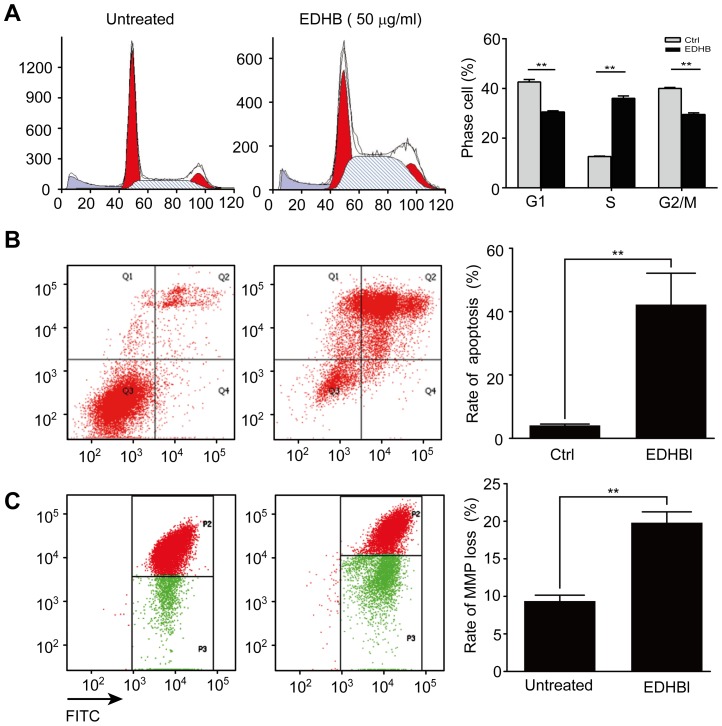
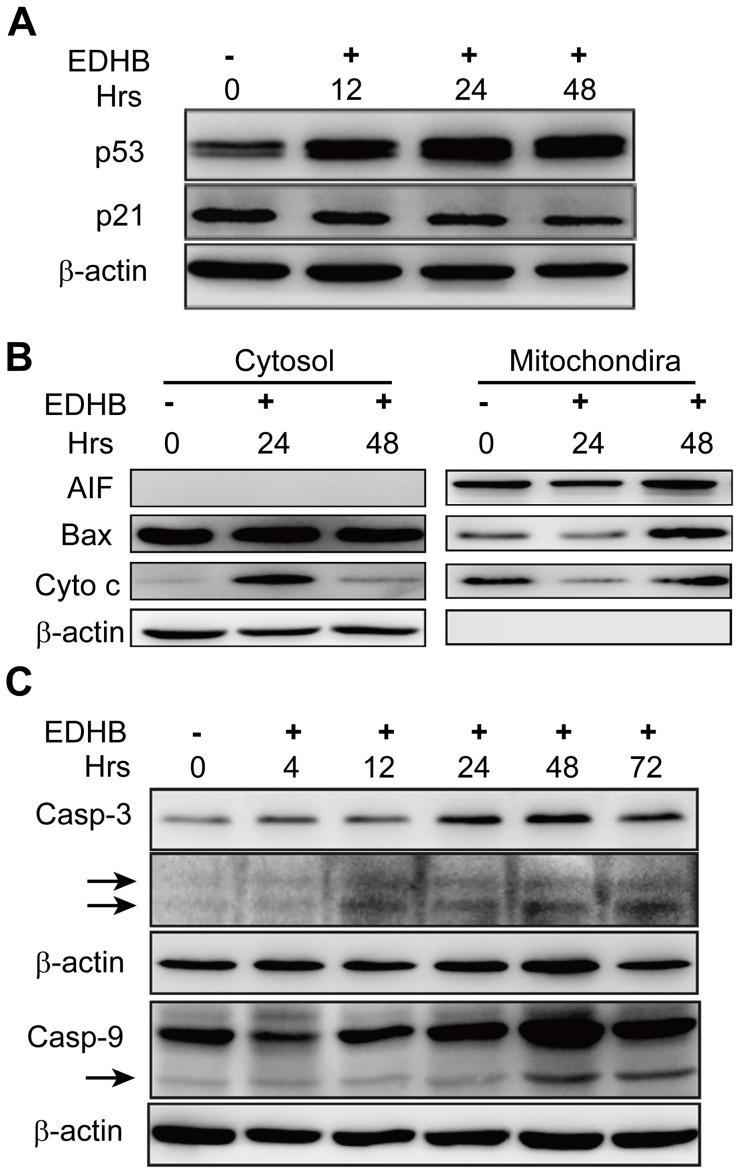
In vitro, EDHB is a competitive inhibitor of prolyl hydroxylase domain enzymes (PHDs). It is a HIF-1α agonist that stabilizes HIF-1α by inhibiting PHD. EDHB activates downstream pathways to induce autophagy and apoptosis of tumor cells. It inhibits the NF-κB pathway, regulates inflammatory responses, improves vascular permeability, and promotes osteoblast differentiation. In cell-based assays, EDHB treatment results in HIF-1α stabilization, induction of autophagy and apoptosis, and reduction of inflammatory responses.
|
| ln Vivo |
In vivo, EDHB attenuates acute hypobaric hypoxia-mediated vascular leakage in the brain. By inhibiting PHDs, EDHB stabilizes HIF-1α, which may protect against hypoxic injury. The compound's ability to modulate inflammatory responses and vascular permeability suggests potential therapeutic applications in conditions such as ischemia and inflammation. However, comprehensive in vivo efficacy studies are limited. EDHB is primarily a research tool for studying HIF-1α signaling.
|
| Enzyme Assay |
In vitro enzyme assays for EDHB involve measuring its inhibition of prolyl hydroxylase domain (PHD) enzyme activity. The enzyme is incubated with varying concentrations of EDHB in the presence of 2-oxoglutarate and a peptide substrate. The hydroxylation of the substrate is measured, and the IC₅₀ is calculated. The compound's ability to stabilize HIF-1α is assessed by measuring HIF-1α protein levels by Western blot. These assays confirm the compound's mechanism as a PHD inhibitor and HIF-1α agonist.
|
| Cell Assay |
In vitro cell-based assays for EDHB evaluate its effects on HIF-1α stabilization, autophagy, apoptosis, and inflammation. Cells are cultured and treated with EDHB, and HIF-1α protein levels are measured by Western blot. Autophagy is assessed by measuring LC3-II accumulation. Apoptosis is quantified by measuring caspase-3/7 activity or by Annexin V staining. Inflammatory responses are evaluated by measuring cytokine production in immune cells stimulated with LPS. These assays confirm the compound's functional activity.
|
| Animal Protocol |
In vivo animal experiments for EDHB have been conducted in models of hypobaric hypoxia-induced vascular leakage. Animals are treated with EDHB, and vascular permeability in the brain is assessed by measuring Evans blue dye extravasation. The compound's effects on HIF-1α stabilization and inflammatory markers are assessed in tissues. Pharmacokinetic studies are conducted to determine the compound's half-life, clearance, and tissue distribution. Comprehensive in vivo studies are ongoing.
|
| ADME/Pharmacokinetics |
Pharmacokinetic (PK) data for EDHB are limited. The compound has a molecular weight of 182.17 g/mol and is a white or off-white crystalline powder. It is soluble in ethanol and slightly soluble in water. The compound's metabolic stability, half-life, and bioavailability have not been fully characterized. Comprehensive ADME studies are needed.
|
| Toxicity/Toxicokinetics |
The toxicity profile of EDHB has not been extensively characterized. As a research compound, it should be handled with appropriate safety precautions. The compound is for research use only and is not intended for human or veterinary use. Comprehensive toxicological studies are needed to fully characterize the safety profile of EDHB.
|
| References |
|
| Additional Infomation |
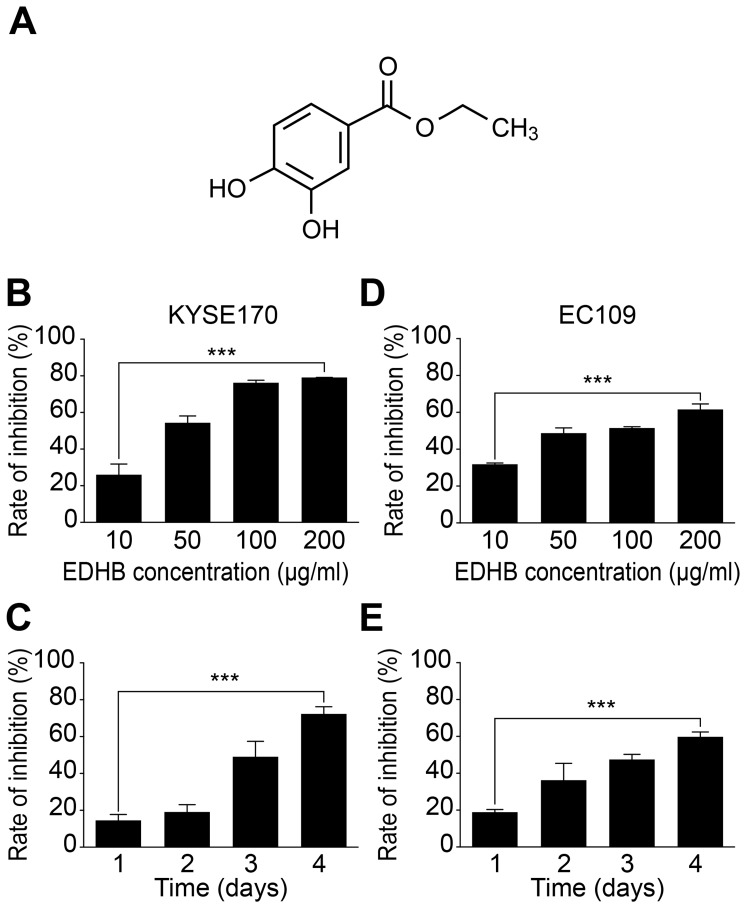
Ethyl 3,4-dihydroxybenzoate is an ethyl ester formed by the condensation of the carboxyl group of 3,4-dihydroxybenzoate with ethanol. It is an antioxidant component found in peanut seed coats. It possesses multiple functions, including acting as an EC 1.14.11.2 (procollagen-proline dioxygenase) inhibitor, antibacterial agent, antioxidant, apoptosis inducer, and plant metabolite. It is an ethyl ester belonging to the catecholamine class of compounds. Its functions are related to those of 3,4-dihydroxybenzoic acid. Ethyl 3,4-dihydroxybenzoate has been reported to exist in Salvia hispanica, Spatholobus suberectus, and other organisms with relevant data.
EDHB (Ethyl 3,4-dihydroxybenzoate) is a competitive inhibitor of prolyl hydroxylase domain enzymes (PHDs) and a HIF-1α agonist. It stabilizes HIF-1α, induces autophagy and apoptosis of tumor cells, and regulates inflammatory responses. EDHB inhibits the NF-κB pathway, improves vascular permeability, and promotes osteoblast differentiation. It attenuates acute hypobaric hypoxia-mediated vascular leakage in the brain. EDHB is a research tool for studying HIF-1α signaling and has not progressed to clinical trials. |
| Molecular Formula |
C9H10O4
|
|---|---|
| Molecular Weight |
182.1733
|
| Exact Mass |
182.057
|
| CAS # |
3943-89-3
|
| Related CAS # |
Ethyl 3,4-dihydroxybenzoate-13C3
|
| PubChem CID |
77547
|
| Appearance |
White to off-white solid powder
|
| Density |
1.3±0.1 g/cm3
|
| Boiling Point |
358.1±22.0 °C at 760 mmHg
|
| Melting Point |
132-134 °C(lit.)
|
| Flash Point |
147.0±15.8 °C
|
| Vapour Pressure |
0.0±0.8 mmHg at 25°C
|
| Index of Refraction |
1.574
|
| Source |
Originated from plants: Leguminosae Arachis hypogaea L.
|
| LogP |
2.22
|
| Hydrogen Bond Donor Count |
2
|
| Hydrogen Bond Acceptor Count |
4
|
| Rotatable Bond Count |
3
|
| Heavy Atom Count |
13
|
| Complexity |
181
|
| Defined Atom Stereocenter Count |
0
|
| SMILES |
O=C(OCC)C1=CC=C(O)C(O)=C1
|
| InChi Key |
KBPUBCVJHFXPOC-UHFFFAOYSA-N
|
| InChi Code |
InChI=1S/C9H10O4/c1-2-13-9(12)6-3-4-7(10)8(11)5-6/h3-5,10-11H,2H2,1H3
|
| Chemical Name |
ethyl 3,4-dihydroxybenzoate
|
| HS Tariff Code |
2934.99.9001
|
| Storage |
Powder -20°C 3 years 4°C 2 years In solvent -80°C 6 months -20°C 1 month Note: Please store this product in a sealed and protected environment (e.g. under nitrogen), avoid exposure to moisture. |
| Shipping Condition |
Room temperature (This product is stable at ambient temperature for a few days during ordinary shipping and time spent in Customs)
|
| Solubility (In Vitro) |
DMSO : ~100 mg/mL (~548.91 mM)
|
|---|---|
| Solubility (In Vivo) |
Solubility in Formulation 1: ≥ 2.5 mg/mL (13.72 mM) (saturation unknown) in 10% DMSO + 40% PEG300 + 5% Tween80 + 45% Saline (add these co-solvents sequentially from left to right, and one by one), clear solution.
For example, if 1 mL of working solution is to be prepared, you can add 100 μL of 25.0 mg/mL clear DMSO stock solution to 400 μL PEG300 and mix evenly; then add 50 μL Tween-80 to the above solution and mix evenly; then add 450 μL normal saline to adjust the volume to 1 mL. Preparation of saline: Dissolve 0.9 g of sodium chloride in 100 mL ddH₂ O to obtain a clear solution. Solubility in Formulation 2: ≥ 2.5 mg/mL (13.72 mM) (saturation unknown) in 10% DMSO + 90% (20% SBE-β-CD in Saline) (add these co-solvents sequentially from left to right, and one by one), clear solution. For example, if 1 mL of working solution is to be prepared, you can add 100 μL of 25.0 mg/mL clear DMSO stock solution to 900 μL of 20% SBE-β-CD physiological saline solution and mix evenly. Preparation of 20% SBE-β-CD in Saline (4°C,1 week): Dissolve 2 g SBE-β-CD in 10 mL saline to obtain a clear solution. View More
Solubility in Formulation 3: ≥ 2.5 mg/mL (13.72 mM) (saturation unknown) in 10% DMSO + 90% Corn Oil (add these co-solvents sequentially from left to right, and one by one), clear solution. |
| Preparing Stock Solutions | 1 mg | 5 mg | 10 mg | |
| 1 mM | 5.4894 mL | 27.4469 mL | 54.8938 mL | |
| 5 mM | 1.0979 mL | 5.4894 mL | 10.9788 mL | |
| 10 mM | 0.5489 mL | 2.7447 mL | 5.4894 mL |
*Note: Please select an appropriate solvent for the preparation of stock solution based on your experiment needs. For most products, DMSO can be used for preparing stock solutions (e.g. 5 mM, 10 mM, or 20 mM concentration); some products with high aqueous solubility may be dissolved in water directly. Solubility information is available at the above Solubility Data section. Once the stock solution is prepared, aliquot it to routine usage volumes and store at -20°C or -80°C. Avoid repeated freeze and thaw cycles.
Calculation results
Working concentration: mg/mL;
Method for preparing DMSO stock solution: mg drug pre-dissolved in μL DMSO (stock solution concentration mg/mL). Please contact us first if the concentration exceeds the DMSO solubility of the batch of drug.
Method for preparing in vivo formulation::Take μL DMSO stock solution, next add μL PEG300, mix and clarify, next addμL Tween 80, mix and clarify, next add μL ddH2O,mix and clarify.
(1) Please be sure that the solution is clear before the addition of next solvent. Dissolution methods like vortex, ultrasound or warming and heat may be used to aid dissolving.
(2) Be sure to add the solvent(s) in order.
|
|
|
Products are for research use only; We do not sell to patients
Copyright 2020 InvivoChem LLC | All Rights Reserved


 COA
COA