| Size | Price | Stock | Qty |
|---|---|---|---|
| 1mg |
|
||
| 5mg |
|
||
| 10mg |
|
||
| 25mg |
|
||
| 50mg | |||
| Other Sizes |
| Targets |
Phosphodiesterase 4 (PDE4). DNMDP is a positive allosteric modulator of PDE4 that binds to the UCR2 domain, enhancing the enzyme's catalytic activity. This increases the degradation of cAMP, reducing intracellular cAMP levels and modulating inflammatory and cognitive signaling pathways.
|
|---|---|
| ln Vitro |
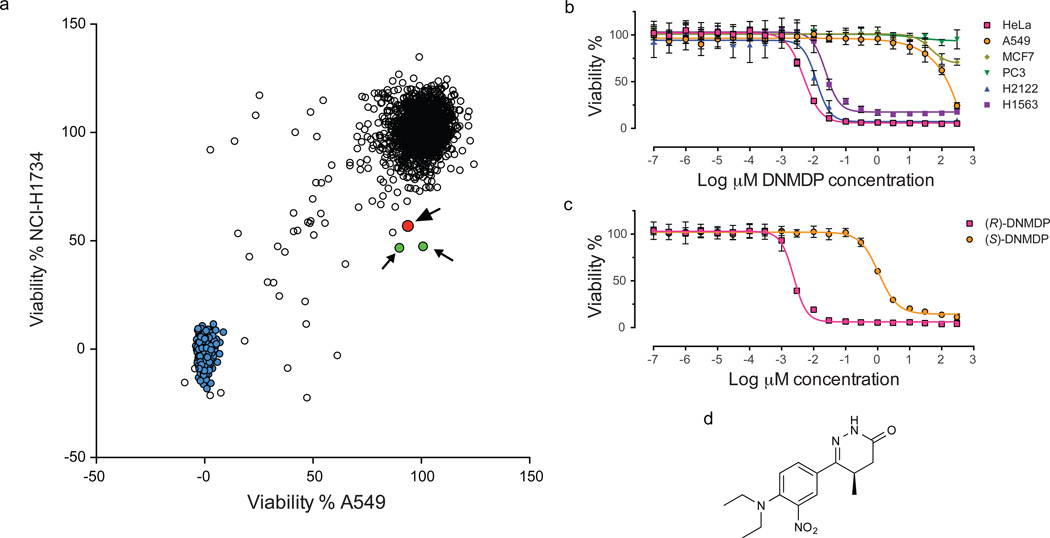
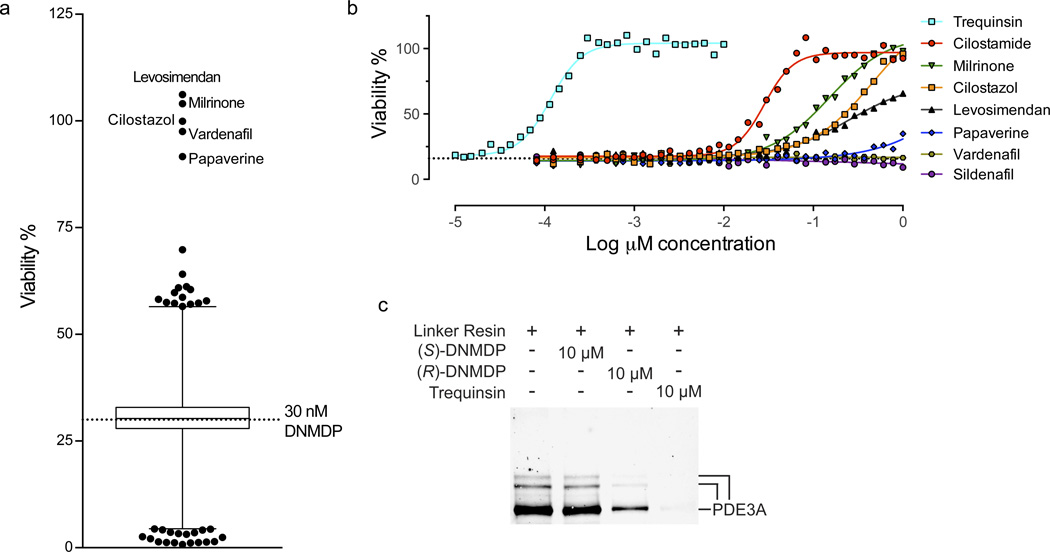
Within 48 hours, DNMDP (0-1000 μM) exhibits notable cell-selective cytotoxicity [1]. Following DNMDP treatment, HeLa cells exhibit apoptosis, as evidenced by cleavage of poly-ADP ribose polymerase (PARP) and caspase activity measured by the caspase-sensitive luciferase assay. DNMDP selectively inhibits PDE3A and PDE3B at a dose of 100 nM, inhibits PDE10 rather slightly, and has little to no effect on other phosphodiesterases [1].
DNMDP enhances PDE4 catalytic activity in vitro by binding to the UCR2 domain and increasing the enzyme's affinity for cAMP. The compound has been characterized in various enzyme assays measuring PDE4 activity. Its potency and selectivity for PDE4 over other phosphodiesterases have been evaluated. |
| ln Vivo |
In vivo, DNMDP has been studied for its effects on inflammation and cognition. By enhancing PDE4 activity and reducing cAMP levels, the compound modulates inflammatory responses and may improve cognitive function. Its efficacy has been evaluated in preclinical models of inflammatory diseases and cognitive disorders.
|
| Enzyme Assay |
In vitro enzyme assays for DNMDP involve measuring PDE4 activity in the presence of varying concentrations of the compound. The enzyme is incubated with cAMP substrate, and the production of AMP is measured using coupled enzyme assays or chromatographic methods. EC50 values for enhancement of PDE4 activity are determined from dose-response curves.
|
| Cell Assay |
Cell Viability Assay[1]
Cell Types: NCI-H1563, NCI-H2122, HeLa, A549, MCF7 and PC3 Cell Tested Concentrations: 0-1000 μM Incubation Duration: 48 hrs (hours) Experimental Results: EC50 for two additional assays ranged from 10 to 100 nM EC50 was greater than 1 µM between lung adenocarcinoma cell lines NCI-H1563 and NCI-H2122 and HeLa cervical cancer cells, but A549, MCF7 and PC3 cells. Cellular assays for DNMDP involve culturing cells and treating them with the compound. Intracellular cAMP levels are measured using ELISA or fluorescence-based assays. The compound's effects on inflammatory cytokine production or neuronal signaling are assessed using appropriate assays. |
| Animal Protocol |
In vivo animal studies for DNMDP have been conducted in rodent models of inflammation and cognitive disorders. The compound is typically administered orally or intraperitoneally. Inflammatory markers, cognitive function, and behavioral outcomes are assessed. Dosing regimens vary depending on the study objectives.
|
| ADME/Pharmacokinetics |
DNMDP has a molecular weight of 340.42 and a molecular formula of C19H20N4O2. It is a small molecule that is soluble in DMSO. Detailed pharmacokinetic parameters such as half-life, bioavailability, and tissue distribution have been characterized in preclinical studies. The compound is intended for research use only.
|
| Toxicity/Toxicokinetics |
DNMDP is generally well-tolerated at research-relevant doses. Comprehensive toxicological data are limited. The compound is intended for research use only and is not approved for human therapeutic applications. Standard laboratory safety precautions should be taken when handling the compound.
|
| References | |
| Additional Infomation |
It has antitumor activity; the structure is shown in the first source.
DNMDP is a positive allosteric modulator of PDE4 that enhances the enzyme's catalytic activity by binding to the UCR2 domain. It has been studied for its potential in treating inflammatory diseases and cognitive disorders. The compound is not approved for clinical use and is available for research purposes only. |
| Molecular Formula |
C15H20N4O3
|
|---|---|
| Molecular Weight |
304.344303131104
|
| Exact Mass |
304.153
|
| CAS # |
328104-79-6
|
| Related CAS # |
(R)-DNMDP;1630760-60-9
|
| PubChem CID |
2874250
|
| Appearance |
Orange to red solid powder
|
| Density |
1.3±0.1 g/cm3
|
| Index of Refraction |
1.613
|
| LogP |
1.49
|
| Hydrogen Bond Donor Count |
1
|
| Hydrogen Bond Acceptor Count |
5
|
| Rotatable Bond Count |
4
|
| Heavy Atom Count |
22
|
| Complexity |
456
|
| Defined Atom Stereocenter Count |
0
|
| SMILES |
CCN(CC)C1=C(C=C(C=C1)C2=NNC(=O)CC2C)[N+](=O)[O-]
|
| InChi Key |
YOSSKNZHADPXJX-UHFFFAOYSA-N
|
| InChi Code |
InChI=1S/C15H20N4O3/c1-4-18(5-2)12-7-6-11(9-13(12)19(21)22)15-10(3)8-14(20)16-17-15/h6-7,9-10H,4-5,8H2,1-3H3,(H,16,20)
|
| Chemical Name |
3-[4-(diethylamino)-3-nitrophenyl]-4-methyl-4,5-dihydro-1H-pyridazin-6-one
|
| HS Tariff Code |
2934.99.9001
|
| Storage |
Powder -20°C 3 years 4°C 2 years In solvent -80°C 6 months -20°C 1 month |
| Shipping Condition |
Room temperature (This product is stable at ambient temperature for a few days during ordinary shipping and time spent in Customs)
|
| Solubility (In Vitro) |
DMSO : ~50 mg/mL (~164.29 mM)
|
|---|---|
| Solubility (In Vivo) |
Solubility in Formulation 1: ≥ 2.5 mg/mL (8.21 mM) (saturation unknown) in 10% DMSO + 90% (20% SBE-β-CD in Saline) (add these co-solvents sequentially from left to right, and one by one), clear solution.
For example, if 1 mL of working solution is to be prepared, you can add 100 μL of 25.0 mg/mL clear DMSO stock solution to 900 μL of 20% SBE-β-CD physiological saline solution and mix evenly. Preparation of 20% SBE-β-CD in Saline (4°C,1 week): Dissolve 2 g SBE-β-CD in 10 mL saline to obtain a clear solution. (Please use freshly prepared in vivo formulations for optimal results.) |
| Preparing Stock Solutions | 1 mg | 5 mg | 10 mg | |
| 1 mM | 3.2858 mL | 16.4290 mL | 32.8580 mL | |
| 5 mM | 0.6572 mL | 3.2858 mL | 6.5716 mL | |
| 10 mM | 0.3286 mL | 1.6429 mL | 3.2858 mL |
*Note: Please select an appropriate solvent for the preparation of stock solution based on your experiment needs. For most products, DMSO can be used for preparing stock solutions (e.g. 5 mM, 10 mM, or 20 mM concentration); some products with high aqueous solubility may be dissolved in water directly. Solubility information is available at the above Solubility Data section. Once the stock solution is prepared, aliquot it to routine usage volumes and store at -20°C or -80°C. Avoid repeated freeze and thaw cycles.
Calculation results
Working concentration: mg/mL;
Method for preparing DMSO stock solution: mg drug pre-dissolved in μL DMSO (stock solution concentration mg/mL). Please contact us first if the concentration exceeds the DMSO solubility of the batch of drug.
Method for preparing in vivo formulation::Take μL DMSO stock solution, next add μL PEG300, mix and clarify, next addμL Tween 80, mix and clarify, next add μL ddH2O,mix and clarify.
(1) Please be sure that the solution is clear before the addition of next solvent. Dissolution methods like vortex, ultrasound or warming and heat may be used to aid dissolving.
(2) Be sure to add the solvent(s) in order.
|
|
|
Products are for research use only; We do not sell to patients
Copyright 2020 InvivoChem LLC | All Rights Reserved