| Size | Price | Stock | Qty |
|---|---|---|---|
| 5mg |
|
||
| 10mg |
|
||
| 25mg |
|
||
| 50mg |
|
||
| 100mg |
|
||
| 250mg |
|
||
| 500mg |
|
||
| Other Sizes |


Purity: ≥98%
| Targets |
Nuclear receptor 4A1 (NR4A1)
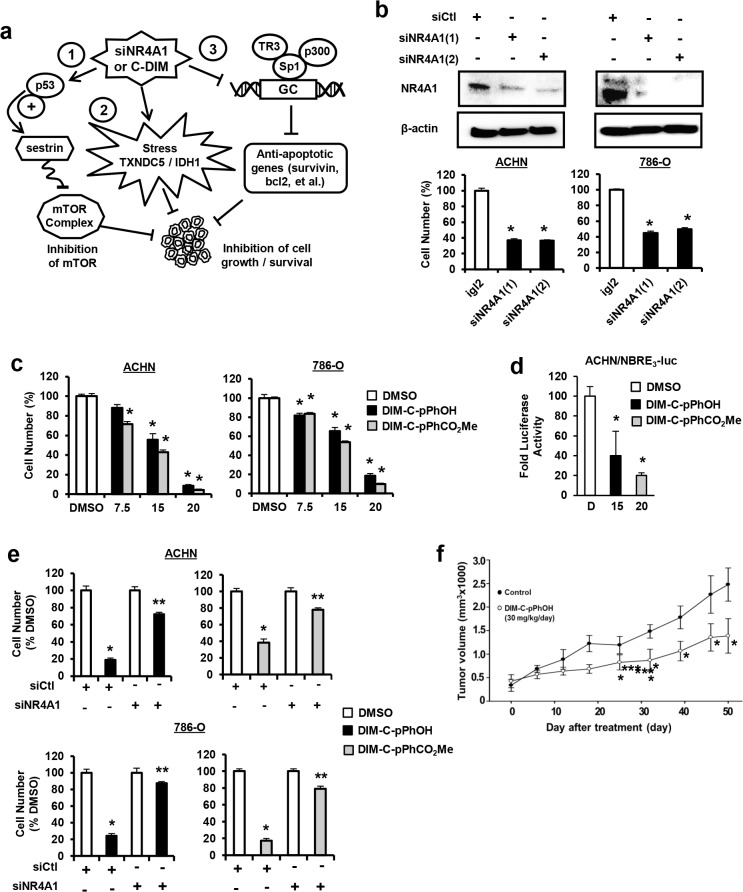
inactivation of NR4A1 by the receptor antagonist DIM-C-pPhOH or the corresponding p-carboxymethyl analog (DIM-C-pPhCO2Me) decreases expression of genes associated with cell proliferation and survival, induces oxidative stress, and inhibits mTOR in cancer cell lines[1] |
|---|---|
| ln Vitro |
inactivation of NR4A1 by the receptor antagonist DIM-C-pPhOH or the corresponding p-carboxymethyl analog (DIM-C-pPhCO2Me) decreases expression of genes associated with cell proliferation and survival, induces oxidative stress, and inhibits mTOR in cancer cell lines[1]
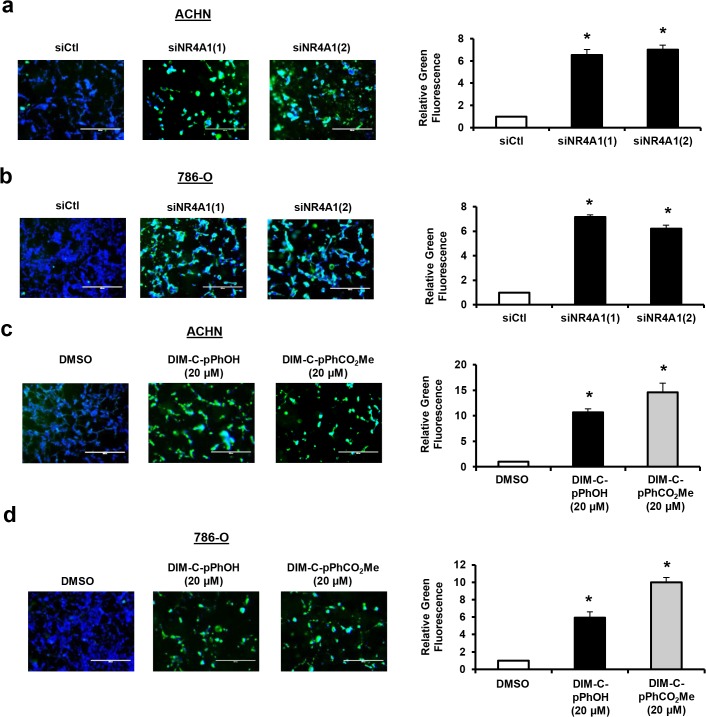
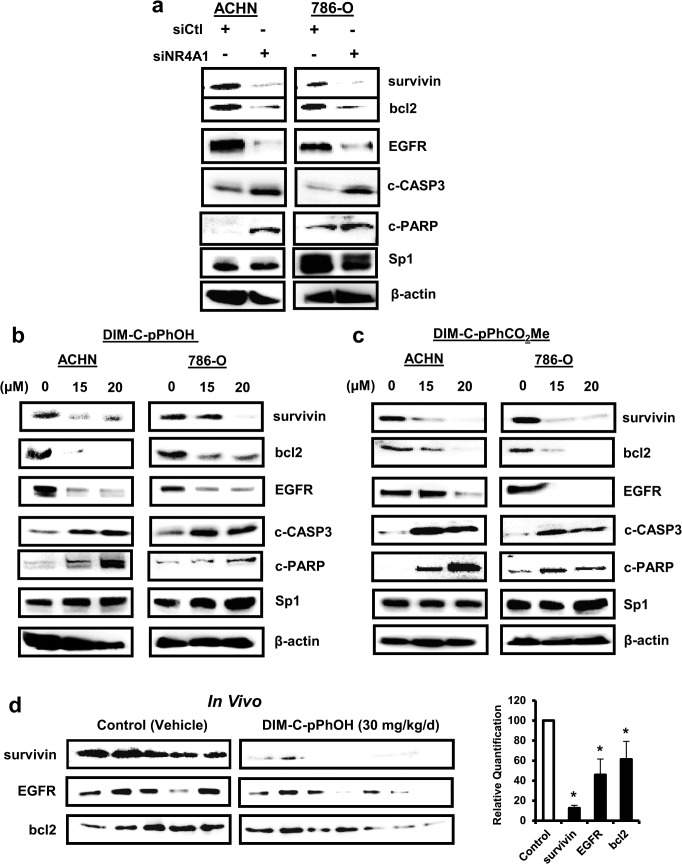
DIM-C-pPhCO₂Me inhibited proliferation of renal cell carcinoma (RCC) cell lines ACHN and 786-O in a dose-dependent manner, with IC₅₀ values of 11.7 μM in ACHN cells and 13.4 μM in 786-O cells. [1] Treatment of ACHN and 786-O cells with 20 μM DIM-C-pPhCO₂Me induced apoptosis, as demonstrated by increased Annexin V staining. [1] DIM-C-pPhCO₂Me (15–20 μM) decreased protein expression of survivin, bcl-2, and EGFR, and increased cleavage of caspase-3 and PARP in ACHN and 786-O cells. [1] Treatment with DIM-C-pPhCO₂Me (15–20 μM) reduced expression of TXNDC5 and IDH1, and induced endoplasmic reticulum stress markers (CHOP, ATF4, p-PERK) and reactive oxygen species (ROS) in both RCC cell lines. [1] In ACHN cells (wild-type p53), DIM-C-pPhCO₂Me (15–20 μM) induced sestrin 2 expression, increased phosphorylation of AMPKα, and decreased phosphorylation of mTOR and its downstream targets (p70S6K, S6RP, 4EBP1). [1] In 786-O cells (mutant p53), DIM-C-pPhCO₂Me also induced sestrin 2 and inhibited mTOR signaling, an effect attenuated by co-treatment with the antioxidant glutathione, indicating ROS-mediated induction. [1] In a transactivation assay using ACHN cells transfected with an NBRE₃-luc reporter and FLAG-NR4A1, DIM-C-pPhCO₂Me (15 μM) significantly decreased NR4A1-dependent luciferase activity. [1] Immunofluorescence staining showed that DIM-C-pPhCO₂Me treatment did not induce nuclear export of NR4A1; the receptor remained localized in the nucleus of ACHN and 786-O cells. [1] |
| Cell Assay |
Cells were seeded and subsequently treated with varying concentrations of DIM-C-pPhOH or DIM-C-pPhCO2Me for 24 hr or transfected with 100 nM siNR4A1 for 72 hr, and whole cell lysates were analyzed by western blot analysis essentially as described using β-actin as the loading control .[1]
ACHN RCC cells were plated on 12-well plates at 5 x 10⁴ cells per well in DMEM supplemented with 2.5% charcoal-stripped FBS. After 24 hr, various amounts of DNA [NBRE3-luc (400 ng), FLAG-NR4A1 (40 ng)] were cotransfected into each well by Lipofectamine 2000 reagent . After 6 hr of transfection, cells were treated with 2.5% stripped DMEM containing either DMSO, DIM-C-pPhOH (20 μM) or DIM-C-pPhCO2Me (15 μM) for 18 hr. [1] ACHN and 786-O cells were seeded in 12-well plates and allowed to attach for 24 hours. Cells were treated with varying concentrations of DIM-C-pPhCO₂Me (e.g., 0, 15, 20 μM) for 24 hours. Cell proliferation was determined by counting cell numbers. [1] For apoptosis assessment, cells treated with 20 μM DIM-C-pPhCO₂Me for 24 hours were stained with Annexin V and analyzed by fluorescence microscopy or flow cytometry. [1] For protein expression analysis, cells were treated with DIM-C-pPhCO₂Me for 24 hours, lysed, and subjected to western blotting using antibodies against survivin, bcl-2, EGFR, cleaved caspase-3, cleaved PARP, TXNDC5, IDH1, CHOP, ATF4, p-PERK, sestrin 2, p-AMPKα, AMPKα, p-mTOR, mTOR, p-p70S6K, p70S6K, p-S6RP, S6RP, p-4EBP1, and 4EBP1. β-actin was used as a loading control. [1] For ROS measurement, cells treated with DIM-C-pPhCO₂Me were incubated with the cell-permeable probe CM-H2DCFDA, and fluorescence was quantified. [1] For immunofluorescence, cells treated with 20 μM DIM-C-pPhCO₂Me for 24 hours were fixed, stained with NR4A1 antibodies and DAPI, and visualized by fluorescence microscopy to determine subcellular localization. [1] For transactivation assays, ACHN cells were co-transfected with an NBRE₃-luciferase reporter plasmid and a FLAG-NR4A1 expression plasmid. After 6 hours, cells were treated with 15 μM DIM-C-pPhCO₂Me for 18 hours, and luciferase activity was measured. [1] |
| References | |
| Additional Infomation |
DIM-C-pPhCO₂Me is a 1,1-bis(3'-indolyl)-1-(p-carboxymethylphenyl)methane compound belonging to the C-DIM class of compounds and has been identified as an NR4A1 antagonist. [1]
It acts on nuclear NR4A1 and does not induce its translocation to mitochondria, which distinguishes it from some other apoptosis inducers that target NR4A1. [1] This compound inhibits multiple pro-cancer pathways downstream of NR4A1 in renal cell carcinoma (RCC) cells, including Sp1-regulated survival genes (survivin, bcl-2, EGFR), stress response genes (TXNDC5, IDH1), and the mTOR signaling pathway. [1] After knocking down NR4A1 by RNA interference, DIM-C-pPhCO₂Me significantly weakened the growth inhibitory effect on renal cell carcinoma (RCC) cells, confirming its NR4A1-dependent mechanism of action. [1] |
| Molecular Formula |
C25H20N2O2
|
|---|---|
| Molecular Weight |
380.438506126404
|
| Exact Mass |
380.15
|
| Elemental Analysis |
C, 78.93; H, 5.30; N, 7.36; O, 8.41
|
| CAS # |
151358-48-4
|
| Related CAS # |
151358-48-4
|
| PubChem CID |
15637614
|
| Appearance |
Light yellow to yellow solid powder
|
| LogP |
5.4
|
| Hydrogen Bond Donor Count |
2
|
| Hydrogen Bond Acceptor Count |
2
|
| Rotatable Bond Count |
5
|
| Heavy Atom Count |
29
|
| Complexity |
541
|
| Defined Atom Stereocenter Count |
0
|
| SMILES |
COC(C1=CC=C(C(C2=CNC3=C2C=CC=C3)C4=CNC5=C4C=CC=C5)C=C1)=O
|
| InChi Key |
BBAOKSZCULLDIW-UHFFFAOYSA-N
|
| InChi Code |
InChI=1S/C25H20N2O2/c1-29-25(28)17-12-10-16(11-13-17)24(20-14-26-22-8-4-2-6-18(20)22)21-15-27-23-9-5-3-7-19(21)23/h2-15,24,26-27H,1H3
|
| Chemical Name |
methyl 4-[bis(1H-indol-3-yl)methyl]benzoate
|
| Synonyms |
DIM-C-pPhCO2Me; DIM-C pPhCO2Me; DIM C-pPhCO2Me
|
| HS Tariff Code |
2934.99.9001
|
| Storage |
Powder -20°C 3 years 4°C 2 years In solvent -80°C 6 months -20°C 1 month |
| Shipping Condition |
Room temperature (This product is stable at ambient temperature for a few days during ordinary shipping and time spent in Customs)
|
| Solubility (In Vitro) |
DMSO: ~76 mg/mL(~199.8 mM)
Ethanol: ~38 mg/mL (~99.9 mM) |
|---|---|
| Solubility (In Vivo) |
Solubility in Formulation 1: ≥ 2.08 mg/mL (5.47 mM) (saturation unknown) in 10% DMSO + 40% PEG300 + 5% Tween80 + 45% Saline (add these co-solvents sequentially from left to right, and one by one), clear solution.
For example, if 1 mL of working solution is to be prepared, you can add 100 μL of 20.8 mg/mL clear DMSO stock solution to 400 μL PEG300 and mix evenly; then add 50 μL Tween-80 to the above solution and mix evenly; then add 450 μL normal saline to adjust the volume to 1 mL. Preparation of saline: Dissolve 0.9 g of sodium chloride in 100 mL ddH₂ O to obtain a clear solution. Solubility in Formulation 2: ≥ 2.08 mg/mL (5.47 mM) (saturation unknown) in 10% DMSO + 90% (20% SBE-β-CD in Saline) (add these co-solvents sequentially from left to right, and one by one), clear solution. For example, if 1 mL of working solution is to be prepared, you can add 100 μL of 20.8 mg/mL clear DMSO stock solution to 900 μL of 20% SBE-β-CD physiological saline solution and mix evenly. Preparation of 20% SBE-β-CD in Saline (4°C,1 week): Dissolve 2 g SBE-β-CD in 10 mL saline to obtain a clear solution. (Please use freshly prepared in vivo formulations for optimal results.) |
| Preparing Stock Solutions | 1 mg | 5 mg | 10 mg | |
| 1 mM | 2.6285 mL | 13.1427 mL | 26.2854 mL | |
| 5 mM | 0.5257 mL | 2.6285 mL | 5.2571 mL | |
| 10 mM | 0.2629 mL | 1.3143 mL | 2.6285 mL |
*Note: Please select an appropriate solvent for the preparation of stock solution based on your experiment needs. For most products, DMSO can be used for preparing stock solutions (e.g. 5 mM, 10 mM, or 20 mM concentration); some products with high aqueous solubility may be dissolved in water directly. Solubility information is available at the above Solubility Data section. Once the stock solution is prepared, aliquot it to routine usage volumes and store at -20°C or -80°C. Avoid repeated freeze and thaw cycles.
Calculation results
Working concentration: mg/mL;
Method for preparing DMSO stock solution: mg drug pre-dissolved in μL DMSO (stock solution concentration mg/mL). Please contact us first if the concentration exceeds the DMSO solubility of the batch of drug.
Method for preparing in vivo formulation::Take μL DMSO stock solution, next add μL PEG300, mix and clarify, next addμL Tween 80, mix and clarify, next add μL ddH2O,mix and clarify.
(1) Please be sure that the solution is clear before the addition of next solvent. Dissolution methods like vortex, ultrasound or warming and heat may be used to aid dissolving.
(2) Be sure to add the solvent(s) in order.
NR4A1 plays a role in RCC proliferation.PLoS One. 2015 Jun 2;10(6):e0128308. |
NR4A1 knockdown and C-DIM/NR4A1 antagonists induce apoptosis in RCC cells.PLoS One. 2015 Jun 2;10(6):e0128308. |
NR4A1 plays a role in expression of Sp-regulated growth promoting and survival genes.PLoS One. 2015 Jun 2;10(6):e0128308. |
Products are for research use only; We do not sell to patients
Copyright 2020 InvivoChem LLC | All Rights Reserved


 COA
COA