| Size | Price | Stock | Qty |
|---|---|---|---|
| 2mg |
|
||
| 5mg |
|
||
| 10mg |
|
||
| 25mg |
|
||
| 50mg |
|
||
| 100mg |
|
||
| 250mg | |||
| Other Sizes |


Purity: =100%
| Targets |
NS3/4A protease (IC50 = 0.29 nM); HCV genotypes (IC50 = 0.2-3.5 nM)
Danoprevir (ITMN191, R7227; RO5190591; RG7227) is a potent, selective inhibitor of hepatitis C virus (HCV) NS3/4A serine protease, with an IC50 of 0.2 nM for HCV genotype 1a NS3/4A protease, 0.1 nM for genotype 1b, and 0.5 nM for genotype 2a in cell-free enzyme assays [1] - Danoprevir inhibits HCV replication in infected cells, with an EC50 of 2.6 nM for HCV genotype 1a (H77 strain) replicon cells, 1.8 nM for genotype 1b (Con1 strain), and 8.5 nM for genotype 2a (JFH-1 strain); it shows no significant inhibition of human serine proteases (e.g., trypsin, factor Xa) at concentrations up to 10 μM [1,2] |
|---|---|
| ln Vitro |
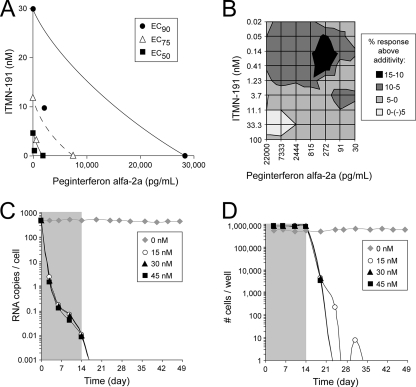
Danoprevir (0.29 nM) inhibits the reference genotype 1 NS3/4A protease half-maximally; however, a panel of 79 proteases, ion channels, transporters, and cell surface receptors does not exhibit any discernible inhibition at a high dose of Danoprevir (10 μM). After its initial association, danoprevir binds to and inhibits NS3/4A for over five hours. A patient-derived HCV genotype 1b replicon is eliminated by danoprevir (45 nM) from Huh7 cells derived from hepatocytes with an EC50 of 1.8 nM.[1] The R155K substitution confers a high level (62-fold increase) of resistance to Danoprevir in HCV subgenomic replicon cell lines containing the individual mutations, whereas the V36M, R109K, and V170A substitutions confer little or no resistance to the drug.[2] Danoprevir exhibits antiviral inhibition effects against HCV genotypes 1, 4, and 6 in Huh7.5 cells transfected with chimeric recombinant virus (IC50 of 2-3 nM), which is >100-fold lower than genotypes 2/3/5 (280-750 nM).[3]
In cell-free assays with recombinant HCV genotype 1b NS3/4A protease, 1 nM Danoprevir inhibited protease activity by ~99% (fluorescent peptide substrate assay); the inhibition was irreversible due to covalent binding to the enzyme’s active site [1] - In HCV genotype 1a (H77)-infected Huh7 cells, treatment with 10 nM Danoprevir for 72 hours reduced HCV RNA levels by ~99.9% (qRT-PCR) and decreased HCV core protein expression by ~99% (Western blot); cell viability remained >95% (MTT assay) [1] - In HCV genotype 1b replicon cells, combination of 5 nM Danoprevir with interferon-α (10 IU/mL) or ribavirin (10 μM) showed synergistic inhibition: HCV RNA reduced by ~99.9% (vs. ~95% for single Danoprevir) and ~99.5% (vs. ~95% for single Danoprevir), respectively [2] - In primary human hepatocytes infected with HCV genotype 2a (JFH-1), 20 nM Danoprevir for 96 hours reduced secreted HCV virions by ~98% (viral titer assay) and intracellular HCV RNA by ~97% (qRT-PCR) [1] |
| ln Vivo |
Danoprevir (30 mg/kg) administered to rats or monkeys demonstrates that its liver concentrations 12 hours post-dosage surpass the concentration of Danoprevir needed to eradicate replicon RNA from cells.[1]
In chimpanzees infected with HCV genotype 1a (H77), intravenous infusion of Danoprevir at 0.5 mg/kg every 8 hours for 7 days reduced serum HCV RNA by 4.8 log10 (below detection limit in 2/3 chimpanzees); liver biopsy showed decreased HCV NS3 protein (immunohistochemistry) and reduced viral replication foci [3] - In SCID mice xenografted with human hepatocytes and infected with HCV genotype 1b, oral administration of Danoprevir at 30 mg/kg twice daily for 14 days reduced hepatic HCV RNA by 3.2 log10 and serum HCV RNA by 2.9 log10 compared to vehicle; no rebound of viral load was observed within 7 days post-treatment [3] - In rats infected with HCV genotype 1a (experimental model), oral Danoprevir at 50 mg/kg once daily for 10 days reduced serum HCV RNA by ~2.5 log10; combination with pegylated interferon-α further reduced RNA by ~4.0 log10 [3] |
| Enzyme Assay |
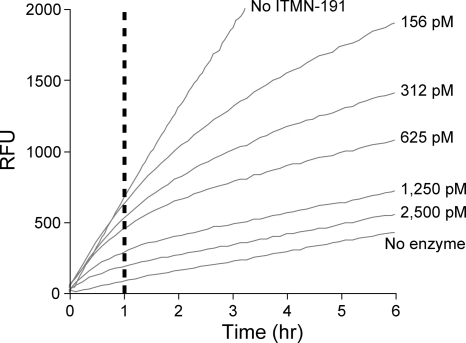
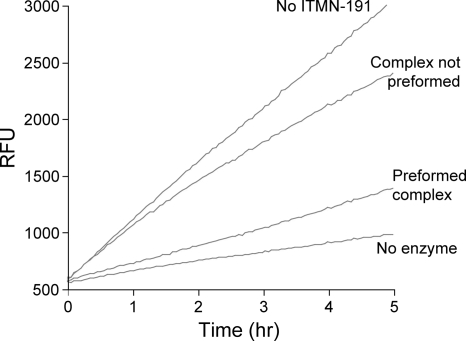
The assay buffer comprises the following: 0.5 μM fluorescein/QXL520-labeled FRET substrate {Ac-DE-Dap(QXL520)-EE-Abu-ψ-[COO]-AS-Cys(5-FAMsp)-NH2}; 25 μM NS4A peptide; 50 mM Tris-HCl, pH 7.5; 15% (vol/vol) glycerol; 0.6 mM lauryldimethylamine N-oxide; 10 mM dithiothreitol). The reaction is started by adding 50 pM of the K2040 enzyme. Fluorescence data is gathered and reactions are set up in black 96-well plates. Included are control reactions that lack both inhibitors and enzymes. Initial rates, which are used to determine IC50, are computed from the reaction's linear phase (up to one hour).The evaluation of the activity recovered from the preformed Danoprevir-NS3/4A complex involves a 15-minute preincubation of 10 nM NS3/4A with a two-fold excess of Danoprevir in 1× assay buffer. Subsequently, the preformed complex is rapidly diluted 200 times into assay buffer that contains substrate. A control reaction is started by adding an enzyme to an otherwise complete reaction mixture, resulting in the same final conditions but without the preincubation of NS3/4A and Danoprevir. Either NS3 or Danoprevir are absent from additional control reactions. Over the course of five hours, the reactions are monitored.
HCV NS3/4A protease activity assay (from [1] abstract description): Recombinant HCV genotype 1a/1b/2a NS3/4A protease was purified from insect cells (Baculovirus expression system). The enzyme was mixed with a fluorescent peptide substrate (Ac-Asp-Glu-Val-Asp-AMC) in assay buffer (50 mM Tris-HCl pH 7.5, 5 mM DTT, 0.01% Brij-35, 10% glycerol). Danoprevir was added at concentrations ranging from 0.01 nM to 10 nM, and the mixture was incubated at 37°C for 1 hour. Fluorescence intensity was measured at excitation 380 nm/emission 460 nm, and protease activity was calculated as the difference between drug-treated and vehicle groups. IC50 was determined via 4-parameter logistic regression [1] - HCV NS3/4A protease binding assay (from [1] abstract description): Purified HCV genotype 1b NS3/4A protease was coated onto 96-well plates. Danoprevir (0.001 nM to 1 nM) was incubated with the protease for 2 hours at 25°C, followed by addition of a protease-specific antibody (fluorescently labeled). Fluorescence intensity (excitation 488 nm/emission 520 nm) was measured to confirm covalent binding [1] |
| Cell Assay |
One day after cell plating, Huh7 cells containing the K2040 replicon are treated with serially diluted Danoprevir. After a 48-hour incubation period, intracellular RNA is extracted for antiviral assays. Using an ABI Prism 7900 sequence detection system, the amount of HCV replicon RNA is measured by reverse transcription (RT)-PCR assay using the primers (5-CACTCCCCTGTGAGGAACTACTG-3 and 5-AGGCTGCACGACACTCATACT-3) and a probe (5-6-FAM-CTTCACGCAGAAAGCGTCTAGCCATGG-MGBNFQ-3). Here, MGBNFQ is a molecular groove binding non-fluorescence quencher that is specific to the HCV 5 untranslated region, and FAM is 6-carboxyfluorescin. The TaqMan Gold RT-PCR kit is used to conduct single-tube reactions. 5 μL of intracellular RNA (50 ng) is used in triplicate reactions for both the RNA standards and samples, in 50 μL. The RT process lasts 30 minutes at 48 °C and then 10 minutes at 95 °C. This is how the PCR is conducted: 40 cycles of 15 s at 95 °C and 1 s at 60 °C. Three duplicate measurements of each RNA concentration are made. A standard curve created by known concentrations of an in vitro-transcribed RNA corresponding to an untranslated region of genotype 1b 5 is used to calculate the absolute concentration of replicon RNA. The EC50 is obtained by fitting the replican levels in the presence of Danoprevir to a logistic function with four parameters.
HCV-infected Huh7 cell assay (from [1] abstract description): Huh7 cells were cultured in DMEM with 10% fetal bovine serum until 70% confluence. Cells were infected with HCV genotype 1a (H77), 1b (Con1), or 2a (JFH-1) at an MOI of 0.1 for 24 hours, then treated with Danoprevir (1 nM, 5 nM, 10 nM) for 72 hours. HCV RNA levels were quantified via qRT-PCR (normalized to GAPDH mRNA), and HCV core/NS3 protein was detected via Western blot (anti-HCV core, anti-NS3 antibodies). Cell viability was assessed via MTT assay (absorbance 570 nm) [1] - HCV replicon cell combination assay (from [2] abstract description): HCV genotype 1b (Con1) replicon cells (stably expressing HCV non-structural proteins and luciferase reporter) were seeded at 1×10⁴ cells/well. Cells were treated with Danoprevir (1 nM, 5 nM, 10 nM) alone or with interferon-α (10 IU/mL) or ribavirin (10 μM) for 48 hours. Luciferase activity was measured to quantify viral replication, and combination index (CI < 0.7) confirmed synergism [2] |
| Animal Protocol |
In monkeys and rats, pharmacokinetic characteristics are assessed. An oral gavage treatment of 30-mg/kg of body weight (a 6-mg/mL solution in water) is given to three Sprague-Dawley rats per time point. ITMN-191 is given orally via gavage to two cynomolgus monkeys per time point at a dose of 30 mg/kg (three milligrams per milliliter in water). After the dose is administered, 1, 4, 8, 12, and 24 hours later, terminal blood samples and the whole perfused liver are taken for every species. Before being analyzed, blood samples are centrifuged at 5°C to extract plasma, then they are kept at -20°C. The samples are collected in EDTA. Liver samples are kept at −70°C after being snap-frozen, pending analysis. Acidified acetonitrile is used to treat blank, standard, and unknown plasma samples as well as homogenized liver containing an internal standard (ITMN-191 analog). Precipitated proteins are then removed by centrifugation. In order to express concentrations in both compartments as weight per unit volume, the density of liver tissue is taken into consideration. A 4000 Q-trap liquid chromatography tandem mass spectrometer equipped with a Turbo-Ionspray source operating in negative-ion mode is used to analyze the cleared supernatants after they have been diluted 1:1 into high-performance liquid chromatography grade water. ABI Analyst software, version 1.4.2, is used to calibrate the analytes and internal standards, and multiple-reaction monitoring scans are used for monitoring. For the quantification of plasma samples and liver homogenates, the calibration standards range from 7.47 ng/mL to 5,440 ng/mL and from 0.0169 ng/mL to 37.0 ng/mL, respectively. In situations where both matrices have an R2 value of > 0.999, quadratic fitting with 1/x weighting is applied.
Chimpanzee HCV infection model (from [3] abstract description): Adult chimpanzees (3 individuals) infected with HCV genotype 1a (H77) were administered Danoprevir via intravenous infusion (dissolved in 5% dextrose solution) at 0.5 mg/kg every 8 hours for 7 days. Serum samples were collected daily to measure HCV RNA via qRT-PCR. Liver biopsies were performed on day 0 and day 7 for immunohistochemical detection of HCV NS3 protein [3] - SCID mouse human hepatocyte xenograft model (from [3] abstract description): Female SCID mice (6-8 weeks old) were transplanted with human hepatocytes (1×10⁶ cells/mouse) via intrasplenic injection. Four weeks post-transplantation, mice were infected with HCV genotype 1b (1×10⁶ IU/mouse) via tail vein injection. Three days post-infection, Danoprevir was dissolved in 0.5% methylcellulose (oral formulation) and administered via oral gavage at 30 mg/kg twice daily for 14 days. Vehicle controls received 0.5% methylcellulose. Serum and liver HCV RNA were measured via qRT-PCR on days 0, 7, 14, and 21 (7 days post-treatment) [3] |
| ADME/Pharmacokinetics |
In male Sprague-Dawley rats, oral administration of 30 mg/kg danoprevir showed approximately 45% oral bioavailability, with a plasma elimination half-life (t₁/₂) of approximately 4.2 hours and a peak plasma concentration (Cmax) of 1.8 μg/mL (reached 1.0 hour after administration) [3] - In beagle dogs, oral administration of 15 mg/kg danoprevir resulted in a liver-to-plasma concentration ratio of approximately 12.3 (measured 2 hours after administration), indicating strong liver targeting (the target organ of HCV) [3] - danoprevir showed high plasma protein binding (>99.5%) in human, rat, and canine plasma (measured by ultrafiltration); it is primarily metabolized by hepatic CYP3A4, with over 80% of the drug excreted in feces within 72 hours [3] - In chimpanzees, intravenous administration of 0.5 mg/kg of danoprevir resulted in a half-life (t₁/₂) of approximately 3.8 hours and a volume of distribution (Vd) of approximately 0.3 L/kg (consistent with plasma protein binding) [3]
|
| Toxicity/Toxicokinetics |
In a 28-day repeated-dose toxicity study in rats (oral danoprevir at doses of 10, 30, and 100 mg/kg/day), the No Adverse Effect Level (NOAEL) was 30 mg/kg/day; at 100 mg/kg/day, 2 out of 5 rats developed mild hepatic steatosis (reversible upon discontinuation of treatment). Serum ALT, AST, creatinine, and BUN levels remained normal [3]. - No significant cytotoxicity was observed in HCV-infected Huh7 cells after treatment with danoprevir at concentrations up to 100 nM for 72 hours (cell viability >95% vs. vector group) [1]. - No clinical signs of toxicity (e.g., weight loss, gastrointestinal discomfort) or abnormal liver and kidney function were detected in chimpanzees treated with intravenous danoprevir (0.5 mg/kg every 8 hours for 7 days) [3].
|
| References | |
| Additional Infomation |
Danoprevir is a keratin 6'-sulfate and aza-macrocyclic compound. Danopvir has been used in clinical trials for the treatment of chronic hepatitis C. Danopvir is a highly bioavailable, orally bioavailable peptide mimicry inhibitor of the hepatitis C virus (HCV) NS3/4A protease, possessing anti-HCV activity and potentially anti-SARS-CoV-2 activity. After oral administration, danopsis binds to and blocks the activity of the HCV NS3/4A protease. This prevents the cleavage and processing of HCV viral proteins, thereby inhibiting HCV replication. Danopvir may also bind to and block the activity of the SARS-CoV-2 protease. This prevents the cleavage and processing of SARS-CoV-2 viral proteins, thereby inhibiting SARS-CoV-2 replication. NS3/4A is a chymotrypsin-like serine protease responsible for cleaving four sites on the HCV polymer to form the viral proteins required for HCV replication. It plays a crucial role in HCV viral replication. HCV infection is closely associated with the development and progression of hepatocellular carcinoma (HCC). Chymotrypsin is responsible for cleaving the SARS-CoV-2 viral polymer to form an RNA replicase-transcriptase complex, which plays a crucial role in the transcription and replication of SARS-CoV-2.
Mechanism of Action Danoprevir is an NS3/4A protease inhibitor. HCV NS3/4A proteases are highly attractive drug targets due to their potential involvement in viral replication and inhibition of the host's response to viral infection. Hepatitis C virus (HCV) protease inhibitors, such as danoprevir, represent a promising new class of HCV therapeutics. Danoprevir is a second-generation covalent HCV NS3/4A protease inhibitor, characterized by higher potency (lower IC50/EC50) and irreversible binding to NS3/4A compared to first-generation inhibitors (such as traprovir) [1,3]. - Its mechanism of action is to covalently bind to serine residues at the active site of HCV NS3/4A protease, preventing the HCV polyprotein from cleaving into functional non-structural proteins (NS4A, NS4B, NS5A, NS5B), thereby blocking viral replication [1]. - Danopvir showed clinical potential in a phase II clinical trial for chronic HCV genotypes 1-4 infection, with a high sustained virological response (SVR) rate when used in combination with interferon-free treatment regimens. The drug was approved in China in 2018 for the treatment of HCV genotype 1b infection [3]. - In vitro studies have confirmed that danoprevir is active against HCV strains resistant to first-generation NS3/4A inhibitors, supporting its use in refractory cases [2]. |
| Molecular Formula |
C35H46FN5O9S
|
|---|---|
| Molecular Weight |
731.831251621246
|
| Exact Mass |
731.3
|
| Elemental Analysis |
C, 57.44; H, 6.34; F, 2.60; N, 9.57; O, 19.68; S, 4.38
|
| CAS # |
850876-88-9
|
| Related CAS # |
850876-88-9; 916826-48-7
|
| PubChem CID |
11285588
|
| Appearance |
White to off-white solid powder
|
| Density |
1.4±0.1 g/cm3
|
| Index of Refraction |
1.622
|
| LogP |
1.12
|
| Hydrogen Bond Donor Count |
3
|
| Hydrogen Bond Acceptor Count |
10
|
| Rotatable Bond Count |
8
|
| Heavy Atom Count |
51
|
| Complexity |
1530
|
| Defined Atom Stereocenter Count |
5
|
| SMILES |
CC(C)(C)OC(=O)N[C@H]1CCCCC/C=C\[C@@H]2C[C@]2(NC(=O)[C@@H]3C[C@H](CN3C1=O)OC(=O)N4CC5=C(C4)C(=CC=C5)F)C(=O)NS(=O)(=O)C6CC6
|
| InChi Key |
ZVTDLPBHTSMEJZ-JSZLBQEHSA-N
|
| InChi Code |
InChI=1S/C35H46FN5O9S/c1-34(2,3)50-32(45)37-27-13-8-6-4-5-7-11-22-17-35(22,31(44)39-51(47,48)24-14-15-24)38-29(42)28-16-23(19-41(28)30(27)43)49-33(46)40-18-21-10-9-12-26(36)25(21)20-40/h7,9-12,22-24,27-28H,4-6,8,13-20H2,1-3H3,(H,37,45)(H,38,42)(H,39,44)/b11-7-/t22-,23-,27+,28+,35-/m1/s1
|
| Chemical Name |
[(1S,4R,6S,7Z,14S,18R)-4-(cyclopropylsulfonylcarbamoyl)-14-[(2-methylpropan-2-yl)oxycarbonylamino]-2,15-dioxo-3,16-diazatricyclo[14.3.0.04,6]nonadec-7-en-18-yl] 4-fluoro-1,3-dihydroisoindole-2-carboxylate
|
| Synonyms |
Danoprevir; RG-7227; RG7227; RG 7227; ITMN-191; ITMN 191; ITMN191; RO-5190591; RO5190591; RO 5190591; Danoprevir (ITMN-191); Ganovo; Intermune ITMN-191;
|
| HS Tariff Code |
2934.99.9001
|
| Storage |
Powder -20°C 3 years 4°C 2 years In solvent -80°C 6 months -20°C 1 month |
| Shipping Condition |
Room temperature (This product is stable at ambient temperature for a few days during ordinary shipping and time spent in Customs)
|
| Solubility (In Vitro) |
DMSO: ~144 mg/mL (~196.8 mM)
Water: 1 mg/mL (Insoluble) Ethanol: ~144 mg/mL (~196.8 mM) |
|---|---|
| Solubility (In Vivo) |
Solubility in Formulation 1: ≥ 2.5 mg/mL (3.42 mM) (saturation unknown) in 10% DMSO + 40% PEG300 + 5% Tween80 + 45% Saline (add these co-solvents sequentially from left to right, and one by one), clear solution.
For example, if 1 mL of working solution is to be prepared, you can add 100 μL of 25.0 mg/mL clear DMSO stock solution to 400 μL PEG300 and mix evenly; then add 50 μL Tween-80 to the above solution and mix evenly; then add 450 μL normal saline to adjust the volume to 1 mL. Preparation of saline: Dissolve 0.9 g of sodium chloride in 100 mL ddH₂ O to obtain a clear solution. Solubility in Formulation 2: ≥ 2.5 mg/mL (3.42 mM) (saturation unknown) in 10% DMSO + 90% Corn Oil (add these co-solvents sequentially from left to right, and one by one), clear solution. For example, if 1 mL of working solution is to be prepared, you can add 100 μL of 25.0 mg/mL clear DMSO stock solution to 900 μL of corn oil and mix evenly. (Please use freshly prepared in vivo formulations for optimal results.) |
| Preparing Stock Solutions | 1 mg | 5 mg | 10 mg | |
| 1 mM | 1.3664 mL | 6.8322 mL | 13.6644 mL | |
| 5 mM | 0.2733 mL | 1.3664 mL | 2.7329 mL | |
| 10 mM | 0.1366 mL | 0.6832 mL | 1.3664 mL |
*Note: Please select an appropriate solvent for the preparation of stock solution based on your experiment needs. For most products, DMSO can be used for preparing stock solutions (e.g. 5 mM, 10 mM, or 20 mM concentration); some products with high aqueous solubility may be dissolved in water directly. Solubility information is available at the above Solubility Data section. Once the stock solution is prepared, aliquot it to routine usage volumes and store at -20°C or -80°C. Avoid repeated freeze and thaw cycles.
Calculation results
Working concentration: mg/mL;
Method for preparing DMSO stock solution: mg drug pre-dissolved in μL DMSO (stock solution concentration mg/mL). Please contact us first if the concentration exceeds the DMSO solubility of the batch of drug.
Method for preparing in vivo formulation::Take μL DMSO stock solution, next add μL PEG300, mix and clarify, next addμL Tween 80, mix and clarify, next add μL ddH2O,mix and clarify.
(1) Please be sure that the solution is clear before the addition of next solvent. Dissolution methods like vortex, ultrasound or warming and heat may be used to aid dissolving.
(2) Be sure to add the solvent(s) in order.
| NCT Number | Recruitment | interventions | Conditions | Sponsor/Collaborators | Start Date | Phases |
| NCT03019991 | Completed | Drug: Danoprevir Drug: Ritonavir |
Healthy | Ascletis Pharmaceuticals Co., Ltd. |
October 2015 | Phase 1 |
| NCT03020082 | Completed | Drug: Danoprevir Drug: Ritonavir |
Chronic Hepatitis C | Ascletis Pharmaceuticals Co., Ltd. |
June 2016 | Phase 3 |
| NCT03020004 | Completed | Drug: Danoprevir Drug: Ritonavir |
Chronic Hepatitis C | Ascletis Pharmaceuticals Co., Ltd. |
January 2016 | Phase 2 |
| NCT03020095 | Completed | Drug: Danoprevir Drug: Ritonavir |
Chronic Hepatitis C | Ascletis Pharmaceuticals Co., Ltd. |
November 28, 2011 | August 2015 |
| NCT01531647 | Completed | Drug: danoprevir Drug: raltegravir |
Healthy Volunteer | Hoffmann-La Roche | January 2012 | Phase 1 |
|
|---|
|
|
|
|---|
|
Products are for research use only; We do not sell to patients
Copyright 2020 InvivoChem LLC | All Rights Reserved


 COA
COA