| Size | Price | Stock | Qty |
|---|---|---|---|
| 5mg |
|
||
| 10mg |
|
||
| 25mg |
|
||
| 50mg |
|
||
| 100mg |
|
||
| 250mg |
|
||
| 500mg | |||
| Other Sizes |


Purity: =99.92%
| Targets |
Natural product; CRISPR/Cas9; HSV-1; Arf-GEFs
Brefeldin A (BFA) targets ADP-ribosylation factor 1 (ARF1), inhibiting its guanine nucleotide exchange factor (GEF) activity, which is essential for Golgi apparatus structure maintenance; no IC50/Ki values for ARF1 are provided [1,6,7] - Brefeldin A (BFA) mediates ADP-ribosylation of C-terminal binding protein 1/Brefeldin A-ADP-ribosylated substrate (CtBP1/BARS), a key regulator of membrane fission; the EC50 for CtBP1/BARS ADP-ribosylation is not reported [4] - Brefeldin A (BFA) disrupts the microtubule and actin cytoskeletons by unknown direct targets, but indirectly alters cytoskeletal organization via Golgi dysfunction; no specific binding targets for cytoskeletal proteins are identified [1] - Brefeldin A (BFA) does not have a defined "drug target" in cancer stem cell (CSC) regulation, but inhibits CSC potential by suppressing the PI3K/Akt signaling pathway; no IC50 for PI3K/Akt is provided [2] |
|---|---|
| ln Vitro |
After 15 or 40 hours of treatment with brefeldin A (BFA), the endoplasmic reticulum (ER) swells significantly and moves to the periphery of normal kidney (NRK) cells. Actin and MT cytoskeleton are significantly disrupted by prolonged Brefeldin A therapy [1]. Brefeldin A and ADPR conjugate mediates the ADP-ribosylation of BARS. When created with cells obtained from CD38+ HeLa cells treated with BFA, bars demonstrate BAC binding [3]. Brefeldin A reduces MDA-MB-231 colony formation in 3D and 2D cultures, promotes identity-independent cell death in MDA-MB-231 breast cancer cells, and blocks MDA-MB migration and MMP 9 (matrix metal Peptidase 9) activity-231[2].
Cancer stem cells (CSCs) are a subset of cancer cells in tumors or established cancer cell lines that can initiate and sustain the growth of tumors in vivo. Cancer stem cells can be enriched in serum-free, suspended cultures that allow the formation of tumorspheres over several days to weeks. Brefeldin A (BFA) is a mycotoxin that induces endoplasmic reticulum (ER) stress in eukaryotic cells. We found that BFA, at sub-microgram per milliliter concentrations, preferentially induced cell death in MDA-MB-231 suspension cultures (EC50: 0.016 µg/mL) compared to adhesion cultures. BFA also effectively inhibited clonogenic activity and the migration and matrix metalloproteinases-9 (MMP-9) activity of MDA-MB-231 cells. Western blotting analysis indicated that the effects of BFA may be mediated by the down-regulation of breast CSC marker CD44 and anti-apoptotic proteins Bcl-2 and Mcl-1, as well as the reversal of epithelial-mesenchymal transition. Furthermore, BFA also displayed selective cytotoxicity toward suspended MDA-MB-468 cells, and suppressed tumorsphere formation in T47D and MDA-MB-453 cells, suggesting that BFA may be effective against breast cancer cells of various phenotypes.[2] Glycoprotein D (gD-1) is an essential virion envelope component of herpes simplex virus type 1 (HSV-1) normally transported to the plasma membrane of the infected cells. In the present study, the intracellular transport of gD-1 was inhibited in cultured HSV-1 infected human fibroblasts by Brefeldin A (BFA) 1 microgram/ml medium added for 12 h after virus adsorption. Immunofluorescence light- and confocal microscopy revealed abolished transport of gD-1 to the plasma membrane, juxtanuclear accumulation of gD-1, and a disorderly arrangement of the tubulin fibres. Withdrawal of BFA influence for more than 60 min resulted in incomplete transport but increasing accumulation of gD-1 in the plasma membrane and in Golgi-like areas close to the nuclei. The tubulin pattern was almost normalized 6 h after removal of BFA. The egress of infectious HSV-1 particles released 9 h post-BFA treatment was not fully reestablished. The results indicate that BFA effects were not completely reversible and caused a sort of cytotoxic influence involving the structure of tubulin.[7] In human fibroblasts (WI-38 cells), treatment with Brefeldin A (BFA) (1 μg/mL, 1-4 hours) disrupts the Golgi apparatus (observed via immunofluorescence staining for Golgi marker GM130) and causes microtubule depolymerization: the number of intact microtubule filaments decreases by >60% after 2 hours, and actin stress fibers become fragmented (detected by phalloidin staining) [1] - In MDA-MB-231 human breast cancer cells: (1) Brefeldin A (BFA) (100 nM, 72 hours) reduces anchorage-independent survival, with soft agar clone formation rate decreasing from 32% (control) to 11%; (2) at 500 nM, it inhibits CSC potential, reducing sphere formation efficiency (SFE) from 8.5% to 2.1% (measured by sphere counting in serum-free medium); (3) 200 nM Brefeldin A (BFA) decreases cell migration by 58% (Transwell assay) and downregulates CSC markers CD44+/CD24- (flow cytometry: CD44+/CD24- cells from 35% to 12%) [2] - In K562 erythroleukemia cells, Brefeldin A (BFA) (500 nM, 24 hours) induces alternative mitophagy: Western blot shows a 2.3-fold increase in LC3-II (autophagy marker) and a 40% decrease in Tom20 (mitochondrial marker), with colocalization of LC3 and Tom20 (immunofluorescence) indicating mitophagosome formation [3] - In HeLa cell lysates, Brefeldin A (BFA) (10 μM, 30 minutes) induces ADP-ribosylation of recombinant CtBP1/BARS: radiometric assay shows 32P-ADP-ribose incorporation into CtBP1/BARS, and SDS-PAGE confirms a 1.8-fold increase in ADP-ribosylated CtBP1/BARS compared to control [4] - In induced pluripotent stem cells (iPSCs), Brefeldin A (BFA) (100 nM, 48 hours) enhances CRISPR/Cas9-mediated genome editing: transfection of sgRNA-Cas9 complex plus Brefeldin A (BFA) increases editing efficiency from 18% (control) to 39% (T7 endonuclease assay) without reducing cell viability (>90% vs. control) [5] - In Vero cells infected with HSV-1, Brefeldin A (BFA) (5 μg/mL, 1 hour post-infection) inhibits viral replication: viral titer (plaque assay) decreases from 10^6 PFU/mL (control) to 10^3 PFU/mL, and immunofluorescence shows reduced HSV-1 UL51 protein localization to the Golgi apparatus [6,7] - In HepG2 human hepatocellular carcinoma cells, Brefeldin A (BFA) -loaded nanomicelles (BFA-NMs) show dose-dependent cytotoxicity: IC50 of BFA-NMs is 8.2 μM (MTT assay, 72 hours), while free Brefeldin A (BFA) has an IC50 of 15.6 μM; BFA-NMs also induce 2.1-fold more apoptosis (Annexin V/PI staining) than free BFA [8] |
| ln Vivo |
In vivo antitumor efficacy of M-BFA (BFA encapsulated in mixed nanomicelles based on TPGS and F127 copolymers) [8]
Encouraged by the outstanding in vitro cytotoxicity and high tumor accumulation in vivo of M-BFA, antitumor efficacy of M-BFA was further investigated using HepG2 tumor-bearing xenograft model. The mice were divided into three groups and given the following formulations intravenously every day for 14 days: PBS, M-BFA 5 mg/kg and M-BFA 10 mg/kg. As shown in Fig. 7A, C, M-BFA 10 mg/kg group displayed the potent antitumor effect and dramatically delayed tumor progression, whereas mice treated with M-BFA 5 mg/kg showed no obvious inhibition. The tumor growth inhibition rate (TGI %) value in the M-BFA 10 mg/kg group was about 42.08% ± 3.29%, which was 2-fold higher than that of the M-BFA 5 mg/kg group. All of three groups caused minimal animal weight loss during the entire experiment (Fig. 7B), indicating low toxicity. Hematoxylin and eosin staining (H&E) analysis revealed that M-BFA exhibited extensive tumor necrosis (Fig. 7D). As shown in Fig. 7D, after the administration of M-BFA, large-scale tumor cells showed sheet necrosis. The necrosis foci were appeared pink, even part of the necrotic tumor tissues were dissolved, forming a cavity (red arrow). In the necrotic foci, more neutrophils infiltrating (green arrow) was detected. Moreover, the tumor cells had large nucleocytoplasmic ratio, even a few cells appeared mitosis (yellow arrow) In nude mice bearing HepG2 xenografts (n=6 per group): (1) Intravenous injection of Brefeldin A (BFA) -loaded nanomicelles (BFA-NMs) at 20 mg/kg (every 3 days for 5 doses) results in 62.3% tumor growth inhibition (TGI) vs. 28.5% TGI for free Brefeldin A (BFA) (10 mg/kg); (2) BFA-NM group shows no significant body weight loss (<5% vs. control), while free BFA group has 8% weight loss; (3) Histopathology of liver/kidney tissues in BFA-NM group shows no obvious damage, whereas free BFA group has mild hepatocyte degeneration [8] |
| Enzyme Assay |
Previous inquiries into the effects of Brefeldin A (BFA) have largely concentrated on dynamics of ER-Golgi membrane traffic, predominantly after relatively short treatments with the drug. We have now analyzed the effects of long BFA treatment on overall cell morphology, behavior of resident and cycling Golgi proteins, and microtubular and actin cytoskeletons organization. Prolonged (15 h or 40 h) treatment of normal rat kidney (NRK) cells with BFA caused dramatic swelling of the Endoplasmic Reticulum (ER) and shifted its localization to the periphery of the cells. The Golgi complex was disassembled and Golgi proteins redistributed and persisted in partially distinct compartments. Prolonged BFA treatment resulted in marked disruption of the MT and actin cytoskeleton. Peripheral MT were absent and tubulin staining was concentrated in short astral MT emanating from the microtubule organizing center (MTOC). Actin stress fibers were largely absent and actin staining was concentrated within a perinuclear area. Within this region, actin localization overlapped that of the membrane transport factor p115. BFA effects on Golgi structure and on MT and actin organization showed the same threshold -- all could be partially reversed after 30 min and 15 h BFA treatment but were irreversible after 40h incubation with the drug. The observed effects were not induced by signaling pathways involved in apoptotic phenomena or in ER stress response pathways. These results suggest that BFA inhibits the activity of key molecules that regulate MT and actin cytoskeleton dynamics. The findings can be used as the basis for elucidating the molecular mechanism of BFA action on the cytoskeleton.[1]
ADP-ribosylation is a posttranslational modification that modulates the functions of many target proteins. We previously showed that the fungal toxin brefeldin A (BFA) induces the ADP-ribosylation of C-terminal-binding protein-1 short-form/BFA-ADP-ribosylation substrate (CtBP1-S/BARS), a bifunctional protein with roles in the nucleus as a transcription factor and in the cytosol as a regulator of membrane fission during intracellular trafficking and mitotic partitioning of the Golgi complex. Here, we report that ADP-ribosylation of CtBP1-S/BARS by BFA occurs via a nonconventional mechanism that comprises two steps: (i) synthesis of a BFA-ADP-ribose conjugate by the ADP-ribosyl cyclase CD38 and (ii) covalent binding of the BFA-ADP-ribose conjugate into the CtBP1-S/BARS NAD(+)-binding pocket. This results in the locking of CtBP1-S/BARS in a dimeric conformation, which prevents its binding to interactors known to be involved in membrane fission and, hence, in the inhibition of the fission machinery involved in mitotic Golgi partitioning. As this inhibition may lead to arrest of the cell cycle in G2, these findings provide a strategy for the design of pharmacological blockers of cell cycle in tumor cells that express high levels of CD38.[4] CtBP1/BARS ADP-ribosylation assay [4]: 1. Recombinant human CtBP1/BARS protein (0.5 μg) is incubated in reaction buffer (50 mM Tris-HCl pH 7.5, 10 mM MgCl2, 1 mM DTT) with 10 μM Brefeldin A (BFA) and 5 μCi [32P]-NAD+ (as ADP-ribose donor) at 37°C for 30 minutes. 2. The reaction is stopped by adding 5× SDS loading buffer and boiling for 5 minutes. 3. Samples are separated by 12% SDS-PAGE, and the gel is dried. Radiolabeled ADP-ribosylated CtBP1/BARS is detected by autoradiography, and band intensity is quantified using ImageJ. The percentage of ADP-ribosylation is calculated relative to the control (without Brefeldin A (BFA)). - No enzyme activity assays for ARF1, cytoskeletal proteins, or PI3K/Akt are described in [1-3,5-8] [1-3,5-8] |
| Cell Assay |
Brefeldin A (BFA) is a mycotoxin that induces endoplasmic reticulum (ER) stress in eukaryotic cells. We found that BFA, at sub-microgram per milliliter concentrations, preferentially induced cell death in MDA-MB-231 suspension cultures (EC50: 0.016 µg/mL) compared to adhesion cultures. BFA also effectively inhibited clonogenic activity and the migration and matrix metalloproteinases-9 (MMP-9) activity of MDA-MB-231 cells. Western blotting analysis indicated that the effects of BFA may be mediated by the down-regulation of breast CSC marker CD44 and anti-apoptotic proteins Bcl-2 and Mcl-1, as well as the reversal of epithelial-mesenchymal transition. Furthermore, BFA also displayed selective cytotoxicity toward suspended MDA-MB-468 cells, and suppressed tumorsphere formation in T47D and MDA-MB-453 cells, suggesting that BFA may be effective against breast cancer cells of various phenotypes[2].
2D Clonogenic Assay [2] After pretreatment with 0–50 μg/mL Brefeldin A (BFA) for 24 h, the cells were reseeded at a density of 1 × 10³ cells per well in the 6-well plate and cultured for additional 12 days, with medium changed every 3 days. The colonies were then fixed for 15 min with methanol-acetic acid (3:1) and stained with crystal violet (1%) for 30 min at room temperature. Wound-Healing Motility Assay [2] Scratch wounds were created using a p10 micropipette tip in six-well plates with overnight confluent cultures. After cell debris were washed three times with phosphate-buffered saline (PBS), cells were replenished with complete medium containing 0–50 μg/mL Brefeldin A (BFA). Images of wound healing were captured by phase-contrast microscopy at indicated times after wounding. Gelatin Zymography [2] Supernatants were collected from cell cultures treated with 0–50 μg/mL Brefeldin A (BFA) for 24 h, filtered through a 0.22 μm filter, and concentrated 50 X by using Centricon spin columns with 10 kD cutoff. Concentrated supernatants were resolved on non-reducing SDS-PAGE using 10% polyacrylamide gels containing 0.1% SDS and 1 mg/mL gelatin. After electrophoresis, the gels were washed three times with 50 mM Tris-HCl (pH 7.5) containing 0.15 M NaCl, 5 mM CaC12, 5 μM ZnCl, 0.02% NaN3, 0.25% Triton X-100 at room temperature for 30 min each time, and then the gels were incubated in the same buffer without Triton X-100 at 37 °C for 20 h. Coomassie Brilliant Blue R-250 staining was used to reveal gelatin-clear zones created by MMPs. Microtubule/actin cytoskeleton staining assay [1]: 1. WI-38 fibroblasts are seeded on coverslips (1×10^4 cells/coverslip) and cultured overnight. Brefeldin A (BFA) is added at 0.1-5 μg/mL, and cells are incubated for 1-4 hours. 2. Cells are fixed with 4% paraformaldehyde (15 minutes, room temperature), permeabilized with 0.1% Triton X-100 (5 minutes), and blocked with 3% BSA (30 minutes). 3. For microtubules: incubate with anti-α-tubulin primary antibody (4°C, overnight), then Alexa Fluor 488-conjugated secondary antibody (1 hour, room temperature). For actin: incubate with Alexa Fluor 594-phalloidin (30 minutes, room temperature). Nuclei are stained with DAPI. 4. Images are captured by confocal microscopy, and the number of intact microtubule filaments/actin stress fibers per cell is counted (n=100 cells per group). - MDA-MB-231 cell migration assay [2]: 1. Transwell inserts (8 μm pores) are coated with Matrigel (1:10 dilution) for 1 hour at 37°C. MDA-MB-231 cells (5×10^4 cells/insert) in serum-free medium with 0-500 nM Brefeldin A (BFA) are added to the upper chamber; medium with 10% FBS is added to the lower chamber. 2. Cells are incubated for 24 hours, then non-migrated cells on the upper surface are removed with a cotton swab. Migrated cells on the lower surface are fixed with 4% paraformaldehyde, stained with 0.1% crystal violet, and counted under a microscope (5 fields per insert). Migration rate is calculated as (migrated cells in BFA group / migrated cells in control) × 100% [2] - HepG2 cell cytotoxicity assay [8]: 1. HepG2 cells are seeded in 96-well plates (2×10^3 cells/well) and cultured overnight. Free Brefeldin A (BFA) or BFA-NMs are added at concentrations of 1-50 μM (n=3 replicates per concentration). 2. After 72 hours, 20 μL MTT solution (5 mg/mL) is added to each well, and cells are incubated for 4 hours. The supernatant is removed, and 150 μL DMSO is added to dissolve formazan crystals. 3. Absorbance is measured at 570 nm, and cell viability is calculated as (A570 of BFA group / A570 of control) × 100%. IC50 is determined by GraphPad Prism using a four-parameter logistic model [8] - HSV-1 viral titer assay [7]: 1. Vero cells are infected with HSV-1 (MOI=0.1) for 1 hour, then treated with 0-10 μg/mL Brefeldin A (BFA). 2. After 24 hours, cell supernatants are collected, and serial dilutions (10^-1 to 10^-6) are prepared. Diluted supernatants are added to Vero cell monolayers (96-well plates) and incubated for 1 hour. 3. Cells are overlaid with 1% agarose in MEM, and plaques are counted after 72 hours. Viral titer is calculated as PFU/mL = (number of plaques × dilution factor) / volume of supernatant added [7] |
| Animal Protocol |
PK study [8]
Female SD rats (5 per group) were dosed intravenously with M-BFA BFA encapsulated in mixed nanomicelles based on TPGS and F127 copolymers) in 10% solutol HS-15% and 90% saline (v/v) at dose level of 520 mg/kg. Blood samples were collected from all of the animals at predose and at 0.25 h, 0.5 h, 1 h, 2 h, 4 h, 6 h, 8 h, and 24 h postdose into tubes containing heparin sodium and 200 mM DDPV. Plasma was separated from the blood by centrifugation at 6800 rpm for 6 min at 4 °C and stored at − 80 °C until analysis. Method development and biological samples analysis were performed by Triple Quad 5500 LC-MS/MS with verapamil as an internal standard (Table S2). PK parameters derived from concentration–time profiles containing T1/2, Cmax, AUC(0−t), AUC(0-∞) were calculated using Phoenix WinNonlin 7.0 by the Study Director. Animal treatment and tumor inhibition in vivo [8] Female BALB/c mice (20 ± 2 g, 5–6 weeks) randomly divided into three groups (5 per group). HepG2 cells (1 × 10⁷/mouse) were implanted subcutaneously into the under back area of mice to establish HepG2 tumor model. The treated mice were checked daily to investigate the size changes of tumors after implanted the HepG2 cells. When the average tumor volume reached around 100 mm3 (volume = (tumor length) × (tumor width)2/2), all mice were ready for the subsequent studies. The HepG2 tumor-bearing nude mice were administrated with M-BFA every day for 14 days. PBS solution was used as the control group. The dosage of BFA in other groups was 5 mg/kg and 10 mg/kg body weight. The tumor size of each mouse was measured every 2 days. Tumor volume (V) was determined by the following equation: V = L × W2/2, where L and W are length and width of the tumor, respectively. The mice were anesthetized with diethyl ether at the end of experiment. The excised organs and tumor tissues were washed with cold PBS (pH 7.4) and were weighed and photographed. In vivo fluorescence imaging of tumor [8] The biodistribution of M-BFA was observed by in vivo imaging. Amphiphilic ICG (Fig. S11) was dissolved in water (1 mg/mL), and then directly added in M-BFA solution (80 μg/mL). ICG molecules entered the nanomicelles via hydrophobic interaction. The mice were intravenously injected with 100 μL free ICG (100 μg/mL) and ICG-loaded M-BFA (containing 100 μg/mL ICG). The mice were anesthetized and imaged using a 808 nm excitation laser at predetermined time by the IVIS Spectrum image system. After 48 h, the mice were sacrificed and various organs were collected to image the fluorescence distribution. HepG2 xenograft model in nude mice [8]: 1. Female BALB/c nude mice (6-8 weeks old) are used. HepG2 cells (5×10^6 cells in 0.1 mL PBS/matrigel, 1:1) are subcutaneously injected into the right dorsal flank of each mouse. 2. When tumors reach 100-150 mm³, mice are randomly divided into 4 groups (n=6 per group): (a) Control group (saline, intravenous injection); (b) Free Brefeldin A (BFA) group (10 mg/kg, dissolved in DMSO/saline 1:9, intravenous injection); (c) BFA-NMs low-dose group (10 mg/kg BFA equivalent, intravenous injection); (d) BFA-NMs high-dose group (20 mg/kg BFA equivalent, intravenous injection). 3. Treatments are administered every 3 days for a total of 5 doses. Tumor volume (length × width² × 0.5) and body weight are measured every 2 days. 4. After the last treatment, mice are euthanized. Tumors are excised, weighed, and fixed in 4% paraformaldehyde for histopathological analysis (H&E staining). Liver and kidney tissues are also collected for H&E staining and biochemical analysis (ALT, AST, BUN, Cr) [8] - No animal protocols for Brefeldin A (BFA) in viral infection, hematological cancer, or stem cell models are reported in [1-7] [1-7] |
| ADME/Pharmacokinetics |
In vivo pharmacokinetic studies [8]
Preliminary characterization of the plasma pharmacokinetics (PK) of brefidobacterium A (BFA) showed that BFA exhibited significant bi-exponential decay in mice and the rate of decay was rapid. The biological half-life (T1/2) of BFA in vivo was 0.17 hours [53]. Based on this, the pharmacokinetic characteristics of M-BFA were evaluated in Sprague-Dawley (SD) rats. The concentration of M-BFA in plasma was analyzed after intravenous injection of 520 mg/kg (equivalent to 20 mg/kg BFA). The results showed that M-BFA exhibited moderate pharmacokinetic characteristics, with a T1/2 of approximately 0.35 hours (compared to 0.17 hours for BFA) and a maximum plasma concentration (Cmax) of 4065.68 ng/mL. In mice, the drug achieved adequate plasma exposure, with an area under the concentration-time curve (AUC0-t) of 3153.75 hng/mL. Biodistribution of M-BFA in tumor-bearing mice[8] Given that brefidobacterium A (BFA) does not have autofluorescence, in order to analyze the in vivo biodistribution and tumor-targeting efficacy of M-BFA, we used indocyanine green (ICG)-loaded M-BFA and injected it into HepG2 tumor-bearing mice for optical imaging analysis. Fluorescence imaging was performed at 0, 1, 2, 4, 8, 24 and 48 h after injection. As shown in Figure 6A, ICG fluorescence was observed at the tumor site in the ICG-loaded M-BFA group after 8 h. After 24 h, there was a significant difference in the accumulation of ICG-loaded M-BFA and free ICG in the tumor tissue. At this time, the fluorescence intensity reached its strongest and remained at a high level for 48 h after injection. In contrast, no obvious fluorescence was observed at the tumor site in the free ICG group. We further observed that the fluorescence was mainly distributed in the liver in the early stage. After 48 h of injection, the fluorescence disappeared throughout the mice. None of the cited references describe the ADME/pharmacokinetics of brefidobacterium A (BFA); no parameters (e.g., absorption rate, volume of distribution, half-life, bioavailability, metabolic pathway, excretion pathway) have been reported [1-8] |
| Toxicity/Toxicokinetics |
Intraperitoneal LD50 of mice: 250 mg/kg. Japanese Journal of Antibiotics, 34(51), 1981 [PMID:7241806]
In vitro toxicity: Brefidin A (BFA) showed low cytotoxicity to normal human fibroblasts (WI-38 cells): after treatment with 1 μg/mL brefidin A (BFA) for 48 hours, cell viability remained above 80% [1]; in iPSCs, 100 nM brefidin A (BFA) did not reduce cell viability (>90% vs. control group) [5] - In vivo toxicity (HepG2 xenograft model): (1) Nanomicelles loaded with brefidin A (BFA) (20 mg/kg) did not cause weight loss (<5%) or liver/kidney function (ALT: 35 ± 5 U/L vs. control group 32 ± 4 U/L). Significant changes in (U/L; AST: 82 ± 7 U/L vs. control group 78 ± 6 U/L; BUN: 5.2 ± 0.4 mmol/L vs. control group 4.9 ± 0.3 mmol/L; Cr: 45 ± 3 μmol/L vs. control group 43 ± 2 μmol/L); (2) Free brefidobacterium A (BFA) (10 mg/kg) can cause 8% weight loss and mild hepatocellular degeneration (H&E staining) [8] |
| References |
|
| Additional Infomation |
Breffieldin A is a metabolite of Penicillium brefeldianum with broad-spectrum antibacterial activity. It functions as a metabolite of the Penicillium fungus.
A metabolite from Penicillium brefeldianum with broad-spectrum antibacterial activity. Breffieldin A has been reported in Penicillium camemberti, Penicillium brefeldianum, and other organisms with relevant data. A fungal metabolite belonging to the macrolide class with broad-spectrum antibacterial activity. Leukemia cells outperform hematopoietic cells with normal differentiation potential in buffering cellular stress, but the underlying mechanisms of this leukemia advantage are not fully elucidated. We used CRISPR/Cas9 technology to knock out the classical autophagy essential gene Atg7 and discovered that erythroleukemia K562 cells possess two autophagy mechanisms. Alternative mitophagy is functional regardless of whether the classical autophagy mechanism is intact. Although classical autophagy deficiency impairs cell cycle, proliferation, and differentiation potential, leukemia cells retain the ability to clear mitochondria and maintain low levels of reactive oxygen species (ROS) and apoptosis. Treatment with a mitophagy-specific inducer revealed that classically autophagy-deficient erythroleukemia cells still retained mitophagic responses. Selective induction of mitophagy in both wild-type and Atg7(-/-) leukemia cells was associated with the upregulation and localization of RAB9A on the mitochondrial membrane. This mitophagy was inhibited when leukemia cells were treated with the alternative autophagy inhibitor brevidin A (BFA) or when RAB9A was knocked down. This was accompanied by increased ROS levels, apoptosis, and decreased DNA damage repair capacity. Therefore, these results indicate that erythroleukemia K562 cells possess an ATG7-independent alternative mitophagy mechanism that functions even under impaired classical autophagy, thereby maintaining their ability to cope with stresses such as excessive ROS and DNA damage. [3] Leukemia cells outperform hematopoietic cells with normal differentiation potential in buffering cellular stress, but the underlying mechanisms of this leukemia advantage are not fully understood. We knocked out Atg7, an essential gene for classical autophagy, using CRISPR/Cas9 technology and found that erythroleukemia K562 cells possess two autophagy mechanisms. Alternative mitophagy functions regardless of whether classical autophagy is intact. Although classical autophagy deficiency weakens cell cycle, proliferation, and differentiation potential, leukemia cells retain the ability to clear mitochondrial damage and maintain low levels of reactive oxygen species (ROS) and apoptosis. Treatment with a mitophagy-specific inducer revealed that classical autophagy-deficient erythroleukemia cells still retained mitophagy responses. In both wild-type and Atg7(-/-) leukemia cells, selective induction of mitophagy was associated with the upregulation and localization of RAB9A on the mitochondrial membrane. Mitophagy was inhibited when leukemia cells were treated with the alternative autophagy inhibitor brevidin A (BFA) or when RAB9A was knocked down. This is accompanied by increased ROS levels, increased apoptosis and decreased DNA damage repair capacity. Therefore, the results indicate that erythroleukemia K562 cells have an ATG7-independent alternative mitochondrial autophagy mechanism that can function even when the classical autophagy process is impaired, thereby maintaining their ability to cope with stresses such as excessive reactive oxygen species (ROS) and DNA damage. [6] Hepatocellular carcinoma (HCC) is one of the cancers with the highest mortality rate. Traditional drugs commonly used in clinical practice are often limited by drug resistance and side effects, so new drugs are still needed. Macrolide antibiotic brefidobacterium A (BFA) is a commonly used lead compound in cancer chemotherapy, but it has poor solubility and stability. In order to overcome these shortcomings, this study encapsulated BFA in a mixed nanomicelle based on TPGS and F127 copolymer (M-BFA). M-BFA has high solubility, colloidal stability and the ability to continuously release intact BFA. In vitro experiments showed that M-BFA significantly inhibited the proliferation of human hepatocellular carcinoma HepG2 cells, induced G0/G1 phase arrest, and induced caspase-dependent apoptosis. Furthermore, M-BFA induces autophagic cell death through the Akt/mTOR and ERK pathways. In a HepG2 tumor-bearing xenograft mouse model, the fluorescent probe indocyanine green (ICG) loaded on M-BFA rapidly distributed to tumor tissue, prolonging its blood circulation time and enhancing its accumulation capacity within the tumor. More importantly, M-BFA (10 mg/kg) significantly delayed tumor progression and induced extensive tumor necrosis. In conclusion, this study demonstrates that M-BFA shows promising potential in the treatment of hepatocellular carcinoma (HCC). [8] Brefidobacterium A (BFA) is a naturally occurring cyclic lactone isolated from fungi (e.g., Brefidobacterium), initially discovered for its ability to disrupt the Golgi apparatus [1,6] - The classic mechanism of action of brefidobacterium A (BFA) is the inhibition of ARF1 activation, leading to fusion of the Golgi membrane with the endoplasmic reticulum, thereby disrupting protein secretion [1,6,7] - Brefidobacterium A (BFA) inhibits HSV-1 replication by blocking the Golgi-dependent transport of viral proteins (e.g., UL51), thereby preventing viral particle assembly [6,7] - In cancer therapy, nanomicelles loaded with brefidobacterium A (BFA) can improve the solubility and tumor targeting of brefidobacterium A (BFA), enhance antitumor efficacy, and reduce systemic toxicity [8] - Brefidobacterium A (BFA) Enhancing CRISPR editing in iPSCs through unknown mechanisms may increase the delivery of sgRNA-Cas9 to the nucleus by regulating endosomal transport [5] |
| Molecular Formula |
C16H24O4
|
|
|---|---|---|
| Molecular Weight |
280.36
|
|
| Exact Mass |
280.167
|
|
| Elemental Analysis |
C, 68.55; H, 8.63; O, 22.83
|
|
| CAS # |
20350-15-6
|
|
| Related CAS # |
|
|
| PubChem CID |
5287620
|
|
| Appearance |
White to off-white solid
|
|
| Density |
1.1±0.1 g/cm3
|
|
| Boiling Point |
492.7±45.0 °C at 760 mmHg
|
|
| Melting Point |
200-205ºC
|
|
| Flash Point |
180.8±22.2 °C
|
|
| Vapour Pressure |
0.0±2.8 mmHg at 25°C
|
|
| Index of Refraction |
1.513
|
|
| Source |
Originated from microorganisms: Penicillium
|
|
| LogP |
1.61
|
|
| Hydrogen Bond Donor Count |
2
|
|
| Hydrogen Bond Acceptor Count |
4
|
|
| Rotatable Bond Count |
0
|
|
| Heavy Atom Count |
20
|
|
| Complexity |
388
|
|
| Defined Atom Stereocenter Count |
5
|
|
| SMILES |
O([H])[C@]1([H])C([H])([H])[C@]2([H])C([H])=C([H])C([H])([H])C([H])([H])C([H])([H])[C@@]([H])(C([H])([H])[H])OC(C([H])=C([H])C([H])([C@@]2([H])C1([H])[H])O[H])=O |c:10,t:31|
|
|
| InChi Key |
KQNZDYYTLMIZCT-KQPMLPITSA-N
|
|
| InChi Code |
InChI=1S/C16H24O4/c1-11-5-3-2-4-6-12-9-13(17)10-14(12)15(18)7-8-16(19)20-11/h4,6-8,11-15,17-18H,2-3,5,9-10H2,1H3/b6-4+,8-7+/t11-,12+,13-,14+,15+/m0/s1
|
|
| Chemical Name |
(1S,2E,7S,10E,12R,13R,15S)-12,15-Dihydroxy-7-methyl-8-oxabicyclo[11.3.0]hexadeca-2,10-dien-9-one
|
|
| Synonyms |
|
|
| HS Tariff Code |
2934.99.9001
|
|
| Storage |
Powder -20°C 3 years 4°C 2 years In solvent -80°C 6 months -20°C 1 month |
|
| Shipping Condition |
Room temperature (This product is stable at ambient temperature for a few days during ordinary shipping and time spent in Customs)
|
| Solubility (In Vitro) |
DMSO: 4 mg/mL (14.3 mM)
Water: 1 mg/mL (Insoluble) Ethanol: 1 mg/mL |
|---|---|
| Solubility (In Vivo) |
Solubility in Formulation 1: ≥ 2.5 mg/mL (8.92 mM) (saturation unknown) in 10% DMSO + 40% PEG300 + 5% Tween80 + 45% Saline (add these co-solvents sequentially from left to right, and one by one), clear solution.
For example, if 1 mL of working solution is to be prepared, you can add 100 μL of 25.0 mg/mL clear DMSO stock solution to 400 μL PEG300 and mix evenly; then add 50 μL Tween-80 to the above solution and mix evenly; then add 450 μL normal saline to adjust the volume to 1 mL. Preparation of saline: Dissolve 0.9 g of sodium chloride in 100 mL ddH₂ O to obtain a clear solution. Solubility in Formulation 2: ≥ 2.5 mg/mL (8.92 mM) (saturation unknown) in 10% DMSO + 90% (20% SBE-β-CD in Saline) (add these co-solvents sequentially from left to right, and one by one), clear solution. For example, if 1 mL of working solution is to be prepared, you can add 100 μL of 25.0 mg/mL clear DMSO stock solution to 900 μL of 20% SBE-β-CD physiological saline solution and mix evenly. Preparation of 20% SBE-β-CD in Saline (4°C,1 week): Dissolve 2 g SBE-β-CD in 10 mL saline to obtain a clear solution. View More
Solubility in Formulation 3: ≥ 2.5 mg/mL (8.92 mM) (saturation unknown) in 10% DMSO + 90% Corn Oil (add these co-solvents sequentially from left to right, and one by one), clear solution. Solubility in Formulation 4: ≥ 2.5 mg/mL (8.92 mM) (saturation unknown) in 10% EtOH + 40% PEG300 + 5% Tween80 + 45% Saline (add these co-solvents sequentially from left to right, and one by one), clear solution. For example, if 1 mL of working solution is to be prepared, you can add 100 μL of 25.0 mg/mL clear EtOH stock solution to 400 μL of PEG300 and mix evenly; then add 50 μL of Tween-80 to the above solution and mix evenly; then add 450 μL of normal saline to adjust the volume to 1 mL. Preparation of saline: Dissolve 0.9 g of sodium chloride in 100 mL ddH₂ O to obtain a clear solution. Solubility in Formulation 5: ≥ 2.5 mg/mL (8.92 mM) (saturation unknown) in 10% EtOH + 90% (20% SBE-β-CD in Saline) (add these co-solvents sequentially from left to right, and one by one), clear solution. For example, if 1 mL of working solution is to be prepared, you can add 100 μL of 25.0 mg/mL clear EtOH stock solution to 900 μL of 20% SBE-β-CD physiological saline solution and mix evenly. Preparation of 20% SBE-β-CD in Saline (4°C,1 week): Dissolve 2 g SBE-β-CD in 10 mL saline to obtain a clear solution. Solubility in Formulation 6: ≥ 2.5 mg/mL (8.92 mM) (saturation unknown) in 10% EtOH + 90% Corn Oil (add these co-solvents sequentially from left to right, and one by one), clear solution. For example, if 1 mL of working solution is to be prepared, you can add 100 μL of 25.0 mg/mL clear EtOH stock solution to 900 μL of corn oil and mix evenly. |
| Preparing Stock Solutions | 1 mg | 5 mg | 10 mg | |
| 1 mM | 3.5668 mL | 17.8342 mL | 35.6684 mL | |
| 5 mM | 0.7134 mL | 3.5668 mL | 7.1337 mL | |
| 10 mM | 0.3567 mL | 1.7834 mL | 3.5668 mL |
*Note: Please select an appropriate solvent for the preparation of stock solution based on your experiment needs. For most products, DMSO can be used for preparing stock solutions (e.g. 5 mM, 10 mM, or 20 mM concentration); some products with high aqueous solubility may be dissolved in water directly. Solubility information is available at the above Solubility Data section. Once the stock solution is prepared, aliquot it to routine usage volumes and store at -20°C or -80°C. Avoid repeated freeze and thaw cycles.
Calculation results
Working concentration: mg/mL;
Method for preparing DMSO stock solution: mg drug pre-dissolved in μL DMSO (stock solution concentration mg/mL). Please contact us first if the concentration exceeds the DMSO solubility of the batch of drug.
Method for preparing in vivo formulation::Take μL DMSO stock solution, next add μL PEG300, mix and clarify, next addμL Tween 80, mix and clarify, next add μL ddH2O,mix and clarify.
(1) Please be sure that the solution is clear before the addition of next solvent. Dissolution methods like vortex, ultrasound or warming and heat may be used to aid dissolving.
(2) Be sure to add the solvent(s) in order.
| NCT Number | Recruitment | interventions | Conditions | Sponsor/Collaborators | Start Date | Phases |
| NCT05969353 | Recruiting | Other: accupunture | Assessing the Effectiveness of BFA as a Non-pharmacologic Pain Management Intervention: A Randomised Sham Controlled Study |
Bnai Zion Medical Center | July 23, 2023 | Not Applicable |
| NCT04094246 | Recruiting | Procedure: Battlefield Acupuncture | Shoulder Injuries Pain,Postoperative |
Keller Army Community Hospital | September 25, 2019 | Not Applicable |
| NCT06333938 | Not yet recruiting NEW |
Device: Bridge Device: BFA |
Anesthesia Surgery |
Durham VA Medical Center | June 2024 | Phase 4 |
| NCT06128772 | Not yet recruiting | Other: Battlefield Acupuncture | Chronic Pain Substance Use Disorders |
Edith Nourse Rogers Memorial Veterans Hospital |
November 30, 2023 | Not Applicable |
|
|---|
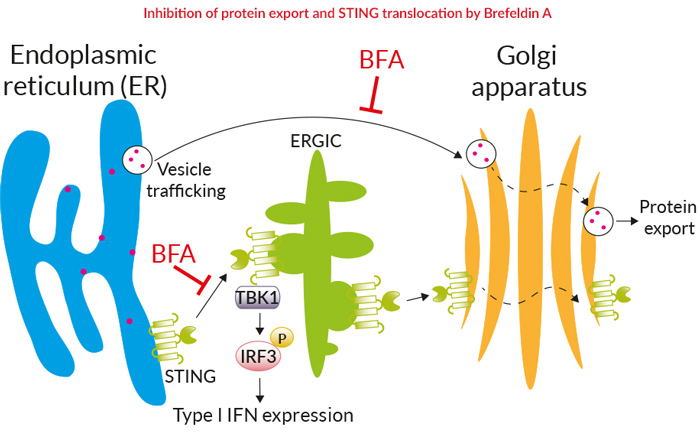
Inhibition of intracellular protein trafficking by Brefeldin A |
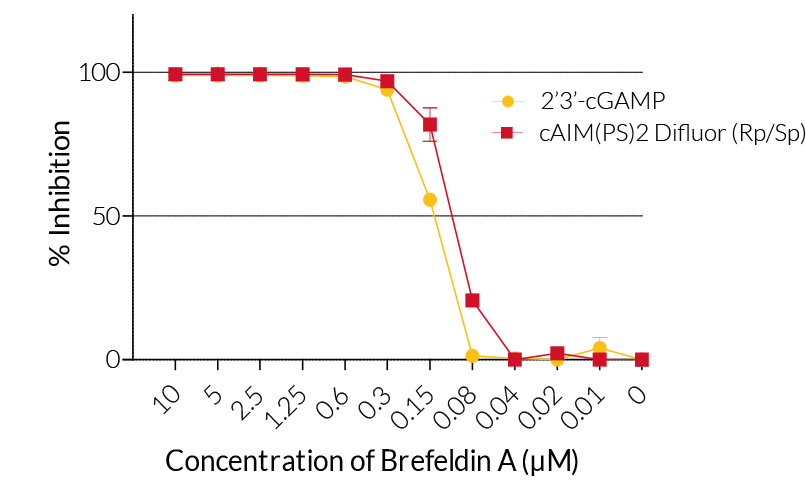
Brefeldin A inhibits STING-induced IRF activity in THP1-Dual™ cells |
Products are for research use only; We do not sell to patients
Copyright 2020 InvivoChem LLC | All Rights Reserved


 COA
COA