| Size | Price | Stock | Qty |
|---|---|---|---|
| 5mg |
|
||
| 10mg |
|
||
| 25mg |
|
||
| 50mg |
|
||
| 100mg |
|
||
| 250mg |
|
||
| 500mg | |||
| Other Sizes |


Purity: ≥98%
| Targets |
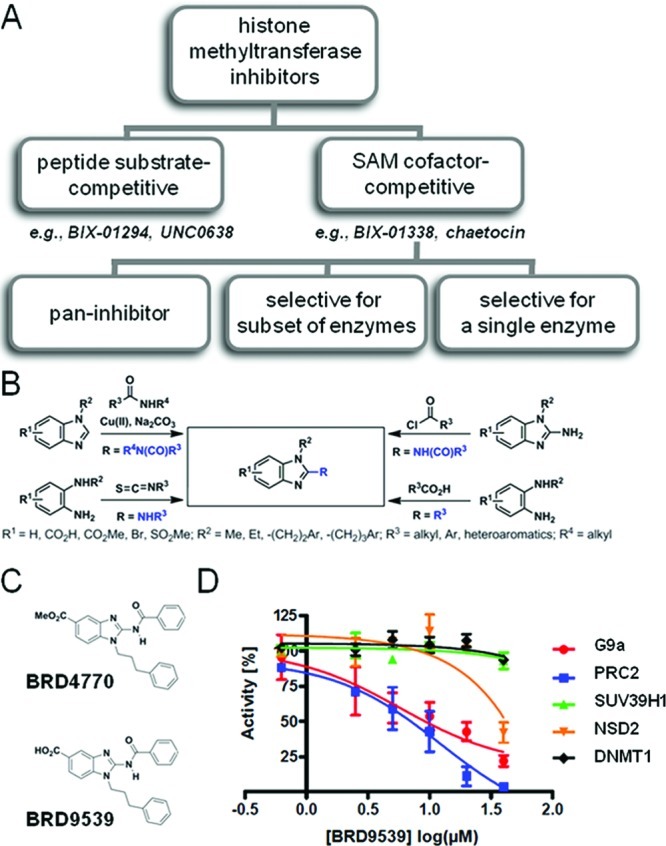
Histone Methyltransferase G9a (also known as KMT1C, EHMT2) (IC50: ~1.9 μM for recombinant G9a enzyme, measured via radioactive methyltransferase assay). No significant inhibition of other histone methyltransferases (e.g., EZH2, SETD8, SUV39H1, DOT1L) or DNA methyltransferases (DNMT1) at concentrations up to 20 μM (inhibition rate < 10% for all non-target enzymes), confirming selective targeting of G9a [1]
|
||
|---|---|---|---|
| ln Vitro |
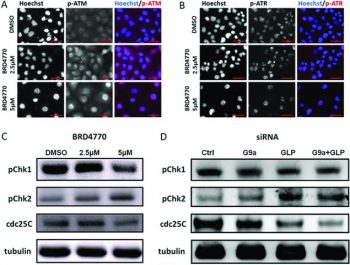
After 72 hours, PANC-1 cells treated with BRD4770 (0–20 µM) have fewer cells[1]. PANC-1 cells treated with BRD4770 (2.5–5 µM; 24 hours) have a 23% reduction in H3K9 trimethylation levels[1]. BRD4770 causes a pancreatic cancer cell line to exhibit a senescent phenotype. Moreover, BRD4770 causes G2/M cell-cycle arrest and suppresses both anchorage-dependent and -independent cell proliferation. While the ataxia telangiectasia and Rad3-related protein (ATR) pathway is unaffected, BRD4770 activates the ataxia telangiectasia mutated (ATM) route without causing DNA damage[1]. Without preventing histone deacetylases from functioning, BRD4770 also causes higher amounts of lysine acetylation in cells[1].
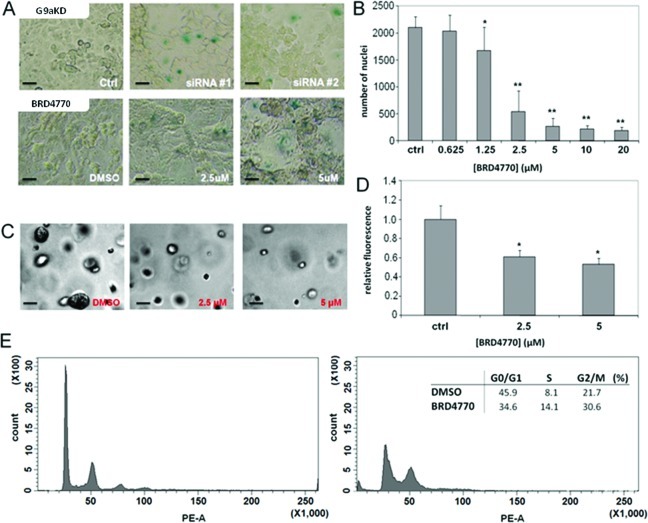
1. Antiproliferative activity in pancreatic adenocarcinoma cell lines: BRD4770 inhibited the proliferation of PANC-1, MIA PaCa-2, and AsPC-1 cells in a dose-dependent manner. After 72-hour treatment, IC50 values were ~3.2 μM (PANC-1), ~4.5 μM (MIA PaCa-2), and ~5.1 μM (AsPC-1) (MTT assay). No significant antiproliferative effect was observed in normal pancreatic ductal epithelial (HPDE) cells at concentrations ≤10 μM (viability > 85% vs. control) [1] 2. Inhibition of G9a-mediated histone modification: PANC-1 cells treated with BRD4770 (1-10 μM) for 48 hours showed a dose-dependent reduction in G9a-catalyzed histone H3 lysine 9 dimethylation (H3K9me2) (Western blot). At 5 μM, H3K9me2 levels were reduced by ~70% compared to the vehicle control; no changes in total H3, H3K9me3, or H3K27me3 were detected [1] 3. Induction of cellular senescence: PANC-1 cells treated with 5 μM BRD4770 for 72 hours exhibited senescence-associated β-galactosidase (SA-β-gal) activity in ~65% of cells (vs. ~5% in the control group, SA-β-gal staining). Senescence-related genes (p16INK4a, p21CIP1) were upregulated by ~4.5-fold and ~3.8-fold, respectively, as measured by qPCR [1] 4. Minimal induction of apoptosis: Flow cytometry (Annexin V-FITC/PI staining) showed that 5 μM BRD4770 treatment for 72 hours increased the apoptotic rate of PANC-1 cells from ~3.1% (control) to only ~7.2%, indicating that the primary antiproliferative mechanism is senescence rather than apoptosis [1] 5. Clonogenic assay: PANC-1 cells seeded at 200 cells/well in 6-well plates and treated with 1-5 μM BRD4770 for 14 days showed a dose-dependent decrease in colony formation. At 5 μM, colony number was reduced by ~80% compared to the control [1] |
||
| ln Vivo |
|
||
| Enzyme Assay |
1. Recombinant G9a enzyme activity assay:
- Reaction system: 50 mM Tris-HCl (pH 8.5), 5 mM MgCl2, 1 mM DTT, 0.1 mg/mL BSA, 20 nM recombinant G9a catalytic domain, 2 μM biotinylated histone H3 (1-21 aa) peptide (substrate), 1 μM [3H]-S-adenosylmethionine (SAM, radioactive methyl donor), and serial concentrations of BRD4770 (0.1-20 μM). - Incubation and detection: The mixture was incubated at 37°C for 45 minutes. The reaction was terminated by adding 5% trichloroacetic acid (TCA), and precipitated peptides were collected on streptavidin-coated filter plates. After washing with TCA and ethanol, the radioactivity of the filter plates was measured using a liquid scintillation counter. IC50 was calculated by fitting dose-response curves to a four-parameter logistic model [1] 2. Methyltransferase selectivity assay: - The same radioactive assay format was used for non-target enzymes (EZH2, SETD8, SUV39H1, DOT1L, DNMT1) with their respective substrates (e.g., H3K27 peptide for EZH2, H4K20 peptide for SETD8). BRD4770 was tested at 0.1-20 μM; all non-target enzymes showed <10% inhibition at the highest concentration (20 μM) [1] |
||
| Cell Assay |
Cell Viability Assay [1]
Cell Types: PANC-1 cells Tested Concentrations: 0 µM, 0.625 µM, 1.25 µM, 2.5 µM, 5 µM, 10 µM, 20 µM Incubation Duration: 72 hrs (hours) Experimental Results: decreased the number of cells after 72 h. Western Blot Analysis[1] Cell Types: PANC-1 cells Tested Concentrations: 2.5 µM, 5 µM Incubation Duration: 24 hrs (hours) Experimental Results: diminished H3K9 trimethylation level by 23% in PANC-1 cells. 1. Cell proliferation (MTT) assay: - Cell seeding: Pancreatic cancer cell lines (PANC-1, MIA PaCa-2, AsPC-1) and HPDE cells were seeded in 96-well plates at 5×10^3 cells/well (RPMI-1640 medium + 10% FBS + 1% penicillin-streptomycin). - Drug treatment: After 24-hour adherence, BRD4770 was added at concentrations of 0.1, 1, 5, 10, 20 μM (triplicate wells per concentration). Plates were incubated at 37°C (5% CO2) for 72 hours. - Viability detection: 20 μL of MTT solution (5 mg/mL) was added to each well, followed by 4 hours of incubation. The supernatant was discarded, and 150 μL of DMSO was added to dissolve formazan crystals. Absorbance at 570 nm was measured, and IC50 values were calculated [1] 2. Western blot for histone modifications: - Protein extraction: PANC-1 cells treated with BRD4770 (1-10 μM) for 48 hours were lysed in RIPA buffer (with protease inhibitors). Protein concentration was determined via BCA assay. - Electrophoresis and detection: 30 μg of protein was separated by 15% SDS-PAGE, transferred to PVDF membranes, and blocked with 5% non-fat milk (TBST) for 1 hour. Membranes were incubated with primary antibodies (anti-H3K9me2, anti-total H3, anti-H3K9me3, anti-H3K27me3) overnight at 4°C, followed by HRP-conjugated secondary antibodies for 1 hour at room temperature. Bands were visualized via ECL reagent [1] 3. SA-β-gal senescence staining: - PANC-1 cells were seeded in 12-well plates at 1×10^5 cells/well and treated with 5 μM BRD4770 for 72 hours. Cells were fixed with 2% formaldehyde/0.2% glutaraldehyde for 15 minutes, then incubated with SA-β-gal staining solution (pH 6.0) at 37°C (no CO2) for 16 hours. Senescent cells (blue-stained) were counted under a light microscope, and the percentage of SA-β-gal-positive cells was calculated [1] 4. qPCR for senescence genes: - RNA extraction: Total RNA was isolated from BRD4770-treated PANC-1 cells using an RNA extraction kit. cDNA was synthesized via reverse transcription. - Real-time PCR: qPCR was performed with SYBR Green master mix and gene-specific primers (p16INK4a, p21CIP1, GAPDH as internal control). Relative gene expression was calculated using the 2^(-ΔΔCt) method [1] |
||
| Animal Protocol |
|
||
| Toxicity/Toxicokinetics |
In vitro toxicity: BRD4770 showed low toxicity to normal HPDE cells (cell viability > 85% after 72 hours of treatment at a concentration of 10 μM). No data on in vivo toxicity (e.g., LD50, hepatotoxicity, nephrotoxicity) or plasma protein binding rate were provided in the literature [1].
|
||
| References | |||
| Additional Infomation |
2-Benzamido-1-(3-phenylpropyl)-5-benzimidazole carboxylic acid methyl ester belongs to the benzimidazole class of compounds.
1. Mechanism of action: BRD4770 is a selective small molecule G9a inhibitor. It binds to the catalytic domain of G9a, preventing SAM from donating methyl groups to H3K9, thereby reducing the level of H3K9me2. The reduction in the level of H3K9me2 leads to the reactivation of senescence-related genes (p16INK4a, p21CIP1), inducing cellular senescence and inhibiting the proliferation of pancreatic adenocarcinoma cells[1]. 2. Research significance: BRD4770 can be used as a chemical probe to verify the effectiveness of G9a as a therapeutic target for pancreatic adenocarcinoma. Its ability to induce senescence (a non-apoptotic anti-proliferative mechanism) suggests its potential for treating anti-apoptotic pancreatic cancer [1] 3. Selectivity advantage: Unlike non-selective epigenetic inhibitors, BRD4770 does not affect other methyltransferases, thereby minimizing off-target effects on irrelevant epigenetic pathways [1] |
| Molecular Formula |
C25H23N3O3
|
|
|---|---|---|
| Molecular Weight |
413.47
|
|
| Exact Mass |
413.173
|
|
| CAS # |
1374601-40-7
|
|
| Related CAS # |
|
|
| PubChem CID |
72193870
|
|
| Appearance |
White to off-white solid powder
|
|
| Density |
1.2±0.1 g/cm3
|
|
| Index of Refraction |
1.625
|
|
| LogP |
5.49
|
|
| Hydrogen Bond Donor Count |
1
|
|
| Hydrogen Bond Acceptor Count |
4
|
|
| Rotatable Bond Count |
8
|
|
| Heavy Atom Count |
31
|
|
| Complexity |
601
|
|
| Defined Atom Stereocenter Count |
0
|
|
| SMILES |
O=C(C1=CC=C2C(N=C(NC(C3=CC=CC=C3)=O)N2CCCC4=CC=CC=C4)=C1)OC
|
|
| InChi Key |
UCGWYCMPZXDHNR-UHFFFAOYSA-N
|
|
| InChi Code |
InChI=1S/C25H23N3O3/c1-31-24(30)20-14-15-22-21(17-20)26-25(27-23(29)19-12-6-3-7-13-19)28(22)16-8-11-18-9-4-2-5-10-18/h2-7,9-10,12-15,17H,8,11,16H2,1H3,(H,26,27,29)
|
|
| Chemical Name |
methyl 2-benzamido-1-(3-phenylpropyl)benzimidazole-5-carboxylate
|
|
| Synonyms |
|
|
| HS Tariff Code |
2934.99.9001
|
|
| Storage |
Powder -20°C 3 years 4°C 2 years In solvent -80°C 6 months -20°C 1 month |
|
| Shipping Condition |
Room temperature (This product is stable at ambient temperature for a few days during ordinary shipping and time spent in Customs)
|
| Solubility (In Vitro) |
DMSO: 27 mg/mL (65.3 mM)
Water: 1 mg/mL (Insoluble) Ethanol: 1 mg/mL |
|---|---|
| Solubility (In Vivo) |
Solubility in Formulation 1: ≥ 2.5 mg/mL (6.05 mM) (saturation unknown) in 10% DMSO + 90% Corn Oil (add these co-solvents sequentially from left to right, and one by one), clear solution.
For example, if 1 mL of working solution is to be prepared, you can add 100 μL of 25.0 mg/mL clear DMSO stock solution to 900 μL of corn oil and mix evenly. Solubility in Formulation 2: 6.25 mg/mL (15.12 mM) in 0.5% Methylcellulose/saline water (add these co-solvents sequentially from left to right, and one by one), suspension solution; with ultrasonication. Preparation of saline: Dissolve 0.9 g of sodium chloride in 100 mL ddH₂ O to obtain a clear solution. (Please use freshly prepared in vivo formulations for optimal results.) |
| Preparing Stock Solutions | 1 mg | 5 mg | 10 mg | |
| 1 mM | 2.4186 mL | 12.0928 mL | 24.1856 mL | |
| 5 mM | 0.4837 mL | 2.4186 mL | 4.8371 mL | |
| 10 mM | 0.2419 mL | 1.2093 mL | 2.4186 mL |
*Note: Please select an appropriate solvent for the preparation of stock solution based on your experiment needs. For most products, DMSO can be used for preparing stock solutions (e.g. 5 mM, 10 mM, or 20 mM concentration); some products with high aqueous solubility may be dissolved in water directly. Solubility information is available at the above Solubility Data section. Once the stock solution is prepared, aliquot it to routine usage volumes and store at -20°C or -80°C. Avoid repeated freeze and thaw cycles.
Calculation results
Working concentration: mg/mL;
Method for preparing DMSO stock solution: mg drug pre-dissolved in μL DMSO (stock solution concentration mg/mL). Please contact us first if the concentration exceeds the DMSO solubility of the batch of drug.
Method for preparing in vivo formulation::Take μL DMSO stock solution, next add μL PEG300, mix and clarify, next addμL Tween 80, mix and clarify, next add μL ddH2O,mix and clarify.
(1) Please be sure that the solution is clear before the addition of next solvent. Dissolution methods like vortex, ultrasound or warming and heat may be used to aid dissolving.
(2) Be sure to add the solvent(s) in order.
Effects ofBRD4770 inhibition on the ATM and ATR pathways.ACS Chem Biol.2012 Jul 20;7(7):1152-7. |
Small-molecule inhibitors of G9a. |
Comparison of genetic and small-molecule inhibition of G9a in PANC-1 cells.ACS Chem Biol.2012 Jul 20;7(7):1152-7. |
Products are for research use only; We do not sell to patients
Copyright 2020 InvivoChem LLC | All Rights Reserved


 COA
COA