| Size | Price | Stock | Qty |
|---|---|---|---|
| 5mg |
|
||
| 10mg |
|
||
| 25mg |
|
||
| 50mg |
|
||
| 100mg |
|
||
| 250mg |
|
||
| 500mg |
|
||
| Other Sizes |
Purity: ≥98%
| Targets |
Anti-ulcer peptidergic agent
BPC 157 targets multiple pathways involved in tissue protection and repair. It is an anti-ulcer peptidergic agent. BPC 157 inhibits inflammation by blocking the production of pro-inflammatory mediators such as nitric oxide, prostaglandins, and leukotrienes. It has been shown to target FAK (focal adhesion kinase) and JAK (Janus kinase) pathways. BPC 157 ameliorates specific (over)stimulated/damaged neurotransmitter systems, including serotonergic and dopaminergic systems. It displays antianxiety and antidepressant effects. |
|---|---|
| ln Vitro |
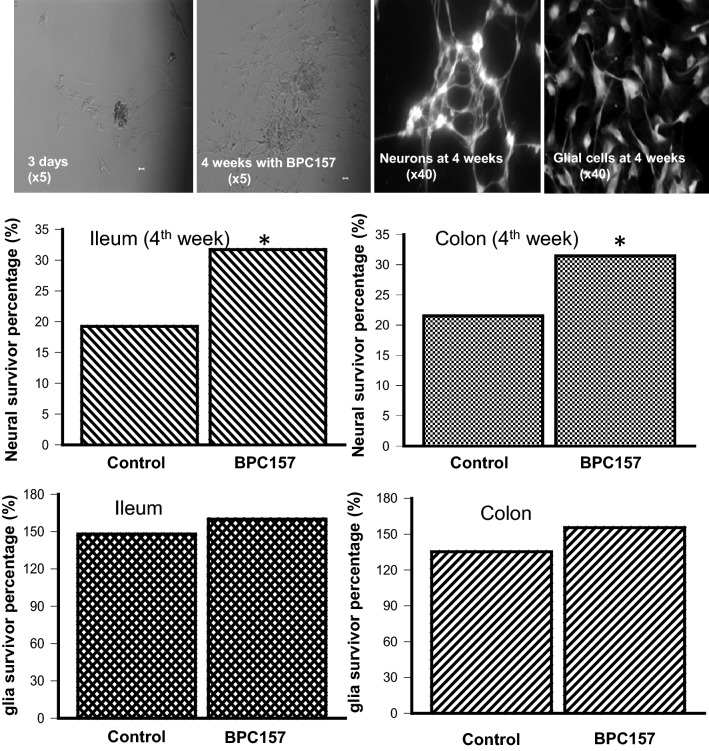
Novel Gastric Peptide BPC157 has Cytoprotective effects in Gastrointestinal Tract and Cultured Enteric Neurons and Glial Cells[3].
In vitro, BPC 157 exhibits cytoprotective effects in the gastrointestinal tract and cultured enteric neurons and glial cells. It promotes wound healing in various cell types. The compound's anti-inflammatory activity is demonstrated by its ability to block the production of pro-inflammatory mediators such as nitric oxide, prostaglandins, and leukotrienes. BPC 157 also shows neuroprotective effects, protecting neurons from damage and promoting nerve regeneration. |
| ln Vivo |
BPC 157 (10 μg/kg, 10 ng/kg) was injected intraperitoneally once a day (first application right after surgery, last application 24 hours prior to sacrifice) or dissolved in drinking water (0.16 μg/mL/12 ml/day till sacrifice) in a toxic rat model of multiple sclerosis. Control generally does not treat colostocolic anastomosis or cysteamine colitis. Both were effectively healed at the same time by BPC 157 [2].
In vivo, BPC 157 reduces immediate and delayed damage induced by brain trauma and improves nerve regeneration after transection. It displays antianxiety and antidepressant effects. BPC 157 shows a protective effect on the stomach and duodenum when administered in models of stress ulcers, cysteamine-duodenal ulcers, and ethanol lesions. Application of BPC 157 improved tendon healing. It has been shown to have hepatoprotective effects. |
| Enzyme Assay |
The in vitro activity of BPC 157 is assessed using various cell-based assays. For wound healing studies, fibroblasts or epithelial cells are cultured in appropriate media and treated with various concentrations of BPC 157 (typically 0.1-100 µg/mL). Cell migration and proliferation are assessed by scratch wound healing assays or by measuring cell proliferation using MTT assays. For anti-inflammatory studies, macrophages are stimulated with LPS and treated with BPC 157, and the production of pro-inflammatory mediators (nitric oxide, prostaglandins, leukotrienes) is measured by Griess reagent, ELISA, or HPLC.
|
| Cell Assay |
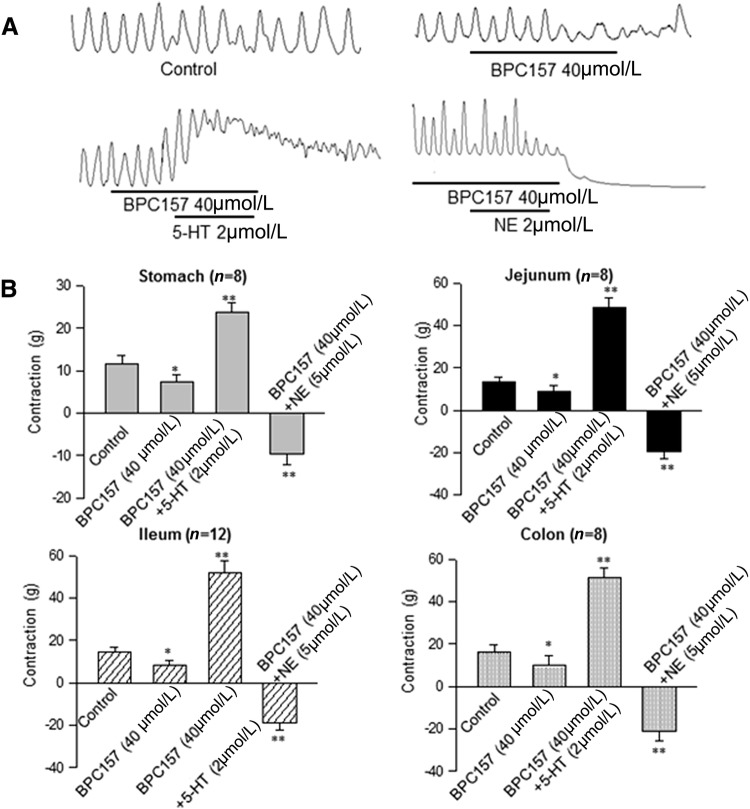
Body protection compound (BPC) 157 is a stable gastric pentadecapeptide. Predrag Sikiric’s team has carried out many investigations of its cytoprotective effects in different organs and tissues. Their evidence indicates that BPC157 has potent cytoprotection in neural injury and gastrointestinal (GI) ulcers. Nevertheless, the effects of BPC157 in the GI remain unclear. It is well known that the gut produces 95% of the 5-hydroxytryptamine (5-HT) in the human body. The 5-HT in the intestinal mucosa stimulates the production of pro-inflammatory mediators by immune cells. Enteric 5-HT may be a key player in physiological actions and the pathogenesis of intestinal inflammation. Previous evidence has shown that enteric 5-HT plays a prominent role in inflammatory bowel disease. The reports imply that BPC157 significantly modulates the regional synthesis of 5-HT in different areas of the rat brain. So far, the detailed mechanism of action of BPC157 has remained elusive in GI physiology and pathophysiology. Therefore, the aim of the study was to clarify the cytoprotective mechanism of BPC157 in the GI by investigating the release of enteric 5-HT, the survival rate of cultured enteric neurons, the proliferation of cultured enteric glial cells (EGCs), and intestinal motility with and without BPC157[3].
For cellular assays, fibroblasts, epithelial cells, macrophages, or neuronal cells are cultured in appropriate media. Cells are treated with various concentrations of BPC 157 for defined periods. Cell viability is assessed using MTT or CellTiter-Glo assays. Cell migration is assessed by scratch wound healing assays or Transwell migration assays. The expression of inflammatory mediators is analyzed by Western blotting or qPCR. The activation of FAK and JAK pathways is analyzed by Western blotting using phospho-specific antibodies. |
| Animal Protocol |
Stable gastric pentadecapeptide BPC 157 was suggested to link inflammatory bowel disease and multiple sclerosis, and thereby, shown to equally counteract the models of both of those diseases. For colitis, cysteamine (400 mg/kg intrarectally (1 ml/rat)) and colon-colon anastomosis (sacrifice at day 3, 5, 7, and 14) were used. BPC 157 (10 μg/kg, 10 ng/kg) was applied either intraperitoneally once time daily (first application immediately after surgery, last at 24 hours before sacrifice) or per-orally in drinking water (0.16 μg/ml/12 ml/day till the sacrifice) while controls simultaneously received an equivolume of saline (5 ml/kg) intraperitoneally or drinking water only (12 ml/day). A multiple sclerosis suited toxic rat model, cuprizone (compared with standard, a several times higher regimen, 2.5% of diet regimen + 1 g/kg intragastrically/day) was combined with BPC 157 (in drinking water 0.16 μg or 0.16 ng/ml/12 ml/day/rat + 10 μg or 10 ng/kg intragastrically/day) till the sacrifice at day 4. In general, the controls could not heal cysteamine colitis and colon-colon anastomosis. BPC 157 induced an efficient healing of both at the same time. Likewise, cuprizone-controls clearly exhibited an exaggerated and accelerated damaging process; nerve damage appeared in various brain areas, with most prominent damage in corpus callosum, laterodorsal thalamus, nucleus reunions, anterior horn motor neurons. BPC 157-cuprizone rats had consistently less nerve damage in all damaged areas, especially in those areas that otherwise were most affected. Consistently, BPC 157 counteracted cerebellar ataxia and impaired forelimb function. Thereby, this experimental evidence advocates BPC 157 in both inflammatory bowel disease and multiple sclerosis therapy[2].
In vivo, BPC 157 is typically administered via intraperitoneal or oral routes in animal models. In wound healing models, the compound is administered topically or systemically, and wound closure is monitored. In models of gastric ulcers, BPC 157 is administered before or after ulcer induction, and ulcer healing is assessed by histopathological examination. In models of brain trauma, the compound is administered, and neurological function and tissue damage are assessed. In tendon healing models, BPC 157 is administered locally or systemically, and tendon healing is assessed by histology and biomechanical testing. |
| ADME/Pharmacokinetics |
BPC 157 has a molecular weight of 1419.54 g/mol and a molecular formula of C62H98N16O22. It is a synthetic peptide that is soluble in water and DMSO. The compound should be stored as a lyophilized powder at -20°C under desiccated conditions. Specific pharmacokinetic parameters such as bioavailability, half-life, and volume of distribution are not detailed in the provided search results. The peptide nature of the compound may limit its oral bioavailability.
|
| Toxicity/Toxicokinetics |
BPC 157 has no reported toxicity. In animal studies, the compound is well-tolerated at therapeutic doses. The compound is intended for research purposes only and is not approved for human or veterinary use. Standard laboratory safety precautions should be followed when handling the compound. Comprehensive toxicological studies are required to establish its full safety profile.
|
| References |
[1]. Stable gastric pentadecapeptide BPC 157: novel therapy in gastrointestinal tract. Curr Pharm Des. 2011;17(16):1612-1632.
[2]. Stable gastric pentadecapeptide BPC 157 heals cysteamine-colitis and colon-colon-anastomosis and counteracts cuprizone brain injuries and motor disability. J Physiol Pharmacol. 2013;64(5):597-612. [3]. Cytoprotective Mechanism of the Novel Gastric Peptide BPC157 in Gastrointestinal Tract and Cultured Enteric Neurons and Glial Cells. Neurosci Bull. 2019 Feb; 35(1): 167–170. |
| Additional Infomation |
Bepecin is being studied in the clinical trial NCT02637284 (PCO-02 - Safety and Pharmacokinetics Trial).
BPC 157 is a research peptide that has been studied for its tissue-protective and wound-healing properties. It is a fragment of a gastric peptide and has been investigated for its potential therapeutic applications in gastrointestinal disorders, inflammatory bowel disease, wound healing, and neurodegenerative conditions. BPC 157 is not approved for clinical use and is intended for research purposes only. It is available from chemical suppliers for research applications. |
| Molecular Formula |
C62H98N16O22
|
|---|---|
| Molecular Weight |
1419.53552
|
| Exact Mass |
1418.704
|
| Elemental Analysis |
C, 52.46; H, 6.96; N, 15.79; O, 24.79
|
| CAS # |
137525-51-0
|
| Related CAS # |
216441-24-6 (sodium);137525-51-0; 1628202-19-6 (acetate); 1628202-16-3 (TFA);137525-51-0;
|
| PubChem CID |
9941957
|
| Sequence |
Gly-Glu-Pro-Pro-Pro-Gly-Lys-Pro-Ala-Asp-Asp-Ala-Gly-Leu-Val
glycyl-L-alpha-glutamyl-L-prolyl-L-prolyl-L-prolyl-glycyl-L-lysyl-L-prolyl-L-alanyl-L-alpha-aspartyl-L-alpha-aspartyl-L-alanyl-glycyl-L-leucyl-L-valine |
| SequenceShortening |
GEPPPGKPADDAGLV
|
| Appearance |
White to off-white solid
|
| Density |
1.4±0.1 g/cm3
|
| Boiling Point |
1802.9±65.0 °C at 760 mmHg
|
| Flash Point |
1044.2±34.3 °C
|
| Vapour Pressure |
0.0±0.6 mmHg at 25°C
|
| Index of Refraction |
1.576
|
| Source |
Endogenously produced metabolite
|
| LogP |
-2.41
|
| Hydrogen Bond Donor Count |
16
|
| Hydrogen Bond Acceptor Count |
24
|
| Rotatable Bond Count |
39
|
| Heavy Atom Count |
100
|
| Complexity |
3040
|
| Defined Atom Stereocenter Count |
12
|
| SMILES |
NCCCCC(C(N1CCC[C@H]1C(N[C@H](C(N[C@H](C(N[C@H](C(N[C@H](C(NCC(N[C@H](C(N[C@H](C(=O)O)C(C)C)=O)CC(C)C)=O)=O)C)=O)CC(=O)O)=O)CC(=O)O)=O)C)=O)=O)NC(CNC([C@@H]1CCCN1C([C@@H]1CCCN1C([C@@H]1CCCN1C([C@@H](NC(CN)=O)CCC(=O)O)=O)=O)=O)=O)=O
|
| InChi Key |
HEEWEZGQMLZMFE-RKGINYAYSA-N
|
| InChi Code |
InChI=1S/C62H98N16O22/c1-31(2)25-37(55(92)74-50(32(3)4)62(99)100)71-46(81)29-65-51(88)33(5)67-53(90)38(26-48(84)85)73-54(91)39(27-49(86)87)72-52(89)34(6)68-57(94)41-15-10-21-75(41)58(95)35(13-7-8-20-63)70-45(80)30-66-56(93)40-14-9-22-76(40)60(97)43-17-12-24-78(43)61(98)42-16-11-23-77(42)59(96)36(18-19-47(82)83)69-44(79)28-64/h31-43,50H,7-30,63-64H2,1-6H3,(H,65,88)(H,66,93)(H,67,90)(H,68,94)(H,69,79)(H,70,80)(H,71,81)(H,72,89)(H,73,91)(H,74,92)(H,82,83)(H,84,85)(H,86,87)(H,99,100)/t33-,34-,35-,36-,37-,38-,39-,40-,41-,42-,43-,50-/m0/s1
|
| Chemical Name |
L-Valine,
glycyl-L-alpha-glutamyl-L-prolyl-L-prolyl-L-prolylglycyl-L-lysyl-L-prolyl-L-alanyl-L-alpha-aspartyl-L-alpha-aspartyl-L-alanylglycyl-L-leucyl-
|
| Synonyms |
BPC 157; BPC-157; BPC157; Bpc 15; 137525-51-0; Bepecin; Bpc-15; Bpc15; Bpc 157; Bepecin; Bpc 15; Bpc157; Booly protection compound 15; L-Valine, glycyl-L-alpha-glutamyl-L-prolyl-L-prolyl-L-prolylglycyl-L-lysyl-L-prolyl-L-alanyl-L-alpha-aspartyl-L-alpha-aspartyl-L-alanylglycyl-L-leucyl-; Booly protection compound 15
|
| HS Tariff Code |
2934.99.9001
|
| Storage |
Powder -20°C 3 years 4°C 2 years In solvent -80°C 6 months -20°C 1 month Note: Please store this product in a sealed and protected environment, avoid exposure to moisture. |
| Shipping Condition |
Room temperature (This product is stable at ambient temperature for a few days during ordinary shipping and time spent in Customs)
|
| Solubility (In Vitro) |
H2O : ≥ 100 mg/mL (~70.45 mM)
DMSO : ~50 mg/mL (~35.22 mM) |
|---|---|
| Solubility (In Vivo) |
Solubility in Formulation 1: ≥ 2.5 mg/mL (1.76 mM) (saturation unknown) in 10% DMSO + 40% PEG300 + 5% Tween80 + 45% Saline (add these co-solvents sequentially from left to right, and one by one), clear solution.
For example, if 1 mL of working solution is to be prepared, you can add 100 μL of 25.0 mg/mL clear DMSO stock solution to 400 μL PEG300 and mix evenly; then add 50 μL Tween-80 to the above solution and mix evenly; then add 450 μL normal saline to adjust the volume to 1 mL. Preparation of saline: Dissolve 0.9 g of sodium chloride in 100 mL ddH₂ O to obtain a clear solution. Solubility in Formulation 2: 2.5 mg/mL (1.76 mM) in 10% DMSO + 90% (20% SBE-β-CD in Saline) (add these co-solvents sequentially from left to right, and one by one), clear solution; with ultrasonication. For example, if 1 mL of working solution is to be prepared, you can add 100 μL of 25.0 mg/mL clear DMSO stock solution to 900 μL of 20% SBE-β-CD physiological saline solution and mix evenly. Preparation of 20% SBE-β-CD in Saline (4°C,1 week): Dissolve 2 g SBE-β-CD in 10 mL saline to obtain a clear solution. View More
Solubility in Formulation 3: ≥ 2.5 mg/mL (1.76 mM) (saturation unknown) in 10% DMSO + 90% Corn Oil (add these co-solvents sequentially from left to right, and one by one), clear solution. |
| Preparing Stock Solutions | 1 mg | 5 mg | 10 mg | |
| 1 mM | 0.7045 mL | 3.5223 mL | 7.0445 mL | |
| 5 mM | 0.1409 mL | 0.7045 mL | 1.4089 mL | |
| 10 mM | 0.0704 mL | 0.3522 mL | 0.7045 mL |
*Note: Please select an appropriate solvent for the preparation of stock solution based on your experiment needs. For most products, DMSO can be used for preparing stock solutions (e.g. 5 mM, 10 mM, or 20 mM concentration); some products with high aqueous solubility may be dissolved in water directly. Solubility information is available at the above Solubility Data section. Once the stock solution is prepared, aliquot it to routine usage volumes and store at -20°C or -80°C. Avoid repeated freeze and thaw cycles.
Calculation results
Working concentration: mg/mL;
Method for preparing DMSO stock solution: mg drug pre-dissolved in μL DMSO (stock solution concentration mg/mL). Please contact us first if the concentration exceeds the DMSO solubility of the batch of drug.
Method for preparing in vivo formulation::Take μL DMSO stock solution, next add μL PEG300, mix and clarify, next addμL Tween 80, mix and clarify, next add μL ddH2O,mix and clarify.
(1) Please be sure that the solution is clear before the addition of next solvent. Dissolution methods like vortex, ultrasound or warming and heat may be used to aid dissolving.
(2) Be sure to add the solvent(s) in order.
|
|
Products are for research use only; We do not sell to patients
Copyright 2020 InvivoChem LLC | All Rights Reserved


 COA
COA