| Size | Price | Stock | Qty |
|---|---|---|---|
| 5mg |
|
||
| 10mg |
|
||
| 25mg |
|
||
| 50mg |
|
||
| 100mg |
|
||
| Other Sizes |
Purity: ≥98%
| Targets |
With an IC50 of 20 nM, BAY-678 is a powerful, selective, cell-permeable, and orally accessible inhibitor of human neutrophil elastase (HNE). For MNE, BAY-678 has a Ki value of 700 nM. A fourth-generation HNE inhibitor is BAY-678 [1]. Through the Structural Genomics Consortium (SGC), BAY-678 has also been proposed to the general public as a chemical probe [2]. A panel of 21 serine proteases is more than 2,000 times more selectively inhibited by BAY-678 [3].
|
|---|---|
| ln Vitro |
With an IC50 of 20 nM, BAY-678 is a powerful, selective, cell-permeable, and orally accessible inhibitor of human neutrophil elastase (HNE). For MNE, BAY-678 has a Ki value of 700 nM. A fourth-generation HNE inhibitor is BAY-678 [1]. Through the Structural Genomics Consortium (SGC), BAY-678 has also been proposed to the general public as a chemical probe [2]. A panel of 21 serine proteases is more than 2,000 times more selectively inhibited by BAY-678 [3].
BAY-678 inhibits human neutrophil elastase (HNE) with an IC50 of 20 nM in a biochemical assay using the isolated enzyme and the fluorogenic peptide substrate MeOSuc-AAPV-AMC [1]. It exhibits high selectivity, showing no inhibition against a panel of 21 related serine proteases (including porcine pancreatic elastase, PPE) at concentrations up to 30 µM [1]. The compound showed minimal inhibition against human cytochrome P450 isoforms CYP2C9 and CYP3A4, with IC50 values > 50 µM [1]. |
| ln Vivo |
In preclinical models of ALI and emphysema, BAY-678 (17) demonstrated notable effectiveness, indicating its anti-inflammatory and anti-remodeling mechanism of action. Additionally, in rat and mouse models of PAH, BAY-678 (17) demonstrated noteworthy positive effects on pulmonary hemodynamics and vascular effects [2].
|
| Enzyme Assay |
The inhibitory capacity of BAY-678 against HNE was assessed using a functional biochemical assay with the isolated enzyme. Enzyme activity was measured at pH 7.4 in the presence or absence of various compound concentrations using a suitable fluorogenic peptide substrate (MeOSuc-AAPV-AMC). IC50 values were derived from the enzyme activity data [1].
To determine the inhibition constant (Ki), enzyme reaction velocities were measured with different substrate concentrations at various inhibitor concentrations. Ki values were extrapolated from Dixon plots, confirming a competitive inhibition mechanism [1]. The binding kinetics (on-rate, kon) were determined using a functional biochemical assay with a substrate containing a modified fluorescent label (MeOSuc-AAPV-umbelliferyl). This allowed sensitive detection of substrate hydrolysis on a millisecond timescale in the presence or absence of the inhibitor. The observed rate constant for the onset of inhibition (kobs) was obtained via nonlinear regression of reaction progress curves and plotted against inhibitor concentration. The slope of the linear regression provided the estimated kon value [1]. |
| Animal Protocol |
The pharmacokinetic profile of BAY-678 was studied in rats. The compound was administered intravenously (0.25–2 hour infusion) and orally (by gavage) at a dose of 0.3 mg kg⁻¹. The vehicle used was a mixture of ethanol, PEG400, and water. Plasma samples were collected to determine pharmacokinetic parameters [1].
|
| ADME/Pharmacokinetics |
In rats, the total plasma clearance (CL) of BAY-678 was 2.0 L h⁻¹ kg⁻¹, and the apparent steady-state volume of distribution (Vss) was 3.9 L kg⁻¹. The terminal half-life (t₁/₂) was 1.3 hours. The oral bioavailability (F) was 83% [1].
|
| Toxicity/Toxicokinetics |
BAY-678 did not show any inhibitory effect on human CYP2C9 and CYP3A4 isoenzymes at concentrations up to 50 µM, suggesting that it is less likely to undergo cytochrome P450-mediated drug interactions [1].
|
| References | |
| Additional Infomation |
BAY-678 (compound 20 in the paper) is a 1,4-dihydropyrimidinone derivative that was discovered during the optimization of a novel HNE inhibitor series. It was selected as a chemical probe candidate due to its balanced properties in terms of polarity, potency (IC50 for HNE = 20 nM) and selectivity for related serine proteases and CYP isoenzymes. It is a reversible competitive inhibitor of HNE. The study mentions that it was used for in-depth in vitro and in vivo characterization, but did not show detailed efficacy results, instead focusing on the optimized clinical candidate BAY 85-8501 [1].
|
| Molecular Formula |
C20H15F3N4O2
|
|---|---|
| Molecular Weight |
400.353914499283
|
| Exact Mass |
400.114
|
| CAS # |
675103-36-3
|
| Related CAS # |
BAY-677;2117404-84-7;BAY-678 racemate;675103-35-2
|
| PubChem CID |
23728722
|
| Appearance |
Light yellow to yellow solid powder
|
| LogP |
2.5
|
| Hydrogen Bond Donor Count |
1
|
| Hydrogen Bond Acceptor Count |
7
|
| Rotatable Bond Count |
3
|
| Heavy Atom Count |
29
|
| Complexity |
755
|
| Defined Atom Stereocenter Count |
1
|
| SMILES |
CC1=C([C@@H](C2=CN=C(C#N)C=C2)NC(=O)N1C1C=CC=C(C(F)(F)F)C=1)C(=O)C
|
| InChi Key |
PGIVGIFOWOVINL-GOSISDBHSA-N
|
| InChi Code |
InChI=1S/C20H15F3N4O2/c1-11-17(12(2)28)18(13-6-7-15(9-24)25-10-13)26-19(29)27(11)16-5-3-4-14(8-16)20(21,22)23/h3-8,10,18H,1-2H3,(H,26,29)/t18-/m1/s1
|
| Chemical Name |
5-[(6R)-5-acetyl-4-methyl-2-oxo-3-[3-(trifluoromethyl)phenyl]-1,6-dihydropyrimidin-6-yl]pyridine-2-carbonitrile
|
| HS Tariff Code |
2934.99.9001
|
| Storage |
Powder -20°C 3 years 4°C 2 years In solvent -80°C 6 months -20°C 1 month |
| Shipping Condition |
Room temperature (This product is stable at ambient temperature for a few days during ordinary shipping and time spent in Customs)
|
| Solubility (In Vitro) |
DMSO : ≥ 100 mg/mL (~249.78 mM)
Ethanol :≥ 4.76 mg/mL (~11.89 mM) |
|---|---|
| Solubility (In Vivo) |
Solubility in Formulation 1: ≥ 2.5 mg/mL (6.24 mM) (saturation unknown) in 10% DMSO + 40% PEG300 + 5% Tween80 + 45% Saline (add these co-solvents sequentially from left to right, and one by one), clear solution.
For example, if 1 mL of working solution is to be prepared, you can add 100 μL of 25.0 mg/mL clear DMSO stock solution to 400 μL PEG300 and mix evenly; then add 50 μL Tween-80 to the above solution and mix evenly; then add 450 μL normal saline to adjust the volume to 1 mL. Preparation of saline: Dissolve 0.9 g of sodium chloride in 100 mL ddH₂ O to obtain a clear solution. Solubility in Formulation 2: ≥ 2.5 mg/mL (6.24 mM) (saturation unknown) in 10% DMSO + 90% Corn Oil (add these co-solvents sequentially from left to right, and one by one), clear solution. For example, if 1 mL of working solution is to be prepared, you can add 100 μL of 25.0 mg/mL clear DMSO stock solution to 900 μL of corn oil and mix evenly. (Please use freshly prepared in vivo formulations for optimal results.) |
| Preparing Stock Solutions | 1 mg | 5 mg | 10 mg | |
| 1 mM | 2.4978 mL | 12.4891 mL | 24.9781 mL | |
| 5 mM | 0.4996 mL | 2.4978 mL | 4.9956 mL | |
| 10 mM | 0.2498 mL | 1.2489 mL | 2.4978 mL |
*Note: Please select an appropriate solvent for the preparation of stock solution based on your experiment needs. For most products, DMSO can be used for preparing stock solutions (e.g. 5 mM, 10 mM, or 20 mM concentration); some products with high aqueous solubility may be dissolved in water directly. Solubility information is available at the above Solubility Data section. Once the stock solution is prepared, aliquot it to routine usage volumes and store at -20°C or -80°C. Avoid repeated freeze and thaw cycles.
Calculation results
Working concentration: mg/mL;
Method for preparing DMSO stock solution: mg drug pre-dissolved in μL DMSO (stock solution concentration mg/mL). Please contact us first if the concentration exceeds the DMSO solubility of the batch of drug.
Method for preparing in vivo formulation::Take μL DMSO stock solution, next add μL PEG300, mix and clarify, next addμL Tween 80, mix and clarify, next add μL ddH2O,mix and clarify.
(1) Please be sure that the solution is clear before the addition of next solvent. Dissolution methods like vortex, ultrasound or warming and heat may be used to aid dissolving.
(2) Be sure to add the solvent(s) in order.
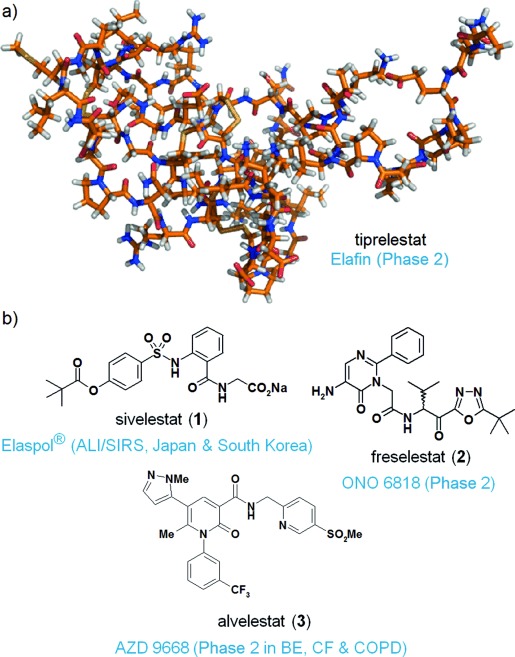
Selection of HNE inhibitors that have reached clinical development.ChemMedChem. 2015 Jul;10(7):1163-73. |
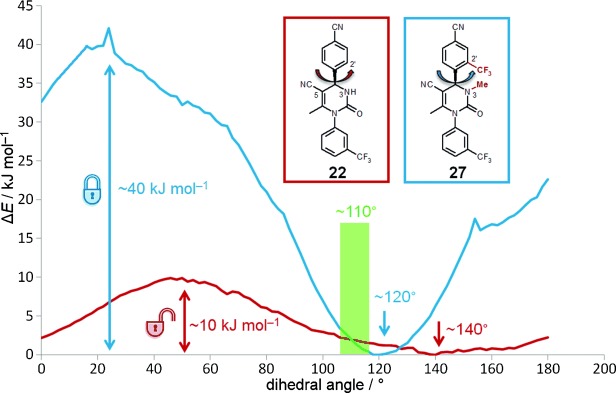
Locking the bioactive conformation with substituents at N3 and C2′. Conformational analysis of free ligands based on modeling. Relaxed coordinate scan of the rotation of the cyanophenyl moiety of 22 and 27 from 0° to 180° in steps of 2°. Depicted is the dihedral angle along N3=C4=C1′=C2′.ChemMedChem. 2015 Jul;10(7):1163-73. |
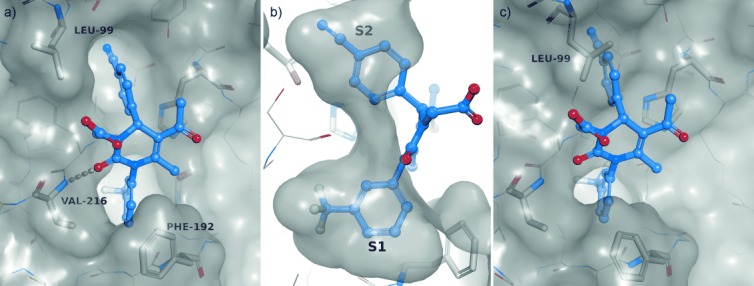
Induced-fit binding mode. Protease (HNE) residues are shown in stick representation (white) with transparent Connolly-like surface.[], [] Ligand 19 (purple) is shown in ball-and-stick model (oxygen: red, nitrogen: blue, fluorine: cyan); hydrogen bonds are depicted as broken yellow lines. a) Structure of HNE in complex with 19. Ligand 19 interacts with HNE by a hydrogen bond (3.1 Å) formed between the C2 carbonyl oxygen atom of the central pyrimidine ring and the Val216 backbone amide of HNE.ChemMedChem. 2015 Jul;10(7):1163-73. |
Products are for research use only; We do not sell to patients
Copyright 2020 InvivoChem LLC | All Rights Reserved


 COA
COA