| Size | Price | Stock | Qty |
|---|---|---|---|
| 5mg |
|
||
| 10mg |
|
||
| 25mg |
|
||
| 50mg |
|
||
| 100mg |
|
||
| 250mg | |||
| 500mg | |||
| Other Sizes |
Purity: ≥98%
| Targets |
Treatment with BAY-598 prevents SMYD2 from methylating MAPKAPK3 in vitro, but it has no effect on the KMT SMYD2-associated SMYD2. After nine days in culture, BAY-598 administration inhibited the growth of Kras;p53 mutant PDAC cells, but had no effect on the growth of Kras;p53;Smyd2 mutant cells [1].
|
|---|---|
| ln Vitro |
Treatment with BAY-598 prevents SMYD2 from methylating MAPKAPK3 in vitro, but it has no effect on the KMT SMYD2-associated SMYD2. After nine days in culture, BAY-598 administration inhibited the growth of Kras;p53 mutant PDAC cells, but had no effect on the growth of Kras;p53;Smyd2 mutant cells [1].
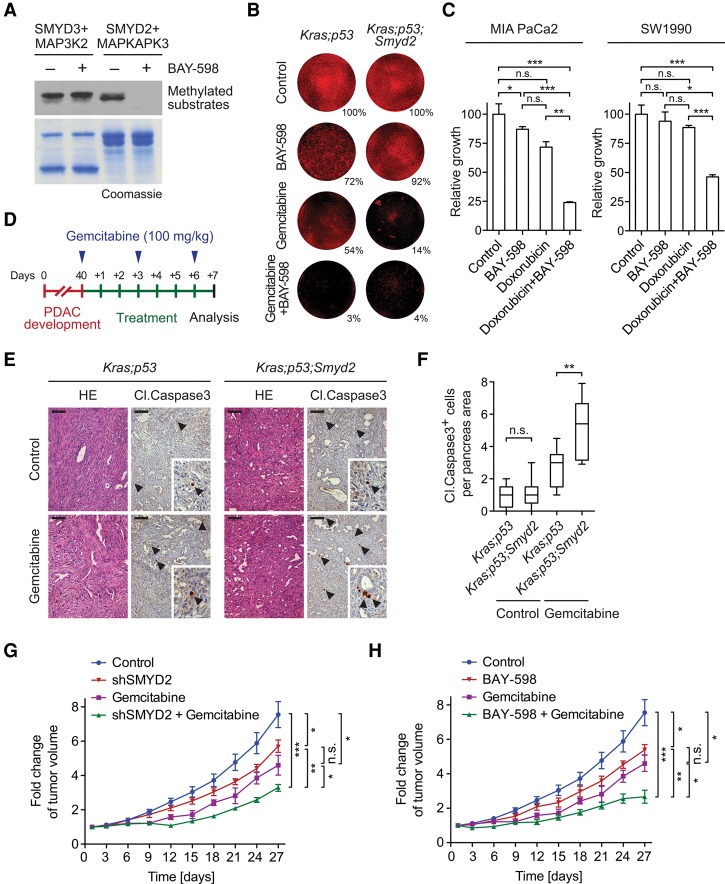
Treatment with BAY-598 reduced the growth of Kras;p53 mutant PDAC cells after 9 days in culture, but had little impact on the growth of Kras;p53, Smyd2 mutant cells, supporting its specificity for SMYD2. [1] The chemotherapeutic gemcitabine was more potent in inhibiting clonal expansion of Kras;p53 mutant PDAC cells when combined with BAY-598 or in cells lacking SMYD2, indicating cooperation between chemotherapy and SMYD2 inhibition. [1] Human PDAC cell lines (SW1990, MIA PaCa2) were highly sensitive to acute treatment (48 h) with a combination of low-dose doxorubicin and BAY-598, while being largely resistant to either agent alone. [1] |
| ln Vivo |
Inhibition of SMYD2 with BAY-598 (50 mg/kg once daily) combined with gemcitabine (100 mg/kg every third day) attenuated the growth of SW1990 xenografts in immunocompromised mice compared to single treatments. [1]
|
| Enzyme Assay |
In vitro methylation assays were performed using recombinant SMYD2 and its substrate MAPKAPK3 (or SMYD3 with its substrate MAP3K2 as a control). The assay mixture contained recombinant proteins, SAM or deuterated SAM, and reaction buffer. For inhibition assays, BAY-598 or DMSO was pre-incubated with SMYD2 before adding radiolabeled SAM. Reactions were incubated overnight, resolved by SDS-PAGE, and analyzed by autoradiography or immunoblot. BAY-598 specifically inhibited SMYD2-mediated methylation of MAPKAPK3 but not SMYD3 activity. [1]
|
| Cell Assay |
For cell viability assays, PDAC cells were seeded in 96-well plates and treated with serial dilutions of BAY-598, doxorubicin, or combination. After 72 hours, viability was assessed using MTT assay. [1]
For long-term colony formation assays, primary PDAC cells from mouse models were seeded in 6-well plates and treated with DMSO, BAY-598, gemcitabine, or combinations for 9 days. Cells were then fixed, stained with Sapphire 700 dye, and imaged for quantification. [1] |
| Animal Protocol |
For xenograft studies, SW1990 human PDAC cells were implanted subcutaneously into NSG mice. Mice were treated with BAY-598 (50 mg/kg once daily, intraperitoneal injection), gemcitabine (100 mg/kg every third day), or vehicle control. Tumor volumes were measured with calipers. [1]
In spontaneous PDAC models (Kras;p53 mutant mice), gemcitabine was administered at 100 mg/kg every third day for three cycles to assess chemosensitivity in the context of SMYD2 inhibition. [1] |
| ADME/Pharmacokinetics |
In vitro experiments showed that BAY-598 exhibited moderate metabolic stability in rat hepatocytes (blood clearance CLblood = 2.5 L/h/kg)[2]. In the Caco-2 cell permeability assay, BAY-598 showed moderate apparent permeability (Papp(AB) = 34 nm/s) and suggested active efflux (efflux ratio = 5)[2]. Its water solubility was 20 mg/L[2]. Following a single intravenous injection of 0.4 mg/kg in rats, BAY-598 showed moderate blood clearance (1.6 L/h/kg)[2]. Following a single oral administration of 0.8 mg/kg in rats, the bioavailability was 24%[2]. In mice, after a single oral administration of 10 or 100 mg/kg daily, plasma concentrations reached [the required plasma concentration]. Exposure to steady state for approximately 9 or 12 hours was performed to achieve a free cell IC₅₀ concentration. [2]
|
| Toxicity/Toxicokinetics |
In mouse efficacy studies, BAY-598 (500 mg/kg, orally, once daily) in combination with doxorubicin resulted in only a slight increase in treatment-related weight loss compared to the monotherapy group. [2]
|
| References |
|
| Additional Infomation |
BAY-598 is a highly selective SMYD2 inhibitor used to study the function of SMYD2 in pancreatic cancer. It was provided by the Structural Genomics Consortium. [1]
This study suggests that SMYD2 inhibition may enhance the efficacy of standard chemotherapy (gemcitabine, doxorubicin) in pancreatic ductal adenocarcinoma (PDAC) by modulating stress response pathways. [1] |
| Molecular Formula |
C22H20CL2F2N6O3
|
|---|---|
| Molecular Weight |
525.335409164429
|
| Exact Mass |
524.09
|
| Elemental Analysis |
C, 50.30; H, 3.84; Cl, 13.50; F, 7.23; N, 16.00; O, 9.14
|
| CAS # |
1906919-67-2
|
| Related CAS # |
1906919-67-2 (S-isomer);1906920-28-2 (BAY598 R-isomer);1906920-07-7 (BAY598 recamic mixture);
|
| PubChem CID |
117072551
|
| Appearance |
Beige Solid powder
|
| LogP |
4.4
|
| Hydrogen Bond Donor Count |
2
|
| Hydrogen Bond Acceptor Count |
8
|
| Rotatable Bond Count |
9
|
| Heavy Atom Count |
35
|
| Complexity |
854
|
| Defined Atom Stereocenter Count |
1
|
| SMILES |
CCN([C@H]1CN(N=C1C2=CC(=C(C=C2)Cl)Cl)C(=NC3=CC(=CC=C3)OC(F)F)NC#N)C(=O)CO
|
| InChi Key |
OTTJIRVZJJGFTK-SFHVURJKSA-N
|
| InChi Code |
InChI=1S/C22H20Cl2F2N6O3/c1-2-31(19(34)11-33)18-10-32(30-20(18)13-6-7-16(23)17(24)8-13)22(28-12-27)29-14-4-3-5-15(9-14)35-21(25)26/h3-9,18,21,33H,2,10-11H2,1H3,(H,28,29)/t18-/m0/s1
|
| Chemical Name |
(S,E)-N-(1-(N'-cyano-N-(3-(difluoromethoxy)phenyl)carbamimidoyl)-3-(3,4-dichlorophenyl)-4,5-dihydro-1H-pyrazol-4-yl)-N-ethyl-2-hydroxyacetamide
|
| Synonyms |
BAY598; BAY 598; BAY-598 S-isomer
|
| HS Tariff Code |
2934.99.9001
|
| Storage |
Powder -20°C 3 years 4°C 2 years In solvent -80°C 6 months -20°C 1 month |
| Shipping Condition |
Room temperature (This product is stable at ambient temperature for a few days during ordinary shipping and time spent in Customs)
|
| Solubility (In Vitro) |
DMSO : ~125 mg/mL (~237.94 mM)
|
|---|---|
| Solubility (In Vivo) |
Solubility in Formulation 1: ≥ 2.08 mg/mL (3.96 mM) (saturation unknown) in 10% DMSO + 40% PEG300 + 5% Tween80 + 45% Saline (add these co-solvents sequentially from left to right, and one by one), clear solution.
For example, if 1 mL of working solution is to be prepared, you can add 100 μL of 20.8 mg/mL clear DMSO stock solution to 400 μL PEG300 and mix evenly; then add 50 μL Tween-80 to the above solution and mix evenly; then add 450 μL normal saline to adjust the volume to 1 mL. Preparation of saline: Dissolve 0.9 g of sodium chloride in 100 mL ddH₂ O to obtain a clear solution. Solubility in Formulation 2: ≥ 2.08 mg/mL (3.96 mM) (saturation unknown) in 10% DMSO + 90% Corn Oil (add these co-solvents sequentially from left to right, and one by one), clear solution. For example, if 1 mL of working solution is to be prepared, you can add 100 μL of 20.8 mg/mL clear DMSO stock solution to 900 μL of corn oil and mix evenly. (Please use freshly prepared in vivo formulations for optimal results.) |
| Preparing Stock Solutions | 1 mg | 5 mg | 10 mg | |
| 1 mM | 1.9035 mL | 9.5176 mL | 19.0353 mL | |
| 5 mM | 0.3807 mL | 1.9035 mL | 3.8071 mL | |
| 10 mM | 0.1904 mL | 0.9518 mL | 1.9035 mL |
*Note: Please select an appropriate solvent for the preparation of stock solution based on your experiment needs. For most products, DMSO can be used for preparing stock solutions (e.g. 5 mM, 10 mM, or 20 mM concentration); some products with high aqueous solubility may be dissolved in water directly. Solubility information is available at the above Solubility Data section. Once the stock solution is prepared, aliquot it to routine usage volumes and store at -20°C or -80°C. Avoid repeated freeze and thaw cycles.
Calculation results
Working concentration: mg/mL;
Method for preparing DMSO stock solution: mg drug pre-dissolved in μL DMSO (stock solution concentration mg/mL). Please contact us first if the concentration exceeds the DMSO solubility of the batch of drug.
Method for preparing in vivo formulation::Take μL DMSO stock solution, next add μL PEG300, mix and clarify, next addμL Tween 80, mix and clarify, next add μL ddH2O,mix and clarify.
(1) Please be sure that the solution is clear before the addition of next solvent. Dissolution methods like vortex, ultrasound or warming and heat may be used to aid dissolving.
(2) Be sure to add the solvent(s) in order.
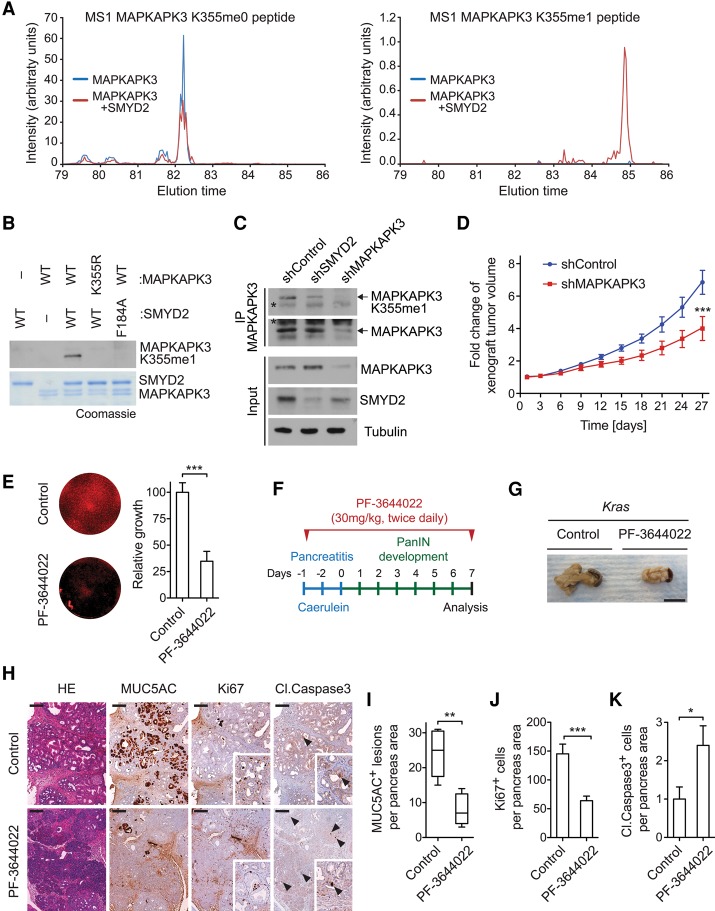
MAPKAPK3 is methylated in PDAC cells and regulates PDAC-associated phenotypes.Genes Dev. 2016 Apr 1;30(7):772-85. |
SMYD2 inhibition enhances PDAC chemosensitivity in vitro and in vivo. (A) BAY-598 inhibits SMYD2.Genes Dev. 2016 Apr 1;30(7):772-85. |
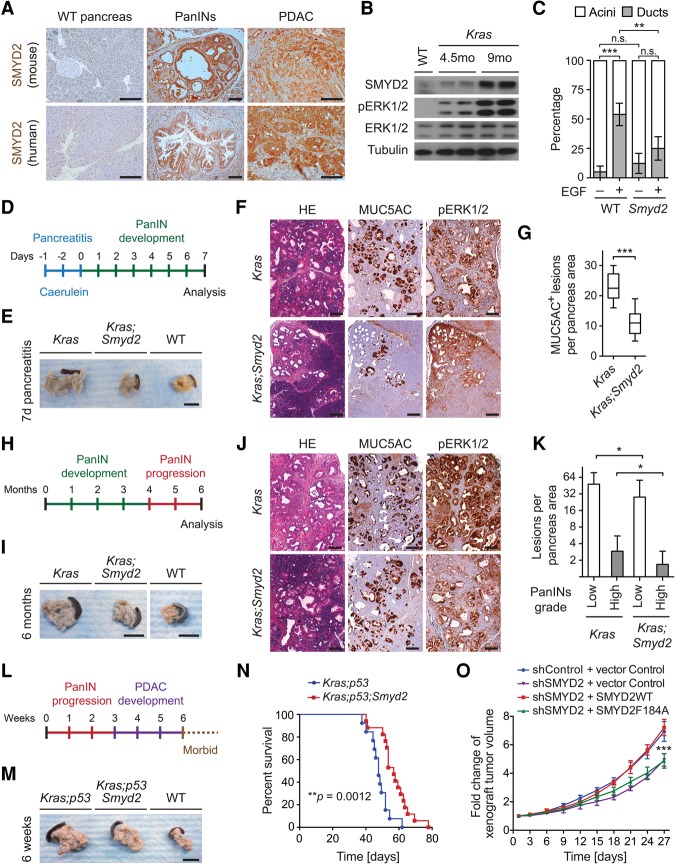
SMYD2 promotes Ras-driven pancreatic cancer.Genes Dev. 2016 Apr 1;30(7):772-85. |
Products are for research use only; We do not sell to patients
Copyright 2020 InvivoChem LLC | All Rights Reserved


 COA
COA