| Size | Price | Stock | Qty |
|---|---|---|---|
| 1mg |
|
||
| 5mg |
|
||
| 10mg |
|
||
| Other Sizes |


Purity: ≥98%
| Targets |
AZD1979 targets the melanin-concentrating hormone receptor 1 (MCHr1), a G protein-coupled receptor involved in the regulation of appetite and energy homeostasis. MCH is an orexigenic neuropeptide that stimulates feeding behavior. By antagonizing MCHr1, AZD1979 blocks the orexigenic effects of MCH, leading to reduced food intake and body weight loss. The compound has an IC50 of approximately 12 nM for MCHr1.
|
|---|---|
| ln Vitro |
In vitro, AZD1979 demonstrates potent antagonistic activity against MCHr1 with an IC50 of approximately 12 nM. The compound's activity is characterized using receptor binding and functional assays. As an MCHr1 antagonist, it blocks MCH-induced signaling in cells expressing the receptor. The compound's excellent DMPK properties indicate favorable drug metabolism and pharmacokinetic characteristics in preclinical species. Specific cellular assay data are not detailed in the available sources.
|
| ln Vivo |
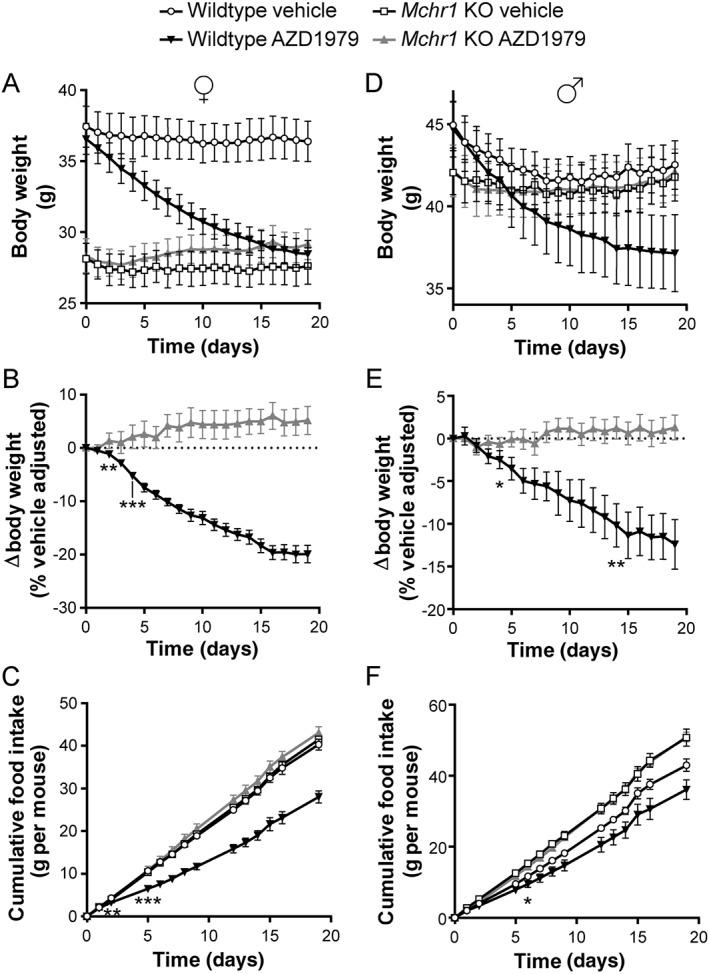
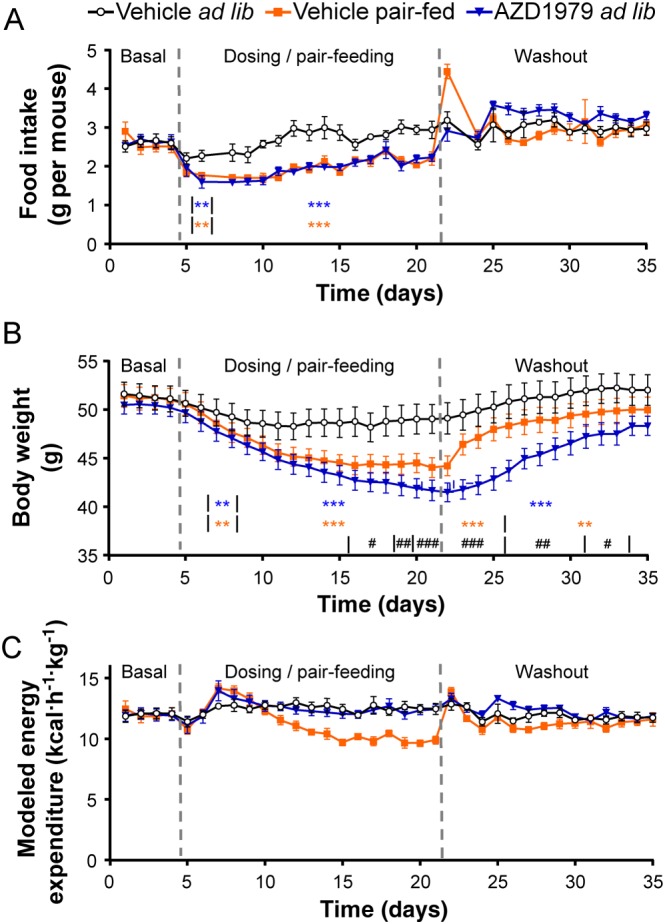
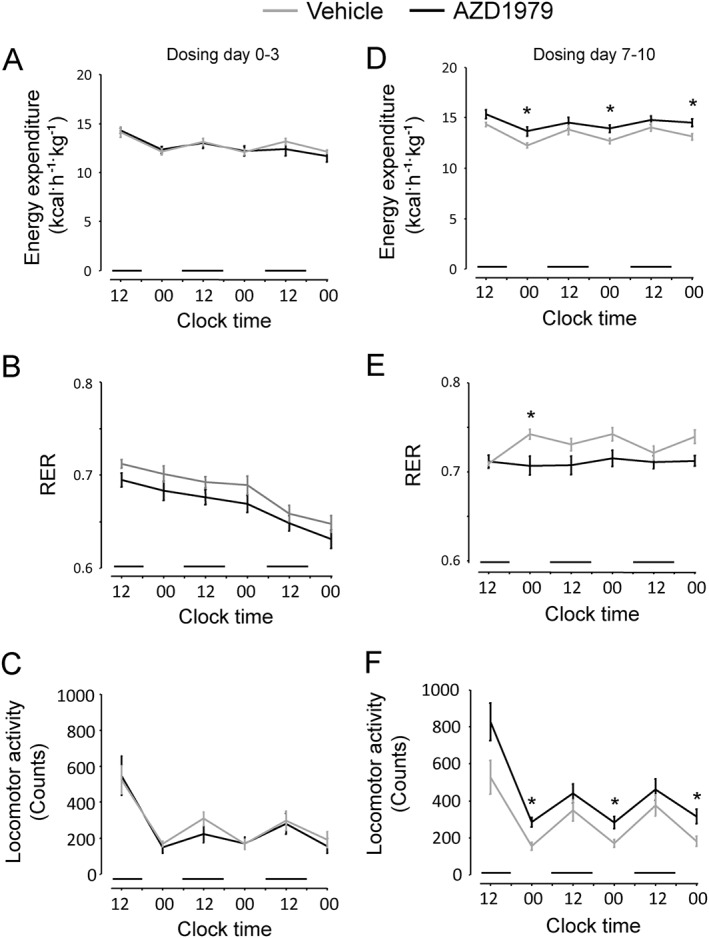
Reduced food intake was initially the primary cause of AZD1979-mediated weight loss in DIO mice, however pair-feeding and indirect calorimetry investigations revealed additional mechanism sustaining energy expenditure. In dogs, AZD1979 also decreases body weight in a dose-dependent manner [1].
In vivo, AZD1979 gives good effects on weight loss in animal models. Studies in mice and dogs demonstrated that AZD1979 effectively reduces body weight through MCHr1 antagonism. The compound's excellent DMPK properties support its in vivo efficacy. A phase I clinical trial (NCT02072993) was conducted in healthy male volunteers to assess the safety, tolerability, and pharmacokinetics of AZD1979. The trial was terminated in July 2014 after stopping criteria were reached. |
| Enzyme Assay |
The MCHr1 binding assay for AZD1979 typically involves incubating the compound with membrane preparations from cells expressing the human MCHr1 receptor and a radiolabeled MCH ligand. After incubation at room temperature for an appropriate period, bound and free ligands are separated by filtration, and the radioactivity is counted. The IC50 or Ki for displacement of the radioligand is calculated from the competition curve. Functional antagonism is assessed using a calcium mobilization assay or a cAMP assay in cells expressing MCHr1.
|
| Cell Assay |
To evaluate the cellular activity of AZD1979, cells expressing the human MCHr1 receptor (such as CHO or HEK293 cells) are seeded in 96-well plates and loaded with a calcium-sensitive fluorescent dye. Cells are pre-incubated with varying concentrations of AZD1979 and then stimulated with MCH. The intracellular calcium flux is measured using a fluorescence plate reader. The IC50 for inhibition of MCH-induced calcium flux is calculated. Alternatively, the compound's ability to inhibit MCH-induced cAMP reduction can be measured using a cAMP assay kit.
|
| Animal Protocol |
The in vivo efficacy of AZD1979 is evaluated in mouse and dog models of obesity. In mouse studies, animals are fed a high-fat diet to induce obesity and then treated with AZD1979 orally at various doses. Body weight, food intake, and metabolic parameters are monitored over the treatment period. In dog studies, similar endpoints are assessed. The compound's effects on weight loss and metabolic improvements are measured. The specific dosing regimens and efficacy data are detailed in published studies.
|
| ADME/Pharmacokinetics |
AZD1979 has excellent DMPK (drug metabolism and pharmacokinetic) properties. Specific pharmacokinetic parameters (e.g., Cmax, Tmax, half-life, AUC) are not detailed in the available sources. The compound has a molecular weight of 462.51 and is soluble in DMSO. As a clinical-stage compound, its pharmacokinetic profile has likely been characterized in preclinical species and in humans. It is typically stored at -20°C.
|
| Toxicity/Toxicokinetics |
Specific toxicity data for AZD1979 are not provided in the available sources. However, the compound was evaluated in a phase I clinical trial in healthy volunteers to assess safety and tolerability. The trial was terminated after stopping criteria were reached, though specific safety findings are not detailed. As a research compound, it is intended for laboratory use only and is not approved for human therapeutic applications. Standard safety precautions should be followed when handling this compound.
|
| References | |
| Additional Infomation |
AZD1979 is a carboxamide formed by the condensation of the carboxyl group of 5-(p-methoxyphenyl)-1,3,4-oxadiazole-2-carboxylic acid with the amino group of 3-phenoxyazacyclobutane, wherein the phenoxy group is replaced at the para position by 2-oxa-6-azaspiro[3.3]heptane-6-ylmethyl. It is an antagonist of melanin condensing hormone receptor 1 (MCHr1). It is an azaspiro compound, oxaspiro compound, oxadiazole, N-acylazacyclobutane, oxacyclobutane, aromatic ether, and carboxamide. It is the conjugate base of AZD1979(1+).
AZD1979 is a melanin-concentrating hormone receptor 1 (MCHr1) antagonist with an IC50 of approximately 12 nM. It was originated by AstraZeneca and has excellent DMPK properties, giving good effects on weight loss in animal models. A phase I clinical trial (NCT02072993) was conducted in healthy male volunteers to assess safety, tolerability, and pharmacokinetics. The trial was terminated in July 2014 after stopping criteria were reached. The compound has a molecular formula of C25H26N4O5 and a molecular weight of 462.51. |
| Molecular Formula |
C25H26N4O5
|
|---|---|
| Molecular Weight |
462.497745990753
|
| Exact Mass |
462.19
|
| CAS # |
1254035-84-1
|
| PubChem CID |
49801838
|
| Appearance |
Off-white to light yellow solid powder
|
| Density |
1.4±0.1 g/cm3
|
| Boiling Point |
636.6±65.0 °C at 760 mmHg
|
| Flash Point |
338.8±34.3 °C
|
| Vapour Pressure |
0.0±1.9 mmHg at 25°C
|
| Index of Refraction |
1.668
|
| LogP |
5.01
|
| Hydrogen Bond Donor Count |
0
|
| Hydrogen Bond Acceptor Count |
8
|
| Rotatable Bond Count |
7
|
| Heavy Atom Count |
34
|
| Complexity |
706
|
| Defined Atom Stereocenter Count |
0
|
| SMILES |
O=C(C1=NN=C(C2=CC=C(OC)C=C2)O1)N3CC(OC4=CC=C(CN(C5)CC65COC6)C=C4)C3
|
| InChi Key |
BKKPIQPFRAPEAY-UHFFFAOYSA-N
|
| InChi Code |
InChI=1S/C25H26N4O5/c1-31-19-8-4-18(5-9-19)22-26-27-23(34-22)24(30)29-11-21(12-29)33-20-6-2-17(3-7-20)10-28-13-25(14-28)15-32-16-25/h2-9,21H,10-16H2,1H3
|
| Chemical Name |
(3-(4-((2-oxa-6-azaspiro[3.3]heptan-6-yl)methyl)phenoxy)azetidin-1-yl)(5-(4-methoxyphenyl)-1,3,4-oxadiazol-2-yl)methanone
|
| Synonyms |
AZD1979; AZD-1979; AZD 1979.
|
| HS Tariff Code |
2934.99.9001
|
| Storage |
Powder -20°C 3 years 4°C 2 years In solvent -80°C 6 months -20°C 1 month |
| Shipping Condition |
Room temperature (This product is stable at ambient temperature for a few days during ordinary shipping and time spent in Customs)
|
| Solubility (In Vitro) |
DMSO : ~33.33 mg/mL (~72.06 mM)
|
|---|---|
| Solubility (In Vivo) |
Solubility in Formulation 1: ≥ 2.5 mg/mL (5.41 mM) (saturation unknown) in 10% DMSO + 40% PEG300 + 5% Tween80 + 45% Saline (add these co-solvents sequentially from left to right, and one by one), clear solution.
For example, if 1 mL of working solution is to be prepared, you can add 100 μL of 25.0 mg/mL clear DMSO stock solution to 400 μL PEG300 and mix evenly; then add 50 μL Tween-80 to the above solution and mix evenly; then add 450 μL normal saline to adjust the volume to 1 mL. Preparation of saline: Dissolve 0.9 g of sodium chloride in 100 mL ddH₂ O to obtain a clear solution. Solubility in Formulation 2: ≥ 2.5 mg/mL (5.41 mM) (saturation unknown) in 10% DMSO + 90% (20% SBE-β-CD in Saline) (add these co-solvents sequentially from left to right, and one by one), clear solution. For example, if 1 mL of working solution is to be prepared, you can add 100 μL of 25.0 mg/mL clear DMSO stock solution to 900 μL of 20% SBE-β-CD physiological saline solution and mix evenly. Preparation of 20% SBE-β-CD in Saline (4°C,1 week): Dissolve 2 g SBE-β-CD in 10 mL saline to obtain a clear solution. View More
Solubility in Formulation 3: ≥ 2.5 mg/mL (5.41 mM) (saturation unknown) in 10% DMSO + 90% Corn Oil (add these co-solvents sequentially from left to right, and one by one), clear solution. |
| Preparing Stock Solutions | 1 mg | 5 mg | 10 mg | |
| 1 mM | 2.1622 mL | 10.8108 mL | 21.6216 mL | |
| 5 mM | 0.4324 mL | 2.1622 mL | 4.3243 mL | |
| 10 mM | 0.2162 mL | 1.0811 mL | 2.1622 mL |
*Note: Please select an appropriate solvent for the preparation of stock solution based on your experiment needs. For most products, DMSO can be used for preparing stock solutions (e.g. 5 mM, 10 mM, or 20 mM concentration); some products with high aqueous solubility may be dissolved in water directly. Solubility information is available at the above Solubility Data section. Once the stock solution is prepared, aliquot it to routine usage volumes and store at -20°C or -80°C. Avoid repeated freeze and thaw cycles.
Calculation results
Working concentration: mg/mL;
Method for preparing DMSO stock solution: mg drug pre-dissolved in μL DMSO (stock solution concentration mg/mL). Please contact us first if the concentration exceeds the DMSO solubility of the batch of drug.
Method for preparing in vivo formulation::Take μL DMSO stock solution, next add μL PEG300, mix and clarify, next addμL Tween 80, mix and clarify, next add μL ddH2O,mix and clarify.
(1) Please be sure that the solution is clear before the addition of next solvent. Dissolution methods like vortex, ultrasound or warming and heat may be used to aid dissolving.
(2) Be sure to add the solvent(s) in order.
Effects of AZD1979 on body weight and food intake in DIO wild type andMchr1KO mice.Br J Pharmacol. 2016 Sep;173(18):2739-51 |
Effects of AZD1979 or pair‐feeding on food intake and body weight in DIO mice.Br J Pharmacol. 2016 Sep;173(18):2739-51. |
Effects of AZD1979 on energy expenditure, RER and locomotor activity.Br J Pharmacol. 2016 Sep;173(18):2739-51. |
Products are for research use only; We do not sell to patients
Copyright 2020 InvivoChem LLC | All Rights Reserved


 COA
COA