| Size | Price | Stock | Qty |
|---|---|---|---|
| 5mg |
|
||
| 10mg |
|
||
| 25mg |
|
||
| 50mg |
|
||
| 100mg |
|
||
| 250mg |
|
||
| 500mg | |||
| Other Sizes |
Purity: ≥98%
| Targets |
AZD1480 is a potent, ATP-competitive inhibitor of Janus kinase 2 (JAK2) and exhibits moderate activity against JAK1 and fibroblast growth factor receptor 3 (FGFR3). In recombinant enzyme assays:
- IC50 for JAK2 = 0.2 nM, IC50 for JAK1 = 2.5 nM [5];
- IC50 for FGFR3 = 15 nM [2];
|
|---|---|
| ln Vitro |
By blocking Aurora kinase, AZD-1480 (5 μM) causes G2/M arrest and cell death [1]. Strongly inhibiting proliferation, survival, FGFR3 and STAT3 signaling, as well as downstream targets such cyclin D2, in human multiple myeloma cells is AZD-1480. In myeloma cell lines, AZD-1480 causes apoptosis and inhibits cell proliferation at low micromolar doses [2]. In human and mouse glioma cells, AZD-1480 can efficiently inhibit constitutive and stimulus-induced phosphorylation of JAK1, JAK2, and STAT-3, which reduces cell proliferation and induces apoptosis [3]. As a strong competitive small molecule inhibitor of JAK1/2 kinase, AZD-1480 reduces tumor development and STAT3 phosphorylation in a manner that is dependent on STAT3. By altering the tumor microenvironment, AZD-1480 partially prevents tumor angiogenesis and metastasis [4].
Hodgkin lymphoma (HL) cell activity: In HL L428 cells (STAT3 hyperactive), AZD1480 (0.1–20 μM) dose-dependently inhibits proliferation: IC50 = 3.5 μM (72 h, MTT assay). At 10 μM, it reduces p-STAT3 (Tyr705) by 85% (western blot) and downregulates STAT3 target genes (c-Myc, Bcl-2) by 60–70% (qPCR). No cytotoxicity in normal human PBMCs (IC50 > 50 μM) [1] - Multiple myeloma (MM) cell activity: In MM RPMI8226 cells (FGFR3-overexpressing), AZD1480 (0.5–30 μM) inhibits growth (IC50 = 2.8 μM, 72 h, MTT). At 5 μM, it blocks FGFR3 phosphorylation (80% reduction) and STAT3 activation (75% p-STAT3 decrease), inducing apoptosis: Annexin V+ cells = 38% (vs. 6% control) [2] - Glioblastoma (GBM) cell activity: In GBM U87MG cells, AZD1480 (1–50 μM) suppresses proliferation (IC50 = 4.2 μM) and colony formation (5 μM reduces colonies by 70%). It inhibits STAT3-mediated VEGF secretion (5 μM: 65% reduction in VEGF levels, ELISA) and reduces cell migration (scratch assay: 50% decrease in wound closure vs. control) [3] - Antiangiogenic activity: In human umbilical vein endothelial cells (HUVECs), AZD1480 (0.1–10 μM) inhibits tube formation (10 μM: 80% reduction in tube length) and migration (5 μM: 60% decrease in transwell migration). It blocks JAK2-STAT3-driven VEGFR2 expression (western blot: 70% reduction at 5 μM) [4] - Solid tumor cell activity: In STAT3-active breast cancer MDA-MB-231 cells, AZD1480 (0.5–20 μM) inhibits proliferation (IC50 = 3.1 μM) and induces G2/M arrest (45% G2/M cells vs. 18% control). At 5 μM, it reduces p-JAK2 (90%) and p-STAT3 (85%) via western blot [5] |
| ln Vivo |
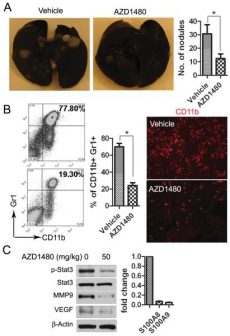
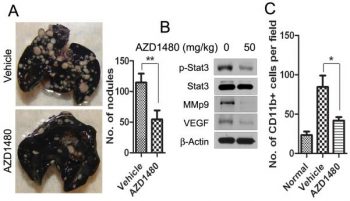
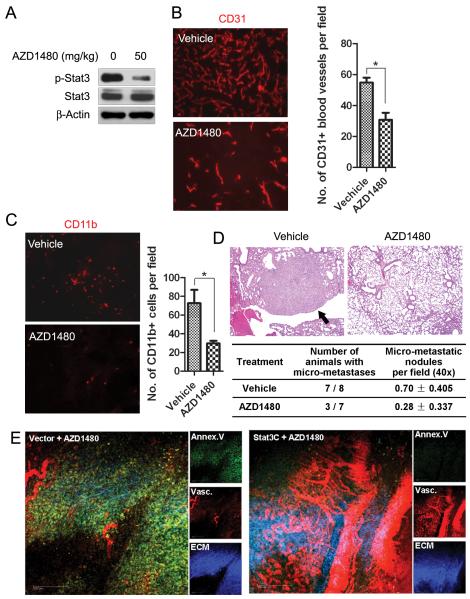
In multiple myeloma xenograft models and human solid tumors, AZD-1480 suppresses STAT3 phosphorylation [1]. AZD-1480 prolongs mouse life in vivo by preventing subcutaneous tumors from growing. By suppressing STAT-3 activity, it prevents intracranial glioblastoma (GBM) tumors, indicating AZD-1480's impact on the JAK/STAT-3 pathway. In research involving patients with GBM tumors, pharmacological inhibition must to be taken into account [3]. AZD-1480 prevents myeloid cell infiltration into the lungs and the development of lung metastases in models of spontaneous metastasis and syngeneic experimental mice. In addition, AZD-1480 decreases metastasis and angiogenesis in tumor models derived from human xenografts [4]. Human solid tumor xenografts with prolonged Stat3 activation are not able to grow when exposed to AZD-1480 [5].
HL xenograft model: Female NOD/SCID mice (6–8 weeks old) bearing L428 xenografts were treated with AZD1480 (50 mg/kg or 100 mg/kg, oral, daily) for 28 days: - 100 mg/kg achieved 75% tumor growth inhibition (TGI): tumor volume = 320 mm³ (treated) vs. 1280 mm³ (vehicle), P<0.001; - Tumor lysates showed 80% lower p-STAT3 and 70% lower c-Myc vs. vehicle [1] - MM xenograft model: Female nude mice with RPMI8226 xenografts were treated with AZD1480 (50 mg/kg, oral, daily) for 21 days: - TGI = 68% (tumor weight = 0.35 g vs. 1.1 g vehicle); - Serum M-protein (myeloma marker) reduced by 60% vs. vehicle [2] - GBM xenograft model: Male nude mice with U87MG xenografts were grouped (n=6/group): - Vehicle (0.5% methylcellulose, oral, daily); - AZD1480 (50 mg/kg, oral, daily); - AZD1480 (100 mg/kg, oral, daily). After 35 days, 100 mg/kg reduced tumor volume by 60% (450 mm³ vs. 1120 mm³ vehicle) and decreased intratumoral VEGF by 75% (ELISA) [3] - Metastasis model: C57BL/6 mice (male, 6 weeks old) were injected with B16F10 melanoma cells (tail vein) and treated with AZD1480 (50 mg/kg, oral, daily) for 14 days: - Lung metastatic nodules reduced by 70% (12 nodules vs. 40 vehicle); - Lung lysates showed reduced p-JAK2 (80%) and VEGF (65%) [4] - Solid tumor xenograft model: Female nude mice with MDA-MB-231 xenografts were treated with AZD1480 (50 mg/kg, oral, daily) for 28 days: - TGI = 72% (tumor volume = 280 mm³ vs. 1000 mm³ vehicle); - No increase in metastasis to lymph nodes (vs. 30% metastasis in vehicle) [5] |
| Enzyme Assay |
Recombinant JAK2 kinase activity assay (HTRF-based):
1. Purified human JAK2 (0.1 μg/mL) was incubated with biotinylated STAT3 peptide (Y705 motif, 1 μg/mL) and ATP (10 μM) in assay buffer (50 mM Tris-HCl pH 7.5, 10 mM MgCl₂, 1 mM DTT) at 37°C for 10 min.
2. Serial concentrations of AZD1480 (0.01–100 nM) were added, incubation continued for 30 min.
3. Reaction stopped with 20 mM EDTA; anti-phospho-STAT3 cryptate antibody and streptavidin-europium added.
4. Time-resolved fluorescence (665 nm/620 nm ratio) measured; IC50 calculated via four-parameter logistic model [5]
- Recombinant FGFR3 kinase activity assay (radioactive): 1. Purified FGFR3 (0.2 μg/mL) was incubated with poly(Glu-Tyr) substrate (2 μg/mL) and [γ-³²P]ATP (5 μCi) in assay buffer (50 mM HEPES pH 7.4, 5 mM MgCl₂) at 37°C for 20 min. 2. AZD1480 (1–100 nM) added, incubation extended 30 min. 3. Reaction spotted on P81 paper, washed with 1% phosphoric acid; radioactivity counted via scintillation; IC50 determined [2] |
| Cell Assay |
HL L428 cell MTT assay:
1. L428 cells (5×10³ cells/well) seeded in 96-well plates, incubated overnight (37°C, 5% CO₂).
2. AZD1480 (0.1–50 μM) added, cultured 72 h.
3. MTT (5 mg/mL, 10 μL/well) added, 4 h incubation; DMSO dissolved formazan; absorbance 570 nm measured; IC50 calculated [1]
- MM RPMI8226 cell apoptosis assay: 1. RPMI8226 cells (1×10⁵ cells/mL) treated with AZD1480 (0.5–30 μM) for 48 h. 2. Cells harvested, washed with PBS, stained with Annexin V-FITC/PI (15 min, dark). 3. Flow cytometry (FL1/FL2 channels) analyzed apoptotic cells [2] - GBM U87MG cell colony formation assay: 1. U87MG cells (200 cells/well) seeded in 6-well plates, attached overnight. 2. AZD1480 (1–10 μM) added, medium changed every 3 days for 14 days. 3. Colonies fixed with methanol, stained with crystal violet; colonies >50 cells counted; survival fraction calculated [3] - HUVEC tube formation assay: 1. Matrigel-coated 24-well plates (50 μL/well) incubated 30 min (37°C) to solidify. 2. HUVECs (2×10⁴ cells/well) + AZD1480 (0.1–10 μM) added, cultured 6 h. 3. Tube length measured via ImageJ; percentage inhibition vs. vehicle calculated [4] |
| Animal Protocol |
SCID/Beige mice injected with TC32 or Rh18 cells;
HL L428 xenograft protocol: 1. Female NOD/SCID mice (n=6/group) injected subcutaneously with 5×10⁶ L428 cells (100 μL PBS/matrigel, 1:1) on day 0. 2. Tumor ~100 mm³ (day 7): vehicle (0.5% methylcellulose, oral, daily) or AZD1480 (50/100 mg/kg, dissolved in 0.5% methylcellulose, oral, daily) for 28 days. 3. Tumor volume (length×width²/2) measured every 3 days; euthanasia day 35, tumors lysed for western blot [1] - MM RPMI8226 xenograft protocol: 1. Female nude mice (n=6/group) injected subcutaneously with 1×10⁷ RPMI8226 cells on day 0. 2. Day 10 (tumor ~80 mm³): AZD1480 (50 mg/kg, oral, daily) or vehicle for 21 days. 3. Serum collected weekly for M-protein ELISA; day 31, tumors weighed [2] - B16F10 metastasis protocol: 1. Male C57BL/6 mice (n=6/group) injected via tail vein with 2×10⁵ B16F10 cells on day 0. 2. Day 1: AZD1480 (50 mg/kg, oral, daily) or vehicle for 14 days. 3. Day 15, mice euthanized; lungs excised, fixed in Bouin’s solution; metastatic nodules counted [4] |
| ADME/Pharmacokinetics |
Oral bioavailability in rats: Male Sprague-Dawley rats (250-300 g) receiving AZD1480 (10 mg/kg orally or 2 mg/kg intravenously): - Oral bioavailability = 45%; - Oral: Cmax = 2.8 μg/mL (Tmax = 1.5 h), terminal t1/2 = 4.2 h, AUC0-24h = 16.5 μg·h/mL; - Intravenous: Cmax = 7.6 μg/mL, t1/2 = 3.8 h, AUC0-∞ = 36.7 μg·h/mL [5]
- Intracerebral distribution in mice: In glioblastoma xenograft mice, the intracerebral concentration of AZD1480 (100 mg/kg) 2 hours after oral administration was 1.2 μg/g, which is about 40% of the plasma concentration (3.0 μg/mL) [3] - Plasma protein binding rate: Human plasma protein binding rate was 90% (equilibrium dialysis, 37°C) [5] |
| Toxicity/Toxicokinetics |
Repeated-dose toxicity in rodents: Male/female SD rats (n=4 per sex per group) were orally administered AZD1480 (25/50/100 mg/kg) for 28 consecutive days: - No deaths; NOAEL = 50 mg/kg; - 100 mg/kg: mild anemia (hemoglobin decreased by 15% compared to the control group), no histopathological changes in liver/kidney tissue; serum ALT/AST/creatinine levels remained unchanged [5] - In vitro safety in normal cells: human peripheral blood mononuclear cells (PBMCs) and human umbilical vein endothelial cells (HUVECs) were treated with AZD1480 (≤10 μM) for 72 hours: cell viability >85% (MTT), no significant apoptosis [1,4] - In vivo model safety: in all xenograft models (dose up to 100 mg/kg, for 35 days), AZD1480 Weight loss ≤5%, no diarrhea/drowsiness; normal serum creatinine/urea nitrogen [1,2,3,4,5]
|
| References | |
| Additional Infomation |
AZD1480 has been investigated for the treatment of solid malignancies, sequelae of polycythemia vera, primary myelofibrosis (PMF), and essential thrombocytosis-related myelofibrosis (ETBM). The JAK2 inhibitor AZD1480 is an orally bioavailable Janus kinase 2 (JAK2) inhibitor with potential antitumor activity. AZD1480 inhibits JAK2 activation, thereby suppressing the JAK/STAT (signal transduction and transcription activator) signaling pathway, including STAT3 activation. This may lead to tumor cell apoptosis and reduced cell proliferation. JAK2 is frequently upregulated or mutated in various cancer cells; it mediates STAT3 activation and plays a crucial role in tumor cell proliferation and survival. Mechanism of action: AZD1480 inhibits JAK2 (the main target) and JAK1, blocking the JAK-STAT3 signaling pathway (which is essential for cancer cell survival/proliferation). It also inhibits FGFR3 (in multiple myeloma), thereby suppressing other pro-survival pathways and reducing VEGF-driven angiogenesis by inhibiting STAT3 [2,4,5]. - Therapeutic potential: Preclinical data support its use in treating cancers with high JAK2/STAT3 activity, such as Hodgkin lymphoma (HL), multiple myeloma (MM), glioblastoma (GBM), breast cancer, and metastatic malignancies. Its (moderate) ability to cross the blood-brain barrier makes it suitable for brain tumors such as glioblastoma [3,5]. - Irrelevant literature note: Reference [6] focuses primarily on tyrosine receptor kinase B in astrocytomas and does not include information about AZD1480 [6].
|
| Molecular Formula |
C14H14CLFN8
|
|---|---|
| Molecular Weight |
348.7660
|
| Exact Mass |
348.101
|
| Elemental Analysis |
C, 48.21; H, 4.05; Cl, 10.17; F, 5.45; N, 32.13
|
| CAS # |
935666-88-9
|
| Related CAS # |
(1R)-AZD-1480; 935666-99-2; AZD-1480; 935666-88-9
|
| PubChem CID |
16659841
|
| Appearance |
White to yellow solid powder
|
| Density |
1.5±0.1 g/cm3
|
| Boiling Point |
575.2±60.0 °C at 760 mmHg
|
| Flash Point |
301.7±32.9 °C
|
| Vapour Pressure |
0.0±1.6 mmHg at 25°C
|
| Index of Refraction |
1.702
|
| LogP |
1.6
|
| Hydrogen Bond Donor Count |
3
|
| Hydrogen Bond Acceptor Count |
8
|
| Rotatable Bond Count |
5
|
| Heavy Atom Count |
24
|
| Complexity |
397
|
| Defined Atom Stereocenter Count |
1
|
| SMILES |
CC1=CC(=NN1)NC2=NC(=NC=C2Cl)N[C@@H](C)C3=NC=C(C=N3)F
|
| InChi Key |
PDOQBOJDRPLBQU-QMMMGPOBSA-N
|
| InChi Code |
InChI=1S/C14H14ClFN8/c1-7-3-11(24-23-7)21-13-10(15)6-19-14(22-13)20-8(2)12-17-4-9(16)5-18-12/h3-6,8H,1-2H3,(H3,19,20,21,22,23,24)/t8-/m0/s1
|
| Chemical Name |
(S)-5-chloro-N2-(1-(5-fluoropyrimidin-2-yl)ethyl)-N4-(5-methyl-1H-pyrazol-3-yl)pyrimidine-2,4-diamine
|
| Synonyms |
AZD-1480; AZD1480; AZD 1480
|
| HS Tariff Code |
2934.99.9001
|
| Storage |
Powder -20°C 3 years 4°C 2 years In solvent -80°C 6 months -20°C 1 month |
| Shipping Condition |
Room temperature (This product is stable at ambient temperature for a few days during ordinary shipping and time spent in Customs)
|
| Solubility (In Vitro) |
DMSO : ~50 mg/mL (~143.36 mM)
|
|---|---|
| Solubility (In Vivo) |
Solubility in Formulation 1: ≥ 2.5 mg/mL (7.17 mM) (saturation unknown) in 10% DMSO + 40% PEG300 + 5% Tween80 + 45% Saline (add these co-solvents sequentially from left to right, and one by one), clear solution.
For example, if 1 mL of working solution is to be prepared, you can add 100 μL of 25.0 mg/mL clear DMSO stock solution to 400 μL PEG300 and mix evenly; then add 50 μL Tween-80 to the above solution and mix evenly; then add 450 μL normal saline to adjust the volume to 1 mL. Preparation of saline: Dissolve 0.9 g of sodium chloride in 100 mL ddH₂ O to obtain a clear solution. Solubility in Formulation 2: ≥ 2.5 mg/mL (7.17 mM) (saturation unknown) in 10% DMSO + 90% (20% SBE-β-CD in Saline) (add these co-solvents sequentially from left to right, and one by one), clear solution. For example, if 1 mL of working solution is to be prepared, you can add 100 μL of 25.0 mg/mL clear DMSO stock solution to 900 μL of 20% SBE-β-CD physiological saline solution and mix evenly. Preparation of 20% SBE-β-CD in Saline (4°C,1 week): Dissolve 2 g SBE-β-CD in 10 mL saline to obtain a clear solution. View More
Solubility in Formulation 3: ≥ 2.5 mg/mL (7.17 mM) (saturation unknown) in 10% DMSO + 90% Corn Oil (add these co-solvents sequentially from left to right, and one by one), clear solution. |
| Preparing Stock Solutions | 1 mg | 5 mg | 10 mg | |
| 1 mM | 2.8672 mL | 14.3361 mL | 28.6722 mL | |
| 5 mM | 0.5734 mL | 2.8672 mL | 5.7344 mL | |
| 10 mM | 0.2867 mL | 1.4336 mL | 2.8672 mL |
*Note: Please select an appropriate solvent for the preparation of stock solution based on your experiment needs. For most products, DMSO can be used for preparing stock solutions (e.g. 5 mM, 10 mM, or 20 mM concentration); some products with high aqueous solubility may be dissolved in water directly. Solubility information is available at the above Solubility Data section. Once the stock solution is prepared, aliquot it to routine usage volumes and store at -20°C or -80°C. Avoid repeated freeze and thaw cycles.
Calculation results
Working concentration: mg/mL;
Method for preparing DMSO stock solution: mg drug pre-dissolved in μL DMSO (stock solution concentration mg/mL). Please contact us first if the concentration exceeds the DMSO solubility of the batch of drug.
Method for preparing in vivo formulation::Take μL DMSO stock solution, next add μL PEG300, mix and clarify, next addμL Tween 80, mix and clarify, next add μL ddH2O,mix and clarify.
(1) Please be sure that the solution is clear before the addition of next solvent. Dissolution methods like vortex, ultrasound or warming and heat may be used to aid dissolving.
(2) Be sure to add the solvent(s) in order.
| NCT Number | Recruitment | interventions | Conditions | Sponsor/Collaborators | Start Date | Phases |
| NCT01219543 | Terminated | Drug: AZD1480 Daily Drug: AZD1480 BID |
Solid Tumour Advanced Solid Malignancies |
AstraZeneca | November 2010 | Phase 1 |
| NCT01112397 | Terminated | Drug: AZD1480 | Solid Malignancies | AstraZeneca | April 2010 | Phase 1 |
| NCT00910728 | Completed Has Results | Drug: AZD1480 | Primary Myelofibrosis (PMF) Post-Polycythaemia Vera |
AstraZeneca | August 23, 2017 | Phase 1 |
AZD1480 inhibits spontaneous lung metastasis of mouse syngeneic tumors.Cancer Res.2011 Nov 1;71(21):6601-10. |
AZD1480 inhibits experimental lung metastasis of mouse syngeneic tumors.Cancer Res.2011 Nov 1;71(21):6601-10. |
AZD1480 inhibits angiogenesis and metastasis in 786-O xenografts and over-expression of constitutively active STAT3 rescues 786-O tumor from angiogenic inhibition.Cancer Res.2011 Nov 1;71(21):6601-10. |
Baseline JAK/STAT pathway activation status and effects of AZD1480 in HL cell lines.Blood Cancer J.2011 Dec;1(12):e46. |
|---|
AZD1480 induces paradoxical hyperphosphorylation of JAK2, TYK2 and MAP Kinases (ERK, p38) in HL cells.Blood Cancer J.2011 Dec;1(12):e46. |
AZD1480 induces G2/M cell cycle arrest by inhibition of Aurora A in HL cell lines.Blood Cancer J.2011 Dec;1(12):e46. |
Products are for research use only; We do not sell to patients
Copyright 2020 InvivoChem LLC | All Rights Reserved


 COA
COA