| Size | Price | Stock | Qty |
|---|---|---|---|
| 5mg |
|
||
| 10mg |
|
||
| 50mg |
|
||
| 100mg |
|
||
| 250mg |
|
||
| 500mg | |||
| Other Sizes |


| Targets |
Auxinole targets the TIR1/AFB auxin receptors. It is a potent antagonist of these receptors. By binding to TIR1, it blocks the formation of the TIR1-IAA-Aux/IAA complex. This prevents the degradation of Aux/IAA repressors, thereby inhibiting auxin-responsive gene expression. Auxinole competitively inhibits various auxin responses in planta.
|
|---|---|
| ln Vitro |
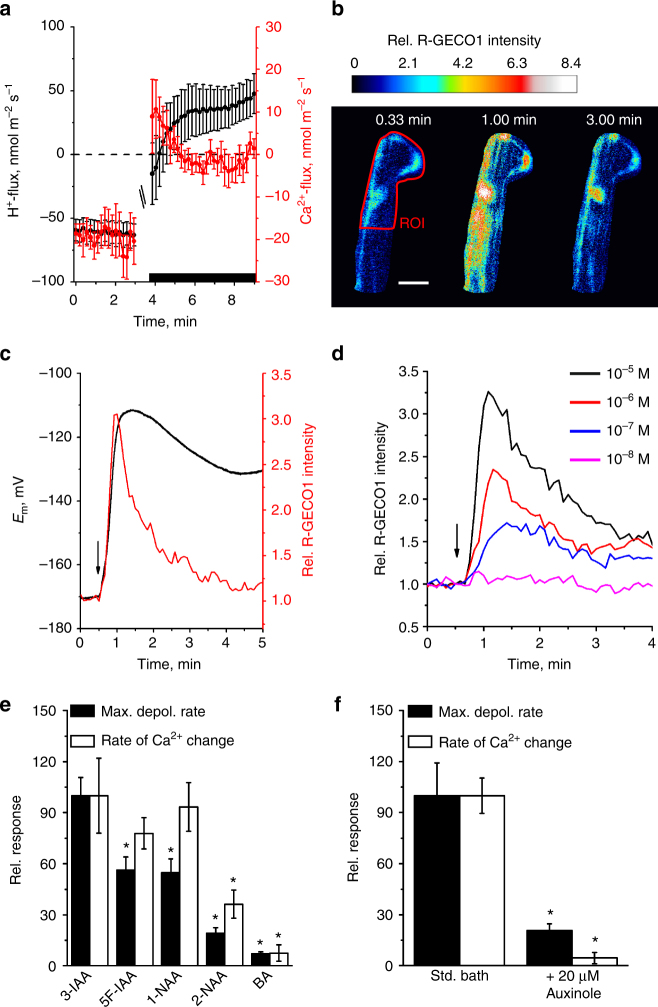
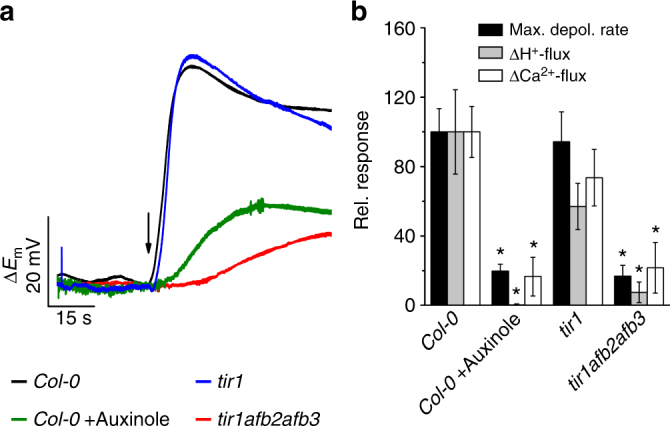
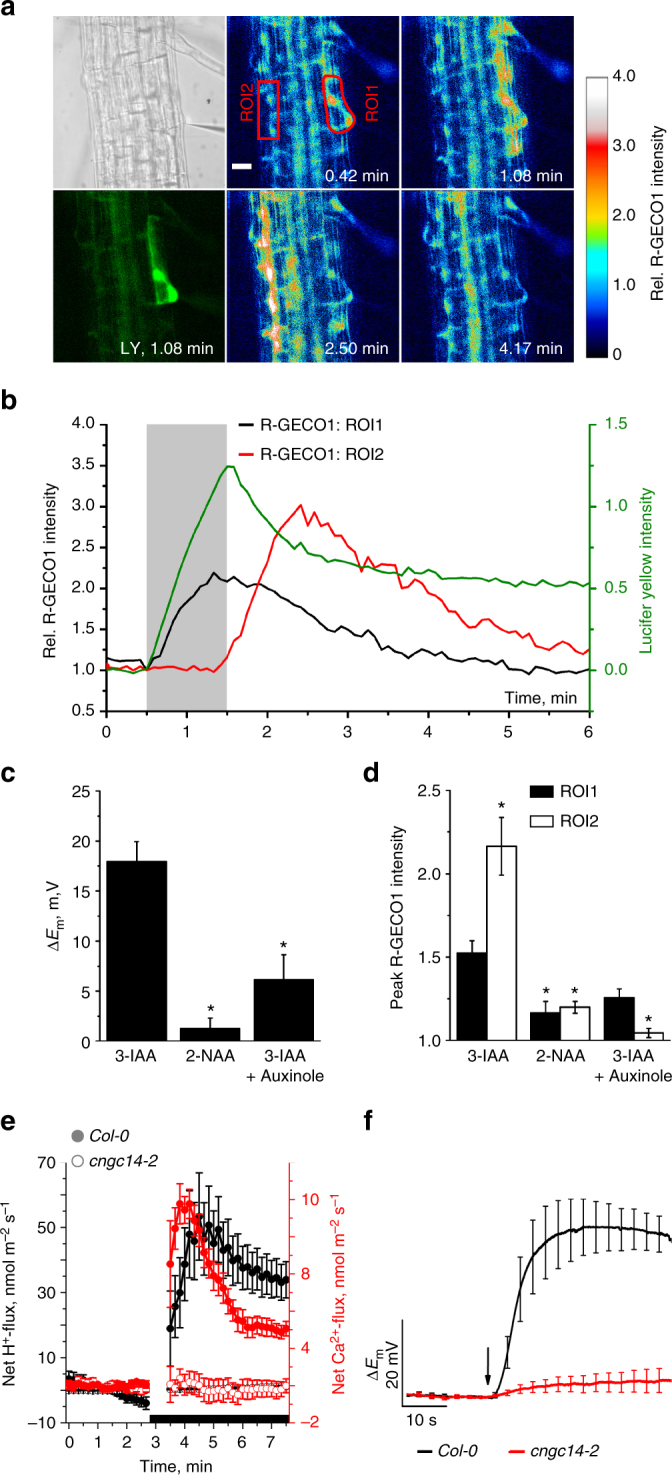
Strongly inhibiting the expression of auxin-responsive genes, auxinole binds to TIR1 to increase the TIR1-IAA-Aux/IAA complex. This is a powerful TIR1/AFB receptor auxin blocking antagonist. Furthermore, auxinole complementarily inhibits a variety of plant growth responses caused by hormones [1]. In root hair cells, auxinole significantly lowers the amount of IAA-triggered detoxification. The brief rise in [Ca2+]cyt is nevertheless entirely inhibited by auxinole (20 μM), which also fills the Ca2+ response[2].
In vitro, Auxinole is a potent auxin antagonist of TIR1/AFB receptors. It binds to TIR1 to block the formation of the TIR1-IAA-Aux/IAA complex and inhibits auxin-responsive gene expression. Auxinole reduces IAA-triggered root hair cell depolarization. Its ability to inhibit auxin signaling has been demonstrated in various in vitro plant models. |
| ln Vivo |
Specific in vivo data for Auxinole are not extensively detailed in the available literature. However, as a potent auxin antagonist, it is used to study auxin signaling and plant growth and development in vivo. It competitively inhibits various auxin responses in planta. Auxinole is a valuable tool for dissecting auxin-mediated processes in plant biology.
|
| Enzyme Assay |
The activity of Auxinole can be assessed using cell-free binding assays with recombinant TIR1 protein. The protein is incubated with a radiolabeled auxin (e.g., [³H]IAA) and varying concentrations of Auxinole. The displacement of the radiolabeled auxin is measured to determine the binding affinity of Auxinole for TIR1.
|
| Cell Assay |
To evaluate the cellular effects of Auxinole, plant cells or tissues are treated with the compound. The inhibition of auxin-responsive gene expression is assessed using reporter gene assays (e.g., DR5:GUS or DR5:GFP). The effects on root hair formation, cell elongation, and other auxin-mediated processes are evaluated using microscopy and biochemical assays.
|
| Animal Protocol |
In vivo studies with Auxinole typically involve application to plants via growth media or foliar spray. The compound's effects on plant growth, development, and auxin responses are assessed. Parameters such as root length, shoot growth, and gravitropism are measured. The inhibition of auxin-responsive gene expression is confirmed by analyzing marker gene expression.
|
| ADME/Pharmacokinetics |
Auxinole has a molecular weight of 321.37 g/mol. Its CAS number is 86445-22-9. It is soluble in DMSO (≥90 mg/mL). The powder should be stored at -20°C for 3 years or at 4°C for 2 years; in solvent at -80°C for 6 months or at -20°C for 1 month. The purity is typically >99%.
|
| Toxicity/Toxicokinetics |
Specific toxicology data for Auxinole are not extensively detailed in the available literature. As a plant auxin antagonist, it is primarily used in plant research and is not intended for human consumption. As with all research compounds, standard safety precautions should be taken when handling Auxinole.
|
| References | |
| Additional Infomation |
Auxinole is a potent auxin antagonist of TIR1/AFB receptors. It binds to TIR1 to block the formation of the TIR1-IAA-Aux/IAA complex and inhibits auxin-responsive gene expression. Auxinole is used as a research tool to study auxin signaling, plant growth, and development. It is not a therapeutic agent but a chemical probe for plant biology research.
|
| Molecular Formula |
C20H19NO3
|
|---|---|
| Molecular Weight |
321.369765520096
|
| Exact Mass |
321.136
|
| CAS # |
86445-22-9
|
| PubChem CID |
13077496
|
| Appearance |
White to off-white solid powder
|
| LogP |
3.6
|
| Hydrogen Bond Donor Count |
2
|
| Hydrogen Bond Acceptor Count |
3
|
| Rotatable Bond Count |
5
|
| Heavy Atom Count |
24
|
| Complexity |
478
|
| Defined Atom Stereocenter Count |
0
|
| SMILES |
O=C(C(CC(C1C(C)=CC(C)=CC=1)=O)C1C2C(=CC=CC=2)NC=1)O
|
| InChi Key |
HGUYAIJBXSQXGV-UHFFFAOYSA-N
|
| InChi Code |
InChI=1S/C20H19NO3/c1-12-7-8-14(13(2)9-12)19(22)10-16(20(23)24)17-11-21-18-6-4-3-5-15(17)18/h3-9,11,16,21H,10H2,1-2H3,(H,23,24)
|
| Chemical Name |
4-(2,4-dimethylphenyl)-2-(1H-indol-3-yl)-4-oxobutanoic acid
|
| HS Tariff Code |
2934.99.9001
|
| Storage |
Powder -20°C 3 years 4°C 2 years In solvent -80°C 6 months -20°C 1 month |
| Shipping Condition |
Room temperature (This product is stable at ambient temperature for a few days during ordinary shipping and time spent in Customs)
|
| Solubility (In Vitro) |
DMSO : ≥ 125 mg/mL (~388.96 mM)
Ethanol : ~2.5 mg/mL (~7.78 mM) |
|---|---|
| Solubility (In Vivo) |
Solubility in Formulation 1: ≥ 2.5 mg/mL (7.78 mM) (saturation unknown) in 5% DMSO + 40% PEG300 + 5% Tween80 + 50% Saline (add these co-solvents sequentially from left to right, and one by one), clear solution.
Preparation of saline: Dissolve 0.9 g of sodium chloride in 100 mL ddH₂ O to obtain a clear solution. Solubility in Formulation 2: ≥ 2.5 mg/mL (7.78 mM) (saturation unknown) in 5% DMSO + 95% (20% SBE-β-CD in Saline) (add these co-solvents sequentially from left to right, and one by one), clear solution. Preparation of 20% SBE-β-CD in Saline (4°C,1 week): Dissolve 2 g SBE-β-CD in 10 mL saline to obtain a clear solution. View More
Solubility in Formulation 3: ≥ 2.08 mg/mL (6.47 mM) (saturation unknown) in 10% DMSO + 40% PEG300 + 5% Tween80 + 45% Saline (add these co-solvents sequentially from left to right, and one by one), clear solution. Solubility in Formulation 4: ≥ 2.08 mg/mL (6.47 mM) (saturation unknown) in 10% DMSO + 90% (20% SBE-β-CD in Saline) (add these co-solvents sequentially from left to right, and one by one), clear solution. For example, if 1 mL of working solution is to be prepared, you can add 100 μL of 20.8 mg/mL clear DMSO stock solution to 900 μL of 20% SBE-β-CD physiological saline solution and mix evenly. Preparation of 20% SBE-β-CD in Saline (4°C,1 week): Dissolve 2 g SBE-β-CD in 10 mL saline to obtain a clear solution. Solubility in Formulation 5: ≥ 2.08 mg/mL (6.47 mM) (saturation unknown) in 10% DMSO + 90% Corn Oil (add these co-solvents sequentially from left to right, and one by one), clear solution. For example, if 1 mL of working solution is to be prepared, you can add 100 μL of 20.8 mg/mL clear DMSO stock solution to 900 μL of corn oil and mix evenly. |
| Preparing Stock Solutions | 1 mg | 5 mg | 10 mg | |
| 1 mM | 3.1117 mL | 15.5584 mL | 31.1168 mL | |
| 5 mM | 0.6223 mL | 3.1117 mL | 6.2234 mL | |
| 10 mM | 0.3112 mL | 1.5558 mL | 3.1117 mL |
*Note: Please select an appropriate solvent for the preparation of stock solution based on your experiment needs. For most products, DMSO can be used for preparing stock solutions (e.g. 5 mM, 10 mM, or 20 mM concentration); some products with high aqueous solubility may be dissolved in water directly. Solubility information is available at the above Solubility Data section. Once the stock solution is prepared, aliquot it to routine usage volumes and store at -20°C or -80°C. Avoid repeated freeze and thaw cycles.
Calculation results
Working concentration: mg/mL;
Method for preparing DMSO stock solution: mg drug pre-dissolved in μL DMSO (stock solution concentration mg/mL). Please contact us first if the concentration exceeds the DMSO solubility of the batch of drug.
Method for preparing in vivo formulation::Take μL DMSO stock solution, next add μL PEG300, mix and clarify, next addμL Tween 80, mix and clarify, next add μL ddH2O,mix and clarify.
(1) Please be sure that the solution is clear before the addition of next solvent. Dissolution methods like vortex, ultrasound or warming and heat may be used to aid dissolving.
(2) Be sure to add the solvent(s) in order.
|
|
|
Products are for research use only; We do not sell to patients
Copyright 2020 InvivoChem LLC | All Rights Reserved