| Size | Price | Stock | Qty |
|---|---|---|---|
| 10mg |
|
||
| 50mg |
|
||
| 100mg |
|
||
| 250mg |
|
||
| 500mg | |||
| Other Sizes |


| Targets |
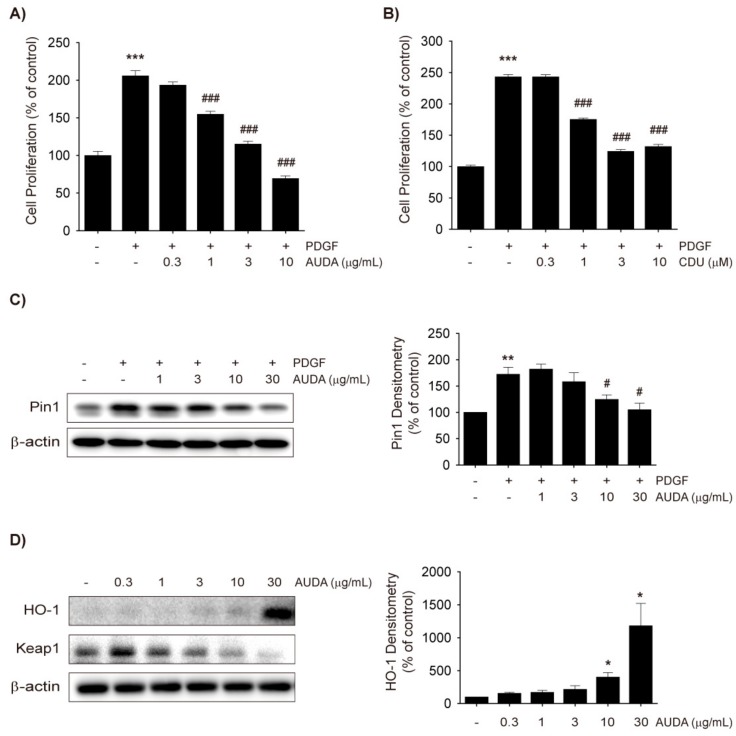
AUDA targets soluble epoxide hydrolase (sEH), an enzyme involved in the metabolism of epoxy fatty acids (EETs). By inhibiting sEH, it prevents the conversion of EETs to diols, leading to increased EET levels. AUDA also activates peroxisome proliferator-activated receptor α (PPARα) 3-fold, while showing no ability to affect PPARδ or PPARγ. It significantly inhibited PDGF-induced rat VSMC proliferation, which coincided with Pin1 suppression and heme oxygenase-1 (HO-1) upregulation.
|
|---|---|
| ln Vitro |
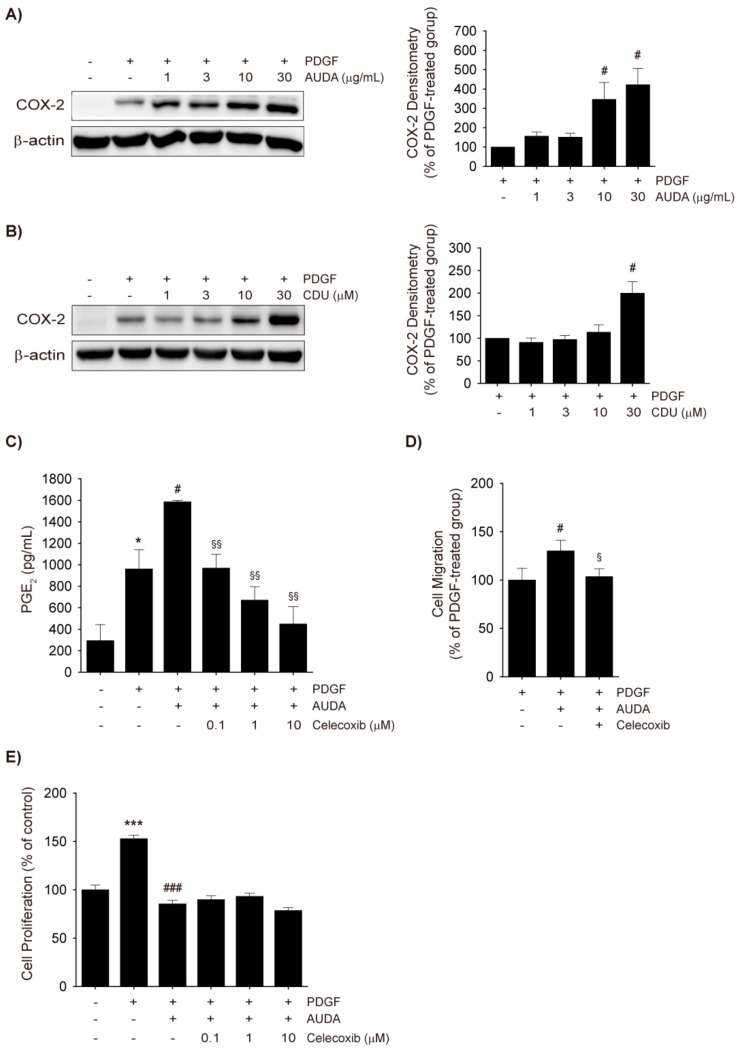
Rat VSMCs exposed to PDGF are inhibited in their proliferation in a dose-dependent manner by AUDA (0.3-10 μg/mL; 48 hours) [2]. COX-2 expression is dose-dependently upregulated by AUDA (0.3–10 μg/mL; 30 minutes) [2]. HCAEC's ability to migrate is improved by AUDA (10, 50, and 100 μM) in a dose-dependent way [3]. The capacity of HCAECs to adhere is greatly enhanced by AUDA [3].
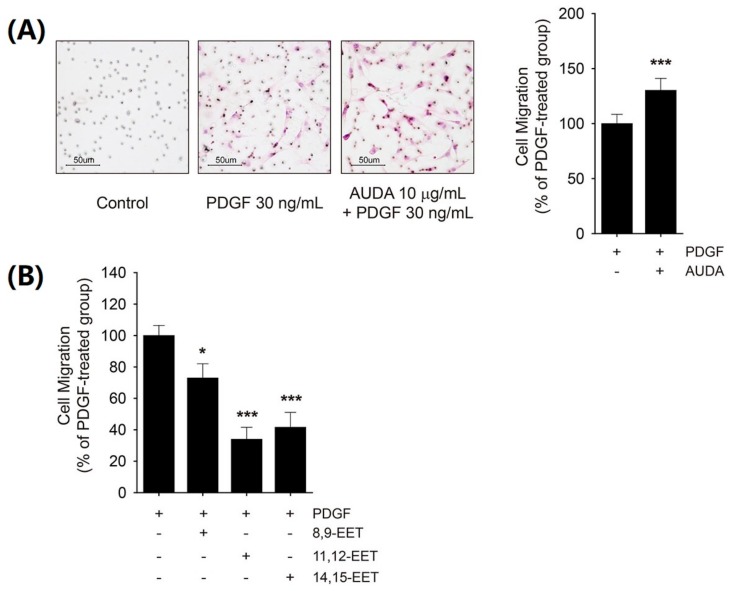
In vitro, AUDA significantly inhibited PDGF-induced rat VSMC proliferation, which coincided with Pin1 suppression and heme oxygenase-1 (HO-1) upregulation. Exogenous 8,9-EET, 11,12-EET, and 14,15-EET treatments did not alter Pin1 or HO-1 levels and had little effect on the proliferation of rat VSMCs. AUDA enhanced PDGF-stimulated cell migration of rat VSMCs. AUDA-induced activation of cyclooxygenase-2 (COX-2) and subsequent thromboxane A₂ production were required for the enhanced migration. |
| ln Vivo |
AUDA (ip; 10 mg/kg; 14 days) lowers the expression levels of IL-1β, MMP-9, and TNF-α [3].
In vivo, AUDA (i.p.; 10 mg/kg; 14 days) reduces TNF-α, MMP-9 and IL-1β expression levels in male C57BL/6 mice. It increased the proliferation, migration, adhesion and tube formation ability of HCAECs in a dose-dependent manner. In a mouse model of KD, AUDA reduced the protein expression of MMP-9, IL-1β and TNF-α, indicating that AUDA may alleviate inflammatory reactions in the coronary arteries. AUDA decreases bleomycin-induced pulmonary toxicity in mice by inhibiting the p38/Smad3 pathways. |
| Enzyme Assay |
The enzymatic activity of AUDA can be assessed using cell-free sEH enzyme assays. Recombinant human or mouse sEH is incubated with its substrate, an epoxy fatty acid (e.g., 14,15-EET), and varying concentrations of AUDA. The conversion of substrate to diol is measured using LC-MS/MS or other chromatographic methods. The IC₅₀ values for sEH inhibition are determined from dose-response curves.
|
| Cell Assay |
Cell proliferation assay [2]
Cell Types: Vascular smooth muscle cells (VSMC) Tested Concentrations: 0.3, 1, 3, 10 μg/mL Incubation Duration: 48 hrs (hours) Experimental Results: The proliferation of rat VSMCs exposed to PDGF was dose-dependently inhibited. Western Blot Analysis[2] Cell Types: VSMC Tested Concentrations: 1, 3, 10, 30 μg/mL Incubation Duration: 30 minutes Experimental Results: COX-2 expression was up-regulated in a dose-dependent manner. To evaluate the cellular effects of AUDA, cells such as vascular smooth muscle cells (VSMCs) or endothelial cells are treated with the compound. Cell proliferation, migration, and adhesion are assessed using standard assays. The levels of EETs and their diol metabolites are measured by LC-MS/MS. The activation of PPARα and downstream signaling pathways is assessed by Western blotting or reporter gene assays. |
| Animal Protocol |
Animal/Disease Models: Male (wild-type) C57BL/6 mice (age, 4-6 weeks; body weight, 18-20 g) [3]
Doses: 10 mg/kg Route of Administration: intraperitoneal (ip) injection; 14-day Experimental Results: TNF -α, MMP-9 and IL-1β expression levels were diminished. In vivo studies with AUDA typically involve administration to animal models via intraperitoneal or oral routes. In models of hypertension or inflammation, the compound's effects on blood pressure, inflammatory markers, and organ function are assessed. In models of pulmonary toxicity, its protective effects are evaluated. Pharmacokinetic parameters, such as bioavailability and half-life, are also characterized. |
| ADME/Pharmacokinetics |
AUDA has a molecular formula of C₂₃H₄₀N₂O₃ and a molecular weight of 392.58 g/mol. Its CAS number is 479413-70-2. It is soluble in DMSO (30 mg/mL, 76.42 mM). The powder should be stored at -20°C for 3 years; in solvent at -80°C for 1 year. The purity is typically 99.50%.
|
| Toxicity/Toxicokinetics |
Specific toxicology data for AUDA are not extensively detailed in the available literature. However, its use in animal studies at effective doses (e.g., 10 mg/kg i.p.) suggests a degree of tolerability. As with all research compounds, standard safety precautions should be taken when handling AUDA. It is intended for research use only and is not for human consumption.
|
| References |
|
| Additional Infomation |
AUDA is a medium-chain fatty acid.
AUDA (compound 43) is a potent inhibitor of soluble epoxide hydrolase (sEH) and a selective activator of PPARα. By inhibiting sEH, it increases EET levels, leading to vasodilation and decreased inflammation. AUDA is used as a research tool to study the roles of sEH, EETs, and PPARα in hypertension, inflammation, and cardiovascular diseases. It is not a clinically approved drug. |
| Molecular Formula |
C23H40N2O3
|
|---|---|
| Molecular Weight |
392.575306892395
|
| Exact Mass |
392.303
|
| CAS # |
479413-70-2
|
| Related CAS # |
AUDA; 479413-70-2
|
| PubChem CID |
10069117
|
| Appearance |
White to off-white solid powder
|
| Density |
1.1±0.1 g/cm3
|
| Boiling Point |
592.7±19.0 °C at 760 mmHg
|
| Flash Point |
312.3±21.5 °C
|
| Vapour Pressure |
0.0±3.6 mmHg at 25°C
|
| Index of Refraction |
1.534
|
| LogP |
5.61
|
| Hydrogen Bond Donor Count |
3
|
| Hydrogen Bond Acceptor Count |
3
|
| Rotatable Bond Count |
13
|
| Heavy Atom Count |
28
|
| Complexity |
479
|
| Defined Atom Stereocenter Count |
0
|
| SMILES |
O=C(O)CCCCCCCCCCCNC(NC1(C2)CC3CC2CC(C3)C1)=O
|
| InChi Key |
XLGSEOAVLVTJDH-UHFFFAOYSA-N
|
| InChi Code |
InChI=1S/C23H40N2O3/c26-21(27)10-8-6-4-2-1-3-5-7-9-11-24-22(28)25-23-15-18-12-19(16-23)14-20(13-18)17-23/h18-20H,1-17H2,(H,26,27)(H2,24,25,28)
|
| Chemical Name |
12-(1-adamantylcarbamoylamino)dodecanoic acid
|
| HS Tariff Code |
2934.99.9001
|
| Storage |
Powder -20°C 3 years 4°C 2 years In solvent -80°C 6 months -20°C 1 month |
| Shipping Condition |
Room temperature (This product is stable at ambient temperature for a few days during ordinary shipping and time spent in Customs)
|
| Solubility (In Vitro) |
DMSO : ~125 mg/mL (~318.41 mM)
|
|---|---|
| Solubility (In Vivo) |
Solubility in Formulation 1: 2.08 mg/mL (5.30 mM) in 10% DMSO + 40% PEG300 + 5% Tween80 + 45% Saline (add these co-solvents sequentially from left to right, and one by one), suspension solution; with sonication.
For example, if 1 mL of working solution is to be prepared, you can add 100 μL of 20.8 mg/mL clear DMSO stock solution to 400 μL PEG300 and mix evenly; then add 50 μL Tween-80 to the above solution and mix evenly; then add 450 μL normal saline to adjust the volume to 1 mL. Preparation of saline: Dissolve 0.9 g of sodium chloride in 100 mL ddH₂ O to obtain a clear solution. Solubility in Formulation 2: ≥ 2.08 mg/mL (5.30 mM) (saturation unknown) in 10% DMSO + 90% (20% SBE-β-CD in Saline) (add these co-solvents sequentially from left to right, and one by one), clear solution. For example, if 1 mL of working solution is to be prepared, you can add 100 μL of 20.8 mg/mL clear DMSO stock solution to 900 μL of 20% SBE-β-CD physiological saline solution and mix evenly. Preparation of 20% SBE-β-CD in Saline (4°C,1 week): Dissolve 2 g SBE-β-CD in 10 mL saline to obtain a clear solution. View More
Solubility in Formulation 3: ≥ 2.08 mg/mL (5.30 mM) (saturation unknown) in 10% DMSO + 90% Corn Oil (add these co-solvents sequentially from left to right, and one by one), clear solution. |
| Preparing Stock Solutions | 1 mg | 5 mg | 10 mg | |
| 1 mM | 2.5473 mL | 12.7363 mL | 25.4725 mL | |
| 5 mM | 0.5095 mL | 2.5473 mL | 5.0945 mL | |
| 10 mM | 0.2547 mL | 1.2736 mL | 2.5473 mL |
*Note: Please select an appropriate solvent for the preparation of stock solution based on your experiment needs. For most products, DMSO can be used for preparing stock solutions (e.g. 5 mM, 10 mM, or 20 mM concentration); some products with high aqueous solubility may be dissolved in water directly. Solubility information is available at the above Solubility Data section. Once the stock solution is prepared, aliquot it to routine usage volumes and store at -20°C or -80°C. Avoid repeated freeze and thaw cycles.
Calculation results
Working concentration: mg/mL;
Method for preparing DMSO stock solution: mg drug pre-dissolved in μL DMSO (stock solution concentration mg/mL). Please contact us first if the concentration exceeds the DMSO solubility of the batch of drug.
Method for preparing in vivo formulation::Take μL DMSO stock solution, next add μL PEG300, mix and clarify, next addμL Tween 80, mix and clarify, next add μL ddH2O,mix and clarify.
(1) Please be sure that the solution is clear before the addition of next solvent. Dissolution methods like vortex, ultrasound or warming and heat may be used to aid dissolving.
(2) Be sure to add the solvent(s) in order.
|
|
|
Products are for research use only; We do not sell to patients
Copyright 2020 InvivoChem LLC | All Rights Reserved