| Size | Price | Stock | Qty |
|---|---|---|---|
| 5mg |
|
||
| 10mg |
|
||
| 25mg |
|
||
| 50mg |
|
||
| 100mg |
|
||
| 250mg | |||
| 500mg | |||
| Other Sizes |
| Targets |
Asimadoline HCl targets the κ-opioid receptor (KOR) with high selectivity. It has IC50 values of 5.6 nM for the guinea pig κ-opioid receptor and 1.2 nM for the human recombinant κ-opioid receptor. It exhibits high selectivity for κ-opioid over μ- and δ-opioid receptors, with binding ratios of 1:501:498 for κ:μ:δ. It has an IC50 of 3 µM for μ-opioid receptors. It also has affinity for L-type and sodium Ca²⁺ ion channels, but with much lower affinity than for κ receptors.
|
|---|---|
| ln Vitro |
In human recombinant receptors, asimadoline (EMD-61753) hydrochloride exhibits a high degree of selectivity in the κ: μ: δ opioid binding ratios of 1:501:498. Asimadoline hydrochloride has an IC50 of 3 µM for μ-opioid receptors and 0.7 µM for μ-opioid receptors. The IC50 values for the following receptors: D1, D2, kainate, σ, PCP/NMDA, H1, α1, α2, M1/M2, glycine, 5HT1A, 5HT1C, 5HT1D, 5HT2, 5HT3, AMPA, and kainate/AMPA[1]. Asimadoline hydrochloride has affinity for both L type and sodium Ca2+ ion channels, with IC50 values ranging from 150 to 800 times higher than that of κ receptors[1]. In the rat duodenum, aspirin hydrochloride exhibits spasmolytic action at high concentrations (IC50=4.2 µM) against 400 µM barium chloride. This finding raises the possibility that aspirin hydrochloride inhibits the direct stimulant effects of barium on smooth muscle via as yet unidentified mechanisms[1].
In vitro, asimadoline hydrochloride exhibits high selectivity for κ-opioid receptors with an IC50 of 5.6 nM (guinea pig) and 1.2 nM (human recombinant). It has an IC50 of 3 µM for μ-opioid receptors. It shows IC50 values >10 µM for a panel of other receptors including D1, D2, kainate, σ, PCP/NMDA, H1, α1, α2, M1/M2, glycine, 5HT1A, 5HT1C, 5HT1D, 5HT2, 5HT3, AMPA, and kainate/AMPA. It exhibits spasmolytic action in the rat duodenum at high concentrations (IC50=4.2 µM). |
| ln Vivo |
In diabetic rats, asimadoline (EMD-61753 hydrochloride; 1, 5, 15 mg/kg; sc) immediately reduces tactile allodynia and formalin-evoked hyperalgesia[3]. After oral dosing, the rate of absorption is 80% in rats and >90% in dogs and monkeys. Asimadoline hydrochloride has a quick metabolism that is comparable in both humans and animals. Peripheral anti-inflammatory effects of asimadoline hydrochloride are partially mediated by elevated levels of joint fluid substance P[1]. With all three time regimens, treatment with asimadoline hydrochloride (5 mg/kg/day; ip) results in a significant (and long-lasting) attenuation of the disease[2].
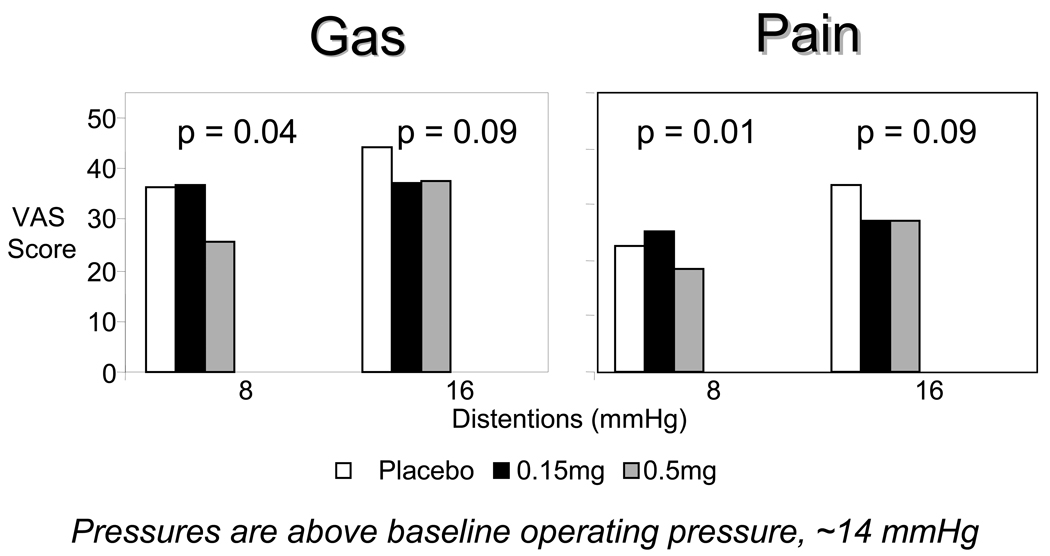
In vivo, asimadoline hydrochloride acutely reduces tactile allodynia and formalin-evoked hyperalgesia in diabetic rats at 1, 5, and 15 mg/kg s.c.. Treatment with 5 mg/kg/day i.p. results in a significant and long-lasting attenuation of disease in rat models. It has peripheral anti-inflammatory actions partly mediated through elevated levels of joint fluid substance P. It has potential for the treatment of pruritus and IBS. |
| Enzyme Assay |
The in vitro receptor binding assay for asimadoline hydrochloride typically involves radioligand displacement studies using membrane preparations from cells expressing the κ-opioid receptor. The compound's affinity (IC50) is determined by measuring its ability to displace a specific radiolabeled ligand from guinea pig and human recombinant κ-opioid receptors. Selectivity is assessed by testing the compound against μ- and δ-opioid receptors and a panel of other receptors.
|
| Cell Assay |
In vitro cellular assays for asimadoline hydrochloride assess its functional activity at the κ-opioid receptor. Cells expressing the κ-opioid receptor are treated with the compound, and downstream signaling, such as inhibition of cAMP accumulation, is measured. The compound's potency as an agonist is determined from these functional assays. Additionally, its effects on smooth muscle contraction can be assessed using isolated tissue preparations such as the rat duodenum.
|
| Animal Protocol |
Animal/Disease Models: Adult female SD (Sprague-Dawley) rats[3]
Doses: 1, 5, 15 mg/kg Route of Administration: SC; single dose Experimental Results: Acutely ameliorated both formalin-evoked hyperalgesia and tactile allodynia in diabetic rats. In vivo animal studies for asimadoline hydrochloride have been conducted in adult female Sprague-Dawley rats. Doses of 1, 5, and 15 mg/kg were administered subcutaneously to assess the compound's effects on formalin-evoked hyperalgesia and tactile allodynia in diabetic rats. In another study, 5 mg/kg/day was administered intraperitoneally. These studies demonstrated the compound's in vivo efficacy in reducing pain and inflammation. |
| ADME/Pharmacokinetics |
Asimadoline hydrochloride is orally active. After oral dosing, the absorption rate is 80% in rats and >90% in dogs and monkeys. It has low permeability across the blood-brain barrier. Its metabolism is quick and comparable in both humans and animals. These pharmacokinetic properties support its use as a peripherally acting therapeutic agent with minimal central nervous system side effects.
|
| Toxicity/Toxicokinetics |
Specific toxicity data for asimadoline hydrochloride are not extensively detailed in the available literature. However, its favorable pharmacokinetic profile and peripheral selectivity suggest a good safety margin. As a κ-opioid agonist, potential side effects may include dysphoria and sedation, but these are minimized by its limited brain penetration. Its safety has been evaluated in clinical studies for IBS and pruritus.
|
| References |
|
| Additional Infomation |
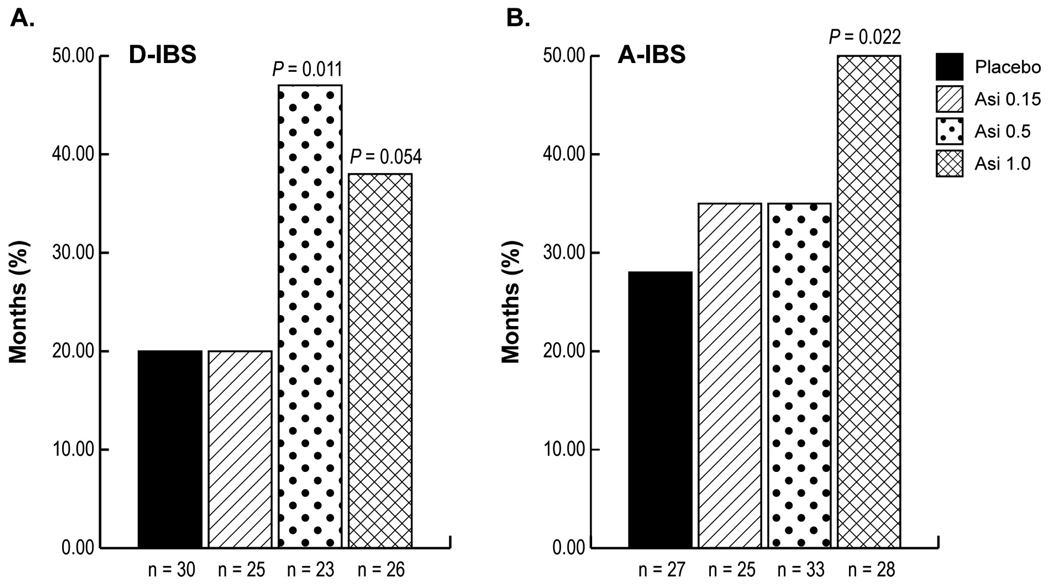
Asimadoline hydrochloride is the hydrochloride salt of asimadoline, an orally active, selective, and peripherally acting κ-opioid agonist. It has been investigated for the treatment of pruritus and irritable bowel syndrome (IBS). Its low blood-brain barrier permeability minimizes central nervous system side effects. The compound has shown encouraging clinical efficacy in IBS patients. It is a research compound and is not approved for clinical use.
|
| Molecular Formula |
C27H31CLN2O2
|
|---|---|
| Molecular Weight |
451.01
|
| Exact Mass |
450.207
|
| CAS # |
185951-07-9
|
| Related CAS # |
Asimadoline;153205-46-0
|
| PubChem CID |
9846614
|
| Appearance |
Off-white to light yellow solid powder
|
| LogP |
4.824
|
| Hydrogen Bond Donor Count |
2
|
| Hydrogen Bond Acceptor Count |
3
|
| Rotatable Bond Count |
7
|
| Heavy Atom Count |
32
|
| Complexity |
531
|
| Defined Atom Stereocenter Count |
2
|
| SMILES |
CN([C@H](CN1CC[C@@H](C1)O)C2=CC=CC=C2)C(=O)C(C3=CC=CC=C3)C4=CC=CC=C4.Cl
|
| InChi Key |
GMJSLABTEURMBF-CLSOAGJSSA-N
|
| InChi Code |
InChI=1S/C27H30N2O2.ClH/c1-28(25(21-11-5-2-6-12-21)20-29-18-17-24(30)19-29)27(31)26(22-13-7-3-8-14-22)23-15-9-4-10-16-23/h2-16,24-26,30H,17-20H2,1H31H/t24-,25+/m0./s1
|
| Chemical Name |
N-[(1S)-2-[(3S)-3-hydroxy-1-pyrrolidinyl]-1-phenylethyl]-N-methyl-a-phenyl-benzeneacetamide hydrochloride
|
| Synonyms |
EMD-61753 ONO3951 EMD 61753EMR 63320 ONO 3951 EMR-63320 ONO-3951 EMD61753 EMR63320
|
| HS Tariff Code |
2934.99.9001
|
| Storage |
Powder -20°C 3 years 4°C 2 years In solvent -80°C 6 months -20°C 1 month Note: Please store this product in a sealed and protected environment, avoid exposure to moisture. |
| Shipping Condition |
Room temperature (This product is stable at ambient temperature for a few days during ordinary shipping and time spent in Customs)
|
| Solubility (In Vitro) |
DMSO : ~240 mg/mL (~532.15 mM)
|
|---|---|
| Solubility (In Vivo) |
Solubility in Formulation 1: ≥ 6 mg/mL (13.30 mM) (saturation unknown) in 10% DMSO + 40% PEG300 + 5% Tween80 + 45% Saline (add these co-solvents sequentially from left to right, and one by one), clear solution.
For example, if 1 mL of working solution is to be prepared, you can add 100 μL of 60.0 mg/mL clear DMSO stock solution to 400 μL PEG300 and mix evenly; then add 50 μL Tween-80 to the above solution and mix evenly; then add 450 μL normal saline to adjust the volume to 1 mL. Preparation of saline: Dissolve 0.9 g of sodium chloride in 100 mL ddH₂ O to obtain a clear solution. Solubility in Formulation 2: ≥ 6 mg/mL (13.30 mM) (saturation unknown) in 10% DMSO + 90% (20% SBE-β-CD in Saline) (add these co-solvents sequentially from left to right, and one by one), clear solution. For example, if 1 mL of working solution is to be prepared, you can add 100 μL of 60.0 mg/mL clear DMSO stock solution to 900 μL of 20% SBE-β-CD physiological saline solution and mix evenly. Preparation of 20% SBE-β-CD in Saline (4°C,1 week): Dissolve 2 g SBE-β-CD in 10 mL saline to obtain a clear solution. View More
Solubility in Formulation 3: ≥ 6 mg/mL (13.30 mM) (saturation unknown) in 10% DMSO + 90% Corn Oil (add these co-solvents sequentially from left to right, and one by one), clear solution. |
| Preparing Stock Solutions | 1 mg | 5 mg | 10 mg | |
| 1 mM | 2.2172 mL | 11.0862 mL | 22.1725 mL | |
| 5 mM | 0.4434 mL | 2.2172 mL | 4.4345 mL | |
| 10 mM | 0.2217 mL | 1.1086 mL | 2.2172 mL |
*Note: Please select an appropriate solvent for the preparation of stock solution based on your experiment needs. For most products, DMSO can be used for preparing stock solutions (e.g. 5 mM, 10 mM, or 20 mM concentration); some products with high aqueous solubility may be dissolved in water directly. Solubility information is available at the above Solubility Data section. Once the stock solution is prepared, aliquot it to routine usage volumes and store at -20°C or -80°C. Avoid repeated freeze and thaw cycles.
Calculation results
Working concentration: mg/mL;
Method for preparing DMSO stock solution: mg drug pre-dissolved in μL DMSO (stock solution concentration mg/mL). Please contact us first if the concentration exceeds the DMSO solubility of the batch of drug.
Method for preparing in vivo formulation::Take μL DMSO stock solution, next add μL PEG300, mix and clarify, next addμL Tween 80, mix and clarify, next add μL ddH2O,mix and clarify.
(1) Please be sure that the solution is clear before the addition of next solvent. Dissolution methods like vortex, ultrasound or warming and heat may be used to aid dissolving.
(2) Be sure to add the solvent(s) in order.
|
|
Products are for research use only; We do not sell to patients
Copyright 2020 InvivoChem LLC | All Rights Reserved