| Size | Price | |
|---|---|---|
| Other Sizes |


| Targets |
Ammonia monooxygenase; copper chelation in the active site. Allylthiourea selectively inhibits ammonia oxidation by targeting the ammonia monooxygenase enzyme and chelating copper within its active site, thereby suppressing its catalytic function. It does not act through conventional receptor targets but rather through direct enzyme inhibition and metal chelation.
|
|---|---|
| ln Vitro |
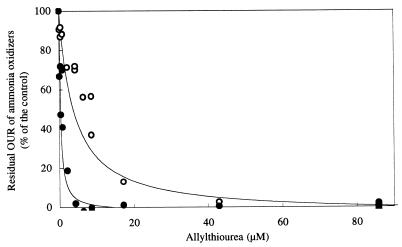
Allylthiourea demonstrates potent inhibition of ammonia oxidation in vitro. At a concentration of 1 µM, it inhibits ammonia oxidation by 80%. Selective inhibition of ammonia oxidation is observed at concentrations ranging from 8 to 80 µM, while complete inhibition is achieved at 86 µM. The compound also exhibits cytotoxicity against cancer cell lines, with an IC50 of 5.22 mM against the MCF-7 cell line. Its inhibitory effects on nitrifying bacteria have been well characterized in microbiological assays.
|
| ln Vivo |
In vivo, Allylthiourea is primarily used as a nitrification inhibitor in soil and environmental studies. It has been employed to investigate the role of ammonia-oxidizing bacteria in various ecosystems. However, detailed pharmacokinetic and pharmacodynamic studies in animal models are limited. Its anticancer activity has been observed in vitro, but in vivo efficacy data are not extensively documented. The compound's primary utility remains in environmental microbiology and basic research applications.
|
| Enzyme Assay |
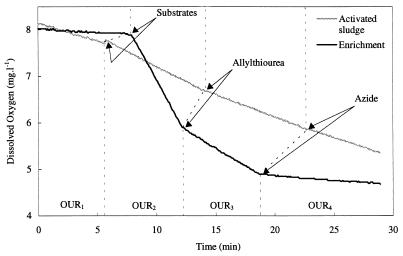
Typical in vitro enzyme inhibition assays for Allylthiourea involve measuring ammonia oxidation activity in microbial cultures or cell-free extracts. Ammonia-oxidizing bacteria such as Nitrosomonas europaea are cultured in appropriate media, and oxygen uptake or nitrite production is measured as an indicator of ammonia oxidation activity. Allylthiourea is added at varying concentrations (typically 1-100 µM), and the rate of ammonia oxidation is compared to untreated controls. The IC50 values are determined from dose-response curves. Copper chelation assays may also be performed to confirm the mechanism of action.
|
| Cell Assay |
Cytotoxicity assays are commonly performed using the MCF-7 breast cancer cell line. Cells are cultured in DMEM supplemented with 10% fetal bovine serum and antibiotics. Allylthiourea is dissolved in DMSO and diluted to various concentrations (typically ranging from 0.1 to 10 mM). Cells are treated for 48-72 hours, and cell viability is assessed using MTT or CCK-8 assays. The IC50 value of 5.22 mM against MCF-7 cells has been reported. For nitrification inhibition studies, microbial cultures are treated with Allylthiourea and ammonia oxidation activity is monitored.
|
| Animal Protocol |
In vivo animal studies for Allylthiourea are not extensively documented. Most applications involve environmental or soil studies rather than traditional animal models. When used in research settings, the compound is typically administered orally or via intraperitoneal injection in rodents for toxicity or pharmacokinetic assessments. Dosing regimens vary depending on the study objectives. However, detailed in vivo efficacy data, particularly for anticancer applications, are limited and primarily derived from in vitro findings.
|
| ADME/Pharmacokinetics |
Pharmacokinetic data for Allylthiourea are limited. The compound is known to be soluble in DMSO (20 mg/mL) but poorly soluble in water (<1 mg/mL). It is typically stored as a powder at -20°C for up to 3 years. Absorption, distribution, metabolism, and excretion (ADME) parameters have not been extensively characterized in mammalian systems. Given its small molecular weight (116.18) and moderate lipophilicity, it is expected to be absorbed following oral administration, but detailed PK studies are lacking.
|
| Toxicity/Toxicokinetics |
Allylthiourea has been reported to exhibit low acute toxicity in standard assays. However, as with many thiourea derivatives, it may cause skin and eye irritation. Chronic exposure studies are limited. The compound is not approved for human therapeutic use and is intended for research purposes only. In environmental contexts, it is considered a metabolic inhibitor rather than a therapeutic agent. Safety precautions should be taken when handling the compound, including the use of personal protective equipment.
|
| References |
|
| Additional Infomation |
Allylthiourea is a white crystalline solid with a slightly garlicky odor. (NTP, 1992)
Allylthiourea is a thiourea with an amino group attached to a propenyl group. It is a metabolite functionally related to thiourea. See also: ... See more... Allylthiourea is primarily used as a research tool in environmental microbiology and cancer studies rather than as a therapeutic drug. It has not been approved for clinical use in humans. The compound's mechanism of action involves inhibition of ammonia monooxygenase through copper chelation. It is also known by synonyms such as Thiosinamine and N-Allylthiourea. Its molecular formula is C4H8N2S, and its molecular weight is 116.18. The compound is available in high purity (≥95%) for research applications. |
| Molecular Formula |
C4H8N2S
|
|---|---|
| Molecular Weight |
116.1847
|
| Exact Mass |
116.04
|
| CAS # |
109-57-9
|
| PubChem CID |
1549517
|
| Appearance |
White to off-white solid powder
|
| Density |
1.1±0.1 g/cm3
|
| Boiling Point |
191.3±33.0 °C at 760 mmHg
|
| Melting Point |
70-72 °C(lit.)
|
| Flash Point |
69.5±25.4 °C
|
| Vapour Pressure |
0.5±0.4 mmHg at 25°C
|
| Index of Refraction |
1.562
|
| LogP |
0.12
|
| Hydrogen Bond Donor Count |
2
|
| Hydrogen Bond Acceptor Count |
1
|
| Rotatable Bond Count |
2
|
| Heavy Atom Count |
7
|
| Complexity |
79.8
|
| Defined Atom Stereocenter Count |
0
|
| SMILES |
S=C(N([H])[H])N([H])C([H])([H])C([H])=C([H])[H]
|
| InChi Key |
HTKFORQRBXIQHD-UHFFFAOYSA-N
|
| InChi Code |
InChI=1S/C4H8N2S/c1-2-3-6-4(5)7/h2H,1,3H2,(H3,5,6,7)
|
| Chemical Name |
prop-2-enylthiourea
|
| HS Tariff Code |
2934.99.9001
|
| Storage |
Powder -20°C 3 years 4°C 2 years In solvent -80°C 6 months -20°C 1 month |
| Shipping Condition |
Room temperature (This product is stable at ambient temperature for a few days during ordinary shipping and time spent in Customs)
|
| Solubility (In Vitro) |
DMSO : ≥ 100 mg/mL (~860.73 mM)
|
|---|---|
| Solubility (In Vivo) |
Solubility in Formulation 1: ≥ 2.5 mg/mL (21.52 mM) (saturation unknown) in 10% DMSO + 40% PEG300 + 5% Tween80 + 45% Saline (add these co-solvents sequentially from left to right, and one by one), clear solution.
For example, if 1 mL of working solution is to be prepared, you can add 100 μL of 25.0 mg/mL clear DMSO stock solution to 400 μL PEG300 and mix evenly; then add 50 μL Tween-80 to the above solution and mix evenly; then add 450 μL normal saline to adjust the volume to 1 mL. Preparation of saline: Dissolve 0.9 g of sodium chloride in 100 mL ddH₂ O to obtain a clear solution. Solubility in Formulation 2: ≥ 2.5 mg/mL (21.52 mM) (saturation unknown) in 10% DMSO + 90% (20% SBE-β-CD in Saline) (add these co-solvents sequentially from left to right, and one by one), clear solution. For example, if 1 mL of working solution is to be prepared, you can add 100 μL of 25.0 mg/mL clear DMSO stock solution to 900 μL of 20% SBE-β-CD physiological saline solution and mix evenly. Preparation of 20% SBE-β-CD in Saline (4°C,1 week): Dissolve 2 g SBE-β-CD in 10 mL saline to obtain a clear solution. View More
Solubility in Formulation 3: ≥ 2.5 mg/mL (21.52 mM) (saturation unknown) in 10% DMSO + 90% Corn Oil (add these co-solvents sequentially from left to right, and one by one), clear solution. |
| Preparing Stock Solutions | 1 mg | 5 mg | 10 mg | |
| 1 mM | 8.6073 mL | 43.0367 mL | 86.0733 mL | |
| 5 mM | 1.7215 mL | 8.6073 mL | 17.2147 mL | |
| 10 mM | 0.8607 mL | 4.3037 mL | 8.6073 mL |
*Note: Please select an appropriate solvent for the preparation of stock solution based on your experiment needs. For most products, DMSO can be used for preparing stock solutions (e.g. 5 mM, 10 mM, or 20 mM concentration); some products with high aqueous solubility may be dissolved in water directly. Solubility information is available at the above Solubility Data section. Once the stock solution is prepared, aliquot it to routine usage volumes and store at -20°C or -80°C. Avoid repeated freeze and thaw cycles.
Calculation results
Working concentration: mg/mL;
Method for preparing DMSO stock solution: mg drug pre-dissolved in μL DMSO (stock solution concentration mg/mL). Please contact us first if the concentration exceeds the DMSO solubility of the batch of drug.
Method for preparing in vivo formulation::Take μL DMSO stock solution, next add μL PEG300, mix and clarify, next addμL Tween 80, mix and clarify, next add μL ddH2O,mix and clarify.
(1) Please be sure that the solution is clear before the addition of next solvent. Dissolution methods like vortex, ultrasound or warming and heat may be used to aid dissolving.
(2) Be sure to add the solvent(s) in order.
|
|
|
Products are for research use only; We do not sell to patients
Copyright 2020 InvivoChem LLC | All Rights Reserved