| Size | Price | Stock | Qty |
|---|---|---|---|
| 50mg |
|
||
| 100mg |
|
||
| 250mg |
|
||
| 500mg |
|
||
| Other Sizes |


| Targets |
Acetyl-CoA synthetases (from plants, yeast, and mammals) – specific inhibition [1]
- Urease (from Helicobacter pylori) – inhibition via reaction with SH-group [1] - Thiol-containing enzymes (including cysteine proteases and alcohol dehydrogenases) – reacts rapidly with free thiol groups via thiol-disulphide exchange [1] - TRPA1 and TRPV1 (temperature-activated ion channels) – activation by allicin, causing garlic's pungency [1] - Cyclooxygenase activity – allicin selectively inhibited GSH-dependent PGH2 to PGE2 isomerase in adenocarcinoma cell line [1] - Nitric oxide synthase (inducible) – inhibitory effect on NO formation [1] |
|---|---|
| ln Vitro |
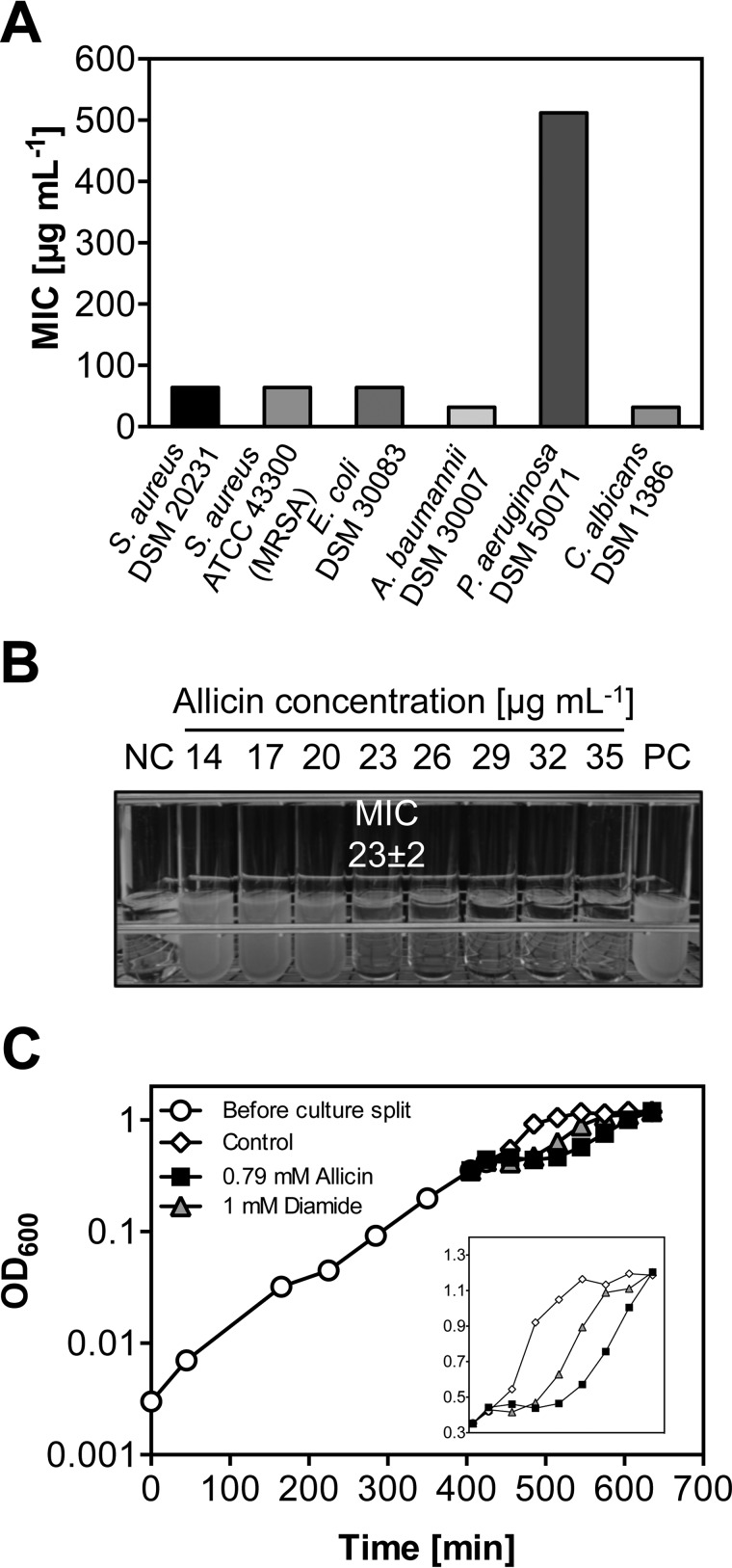
Methicillin-resistant Staphylococcus aureus ATCC 43300, typical strain Staphylococcus aureus DSM 20231, Escherichia coli DSM 30083, Acinetobacter baumannii DSM 30007, and Candida albicans DSM 1386 all had equivalent minimum inhibitory concentrations (MICs) for allicin (32–64 μg/mL)[1].
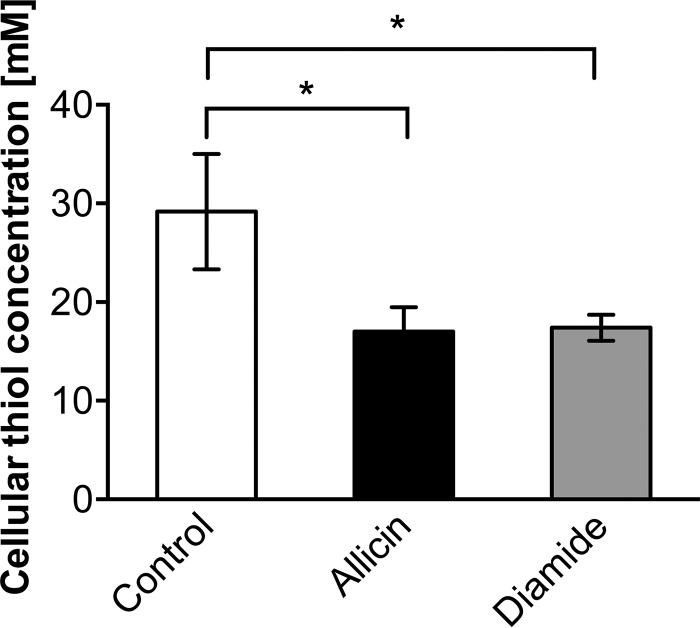
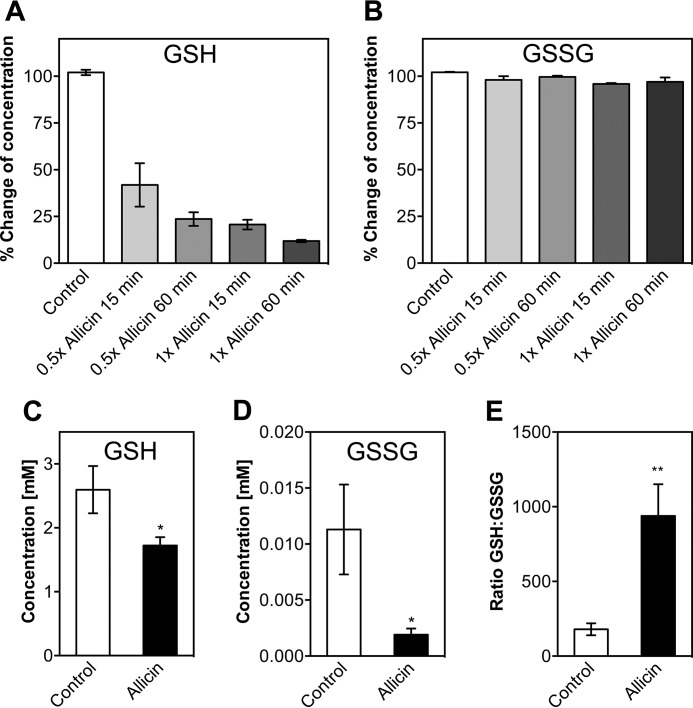
Antibacterial activity: Minimum inhibitory concentrations (MICs) for Gram-negative strains ranged from 0.4 to 6.87 μg/ml; for Gram-positive strains ranged from 13.8 to 55.0 μg/ml. Garlic extract (57.1% w/v containing 220 μg/ml allicin) inhibited growth and killed most oral bacteria tested. Time-kill curves for Streptococcus mutans showed a delay before killing, while killing of Porphyromonas gingivalis started almost immediately. Garlic extract inhibited trypsin-like and total protease activity of P. gingivalis by 92.7% and 94.88%, respectively. [1] - Antifungal activity: Cu²⁺ showed dose-dependent fungicidal activity against Saccharomyces cerevisiae cells, and its lethal effect was extremely enhanced in the presence of allicin. [1] - Anticancer activity: Allicin inhibited proliferation of cancer cells (murine and human origin) and induced apoptosis with features such as apoptotic bodies, DNA fragmentation, activation of caspases, and poly (ADP-ribose) polymerase cleavage. Allicin induced apoptosis through caspase-independent pathway accompanied by mitochondrial release of AIF, with PKA playing an important role. [1] - Antiproliferative effect: Allicin transiently depletes intracellular glutathione (GSH) level; extent of GSH decrease correlated well with growth inhibitory activity. [1] - Antioxidant activity: Allicin scavenges hydroxyl radicals and inhibits superoxide production by phorbol ester-activated human granulocytes. Allicin reacts with free thiol-containing enzymes and serves as an efficient antioxidant by trapping radicals. [1] - Antiplatelet activity: Allicin inhibited platelet aggregation. [1] - Immunomodulatory activity: Allicin (1, 10, 100 ng/ml for 20 hours) altered cellular functions of macrophages to kill tumor cells and produce various molecules such as NO, H₂O₂, TNF-α, IL-1, and IL-6. [1] - Anti-inflammatory properties: Allicin inhibited spontaneous and TNF-α induced secretion of pro-inflammatory cytokines and chemokines from intestinal epithelial cells. [1] - Antigenotoxic effect: Allicin showed antigenotoxic effect against methyl methanesulphonate induced genotoxic damage. [1] |
| ln Vivo |
Antimicrobial effect in rats: When garlic extract containing 8 μM allicin was administered intragastrically to albino rats, a maximum of 0.4 μM in the intestine and 2.4 μM in caecum was detected after 4 and 6 hr, respectively. About 50–60% reduction in microflora was observed in intestine after 4 hours; a 5-fold decrease in microflora was seen in caecum at the end of 8 hours. [1]
- Cardiovascular effects: In fructose-fed rats, synthetic allicin lowered blood pressure, insulin, and triglyceride levels. Allicin and enalapril showed similar beneficial effects on blood pressure, insulin, and triglycerides in fructose-induced hyperinsulinemic, hyperlipidemic, and hypertensive rats. Allicin also reduced weight gain in fructose-fed groups. [1] - Vasodilator activity: In rat pulmonary vascular bed with increased tone, allicin produced dose-related decrease in pulmonary arterial pressure without changing left arterial pressure. Allicin also decreased systemic arterial pressure in a dose-related manner. A modest dose (14 mg of allicin) caused decrease in diastolic blood pressure in severely hypertensive patients. [1] - Hypolipidemic effect in rabbits: Allicin altered the lipid profile in hyperlipidemic rabbits. In hypercholesterolemic rabbits, garlic (0.6% allicin) significantly reduced hypercholesterolemia comparable to gemfibrozil, with serum triglycerides unchanged. [1] - In rats fed high cholesterol diet, garlic powder (0.6% allicin) significantly reduced serum cholesterol, triglycerides, and blood pressure. No changes in serum glucose and protein. [1] - Hepatoprotective effect: In D-galactosamine/lipopolysaccharide induced hepatitis rats, pretreatment with allicin prevented increased lipid peroxidation and decreased liver antioxidant enzyme levels. [1] - Common cold prevention: In a 12-week randomized trial with 146 volunteers taking one capsule daily (allicin-containing supplement vs placebo), the active treatment group had significantly fewer colds than placebo group; placebo group recorded significantly more days challenged virally and significantly longer duration of symptoms. [1] |
| Enzyme Assay |
Urease inhibition assay: Allicin or garlic extract inhibited urease activity attributed to reaction of allicin with SH-group. Thiol reagents (L-cysteine, 2-mercaptoethanol, glutathione, dithiothreitol) strongly protected the enzyme from loss of activity, while urea and boric acid showed weaker protection. The study used Helicobacter pylori urease. [1]
- Acetyl-CoA synthetase inhibition: Allicin was shown to be a specific inhibitor of acetyl-CoA synthetases from plants, yeast, and mammals. The bacterial acetyl-CoA-forming system (consisting of acetate kinase and phosphotransacetylase) was inhibited. Allicin specifically inhibited enzymes of the fatty acid synthesis sequence. [1] - Protease activity assay: Garlic extract inhibited trypsin-like and total protease activity of Porphyromonas gingivalis by 92.7% and 94.88%, respectively. [1] - PGH2 to PGE2 isomerase inhibition: Allicin selectively inhibited the GSH-dependent PGH2 to PGE2 isomerase in adenocarcinoma cell line. [1] |
| Cell Assay |
Cell viability and apoptosis assay: Allicin inhibited proliferation of cancer cells of murine and human origin by cell viability assay. Allicin induced apoptosis with typical features such as apoptotic bodies, DNA fragmentation, activation of caspases, and poly (ADP-ribose) polymerase cleavage. [1]
- Caspase-independent apoptosis assay: Allicin induced apoptosis of cells through caspase-independent apoptosis pathway accompanied by mitochondrial release of AIF; protein kinase A (PKA) appeared to play an important role in the caspase-independent apoptosis. [1] - Macrophage immunomodulation assay: Allicin at various doses (1, 10, 100 ng/ml) for 20 hours altered cellular functions of macrophages to kill tumor cells and produce various molecules such as NO, H₂O₂, TNF-α, IL-1, and IL-6. [1] - Anti-inflammatory cytokine secretion assay: Allicin inhibited spontaneous and TNF-α induced secretion of pro-inflammatory cytokines and chemokines from intestinal epithelial cells. [1] |
| Animal Protocol |
Intragastric administration in rats: Garlic extract containing 8 μM allicin was administered intragastrically to albino rats. Measurement of allicin content in intestine and caecum at 4, 6, and 8 hours post-administration, and assessment of microflora reduction. [1]
- Fructose-induced hypertensive rat model: Rats were fed fructose to induce hyperinsulinemia, hyperlipidemia, and hypertension. Synthetic allicin was administered, and effects on blood pressure, insulin, triglycerides, and body weight were measured. Allicin and enalapril were compared. [1] - High cholesterol diet rat model: Rats were fed a high cholesterol diet. Garlic powder (0.6% allicin) was administered, and serum cholesterol, triglycerides, glucose, protein, and systolic blood pressure were measured. [1] - Hypercholesterolemic rabbit model: Rabbits fed cholesterol-rich diet were treated with allicin; lipid profile and atherosclerotic plaque formation were assessed. [1] - D-galactosamine/lipopolysaccharide induced hepatitis rat model: Rats were pretreated with allicin; lipid peroxidation and liver antioxidant enzyme levels were measured. [1] - Common cold prevention clinical trial: 146 volunteers randomized to receive placebo or allicin-containing garlic supplement, one capsule daily, over a 12-week period. Number of colds, duration of symptoms, and viral challenge days were recorded. [1] |
| ADME/Pharmacokinetics |
Metabolism / Metabolites
DADSO is a known human metabolite of diallyl disulfide. Stability in simulated gastric fluid (SGF, pH 1.2) and simulated intestinal fluid (SIF, pH 7.5): At 37°C, approximately 90% of allicin remained after 5 hours in water at pH 1.2 and 7.5. After 1 day at pH 1.2, about 80% remained; at pH 7.5, about 62% remained. Allicin did not appear to generate its normal transformation products (diallyl disulfide, ajoene, dithiin) at these pH values. [1] - Stability in blood: Only traces of allicin could be detected after incubation in blood for 5 minutes. Allicin was more reactive to the blood cell fraction than to plasma fraction. No allicin was detected after 3 minutes when incubated in blood cell fraction. In plasma fraction, allicin concentration decreased gradually with an estimated half-life of about 50 minutes. A rapid color change of red blood cells to dark color was observed after addition of allicin, possibly due to rapid oxidation of iron in hemoglobin. Concurrent with allicin disappearance, diallyl disulfide was observed. [1] - Metabolism in liver: After incubation for 3 minutes in liver homogenate, a 90% decrease of initial allicin was observed; 99% decrease after 6 minutes. [1] - In vivo detection: Allicin cannot be detected in blood or urine after ingestion of raw garlic or pure allicin within 1 to 24 hours after ingestion of 25 g raw garlic (~90 mg allicin). [1] - Re-formation: Allicin can be produced by human liver microsomes from diallyl disulfide, suggesting that despite rapid disappearance from bloodstream, allicin can be reformed intracellularly via interconversion of metabolites. [1] - Bioavailability of S-allyl cysteine (a metabolite): Pharmacokinetic studies of S-allyl cysteine demonstrated rapid absorption and almost 100% bioavailability after oral administration (103% in mice, 98.2% in rats, 87.2% in dogs). [1] - Metabolites: S-allylmercaptocysteine, diallyl sulfide, diallyl disulfide, diallyl trisulfide, ajoene, S-allylcysteine, allyl mercaptan, and vinylidithiins are formed from allicin. [1] - Vinylidithiin pharmacokinetics: After oral administration of 27 mg 1,3-vinylidithiin and 9 mg of 1,2-vinylidithiin to rats, both compounds were detected in serum, kidney, and fat tissue over 24 hours; in liver only 1,3-vinylidithiin was found. 1,3-vinylidithiin was rapidly eliminated, while 1,2-vinylidithiin was more lipophilic and accumulated in fat tissue. [1] - Permeability: Allicin can easily permeate cell membranes of phospholipid bilayers, carry out intracellular activity, and interact with SH groups. High permeability through membranes may greatly enhance intracellular interaction with thiols. [1] |
| Toxicity/Toxicokinetics |
No severe toxic side effects were reported in clinical studies even at high dosages (daily doses up to 7.2 g/day aged garlic extract, up to 10 g/day aged extract for immune enhancement). [1]
- Adverse effects associated with garlic (not allicin specifically but garlic preparations): odor on breath and skin, occasional allergic reactions, stomach disorders, diarrhea, decrease of serum protein and calcium, anemia, bronchial asthma, contact dermatitis, inhibition of spermatogenesis, damage of intestinal lining and stomach. [1] - Allicin is one of the major irritants in raw garlic. Oil-soluble sulfur compounds are more toxic than water-soluble compounds. When garlic is extracted in water for a certain period, its toxicity is greatly reduced. [1] - Safety of aged garlic extract (which contains allicin derivatives but not allicin itself) confirmed by toxicological studies: acute and subacute toxicity tests, chronic toxicity test, mutagenicity tests, general toxicity tests, teratogenicity tests, and clinical studies on >1000 subjects showed no adverse effects. [1] |
| References |
|
| Additional Infomation |
Allicin is a sulfoxide compound and a plant-based antifungal agent. It has antibacterial properties. Allicin has been used in research trials for the treatment of follicular lymphoma. It has been reported that allicin is found in allium ursinum, scallion (Allium ampeloprasum), and other organisms with relevant data. See also: Garlic (partial).
Garlic has been used medicinally since 3000 BC for treatment of heart conditions, arthritis, pulmonary complaints, abdominal growths, respiratory infections, skin disease, diarrhea, headache, wounds, ulcers, and tumors. Ancient Chinese consumed garlic for longevity. [1] - Mechanism of allicin's antimicrobial action: reacts rapidly with free thiol groups via thiol-disulphide exchange, interacting with thiol-containing enzymes including cysteine proteases and alcohol dehydrogenases. [1] - Alliin content in garlic cloves: average ~8 g/kg. Crushed raw garlic contains ~37 mg/g allicin. [1] - Allicin stability: More stable in protic polar solvents (methanol) than in aprotic polar solvents (ethyl acetate). At room temperature in ethyl acetate, allicin reduced to 10% within 3 days; in methanol it took around 13 days. At -80°C, allyl thiosulfinates of blended fresh garlic were stable for at least 2 years. [1] - Factors affecting allicin formation: Optimum pH for thiosulfinate formation is 4.5–5.0; below pH 3.6 no thiosulfinates are formed. Allinase is completely and irreversibly inhibited by acidic conditions found in stomach. Maximum rate of allicin formation at 35°C. [1] - Commercial garlic products: No allicin detected in commercial products (<1 ppm). Some garlic powder products have "allicin potential" (0.64–4.64 g/kg). Under simulated digestive conditions (sequential SGF and SIF), only about 1% of allicin was observed. [1] - Allicin's pungency: Raw garlic activates TRPA1 and TRPV1 via allicin, causing painful burning and prickling sensations. [1] - Allicin is considered the active component of garlic in vivo, but cannot be detected in blood or urine after ingestion; its metabolites (e.g., diallyl disulfide, S-allylcysteine, ajoene) are likely responsible for many health benefits. [1] |
| Molecular Formula |
C6H10OS2
|
|---|---|
| Molecular Weight |
162.26
|
| Exact Mass |
162.017
|
| CAS # |
539-86-6
|
| PubChem CID |
65036
|
| Appearance |
Colorless to light yellow liquid
|
| Density |
1.1±0.1 g/cm3
|
| Boiling Point |
248.6±43.0 °C at 760 mmHg
|
| Melting Point |
25°C
|
| Flash Point |
104.2±28.2 °C
|
| Vapour Pressure |
0.0±0.5 mmHg at 25°C
|
| Index of Refraction |
1.567
|
| LogP |
1.19
|
| Hydrogen Bond Donor Count |
0
|
| Hydrogen Bond Acceptor Count |
3
|
| Rotatable Bond Count |
5
|
| Heavy Atom Count |
9
|
| Complexity |
120
|
| Defined Atom Stereocenter Count |
0
|
| SMILES |
C=CCS(SCC=C)=O
|
| InChi Key |
JDLKFOPOAOFWQN-UHFFFAOYSA-N
|
| InChi Code |
InChI=1S/C6H10OS2/c1-3-5-8-9(7)6-4-2/h3-4H,1-2,5-6H2
|
| Chemical Name |
3-prop-2-enylsulfinylsulfanylprop-1-ene
|
| HS Tariff Code |
2934.99.9001
|
| Storage |
Powder -20°C 3 years 4°C 2 years In solvent -80°C 6 months -20°C 1 month Note: Please store this product in a sealed and protected environment (e.g. under nitrogen), avoid exposure to moisture and light. |
| Shipping Condition |
Room temperature (This product is stable at ambient temperature for a few days during ordinary shipping and time spent in Customs)
|
| Solubility (In Vitro) |
DMSO : ~100 mg/mL (~616.26 mM)
Ethanol : ~70 mg/mL (~431.38 mM) |
|---|---|
| Solubility (In Vivo) |
Solubility in Formulation 1: ≥ 3.5 mg/mL (21.57 mM) (saturation unknown) in 10% EtOH + 40% PEG300 + 5% Tween80 + 45% Saline (add these co-solvents sequentially from left to right, and one by one), clear solution.
For example, if 1 mL of working solution is to be prepared, you can add 100 μL of 35.0 mg/mL clear EtOH stock solution to 400 μL PEG300 and mix evenly; then add 50 μL Tween-80 to the above solution and mix evenly; then add 450 μL normal saline to adjust the volume to 1 mL. Preparation of saline: Dissolve 0.9 g of sodium chloride in 100 mL ddH₂ O to obtain a clear solution. Solubility in Formulation 2: ≥ 3.5 mg/mL (21.57 mM) (saturation unknown) in 10% EtOH + 90% (20% SBE-β-CD in Saline) (add these co-solvents sequentially from left to right, and one by one), clear solution. For example, if 1 mL of working solution is to be prepared, you can add 100 μL of 35.0 mg/mL clear EtOH stock solution to 900 μL of 20% SBE-β-CD physiological saline solution and mix evenly. Preparation of 20% SBE-β-CD in Saline (4°C,1 week): Dissolve 2 g SBE-β-CD in 10 mL saline to obtain a clear solution. View More
Solubility in Formulation 3: ≥ 3.5 mg/mL (21.57 mM) (saturation unknown) in 10% EtOH + 90% Corn Oil (add these co-solvents sequentially from left to right, and one by one), clear solution. Solubility in Formulation 4: 3.25 mg/mL (20.03 mM) in 10% DMSO + 40% PEG300 + 5% Tween80 + 45% Saline (add these co-solvents sequentially from left to right, and one by one), suspension solution; with ultrasonication. For example, if 1 mL of working solution is to be prepared, you can add 100 μL of 32.5 mg/mL clear DMSO stock solution to 400 μL PEG300 and mix evenly; then add 50 μL Tween-80 to the above solution and mix evenly; then add 450 μL normal saline to adjust the volume to 1 mL. Preparation of saline: Dissolve 0.9 g of sodium chloride in 100 mL ddH₂ O to obtain a clear solution. Solubility in Formulation 5: ≥ 3.25 mg/mL (20.03 mM) (saturation unknown) in 10% DMSO + 90% (20% SBE-β-CD in Saline) (add these co-solvents sequentially from left to right, and one by one), clear solution. For example, if 1 mL of working solution is to be prepared, you can add 100 μL of 32.5 mg/mL clear DMSO stock solution to 900 μL of 20% SBE-β-CD physiological saline solution and mix evenly. Preparation of 20% SBE-β-CD in Saline (4°C,1 week): Dissolve 2 g SBE-β-CD in 10 mL saline to obtain a clear solution. Solubility in Formulation 6: ≥ 3.25 mg/mL (20.03 mM) (saturation unknown) in 10% DMSO + 90% Corn Oil (add these co-solvents sequentially from left to right, and one by one), clear solution. For example, if 1 mL of working solution is to be prepared, you can add 100 μL of 32.5 mg/mL clear DMSO stock solution to 900 μL of corn oil and mix evenly. |
| Preparing Stock Solutions | 1 mg | 5 mg | 10 mg | |
| 1 mM | 6.1629 mL | 30.8147 mL | 61.6295 mL | |
| 5 mM | 1.2326 mL | 6.1629 mL | 12.3259 mL | |
| 10 mM | 0.6163 mL | 3.0815 mL | 6.1629 mL |
*Note: Please select an appropriate solvent for the preparation of stock solution based on your experiment needs. For most products, DMSO can be used for preparing stock solutions (e.g. 5 mM, 10 mM, or 20 mM concentration); some products with high aqueous solubility may be dissolved in water directly. Solubility information is available at the above Solubility Data section. Once the stock solution is prepared, aliquot it to routine usage volumes and store at -20°C or -80°C. Avoid repeated freeze and thaw cycles.
Calculation results
Working concentration: mg/mL;
Method for preparing DMSO stock solution: mg drug pre-dissolved in μL DMSO (stock solution concentration mg/mL). Please contact us first if the concentration exceeds the DMSO solubility of the batch of drug.
Method for preparing in vivo formulation::Take μL DMSO stock solution, next add μL PEG300, mix and clarify, next addμL Tween 80, mix and clarify, next add μL ddH2O,mix and clarify.
(1) Please be sure that the solution is clear before the addition of next solvent. Dissolution methods like vortex, ultrasound or warming and heat may be used to aid dissolving.
(2) Be sure to add the solvent(s) in order.
| NCT Number | Recruitment | interventions | Conditions | Sponsor/Collaborators | Start Date | Phases |
| NCT00874666 | Unknown status | Other: crushed garlic clove Dietary Supplement: garlic powder tablet |
Healthy | Silliker, Inc. | 2009-04 | Early Phase 1 |
| NCT04545879 | Completed | Dietary Supplement: Raw garlic juice containing allicin | Atherosclerosis | National Taiwan University Hospital | 2019-03-18 | Not Applicable |
| NCT00200785 | Completed | Dietary Supplement: garlic powder added to ambient water Dietary Supplement: garlic powder added to boiling water |
Arteriosclerosis Intracranial Arteriosclerosis |
National Center for Complementary and Integrative Health (NCCIH) | 2006-03 | Not Applicable |
| NCT00029250 | Withdrawn | Drug: Garlic powder standardized to allicin | HIV Infections Hypercholesterolemia Hyperglycemia Hypertriglyceridemia |
National Center for Complementary and Integrative Health (NCCIH) | 2001-11 | Phase 2 |
| NCT00122889 | Completed | Drug: Garlic powder with high allicin content
Drug: Garlic powder with low allicin content Drug: Garlic oil Drug: Aged garlic |
Healthy | Fred Hutchinson Cancer Center | 2005-07 |
|
|
|
Products are for research use only; We do not sell to patients
Copyright 2020 InvivoChem LLC | All Rights Reserved